Tag: CJ

  • CJ Foods Launches First Production Plant in Japan, Bolstering K-Food’s Global Reach!

    CJ Foods Launches First Production Plant in Japan, Bolstering K-Food’s Global Reach!

    CJ Foods has embarked on an ambitious journey in Japan by inaugurating its first production facility, marking a significant milestone in the expansion of Korean cuisine in one of Asia’s most discerning markets. The new plant, strategically located in Kisarazu City, Chiba Prefecture, spans 8,200 square meters on a sprawling 42,000-square-meter site and comes with a hefty investment of approximately $73 million (KRW 100 billion). This facility is noteworthy not only for its size but also as the first production site established by a Korean food company in Japan, with plans to manufacture the popular bibigo mandu for nationwide distribution.

    While CJ Foods already operates four dumpling factories in Japan following its acquisition of Gyoza Keikaku in 2020, the Chiba facility stands out as the company’s inaugural plant built from the ground up. This development is part of a broader strategy to enhance local sourcing capabilities, optimize supply chain efficiency, and expand market share in Japan’s vibrant frozen dumpling sector.

    The Japanese frozen dumpling market, valued at approximately $825 million (KRW 1.1 trillion), is currently dominated by gyoza-style dumplings, which account for more than half of total sales. The love affair with bibigo products is clearly on the rise — alongside the 28% surge in CJ Foods’ dumpling sales, the company also reported a striking 27% uptick in overall food sales within Japan during the first half of 2025.

    To further bolster its reach, CJ Foods has entered into a partnership agreement with ITOCHU Corporation, a formidable player in food distribution that owns the major distributor NIPPON ACCESS and the convenience store chain FamilyMart. This collaboration promises to enhance CJ Foods’ distribution network across the country.

    “The Chiba plant is a key step for our growth and sustainability in Japan,” remarked CJ Foods Vice Chairman Kang Sin-ho during the opening ceremony. “Through continuous innovation, we will speed up the global expansion of K-food.” With the Korean Wave showing no signs of slowing down, Japan emerges as CJ Foods’ next strategic market following its endeavors in the United States.

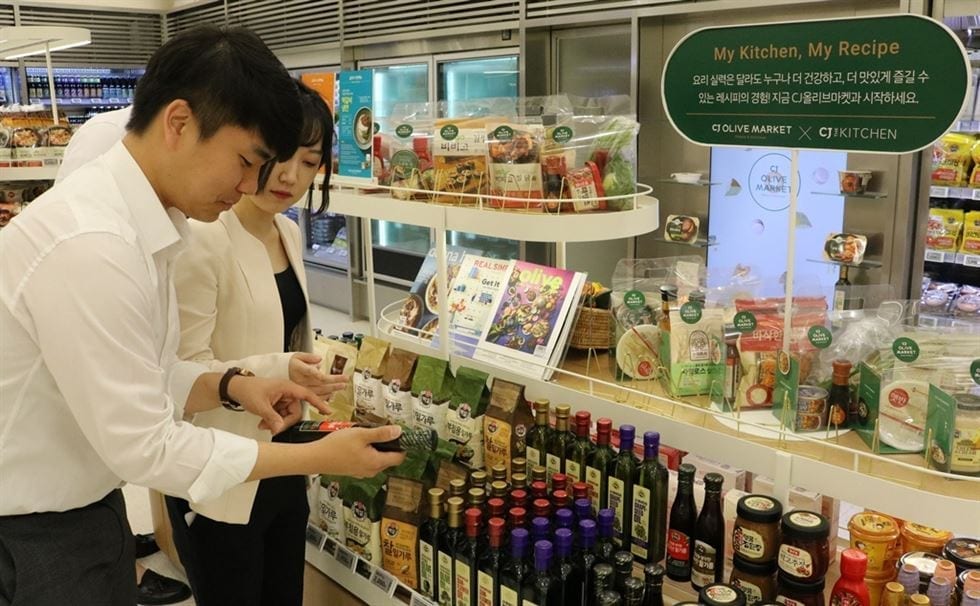
    CJ Foods’ offerings, including bibigo mandu, frozen gimbap, and an array of Korean sauces, are already available through major retailers such as AEON, Costco, Amazon, Rakuten, Don Quijote, and Ito-Yokado. In a remarkable showing, bibigo gimbap alone sold around 2.5 million units at AEON and Costco in 2024.

    Questions & Answers

    What is the significance of CJ Foods opening its new plant in Japan?
    The new plant in Kisarazu City marks CJ Foods’ first facility built in Japan by a Korean food company, aiming to enhance local sourcing and efficiency while expanding its market share in the growing frozen dumpling sector.

    How have CJ Foods’ sales performed in Japan recently?
    In early 2025, CJ Foods reported a 28% increase in dumpling sales and a 27% rise in overall food sales in Japan, reflecting a growing demand for its products.

    What strategic partnerships has CJ Foods established to strengthen its presence in Japan?
    CJ Foods has signed a partnership with ITOCHU Corporation, enhancing its distribution network through ITOCHU’s extensive reach, which includes major food distribution and convenience retailing.

  • CJ Foods Expands Global Footprint with New Mandu Factory in Japan

    CJ Foods Expands Global Footprint with New Mandu Factory in Japan

    In an ambitious move to expand its culinary footprint, South Korea’s CJ Foods has announced a significant investment of approximately $73 million (KRW 100 billion) to establish a new mandu (Korean dumpling) factory in Chiba Prefecture, Japan. This state-of-the-art facility will cover 42,000 square meters and is equipped with cutting-edge production lines. Construction is on track to wrap up by July, with production slated to kick off in September.

    Strengthening Its Presence in Japan

    This initiative is designed to enhance CJ Foods’ presence in Japan’s lucrative frozen dumpling market, which boasts an impressive annual value of around $800 million (JPY 114 billion). The factory will be churning out popular items such as bibigo mandu, alongside innovative convenience products aimed at nationwide distribution.

    A Blossoming Market for Korean Cuisine

    Japan is a crucial market for CJ Foods, where beloved offerings like bibigo mandu and gimbap are already available at major retailers such as AEON, Costco, Amazon, and Rakuten. Notably, in 2023, bibigo gimbap sold 2.5 million units in Japan, showcasing the growing appetite for Korean cuisine.

    Global Expansion Plans

    But the excitement doesn’t stop in Japan. CJ Foods is also pushing the envelope with plans for a new factory in Hungary by late 2026 and a grand Asian food complex in South Dakota, USA, set to debut in 2027. Currently, the company operates 20 plants across the United States, four mandu factories in Japan, and production bases in Germany, Vietnam, and Australia.

    This expansion strategy underscores CJ Foods’ mission to elevate its global K-food business by boosting local production capacity and satisfying the surging demand for its delectable offerings. And with this rapid growth, one can’t help but wonder what tasty delights CJ Foods will dream up next!

    Questions & Answers

    • What type of products will the new factory in Japan produce? The factory will produce popular items like bibigo mandu and other convenience products for nationwide distribution.
    • When will production at the new factory begin? Production is expected to start in September, following the completion of construction in July.
    • Where else is CJ Foods expanding aside from Japan? CJ Foods is planning to open a new factory in Hungary by late 2026 and is developing a large Asian food complex in South Dakota, USA, projected to open in 2027.
  • E-Mart to open first outlet in Hanoi

    E-Mart to open first outlet in Hanoi

    South Korean retail group E-Mart is to build its first hypermarket in Hanoi’s StarLake urban area.

    According to StarLake, E-Mart and THT Development have signed an agreement to transfer two commercial land lots within StarLake Project, for an area of 1.86 million sqm in Hanoi’s Tay Ho (West Lake) district.

    In late 2015, E-Mart opened first location in Vietnam, on a 3ha site in Go Vap district, in Ho Chi Minh City, investing up to US$60 million.

    After exiting China, E-Mart plans to open 50 stores in Vietnam during the next five years.

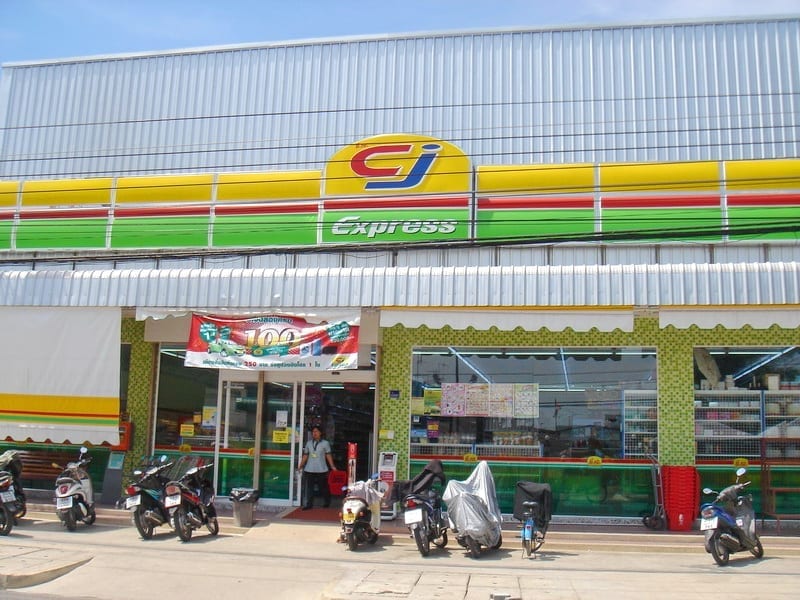
    Another South Korean retail and entertainment group CJ has also deposited an agreement with THT for two land lots at StarLake Project.

    CJ plans to open CGV cinemas, a Tous les Jours bakery, and FMCG businesses there.

  • Korean retail conglomerates eye pet business more and more

    Korean retail conglomerates eye pet business more and more

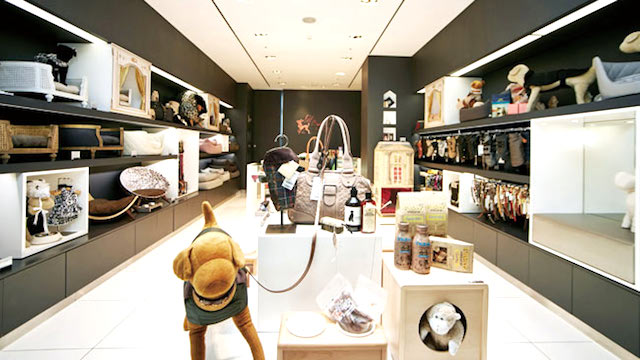
    South Korean retail conglomerates like CJ, Lotte and Shinsegae are catering more and more for pet owners as market demand grows.

    They have opened pet shops that offer products and services ranging from food and grooming services to even lodging for pets. They are also launching their own branded product lines.

    Shinsegae International’s household goods brand Jaju has launched its pet product line Jaju Pet, which plans to sell innovative pet products such as its “slow round bowl”, designed to help pets eat their food slowly, and plastic dog-waste bags that can be connected to a dog collar.

    E-Mart, Korea’s first discount retail outlet run by Shinsegae, has opened Molly’s Pet Shop with its offering of products and grooming services. It even has its own pet hotel. Since opening at the end of 2010, E-Mart now runs 35 Molly’s stores.

    Lotte Department Store opened a pet consulting service dubbed Zipsa in Gangnam in January. The store offers such services as dog-walking or pet-food delivery.

    Online shopping malls are also trying to catch some action. GS Shop has launched a “pet zone” on its mobile platform offering services that cater to various stages of a pet’s life cycle, while CJ Mall has its All Pet Club, offering food and clothing products as well as services such as lodging and funerals.

    Food companies Binggrae, Dongwon F&B Harim, KGC and Pulmuwon are also launching pet-food brands.

    Korea’s Ministry of Agriculture, Food and Rural Affairs says the pet industry has grown by more than 14 per cent on average a year since 2014. The market size was tabulated at KRW2.3 trillion (US$ 2.1 trillion) last year and is expected to surpass the KRW3 trillion won mark this year.

    The pet-loving population is estimated to be around 10 million individuals in 4.57 million households. Analysts say that as single or two-person households increase and as the aging population grows, society will see more people raising pets in the future.

  • CJ pulls out of McDonald’s Korea race

    CJ pulls out of McDonald’s Korea race

    CJ Group says it has withdrawn from the bidding process for franchise rights for McDonald’s Korea.

    The Korean multinational gave no reason for its loss of interest.

    McDonald’s US is seeking buyers for 20 year franchise rights for its business in China, Hong Kong and Korea as it moves to a franchise partnership model outside the US.

    CJ Group, whose interests include cinema chains in Asia and the Tous Les Jours bakery chain, said this week it had not entered the latest round of bidding for the business.

    That leaves a consortium including Maeil Dairy Industry and another group with KG Group and NHN Entertainment Corp as the last two potential buyers on the shortlist.

    McDonald’s hopes to earn about US$280 million from the Korean master franchise rights.

  • Multi-brand Korean cosmetic shops thrive

    Multi-brand Korean cosmetic shops thrive

    Korean cosmetic shops that sell various brands under one roof have steadily expanded their presence across the country, giving sophisticated customers more options, according to industry sources.

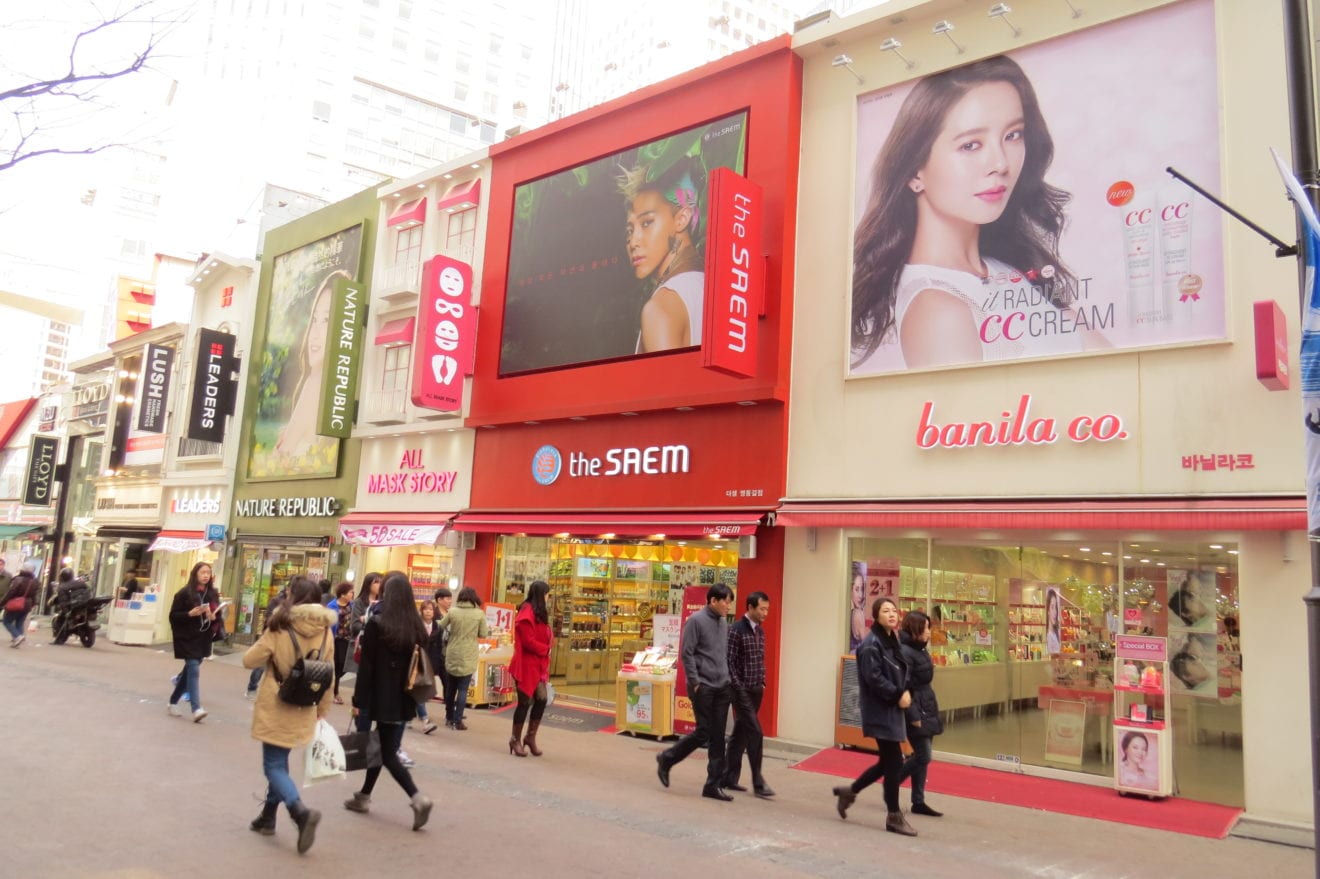
    AmorePacific, South Korea’s No. 1 cosmetic company, operates about 1350 multi-brand stores, called Aritaum nationwide, which offer a wide selection of its products, including such mass brands as Laneige and IOPE. The company also operates single brand shops such as Innisfree and Etude House in the lower-end and Sulhwasoo and Hera in the higher-end segment as part of a two-track strategy.

    Also showcasing multi-brands are beauty and health care stores, such as CJ’s Olive Young and its smaller rival Watsons, which have expanded and enjoyed growing popularity among urban youngsters.

    To catch up with the latest trend, local cosmetic companies have launched multi-brand cosmetic shops in major retail strips.

    LG Household & Health Care Ltd., the nation’s second-largest cosmetic maker, launched a multi-brand shop called Nature Collection, in February, operating 11 stores in major retail strips in Seoul. The store features brands that focus on a natural look, including The Face Shop and Beyond.

    “Nature Collection is promoted through word-of-mouth, with various products and promotional events,” a company spokesman told Yonhap news service.

    Able C&C, which created the boom for the single brand shop with Missha, has recently opened a multi-brand shop called Beauty Net on a popular street in Seoul to display a wide range of select products.

    Beauty Net Korea store

    Industry officials say multi-brand shops are effective in improving customer convenience and brand management and promotion, providing easier access to new brands.

    “Expansion of these multi-brands provide the other brands with more chances to be introduced to customers,” said an Able C&C spokesman.

  • Seoul insect restaurant opens

    Seoul insect restaurant opens

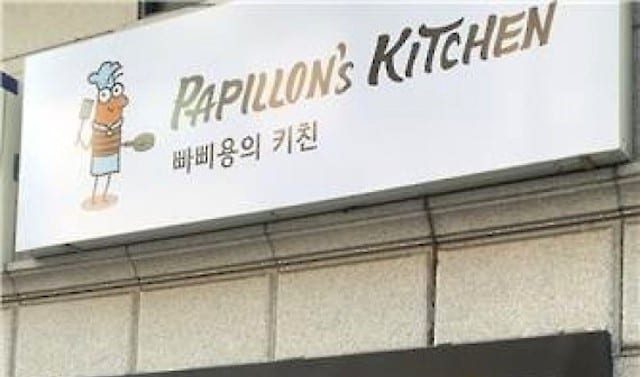
    Papillon’s Kitchen, a new Seoul insect restaurant has been packed since its opening – and is fully booked for the next few months.

    Although insects are known to be a great source of protein, and often mentioned as the ‘food of the future’, many consumers avoid them due to their appearance. However, the number of individuals who enjoy edible insects as a meal is continuously increasing as awareness builds of their health value.

    ‘Papillon’s Kitchen’, the first insect restaurant in Korea, serves food made from insects such as grasshoppers and crickets.

    During a recent mealtime watched by Korea Bizwire staff, guests sat around a large table and enjoyed pasta, soup, and croquettes made from insects. They seemed to be enjoying their meal, as everyone appeared to be content.

    “There’s no problem with food cooked with insects when I can’t see them,” said one female customer, raising her thumb in approval.

    With food scarcity becoming an increasing concern due to the rapid growth of the global population, insects could be a great substitute for traditional sources of protein. The academic world and food industry predict that in the not-so-distant future, insects will rise as one of the main sources of nourishment for humans.

    Insect resturant 1

    While 100 grams of beef contains 21 grams of protein, the same mass of dried grasshoppers contains 70 grams of protein. Insects are also less fattening, as they contain half the calories of rice and beans.

    Insects are also considered to be an eco-friendly food source. According to the Food and Agriculture Organization (FAO), the food resources used to breed cows for beef could contribute to the production of 12 times as many crickets. Even more significant, the amount of greenhouse gas produced when raising crickets is one hundredth the amount produced when raising cows.

    Insect resturant

    Due to new perspectives on insects as food, the Korean government and related industries are taking fast action. Currently, the government has certified mealworms and crickets as ‘general food ingredients’. Food industry giant CJ also started research on edible insects in collaboration with the Korean Edible Insect Laboratory Knowledge Coop (KEIL).

    Experts comment that people hold prejudice on insects simply because of their unattractive appearance. They expect  edible insects will soon be commercialised due to their many benefits.

  • South Korean retailers eye overseas push

    South Korean retailers eye overseas push

    The largest South Korean retailers, faced with cut-throat competition in the rapidly saturating domestic market, are turning their attention to overseas markets in conjunction with small and mid-sized businesses to secure a new growth driver.

    The country’s three major retail conglomerates – Shinsegae Group, Lotte Group and CJ Group – are targeting to sell more of their ‘private brand’ products or help small and medium-sized enterprises (SMEs) promote their products both in emerging and developed markets, they said.

    Of the three, Shinsegae’s Emart, the nation’s largest discount store chain by sales, appears to be the most aggressive player given its latest moves and announcements.

    On Wednesday, Emart outlined its 2016 plan not only to increase shipments of its products to overseas branches in China and Vietnam but also to supply them to local retail companies in the US, Europe and Oceania.

    “We have set an ambitious target of US$20 million in overseas earnings this year, sharply up from $1.72 million the year before. What we earn outside the country still accounts for a tiny portion of our overall sales. But we expect it to grow over time,” Emart spokeswoman Hur Chae-jeong said.

    For all of 2015, Emart saw its net profit jump 57 per cent to 455.9 billion won ($374 million) from 290 billion won a year earlier. Sales rose 4.1 per cent to 15.3 trillion won from 14.7 trillion won during the same period.

    The dominant discount store company seeks to fill more than 40 per cent of its total products to be exported with price-competitive PB products. In Korea, in partnership with SMEs, big retailers provide ‘less-recognised’ private label products to customers at lower prices compared to existing brand names.

    Moreover, Emart signed an initial agreement with the Korea Trade-Investment Promotion Agency (KOTRA) in November to help SMEs find ways to export their products. The move was in line with the government’s broad efforts to support them amid falling exports.

    Exports have been on a losing streak over the past 14 months, posting a 12 per cent on-year decline in February at $36.4 billion, according to government data.

    Lotte Department Store and CJ O Shopping, the nation’s biggest department store chain and home shopping channel by sales, respectively, have taken similar moves to go overseas.

    Lotte said Thursday it had arranged meetings between Korean SMEs and their Vietnamese and Indonesian counterparts in those countries to help them find bilateral business opportunities there.

    “The Korean SMEs supply their products to our department store chains. If they successfully enhance their brand awareness among overseas customers, it will lead to an increase in sales. So we will jointly conduct a market survey with the SMEs and offer them a variety of support programs,” a Lotte spokesman said.

    Lotte currently operates department store outlets in Vietnam, Indonesia, Russia and China.

    CJ O Shopping said it has partnered with Kotra to help Korean SMEs advance into Latin American markets on top of its current China and Southeast Asian markets.

    “In June last year we set up a joint venture with Mexico’s main broadcasting company Televisa to sell Korean products through a local home shopping channel. We will sign such partnerships with other Latin American countries in coming years,” CJ spokesman Hong Seok-woo said.

    CJ O shopping is in talks with daily deals website operator Groupon  and US retailer Walmart Stores to have Korean products available in their online shopping malls, Hong said.

    CJ has signed with 10 countries, largely in emerging markets, to sell Korean goods through local home shopping channels.

    “We are seeing a burgeoning demand for Korean beauty and fashion products in Latin America helped by the boom of ‘hallyu,’ or the Korean wave, there,” he added.