Tag: clark

  • Rising to the Top: Clark International Airport Corporation Paves the Way for Next-Gen Logistics Hub in the Philippines

    Rising to the Top: Clark International Airport Corporation Paves the Way for Next-Gen Logistics Hub in the Philippines

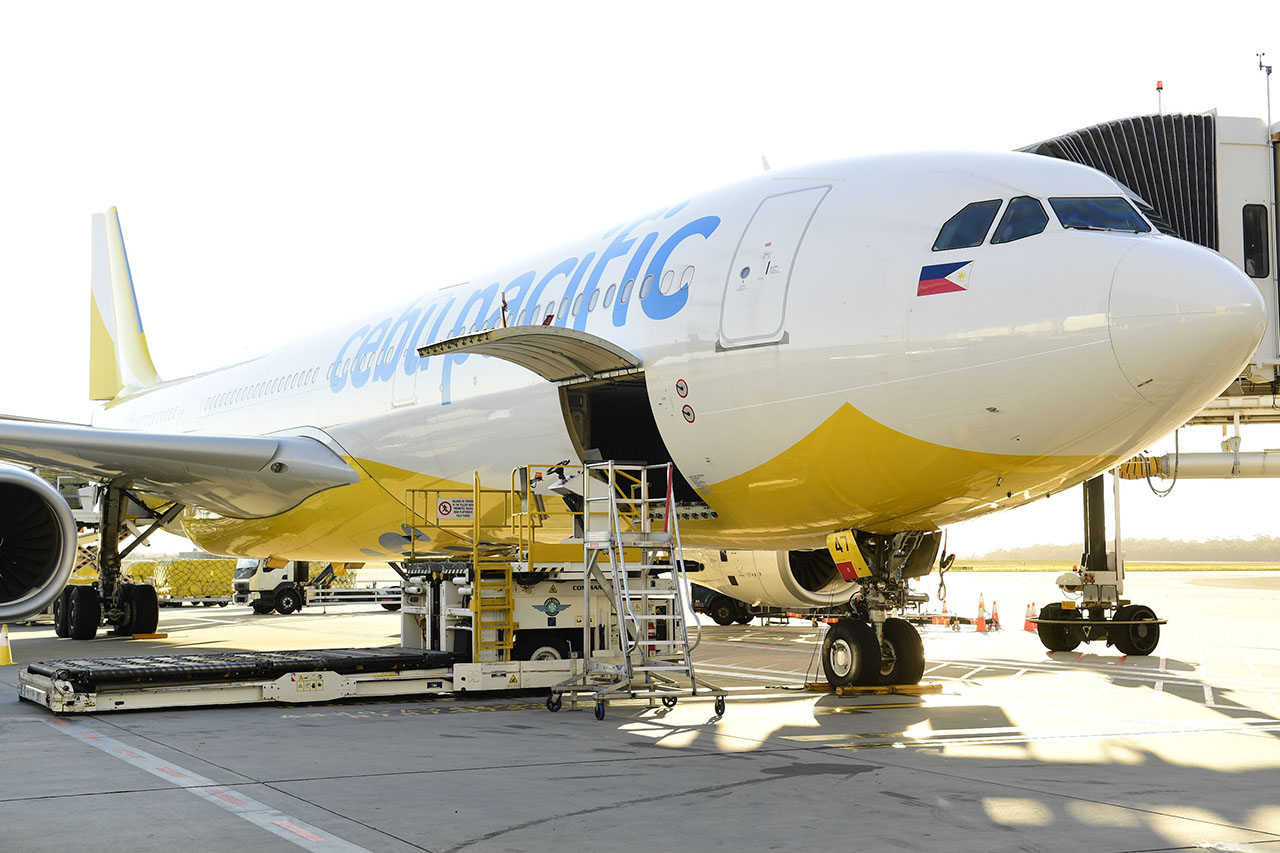
    The Clark International Airport Corporation (CIAC) is taking decisive steps to establish the Clark Civil Aviation Complex (CAC) as the Philippines’ next central hub for cargo and logistics. This development is supported by the extensive redevelopment of the 2,367-hectare property, with CIAC rapidly improving infrastructure, managing the estate, and reforming policies to accommodate the increasing regional demand.

    Heading in a New Direction

    Joseph P. Alcazar, President and CEO of CIAC, states that the corporation has revised its strategy and has refocused on managing the estate and developing airport infrastructure. Their goal is to support the Clark International Airport (CRK) and convert the Clark Civil Aviation Complex into the Clark Aviation Capital.

    Within the first five months of 2025, the Clark International Airport (CRK) doubled its cargo throughput compared to the previous year, handling over 35,900 tonnes across more than 2,500 flights. Historically, CRK has been seen as a strategic alternative to the crowded gateways in Metro Manila. Now, CRK is utilising its prime location, extensive aviation estate, and updated infrastructure to further CIAC’s logistics vision.

    Geography and Policy: The Advantages of Clark

    Central Luzon is the location of CAC, providing it with direct access to major expressways, seaports, and the market in Metro Manila. This connectivity enables quick cargo movement with various transportation options.

    CAC, the largest aviation complex in the Philippines, is uniquely positioned, offering operational and tax advantages due to its status as one of the few freeport zones housing an international airport.

    Claude’s close proximity to the industrial corridors in Luzon and its uncongested airspace make it an ideal location for time-sensitive cargo, including e-commerce deliveries and Maintenance, Repair, and Overhaul (MRO) operations.

    Strengthening Connections

    To keep up with its expanding role in logistics, Clark is investing in long-term infrastructure that improves accessibility to key economic zones and trade routes.

    Cargo volumes have soared at Clark, with a 100% increase in the first five months of 2025, which builds on a 32% increase from 2024.

    Building Infrastructure and Future Hubs

    The progress is supported by a series of infrastructure projects led by CIAC, including a new air traffic control tower, upgraded airfield lighting systems, and radar installations.

    CIAC is also focusing on future growth areas such as temperature-sensitive cargo and e-commerce logistics. For instance, in 2024, CIAC signed a Memorandum of Understanding with Philippine Pharma Procurement, Inc. to explore the development of pharmaceutical logistics capabilities within the complex.

    Enhancing Resilience and Multimodal Mobility

    As part of its long-term strategy, CIAC is considering new infrastructure aimed at resilience and disaster readiness.

    CIAC is also developing plans for a Multimodal Mobility Hub, a compact, connected space that integrates various transport modes, improving urban access and logistics efficiency.

    Governance, Services, and Sustainability

    CIAC plays a crucial supporting role for estate locators and cargo operators, despite not directly operating cargo services.

    Policy reforms are helping to accelerate infrastructure development. The Public-Private Partnership (PPP) Code institutionalises best practices for private-sector participation and offers a transparent framework for implementing major projects.

    Sustainability remains at the forefront of CIAC’s long-term perspective. CIAC actively supports initiatives that promote sustainable aviation.

    Questions & Answers

    What is the strategic plan of CIAC for Clark International Airport?
    CIAC is focusing on improving infrastructure, managing the estate, and reforming policies to support Clark International Airport (CRK) and convert the Clark Civil Aviation Complex into the Clark Aviation Capital.

    Which areas is CIAC targeting for future growth?
    CIAC is exploring potential growth areas such as temperature-sensitive cargo and e-commerce logistics. The corporation is also planning to develop pharmaceutical logistics capabilities within the complex.

    How is CIAC working towards sustainability?
    CIAC actively supports initiatives that promote sustainable aviation. The corporation is planning infrastructure across Clark Aviation Capital that incorporates green building standards, efficient land use, and transport connectivity to reduce the carbon footprint of logistics operations.
  • Philippines’ Clark airport makes pitch as aviation hub

    Philippines’ Clark airport makes pitch as aviation hub

    Last week, Philippine delegates pitched Clark International Airport’s viability as an attractive regional hub for global aerospace and aviation companies

    Airport developer Berthaphil is calling on maintenance, repair and overhaul (MRO) companies to consider setting up at Clark, where SIA Engineering has already established its own airframe maintenance operations. 

    Located 80 kilometres north of the capital Manila, the international airport can be accessed via the expressway and is situated within the free trade zone. This means interested parties can get favourable tax concessions, including up to a 7-year tax holiday and then a 5 percent corporate income tax rate.

    Berthaphil, which also built the first bonded warehouse and logistics centre at Clark, is offering a 10-hectare airfield site, with access to the primary runway, which can accommodate large widebody aircraft. The developer said the vacant property is available ‘as is’ or for a ‘a build to suit’ project.

    Apart from MRO companies, the groups are also targeting cargo airlines, logistics companies, fixed-based operators, business aviation companies, original equipment makers, regional and international airlines, and training organisations.

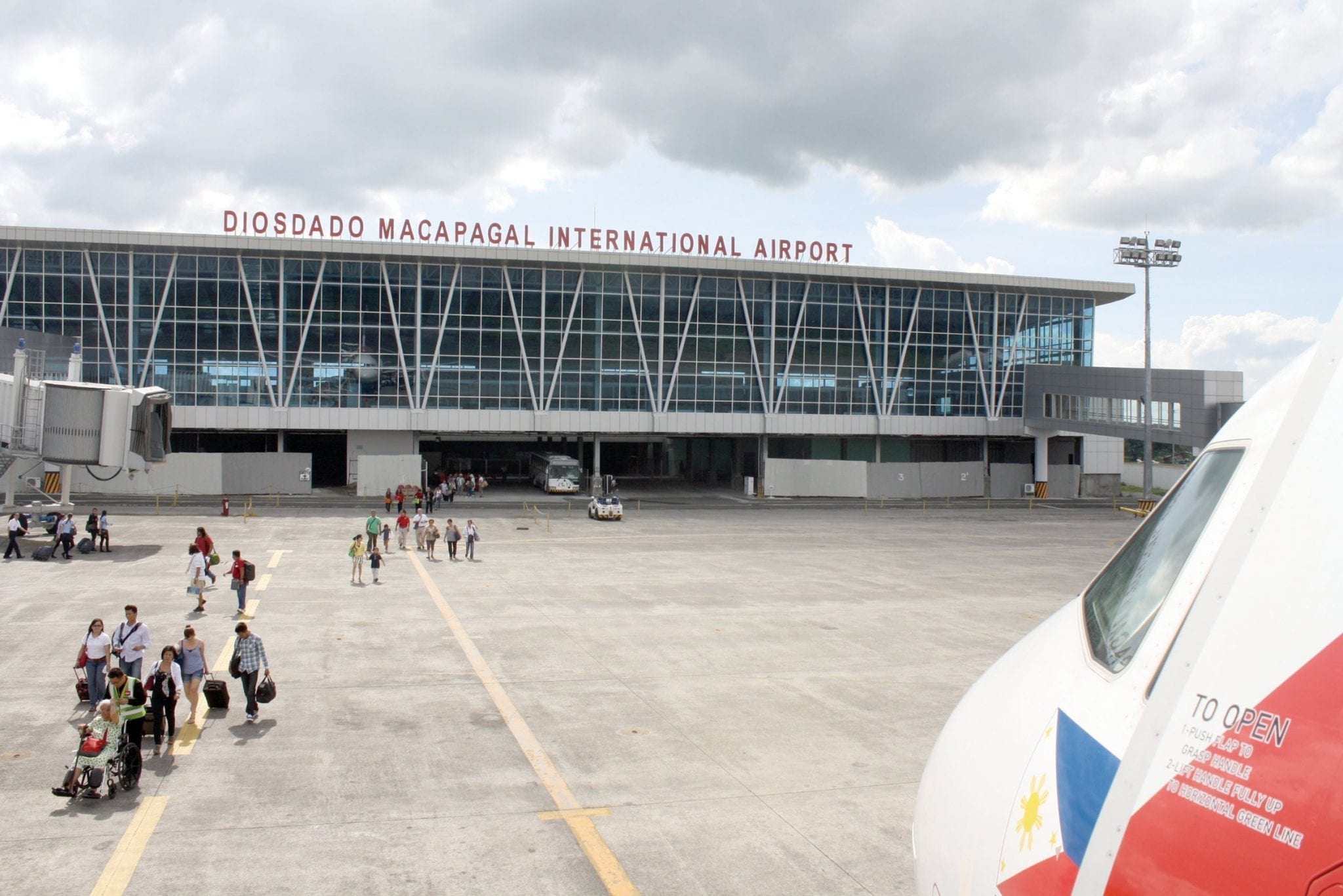
    Companies that have established operations at Clark include Singapore-based SIA Engineering and Hong Kong-based MetroJet. With a new terminal building, the airport has capacity for 80 million passengers, It is also an air cargo gateway for UPS, DHL and FedEx.

  • Cebu Pacific looking to restore Clark flights

    Cebu Pacific looking to restore Clark flights

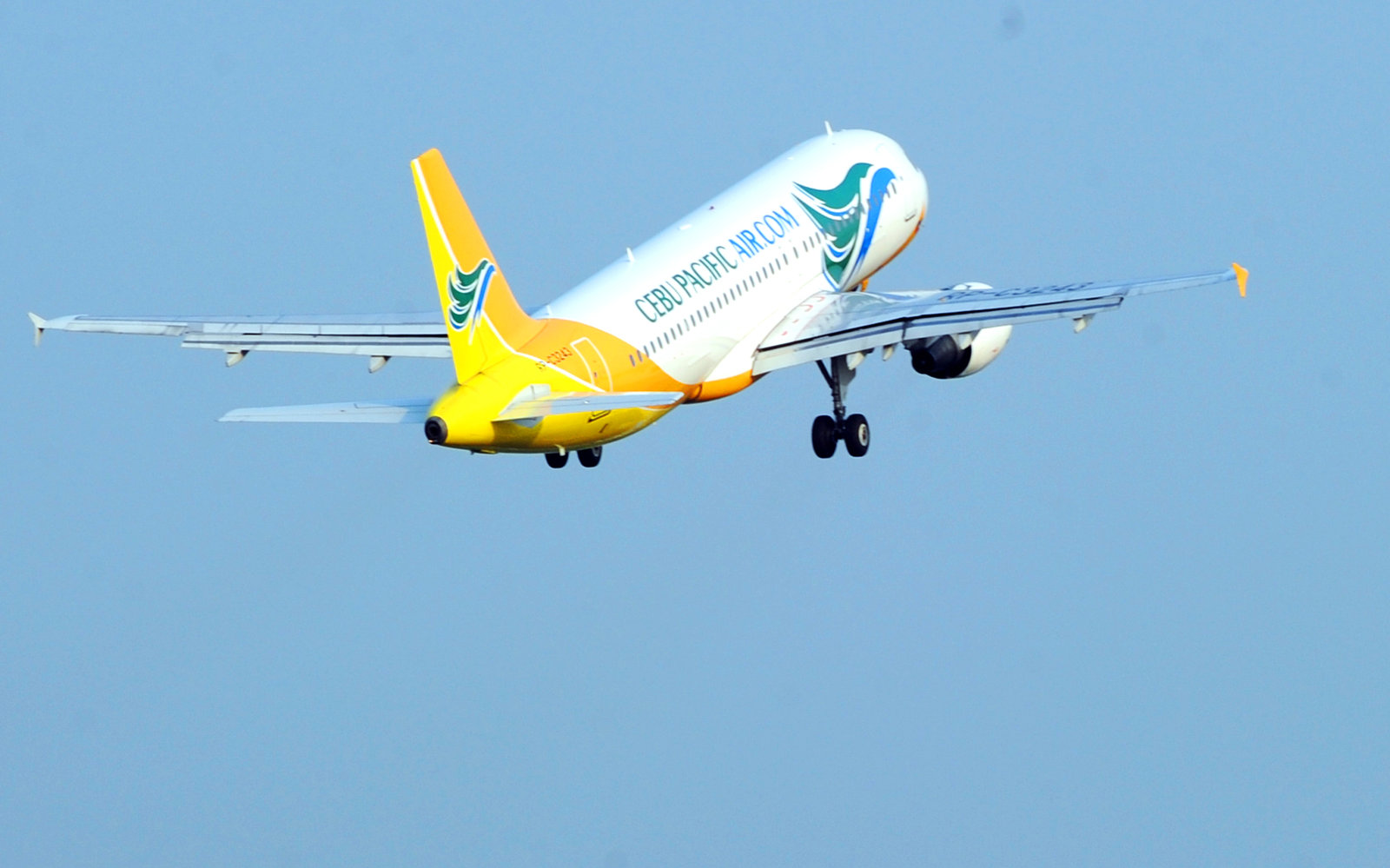
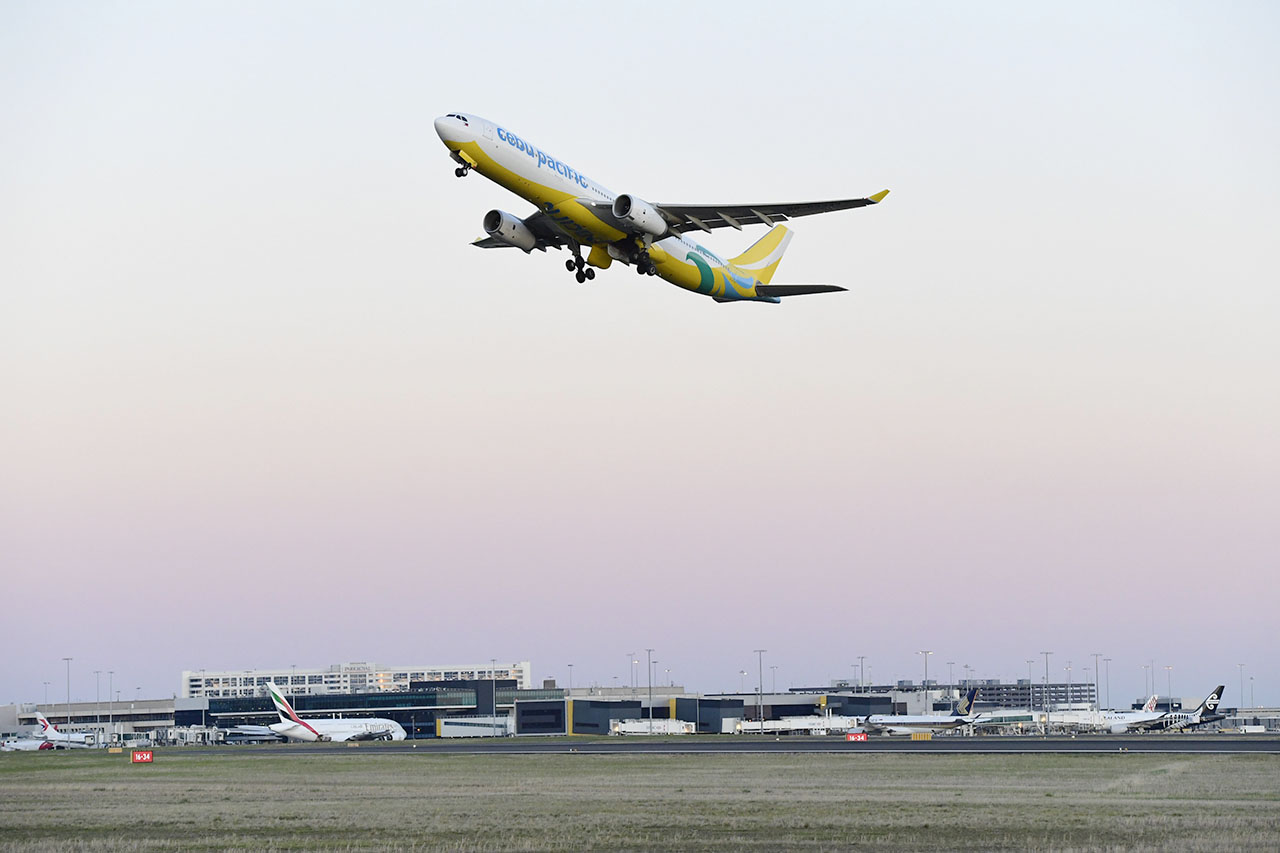
    Cebu Pacific is working to restore more of its flights in other air hubs in the Philippines, such as Clark International Airport, the budget carrier’s president told reporters last week.

    “We will be happy to resume flights at Clark and the other destinations we used to fly in,” Xander Lao, president and chief commercial officer, said. “Actually, when we said we were back at 100 percent operations, it referred to the seats and not actually to our fleet. From a pacing perspective, we are not there yet. For now, it is a matter of connecting the points and going from there.”

    He continued that on whether there is a possibility of moving some of their flights from the Ninoy Aquino International Airport to Clark International Airport, he said they are open to that idea.

    “Honestly, we welcome any capacity growth that comes from the market, but I think it should come down to the airlines on where they would want to designate flights to,” the Cebu Pacific president remarked. “We think Clark on its own has a lot of potential as it has around 20 million people in its catchment area, but Clark from Manila is very far as it is around 100 kilometers apart. It will be hard to convince businessmen or some passengers to travel that far to an airport.”

    Lao said that it is very good that the government is trying to improve the airport infrastructure in the Philippines, and said that they are excited about its various developments.

  • Airasia Philippines sees better performance in Q2

    Airasia Philippines sees better performance in Q2

    AirAsia Group Berhad announced on Wednesday that its Philippine unit, Philippines AirAsia, Inc., saw a 2% increase in passengers carried in the second quarter of the year.

    “AirAsia Philippines’ strong rebound seen in 1Q2021 (first quarter) further increased in 2Q2021 (second quarter), posting a 2% higher number of passengers carried quarter-on-quarter and 4 percentage points higher load factor to record a solid 78%,” AirAsia Group Berhad said in an e-mailed statement.

    “Monthly breakdown showed that load factor was as high as 83% in June 2021, boosted by active capacity management,” the airline group noted.

    “This was despite running a limited number of charter and passenger flights due to community quarantine restrictions and despite flying only from its Manila hub,” it added.

    AirAsia also said that expectation of high vaccination rates in Southeast Asian countries by the end of 2021 is lending confidence on upcoming recovery, supported by its “robust short-haul model in addition to leaner and more stabilized operations.”

    The group has said it expects domestic operations in the Philippines to be below 25% of pre-pandemic levels until at least September while the population awaits widespread vaccination against the coronavirus disease 2019 (COVID-19).

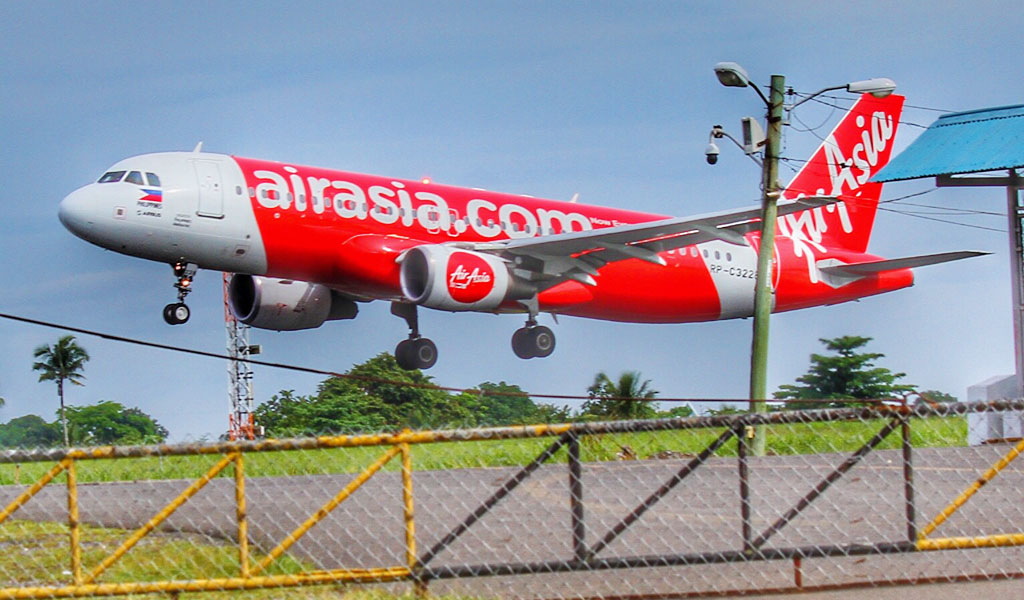
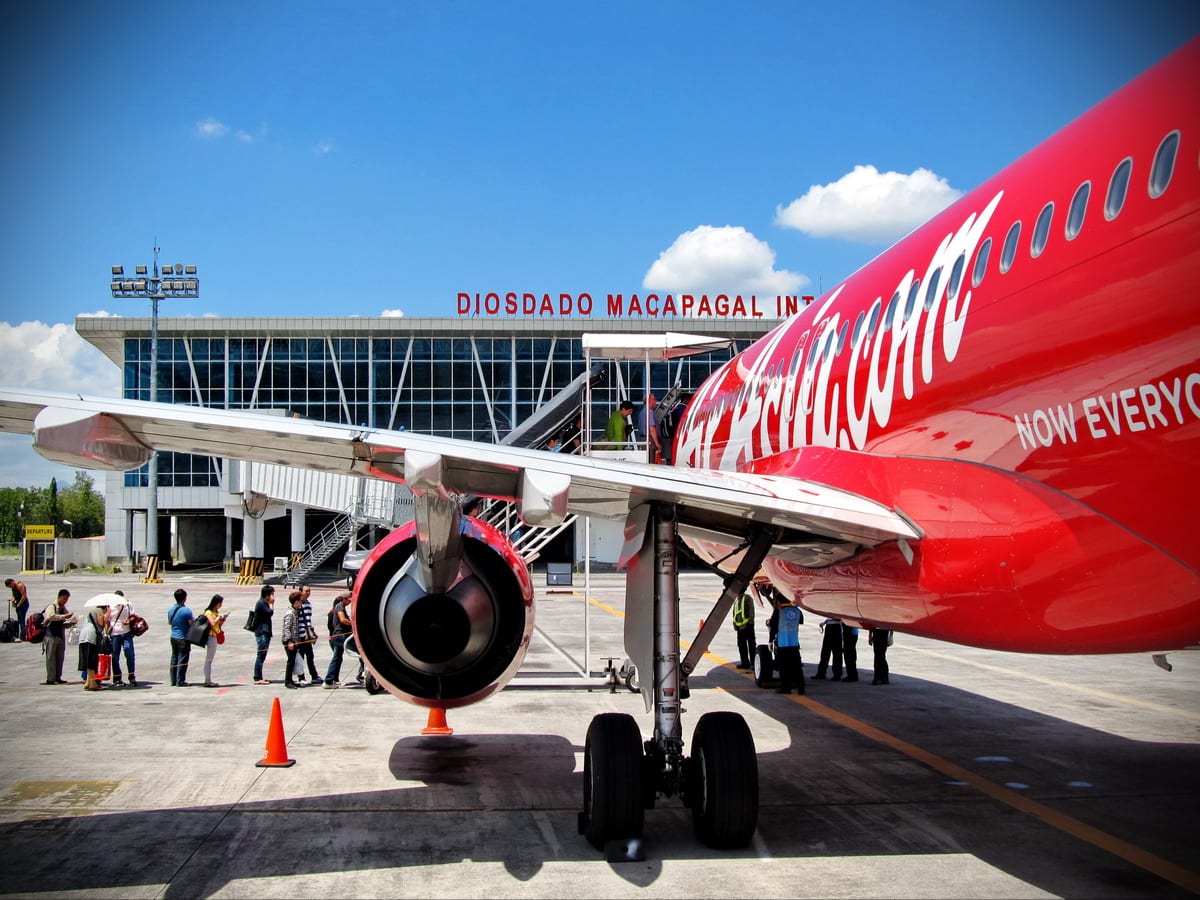
    Philippines AirAsia announced last week its plan to restore its hub in Clark by the fourth quarter of the year.

    AirAsia said it started its Philippine operations in Clark in March 2012.

    “Pre-pandemic, Philippines AirAsia flew to 10 domestic and three international destinations from Clark namely, Cagayan de Oro, Caticlan, Cebu, Davao, Iloilo, Puerto Princesa, Tacloban, Incheon, Kaohsiung, and Taipei,” it said.

  • Philippines AirAsia to revive Clark hub end this year

    Philippines AirAsia to revive Clark hub end this year

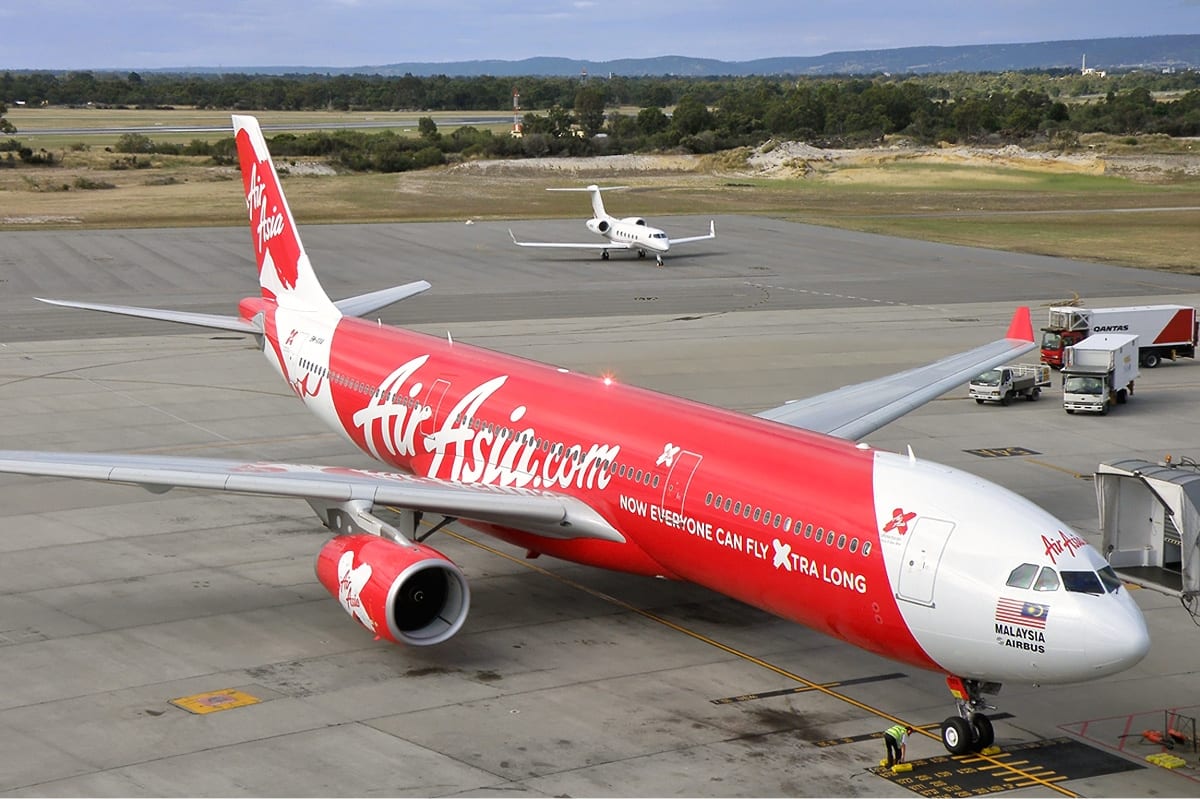
    Philippines AirAsia plans to strategically restore its hub at Clark International Airport, northwest of the capital Manila, in October 2021, pending the easing of travel restrictions and an increase in travel demand, says Chief Executive Officer Ricky Isla.

    “Once travel restrictions ease and demand picks up soon, we are eyeing to strategically restore AirAsia’s Clark hub hopefully by Q4 of 2021,” he said in a statement, after joining Philippines President Rodrigo Roa-Duterte and other government and industry representatives in witnessing the inspection and dry-run of the airport’s new second passenger terminal (Terminal 2) building on July 19, 2021. Isla said the new terminal would boost the airline’s drive towards a stronger rebound post-COVID-19. Government representatives echoed his sentiment saying they hoped AirAsia Philippines would make a strong come-back in 4Q21.

    According to the ch-aviation schedules module, the AirAsia Group unit will restore flights from Clark on October 1, 2021, to the following domestic destinations:

    • 4x weekly to Cagayan de Oro Laguindingan;
    • daily to Caticlan;
    • daily to Cebu;
    • 4x weekly to Davao, increasing to daily frequencies by January 1, 2022;
    • 4x weekly to Iloilo (from October 2);
    • 4x weekly to Puerto Princesa; and
    • 4x weekly to Tacloban.

    AirAsia began its Philippines operations at Clark in March 2012, a move that helped push connectivity in northern and central parts of Luzon, the country’s largest and most populous island that also includes Manila. Before the pandemic, AirAsia Philippines flew to 10 destinations from Clark, including the domestic points being restored, and internationally to Seoul Incheon (South Korea), Kaohsiung and Taipei Taoyuan (Taiwan).

    Punted as Asia’s next premier gateway for North and Central Luzon, the new terminal is expected to relieve congestions at Manila Ninoy Aquino Int’l (NAIA), which has an annual capacity of eight million passengers. The new terminal will increase capacity at Clark to 12 million passengers annually and boost air transport capacity for the Greater Capital Region, including the cities of Angeles and Mabalacat within the Clark Freeport Zone in the province of Pampanga.

    Operated by the Luzon International Premier Airport Development (LIPAD) Corporation, the second terminal has been constructed at a cost of PHP12.55 billion peso (USD243 million). It forms part of the so-called “Build, Build, Build (BBB)” program of the Philippines government. Under the model, the infrastructure was built by the government using its own funds, while the operations and maintenance are handed over to the private sector.

    Spread across 110,000 sqm, the new terminal features 18 passenger boarding bridges, 3,881 parking spaces, and 20 bus parking bays. It also facilitates an end-to-end contactless passenger experience from the bus ride, check-in, bag drop, and even when ordering meals.

    Clark International Airport currently serves 27 destinations in 10 countries, involving six airlines, according to ch-aviation data. The airport has two runways (02R/20L and 02L/20R) both measuring 3,200 x 60 metres at an elevation of 148 metres MSL.

  • Clarks to permanently shut stores as it weighs survival options

    Clarks to permanently shut stores as it weighs survival options

    Footwear retailer Clarks has elected to close some of its UK stores permanently once the current government lockdown on businesses in response to the coronavirus pandemic is lifted.

    The decision is an effort to survive the hit to its business as the virus keeps consumers at home and has curbed consumer spending. It will affect what the company described as “a small number” of the chain’s 347 outlets in the territory, with the performance and location of each of these outlets now under close scrutiny.

    Clarks has also reportedly drafted in investment bank Rothschild to assist it in its financing options and flesh out a turnaround plan for after the pandemic passes

    Many of the firm’s sales staff are now furloughed at home with their employment secured by the government’s recently introduced job retention scheme.

  • AirAsia increases some flight frequencies from Cebu, Clark

    AirAsia increases some flight frequencies from Cebu, Clark

    AirAsia said Friday it was increasing flight frequencies out of its Clark and Cebu hubs to meet travel demand.

    Starting in January, the following will be flown daily from 3 times weekly: Clark to Iloilo (Z2 931) and Iloilo to Clark (Z2 932). The following will be flown 4 times weekly from 3 times: Cebu to Kuala Lumpur (Z2 7110) and Kuala Lumpur to Cebu (Z2 7111), AirAsia said.

    Starting March 29, the following will be flown 4 times weekly from 3 times: Clark to Tacloban (Z2 975) and Tacloban to Clark (Z2 976). Also on March 29, the following will be flown daily from 3 times weekly: Cebu to Puerto Princesa (Z2 543) and Puerto Princesa to Cebu (Z2 544), AirAsia said.

    “We are pleased to welcome the new year with additional flights, offering guests more options when flying with us as they accomplish their travel goals this 2020. Our adjustments are well guided by data, and I am very optimistic about the tourism boost this will bring to our country in the summer months,” said AirAsia Philippines CEO Ricky Isla.

  • Cebu Pacific increases capacity in Clark, Palawan

    Cebu Pacific increases capacity in Clark, Palawan

    Cebu Pacific said it will end the year as the biggest carrier in terms of capacity at the Clark International Airport and the Busuanga and Puerto Princesa airports in Palawan.

    In a statement, the Gokongwei-led budget carrier attributed the increased capacity share in Clark to the direct flights to Guangzhou and Puerto Princesa, as well as between Puerto Princesa and Hong Kong.

    Cebu Pacific said its capacity share at the Clark International Airport will hit 28% by end-2019. The airline mounts 190 flights weekly from this hub to Bacolod, Bohol, Caticlan, Cebu, Davao, Iloilo, Puerto Princesa, Guangzhou, Hong Kong, Macau, Narita and Singapore.

    “Cebu Pacific has taken a measured pace of expansion in Clark, but we have always believed in the potential of Clark. Over the past 12 months, our capacity growth in Clark hit over 90%. With the growth in passenger traffic in Clark, we are bullish that the new routes we launched over the past few months will continue to perform strongly,” Alexander G. Lao, chief strategy officer of Cebu Pacific, was quoted as saying.

    The airline is also set to end the year with 46% total capacity share in Puerto Princesa and the Busuanga Airport. Cebu Pacific mounts 190 flights a week to and from Palawan.

    “We remain confident that Hong Kong will bounce back, and despite current concerns, there is continued demand for travel between Hong Kong and the Philippines. We are confident in the potential of Palawan to grow tourism sustainably, and we will continue to work with our stakeholders in Palawan to better connect the province to the rest of the Philippines and to key tourist catch points in Asia,” Alex B. Reyes, vice-president for commercial at Cebu Pacific, said.

    Cebu Pacific increased capacity by 23% to 19 million seats as of end-September.

    Cebu Air, Inc., the listed operator of Cebu Pacific, said its nine-month profit surged 142% to P6.75 billion, as it added flights and raised average fares.

  • Cebu Pacific to launch Clark-Guangzhou flights

    Cebu Pacific to launch Clark-Guangzhou flights

    Cebu Pacific said it is set to launch in November direct flights between Clark in Pampanga and Guangzhou, China amid increasing demand for leisure and business travel.

    “Cebu Pacific will launch next month direct flights between the Clark International Airport and Guangzhou, China, becoming the first Philippine carrier to link the two cities,” the low-cost carrier said in a statement on Saturday.

    Flights between Clark and Guangzhou will be operating four times a week beginning Nov. 11: Monday, Wednesday, Friday, and Saturday.

    “The flight departs Clark at 11:35pm; while the return flight departs at 3:15am of the next day,” it said.

    Cebu Pacific said the new route will cater to “increasing demand for leisure and business travel” and it will “further enhance the potential for investments in the special economic zones in Central Luzon, including the 9,450-hectare New Clark City.”

    It noted that the Clark International Airport is within proximity to Manila-Clark passenger railway connecting Manila to Clark and a cargo railway connecting Subic to Clark, which are both expected to be operational by 2022.

    “With direct air service between Clark and Guangzhou, it will be easier for entrepreneurs and businessmen in the e-commerce space to meet up with suppliers, Cebu Pacific Vice-President for Commercial Alex B. Reyes was quoted as saying in the statement.

    Guangzhou, one of China’s nine National Central Cities, is a wholesalers’ “haven for retail and popular consumer goods,” the budget carrier noted.

    The low-cost airline currently flies 27 times weekly between the Philippines and mainland China, with direct flights between Shanghai, Manila and Cebu; as well as Manila and Beijing, Guangzhou, Xiamen and Shenzhen.

    Cebu Pacific operator Cebu Air, Inc. recorded a 116% growth in its net income in the first half to P7.14 billion, driven by its increased passenger volume and higher average fares.

    Shares in Cebu Air went up 20 centavos or 0.22% to close at P92.20 apiece on Friday.

  • Cebu Pacific poised to become largest airline out of Clark

    Cebu Pacific poised to become largest airline out of Clark

    Philippine low-cost carrier, Cebu Pacific (CEB), is poised to become the country’s largest airline operator out of the Clark airport.

    CEB President and CEO Lance Y. Gokongwei said last week that by October, CEB will be starting the Clark-Puerto Princesa flights and by the end of December, CEB will be the largest airline operator out of Clark.

    He said CEB will fly to seven domestic and four international destinations, about 170 flights per week with almost 30 percent into Clark.

    “We’re very eager to grow here because we inaugurated Clark in 2006 and it is now our 13th year, and we are very supportive of Clark as a tourist and business destination,” Gokongwei said.

    He said next year CEB will add even more destinations as it is set to receive seven more aircraft this year and about 15 more in the next five years.

    “So definitely Clark is in our plans,” he added, especially with the opening of the new Clark passenger terminal which has a capacity of 8 million passengers plus the original four million.

    “So, a lot of room to grow. I do expect that Clark will be our fastest-growing hub in the next five years and I think it will easily triple in the next five years,” Gokongwei said.

    “I think the infrastructure to Clark has definitely improved and by 2024 and 2025 with the railway, it’s going to grow and the constraints in Naia are also supporting the growth of Clark,” he observed.

    “Because if you want to serve Luzon or you want an international hub to the Visayas and Mindanao, then Clark is the place to do it,” he added.

    CEB is the biggest airline with four international destinations out of Clark but domestically, it’s Philippine Airlines, said Alexander Lao, CebGo president and CEO.

    CEB flies to Cebu, Davao, Boracay, Tagbilaran, Bacolod, Iloilo and soon Puerto Princesa domestically. “Our strategy is to keep increasing the number of frequencies on those thicker routes,” Lao said.

    CEB’s future plans include making the four times weekly Narita flights daily and mount flights to Kansai since it is the second largest city in Japan.

    However, long-haul flights out of Clark are not yet in the horizon for CEB because “it is not viable for us,” Gokongwei said.

    “But I think there is enough catchment basin in this area to service domestic and short haul international flights,” he added.

  • Cebu Pacific to begin Cebu-Busuanga flights in October

    Cebu Pacific to begin Cebu-Busuanga flights in October

    Budget carrier Cebu Pacific announced on Thursday, August 15, that it is launching direct flights from Cebu to Busuanga (Coron) in Palawan.

    Cebu Pacific’s subsidiary Cebgo will fly twice daily between the Mactan-Cebu International Airport and Francisco B. Reyes Airport, beginning October 27 this year.

    • 1st flight
      • departing Cebu at 7:25 am, arriving in Busuanga at 9 am
      • (turnaround flight) departing Busuanga at 9:20 am, arriving in Cebu at 11 am
    • 2nd flight
      • departing Cebu at 10:25 am, arriving in Busuanga at 12:05 pm
      • (turnaround flight) departing Busuanga at 12:25 pm, arriving in Cebu at 2:10 pm

    “We believe that these twice daily flights will enable residents from Cebu and other parts of Visayas and Mindanao to explore Palawan, without having to make the trip to Metro Manila to catch their flights,” said Cebgo president and chief executive officer Alexander Lao in a statement on Thursday.

    “With this direct Cebu-Busuanga route, the islands of Coron and Culion are easier to get to. This will also allow locals from the rest of Southern Luzon to easily connect to Cebu and its network of over 20 domestic and 6 international destinations,” he added.

    Cebu Pacific is having a seat sale for the new route from Thursday until Saturday, August 17, with a base fare as low as P299. The travel period is from October 27, 2019 to March 28, 2020.

    Aside from Cebu, Cebu Pacific operates flights out of Manila, Clark, Kalibo, Iloilo, Davao, and Cagayan de Oro.

    Its network covers over 100 routes and 64 destinations, spanning Asia, Australia, the Middle East, and the United States.

  • Cebu Pacific expands flights from Clark

    Cebu Pacific expands flights from Clark

    Cebu Pacific, the country’s biggest budget airline, widened its presence at the Clark International Airport in Pampanga province with the opening on Friday of three new routes, including flights to Tokyo, Japan.

    The move opens up tourism and business opportunities for the central Luzon gateway while helping Cebu Pacific ramp up operations as it pursues an aggressive expansion strategy.

    Cebu Pacific on Friday also inaugurated daily flights between Clark Airport and Bacolod and Iloilo.

    Lance Gokongwei, Cebu Pacific CEO, outlined the company’s long history in Clark Airport, which it first tapped as a hub for daily flights to Cebu 13 years ago.

    “Since 2006 we have never stopped flying to Clark. We have always believed in the potential of Clark as a gateway to Manila, to central and northern Luzon, a hub with over 25 million residents,” Gokongwei said during the launch event.

    Cebu Pacific will also be the first airline to link Clark Airport to Narita International Airport in Japan with flights to operate four times a week.

    The new routes will help make Cebu Pacific the largest carrier in Clark Airpo

    Clark Airport is also being positioned as an alternative to the congested Ninoy Aquino International Airport in Manila.

    The Gokongweis are doubling down on their investment in Clark as the family’s JG Summit Holdings, a property, food, retail and airline conglomerate, is part of the consortium that will operate the Pampanga gateway.

    Cebu Pacific earlier announced the start of daily flights between Clark and Puerto Princesa in Palawan by the fourth quarter of 2019.

    The four new routes will boost Cebu Pacific’s total capacity in Clark by 40 percent in 2019 alone. This follows a 75-percent increase in 2018 with the launch of direct commercial air service to and from Davao and Panglao (Bohol) as well as additional frequency for the Clark-Macau route.

  • Cebu Pacific launches P99 domestic seat sale starting Monday

    Cebu Pacific launches P99 domestic seat sale starting Monday

    Budget carrier Cebu Pacific on Monday announced a P99 seat sale for domestic flights one-way from Clark International Airport.

    In an advisory, the airline said the sale started Monday, August 19, and will end on Wednesday, August 21.

    The travel period is from October 1, 2019 to January 31, 2020.

    The P99 one-way flights are Clark to Bacolod, Bohol, Boracay (Caticlan), Cebu, Clark, Davao, Iloilo, and Puerto Princesa.

    Aside from Clark, Cebu Pacific operates flights out of six other strategically placed hubs in the Philippines: Manila, Kalibo, Iloilo, Cebu, Cagayan de Oro (Laguindingan) and Davao.

    The carrier operates over 2,000 weekly flights across 37 domestic and 26 international destinations.

  • Cebu Pacific to expand its hubs in Clark, Cebu

    Cebu Pacific to expand its hubs in Clark, Cebu

    Cebu Pacific said it is eyeing to expand its hubs in Clark and Cebu as it continues to boost its fleet with a target of 83 aircraft by end-2022.

    Lance Y. Gokongwei, president of Cebu Pacific operator Cebu Air, Inc., said the budget carrier will be adding “a lot of frequency” in its hubs in Cebu and Clark.

    “In Clark, we’re going to try to connect the dots so that a lot of North Asia will be able to fly into the south without having to connect through Manila… I think in the next two to three years, you’ll see a lot of flights into Japan, (South) Korea and China from Clark,” he told BusinessWorld on the sidelines of the JG Summit Holdings, Inc. stockholders’ meeting last week.

    For Cebu, Mr. Gokongwei said they will ramp up the frequencies of its existing routes, which currently connect the city to both Japan and South Korea. Cebu is a popular destination for Japanese and Korean tourists.

    “The (Airbus A321neos), we put them into Manila. Then we pull out the (Airbus A320s) and put them to Clark or to Cebu,” he said.

    The carrier is currently on fleet expansion mode and expects the delivery of 12 new aircraft this year, namely six Airbus A321neos (new engine option), five A320neos and one ATR 72-600.

    Mr. Gokongwei said in the long term, what Cebu Pacific wants is to make its Clark operations as big as its Manila operations. “We have to complete the Bacolods, the Iloilos, the Taclobans, the CDOs. Whatever we have in Manila, we’ll replicate in Clark,” he said, but noted it may take about 15 years from now.

    Cebu Pacific said its hubs in Clark and Cebu have already seen rapid growth since the start of the year, both in terms of new routes and frequency of flights.

    For the Clark hub, the carrier already increased its capacity to and from Caticlan by 231% after shifting to use the bigger Airbus A320 starting March 31 from the 78-seater ATR 72-600.

    It also noted it will be opening daily from its Clark hub going to and from Iloilo, Bacolod and Narita by Aug. 9, and daily flights to and from Puerto Princesa by Oct. 9.

    For its Cebu hub, the airline noted it already added frequency to its flights going to Cagayan de Oro, Dumaguete, Siargao, Iloilo, Caticlan, Ozamiz and Zamboanga by an average of 63% since April 15.

    “Flights between Manila and Cebu had likewise increased 24%. The increase in flights from its Cebu hub is on top of its six-times weekly Cebu-Shanghai and Shanghai-Cebu routes which began on April 15, 2019,” it added.

    Cebu Pacific currently has flights from Clark to Cebu, Caticlan, Tagbilaran, Davao, Singapore, Macau and Hong Kong.

    In its Cebu hub, the carrier flies to and from Bacolod, Caticlan, Butuan, Cagayan de Oro, Calbayog, Camiguin, Clark, Davao, Dumaguete, General Santos, Iloilo, Kalibo, Legazpi, Ozamis, Pagadian, Puerto Princesa, Siargao, Surigao, Tacloban, Zamboanga, Hong Kong, Macau, Tokyo (Narita), Singapore and Incheon.

    Listed Cebu Air posted a net income of P3.43 billion in the first quarter, up 138.4% from the same period last year due to a growth in passenger volume and average fares

  • Cebu Pacific to launch flights Between Clark, Philippines and Narita

    Cebu Pacific to launch flights Between Clark, Philippines and Narita

    Cebu Pacific has unveiled plans to launch flights from its rapidly growing hub in Clark, Philippines to Narita Airport.

    The airline will operate four flights per week between Clark and Narita on Mondays, Wednesdays, Fridays and Sundays, beginning Aug 9.

    Cebu Pacific will also begin direct flights between its hubs in Clark and Iloilo; as well as between Clark and Bacolod on Aug 9; as well as daily flights between Clark and Puerto Princesa in Palawan by Oct 9 October 2019.

    The four new routes will boost Cebu Pacific’s total capacity in Clark by 40% in 2019 alone, following a 75% increase in 2018 with the launch of direct flights to and from Davao and Panglao (Bohol); as well as additional frequency for the Clark-Macau route.

    “There is so much untapped potential in Clark, and we are committed to expanding our Clark hub to expand tourism, trade and investment opportunities. This will open up the areas around Clark to more investors and entrepreneurs,” said Candice Iyog, Vice President for Marketing and Distribution of Cebu Pacific.

    With a population of over 23 million in its catchment area, Clark International Airport is one of Asia’s fastest-growing airports, with passenger volume reaching about 2.5 Million in 2018.

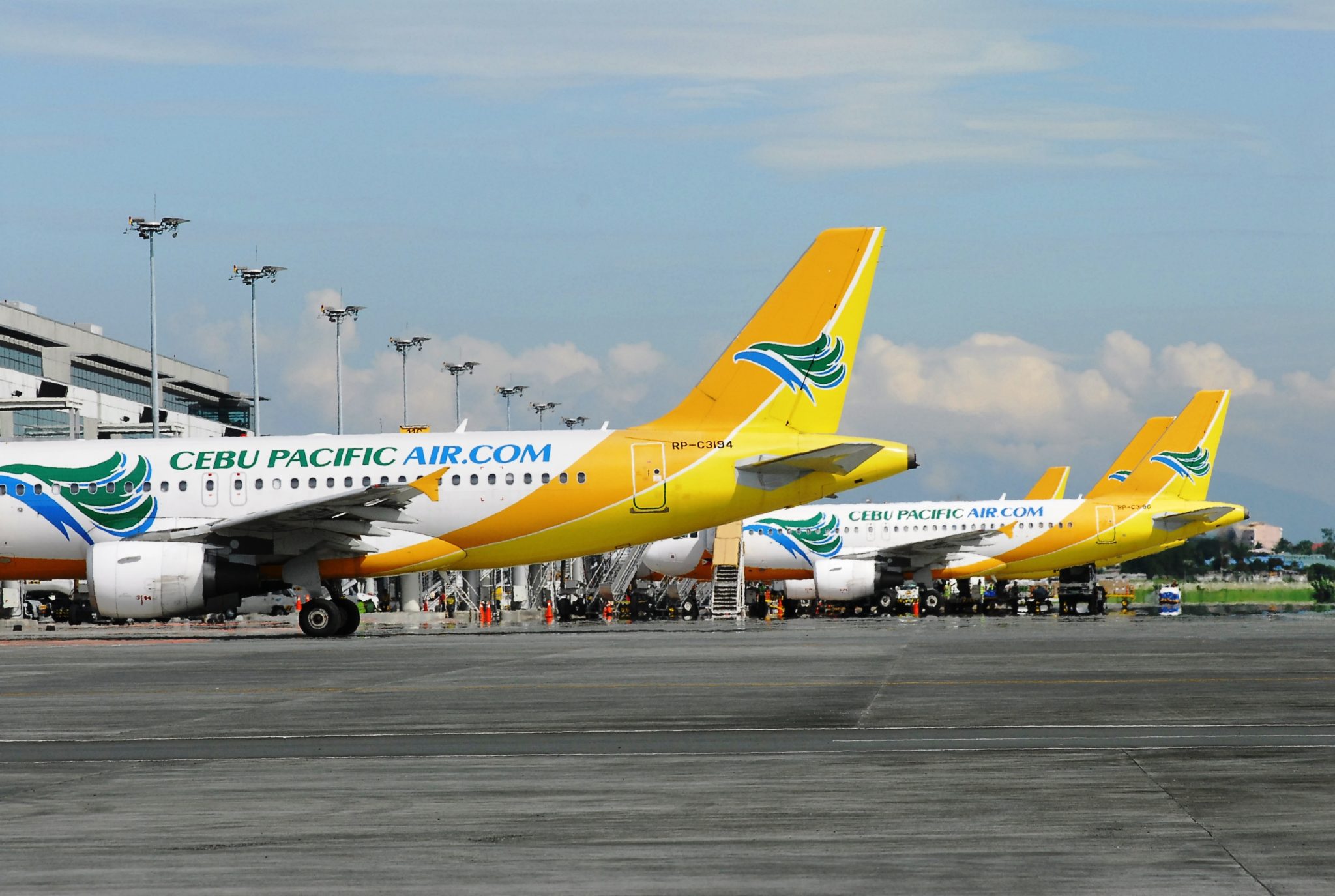
    Cebu Pacific has been operating flights in and out of Clark since 2006 and today has direct flights to Cebu, Caticlan, Tagbilaran, Davao, Singapore, Macau and Hong Kong.

    “With direct air service between Clark and Narita, it will be easier for Japanese tourists to access destinations in Pampanga, Pangasinan, Baguio, La Union and the rest of Luzon. Conversely, it will also be easier for residents in these areas to enjoy Tokyo, with a direct flight from Clark,” added Candice Iyog.

    Japan is one of the Philippines’ top sources of inbound tourists, with 631,801 Japanese visiting the country in 2018.

    In 2018, Cebu Pacific flew 20.3 million passengers on over 2,130 weekly flights across 37 domestic and 26 international destinations.