Retail News CRM

Tag: clean clothes campaign

  • H&M suppliers’ Bangladesh factories ‘unsafe’

    H&M suppliers’ Bangladesh factories ‘unsafe’

    Labour rights groups are calling on H&M to do more to protect garment workers in Bangladesh, after a review of strategic H&M suppliers revealed “severe delays” in urgent building repairs.

    The Clean Clothes Campaign, the International Labor Rights Forum, the Maquila Solidarity Network and the Worker Rights Consortium say the lack of action leaves “tens of thousands of workers at risk of death and injury”.

    The agencies were witness signatories to the Bangladesh Accord on Fire and Building Safety, and have published an update to an initial report into delays in safety repairs at 32 of H&M’s most strategic Bangladesh suppliers. The update, based on a review of publicly-available documentation carried out in January 2016, shows that all but one of H&M’s strategic suppliers remain behind schedule in making repairs and that over 50 per cent of them are still lacking adequate fire exits.

    “More than two and a half years into the process of the Bangladesh Accord every single mandated repair at H&M’s suppliers should have already been completed. However, the sad reality is that hardly any of H&M’s supplier factories in Bangladesh can be called safe,” said Scott Nova of the Worker Rights Consortium.

    The report does demonstrate some progress. Although the overall number of outstanding fire, electrical and structural renovations remains high at 37 per cent, the number of items reported as “behind schedule” at these 32 factories has decreased. However, the authors point out that, while this reflects actual progress in some cases, it is largely the granting of deadline extensions to factories rather than the completion of renovations that explains the improvement.

    “We are pleased that the pressure placed on H&M following our last report has resulted in some recent improvements, but are shocked that so much remains left to do,” said Liana Foxvog of the International Labor Rights Forum.

    “We urge H&M to provide meaningful funding for lifesaving safety renovations in order to put an end to the persisting delays.”

    Furthermore, the renovations required to ensure workers can safely exit a factory in the case of a fire are still subject to some of the most severe delays. In 13 per cent of the factories (compared to 16 per cent in September) lockable doors have not yet been removed; 38 per cent of the factories (compared to 55 per cent in September) still have not removed sliding doors and collapsible gates; and 55 per cent have failed to install fire-rated doors and enclosed stairwells (compared to 61 per cent in September. Any of these hazards could result in garment workers being trapped in a burning building, as has happened repeatedly in Bangladesh, including at H&M supplier, Garib & Garib, where 21 workers died.

    “H&M is able to increase profits in an extremely competitive climate, but yet the company is apparently incapable of getting all of its suppliers to carry out even simple actions such as removing a lock,” said Sam Maher of the Clean Clothes Campaign. “This is totally unacceptable.”

    Further information on the Accord on Fire and Building Safety in Bangladesh can be read here.
  • Fashion brands targeted in Cambodian minimum wage push

    Fashion brands targeted in Cambodian minimum wage push

    Lobby group the Clean Clothes Campaign aims to shame the world’s large fashion brands into supporting a Cambodian minimum wage rise.

    The CCC says it is lobbying on behalf of a coalition of Cambodian unions that the multinational brands must ensure a minimum wage of US $177. Thousands of women and men in Cambodia and around the world, have worn stickers saying “brands must provide a living wage for workers!” in factories which produce apparel for major global brands such as H&M, Inditex, Levi’s and Gap.

    The campaign is co-ordinating ongoing action in Asia, the US and Europe.

    In October, the Labour Advisory Council (LAC), a tripartite wage-setting body, voted to approve a new minimum wage of $140, to be implemented in January 2016 for Cambodia’s 700,000 garment workers, despite objections from a number of unions.

    “This insufficient $12 wage increase is a slap in the face to workers who have been organising for over a year to demand a fair minimum wage of $177,” said the CCC.

    A coalition of Cambodian unions are joining together to demand that the brands immediately ensure a minimum wage of US $177 is paid in their Cambodian suppliers and negotiate directly with Cambodian unions a binding agreement to achieve living wages, decent purchasing practices, stable employment, and union rights for the long-term.

    “Some brands, such as H&M and Adidas, have made public statements that they support a living wage for workers in their supply chains. However, these assertions ring hollow to workers who often work excessive overtime and still cannot provide for the basic needs of themselves and their families.”

    Athit Kong, VP of C.CAWDU, an independent union in Cambodia, says the $12 increase does not reflect the real basic needs of the workers, “especially in light of the enormous profits of multinational brands”.

    “It is clear that the only solution to poverty wages in the garment industry is genuine collective bargaining between brands, as the principal employers, and the garment unions.”

    A Global Action Day is planned for December 10, International Human Rights Day. Workers and campaigners from all over the world will show support to the Cambodian workers with workplace actions, fashion mobs, catwalks, and other store actions.

    Mirjam van Heugten from CCC, says brands sourcing from Cambodia cannot expect the women and men working in their factories to accept “these bread crumbs”.

    “The workers effectively slave themselves at factories, only for the brands to make huge profits. The targeted brands such as H&M and Inditex must put their leadership claims into practice by making sure all garment workers receive a living wage.”

  • Aldi targeted by Clean Clothes Campaign

    Aldi targeted by Clean Clothes Campaign

    German discounter Aldi is taking the heat from the latest campaign over fair working conditions at suppliers to major retail brands.

    The Clean Clothes Campaign is lobbying both Aldi and the Bangladesh government to take immediate action to ensure more than 1000 workers employed at the Swan Garment and Swan Jeans factories are provided with months of unpaid wages and bonuses they were allegedly deprived of following “the sudden and illegal closure of the factory” in April.

    Swan workers have been engaged in a sit-in outside the Dhaka Press Club since July 11 to demand action from the Bangladesh government and are due to meet with the Minister of Labour later this week to discuss their demands.

    The CCC says Swan Garments and Swan Jeans are both owned by the Swan Group, who also own a further three factories in the Dhaka area. The Swan Group websites lists a number of European brands as long term buyers from the Group including Lidl, Next, Bestseller, Dunnes and Walmart. Workers claim they were producing for Aldi, Piazza Italia and Motivi in the months prior to closure.

    “After almost three decades of operating in Bangladesh it appears the Swan Group started facing difficulties in 2014, when many of its long term buyers pulled their orders and the factories began to rely on subcontracting to maintain their business. In January 2015 the factory suddenly stopped paying salaries,” CCC said in a statement.

    “The Chinese owner of Swan Group, Ming Yuen Hon (Toby), attempted to flee the country on April 9, but was prevented from doing so by workers who confronted him at the airport and brought him back to the factory. This action forced Hon to pay one month salary to the workers, but on April 10 the two factories were illegally declared closed. According to his family Hon committed suicide some time in the following weeks.

    Workers have been engaged in various demonstrations since April 19 to demand their salaries and the reopening of factories.

    “Concerned that their fate will be the same as the Tuba Group workers who last year were forced to go on hunger strike to demand the wages and bonuses they were owed, several hundred Swan workers have been participating in a permanent sit down protest outside the Dhaka press club since July 12, and a number of workers have been injured by police using force to attempt to disperse protesters. In response the Ministry of Labour and the BGMEA have been promising that steps would be taken to resolve the issue of unpaid wages, but as the Eid holiday passed workers continued to wait for the money they are owed.”

    Joly Talukder, joint general secretary of the Garment Workers Trade Union Centre in Bangladesh said, the government is ignoring the protest, and the state of workers, and has not taken any step to meet the genuine legal demand to pay the arrears.

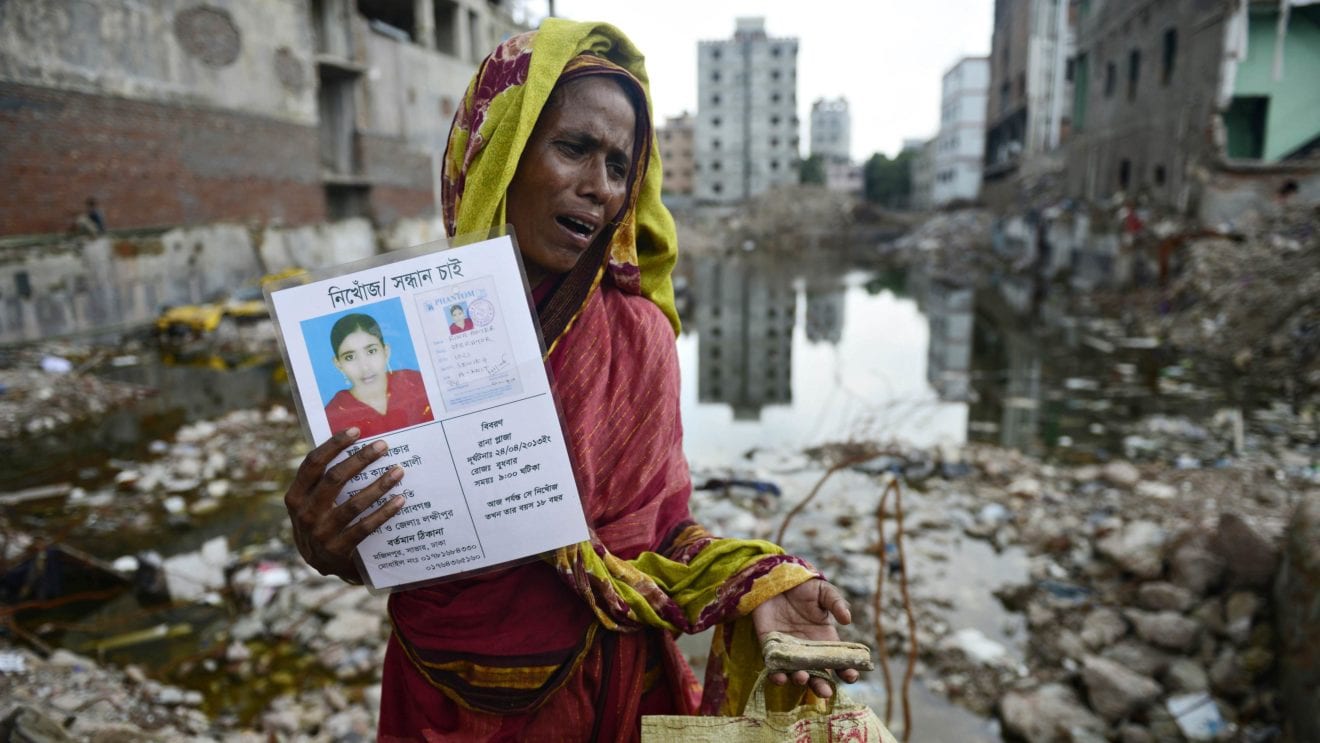
    CCC says the problem of sudden and illegal closures of garment factories is growing in Bangladesh, in part due to changes in the industry triggered by the Rana Plaza collapse.

    “These closures are leaving thousands of workers unemployed and deprived of their legally owed severance pay. To date little action has been taken by the Bangladesh government or international brands and retailers to ensure workers are not left without the wages and benefits they are owed.

    “Swan Garments is one of many factories that has closed illegally in Bangladesh over the last year. As in the majority of cases it is workers who are left with nothing – not even the wages and severance payments they are owed” says Samantha Maher of the Clean Clothes Campaign. “It is unacceptable that once again workers are being left to pay the price for bad factory management, impossible buyer demands and government inaction and we urge Aldi and the Ministry of Labour to ensure justice for the Swan workers.”

    The CCC did not define a “legal closure” of a factory, or explain where they expected the money to come from if the company was insolvent.

  • Rana Plaza fund full

    Rana Plaza fund full

    The Clear Garments Marketing campaign says the Rana Plaza Belief Fund has reached its $30 million goal, which means victims of the catastrophe might be paid in full.

    The marketing campaign says the fund was accomplished with the assistance of “a big nameless donation”.

    The fund was set as much as present help to victims of the 2013 catastrophe when 1129 staff have been crushed to demise when a multistorey constructing filled with sweatshops producing clothes largely for multinational manufacturers, collapsed.

    The CCC has been campaigning since instantly after the catastrophe in April 2013 to demand that manufacturers and retailers offered compensation to its victims.

    “Now that each one the households impacted by this catastrophe will lastly obtain all the cash they’re owed, they will lastly concentrate on rebuilding their lives,” stated CCC spokesperson Ineke Zeldenrust.  “This can be a exceptional second for justice.”

    The Rana Plaza Donors Belief Fund was arrange by the ILO in January 2014 to gather funds to pay awards designed to cowl lack of revenue and medical prices suffered by the Rana Plaza victims and their households when the Rana Plaza constructing collapsed within the garment business’s worst ever catastrophe.

    In November 2014, the Rana Plaza Coordination Committee introduced that it might want round $30 million to pay in full over 5000 awards granted via the scheme. Nevertheless, the failure of manufacturers and retailers linked to Rana Plaza to offer enough and well timed donations into the fund has, till now, prevented the cost of the awards from being accomplished.