Tag: clean energy

  • Citi Names Asia Clean Energy Head

    Citi Names Asia Clean Energy Head

    Based in Hong Kong, the newly created role will support the bank’s clients with their transition to cleaner energy.

    Citi has appointed William Pang as head of natural resources and clean energy transition (NRCET) investment banking Asia, effective immediately, the U.S. lender announced in a statement on Tuesday.

    Pang joined Citi in 2015, and has over 18 years of investment banking and legal experience, including at HSBC, Lexicon Partners, Macquarie Group and Clifford Chance.

    In his new role, Pang will work closely with the global leaders of NRCET and the leaders of the relevant sectors – chemicals, energy, power and clean energy transition. He is currently head of power and infrastructure investment banking for Asia, and will concurrently hold this role, the announcement said. He will report regionally to Jan Metzger, Asia Pacific head of banking, capital markets and advisory and globally to NRCET co-heads Stephen Trauber and Sandip Sen.

    In 2019, Citi met its $100 billion environmental finance goal four years early. In April 2021, it announced a $500 billion environmental finance goal and $1 trillion sustainable finance goal, all by 2030. Circular economy and sustainable agriculture and land use are among the new criteria for its $500 billion goal.

    The drive toward low and net-zero carbon solutions will facilitate the formation and growth of many new companies and will require significant capital investment. It will also facilitate the formation and growth of many new companies requiring significant capital investment, Metzger said.

  • Hanwha gets smart about solar cell production

    Hanwha gets smart about solar cell production

    Hanwha Group has been striving to make the solar business its future growth engine since it first entered the industry in 2010, and that hard work is starting to pay off. Hanwha Q Cells, the group’s solar cell producer, is now one of the largest manufacturers in the industry, but competition is getting much tougher. Even some of the more established companies in Europe and the United States are struggling due to fast-growing Chinese manufacturers, according to Hanwha. As a result, the United States imposed tariffs on solar cell and module imports earlier this year.

    In a bid to tackle fierce competition and fortify its leadership, the group invested in making its new solar cell plant smarter using wearable gadgets, big data and robots.

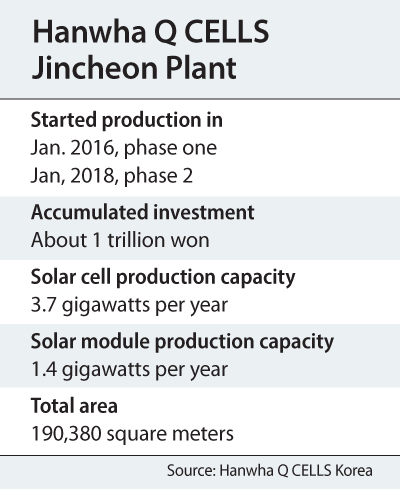
    The Jincheon 2 plant, which started mass production of solar cells and modules in January, is an addition to the original complex built in 2016. With the first and second plant combined, the Jincheon facility is the largest single solar cell production site in the world, according to Hanwha, with 3.7 gigawatt production capacity.

    When we visited the solar cell production line on the third and fourth floor of the newly-built plant on Tuesday, some workers were moving busily from machine to machine wearing what looked like a smart watch.

    “It looks like a smart watch because we took the hardware from electronics companies like Samsung,” a spokesperson from Hanwha said. “But we applied our own software so that workers receive alarms when there are problems with the machines.”

    According to the solar cell maker, the watch does not provide a detailed cause or explanation of the problems, but it makes workers respond immediately to issues by alarming them with notices categorized into four stages – S, A, B and C – depending on the severity and complexity of the problem.

    The system means that just 40 workers are required to manage 220 machines lined-up horizontally in five production lines in the 330-meter-long (1082 feet) solar cell production room, according to Hanwha.

    Another unusual scene inside the plant was a huge stack of 200 solar cells moving around over workers’ heads.

    “We call it a cassette,” said Yang Byung-ki, a manager of cell production at Hanwha Q Cells Korea, the company in charge of cell production in Korea. “This automated overhead logistics system delivers solar cells quickly and safely to the next destination.”

    The automated delivery system moves cells through the 10 stages of production.


  • Construction of $52 million solar power plant starts in central Vietnam

    Construction of $52 million solar power plant starts in central Vietnam

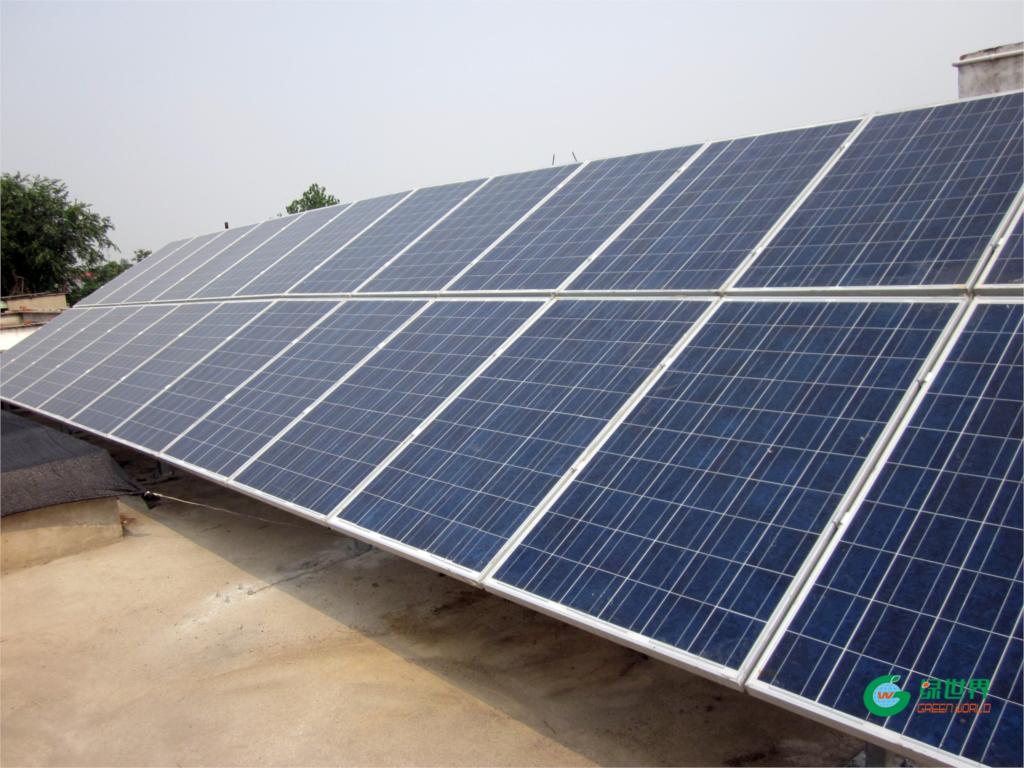
    Work has begun on a $52 million solar power plant in the south central province of Ninh Thuan.

    Project representatives said that of the total investment of VND1.2 trillion ($52.2 million), VND900 billion ($39.1 million) will go towards equipment costs; and the rest for land clearance and construction.

    “The Phuoc Huu solar plant project will supply clean energy to the national electricity system and cater to power demand in the whole country in general and Ninh Thuan Province in particular,” said a representative of Nha Trang Bay Investment and Construction JSC, the project investor.

    In the first year of operation, the power plant is expected to generate about 104.1 million kWh.

    “The construction of Phuoc Huu solar power plant aligns with directions from the government, the Ministry of Industry and Trade and the Vietnam Electricity’s orientation to develop clean energy,” the representative said.

    Vietnam currently relies largely on hydropower and thermal power plants for its electricity demands, but these projects have drawn frequent domestic and international criticism for their social and environmental impacts.

    Solar power currently accounts for just 0.01 percent of the country’s total power output, but the government plans to increase the ratio to 3.3 percent by 2030 and 20 percent by 2050.

    Vietnam aims to produce 10.7 percent of its electricity from renewable energy sources by 2030, mainly through solar and wind power projects.

  • Apple announces new clean energy investments, asks suppliers to decarbonise

    Apple announces new clean energy investments, asks suppliers to decarbonise

    Apple said on Tuesday it would make fresh investments to set up solar and wind projects in Europe and called on its suppliers to decarbonize operations related to the production of iPhones and other products.

    The company in 2020 had pledged to remove carbon emissions from its entire business, including products and its sprawling supply chain – which spans from Vietnam to Brazil – by 2030.

    The iPhone maker will now require its supply partners to report on progress on carbon neutrality goals, specifically, Scope 1 and Scope 2 emissions reductions, related to the production of Apple products and will audit their progress annually.

    More than 200 suppliers, representing 70 percent of Apple’s direct manufacturing spending, including Corning Inc, Nitto Denko Corp, SK Hynix Inc, STMicroelectronics, TSMC, and Yuto, have committed to using clean power such as wind or solar for all Apple production, Apple said.

    Apple had previously asked suppliers to commit to 100 percent renewable energy for Apple’s production.

    “We’re determined to be a ripple in the pond that creates a bigger change,” Chief Executive Officer Tim Cook said. Apple has been carbon neutral for its global corporate operations since 2020.

    Many multinational companies are increasingly looking into global supply chains to reduce their carbon footprint as climate change becomes a bigger focus for investors and regulators.

    Apple said the European investments are part of a strategy to address about 22 percent of its carbon footprint coming from the electricity customers use to charge their devices.

    With the construction of new European projects, the company aims to power all Apple devices on the continent with low-carbon electricity, it said.

    In total, the planned investments will add 3,000 gigawatt hours per year of new renewable energy on the grid, Apple said.

  • 2018 sales of EV doubled in Korea

    2018 sales of EV doubled in Korea

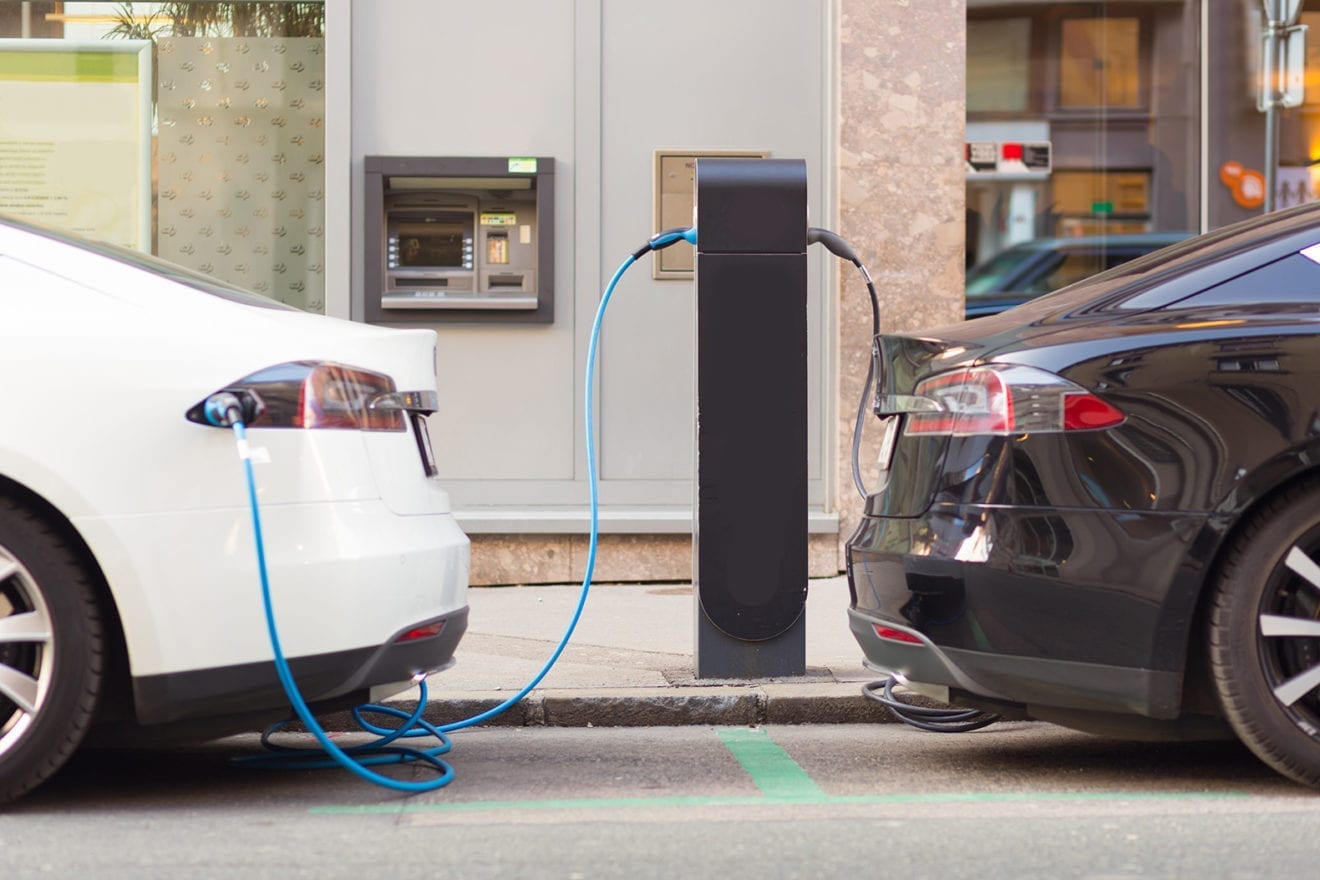
    Hyundai Motor Executive Vice Chairman Chung Eui-sun laid out a plan to develop 44 electric vehicle models (EVs) and sell 1.67 million of the cars by 2025 during his New Year’s message held at the beginning of this year. The goal was a dramatic increase on the 38 models he planned to have by 2025 at the start of 2018. The revised goal is rooted in the fact that EVs are growing at an unprecedented pace in the global auto industry.

    According to U.S. market research firm S&P Global Platts, the number of electric cars sold worldwide exceeded 2 million in 2018 including plug-in hybrids, double the 1 million sold in 2017.

    This achievement came seven years after Tesla rolled out its Model S, opening the era of EVs, and more than two decades since Toyota released the world’s first hybrid, the Prius.

    Among the total number of EV cars sold, battery-electric vehicles sold 1.45 million units last year, followed by plug-in hybrids at 550,000 units.

    The most popular model was Tesla’s Model 3, which started mass production last year. Unlike the Model S and X, which cost over 100 million won ($88,850), the Model 3 was released as a more affordable model with a price tag around 50 to 60 million won. It sold 146,846 units, taking the top spot.

    Four Chinese companies ranked high in the top 10. The EC Series from Beijing Automotive Group ranked second. BYD’s eco-friendly plug-in hybrid, the e5, and JAC Motor’s iEV E/S were also on the list. Among Japanese cars, Nissan’s Leaf placed third while Toyota’s Prius Prime was ninth and Mitsubishi Outlander plug-in hybrid placed 10th.

    Hyundai and Kia both made it to the top 10 list of automakers for the first time. Combined, the two sold 90,860 units last year, taking the eighth spot.

    Tesla sold the most cars, at 245,240, followed by China’s BYD at 229,338. German brands, traditionally strong players in the vehicle market, had BMW at fifth and Volkswagen at ninth.

    Industry analysts project the market for electric cars will expand at an even faster speed. Deloitte, a global consulting firm, expects 4 million EVs to be sold in 2020 and 14 million in 2025. By 2030 it expects EV sales to hit 21 million.

    Considering that 98 million cars are sold worldwide annually, within 20 years one of every five cars purchased will be an EV.

    Experts say that while the United States and China have led the growth of the EV market, that is likely to change in the future.

    Deloitte forecast that cost reductions from technology development will pull down the price of EVs to be on a par with diesel cars by 2022. This means the product sector will gain price competitiveness, no longer relying on government subsidies.

    The market will also get more competitive. Toyota and Volkswagen are both planning to release new electric cars in the near future, with Volkswagen aiming to make 25 percent of the cars it produces EVs by 2025. Its investment in electric cars is already worth 20 billion euros ($2.25 billion).

    According to consulting firm AlixPartners, Volkswagen Group is planning to release 55 EV models by 2022. This accounts for half of all EV models slated for release by then.

    “Government subsidies played a big role in enabling Chinese firms to sell large numbers of EVs, but its finances have hit the limit,” said Kwon Yong-ju, a professor from Kookmin University’s department of automotive & transportation design.

    “With European companies having accumulated technology and capital while waiting for the commercialization of EVs, the future could be quite different from now.”

    “Major countries, like the United States and Europe, have tightened regulations toward environmental pollution more than before,” said Koh Tae-bong, head of research center at Hi Investment & Securities. “For car companies, it is inevitable that they will expand the amount of electric cars they make.”

  • Asean’s Power Landscape Expected to Transform in 2019

    Asean’s Power Landscape Expected to Transform in 2019

    Member states of the Association of Southeast Asian Nations are on a path to transform their power landscapes as energy demand continues to rise to match the region’s economic growth potential, a power management company said this week. “In the pursuit of a robust digital economy, Asean is heralding in an era of unprecedented innovation … 2019 will see power play an indispensable role in shaping the evolution of the region’s economy,” Ireland-based power management company Eaton said in a statement.

    In Southeast Asia, technology will have to meet increasing demand for clean, renewable energy and remote power management, support the arrival of 5G connectivity, and provide resilience against growing cyberthreats.

    Asean’s evolving energy demand, which according to the International Energy Agency will grow by almost two-thirds by 2040, will go together with the projected boom in the region as part of the fourth industrial revolution.

    Development of the region’s smart cities network has already made way for some significant changes in regional power management, Eaton said.

    “We are seeing a seismic shift in the region’s power management outlook as cities gear up on technology as the foundation of smart and sustainable urban development,” the company said.

    Eaton said batteries would continue to develop in this part of the world beyond their traditional use as a backup energy source.

    “At present, heavy investments in Asean are being made in preparation for such technologies in the years to come,” the company said.

    Singapore, for example, has embarked on a public-private partnership through its Energy Market Authority to speed up the deployment of energy storage systems.

    Though new technology seems to demand new assets, Eaton also highlighted the importance of making the most of existing assets.

    “Only by devising new and innovative solutions can the industry progress amid drastic changes in power demand and supply,” the company said in the statement.

  • Vietnam solar power investment rush poses an overload risk

    Vietnam solar power investment rush poses an overload risk

    The investment rush in solar energy could end up testing Vietnam’s weak power infrastructure, experts say. They say that both transmission capacity and the ability of grids to absorb the energy produced by new projects are suspect, as of now. The 9.35 U.S. cents per kWh Feed in Tariff (FIT) for solar power in Vietnam has sparked an investment rush.

    The latest project to be completed is the 49MW Krong Pa plant in the Central Highlands province of Gia Lai. It began operations last week.

    The investor, TTC Group, a corporation that invests in real estate, energy and education projects, has 19 other solar power projects underway.

    Other corporations have also been rolling out ambitious plans. The Xuan Cau Group plans to invest in a 2,000MW solar power project in southern Tay Ninh Province, while the Xuan Thien Corporation plans a 3,000MW project in the Central Highlands province of Dak Lak.

    September statistics from the Ministry of Industry and Trade show that 121 solar power projects been approved, which are expected to add 6,100 MW of output by 2020 and another 7,200 MW by 2030.

    Of these, 25 have signed power purchase agreements with Vietnam’s biggest power producer and sole distributor, Vietnam Electricity (EVN).

    In addition, another 221 projects await authorization, with a combined 13,000 MW of potential output.

    At this rate, the combined solar power output would accounts for 60 percent of Vietnam’s total output from all power sources kinds of power. It also far exceeds the country’s plan for solar energy output of 850MW by 2020, and 4,000 MW in the 4 following years.

    “There is an investment boom in solar power projects, but this is not good,” said Toby Couture, an expert of the German Corporation for International Cooperation (GIZ).

    He said authorities should come up with a balanced forecasting framework, rather than letting the market overheat.

    On top of the race to get projects completed before June 30, 2019 to enjoy the preferential FIT, the explosion of investment in solar power is also raising concerns over overloading of the power grid once the projects become operational.

    According to Vu Ngoc Duc of the Energy Institute under the Ministry of Industry and Trade, the fact that most projects are concentrated in central provinces of Ninh Thuan and Binh Thuan, and Dak Lak carries the risk of overloading the current power grid.

    Power plants cannot be plugged in without considering the capacity of each power transmission line, he said.

    Dinh Quang Tri, acting general director of EVN, admitted that 9.5 cents a kWh was still cheaper than electricity from oil, but the main problems the utility faces are infrastructural.

    Central Vietnam has relatively weak electricity infrastructure because of low consumption, but it is where the new renewable energy projects will be concentrated, he said.

    “The lines cannot take thousands of megawatts at the same time,” said Tri, adding that EVN had petitioned the government to plan and approve additional transmission lines.

    However, the procedures for planning, land clearance and construction will take a long time, so the existing grid will not be able to keep up with capacity of new solar plants.

    “This is a huge challenge. If we don’t purchase electricity from these solar plants, there will be a shortage. But if these projects are completed too quickly, the grid will not be able to load it all,” Tri said.

    He said that to avoid overloading the transmission grid, the Government should promote household solar panels, suitable for the low voltage grid, so that no additional investment into the transmission grid is required.

    Deputy Minister of Industry and Trade Dang Hoang An said that the ministry was directing the re-planning of local and national power development. It is assigning grid development units the task of resolving infrastructural bottlenecks to support approved solar power projects, he added.

    Solar power currently accounts for just 0.01 percent of the country’s total power output, but the government plans to increase the ratio to 3.3 percent by 2030 and 20 percent by 2050.

  • Vietnam’s wind power tariffs attractive, but concern rises

    Vietnam’s wind power tariffs attractive, but concern rises

    Vietnam’s new feed-in tariffs are attracting great interest in wind power, but investors are concerned about grid connection and purchase agreements. The new feed-in tariffs (FIT) are expected to be attractive to domestic and foreign investors, Tommaso Rovatti Studihard, South East Asia sales director for wind power developer Vestas Asia Pacific said.

    The government recently approved tariff revisions under Decision 39 on support mechanisms for the development of wind power.

    The decision, effective from November 1 this year, raises the tariffs from 7.8 US cents per kWh to 8.5 US cents for onshore and 9.8 US cents for offshore generation respectively.

    “Electricity demand will grow at an estimated 8 – 10 percent a year from now to 2030. This represents realistic opportunities for investors,” Studihard said.

    Conjecturing that the national plan envisages adding 1,000 MW of wind power by 2020 and 6,000 MW by 2030, he said the targets are achievable.

    “Vestas is excited about the Vietnamese market, probably this is the most promising market in the Asian region with very good wind resources,” he said.

    Vestas has so far put three wind power projects into operation in Vietnam and plans to have another project come online by 2019 and “do a lot more in the future.”

    Studihard noted that over the next three to five years there are huge opportunities in Vietnam to have some gigawatts of wind power, but the bankability of the power purchase agreement (PPA) remains an issue with many investors, especially international investors, and banks finding it a little difficult to be comfortable with.

    There are no clear termination and force majeure clauses in the PPA, which hinders the attraction of foreign investment, especially from banks and credit institutions, he explained.

    “One more problem is Vietnam’s weak grid capacity, which would become a bottleneck for developing wind and other renewables. The grid needs to be upgraded to tap the great potential Vietnam has for offerable, sustainable and reliable wind power.”

    Bui Van Thinh, CEO of the Thuan Binh Wind Power JSC (TBW), said having gained success in developing the 24MW Phu Lac wind power project in the central province of Binh Thuan, TBW is completing procedures to start construction of a 30MW wind power project in neighboring Ninh Thuan Province.

    But the weak grid capacity is the biggest challenge to expanding renewables like wind and solar power, he said.

    The transmission line near Phu Lac site could handle 100MW, compatible with two 50MW wind power projects.

    Overload capacity is imminent once a solar power project connects with the transmission line, Thinh noted, citing the concerning fact that there are eight solar power projects in the locality approved to connect with the grid.

    “The government should instruct the state-run Electricity of Vietnam (EVN) to install transmission lines to cope with the renewable power projects across the country, especially those in Ninh Thuan and Binh Thuan.”

    Ninh Thuan and Binh Thuan are central provinces that have the greatest potential for renewable energy in the country.

    While 2,000 MW of solar power are proposed to be generated in Ninh Thuan, the local transmission line can only handle a few hundred megawatts. Thus, 110 kV or 220 kV transmission lines need to be installed before pushing the power to the 500kV transmission line and sending it to Ho Chi Minh City or Danang City, Thinh added.

    Nguyen Van Thanh, deputy head of the Ministry of Industry and Trade’s Electricity and Renewable Energy Authority, said demand for energy, wind power in particular, has been growing rapidly.

    The need for ensuring energy security but also sustainable development has changed Vietnam from an energy seller to buyer, with the country’s dependence on imported energy sources also rising, he said.

    Vietnam also faces a shortage of primary energy, with coal imports posing many risks related to supply, price and transportation, he noted.

    “Given that, efficient exploitation of new and renewable sources would play a key role in the country’s socio-economic development, energy security and sustainable development.

    “The country is working diligently to draft policies for the efficient and economical use of energy, diversification of energy sources and increasing application of new and eco-friendly technologies,” Thanh added.

    Under the revised Power Development Plan VII, power stations in the country are expected to generate a total of 60,000 MW by 2020. Of these, coal-fired stations would make the largest proportion of 42.7 percent, followed by hydropower (30.1 percent), gas-fired plants (14.9 percent) and renewable energy sources (9.9 percent).

    By 2030, the total capacity would soar to 129,500 MW, with coal and gas-fired plants accounting for 42.6 percent and 14.7 percent respectively, similar to the figures set for 2020. But the ratio of renewable energy sources is set to double to 21 percent by then.

  • Electric vehicles, new tech focus of NAP 2019 in Malaysia

    Electric vehicles, new tech focus of NAP 2019 in Malaysia

    The National Automotive Policy (NAP) 2019 will be unveiled in the first quarter of next year, and will place emphasis on electric vehicles and new technologies, according to Deputy International Trade and Industry Minister Dr Ong Kian Ming.

    “The main focus then (NAP 2014) was on energy efficient vehicles (EEVs) and now we are moving much more towards electric vehicles and new technologies,” he said after delivering his keynote address at Kuala Lumpur International Automotive Conference 2018 today.

    “But we have to discuss with the relevant stakeholders first and make sure that we fine-tune the details, so that the needs of the whole industry are taken care of,” he added.

    Ong said his ministry together with some key companies in the automotive sector, are currently reviewing the policy, which was first introduced in 2006 to transform the domestic automotive industry.

    Furthermore, he said the revised policy, which will also include the development of the third national car project, will overlook the entire automotive ecosystem, encompassing four key pillars of connected mobility, Industrial Revolution 4.0, new generation vehicles and artificial intelligence.

    “When we talk about the third national car, we need to look at it at a holistic perspective. So let’s not just focus on the third national car project, which is an important component of the NAP review, but also look at the entire ecosystem. This ecosystem needs to be further enhanced and developed to take into consideration of new trends, such as the newly launched Industry 4.0.

    “With the new technologies coming in, including the possibility of self-driving cars, more rapid advancement in electric vehicles and necessary ecosystems such as batteries and charging stations, it is timely to review this particular sector,” he noted.

    To date, Ong said, the ministry has received over 20 proposals on the third national car project, from various sub-sectors, comprising small to large companies in the automotive sector, which include some “big players”.

    He noted that the ministry has developed a matrix to analyse and evaluate these proposals, in order to make a fair, transparent and comprehensive choice.

    “One of the deciding factors would be the financial sustainability of the project as the government will not be funding this third national car project as noted in Budget 2019,” Ong added.

    Meanwhile, the Malaysian Automotive Association (MAA) president Datuk Aishah Ahmad said in conjunction with the event that the association is hopeful that the government would continue to focus on the components emphasised in NAP 2014, including the EEV initiative.

    “Future technology is good, but we would also like them to continue to emphasis on EEV that has helped the industry. We would also like to see long-term policies rather than short-term (policies) and more consultations with the industry,” she added.

    Themed “Beyond Mobility: Moving Sustainably”, the two-day conference, which is organised by the Asian Strategy and Leadership Institute (Asli) and MAA, aims to bring together industry experts and leading players to share views concerning the automotive industry and ecosystem roadmap beyond 2025.

  • Renewable project facing criticism in Korea

    Renewable project facing criticism in Korea

    The government’s plan to build a renewable energy complex at Saemangeum, North Jeolla, is generating controversy as it deviates from plans to develop the reclaimed tidal flat into a regional economic hub and is being pursued without public approval.

    The controversy flared up as President Moon Jae-in announced Tuesday that the government will construct a solar and wind energy complex at Saemangeum.

    The government argues that around 10 trillion won ($8.7 billion) in private investment will flow into the project and that two million workers will be employed annually in the building of the facility.

    Despite the optimistic forecasts, the move is being criticized as an abrupt policy shift.

    When President Moon Jae-in visited Saemangeum last year, he mentioned developing the area into an economic hub for the Yellow Sea region but said nothing of solar or wind power. Opposition lawmakers have raised concerns about the projects.

    “The government’s plan to make Saemangeum, previously touted to be developed into an economic center for the Yellow Sea, into a mecca of renewable energy means a policy change,” said Chung Dong-young, a lawmaker for the Jeolla-based Party for Democracy and Peace. “This is the same as abandoning plans to expedite the development of Saemangeum.”

    The Party for Democracy and Peace, with 14 lawmakers from the Honam region, is especially angry about being bypassed.

    In light of such concerns, the government has explained that plans for Saemangeum’s renewable energy complex, which will cover an area comparable to the size of four nuclear power plants, will not interfere with existing initiatives.

    “The government’s determination to develop Saemangeum into an economic hub of the Yellow Sea area remains unchanged,” Minister of Land, Infrastructure and Transport Kim Hyun-mee said during the annual audit by lawmakers on Monday.

    A spokesman for the state-run Saemangeum Development and Investment Agency explained that it was not the right time for consultations with local residents and the general public.

    “Taking comments from local residents is done during the construction approval process. We are not yet at the development stage, so we haven’t asked for [comments], but we are obviously planning to do so,” he said.

    Opposition lawmakers and energy experts are suspicious that the plans for Saemangeum were changed to accommodate the Moon administration’s pledge to reduce nuclear power dependency.

    The new Saemangeum initiative is part of the government’s 3020 renewable energy plan, which established a renewable target of 20 percent by 2030. With current renewable energy output at just 8 percent of the total, the government is in need of more solar and wind power plants.

    “[The government] seems to be developing Saemangeum as there aren’t vast plots of land in the country suitable for solar or wind power complexes,” said a professor of nuclear energy who requested anonymity.

    Questions regarding the feasibility of the energy project have also been raised.

    “The electrical output produced by the energy complex will be little, at around 60 percent of a nuclear power plant,” said Kim Sam-hwa, a lawmaker for minor opposition Bareunmirae Party. “If it means building six-tenths of a nuclear power plant by spending 10 trillion won, wouldn’t it just be better to continue operating the Wolsong 1 plant?”

    Wolsong 1 is a nuclear plant set to be decommissioned.

    At the moment, renewable energy is less economical when compared with nuclear energy, explained Roh Dong-seok, a senior researcher at the Korea Energy Economics Institute. As the efficiency rate for solar power is about 15 percent, the actual production output of solar power plants is much lower than their rated capacity.

    The government’s promise to return the plots of land to their original state after operating solar and wind power plants at the location for 20 years is in doubt as the energy produced will have to be replaced.

    Local residents remain divided over the new project.

    “Even if it’s a government project, I can’t accept something that is pushed without prior notice,” said Ko Yoon-seok, a local leader of a town adjacent to the tidal flat. “There isn’t enough information to determine whether it’s right or wrong, but it’s difficult to say that everyone is against it.”

  • Biodegradable Packaging Material Market Remains Highly Fragmented, with Tier 3 Players Collectively Foreseen

    Biodegradable Packaging Material Market Remains Highly Fragmented, with Tier 3 Players Collectively Foreseen

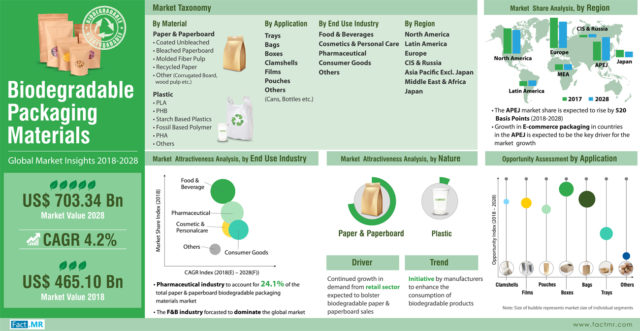
    Biodegradable packaging market witnessed moderate growth during 2013 to 2027, and the status quo is envisaged to prevail over the period of forecast 2018 to 2028, according to new Fact.MR study. Volume sales of biodegradable packaging are foreseen to record a modest 4.2% CAGR through 2028, which is anticipated to equal a market value in excess of US$ 703 billion. The study finds that tier 3 players will collectively continue to account for over three-fifth share of the biodegradable packaging market.

    Biodegradable packaging market is expected to envisage healthy value CAGR of 4.2% during the period 2018-2028, with revenues surpassing US$ 703 billion by 2028 end. The study also opines that the paper & paperboard biodegradable packaging will retain its undisputed dominance in the biodegradable packaging market, as it may account for more than 95% of the total market revenue by the end 2028. The global war against plastic packaging materials is opening an attractive window of opportunities for paper packaging companies, enticing them into entering the biodegradable packaging market.

    A majority of regulatory bodies and international environmental organizations have proposed a ban on single-use packaging materials to mitigate the perilous effects of non-degradable solid waste on the environment. Increasing environmental awareness and consumer inclination towards making sustainable purchases is providing a major boost to the growth of the market.

    Positive effects of the ban on single-use packaging on the biodegradable packaging market are offset by stringent labeling regulations and certification procedures to control false claims about the biodegradability of packaging materials. The market is characterized by the needs to comply with strict quality standards established in various regional markets, which may complicate it for market players to maintain competitive prices of biodegradable packaging solutions.

    Meanwhile, the study finds that leading players in the biodegradable packaging market are adopting strategies to acquire their smaller rivals to consolidate a stronger position in the packaging sector. DS Smith plc – a British paper packaging company – recently announced its plans to acquire its Spanish rival Europac Group for over US$ 2 billion, in order to merge the Western European biodegradable packaging market. Another leading player – Smurfit Kappa Group recently completed the acquisition of Reparenco – a paper and recycling company in Netherlands – for €460 million to expand its European biodegradable packaging capacities.

    An American manufacturer of biodegradable packaging – WestRock Company recently acquired packaging businesses across the world, including Hanna Group Pty Ltd, Plymouth Packaging, Inc., and Schlüter Print Pharma Packaging GmbH, to establish a stronger presence in the market. The company also revealed its plans to acquire KapStone Paper and Packaging Corp., an American paper company, for a total enterprise value of around US$ 4.9 Bn to leverage KapStone’s expertise in biodegradable packaging using kraft paper.

    “Increasing growth of the e-commerce sector and popular trends of online grocery shopping is opening new avenues of growth for players in the biodegradable packaging market. Purchasing decisions of environment-conscious consumers are greatly influenced by sustainable packaging materials, which may create high demand for biodegradable packaging solutions in the coming future. Stakeholders in the biodegradable packaging market are shifting their focus on the dynamic trends in the e-commerce sector while adopting their future business strategies,” says a lead analyst at Fact.MR.

    The study further states that, among all the leading end-user industries in the biodegradable packaging market, food & beverage industry is expected to account for more than 30% of the total market share throughout the forecast period. Increasing demand for packaged food products, convenience foods, and ready-to-eat meals is reflected in supermarket shelves. Leading market players are introducing biodegradable packaging films, trays, and bags to further improve the fresh food experience for consumers while offering numerous environmental benefits.

    Sensing the extraordinary growth opportunities in the biodegradable packaging market for the F&B industry – the Mondi Group recently developed an innovative, paper-based, biodegradable packaging bag for food – Sustainex®, in collaboration with a Polish converter, SILBO. Multifold opportunities for biodegradable packaging in the F&B industry are boosting market players to develop innovative technologies, biodegradable packaging materials, and designs, which is expected to influence the dynamics of the biodegradable packaging market in the upcoming years.

  • Malaysia to focus more on pollution charge on single-use plastics by 2021

    Malaysia to focus more on pollution charge on single-use plastics by 2021

    The government is working towards implementing a pollution charge for single-use plastics which will be imposed on fixed premises at a rate of 20 sen or higher, to be determined by state governments through local councils. They include premises such as hypermarkets, supermarkets, department stores, convenience stores, fast food restaurants, petrol station convenience store, chain stores and pharmacies.

    Minister of Energy, Science, Technology and Climate Change Yeo Bee Yin said the federal government is giving state governments the liberty to determine the rate, and to decide the implementation time frame between 2019 until 2021, marking the first phase of the Roadmap Towards Zero Single-Use Plastics 2018-2030, which was launched in conjunction with the Greentech & Eco Products Exhibition & Conference Malaysia (IGEM 2018) today.

    “We have already engaged with the ruling government states as well as the opposition states. Everyone has already agreed to the plan and said they want to do this as well together,” she said at the event.

    Yeo said the goal is to address the lack of uniformity in the use of single-use plastics with such initiatives already being in effect in some states and result in the improvement and increase in the production and use of bio-degradable bags.
    She believes the charges will not be passed on consumers but instead encourage a change in behaviour and lead to people eventually using shopping bags.

    Yeo said the money collected from the levy will be ploughed back for green initiatives, creating awareness and reusable shopping bags.

    Phase two of the roadmap which will go on between 2022 and 2025 may see the levy being extended to manufacturers and non-fixed premises.

    Meanwhile, the government has cancelled 155.7256 megawatts (MW) of renewable energy feed-in tariff (FiT) projects due to unfavourable response in September 2018 and instead opened up 114.5682 MW FiT projects for qualified applicants.

    Additionally, the Sustainable Energy Development Authority of Malaysia rolled out the country’s first solar photovoltaic (PV) monitoring system, which is a database connected to grid’s nationwide meant to monitor the performance of solar PVs on a real-time basis.

    Keeping up with that, the country’s first insurance plan for solar PVs was launched this week.

    The initiative is under Seda in collaboration with Allianz Malaysia Bhd and the Malaysian Photovoltaic Industry Association. This scheme is aimed at protecting residential solar PV users.

    On another note, the government will introduce Building Energy Intensity labelling as part of its efforts to promote voluntary adoption of energy efficiency in the building sector. This is along with a renewed push for the adoption of energy performance contracting for government buildings next year.

    Yeo said capital for the retrofitting projects will be derived from the private sector, with any cost savings derived to be shared between both parties.
    She said there can be savings if the government is able to save some 20% of its annual electricity costs. This in turn will translate into a return of investment and profit for investors.

  • Vietnam’s renewable energy sector in a state of flux

    Vietnam’s renewable energy sector in a state of flux

    Vietnam’s renewable energy sector is experiencing an unprecedented surge in project activities and policy changes, making end results unpredictable.

    The surge in activity includes project approvals as well as project transfers to technically experienced and financially capable developers, which is a positive trend, but whether it can fulfill the nation’s renewable energy potential remains to be seen.

    Among the significant policy developments that have taken place of late is the temporary suspension of approval for additional solar power projects (SPPs).

    The Office of the Government has issued Notice No. 174 requesting the Ministry of Industry and Trade (MOIT) to suspend approval of additional SPPs pending, in turn, the approval of a national master plan for the development of solar power (Solar PDP).

    The MOIT has been tasked with formulating and presenting a new Solar PDP to the Prime Minister.

    Notice 174 states that over 70 solar power projects with a total registered capacity of 3GW approx have been approved within relevant master plans (noting a planned capacity of 850MW for up to 2020 under the Power development plan 7).

    Pending passage of the new master plan for solar power development, only projects that have been appraised by the MOIT (50MW or less) and those that have already been presented to the PM (above 50MW) will be considered for approval.

    Other solar projects, including those being appraised by the MOIT, regardless of their registered capacity, shall be deferred and considered for inclusion in the national solar master plan.

    The impact of this suspension has been seen in the market, where the selling side has tended to mandate higher prices for their project development efforts. It has also reminded market players to be prepared to accommodate potential policy uncertainties, twists and turns in their dealings.

    FIT developments

    Another area of primary interest in the sector has been in the Feed in Tariff (FIT) deadline for SPPs.

    To further promote socio-economic development, Deputy PM Vuong Dinh Hue has instructed the Ministry of Planning and Investment (MPI) to draft a Government resolution proposing a special regime and policy, including a potential extension of application of Decision No.11/2017 (Decision 11) on FIT for SPPs in Ninh Thuan Province.

    The draft document (No. 4545 dated July 4, 2018) submitted by the MPI to the Government Office has been reviewed.

    The Government Office has since issued a notification (No. 7108 dated 26/07/2018) saying Decision 11, which provides for a FIT of US cents 9.35/kWh, will not be extended.

    However, a PM Decision on extension of commercial operation date (COD) till 2020 for Ninh Thuan province up to a capacity of 2000 MW (AC) is expected.

    In order to support the next policy consideration, the MOIT has issued a document (Official Letter 5735) requesting relevant Government bodies and their units to assign a cadre to participate in the working group to draft a decision amending Decision 11 and another draft decision to develop bidding mechanisms for the solar power sector. These are to be submitted to the PM for his consideration.

    It is to be noted that post June 2019 solar power projects may expect a lower FIT rate of approx 7.6 US cents/kWh. The authorities are further considering formulating a special provincial plan to support investments in the two key provinces of Ninh Thuan and Binh Thuan, which are attracting huge investor interest for solar power projects.

    This guideline on the application of Decision 11’s FIT, together with the potential for system overload if the transmission system is not updated in time, will present a significant technical challenge for Vietnam Electricity (EVN) and MOIT in accommodating the policy.

    This will also be true of piloting direct Power Purchase Agreements (PPAs) and upcoming policy changes.

    Rooftop projects

    In relation to rooftop solar power projects, national utility EVN, the sole power distributor in the country, issued a document (EVN Official Letter 1337) on March 21, 2018 guiding the temporary implementation scheme for rooftop SPPs with capacities equal to or less than 1MW, pending the issuance of an official guidance document by the MOIT and the Ministry of Finance (MOF) on payment and invoicing structure.

    The prevailing regulations provide for a net-metering scheme for rooftop SPPs. Under this, credit for surplus electricity (over direct consumption) generated can be transferred to subsequent payment cycles, and the excess electricity generated can be sold to EVN at the rate mentioned in the PPA signed by the seller and EVN either at the end of the relevant year or upon termination of the agreement.

    The MOIT Circular 16, issued last year, requires a solar power generator, as the seller, to enter into an appendix to the Model PPA in place with EVN or its authorized subsidiary. The model appendix is provided under Annexure 3.2 of Circular 16.

    However, according to EVN OL 1337, the appendix will not be applied until the MOIT and the MOF issue further guidance on the finalization, payment scheme and invoicing mechanism for such net-metering purposes.

    Offtake limitations

    Under current regulations, EVN is required to offtake the entire power output of solar and wind power projects.

    However, EVN already anticipates significant challenges to honoring this requirement, especially in areas with high concentration of solar and wind power projects with limited transmission capacity, even with the proposed system update expected by the end of 2019.

    EVN has reported such challenges to the MOIT, and the latter has issued a document (OL 3943 dated May 21, 2018) that requires the following:

    – EVN to instruct its affiliates to formulate grid connection agreements (GCA) for projects that may be able to dispatch power to the national transmission system without causing system overload;

    – EVN to review and consider (i) dispatch capacity of the system, and (ii) potential conditional GCA for projects that may cause system overload. Developers and operators may be required to reduce power output and suspend operation of their plants as requested by EVN’s operators to avoid system overload and comply with technical requirements under MOIT’s Circular 30/2015 and Circular 25/2016.

    – EVN to prepare and present to MOIT in the third quarter of 2018 a plan for investment in a transmission system able to take dispatch of renewable power projects after 2020.

    These MOIT instructions may result in potential deviations from the model power purchase agreements. EVN’s offtake obligation and such deviation would certainly add another significant item to the list of bankability issues for projects without executed PPAs and GCAs.

    It is expected that such issues would be further considered in the process of amending Decision 11 and related regulations.

    Stakeholders in projects with executed PPAs and GCA would be well advised to ensure closer monitoring and coordination with EVN to minimize impacts and disruptions.

    Increasing wind power FIT

    The MOIT has proposed to the PM an amendment (Draft decision) to Decision 37/2011 to increase FIT for wind power projects from the current 7.8 US cents/kWh (onshore).

    The amended draft decision will increase the FIT equivalent to 8.77 US cents/kWh (onshore) and 9.97 US cents/kWh (offshore), based on the SBV’s exchange rate of $1 equivalent to VND21,896 (announced on January 4, 2016) and subject to fluctuation.

    This potential increase is an effort to fix one of the most notable issues with wind power development regulations in Vietnam. The FIT under the draft decision shall apply to projects achieving COD before January 1, 2021.

    To sum up, although Vietnam has an advantage in terms of abundant resources, whether or not it will be able to tap its full potential remains to be seen.

  • Jokowi Opens Indonesia’s First Wind Power Plant

    Jokowi Opens Indonesia’s First Wind Power Plant

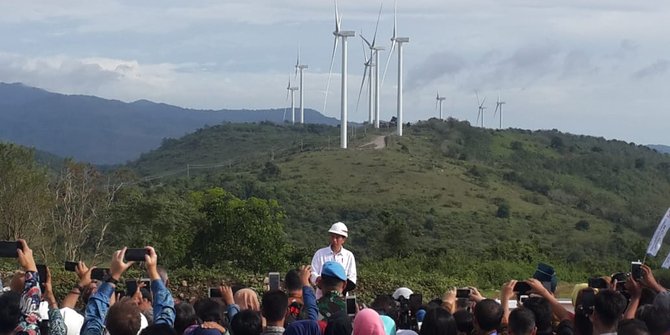
    As President Joko “Jokowi” Widodo inaugurated Indonesia’s first wind power plant in Sidenreng Rappang, South Sulawesi, on Monday (02/07), the government is getting closer to its ambitious target of obtaining more than a fifth of the country’s energy from renewable sources.

    The plant, also known as PLTB Sidrap, consists of 30 wind turbines which can produce up to 75 megawatts and electrify 80,000 households. The turbines in 40 percent consist of locally produced components.

    “This puts Indonesia among the few Asian countries that posses wind power plants, like Japan, China and Korea,” Jokowi said in a statement.

    Sidrap started its development in 2015 with $150 million borne by a consortium comprising of UPC Renewables Asia I, UPC Renewables Asia III, Sunedison and Binatek Energi Terbarukan.

    A similar project in Bantul, Yogyakarta, also developed  by UPC Renewables, was shelved in 2017 due to land clearance problems.

    Jokowi seeks to connect 99 percent of Indonesians to the country’s grid by 2019, when his first presidential term ends. Currently, the electrification rate is 96 percent.

    Indonesia aims to have 23 percent of its total power coming from renewable resources by 2025, also to fulfill its climate change mitigation commitment, in accordance with the Paris Agreement.

    Today, only 14 percent of the country’s energy is clean. More than half of it still comes from coal-powered plants.

  • Southeast Asia’s largest solar project to be built in Vietnam

    Southeast Asia’s largest solar project to be built in Vietnam

    Vietnamese construction firm Xuan Cau and Thailand conglomerate B.Grimm have teamed up to build Southeast Asia’s largest solar power plant in Tay Ninh Province.

    The signing of the joint venture agreement in Bangkok was witnessed by the prime ministers of both countries.

    The $420 million, 420MW project is set to be commissioned in June 2019, said Preeyanart Soontornwata, CEO of the B.Grimm Power Public Company.

    With Vietnam’s electricity demand growing significantly, B.Grimm estimates that the project will eventually account for 30 percent the company’s total income.

    Solar power currently accounts for 0.01 percent of the country’s total power output, but the government plans to increase the ratio to 3.3 percent by 2030 and 20 percent by 2050.

    Vietnam depends largely on hydropower and thermal power plants for its electricity demands, but the projects have often drawn criticism from both local and international communities due to environmental concerns.

    Vietnam is aiming to produce 10.7 percent of its electricity through renewable energy by 2030, mainly through solar and wind energy.

    Earlier this month, Prime Minister Nguyen Xuan Phuc said that Vietnam aimed to increase the number of households using solar energy from the current 4.3 percent to 26 percent by 2030.