Tag: cloud computing

  • Southeast Asia Targets USD 11 Billion Subsea Cable Expansion for Route Redundancy

    Southeast Asia Targets USD 11 Billion Subsea Cable Expansion for Route Redundancy

    Telecommunications operators and infrastructure investors are committing USD 11 billion between 2026 and 2035 to build new subsea cable systems across Southeast Asia. The spending will expand the number of active intra-Asian cable lines from 14 in 2025 to 19 by 2035, securing international data bandwidth for regional digital economies and hyperscale cloud providers.

    Submarine cables handle more than 99 per cent of international communications traffic in hubs such as Singapore. Under the city-state’s Digital Connectivity Blueprint, authorities plan to double the volume of subsea cable landings over the next decade, backed by an estimated SGD 10 billion (USD 7.4 billion) in predominantly private sector capital.

    Rerouting Around Maritime Chokepoints

    Engineering plans for newly announced trans-Pacific and regional cables increasingly avoid traditional, direct passages through the South China Sea. Systems including Apricot, Echo, and Bifrost run alternative paths through Indonesian and Philippine territorial waters to connect Southeast Asia directly with North America, Japan, and South Korea. Taking longer perimeter paths increases capital costs and latency, but operators accept the trade-off to shield data links from geopolitical exposure and congested straits.

    For enterprise users and cloud operators across Asia-Pacific, these southern corridors remove single-point failure risks that have historically disrupted regional supply chains. Financial platforms, retail marketplaces, and cloud providers gain lower downtime risks during localized outages, while secondary telecom operators in Jakarta and Manila secure direct wholesale access without routing entirely through Singapore.

    Equipment Supply and Infrastructure Competition

    The supply chain for physical infrastructure remains divided among a handful of global manufacturers. Japan’s NEC and France’s ASN maintain strong market positions in island networks across Indonesia and the wider archipelago, while Chinese suppliers have expanded cable contracts in Cambodia and selected Indonesian domestic systems.

    This supplier spread gives regional governments room to balance national security requirements against procurement costs. At the same time, physical reliability remains a constant operational bottleneck. International Telecommunication Union data indicates that human activity, mainly commercial fishing and vessel anchoring, causes 86 per cent of all subsea cable faults, requiring more than 200 offshore repair operations worldwide each year.

    Coordinated Regional Master Plans

    The push for network redundancy builds on policy commitments laid out in the ASEAN Digital Master Plan 2030, which directs member countries to coordinate subsea repair approvals and landing permits. Previous repair timelines often stretched for months due to overlapping maritime jurisdictions and strict cabotage restrictions in archipelagic waters.

    Attention now turns to the planned commissioning of major multi-terabit links, including the Apricot and Bifrost systems, which are scheduled to land initial capacity phases before 2027.
  • AWS Plans 420 Tbps Sta’O’Nuk Subsea Cable Linking the US and Japan by 2029

    AWS Plans 420 Tbps Sta’O’Nuk Subsea Cable Linking the US and Japan by 2029

    Amazon Web Services will build a 420 Tbps subsea cable connecting the United States and Japan, scheduled to begin commercial operations in 2029.

    The system, named Sta’O’Nuk, will run 20 fiber pairs across the Pacific Ocean, linking a new landing station in Washington state to an undisclosed site in Japan. It represents the first international subsea cable to land in Washington state in nearly three decades.

    Landing station and tribal partnership

    AWS partnered with Toptana Technologies to develop the American cable landing station and backhaul network in Ocean Shores, Washington. Founded in 2022 by the Quinault Indian Nation, Toptana is the only Indigenous-owned cable landing station operator on the US West Coast.

    Construction has begun on the Ocean Shores facility, designed to support up to four subsea cable systems. Assured Communications serves as program manager and operational service provider for the station, while the Quinault Indian Nation granted AWS permission to use the name Sta’O’Nuk, which translates to “lightning serpent” in the Quinault language.

    Washington state last saw international subsea arrivals in 1999, when Pacific Crossing-1 landed at Harbour Pointe and Alaska United East connected in Lynnwood. Toptana previously outlined a 17,700-square-foot, 1 MW station footprint when it first announced site plans in 2022.

    Transpacific cloud capacity

    Hyperscale cloud providers have shifted from purchasing capacity on shared consortium routes to financing and constructing dedicated private pipes across Asia-Pacific corridors. Direct cable ownership provides AWS with lower latency, predictable operating costs, and dedicated bandwidth between its data center regions in North America and East Asia without reliance on third-party commercial carriers.

    The Japanese landing location and local terminal partners remain unannounced as construction advances toward the 2029 target.

  • Tencent-Backed Enflame Draws 4,073 Times Retail Demand in Shanghai IPO

    Tencent-Backed Enflame Draws 4,073 Times Retail Demand in Shanghai IPO

    Shanghai Enflame Technology drew 4,073 times retail subscription for its public offering on Shanghai’s STAR Market, raising 6.12 billion yuan ($860 million) to expand production of domestic artificial intelligence chips.

    Individual buyers lodged seven million orders totaling 5.98 trillion yuan, taking up the retail tranche of an issue priced at 142.18 yuan per share. The sale of 43 million shares represents 10 percent of the company’s enlarged equity base.

    Anchor Customer And Rising Shipments

    Founded in 2018, Enflame develops AI accelerator hardware designed for cloud infrastructure and large data centers. Tencent Holdings owns 20 percent of the business and generated 84 percent of Enflame’s total revenue in 2025, up from roughly 38 percent a year earlier.

    The company builds processor cards deployed in chatbots, recommendation systems and generative computing workloads. SWS Research estimates Nvidia commanded 55 percent of China’s AI accelerator market in 2025, while Enflame captured 1.7 percent of local shipments.

    The Final Dragon Reaches Public Capital

    Enflame is the last of China’s four emerging AI chip startups, known locally as the four little dragons, to complete a public listing. Peers Moore Threads, Biren Technology and MetaX Integrated Circuits reached the market earlier, with Moore Threads gaining 425 percent on its trading debut last December.

    While local computing platforms continue to substitute imported silicon, profitability remains unproven across the cohort. Enflame cut its net loss to 1.2 billion yuan in 2025 from 1.5 billion yuan in 2024. For the first half, the company projects a loss of 600 million yuan against anticipated revenue between 10.6 billion and 11.5 billion yuan.

  • Google to Roll Out Two AI Chips a Year and Expand Taiwan Hub

    Google to Roll Out Two AI Chips a Year and Expand Taiwan Hub

    Google will accelerate its custom artificial intelligence chip rollout from a two-year cycle to two processors annually while expanding its Taiwan research footprint by 60 per cent.

    The revised schedule shifts the company away from its traditional multi-year hardware cadence as competition for proprietary cloud computing silicon intensifies across the tech sector.

    Faster Silicon Cadence

    Amin Vahdat, Google’s senior vice president and artificial intelligence infrastructure chief, announced the accelerated timeline during a keynote address at Semicon Taiwan in Taipei on Wednesday. The company plans to release two bespoke chips every year and expects to lift that frequency even further over time.

    Backing the faster production tempo requires more engineering capacity on the ground. Google is growing its dedicated research and development floor space across Taiwan by 60 per cent to house expanded design and testing teams.

    Regional Hardware Footprint

    Taiwan sits at the centre of global advanced semiconductor fabrication and packaging. By enlarging its local engineering hubs, Google tightens operational proximity to key foundry partners, contract assemblers and component supply chains that manufacture its custom processing units.

    For cloud platforms and enterprise services operating across Asia-Pacific, in-house silicon helps control operational power costs and workload efficiency in regional data centres. Competing tech operators across the region are running similar programs to secure custom processing capacity.

    The company will now focus on staffing the expanded Taiwan design facilities ahead of its next scheduled processor rollouts.

  • Taiwan Pledges NT$40 Billion to Train 500,000 AI Specialists by 2040

    Taiwan Pledges NT$40 Billion to Train 500,000 AI Specialists by 2040

    Taiwan will allocate more than NT$40 billion (US$1.26 billion) next year across 10 major artificial intelligence projects to train 500,000 technical specialists by 2040.

    President William Lai confirmed the funding commitment in Taipei, tying the long-term headcount target to the government’s newly established AI Talent Ark Project. The program combines basic technical schooling, professional upskilling, and data-driven instruction to supply engineering talent to domestic hardware and software sectors.

    Building Domestic GPU Capacity

    Alongside the training quota, the Ministry of Digital Affairs is targeting the installation of at least 10,000 graphics processing units across local data centers within 12 months. The compute capacity will be developed through private investment under a build-own-operate framework.

    Minister of Digital Affairs Lin Yi-ching designated domestic AI computing facilities as public infrastructure eligible for private capital. The policy requires data centers to operate under Taiwanese legal jurisdiction so that commercial models remain compliant with local data governance standards.

    The ministry is also assembling a sovereign AI training corpus by opening state datasets to domestic and foreign developers. The goal is to build base models capable of handling Taiwanese language variants and local commercial contexts without relying entirely on offshore platforms.

    Sovereignty and Network Resilience

    Taiwan’s push mirrors parallel infrastructure plays across East Asia, where governments in Tokyo and Seoul are funding domestic compute clusters and localized foundation models to avoid complete reliance on US cloud hyperscalers. For technology hardware makers and enterprise software vendors operating in the region, the plan secures subsidized access to local high-performance compute capacity and a steady supply of specialized engineers.

    Network resilience forms the secondary layer of the digital sovereignty push. Lin noted that low-Earth-orbit satellite systems remain an active priority to safeguard data traffic against potential disruptions to undersea telecommunications cables.

    The digital ministry will roll out the private investment terms for the build-own-operate compute centers later this fiscal year, with the first 10,000 GPU deployments expected on line before late 2027.

  • Indosat and Arsari Group Launch 86,000-Kilometer RAIA Grid in Indonesia

    Indosat and Arsari Group Launch 86,000-Kilometer RAIA Grid in Indonesia

    Indosat Ooredoo Hutchison and Arsari Group have launched an 86,000-kilometer digital network across Indonesia through their joint venture PT Infra Fiber Teknologi. The open-access platform, named RAIA Grid, links data centers, 5G sites, and home broadband lines to handle computational workloads and cloud traffic.

    The network operates on an open-access model, allowing third-party telecom operators, hyperscalers, data center operators, and cloud service providers to lease capacity. Built-in machine learning models manage route optimization, demand forecasting, automated deployment, and predictive maintenance across the nationwide fiber footprint.

    Connecting Data Centers and Fiber

    Former Telkomsel chief executive Hendri Mulya Syam leads the venture as president director of RAIA Grid. The platform handles data center-to-data center connections alongside fiber-to-the-home and cellular backhaul, aiming to lower data transfer latency across the Indonesian archipelago.

    Indosat president director Vikram Sinha noted that the system integrates with Indosat and technology partner Zankore to provide a foundation for full-stack artificial intelligence services. By linking wholesale transport infrastructure directly to server hubs, the operators plan to capture enterprise data processing demand that traditional carrier networks struggle to route efficiently.

    Ambitions for Computing Power

    Indonesian telecommunications groups are shifting capital expenditure away from pure consumer mobile coverage toward wholesale fiber, enterprise cloud links, and data center interconnects. With international cloud providers building facilities in Greater Jakarta and Batam, carrier revenue growth now hinges on carrying high-density computational traffic between these server campuses.

    Arsari Group deputy chief executive Aryo Djojohadikusumo indicated the partnership intends to expand beyond basic transmission into high-performance computing, including exploratory plans for domestic supercomputer assembly. The joint venture now faces the operational rollout of its route links as data center operators bring new capacity online in West Java and secondary island hubs.

  • Zhipu AI Launches GLM-5.3-Flash After Stealth Trial on 100,000 Domestic Chips

    Zhipu AI Launches GLM-5.3-Flash After Stealth Trial on 100,000 Domestic Chips

    Beijing-based Zhipu AI launched its open-weight model GLM-5.3-Flash on Wednesday after running the system across a cluster of 100,000 domestic Chinese chips. The release followed an unannounced trial on platforms including OpenRouter and OpenCode, where the system processed 62 trillion tokens under the test alias Ox Alpha before its formal unveiling.

    Shares tied to the startup rose following the disclosure. Zhipu confirmed that the entire test deployment operated on domestic silicon rather than foreign hardware imports.

    Traffic Across Developer Marketplaces

    The stealth evaluation generated heavy traffic across international developer hubs over the past week. Users tested the then-unidentified Ox Alpha across code generation and complex task routing, driving sustained compute volume across the 100,000-chip array before Zhipu claimed ownership of the checkpoint.

    Releasing the architecture as open weights allows enterprise clients and independent software developers to download, modify, and host the model on their own infrastructure. That deployment model lowers operating expenses for commercial software firms looking to integrate natural language tools without paying continuous per-token API charges to proprietary providers.

    Domestic Compute Strategy

    Building massive cluster capacity on domestic processors addresses direct supply constraints that Chinese technology groups face under ongoing hardware export restrictions. Large tech firms across the mainland have traditionally relied on foreign graphics processors to train top-tier foundation models, but local alternatives are now taking on larger workloads.

    The performance of the 100,000-unit setup provides an operating template for other Chinese software developers seeking to decouple their deployment pipelines from foreign accelerators. Market attention now turns to downstream enterprise adoption rates and independent performance benchmarks against competing commercial models over the current quarter.

  • AI Retail Assistant Spending to Reach USD 22.4 Billion by 2036

    AI Retail Assistant Spending to Reach USD 22.4 Billion by 2036

    Global retail spending on artificial intelligence assistants will expand from USD 2.4 billion in 2026 to USD 22.4 billion by 2036, according to industry data from Fact.MR. The projected 25.0 per cent annual growth rate adds USD 20 billion in total market value over the decade, lifted from a baseline of USD 1.9 billion recorded in 2025.

    Asian retail markets represent two of the primary growth corridors over the forecast period. South Korea will expand at a 25.9 per cent compound annual rate through 2036, driven by high mobile commerce penetration and dense transaction pools inside native retail apps. Japan is projected to grow at 21.0 per cent annually, propelled by chain store operators adopting automated multilingual customer support and digital floor guidance.

    Cloud Platforms and Inventory Signals Dominate Spend

    Software platforms will account for 41.0 per cent of all retail assistant expenditure in 2026. Retailers are selecting single-platform layers to handle catalog search, guided selling journeys, and customer service escalation rather than buying point solutions.

    Cloud infrastructure will capture 51.0 per cent of deployments this year, giving store networks centralized access to generative models without the expense of hosting separate environments for each brand format. Large enterprises will generate 42.0 per cent of overall market demand, backed by dedicated governance teams and complex multi-channel data operations.

    Assistant capabilities are also shifting away from basic conversational bots toward merchandise planning. Forecasting tools will take 44.0 per cent of segment demand in 2026. Merchandising desks are connecting online search patterns with replenishment schedules to adjust inventory before store shortages occur.

    Integration Obstacles and Enterprise Rollouts

    The speed of commercial adoption faces technical friction across legacy systems. Data quality issues across fragmented product catalogs will shave an estimated 0.8 percentage points off market expansion, while internal governance reviews and legacy software integrations remain the primary bottlenecks for department store and hypermarket chains.

    Global technology providers have stepped up rollouts to meet store demand. Google Cloud launched its Conversational Commerce agent on Vertex AI in September 2025, while Microsoft introduced automated brand agents for Shopify and Copilot Studio templates in January 2026.

    The critical operational test for Asian retail operators through 2027 will center on catalog hygiene and real-time inventory synchronization across physical stores and marketplace channels.

  • Alibaba Opens Brazil Data Centres to Target South American AI Demand

    Alibaba Opens Brazil Data Centres to Target South American AI Demand

    Alibaba Group launched new data centres in Brazil to provide artificial intelligence computing capacity across South America. The facility marks the Chinese tech conglomerate’s latest infrastructure push outside its domestic base.

    The investment brings Alibaba’s cloud division into direct competition with Western infrastructure providers across Latin America. Local enterprises and developers gain direct access to the group’s AI model deployment tools and cloud compute services without routing data through North American server hubs.

    Expanding Cloud Infrastructure Outside Asia

    Alibaba has focused its overseas cloud strategy on emerging markets where digital infrastructure demand outpaces local supply. While the group built its initial international presence across Southeast Asia and the Middle East, South America represents a fresh expansion corridor for its enterprise AI suite.

    Building local data centres cuts latency for enterprise clients in Brazil and neighbouring economies. It also satisfies regional data residency requirements, a critical hurdle for financial institutions, retailers, and public sector clients adopting generative AI software.

    Competition for Global AI Workloads

    For retailers and consumer platforms operating across Latin America, the facility adds capacity for real-time customer analytics, logistics routing, and automated recommendation engines. Chinese cross-border e-commerce platforms active in the region also rely on low-latency cloud infrastructure to process transactions and handle merchant inventory.

    The expansion tests whether Chinese cloud architectures can win market share in South America against entrenched US infrastructure operators. The next milestone will be client onboarding across regional enterprise accounts as the new server zones go live.

  • Over Half of Southeast Asian Retailers Remain Stuck in AI Pilots

    Over Half of Southeast Asian Retailers Remain Stuck in AI Pilots

    More than 56 percent of consumer goods and retail companies across Southeast Asia remain trapped in continuous testing, unable to scale artificial intelligence into commercial production.

    While 8 percent of enterprises in the region have fully deployed AI initiatives compared to a 6 percent global average, retail operators lag behind banking and technology peers.

    Why Models Fail at the Border

    Across global retail, nearly 75 percent of AI projects fail to reach production deployment. Poor data quality accounts for roughly 85 percent of those collapses, compounded by the region’s mix of modern supermarkets, social commerce platforms, and traditional corner stores.

    A demand forecasting algorithm tuned on clean transaction records in Singapore often breaks down when deployed across Indonesian point-of-sale systems or Vietnamese wholesale networks. Without standardized data definitions across borders, multi-market rollouts stall before delivering operational cost cuts.

    Another 73 percent of failed retail AI programs lacked quantifiable performance metrics before launch. Broad mandates to improve customer personalization frequently dissolve without hard targets, such as cutting category stockouts by 4.5 percent across secondary regional logistics hubs.

    Regulatory Divergence and Vendor Risks

    Multi-market operators now run AI workloads across separate cloud platforms to mitigate operational outages. More than a third of large enterprises deploy five or more models in production, driven by concerns that single-vendor disruptions could halt real-time pricing and automated purchase orders across physical storefronts.

    Singapore and Vietnam have introduced comprehensive risk-based AI regulatory frameworks, while neighboring markets develop separate data residency rules. Retailers operating across Jakarta, Bangkok, and Manila face distinct local sovereignty laws that penalize centralized data models.

    For regional retail groups that expanded through rapid store acquisitions over the past decade, technical fragmentation creates the same operational drag that previously hobbled centralized enterprise resource planning rollouts. Successful operators are shifting away from standalone software pilots, requiring field managers to redesign replenishment and supply workflows around automated tools before approving cross-border rollouts.

    Regulatory compliance deadlines in Singapore and expanding data sovereignty enforcement in Jakarta will test whether multi-market retailers can maintain cross-border automated pricing and inventory pipelines through 2027.

  • Pakistan Plans AI Trade Data Network Linking 55 Overseas Missions

    Pakistan Plans AI Trade Data Network Linking 55 Overseas Missions

    Pakistan’s Ministry of Commerce reviewed plans in Islamabad to build a sovereign cloud and artificial intelligence platform connecting commercial trade data across more than 55 overseas trade missions.

    Commerce Minister Jam Kamal Khan met with representatives from the Pakistan Digital Authority and data-centre operator Sky47 to draft the framework. The plan targets disparate datasets covering thousands of tariff codes, exporter registries, chambers of commerce, and the Trade Development Authority of Pakistan.

    Centralising Export Data And Sovereign Cloud

    The ministry aims to consolidate fragmented departmental databases into a unified national system. Officials reviewed data governance protocols that classify trade information into open, shared, restricted, and personally identifiable tiers while keeping data ownership within respective public agencies.

    Discussions centered on shifting trade analysis away from static reports toward predictive computing models. Khan directed departments to build direct digital feeds between domestic commercial bodies and trade attachés stationed abroad.

    Expanding Data Centre Capacity With Sky47

    Sky47 presented plans to expand its local data-centre footprint to support sovereign hosting, cybersecurity, disaster recovery, and the higher computing loads required by machine learning models. The company outlined facilities featuring energy-efficient cooling, intelligent data storage, and metadata management designed to replace small, departmental server setups.

    Government trade digitisation across South Asia has often stalled at the portal stage, leaving exporters reliant on manual clearance and disconnected trade attachés. Consolidating tariff analytics and real-time overseas market intelligence onto sovereign servers represents an effort to modernise export logistics that regional peers like India and Vietnam completed years earlier.

    The ministry and the Pakistan Digital Authority will next draft sector-specific roadmaps under a broader national digital master plan before opening integration to provincial agencies and private trade groups.

  • Alibaba Net Profit Plunges 75 per Cent on Heavy AI Infrastructure Spending

    Alibaba Net Profit Plunges 75 per Cent on Heavy AI Infrastructure Spending

    Alibaba Group reported a 75 per cent plunge in quarterly net profit to June as capital expenditure on artificial intelligence surged. Group revenue rose 9 per cent to 268.95 billion yuan, matching market forecasts while cloud computing gains offset slowing domestic commerce.

    Capital spending climbed 75 per cent year on year to 67.68 billion yuan in the three months to June 30. The Hangzhou-based group has already deployed half of its 380 billion yuan AI investment budget scheduled through 2029, buying server processors and expanding data centres to handle surging enterprise demand.

    Surging Compute Costs and In-House Silicon

    Chief executive Eddie Wu said the company expects to break even on its AI-related capital expenditure within three years at current gross margins. Revenue from AI cloud and compute services jumped 45 per cent to 48.44 billion yuan during the quarter, with annual recurring revenue from AI model-as-a-service exceeding 16 billion yuan.

    To rein in hardware expenses, Alibaba is replacing commercially procured processors with silicon built by its in-house chip division, T-head. The proprietary semiconductors are now running across clustered server racks for both model training and inference workloads, which management expects will widen operating margins as deployment expands.

    The margin squeeze mirrors the heavy infrastructure spending across Asia’s technology sector, where hyperscalers and platform operators are absorbing massive upfront costs before enterprise software monetization matures. Alibaba is defending its cloud dominance against domestic rivals Tencent and Baidu, while simultaneously backing frontier model developers such as Moonshot to anchor future compute traffic to its ecosystem.

    Reorganisation and Core Retail Headwinds

    Adjusted earnings per American Depositary Share fell to 8.52 yuan, trailing the 10.53 yuan consensus tracked by LSEG. Softer consumer demand in mainland China continues to weigh on the core marketplace division, prompting chief financial officer Toby Xu to highlight macroeconomic friction across domestic online shopping.

    Wu now leads the dedicated Alibaba Token Hub following an internal restructuring that split operations into four divisions: e-commerce, AI cloud and compute, model applications, and other businesses. Affiliate Ant Group recorded a 1 per cent rise in quarterly profit as it tests AI shopping assistants and digital health tools.

    Management is targeting overall profitability for the group’s quick-commerce unit by fiscal 2029, while tracking a three-year payback window on its current infrastructure outlays.

  • Korean Air shifting most of its data to Amazon’s AWS

    Korean Air shifting most of its data to Amazon’s AWS

    Korean Air Lines said Tuesday it will transfer most of its data and applications to Amazon’s cloud computing platform as it overhauls its IT infrastructure over the next three years. The planned data migration to Amazon Web Services (AWS) is part of Korean Air’s broader plan to invest 200 billion won ($178 million) over the next 10 years to accelerate the company’s digital innovation and transformation, Korean Air said in a statement.

    “Leveraging cloud technologies means we will be able to provide faster and more efficient services that are tailored to the needs of our customers,” Korean Air President Walter Cho said in the statement.

    Cho, AWS Managing Director Ed Lenta and LG CNS Chief Executive Kim Young-seob signed a data center outsourcing agreement. LG CNS, one of Korea’s leading IT outsourcing providers, will help Korean Air move its data to the AWS system.

  • Samsung steps up Microsoft cooperation

    Samsung steps up Microsoft cooperation

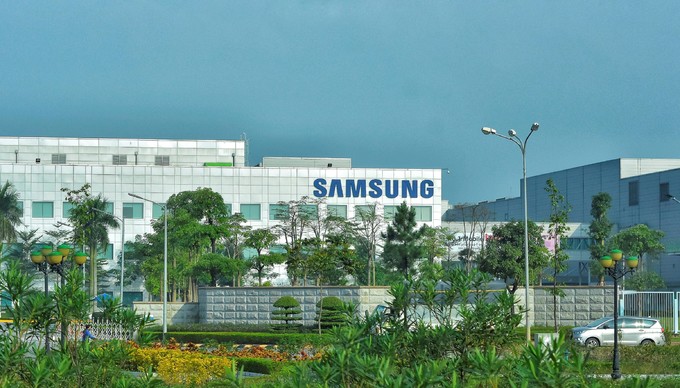
    Samsung Electronics Vice Chairman Lee Jae-yong met with Microsoft CEO Satya Nadella in Seoul Wednesday and vowed to increase cooperation with the U.S. company in artificial intelligence and cloud computing. Nadella is visiting Seoul this week for the first time in four years and delivered a keynote speech at Microsoft Korea’s “Future Now” artificial intelligence (AI) conference Wednesday.

    The two met in the morning before the conference and agreed to step up partnership in artificial intelligence, cloud computing and big data, said a Samsung spokesman.

    Microsoft currently uses Samsung’s semiconductors for cloud servers, and Samsung could sell more of its chips to the American partner in the near future.

    Media reports in Seoul say, as a result of the meeting, some Samsung devices, including smartphones, will be embedded with Microsoft cloud services in the future. Samsung already uses Azure, a Microsoft cloud computing platform, for its system air conditioners to collect data on the surrounding environment, including temperature and humidity, so the machines run more efficiently.

    The two executives might meet on a regular basis and exchange ideas on tech development, according to reports. The two leaders met in Seoul four years earlier.

    During his keynote speech at the conference at a hotel in western Seoul, Nadella mentioned Samsung as one of several Korean companies that had developed offerings based on Microsoft’s Azure platform.

    “Take the example of Samsung Electronics’ IoT [Internet of Things]-based air conditioner that runs on Azure. By taking into account environmental factors, like the number of people, the smart air conditioner can save up to 25 percent in energy and 30 percent in costs,” he said.

    Other sections of the Microsoft CEO’s speech were centered around the need to use artificial intelligence responsibly.

    “We need to ask ourselves not only what computers can do, but what computers should do,” he said, addressing an audience of over 1,500 programmers and businesspeople.

    He also spoke of the necessity to find ways to develop AI for “people who don’t have the ability to participate” in the digital economy.

    As an example, Nadella shared the case of Korea University Prof. Lee Seong-whan using Microsoft’s deep learning Cognitive Toolkit. Lee, who heads the brain and cognitive engineering department, analyzes brain signals in the development of computer systems that amputees can use to move prosthetic arms or robotic arms.

    Earlier on Tuesday, Samsung hosted “Tech Forum 2018,” an event for developers in Silicon Valley. Around 150 developers and designers were invited to the Samsung Research America center there.

    Kim Hyun-suk, president and CEO of Samsung’s consumer electronics division, said in opening remarks that the company was developing many “unfamiliar acquaintances,” which he believes will shape Samsung’s future innovation.

    “Samsung encounters a vast number of customers, rapidly changing technologies and new staff from various backgrounds,” he said. “Our strength is in selling more than 500 million consumer devices a year. We will expand contact points with our customers to reach into the smallest corners of their living spaces and bring innovation to their lifestyles in general.”

    Kim added that in terms of working with various employees, the company will continue to develop a corporate culture where global staff can cooperate and freely suggest ideas. Samsung also introduced the company’s developments in future technologies and held open discussions.

  • Cloud computing can help firms cut costs

    Cloud computing can help firms cut costs

    With the rise of cloud computing in business practices worldwide, Microsoft is encouraging Indonesian industries and businesses to take advantage of this technology in their day-to-day operations, mainly due to the cost-cutting advantages that it offers.

    Microsoft Indonesia’s national technology officer Tony Seno Hartono explained that by using public cloud services, such as the ones Microsoft offers through its Azure service, Indonesia’s businesses could significantly increase their operational efficiency, by 25 to 50 percent.

    This is due to the fact that cloud services provide many streamlined features such as server management, data storage and even the electricity to keep the data-storing servers alive. “It can help businesses decrease their operational costs, because using cloud services is basically like outsourcing. Microsoft has a huge data center, capable of storing data and managing it for you. Why not utilize our services?” he said on Monday.

    Microsoft, he continued, is in talks with an unspecified telecom operator to build a data center in Indonesia, but says the negotiations are still ongoing. Indonesian users of Azure currently have their data stored in Microsoft’s data centers abroad, such as in Singapore and the US.

    Adding to the virtues of cloud computing, Tony elaborated that the local creative industry could also harness the benefits of Microsoft’s multiple data centers for creating works of art. One example is in the animation industry, where higher quality animations require massive amounts of time and data to be rendered.

    During the making of James Cameron’s blockbuster film Avatar, Cameron collaborated with Microsoft to render the CGI animations using their public cloud services, thus saving the film production time and costs.

    Tony said that if Cameron had not utilized Microsoft’s multiple data centers, the animations from Avatar would have taken many years to render properly due to the film’s scale and size.

    Within the film industry in Indonesia, many have expressed interest in using Microsoft servers but none have used them so far, because the industry still remains small, and large-scale animation jobs in Indonesia tend to be taken to foreign animation studios to be worked on, Tony added.

    From the perspective of Winastwan Gora, chief operating officer of tech education start-up Kelase, the usage of Azure cloud services has benefitted his company’s operations and has helped cut costs.

    Kelase signed up for Microsoft’s BizSpark service, for three years of Azure usage with a usage cost limit of US$150 per month. The move guaranteed them space on Microsoft’s data centers abroad for storing and processing their information.

    “By utilizing the Azure cloud, we were able to improve our communications and marketing efforts and also, our analytical and source control mechanisms became easier to carry out compared with other means. In other words, it’s now easier for the company to be run digitally,” Gora said.