Tag: cloud

  • CITIC Telecom CTC opens cloud centers in London and Moscow

    CITIC Telecom CTC opens cloud centers in London and Moscow

    CITIC Telecom CPC, a subsidiary of CITIC Telecom International Holdings Limited, is launching new connected SmartCLOUD Services Center in Moscow and London. Stephen Ho, CEO of CITIC Telecom CPC, said the ‘Europe & Russia Cloud Ring’ will be crucial for European-based enterprises who are looking to invest in and explore the emerging market and business opportunities in mainland China.

    The two new sites will provide enterprise customers with scalable multi-cloud connectivity with full disaster recovery capability and intra-city, inter-city and cross-boundary redundancies. They will also provide round-the-clock professional support optimizing customers’ IT investment, achieving a faster response time and ensuring business continuity.

    The move follows the company’s recent debut of two cloud centers in Frankfurt, Germany, and Cape Town, South Africa. The company now has 18 cloud centers across Asia Pacific, America, South Africa, Europe and Russia.

    Mavenir creates open RAN ecosystem

    Mavenir has announced an Open RAN partner ecosystem that includes MTI, Tecore Networks, Baicells, NEC, AceAxis, KMW, Benetel, CommScope, Blue Danube Systems and Airrays.

    The move aims to provide more options and makes it easy for operators to deploy an innovative, flexible cloud-based Open RAN solution, the company said.

    Mavenir will act as the end-to-end systems integrator simplifying the engagement for operators and creating an offering that is on par with the traditional, hardware centric proprietary vendors.

    Juniper Networks invests $2m in Corero

    Corero Networks said it has secured a $2 million investment from Juniper Networks.

    The investment follows the pair’s recently signed multi-year global resale partnership, under which Juniper will resell and support Corero’s SmartWall DDoS protection software products and services.

    ServiceNow taps NTT Com to launch two data centers in Japan

    ServiceNow is building two new data centers in Tokyo and Osaka through a partnership with NTT Communications to provide high-performing and high-availability cloud services to enterprises in Japan.

    The two data centers being built by NTT Com are expected to be ready in the first half of 2019.

    The new Japanese data centers are expected to enhance the ServiceNow Nonstop Cloud, which has been designed to support the availability and scalability of services and processes for global enterprises.

    The new data centers will add to ServiceNow’s existing nine data center pairs, which are set up across five continents to meet customers’ location and data sovereignty needs.


  • OnApp launches upgraded cloud management platform

    OnApp launches upgraded cloud management platform

    UK-based cloud platform software company OnApp has launched version 6.0 of its OnApp cloud management platform for telcos and MSPs.

    OnApp 6.0 includes a new version of OnApp accelerator, which boasts an up to 100% performance improvement for websites hosted in OnApp clouds.

    The new version also introduces buckets,  a combined role-based access control and billing engine designed to give cloud service providers flexibility in how they package and price cloud services.

    Other features include new SDN capabilities, enhanced cloud workload import, notification and automation features and support for the VMware vCenter suite.

    “OnApp makes cloud easy for telcos, MSPs and other service providers who have struggled to make cloud profitable – either because of the cost and complexity of building and managing their own open source clouds, or because of the commercial limitations of reselling hyperscale clouds like AWS,” OnApp chief commercial officer Tim Meredith said.

    “The new version of OnApp makes it even easier to build a cloud with OnApp, integrate cloud billing models with your existing billing systems and processes, and get to market fast with your own accelerated cloud services.”

  • Optus Business expands managed solutions portfolio

    Optus Business expands managed solutions portfolio

    Australia’s Optus, through subsidiary Optus Business, has expanded its line-up of fully managed ICT solutions for enterprises.

    The operator has added contact center, security and storage solutions to its Optus GO portfolio of managed services.

    Optus GO Contact Centre provides cloud based contact center capabilities including management of inbound and outbound calls, chat and email. Optus GO Security includes email and web protection based on cloud security architecture, and Optus GO Storage provides as-a-service flash storage for data centers.

    The Optus GO managed ICT solutions suite, which launched in February, already included connectivity, collaboration and cloud services for businesses of all sizes.

    “The Optus GO solutions were created in response to our customers who are looking for the benefits of ICT solutions without the cost or burden of ownership and management,” Optus Business managing director John Paitaridis said.

    “We designed Optus GO to save our customers time and money by simplifying technology, delivering connectivity and ICT as an end to end solution in a secure and managed environment.”

    He said Optus GO aims to provide enterprise customers with the core computing foundations to support the business opportunities that will be afforded by emerging technologies including IoT, advanced analytics, AI and 5G.

    Optus is a wholly-owned subsidiary of Singapore’s Singtel Group.

  • China said to insert spy chips into Supermicro servers

    China said to insert spy chips into Supermicro servers

    An explosive report has accused Chinese intelligence agencies of sneaking a tiny chip into servers assembled in China for US chip maker Supermicro that introduced hardware vulnerabilities enabling stealth access to any network using the altered devices.

    US investigators have found evidence of an unprecedented supply chain attack on servers used by companies including Amazon and Apple.

    The allegedly compromised components were used by video streaming company Elemental Technologies for its services compressing video files and optimizing them for different devices.

    According to the report, a third party company hired by AWS to scrutinize Elemental’s security in advance of Amazon’s potential acquisition of the company discovered a tiny microchip in a sample server that was not part of the original design. Apple was also reportedly a major Supermicro customer, using its components for a global network of data centers, the report adds.

    This chip allegedly allows for the creation of a stealth doorway into any network using the altered servers. The investigation reportedly subsequently found evidence that the chips had been inserted by four subcontractors of Supermicro’s primary manufacturers for its motherboards, which are based in Shanghai and Taiwan.

    Interactions between Chinese officials, manufacturers and middlemen in China intercepted by investigators suggest that middlemen offered bribes and threats to coerce the subcontractors to insert the chips on behalf of a PLA unit specializing in hardware attacks, the report claims.

    But Amazon, Apple and Supermicro have all subsequently released statements challenging the report. Apple has been particularly firm in its denial of the report, stating that the company has repeatedly found “absolutely no evidence” to support Bloomberg’s claims, and has consistently provided statements refuting almost all aspects of the story as it relates to Apple.

    Supermicro has also stated that it is unaware of any investigation and has not been contacted by the government, while China’s Ministry of Foreign Affairs has insisted that the nation “is a resolute defender of cybersecurity” and that supply chain security is a concern of all governments.

  • HKBNES launches free public Wi-Fi at tram shelters

    HKBNES launches free public Wi-Fi at tram shelters

    HKBN Enterprise Solutions (HKBNES) has formally launched a free high-speed public Wi-Fi network on tram shelters across Hong Kong in association with Hong Kong Tramways and Cody Out of Home (Cody OOH).

    The HEREWIFIFREE service provides public free Wi-Fi with unlimited sessions on nine key tram shelters located along the busiest commercial and residential centers on Hong Kong Island.

    HKBN launched a pilot of the new service in May, and usage levels have grown 40% by the end of August. The unlimited usage session enhancement meanwhile launched in June.

    “We are happy to support this high-speed free Wi-Fi service to bring Hong Kongers speedy and convenient online connectivity,” HKBN director Mikron Ng said.

    “Our partnership with Tramways and Cody OOH is another example of how we showcase our win-win-win model in which Tramway passengers, Cody OOH customers and our corporate customers can all benefit.”

    “Hong Kong Tramways is pleased to collaborate with HKBNES and Cody OOH in order to offer innovative services,” added Hong Kong Tramways commercial and corporate affairs manager Antoine Sambin.

    “The high quality and the user-friendly experience of the free Wi-Fi solution are valued by the tram passengers, pedestrians and retail communities in the near vicinity. We aim to keep contributing to a smarter city thanks to our Tram Shelters network.”

  • Public cloud demand to drive data center infra market

    Public cloud demand to drive data center infra market

    Synergy Research Group (SRG) revealed that over the last 24 months, quarterly spend on data center hardware and software has grown by 28%, driven by burgeoning demand for cloud services and increased prices for more fully featured servers.

    The main beneficiaries have been vendors supplying public cloud infrastructure, who have seen a 54% growth in revenues over the period. Growth for enterprise data center infrastructure has been much lower and spending was actually in slow decline until the recent spike in server demand and pricing gave vendor revenues a boost.

    Within the enterprise it is private cloud infrastructure that is driving spending with a 45% increase since the second quarter of 2016. In terms of market share, ODMs in aggregate account for the largest portion of the public cloud market, with Dell EMC being the leading individual vendor, followed by Cisco and HPE. The Q2 market leader in private cloud was Dell EMC, followed by Microsoft and HPE. The same three vendors led in the non-cloud data center market, though with a different ranking.

    Total data center infrastructure equipment revenues, including cloud and non-cloud, hardware and software, were $38 billion in the second quarter, with public cloud infrastructure accounting for a third of the total. Private cloud or cloud-enabled infrastructure accounted for over a third of the total. Servers, OS, storage, networking and virtualization software combined accounted for 96% of the Q2 data center infrastructure market, with the balance comprising network security and management software.

    Dell EMC leads in both server and storage revenues, while Cisco dominates the networking segment. Microsoft features heavily in the rankings due to its position in server OS and virtualization applications. Outside of these three, the other leading vendors in the market are HPE, IBM, VMware, Lenovo, Huawei, Inspur and NetApp.

    “We are seeing cloud service revenues continuing to grow by 50% per year, enterprise SaaS revenues growing by over 30%, search/social networking revenues growing by over 25%, and e-commerce revenues growing by over 40%, all of which are driving big increases in spending on public cloud infrastructure,” said John Dinsdale, a Chief Analyst at Synergy Research Group.

    “That is not a new phenomenon. But what has been different over the last three quarters is that enterprise spending on data center infrastructure has really jumped, driven primarily by hybrid cloud requirements, increased server functionality and higher component costs,” concluded Dinsdale.

  • Alibaba cloud eyes retail sector with 9 new product launch

    Alibaba cloud eyes retail sector with 9 new product launch

    The Retail industry in China has experienced some significant changes over the past few years.

    New Retail is trending as players in the industry are striving to bring customers an unique omnichannel experience. Shoppers can now buy anything, anywhere, anytime.

    The online-offline shopping experience has been strongly supported by digitalization. Alibaba, China’s e-commerce powerhouse, has been offering a wide range of services to support retailers. However, the latter were only available in China.

    Earlier this week, Alibaba has launched its suite of cloud-computing solutions globally. Among them are a smart access gateway that enables retailers to connect their data from different shops to a single cloud platform, data lake analytics, or a serverless, high-performance query service that analyses historical inventory and sales data. To prevent retailers from data loss, Alibaba Cloud also launched its Anti-Bot Service, a software solution that protects users from online scalpers and crawlers.

    Alibaba’s cloud-computing unit’s chief solution architect, Derek Wang said “This new suite of offerings includes products that are highly efficient, cost effective. Some of them are the first of their kind in the industry.”

    He said that all products have specific features meeting some identified need within the flourishing retail market in the Asia Pacific region, allowing retailers for a more effective deployment of their resources and deeper consumer insights.

    If the New Retail concept has been around in China for a while, Alibaba’s move aims at expanding it across Asia, specifically Southeast-Asia.

    Ng Yu Xuan, a Frost and Sullivan industry analyst, said Asia-Pacific’s cloud computing market is highly price-sensitive, giving Alibaba Cloud an opportunity to expand its footprint in the region through its aggressive pricing strategies.

    However, as AI and machine learning isn’t quite widespread in the developing countries, Ng said that should it want to succeed, Alibaba will have to build an extensive partner ecosystem outside China.

    As more ASEAN businesses are adopting a multi-cloud strategy to avoid supplier lock-in and reap the benefits of the latest innovations in the industry, Alibaba started an ASEAN partner alliance program. The program will allow the e-commerce giant to fuel growth in his Asian ecosystem as it aims to recruit 150 solution partners and train 600 sales and technology personnel in the following 12 months.

  • Western Digital NAS device suffers from a potential Privacy issue

    Western Digital NAS device suffers from a potential Privacy issue

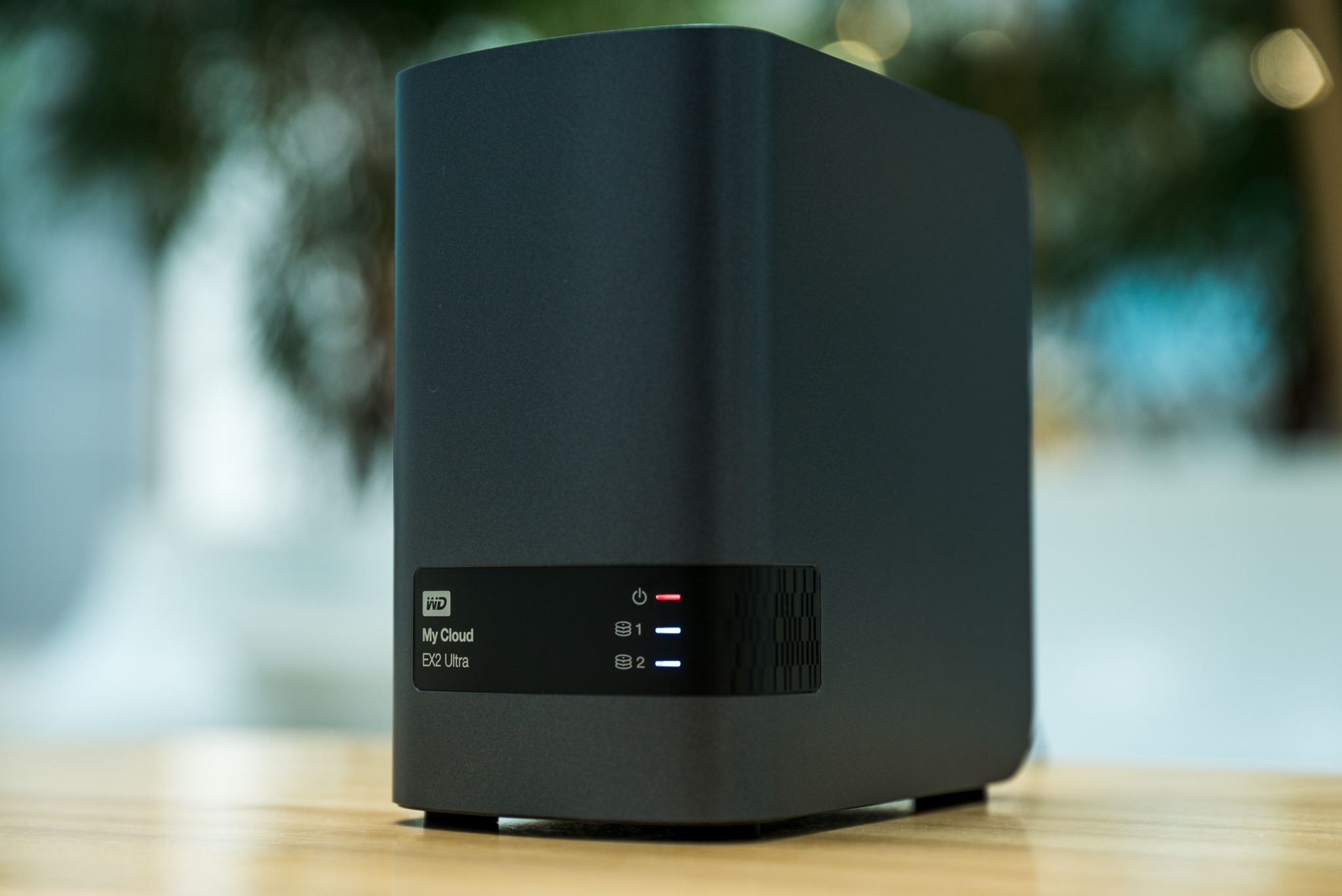
    The default configuration of Western Digital My Cloud EX2 network drives allows any unauthorised user on the local network to extract files by sending HTTP requests, according to security researchers. Western Digital’s My Cloud devices are storage/backup device that lets users backup and store important documents, photos and media files.
    In a security advisory, researchers at Trustwave said that when the device is switched on, the UPnP-media server automatically starts, which by default allows any user who can send HTTP requests to the device to extract any files. Thus, it is possible to bypass any permissions or restrictions set by the owner or administrator of the device.
    “It is possible to access files on the storage even when Public shares are disabled.  Specifically, anyone can issue HTTP requests to TMSContentDirectory/Control
    on port 9000 passing various actions. The Browse action returns XML with URLs to  individual files on the device,” said researchers.
    Researchers said that they had informed Western Digital about the problem in January of this year, but the manufacturer said that it will not release a patch. As a measure to prevent exploitation of the vulnerability, users are advised to disable DLNA if important data is stored on the device. Western Digital recommended that users follow this knowledge base article to turn off DLNA “if they do not wish to use the product feature.”
    Jason Garbis, vice president at Cyxtera, told that like all network-attached devices, organisations need to engage with their information security teams prior to deploying this drive onto their network.
    “Organisations of all sizes need to take a more proactive approach to network security and apply a zero-trust philosophy to their network. Once again, this vulnerability demonstrates that network access to a system – even without login credentials – is a privilege that must be managed. Today’s networks are far too open, which is a root cause of the many successful attacks and breaches affecting the IT industry,” he said.
    “With proper configuration, this device can be safely used. It should have the DLNA (UPnP) feature disabled, and ideally should have network access restricted to only authorised users. Deployed in its default configuration, this device exposes businesses to unnecessary risk of data breach, either to malicious insiders or external attackers.”
    Earlier this year, another security researcher found a plethora of vulnerabilities, such as pre auth remote root code execution, as well as a hardcoded backdoor admin account which cannot be changed. The backdoor also allows for pre auth remote root code execution on the affected device. The backdoor allowed anyone log in as user mydlinkBRionyg with the password abc12345cba. Western Digital has since issued a fix for this problem. It can be found here.
  • Cathay Pacific taps Red Hat for hybrid cloud transition

    Cathay Pacific taps Red Hat for hybrid cloud transition

    Airline Cathay Pacific is using Red Hat solutions and services to transform its legacy infrastructure into a modern hybrid cloud architecture.

    Using Red Hat OpenStack Platform and Red Hat OpenShift Container Platform, Cathay Pacific created a more efficient and scalable platform for developing and delivering new services, enabling the company to ultimately create a better overall experience for their customers.

    Based in Hong Kong, Cathay Pacific is an international airline offering passenger and cargo services to 200 destinations in 52 countries and territories worldwide. Digital capabilities are a critical function of the company’s business strategy for growth, with the heart of this initiative emphasizing a responsive and adaptable customer experience.

    Cathay Pacific’s legacy infrastructure and development process posed a challenge, making it difficult for the airline to maintain a high level of performance from its internal systems and customer-facing applications. Its existing systems were inflexible and time consuming to modify, forcing the company to handle an increasing level of technical debt dedicated to system maintenance and “keeping the lights on.”

    Using Red Hat’s open standards-based, enterprise technologies and guided by Red Hat’s technical expertise, Cathay Pacific migrated from its legacy infrastructure to a hybrid cloud architecture, consisting of a private cloud environment that includes Red Hat OpenStack Platform which can provision workloads as needed into public cloud instances.

    Forming the bridge to the public cloud is Red Hat OpenShift Container Platform, which supports more than 50 consumer-facing applications.

    With Red Hat OpenShift Container Platform, Cathay Pacific is able to move applications in a more streamlined fashion across its hybrid infrastructure and is able to scale computing resources up and down as demand requires.

  • Alibaba Cloud enters partnership with ASL

    Alibaba Cloud enters partnership with ASL

    Alibaba Cloud and Hong Kong IT service provider Automated Systems Limited (ASL) have entered a strategic partnership aimed at facilitating the development of the cloud market in Hong Kong and Macau.

    Under the collaboration, both companies will collaborate on areas including go-to-market, solution creation, and cloud security services.

    The companies will also invest to create joint teams that will offer innovative cloud solutions and services for businesses in the two markets.

    Alibaba Cloud will contribute security solutions and services for ASL’s Security Operation Center Plus offering. The two companies will also establish a joint solution lab working on new offerings for the healthcare, property, financial services and other industries.

    Meanwhile Alibaba Cloud will provide ASL with support to create a technical team to handle presales, solutions architecture and solution delivery, and ASL will acquire cloud talent through the Alibaba Cloud Associate and Alibaba Cloud Professional certification programs.

    “We are excited to work closely with Alibaba Cloud, the leading digital transformation expert in the world,” ASL executive director and CEO Wang Yeou said.

    “The partnership will further our mutual vision of fostering the development of the cloud market in Hong Kong and Macau. In the age of cloud computing and digital transformation, this partnership will build and strengthen ASL’s brand and position as a leading and industry-specific cloud service provider in Hong Kong and Macau.”

  • Megaport supporting Google Cloud Partner Interconnect

    Megaport supporting Google Cloud Partner Interconnect

    Australia-based network as a service (NaaS) provider Megaport has introduced support for Google Cloud’s Partner Interconnect with its global SDN.

    The new service will allow Megaport customers to provide connectivity from their facility to the nearest Google edge PoP.

    Customers can select from a range of sub-rate interface speeds varying from 50Mbps up to 10Gpbs.

    The Partner Interconnect service is available across the Megaport SDN, which spans over 200 data centers globally. Megaport is enabling deeper integration between the SDN and Google Cloud via its API to enable provisioning of network capacity to Google virtual private clouds.

    “Scalable connectivity to Google Cloud Platform ensures that cloud-enabled applications perform to meet mission-critical business requirements,” Megaport CEO Vincent English said.

    “Google Cloud brings tremendous value to the Megaport Ecosystem and empowers our customers to address a wide variety of business needs. We have been working with Google Cloud since our inception and we are excited to grow and evolve our integration to ensure the next generation of business growth.”

    Megaport also recently announced a partnership with Colt Data Centre Services to allow Colt customers to access direct connectivity to a range of major cloud service providers via the Megaport SDN.

  • Tencent decides to launch its first Asean data center in Cyberjaya

    Tencent decides to launch its first Asean data center in Cyberjaya

    Tencent Holdings Limited, a China based investment holding firm, and Tourism Malaysia are planning to jointly set up a data center in Cyberjaya, Malaysia. Sources claim that the strategic move is a part of the Smart Tourism 4.0 program launched recently in Malaysia. Under the new project, Tencent is expected to use the reproduction of its earlier digital ecosystem model.

    Datuk Siew Ka Wei, the chairman of Tourism Malaysia, has stated that the group has decided to establish an incubation unit in Cyberjaya in association with the regional partner. He further added that the initiative will include not only retail firms but also airliners and myriad other players across the transport sector.

    Experts are of the opinion that this smart tourism initiative will make notable contributions towards the economic growth of Malaysia considering that 8 million tourist arrivals are expected in Malaysia from China over the next two years. As per a key official of Tourism Malaysia, startups with innovative, fresh ideas will benefit commendably from the smart tourism initiative.

    If reports are to be believed, the initiative is forecast to be live in the second half of this year. The program will help the Malaysian Tourism Promotion Board to promote the growth of tourism industry in the country.

    Malaysia Smart Tourism 4.0 program encompasses the development of approximately 40 videos, each spanning over five minutes. These videos display exceptional holiday experiences in the country, including resorts, gastronomy, heritage, beaches, soft adventure tourism, history, and culture. It is likely that Tencent will declare the establishment of the data center in Cyberjaya by the end of the month, thereby becoming the first organization to provide services for the entire Asian region.

    It has been speculated that the Chinese retail conglomerate will support the expansion of Malaysian businesses across the China market by providing them with new technology. In return, Tourism Malaysia will offer substantial facilities to Tencent for its business growth across the country.

  • Juniper enhances cybersecurity platform

    Juniper enhances cybersecurity platform

    Juniper Networks has announced new enhancements to its unified cybersecurity platform, aimed at helping customers run their businesses with confidence and efficiency across locations and clouds.

    These enhancements simplify security operations by accelerating time to detection and orchestrating mitigation. The result is improved productivity and a stronger security posture across enterprise networks and cloud workloads whether in AWS, Azure, Google Cloud or private data centers.

    To give security teams a simplified and comprehensive view of threats and enable one-click mitigation, Juniper Networks SRX Series Next-Generation Firewalls now feed directly into the Advanced Threat Prevention (ATP) Appliance. This integration enables the aggregation and correlation of security events from various Juniper and third-party sources into a consolidated timeline view of all threats in the network, and allows security teams to teams  prioritize critical alerts and mitigate threats with one click.

    Furthering its promise to use the entire network for security enforcement, the Juniper ATP Appliance is bringing its built-in threat behavior analytics and one-touch mitigation to Junos Space Security Director Policy Enforcer, offering a unified view of threat behavior across the security fabric for extended remediation. This integration enables adaptive malware detection that triggers automated policy enforcement for a substantially hardened security posture across networks and cloud environments.

    Security Director Policy Enforcer is meanwhile now integrated with Amazon Web Services (AWS). Juniper extends multicloud workload protection and consistent security across multicloud environments, securing workloads in AWS Virtual Private Clouds (VPCs).

    As part of its commitment to global cybersecurity, Juniper Networks now has data centers for Juniper Sky ATP in Asia Pacific and Canada, in addition to its existing data centers in the US and Europe. The company is also  furthering its commitment to an open and unified approach to cybersecurity by joining the Cyber Threat Alliance (CTA), an organization dedicated to improving the security of the global digital ecosystems through cyber threat information sharing.

  • Supernap Wins Datacloud Asia Awards for “Excellence in Data Centre Service Southeast Asia”

    Supernap Wins Datacloud Asia Awards for “Excellence in Data Centre Service Southeast Asia”

    SUPERNAP Thailand, the recognized leader in colocation services, won “Excellence in Data Centre Service Award Southeast Asia” and the best “Data Centre Location Award” at Datacloud Asia 2018 held at the Capella Hotel in Singapore recently. It is the first time that a data center in Thailand won an award from the international premier conference for data centres and cloud technology in the region.

    The awards recognize SUPERNAP Thailand as the leading Southeast Asia data center provider for its most efficient, high density and ultrascale capacity. Chonburi Province, where SUPERNAP Thailand is located, is recognized as the most attractive location for attracting operators and cloud services providers. Chonburi province is part of the EEC (Eastern Economic Corridor) zone and is strategically positioned for the submarine cables and “one belt one road” project.  It is Thailand’s new flagship investment zone designed to accommodate next-generation industries and meet the Thailand 4.0 policy.

    The Datacloud Asia award recognizes genuine innovation and the continuing evolution in the flourishing Asia digital infrastructure market.

    “Datacloud Asia goes from strength to strength and the award winners mirror the optimism, dynamism and entrepreneurism that is permeating throughout the region,” said Mr. Philip Low, Host of Datacloud Asia and President of BroadGroup. “The rapid development of the Asian data economy can lead global innovation and break down old mindsets from many aspects.”

    “We are extremely honored to accept the awards, that are a testimonial to our efforts in providing the excellent and the most trusted data center service to our customers in Thailand and across the region, said Mrs. Sunita Bottse, Managing Director of SUPERNAP Thailand. “Moving towards the transformation of the economy, we foresee that the demand for innovative, scalability, security, redundancy, and availability will tremendously increase.

    We will remain steadfast in our commitment to continue to deliver excellent customer service, thus powering their ability to the greater success.”

    SUPERNAP Thailand was one of five nominees for the Excellence in Data Center Service Award. The company won over its counterparts from South Korea, Hong Kong, Indonesia, and Singapore. Revolutionary innovations such as tri-redundant power systems, modular building design and 100% heat containment technologies allow SUPERNAP Thailand to efficiently facilitate client growth without current or future concerns over reliability of power supply, cooling, connectivity or space. The award reiterates SUPERNAP Thailand’s positioning as the most trusted world-class purpose-built data center for customers with a long-term vision to develop Thailand’s presence as a serious data center hub for Asia Pacific.

    While the award for best “Data Center Location” recognizes Chonburi Province as a prime location for data centers in Asia,  it succeeded over three other locations nominated from China, India, and Malaysia. This strongly confirms that SUPERNAP Thailand has been cited as the best strategic location to provide support for growth for all investors in Asia. In addition, SUPERNAP Thailand is located outside Bangkok’s flood zone and 110 metres above sea level and able to access numerous national and international telecommunications carriers with proximity 27km to the international cable landing station.

    Established in 2017, SUPERNAP Thailand targets customers from government bodies, the banking and finance sectors, insurance and healthcare providers, cloud solution providers, and e-commerce companies both in-country and across ASEAN countries.

  • Carriers take M&A route to woo enterprise cloud business

    Carriers take M&A route to woo enterprise cloud business

    Revenue growth for carriers will be of critical importance in 2018, according to Craig Wigginton, global telecommunications sector leader for Deloitte.

    “Revenue yield on data services (revenue per bit consumed) continues to decline as consumers use more and more data, with static or declining monthly bills. Hence it is critical to identify rapid investment opportunities across the telecom portfolio—including 5G, IoT, and cross-industry partnerships (such as mHealth and mPayments), as well as a host of other growth opportunities,” Wigginton said.

    One avenue that many operators are pursuing with interest is enterprise cloud. Given that enterprises are a demanding lot,  operators are ramping up on infrastructure to support demand for cloud services.

    The Technology Business Research (TBR) 4Q17 Carrier Cloud Benchmark revealed a 15.7% year-to-year growth in 4Q17 is largely due to strategic acquisitions and alliances, investments in new data centers, and portfolio expansion in growth segments such as SaaS and hybrid cloud.

    Cloud revenue growth is being limited, however, due to pricing pressures and growing demand for solutions from webscale cloud providers such as Amazon Web Services (AWS). Carriers are cognizant of these trends and are becoming more focused on supporting hybrid and multi-cloud environments by launching new orchestration platforms.


    “All benchmarked companies sustained year-to-year Cloud as a Service revenue growth in 4Q17 as significant opportunity remains for carriers to target businesses seeking greater cost savings, scalability and efficiency by migrating traditional infrastructure and applications to the cloud,” said Steve Vachon, an analyst in TBR’s Telecom Practice.

    “Though cloud revenue growth is being limited by pricing pressures from webscale providers, carriers are relying on the value proposition and convenience offered by the bundling of their cloud solutions with other network offerings, such as SD-WAN, security and mobility services, to attract customers.”

    Operators are revamping their go-to-market strategies to counter disruption from webscale providers such as AWS, Google and Microsoft. Competition will intensify over the next several years as webscales seek to play a larger role within the European and Asian cloud markets by investing in additional data centers in those regions.

    Amid demand for solutions from webscales in the cloud market, most carriers are offering access to these companies to complement their existing cloud portfolios and to support hybrid and multi-cloud environments. Carriers are also integrating webscale cloud platforms to enhance adjacent portfolio segments such as Internet of Things and unified communications.