Tag: co-founder

  • Gojek Co-Founder Sentenced to Decade Behind Bars, Stirs Investor Anxiety Amid Corruption Scandal

    Gojek Co-Founder Sentenced to Decade Behind Bars, Stirs Investor Anxiety Amid Corruption Scandal

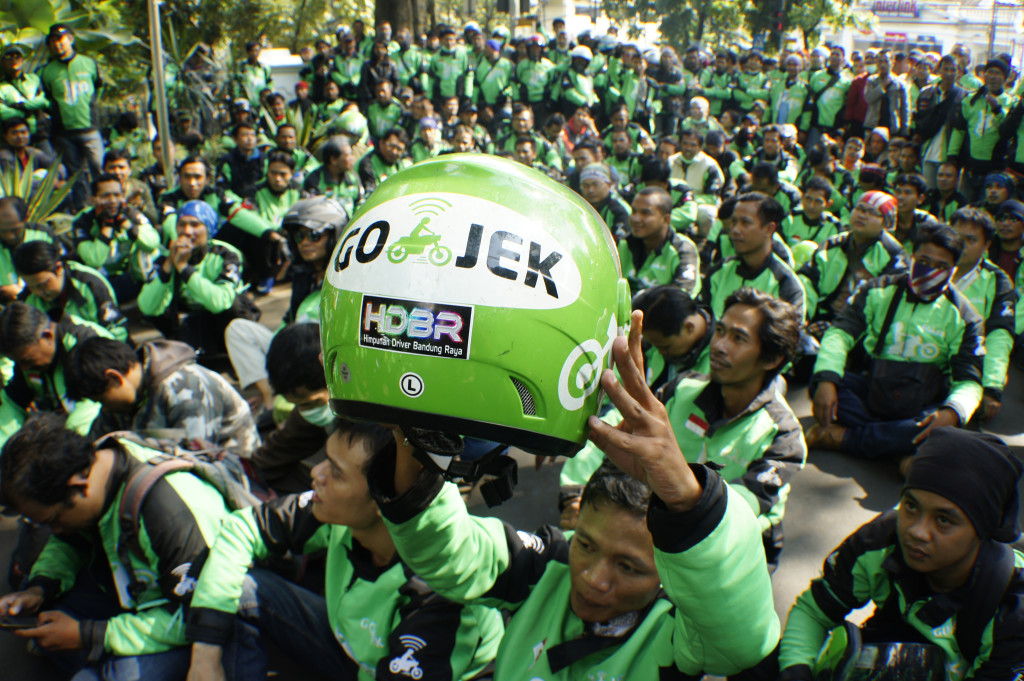
    Nadiem Makarim, a co-founder of tech giant Gojek and former education minister, has been found guilty of some charges in a corruption case by an Indonesian court and sentenced to ten years in prison. Makarim, aged 41, has contested the charges, declaring that the case against him is politically driven, an opinion that has garnered support from scholars and rights activists.

    The Potential Impact on Investor Confidence

    This verdict could potentially further weaken investor confidence in Indonesia. The nation’s currency, the rupiah, and stocks have seen a downturn this year following cuts to projections by credit rating agencies due to erratic policy decisions and governance worries. Additionally, the index provider MSCI is considering downgrading Southeast Asia’s largest economy due to concerns over market transparency.

    Makarim was accused of profiting from the government’s decision to purchase Google Chromebook laptops for Indonesian schools during his tenure as education minister from 2019 to 2024 under the former administration of Joko Widodo. This decision allegedly resulted in state losses amounting to US$125 million.

    Details of the Verdict

    Delivering the ruling at Indonesia’s Corruption Court in Jakarta, Chief Judge Purwanto Abdullah declared that a panel of judges had found Makarim guilty of misusing his authority and causing state losses. However, Makarim was acquitted of the charge of directly seeking personal enrichment.

    Makarim was ordered to pay a fine of 1 billion rupiah and return over 800 billion rupiah (US$45 million), an amount the judges determined was personal gain from the deal. Failure to return the money would add an additional five years to his prison term, the judges said.

    Surrounded by his family and friends, a tearful Makarim expressed his intention to appeal the verdict. He claimed the facts supporting the sentence were unreasonable, adding that he couldn’t meet the payment amount ordered by the court.

    Prosecutors alleged that Gojek’s parent company’s investment from Google influenced the procurement decision. They also claimed that Makarim created tender specifications that only matched the Chrome system, making Google the sole controller of the educational environment in Indonesia.

    Google, however, wasn’t indicted. Makarim has refuted these allegations, stating there was no personal enrichment, and the investment from Google in Gojek’s parent company had no relation to the procurement.

    Questions & Answers

    What were the charges against Nadiem Makarim?
    Makarim, former education minister and co-founder of Gojek, was found guilty of abusing his authority and causing state losses.

    What are the potential ramifications of this ruling on Indonesia’s economy?
    This ruling may further weaken investor confidence in Indonesia, exacerbating existing concerns over unpredictable policymaking, governance issues, and market transparency.

    What was the penalty imposed on Makarim by the court?
    Makarim was sentenced to ten years in prison and ordered to pay a 1 billion rupiah fine. He was also directed to return over 800 billion rupiah, an amount the judges said he personally gained from the deal.

  • Digital Assets Maintain Strong Long-Term Prospects, Asserts Sygnum Co-Founder

    Digital Assets Maintain Strong Long-Term Prospects, Asserts Sygnum Co-Founder

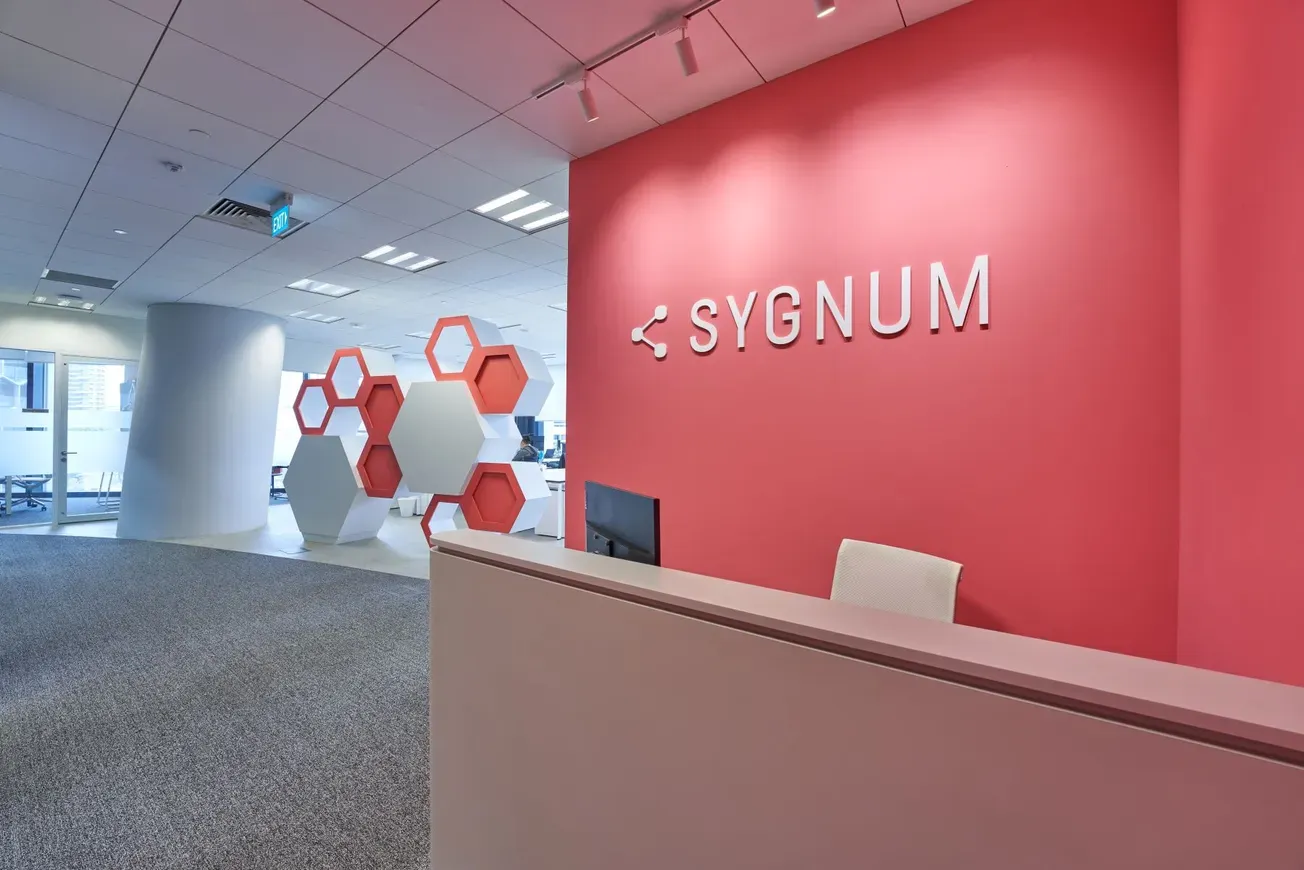
    Sygnum, a regulated digital asset bank, was conceived with a dual vision between Singapore and Switzerland. Gerald Goh, co-founder and CEO of Sygnum Asia-Pacific, has been a key player in establishing this transcontinental structure since 2017. Even with the fluctuating state of crypto markets, Goh reports a robust demand. According to Sygnum’s recent survey, digital assets are becoming increasingly popular among high net worth individuals (HNWIs) in Asia.

    Origins of Sygnum

    The concept of Sygnum saw its inception in Singapore in 2017 during the Singapore Fintech Festival. Goh, along with his three co-founders Luka Müller, Manuel Krieger and Mathias Imbach, were united by a shared vision: to provide a trustworthy platform for global access to digital assets.

    The founders envisioned Sygnum as a bridge between Singapore and Switzerland, two of the world’s most innovative and forward-thinking financial centers. Their goal was to leverage the openness of these regulatory environments to integrate digital assets into the financial services sector. However, they were unsure which jurisdiction would pioneer the regulation of digital assets.

    Dual Incorporation Strategy

    As a result, the founders decided to simultaneously incorporate Sygnum in both Singapore and Switzerland. This decision proved to be a prudent one, as it allowed them to engage with both regulatory environments from the outset. From its inception, Sygnum has had a strong presence in the Asia-Pacific region.

    Goh explains that the dual structure was driven by the recognition of Singapore and Switzerland as trusted financial hubs in their respective regions. The Swiss base was intended to serve Europe, while the Singapore base would cater to the Asia-Pacific region. The founders saw this as a strategic combination of the best of both worlds, given that both the Swiss Financial Market Supervisory Authority (FINMA) and the Monetary Authority of Singapore (MAS) were among the earliest regulators to recognize the potential of blockchain technology.

    Market Orientation

    While Sygnum Asia appears to be more consumer-focused (B2C), its Swiss counterpart is more oriented towards serving businesses (B2B). In Singapore, Sygnum utilizes both B2C and B2B channels, but Goh acknowledges the current tilt towards B2C. The company has more direct clients than banking partners in Singapore, whereas in Switzerland, Sygnum collaborates with over 20 Swiss banks and is a leading provider of B2B services.

    Goh believes that the slower institutional adoption of crypto in Singapore is due to the cautious approach of regulated intermediaries in the region. Despite years of engagement with local banks and external asset managers, the momentum to launch regulated digital asset services has been somewhat subdued compared to other regions.

    Questions & Answers

    How did the concept of Sygnum come into being?
    The idea for Sygnum was conceived during the 2017 Singapore Fintech Festival. The co-founders envisioned a platform that would offer global access to digital assets in a trusted manner.

    What was the rationale behind incorporating Sygnum in both Singapore and Switzerland?
    The decision to incorporate in both jurisdictions was driven by the recognition of Singapore and Switzerland as leading, innovative financial hubs. The dual structure allowed Sygnum to engage proactively with the regulatory environments of both regions.

    Why is institutional adoption of crypto slower in Singapore?
    The slower adoption rate is attributed to the cautious approach of regulated intermediaries in Singapore. Despite ongoing engagement with local banks and external asset managers, the pace to launch regulated digital asset services has been more measured than in other regions.

  • Ben & Jerry’s co-founder quits, citing loss of independence

    Ben & Jerry’s co-founder quits, citing loss of independence

    Jerry Greenfield, co-founder of the renowned ice cream brand Ben & Jerry’s, has announced his departure from the company. His exit comes as a result of the eroding independence that he and fellow co-founder Ben Cohen had established within the company’s governance structure when they sold the enterprise to Unilever over 20 years ago.

    An Emotional Departure

    In a public statement, Greenfield conveyed his deep sadness and regret over his decision to leave the company. He stated, “It’s with a broken heart that I’ve decided I can no longer, in good conscience, and after 47 years, remain an employee of Ben & Jerry’s.” Greenfield clarified that his decision to leave was not due to a loss of affection for his colleagues at the company, but rather due to the company’s dwindling autonomy.

    Ben & Jerry’s, which was acquired by Unilever in 2000, has a well-known reputation for advocating social justice issues. Greenfield noted that the company has traditionally used its independence to take a stance and vocalize their support for peace, justice, and human rights in relation to real-world events. He expressed his profound disappointment over the fact that this independence, which was a fundamental condition of their sale to Unilever, has disappeared.

    Unilever’s Response

    In response to Greenfield’s exit, a spokesperson for Unilever expressed the company’s gratitude for Greenfield’s tenure and contributions. Although the spokesperson mentioned that the company disagreed with Greenfield’s standpoint, they extended their appreciation to him for his decades of service and wished him all the best in his future endeavors. The spokesperson also mentioned the company’s attempts to involve both co-founders in discussions aimed at reinforcing Ben & Jerry’s value-based position in the world.

    Questions & Answers

    Why has Jerry Greenfield decided to leave Ben & Jerry’s?
    Greenfield has chosen to leave due to the perceived loss of the company’s independence, which he believes was a fundamental aspect of the company’s sale to Unilever.

    What was Ben & Jerry’s reputation prior to its acquisition by Unilever?
    Prior to its acquisition by Unilever, Ben & Jerry’s was known for its outspoken stance on various social justice issues. The company often used its independent status to vocalize support for peace, justice, and human rights in relation to real-world events.

    What was Unilever’s reaction to Greenfield’s departure?
    Unilever expressed gratitude for Greenfield’s contributions and service to the company, despite disagreeing with his perspective on the company’s autonomy. The company also conveyed their attempts to involve both co-founders in discussions aimed at bolstering Ben & Jerry’s value-based position in the world.

  • Four Pillars Gin Co-founder Stuart Gregor Ascends To Ceo At Lark Distilling Co

    Four Pillars Gin Co-founder Stuart Gregor Ascends To Ceo At Lark Distilling Co

    Whisky manufacturing company, Lark Distilling Co, has announced the appointment of Stuart Gregor as it’s Managing Director, effective from January.

    Gregor is known for co-establishing the Four Pillars Gin brand in 2013, which transformed from a small-scale craft operation into a worldwide recognized name in gin production. His successful venture was sold to Lion, a subsidiary of Kirin Group, in 2023. Additionally, Gregor has been serving as a non-executive director at Lark since the previous year.

    Decades of Industry Expertise

    According to Lark Distilling Co, Gregor’s appointment as CEO is marked by his extensive industry experience, spanning over a quarter-century. His proficiency covers areas such as brand creation, premium beverage marketing, international expansion, and entrepreneurship.

    In addition to his entrepreneurial exploits, Gregor has made significant strides in public relations and marketing. He co-founded the PR and marketing firm, Liquid Ideas, and has held the position of president at the Australian Distillers Association in the past.

    New Chapter for Lark Distilling Co

    Domenic Panaccio, the chairman of Lark Distilling Co, voiced his confidence in Gregor, highlighting his deep familiarity with the company and his role in the brand’s evolution. “Today’s announcement reflects our strong focus on effective succession planning, ensuring a smooth and orderly transition that positions Lark for continued success in its next phase of growth,” added Panaccio.

    Gregor will be replacing Satya (Sash) Sharma, who will conclude his tenure as CEO on December 31, after leading the company for three years. Sharma will be taking up the role of MD for Asia Pacific Ragion at Campari Group following his departure.

    Lark’s Legacy

    Established in 1992 by Bill and Lyn Lark, the company is renowned for its exceptional Tasmanian whisky, primarily its signature Single Malt Signature Collection. In the 2024-25 fiscal year, the company reported a modest revenue increase of 2.6 percent, amounting to $17.2 million, alongside a loss of $11.3 million.

    Questions & Answers

    Who has been appointed as the new CEO of Lark Distilling Co?
    Stuart Gregor has been appointed as the new CEO and Managing Director of Lark Distilling Co.

    What has been Stuart Gregor’s significant contribution to the alcohol industry prior to this role?
    Stuart Gregor co-founded the globally celebrated gin brand, Four Pillars Gin, and has been serving as a non-executive director at Lark Distilling Co.

    Who will Stuart Gregor be replacing at Lark Distilling Co?
    Stuart Gregor will be succeeding Satya (Sash) Sharma as the CEO of Lark Distilling Co.