Retail News CRM

Tag: co working

  • Co-working gains ground post-Covid

    Co-working gains ground post-Covid

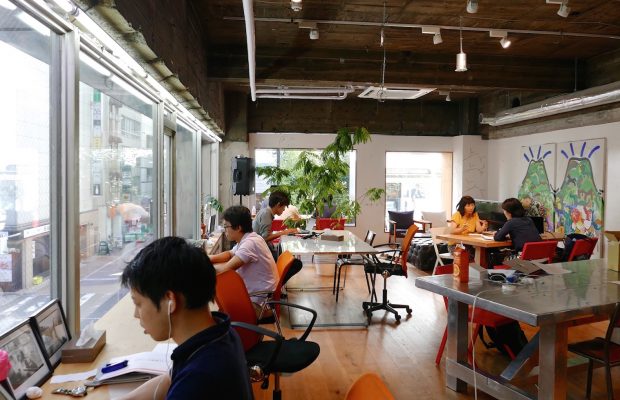
    Co-working spaces are becoming extremely popular in the post-Covid era and boast an average occupancy rate of 80 percent.

    The country has 179 co-working spaces concentrated in Hanoi, HCMC and Da Nang, according to corporate service provider Acclime Vietnam and property consultancy Knight Frank Vietnam.

    Alex Crane, managing director of Knight Frank, attributed growth to high demand for grade A and B offices with companies being set up or resuming business after the pandemic.

    In the first six months 76,233 companies were incorporated, up 13.6 percent from the same period last year.

    “Flexible workspace is not only an effective tool for corporate tenants but also a key promoter of growth of Vietnamese start-ups,” Crane said.

    The Vietnamese start-up spirit is one of the driving factors of growth along with the expansion by multinational companies in the country, he added.

    Vietnam ranks among the top 20 Asian markets in terms of co-working space, according to Acclime.

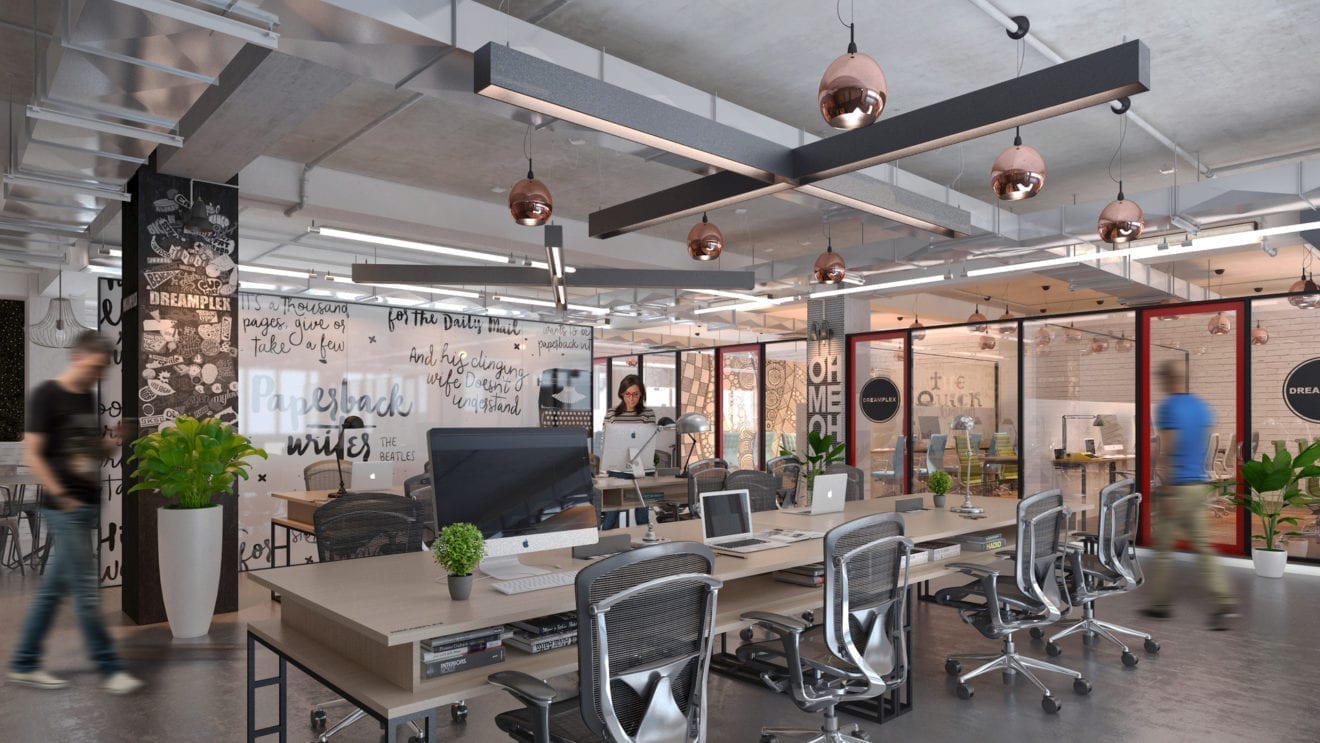
    Some prominent players in the market include local names such as Dreamplex, UPGen, CirCO, and Toong and global players like Regus, The Executive Center and WeWork.

    U.S.-based WeWork, operator of 4.16 million square meters of space globally, said its revenues in Vietnam rose by 40 percent in the first quarter.

    “Vietnam remains our most dynamic market in Southeast Asia,” WeWork director for Southeast Asia and Australia, Balder Tol, said.

  • Shinsegae launched coworking space in Seoul

    Shinsegae launched coworking space in Seoul

    Shinsegae International has launched a new coworking space in Seoul it expects will boost its retail business.

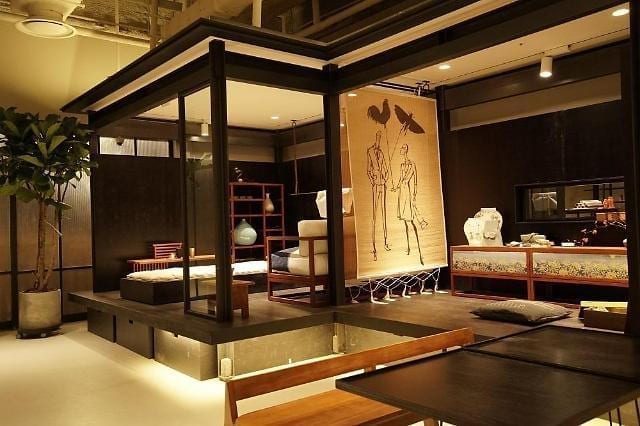
    The new 278sqm “Scale Up” space in Cheongdam-dong is targeted at startups in the lifestyle-related industry. With seven offices and meeting rooms, it is loosely modeled on the firm’s earlier coworking space S.I Lab for fashion enterprises.

    “Scale Up’s main purpose is not to provide space, but rather to support startups with growth potential,” said Shinsegae International executive director Park Seung-seok. “With our infrastructure, we aim to make a win-win situation for both Shinsegae International and small startups.”

    Shinsegae has reserved one of the Scale Up offices for foreign business operators visiting the country. Four other members will pay a monthly fee of KRW1.5 million (US$1280) to use the space, which includes support services such as opportunities to use the company’s retail channels and potential cooperation with Shinsegae brands.

  • Chinese co-working space operator opens second Singapore hub

    Chinese co-working space operator opens second Singapore hub

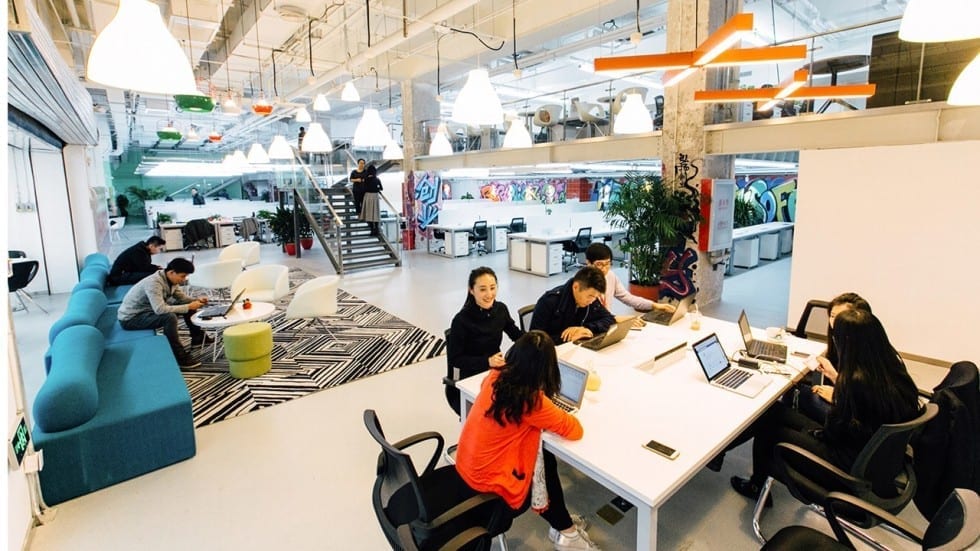
    Prominent Chinese co-working space operator UrWork is opening a second Singapore location in the first quarter of next year. The company, which is backed by Alibaba’s Ant Financial and Sequoia Capital among others, launched its first overseas branch at Ayer Rajah Crescent in July. Its new outlet will be at Suntec City and is part of the firm’s efforts to become a bridge between South-east Asia and China, founder and chief executive Mao Daqing said.

    Beijing-based UrWork, which has been billed as China’s answer to Silicon Valley co-working giant WeWork, has been valued at about US$1.5 billion (S$2 billion).

    It has 100 co-working sites in 33 Chinese cities and is the country’s largest co-working space operator.

    The company plans to expand globally into 35 cities with 160 locations over the next three years.

    To stand out in the increasingly crowded co-working market, UrWork positions itself as a provider of key services to start-ups looking for global growth.

    It runs a series of acceleration programmes to help new firms scale, and has also developed a proprietary scheme partnering Chinese government agencies and service suppliers to help foreign start-ups enter the Chinese market.

    Its second location in Singapore will span 1,300 sq m in Suntec City and will take in South-east Asian start-ups looking to expand into China, as well as Chinese firms keen on growing in the region.

    UrWork also invested in Jakarta-based co-working space Rework earlier this year as part of its regional strategy.

    The company signed a memorandum of understanding with trade agency IE Singapore and property giant CapitaLand last December to help Singapore firms break into the China market by offering co-working spaces as well as business advisory services.

    South-east Asia has become a market with plenty of opportunities for investors in China “due to a strong supply of high-potential tech start-ups, big market volume, surging amount of freelancers, low operational cost and high rate of digital penetration”, said Mr Mao.

    “As a Chinese home-grown company, we know the needs of Chinese entrepreneurs in China and overseas, laying a solid foundation for our fast-scaling and service integration,” he added.

    Key sectors of interest for UrWork in Singapore and South-east Asia include artificial intelligence, the Internet of Things and fintech, Mr Mao said.

  • Vietnam set for co-working office boom

    Vietnam set for co-working office boom

    With both local and international operators strongly expanding into co-working in Vietnam, the industry is expected to develop rapidly, experts have said.

    An office building for lease in Ha Noi. Co-working offices are in great demand thanks to the flexibility, creativity and amenities tenants get. It also offers a far more cost-effective solution for tenants compared to traditional leased office space.

    They said the development of this new segment in the property market is being driven by start-ups, freelancers and increasingly by small companies.

    Vu Cam Giang, co-founder of Moonwork co-working space in Ha Noi, told that initially co-working had attracted students, employees allowed to work from home, start-ups, freelancers and artists who were curious about the new experience.

    But now only start-ups and freelancers hire co-working space, with many of them needing a place where they can bounce things of each other or explore co-operation opportunities, she said.

    Since it was launched more than a year ago her co-working space has been always full, indicating the high demand, she said.

    A recent report from property consultant CBRE Vietnam said the co-working segment has grown rapidly in Ha Noi and HCM City since it was first introduced in 2012 and started to gain traction in 2015 with the entry of local operators Toong and Dreamplex.

    The report said there are now 17 co-working space operators with 22 venues, all but one local, but the situation is set to change with the entry of regional operators later this year and in 2018.

    Talking about the growth, the report said the global co-working industry has been growing at 53 per cent a year for the last five years. In Vietnam the rate has been 58 per cent.

    But with the concept still being relatively new in the country, and major regional and international operators yet to enter, the rate is set to accelerate, it said.

    Co-working offices are in great demand thanks to the flexibility, creativity and amenities tenants get. It also offers a far more cost-effective solution for tenants compared to traditional leased office space.

    Office rents now range between $1,100 and $1,400 per month.

    Besides, co-working tenants do not have to shell out money for furnishing or even buying computers and other office equipment.

    CBRE said the cost of co-working space varies across cities, and is less in Ha Noi and HCM City than most other cities in the Asia Pacific.

    But the offices are generally not located in prime buildings or areas since operators seek to keep rental costs low. They are often situated in underutilised buildings in non-central locations, it said.

    The entry of larger operators would likely usher in a period of consolidation and M&A activity within the industry, forcing poorly managed or unsuitable co-working spaces out of the market and improving the quality of existing operators, it said.

    “With the development of start-ups and freelancers and people’s changing perception in choosing working space, the co-working segment will continue to expand in Vietnam,” Giang said.

  • Unilever Foundry launches co-working space in Singapore

    Unilever Foundry launches co-working space in Singapore

    Unilever Foundry, a Unilever-lead initiative for start-ups and innovators, has opened a collaborative working space at the firm’s regional office in Singapore – the first of its kind for Unilever.

    Dubbed Level3, the new collaborative space was launched by the Unilever Foundry to provide startups with the opportunity to interact and partner with Unilever and other ecosystem partners to solve business challenges. This ranges from marketing to finance, logistics, supply chain and customer development.

    “Level3 offers our business a direct connection with disruptive technologies and changemakers to shape the way we work — ultimately impacting people’s lives,” said Pier Luigi Sigismondi, president, South East Asia and Australasia. “Level3 is the springboard for startups to scale and build successful businesses.”

    Opening February 14, within the Unilever regional headquarters in Singapore, the 22,000 square foot workspace aims to connect startups to Unilever brands, and give them access to existing Unilever Foundry programs.

    Fifteen international and local startups are taking part, including Adludio, ConnectedLife, Datacraftt, EcoHub, GetCraft, Next Billion, Olapic, Snapcart, TaskSpotting and Try and Review.

    It comes at a time when industry experts are attempting to foster relations in Singapore between big multinationals and innovators.

    “The set-up of Level3 in Singapore — a global first for Unilever — is a strong testament to the growing vibrancy of Singapore’s startup ecosystem,” said Dr Beh Swan Gin, Chairman, Singapore Economic Development Board. “Level3 represents an emerging corporate innovation model that is aligned with EDB’s efforts to encourage collaborations between multinational companies and other enterprises such as startups.”

    Unilever tapped Padang & Co to design the building and manage all programs within the space. The innovation experts will host learning and networking opportunities, such as fireside chats, sharing sessions, mentoring programs and access to training and resources offered by technology partners.

    “We envision Level3 as a vibrant workspace offering global opportunities for entrepreneurs. We are passionate about connecting members of the startup ecosystem to spark collaboration and ignite innovation,” said Derrick Chiang, CEO, Padang & Co.

  • Co-working spaces taking off in Vietnam

    Co-working spaces taking off in Vietnam

    Co-working spaces remain in the initial stages of development in Vietnam and are concentrated primarily in major cities like Hanoi and Ho Chi Minh City.  Hanoi now has around 14 co-working projects providing more than 7,000 sq m while HCMC has around ten projects with nearly 7,500 sq m for lease, according to the latest report from Cushman & Wakefield (C&W), a leading global real estate services firm.

    The most common sizes are from 300 sq m to 800 sq m and they tend to be located in the CBD or CBD-fringe districts or in new urban areas like the west of Hanoi or in Ho Chi Minh City’s District 2.

    “Globally, we are seeing demand growing at 10-15 per cent each year,” said Mr. Alex Crane, General Manager of C&W Vietnam.

    “APAC, and Vietnam in particular, is still in the early stages of co-working spaces becoming familiar and adopted.”

    Development of co-working spaces in Vietnam has been evidenced by the opening of more and more locations and especially the expansion of investors such as UP and Toong in Hanoi and Dreamplex in Ho Chi Minh City.

    UP now has two locations with nearly 1,400 sq m, Toong has three locations in Hanoi and one in Ho Chi Minh City with a total area of roughly 3,800 sq m, and Dreamplex has two locations in Ho Chi Minh City with over 3,700 sq m.

    According to Mr. Crane, there will be a further integration of co-working spaces into corporate real estate as CEOs are constantly looking to reduce real estate costs and co-working spaces offer a flexible, cost effective solution.

    “The rise of co-working spaces coincides with the number of millennials in the workforce and the working habits of Generations Y and Z will continue to impact how developers and multinational occupiers plan and use their commercial space,” he said.

    Co-working spaces are attractive to individuals, freelancers, startups and small companies mainly in the fields of technology and communications, who need flexibility as well as networking opportunities.

  • Thai Hubba is building a marketplace of fully-automated offices

    Thai Hubba is building a marketplace of fully-automated offices

    Thai co-working space Hubba has raised a pre-series A funding round, it announced yesterday. The company got US$350,000 in a round led by US-based venture capital firm 500 Startups. The round was joined by 500 Startups’ Southeast Asian fund 500 Durians and Thai fund 500 Tuk Tuks.

    Singapore-based VC Golden Gate Ventures and Thailand-based VC Ardent Capital also participated. Several local angel investors got involved as well, including Computerlogy CEO Vachara Aemavat, Playlab CEO Jakob Lykkegaard Pedersen, and Stock2morrow CEO Piyaphan Wongyara.

    Under the deal, Ruangroj “Krating” Poonpol, venture partner at 500 Tuk Tuks, will join Hubba’s board of directors.

    Hubba’s investors will be working with startups that use the company’s spaces to help mentor them, and even to potentially invest in some of them, Amarit says. The company will also work together with its investors on joint programs and activities going forward.

    Working together

    Hubba was the first co-working space in Thailand, founded by brothers Amarit and Charle Charoenphan in 2012. Today the company has a presence in seven locations and holds minority stakes in other co-working spaces like Punspace in Chiang Mai, Thailand, and Toh Lao in Vientiane, Laos.

    In the last three years, it has worked to build up the country’s startup ecosystem through its co-working space business as well as community activities and events. Last year, it also launched Pah Creative Space, a co-working space for designers and other creative freelancers.

    Hubba will use the new funding to fuel two new projects, Amarit says. One of them is Hubba-to, a planned artisan co-creation community that the company plans to launch in partnership with Thai real-estate developer Sansiri. The other is Node, a prototype for an “automated office” that will “enhance efficiency and reduce unnecessary expense.”

    “It’s going to work like Airbnb for private rooms and office spaces,” Amarit says. Node offers spaces that can be rented out for specific time slots and used for offices, meeting rooms, and so on. Landlords can list their properties on the site and wait for bookings to come. Payment via credit card is handled by the site. The listings include WiFi and amenities such as pens and notepads, and are cleaned by Node staff after use.
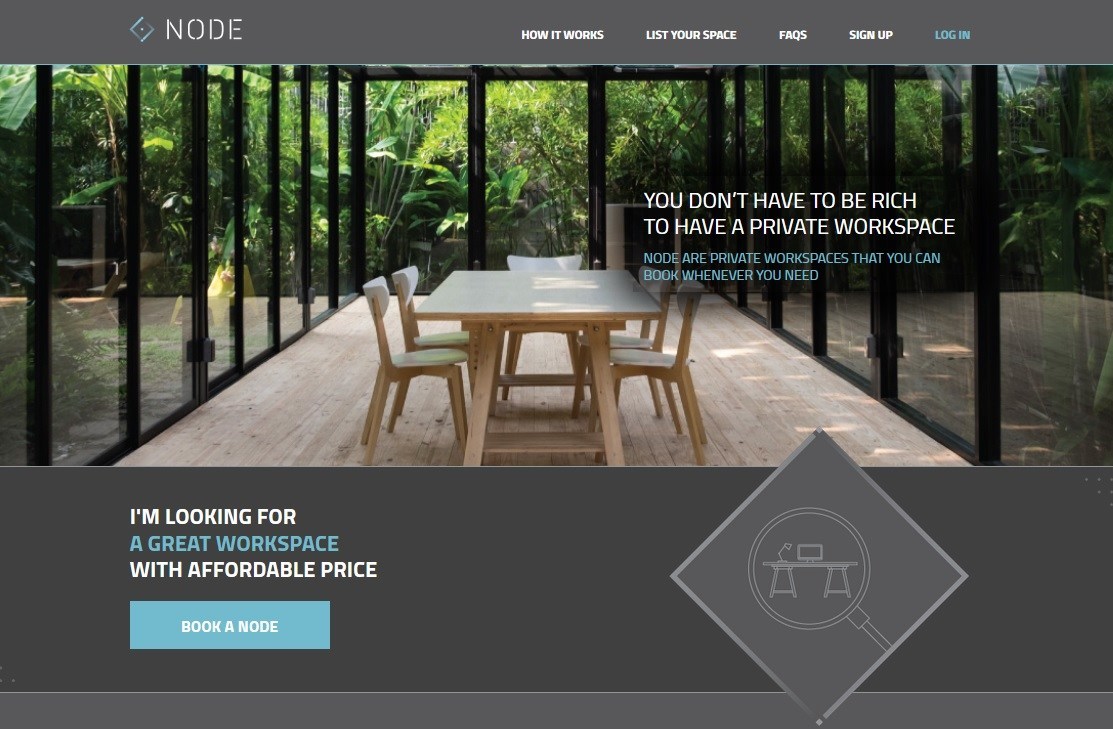
    Node (Airbnb for working space) screenshot

    “Our killer feature is that we will have what is called Node Plus,” Amarit explains. “[Those] are spaces that have been fully equipped with IoT (internet of things) and technology that allows spaces to be fully booked on-demand and managed remotely with no need for staff (locks, lights, AC, WiFi, and security).”

    The automation will help keep operating costs and booking fees down, Amarit says. Node takes a 20 to 30 percent commission from property owners.

    Taking the Airbnb approach to professional spaces is an interesting twist on the model used by Wework, the US-based co-working space decacorn, which sub-leases existing office space to entrepreneurs and freelancers.

    “I think everyone in the co-working world is amazed and in awe of Wework and its lofty projections,” Amarit says. “However, I think the markets we work in are definitely different from Wework, so we can’t just clone it. We need to find our own Southeast Asian model and Hubba-to and Node may be the way forward.”

    Hubba expects the funding to give it enough time to pursue “multiple growth trajectories.”

    “We will look to raise again in 2016 as we build traction and momentum for both projects,” he says.