Tag: cofee

  • Starbucks employees to receive 60% bonus amid firm’s worst year since 2020

    Starbucks employees to receive 60% bonus amid firm’s worst year since 2020

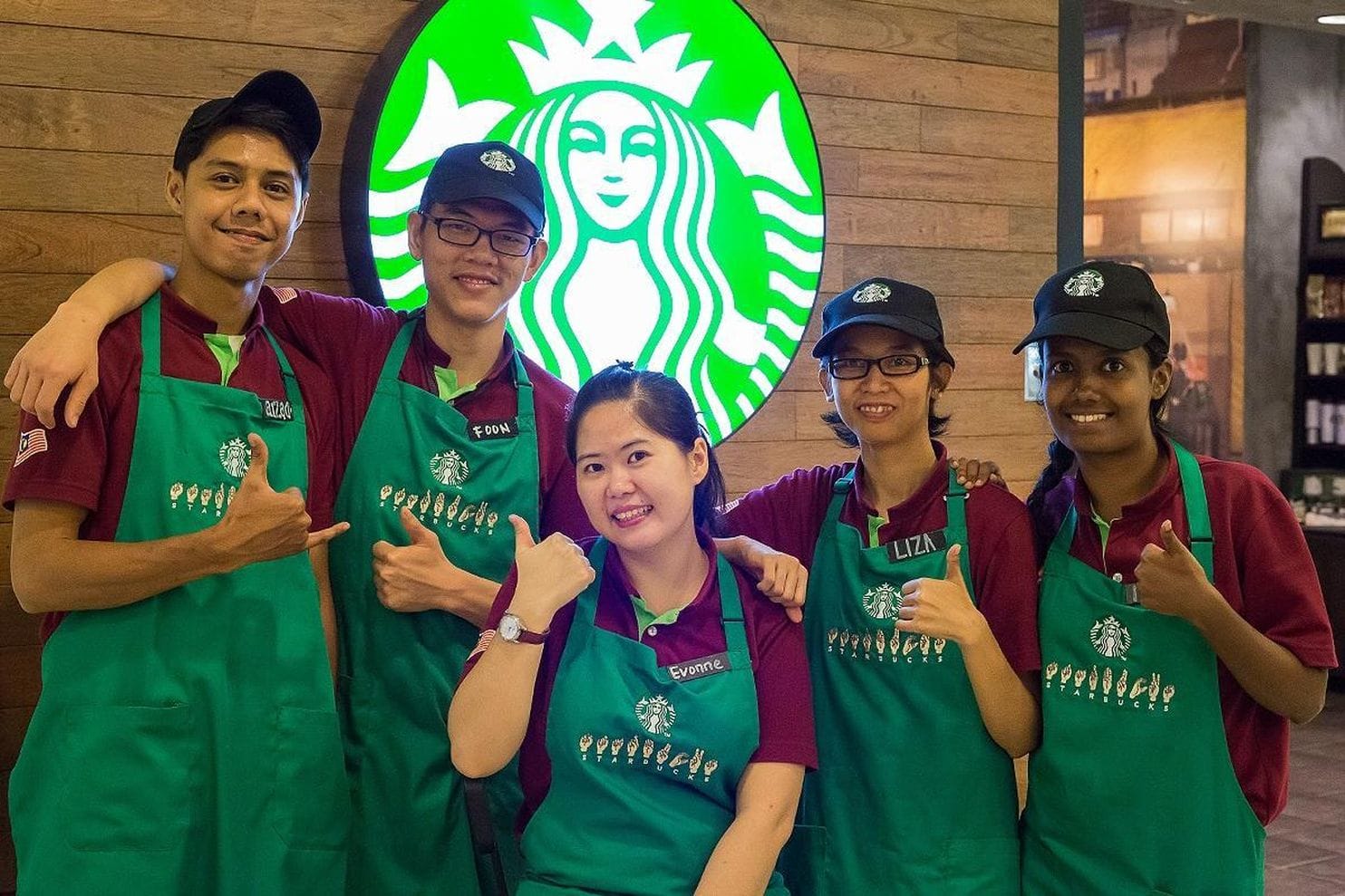
    Many corporate workers at U.S. coffee chain Starbucks will get just 60% of their total bonuses for the 2024 fiscal year amid the company’s first annual sales decline since 2020.

    The coffee giant’s poor performance in the fiscal year, which ended on September 29, cut into the overall bonus for employees who met their personal goals, a source familiar with the matter said.

    Bonuses for most employees are determined based on both individual performance and company results, with the latter calculated from revenue and operating income, a separate document shows.

    They are typically paid in December and, in the U.S., range from 5% of base pay for non-managerial employees to 45% for senior vice presidents.

    The reduced bonuses reflect the challenges Starbucks has faced this year as consumers, hit by widespread inflation, scaled back on their lattes.

    Its quarterly and yearly performances, reported late last month, show disappointing sales in its two largest markets, the U.S. and China, which fell short of analysts’ expectations.

    For the third consecutive quarter, Starbucks saw a decline in same-store sales, with a 7% drop this quarter—the steepest since the Covid-19 pandemic, according to CNBC.

    Net income attributable to the company for the fourth quarter was US$909.3 million, or 80 cents per share, down from $1.22 billion, or $1.06 per share, a year earlier. Net sales also decreased by 3% year-on-year to $9.07 billion.

    This was Starbucks’ first quarter under new CEO Brian Niccol, who joined the company in September to turn the business around.

    “It is clear we need to change our strategy to win back customers fundamentally,” he said in the report. “We have a clear plan and are moving quickly to return Starbucks to growth.”

    For the full fiscal year, global comparable store sales dropped by 2%, largely due to a 4% decline in comparable transactions, as shown in the firm’s report.

    This marked the second drop in the last 15 years, with the first occurring in 2020 due to Covid-19 restrictions.
  • Indonesia’s Tanamera Coffee launches in Malaysia

    Indonesia’s Tanamera Coffee launches in Malaysia

    Indonesian specialty coffee roaster and café chain Tanamera Coffee has opened its first outlet in Malaysia.

    The Kuala Lumpur outlet marks Tanamera Coffee’s third market after its native Indonesia, where it operates 22 stores, and Singapore, where it has opened eight sites since debuting in 2020.

    “We are thrilled to finally bring Indonesian specialty coffee to Malaysia with the opening of our very first outlet in the exciting and vibrant city of Kuala Lumpur. This is our third country and we can’t wait to serve you, both in this store and other upcoming outlets,” Tanamera Coffee said on social media.

    Founded in 2013 to promote Indonesian specialty coffee, Tanamera Coffee sources its coffee from the Aceh, Sumatra, Toraja, Bali, Java, and Flores regions of Indonesia.

    World Coffee Portal research forecasts the total Malaysian branded coffee shop market will exceed 2,700 outlets by 2025.

    Alongside strong outlet growth for convenience-focused operators, such as ZUS Coffee and Gigi Coffee, a wave of premium coffee chains are seeking to catalyse growing demand for specialty coffee in Malaysia.

    Having opened its first international outlet in Malaysia in October 2022, Indonesia’s Kopi Kenangan is aiming to reach 100 locations in the Southeast Asian country by the end of 2024. Luxury US brand Ralph’s Coffee entered Malaysia in the same month as part of its new flagship retail store in Kuala Lumpur.

    Meanwhile, Seattle-based Starbucks, operated in Malaysia by Berjaya Food Bhd, expects to reach 400 stores in July 2023. Additionally, Taiwanese specialty coffee chain HWC Coffee has grown its Malaysian footprint to 29 outlets and opened a flagship store and coffee academy in Kuala Lumpur in June 2023.

  • Huawei plans to launch coffee chain

    Huawei plans to launch coffee chain

    Telecommunication giant Huawei Technologies Co’s recent plan to enter the on-premise coffee market in China has triggered heated discussions on the beverage’s role in rejuvenating established non-food brands among younger consumers.

    Huawei has applied for two trademarks related to coffee. The registered name of one trademark is “One Cup of Coffee Absorbs Cosmic Energy”. The name is classified into the category of convenience food and the application is waiting for acceptance, according to Qichacha, a data bank that tracks business registrations.

    The other trademark is classified into the category of catering and accommodation, covering services including cafes, restaurants and mobile food supply. The application is waiting for review.

    The move is a follow-up to the company’s management interests in the coffee sector.

    In August, Ren Zhengfei, founder of Huawei, said that the company plans to open more than 100 coffee stores in the company’s Qingpu base in Shanghai to attract young people to work for the company.

    Before Huawei, domestic leading sportswear brand Li-Ning recently started its own freshly brewed coffee as it has applied to register its brand as “Ning Coffee”.The sportswear company already operates coffee services in Beijing, Xiamen in Fujian province, and Zhanjiang in Guangdong province. The company runs coffee as an innovation and added value to its in-store shopping experiences, according to Li-Ning, which owns more than 7,000 stores in the country.

    Li-Ning is one of the large-scale retail networks that have banked on the beverage to get closer to younger consumers. Beijing TRT Group, a traditional Chinese medicine pharmacy, China Post, Petro-China, Sinopec Group and even Goubuli-an iconic Tianjin-based bun specialist-have opened their own coffee units. The list of brands entering the coffee sector goes on.

    Zhu Danpeng, a food and beverage analyst, said the recent cross-sector marketing events, which have involved business extension into the coffee sector, have shared one identical aspiration-to get engaged with the younger generation, which has become a dominant consumer group, playing a crucial role in a brand’s future. “To make a brand younger is more or less about how to grow loyalty and frequency with the Gen Z consumers,” said Zhu.

    The capital market and investors have also been drawn to the fast-rising coffee industry, pushing the growth of on-premise coffee niche brands including Manner Coffee, M Stand and Seesaw as well as those internet-based packaged instant coffee brands such as Saturnbird Coffee.

    According to a report by Jiemian, the domestic coffee sector received financing of more than 4 billion yuan ($594 million) in 2021. In March, Canadian coffee group Tim Hortons in China announced it had received an investment of 1.2 billion yuan, propelling the chain to grow from the current 410 stores in the country to 2,750 stores by 2026.

    According to research institute iiMedia Research, in 2021, the coffee market has been valued at 381.7 billion yuan and is estimated to grow to 1 trillion yuan in 2025, with an average annualized growth rate of 27.2 percent.

    By comparison, milk tea, a darling among Chinese youth, has been gradually losing its appeal. According to Nayuki Tea’s annual financial report for 2021, the milk tea maker has seen a loss of 145 million yuan in net profit, which was 16.6 million yuan a year earlier.

  • Starbucks partners with Pokemon Go in Asia

    Starbucks partners with Pokemon Go in Asia

    Pokemon Go is excited to announce that they are partnering with Starbucks and that its stores in select Asia markets are transforming into PokéStops and Gyms in Pokémon GO.

    Adventurous Pokémon GO trainers in Hong Kong, Indonesia, the Philippines, Singapore, and Thailand can visit nearby Starbucks locations to discover Pokémon, join battles with their Pokémon teams, and pick up their favorite Starbucks treats to enjoy on-the-go. With the health and well-being of customers top of mind, the app’s increased range and additional features for socially-distanced connection will help Pokémon GO and Starbucks fans enjoy the world of Pokémon in more exciting ways.

    “Starbucks and Pokémon GO both represent important gathering spaces for community, both online and offline,” said Erin Silvoy, vp product and marketing, Starbucks Asia Pacific. “Starbucks is excited to offer our customers in Asia more ways to connect with the world of Pokémon GO, and for Pokémon GO trainers to enjoy the premium Starbucks Experience on their adventures.”

    “Niantic’s mission is ‘Adventures on foot with others,’” said Gary Chang, APAC business development lead at Niantic. “In partnership with Starbucks, we can bring our shared values of health and well-being together in this exciting experience for customers and trainers.” Since introducing the world to a new genre of mobile gaming – location-based AR games – Niantic has been working with brick-and-mortar brands like Starbucks across the world to offer customers new experiences focused on movement and exploration.

  • Singapore coffee chain Kimly boosts profit, despite Covid-19

    Singapore coffee chain Kimly boosts profit, despite Covid-19

    Singaporean traditional coffee shop operator Kimly has recorded a 5.3-per-cent year-on-year boost in half-year profit to SG$10.5 million (US$7.4 million).

    The result was achieved on a more modest 1-per-cent increase in sales to $107.4 million ($75.74 million) in the half-year ended March 31.

    The improved revenue was largely due to the brand’s five new coffee shops and eight food stalls opened since November.

    While the Covid-19 pandemic seriously and adversely impacted economic growth prospects in Singapore, Kimly’s coffee shops, canteens and food courts remain open for takeaway and delivery services throughout. Since the nation’s circuit breaker was introduced on April 7 footfall has fallen at these locations, the company said.

    “In line with the further tightening of circuit breaker measures recently, the group has suspended operations at its six Rive Gauche outlets and Cake Central Kitchen facility but the group does not expect the suspension to have any material impact on the group’s revenue.”

    The Kimly board said that besides placing focus on enhancing food offerings and operational efficiency in the upcoming year, “we remain committed to secure more long-term direct ownership of food outlets and food stalls in matured estates which is in line with our asset ownership strategy”.

    “We believe that there are still acquisition opportunities in the local market where we can tap on to further expand our presence in Singapore as well as enhance our profitability.”

  • Second Starbucks community outlet opens doors in South Korea

    Second Starbucks community outlet opens doors in South Korea

    A second Starbucks community store has opened in South Korea.

    The new venue, located in Seongsudong, Seoul, is described by the company as a “hub for young people and prospective startups to share information about networking and starting their own businesses”.

    The store is located near a sizable startup and social-venture community and a major metro station.

    Starbucks will host a series of startup workshops for young people at the store via its new Starbucks Youth Startup Entrepreneurship Programme, which is funded by a portion of sales from the store, coordinating with other stores across the market to offer the program to youth in other parts of the country.

    The community space within the store features movable walls and furniture as well as regular cafe seating.

  • South Korean cafe ranks continues to grow

    South Korean cafe ranks continues to grow

    The number of South Korean cafes continues to grow at a brisk pace, according to a government recent study.

    The Korea Fair Trade Commission reported there were 15,036 coffee shops in South Korea as of 2018, an increase of 7.9 percent (1105 shops) over the previous year. The rate of increase was the highest among all types of restaurants.

    The data may be a year out of date, but anecdotal feedback from the industry suggests the trend endured into last year

    As of 2018, average annual sales for South Korean cafes amounted to 231 million won (US$190,000), which was 6.5 percent more than in 2017.