Retail News CRM

Tag: Coinbase

  • Coinbase Survey Reveals: Over 60% Singaporeans Own Cryptocurrency – A Deep Dive into Their Investment Trends

    Coinbase Survey Reveals: Over 60% Singaporeans Own Cryptocurrency – A Deep Dive into Their Investment Trends

    Cryptocurrencies have gained significant traction in Singapore, with the majority of its citizens having some level of interaction with the digital asset, as revealed by a recent survey.

    Singaporean Interest in Cryptocurrencies

    A substantial portion of Singaporeans, amounting to 61 percent, are in possession of some form of cryptocurrency, according to recently published survey data. Unsurprisingly, the predominant demographic among these investors are individuals aged 18 to 34 years, who make up 70 percent of the group. Of these, about 68 percent are male.

    Investment Approach: HODL vs Trading

    The study also revealed the investment habits of cryptocurrency owners. The majority, 58 percent, were found to be long-term investors, a strategy commonly referred to as HODL or “hold on for dear life”. On the other hand, 22 percent were classified as occasional traders, with another 20 percent identified as active traders. Remarkably, 42 percent of the survey participants had been investing in cryptocurrencies for over two years.

    The investment allocation was also explored in the study, with 74 percent of respondents stating that 10 percent or less of their portfolios was invested in digital assets. These portfolios typically contained an average of three different types of cryptocurrency. The median portfolio size ranged within S$3,000 ($2,300) to S$5,000.

    Cryptocurrency Price Predictions

    Looking ahead, 25 percent of the respondents anticipate the price of Bitcoin to reach between $100,000 and $150,000 within the next year. Meanwhile, 15 percent predict a rise above $150,000. However, the majority hold a more conservative prediction, expecting the value to fall within the $50,000 to $100,000 bracket. Only 18 percent of the respondents foresee Bitcoin dropping below $50,000. The price of Bitcoin at the time of the survey’s publication was approximately $86,000.

    The data for this report was collected from a pool of 3,513 active retail investors and other interested individuals in Singapore. The survey was conducted between August 15 and August 19 of the current year.

    Questions & Answers

    What percentage of Singaporeans own cryptocurrency?
    According to a recent survey, 61 percent of Singaporeans own some form of cryptocurrency.

    What is the average investment allocation to cryptocurrencies in Singapore?
    The survey found that 74 percent of investors have allocated 10% or less of their portfolios to cryptocurrency holdings.

    What are the future price expectations for Bitcoin among Singaporean investors?
    Within the next year, 25 percent of the respondents expect Bitcoin’s price to reach $100,000 to $150,000, 15 percent predict a rise above $150,000, and the majority forecast a value between $50,000 and $100,000.
  • Coinbase Axes Nearly 1,000 Jobs

    Coinbase Axes Nearly 1,000 Jobs

    Winter for the cryptocurrency industry persists with Coinbase being the latest to downsize its business by cutting nearly 1,000 jobs.

    Coinbase – the world’s second largest crypto exchange by trading volume – will cut 950 jobs, or about 20 percent of its workforce as part of broader restructuring plans, according to a blog post by CEO and co-founder Brian Armstrong.

    The US-listed firm will also shut down several projects with a lower probability of success.

    In 2022, the crypto market trended downwards along with the broader macroeconomy. We also saw the fallout from unscrupulous actors in the industry, and there could still be further contagion, Armstrong said in the post.

    This marks the third round of layoffs for the crypto exchange since last year when it slashed 1,100 jobs in June followed by another 60 jobs in November.

    Coinbase is well capitalized, and crypto isn’t going anywhere. I believe recent events will ultimately end up benefiting Coinbase greatly (a large competitor failing, emerging regulatory clarity, etc.), and they validate our long term strategy, said Armstrong, referencing the FTX collapse.

    But it will take time for these changes to come to fruition and we need to make sure we have the appropriate operational efficiency to weather downturns in the crypto market, and capture opportunities that may emerge.

  • Blackrock Enters the Crypto World

    Blackrock Enters the Crypto World

    The world’s largest asset manager wants to make cryptocurrencies more accessible to its institutional clients. A welcome step for partner Coinbase, which is facing regulatory problems.

    You could hardly find two more divergent viewpoints on cryptocurrencies. Tee Fong Seng, head of private banking at Geneva-based bank Pictet in Asia, caused a stir at the Wealth Management Summit in Singapore with his statement Crypto will be an asset class that we cannot ignore but today, I don’t think there is a place for private bankers and private bank portfolios. Contrast that with the world’s largest asset manager, Blackrock, partnering with the US crypto exchange Coinbase.

    Through this cooperation, Blackrock CEO Larry Fink aims to make cryptocurrencies directly accessible to institutional investors, starting with Bitcoin. Under the agreement, users of Blackrock’s Aladdin institutional investment platform can sign up for Coinbase Prime to access crypto trading, custody, prime brokerage, and reporting. To participate in crypto trading, institutions must be clients of both Blackrock and Coinbase.

    The integration comes about four months after Fink’s announcement that Blackrock would explore ways to offer digital assets to its clients.

    Coinbase Prime institutional trading solution boasts around 13,000 institutional clients and is specifically tailored towards institutions such as hedge funds, financial institutions, asset- and financial managers. For Coinbase’s crypto ecosystem, the collaboration with Blackrock represents a huge vote of confidence given Blackrock’s $8.5 trillion in assets under management at the end of the second quarter.

    The partnership shows that institutional investors are becoming increasingly confident in the crypto market. This year, several major financial players either have entered the market or expanded their existing initiatives and offerings in digital assets. Blackrock, JP Morgan, Goldman Sachs, Deutsche Bank and Morgan Stanley are but a fraction of a growing list of traditional financial institutions using digital assets.

    This year’s crash in cryptocurrencies seems to be helping institutional adoption, with investors who felt they missed the boat now seeing current prices as a good entry point. Joseph Chalom, Blackrock’s Global Head of Strategic Ecosystem Partnerships, said the firm’s institutional clients «are increasingly interested in engaging in the digital asset markets and are focused on how to efficiently manage the operational lifecycle of these assets.»

    For Coinbase, this partnership couldn’t have come at a better time. Its US-listed shares, considered an indicator of overall crypto market sentiment, currently trading about 65 percent lower than at the end of last year, 2021 closed about 10 percent higher on Thursday following the Blackrock announcement.

    Coinbase, however, is facing regulatory issues. A former Coinbase product manager and two alleged accomplices are currently facing charges in a US federal court in Manhattan. Ishan Wahi is accused by U.S. law enforcement and the Securities and Exchange Commission (SEC) of insider trading while working at Coinbase.

    According to media reports, the SEC is investigating the company for selling digital assets that should have been registered as securities, prompting long-time Coinbase supporter and investor Cathie Wood to unload Coinbase shares in a big way.

  • HSBC Adds Coinbase to Crypto Ban List

    HSBC Adds Coinbase to Crypto Ban List

    Despite the growing embrace of cryptocurrencies among institutions and retail investors, HSBC is sticking to its policy of avoiding virtual currencies and stocks correlated to them.

    Europe’s largest bank in Europe, with total assets of $2.715 trillion, is likely to avoid Coinbase’s newly listed COIN stock because of lingering worries about crypto’s role in money laundering and criminal activity.

    HSBC has no appetite for direct exposure to virtual currencies and limited appetite to facilitate products or securities that derive their value from virtual currencies. This is not a new policy, Ankit Patel, HSBC corporate media relations manager, told crypto news platform Coindesk.

    Last week, the bank confirmed that it stopped customers of its online trading platform InvestDirect from adding MicroStrategy stock to their portfolios, calling them a «virtual currency product.» The company holds about $5.5 billion in bitcoin, or about 80 percent of its $6.8 billion market capitalization.

    Coinbase debuted on Nasdaq last Wednesday in a direct listing, in what was seen as another key step towards cryptocurrencies becoming a mainstream medium of exchange.

    The listing of Coinbase’s means that even if average investors don’t want to buy or sell cryptocurrencies on their own, they can still can invest in the cryptocurrency economy by taking a stake in one of its biggest players. After a day of trading, the U.S.’ largest cryptocurrency exchange had a market capitalization of $86 billion.

    To stay competitive amid client demand for digital assets, financial sector giants have ramped out their offerings. These include BNY Mellon, which announced the introduction of crypto custodial services and Morgan Stanley, which will roll out a bitcoin offering to wealth management clients and is reportedly mulling exposure in Bitcoin through its investment arm, Counterpoint Global. Goldman Sachs has also said it would offer investments in bitcoin and other digital assets to its wealth clients.

    Outside of the U.S., notable global banks that have also launched crypto offerings include Standard Chartered and DBS.

  • Bitcoin drops as South Korea moves to regulate cryptocurrency trading

    Bitcoin drops as South Korea moves to regulate cryptocurrency trading

    Currently, many cryptocurrency exchanges (including South Korean ones like Kucoin) allow trading with little more than your name and an email.

    Bitcoin appeared to find a bottom on Friday, rebounding to $15 000 after moves by South Korea to curb speculation and protect retail customers took the cryptocurrency down more than 8% on Thursday.

    “The government had warned several times that virtual coins cannot play a role as actual currency and could result in high losses due to excessive volatility”, the country’s government said in a statement.

    Those new regulations would include prohibiting anonymous trading accounts and could give authorities the ability to shut down exchanges, Reuters said. Among other concerns, unmasking bitcoin traders would open up owners to taxation, a significant concern now that bitcoin has increased in value exponentially. The virtual currency plunged more than 10% to below $14,000 on Thursday morning in Asia, according to CoinDesk.com, and continued to fluctuate through the day.

    As part of what appears to be a series of updates created to improve oversight of industry practices, the government will also seek to bar banks from issuing new virtual accounts to cryptocurrency exchanges.

    Mati Greenspan, a Tel Aviv-based analyst at investment firm eToro, said it would be too early to gauge the impact of the rules, but they sounded “ominous”. Demand is so high that prices for the unit are around 20 per cent higher than in the United States, its biggest market.

    The country is also home to Bithumb, one of the world’s biggest bitcoin exchanges.

    In comparison, about 11% of Americans polled by student loan comparison website LendEdu in September said they either now own or have owned virtual currencies in the past, while 17.2% said they would invest in bitcoin in the future.

    South Korea may also stop local companies from providing settlement services for virtual currency transactions.

    In a case highlighting the risks of cryptocurrency, a Seoul virtual currency exchange declared itself bankrupt last week after being hacked for the second time this year.

    So far, China is the only country in the world to have totally banned bitcoin exchanges.

    Seoul-based Youbit said it was filing for bankruptcy after hackers stole almost a fifth of its clients’ holdings.

  • Why Has Bitcoin’s Price Gone Up So Fast ?

    Why Has Bitcoin’s Price Gone Up So Fast ?

    Bitcoin has been in a bull market like few the world has ever seen. At the beginning of the year, the price of a Bitcoin was below $1,000. It hit $5,000 in October, then doubled by late November. And on Thursday, less than two weeks later, the price of a single Bitcoin rose above $20,000 on some exchanges, according to Coinmarketcap.

    The latest price spike has been credited to signs that Wall Street companies plan on bringing their financial heft into the market.

    At the current cost, the value of all Bitcoin in circulation is about $300 billion. To get a sense of how big that is, all the shares of Goldman Sachs are worth about $90 billion.

    The gains have been driven by several other factors — perhaps the most important being the irrational mentality that can take over in speculative bubbles.

    But most people buying Bitcoin are doing so in the belief that others will want it even more in the future. The gains, though, have many people, even Bitcoin believers, anticipating a big crash.

    Currently, the average price of one Bitcoin is about $15.435, according to Blockchain.info, a news and data site.

    Bitcoin used to be all about libertarians and black-market trade. Are those still driving the price?

    The fringe communities that drove Bitcoin in its early years are playing a much less important role in the current rally.

    Many investors have said the most important factor driving the current enthusiasm is the entry of hedge funds and other institutional investors.

    The path for large investors has been smoothed by the Chicago Mercantile Exchange and Chicago Board Options Exchange, which have been racing to roll out Bitcoin futures contracts. Most banks are already signed up with these exchanges and consequently can immediately begin trading the contracts. The options exchange has said it plans to start trading on Sunday.

    It is still unclear how the arrival of Bitcoin futures will influence the demand for the digital tokens.

    With a futures contract, banks can bet on the price of Bitcoin without holding the underlying Bitcoins. This is expected to bring many new players into the market who don’t want to deal with the complications of holding Bitcoins.

    But the futures contract will also allow investors to short Bitcoin, or bet on the price’s going down, which has been hard to do until now. Some analysts think this could put downward pressure on the price. Other market participants have worried that Bitcoin futures could spread the risks of Bitcoin into the rest of the financial system.

    People still use Bitcoin and other virtual currencies to make ransom payments and buy illegal goods online, including synthetic opioids. But that activity has been on the wane since the authorities shut down some of the largest online black markets this year.

    What role are smaller investors playing in the virtual currency markets?

    Individual investors have been just as active as large investors. Nowhere has the phenomenon of ordinary people buying virtual currencies been more visible than in South Korea, where several exchanges have storefronts to help new customers. This is all the more remarkable because just a year ago, Koreans showed almost no interest in these markets.

    Small Japanese investors have also been investing in Bitcoin. They have been encouraged by laws passed this year that essentially legalized Bitcoin and allowed Bitcoin exchanges to get regulatory licenses.

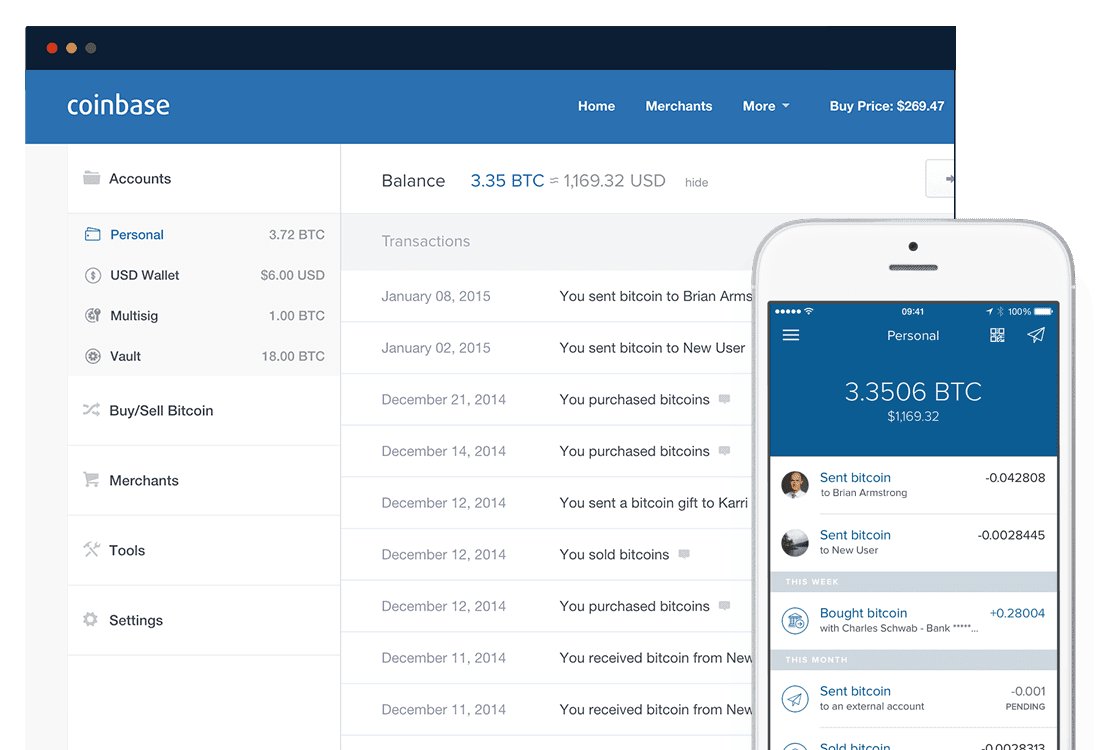
    Most small-time investors have gone to the San Francisco company Coinbase, which provides a Bitcoin brokerage service, similar to Charles Schwab, as well as an exchange for larger investors. Coinbase now has more account holders than Schwab, and it has struggled to keep up with the growth.

    China used to be the most active country for Bitcoin trading and mining, but the authorities there have cracked down this year.

    What are the dangers of getting into this market?

    Many of the largest exchanges, including in South Korea, are essentially unregulated. The lack of oversight means that no one is checking that the exchanges are properly securing their customers’ money or that large players are not able to manipulate the price. One of the largest exchanges in the world, Bitfinex, has been hacked numerous times and provides little transparency about where it is keeping its money.

    Even regulated exchanges, like Coinbase in the United States, have not been battle tested like larger financial institutions, and their operations have gone down at key moments.

    Once people buy Bitcoin or other virtual currencies, they are often targeted by hackers who have become experts at penetrating Bitcoin accounts.Bitcoin “wallets” are vulnerable to new kinds of attacks that are not a problem for ordinary financial accounts.

    Most important, in contrast to money in a bank account, when a Bitcoin is gone there is essentially no way to get it back and no insurance covering its loss.

    Are more people using Bitcoin to pay for things?

    When Bitcoin was released in 2009, it was described as a new kind of electronic cash.

    Recently, though, many programmers working on Bitcoin have said the system in its current form is not a particularly good way to pay for things.They argue that it is best designed to serve as a sort of scarce commodity, like digital gold, allowing people to keep their money outside the control of governments and companies.

    Many people who want to use virtual currencies for online payments are looking to Bitcoin competitors, like Bitcoin Cash and Monero.

    What role are the other virtual currencies playing in this frenzy?

    Earlier this year, bullish sentiment was focused on Ethereum, a virtual currency network that is more adaptable than Bitcoin. The price of Ether, the virtual currency on the Ethereum network, has continued to rise in recent months, but not as fast as Bitcoin.

    Many investors were also putting their money into custom virtual currencies released by entrepreneurs in so-called initial coin offerings. These new virtual currencies have generally been designed to serve as the internal payment mechanisms on new software the entrepreneurs are building.

    This fall, though, regulators have signaled that they are planning to crack down on coin offerings.

    Where did virtual currencies come from, and how do they work?

    The Bitcoin software was released in early 2009 by a mysterious creator who went by the name of Satoshi Nakamoto. The search is still on for the true identity of Satoshi.

    The software released by Satoshi set out the basic rules for Bitcoin and the computer network on which it lives. Unlike other forms of money, which are controlled by governments and financial institutions, Bitcoin operates on a decentralized network of computers that no one institution controls.

  • Bitcoin debit card makes cryptocurrency more accessible

    Bitcoin debit card makes cryptocurrency more accessible

    Coinbase has launched a debit card that enables US users to spend bitcoins anywhere Visa is accepted.

    The launch of a debit card – and the recognition of the currency by the Visa card system is further evidence that the new generation cryptocurrency is building momentum globally.

    The card is a result of a partnership between Shift Payments and Coinbase. The former aims to integrate multiple currencies into a single card, while the latter provides digital ‘wallets’ where 2.8 million users across the world go to for their bitcoin transactions. With a Shift Card, users can link their Coinbase account to a physical Visa debit card, which they can use to pay at participating stores in real life or online, wherever Visa is accepted (the team is also working on incorporating airline miles and other loyalty points.)

    For now, apart from the US$10 card issuance charge, there are small fees – domestic transactions fees from BTC to USD are charged at zero per cent, and ATM withdrawals are US$2.50.

    The Shift Card could make bitcoin more accessible, and counter its lack of usage, which is caused largely by the misconception among consumers that not many businesses accept it. (They’re wrong: 38 million merchants worldwide do).

    Unlike conventional currencies, cryptocurrency is an open network not controlled by any bank or government, but managed by its users. It is hoped that the system will provide a more democratic, transparent, and cheaper way to trade, upgrading the status quo, which some argue were not designed for the digital era.

  • Coinbase Penetrates Singapore With New Retail Bitcoin Service

    Coinbase Penetrates Singapore With New Retail Bitcoin Service

    Coinbase, one of the biggest bitcoin exchanges and wallet services in the United States, has unveiled retail buy-and-sell operations in Singapore and Canada. 

    The operations is part of the San-Francisco-based company’s expansion into Asia to make digital currency more accessible around the globe, Brian Armstrong, Coinbase CEO and co-founder, disclosed.

    The cryptocurrency exchange and wallet service firm in Singapore, set to open on Thursday, will allow clients to buy and sell virtual cash with the Singapore currency.

    At around 8 a.m. today Singapore local time, customers in the country can buy and sell digital cash using Singapore Dollars via Coinbase.

    Coinbase has also unveiled a buy and sell service as well as a bitcoin exchange for professional online traders in Canada earlier this week.

    According to Coinbase International Expansion head David Farmer, The Lion City is a major market for the company. “At present, over 15,000 people in Singapore have signed up for a Coinbase Wallet.”

    With more and more customers realizing the importance of bitcoin, Coinbase is making sure they give what the people need. Famer added: “By extending our buy and sell service in Singapore, we are helping to make their on-ramp to the Bitcoin world as simple and as safe as possible as we move ahead.”

    Unlike conventional currencies, digital money is purchased and sold via peer-to-peer network immune to government control. Being independent in nature, Bitcoin is not supported by a central bank, and its value fluctuates based on user demand.

    Singapore has a reputation for financial trust and confidentiality, and is well-established to serve a big chunk of the rapidly-evolving emerging markets like Thailand, Vietnam, Indonesia, and Philippines.

    Today, Coinbase has business centers in nearly 30 geographical locations around the globe. The company aims to have a presence in 40 countries by the end of the year, Armstrong said.

    Coinbase is being funded by 21 investors, totalling $107 million. Based on analysts estimates, the company is worth more than $400 million.

    Bitcoin was trading at $229.35, rising 0.6 pct on the day as of Wednesday.