Tag: cola

  • Coca-cola Unveils Ai-powered Vending Machine For Enhanced, Personalized Consumer Experience

    Coca-cola Unveils Ai-powered Vending Machine For Enhanced, Personalized Consumer Experience

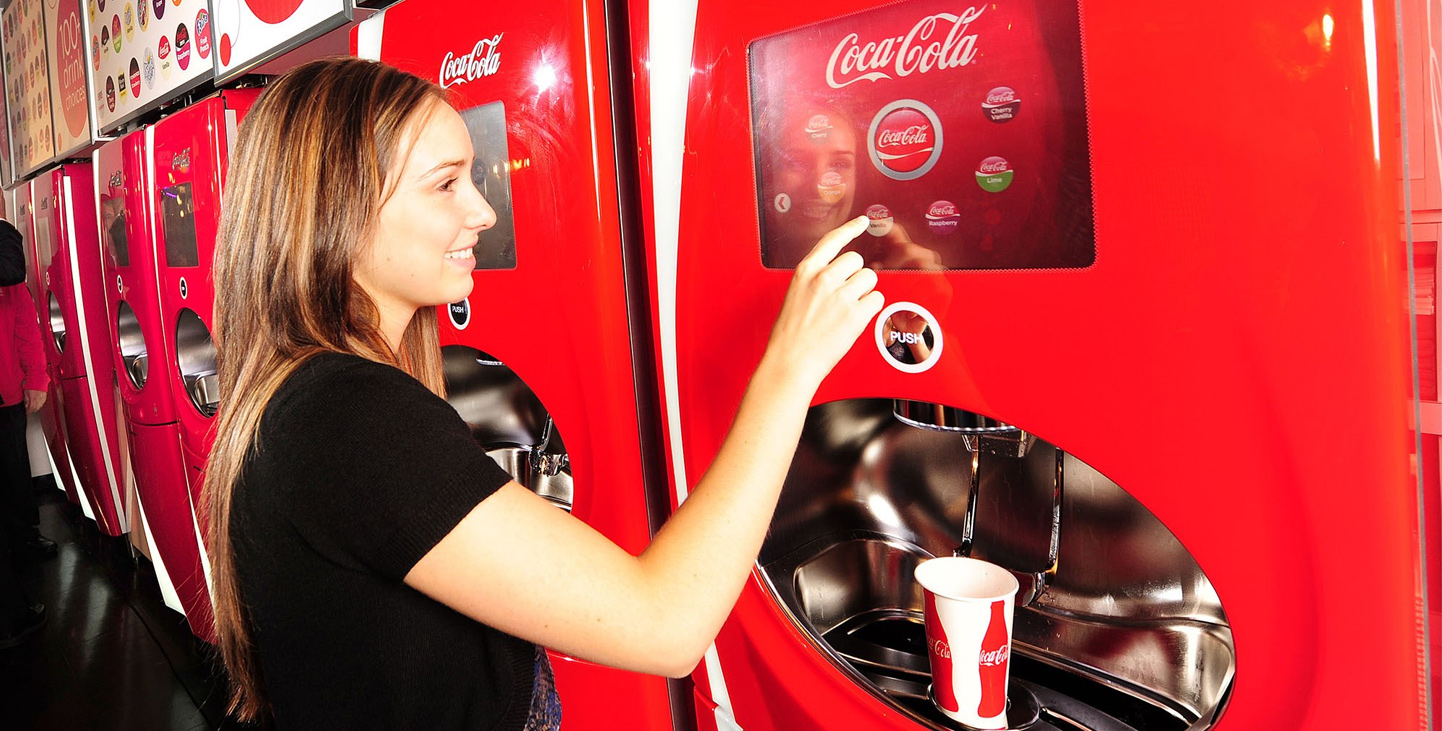
    Coca-Cola has debuted its most recent innovation in the form of a Coke&Go cooler vending machine. This cutting-edge machine is powered by artificial intelligence (AI) and computer vision, creating an upgraded, efficient, and personalized vending experience for consumers.

    Enhanced Consumer Experience

    The Coke&Go cooler vending machine allows consumers to gain access via their smartphones. This can be done by either scanning a QR code or by inputting credit card information, providing a seamless and technologically advanced method of interaction. What sets this vending machine apart is its ability to identify products using a product recognition technology. This means that customers can confirm and complete their purchases through the payment options that they have linked with the system.

    Terry Burbidge, GM of vending at Coca-Cola Europacific Partners New Zealand, underlined that this move aims to align their products more closely with the modern lifestyle of their consumers. He stated, “It’s about making refreshment more intuitive, more accessible, and more aligned with how Kiwis live today.”

    Smart Inventory Tracking

    The latest version of this vending machine also comes equipped with smart inventory tracking. This feature ensures that the cooler vending machines are restocked with the correct beverages at the right time. In doing so, not only does it enhance efficiency, but it also significantly reduces the likelihood of items being out of stock.

    The soft drink behemoth has plans to expand the presence of this innovative vending machine following a successful trial at the Sydney Airport during the previous year. Over the course of the next two years, hundreds of these advanced cooler vending machines will be installed across Australia and New Zealand.

    Questions & Answers

    What is the Coke&Go cooler vending machine?
    The Coke&Go cooler vending machine is a new type of vending machine by Coca-Cola that uses artificial intelligence and computer vision to provide an efficient and personalized experience.

    How do consumers interact with the Coke&Go cooler vending machine?
    Consumers can interact with the machine using their smartphones, either by scanning a QR code or entering their credit card information.

    What are the benefits of the vending machine’s smart inventory tracking feature?
    The smart inventory tracking ensures that the vending machines are consistently stocked with the right beverages, which improves efficiency and reduces the chance of items being out of stock.
  • Pepsi Unveils Prebiotic Cola: A Revolutionary Step In Classic Beverage

    Pepsi Unveils Prebiotic Cola: A Revolutionary Step In Classic Beverage

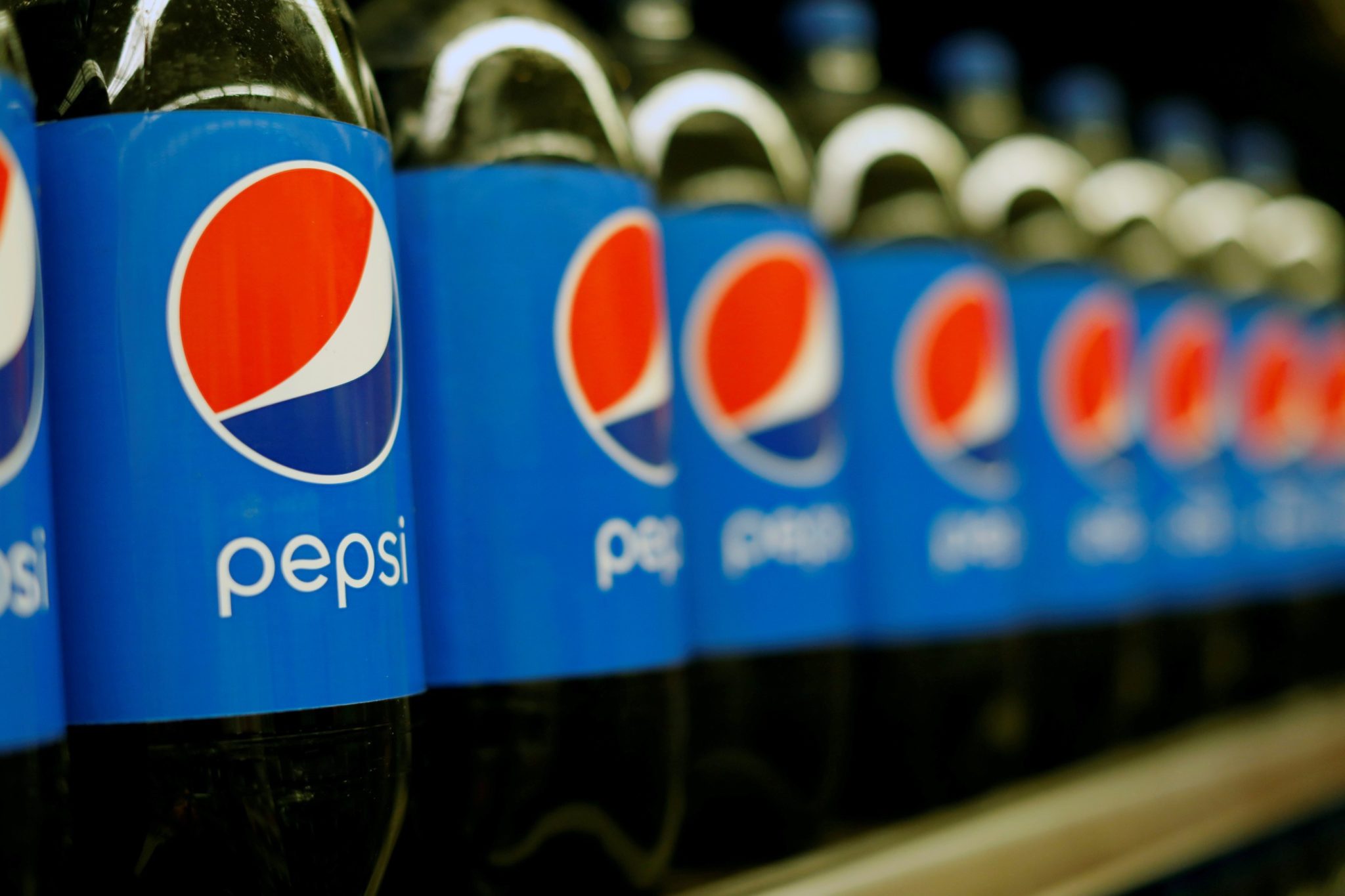
    PepsiCo has announced the launch of Pepsi Prebiotic Cola, a significant development in the traditional cola category that it hasn’t seen in two decades.

    The Modern Twist to Classic Pepsi

    The new product brings a fresh perspective to the conventional Pepsi flavor, enhanced with functional prebiotic fiber aimed at promoting gut health. Pepsi Prebiotic Cola is available in two distinctive flavors: Original Cola and Cherry Vanilla. Each 350ml can of this innovative concoction includes five grams of cane sugar, 30 calories, and three grams of prebiotic fiber, and is void of any artificial sweeteners.

    A Leap Forward in Cola Experience

    PepsiCo’s US CEO, Ram Krishnan, expressed his excitement about the new product, stating that Pepsi Prebiotic Cola takes a significant leap forward in offering consumers more choice and functional ingredients in their cola drinking experience, without sacrificing the iconic Pepsi taste that the brand is renowned for.

    Reflecting Mindful Consumption Trends

    The introduction of Pepsi Prebiotic Cola is a marker of shifting trends towards more conscious consumption. This product complements PepsiCo’s existing portfolio, which includes Pepsi Zero Sugar and Poppi, a rapidly growing prebiotic soda brand recently acquired by PepsiCo.

    Availability and Packaging

    The new Pepsi Prebiotic Cola range is scheduled to launch online in the fall, and it is expected to be available in retail stores nationwide in the early part of next year. The product will be sold as single cans and in eight-packs, allocated in the conventional soft drink aisle, alongside Pepsi’s comprehensive range.

    Questions & Answers

    What is the new product that PepsiCo has launched?
    PepsiCo has launched Pepsi Prebiotic Cola, a product that brings a modern twist to the traditional Pepsi flavor with the addition of functional prebiotic fiber.

    What are the key features of Pepsi Prebiotic Cola?
    Pepsi Prebiotic Cola contains five grams of cane sugar, 30 calories, and three grams of prebiotic fiber. It does not contain any artificial sweeteners and is designed to support gut health.

    When and where will Pepsi Prebiotic Cola be available?
    The new Pepsi Prebiotic Cola range will be available online in the fall and in nationwide retail stores in the early part of next year.

  • PepsiCo makes new leadership appointments across ANZ

    PepsiCo makes new leadership appointments across ANZ

    PepsiCo has appointed Kyle Faulconer – its current CEO for Australia and New Zealand (ANZ) – to a wider role, including responsibility for IndoChina Foods.

    Faulconer moved from the US in 2021 to join the company as its new leader in the ANZ market. According to Wern-Yuean Tan, chief commercial officer and CEO for Apac at PepsiCo, Faulconer’s leadership over the past two years has helped drive the company to new heights.

    “Kyle has identified new growth platforms that have enabled portfolio and channel expansion, as well as stronger capabilities, including marketing transformation and demand acceleration,” said Tan.

    “With a people-first approach, Kyle has also personally invested significant time into talent development, empowering teams and facilitating growth opportunities.”

    The company has also made two new GM appointments to support Faulconer’s promotion.

    Alexa Horley, CCO for PepsiCo Australia, has been named GM of Australia Foods and has end-to-end responsibility for the food business.

    Horley has an 18-year tenure at PepsiCo and has held various leadership positions locally and in Asia. In her most recent role, she has led the commercial agenda, delivering strong category growth and business expansion, transforming commercial capabilities – including the digital and data agenda – and accelerating e-commerce.

    Stephan Anderson, current CFO for PepsiCo ANZ, has been given an additional role as GM for ANZ Beverages.

    In his new role, Anderson will lead the finance functions across ANZ Food and Beverages and will be responsible for the entire beverages business.

    Anderson joined PepsiCo in 2022 and has helped transform its finance function by introducing innovative digital solutions and elevating its partnering capabilities.

    The company added that Anderson played a pivotal role in the beverage business by improving relationships with bottling partners and successfully launching Bubly last year, the first brand PepsiCo has launched since it began operations in Australia.

    “Alexia and Stephan are valuable members of our leadership team, and I am thrilled that they have taken up their new roles,” shared Faulconer.

    All appointments are effective immediately.

  • PepsiCo has no plans to change portfolio after WHO aspartame warning

    PepsiCo has no plans to change portfolio after WHO aspartame warning

    The World Health Organization reaffirmed its recommended intake of aspartame Thursday, but the agency’s classification of the sweetener as a possible carcinogen could still scare away diet soda drinkers and lead to new beverage formulas.

    Soda consumption has fallen over the past two decades as consumers have switched to drinking more water or picking beverages with less sugar. However, diet sodas have been a bright spot for the category in recent years.

    Although full-calorie options still dominate the soda segment, diet sodas now represent more than a quarter of sales. Coca Cola’s and Pepsi Co’s bets on zero-sugar versions of their namesake sodas have been paying off for both companies. Diet Coke, Coke Zero, Pepsi Zero Sugar and Diet Mountain Dew all contain aspartame.

    On Thursday, the International Agency for Research on Cancer, a WHO agency, identified a possible link between aspartame and a type of liver cancer called hepatocellular carcinoma. WHO officials said more research on the potential connection is needed.

    A separate body, the Joint Expert Committee on Food Additives, said in its own report that the acceptable daily intake of the sweetener is under 40 milligrams per kilogram of body weight, reaffirming prior recommendations. For most adults, that means drinking less than nine to 14 cans of diet soda every day.

    While the findings on possible links to cancer may not deter consumers who drink smaller amounts of diet soda, the announcement could at least temporarily hurt sales.

    Diet sodas are at least 50% more popular with higher-income consumers than with lower-income people, according to TD Cowen data. Those consumers could be concerned by the WHO’s report, TD Cowen analyst Vivien Azer wrote in a research note last week.

    The biggest risk for soda makers is how much attention the announcement garners. CFRA analyst Garrett Nelson wrote in a June 29 note that the news could hurt sales volumes of low-calorie sodas if enough consumers see the headlines.

    Likewise, Wedbush analyst Gerald Pascarelli told CNBC he thinks the report could hit sales in the category. But the dip might not last long.

    “These companies are quick to pivot and to do what’s necessary to maintain momentum for their brands, and we suspect they’ll do the same thing,” he said.

    Dr. Francesco Branca, head of the WHO’s nutrition and food safety division, said manufacturers who use aspartame in their food and drinks should consider making their products without the sweetener.

    But PepsiCo Chief Financial Officer Hugh Johnston said on Thursday that the company has no plans to change its use of aspartame. He added that the company doesn’t include the sweetener in much of its portfolio.

    Aspartame was used in Diet Pepsi until 2015, when the company tweaked the formula. After backlash from customers, PepsiCo brought it back a year later. But the change didn’t last long — the beverage giant got rid of aspartame in Diet Pepsi in 2020. It still uses it in Pepsi Zero Sugar.

    Coke faces more risk of losing out on sales over aspartame concerns, according to CFRA’s Nelson. The beverage giant currently uses the sweetener in both its Diet Coke and Coke Zero, but could swap it out for another, such as stevia, in the future.

    Even so, Edward Jones analyst Brittany Quatrochi said she isn’t expecting a big hit to diet soda sales.

    “Consumers may trade into a different sugar-free offering, but this isn’t the first kind of food or beverage product to be labeled a carcinogen,” she said.

    For example, the IARC classified red meat as a probable carcinogen in 2018.

    Makers of diet sodas aren’t fretting over lost sales yet. The American Beverage Association, which lobbies on behalf of Coke, PepsiCo, and Dr. Pepper’s took the WHO announcement as further confirmation of the sweetener’s safety.

    “With more than 40 years of science and this definitive conclusion from the WHO, consumers can move forward with confidence that aspartame is a safe choice, especially for people looking to reduce sugar and calories in their diets,” ABA interim CEO Kevin Keane said in a statement.

    Besides diet sodas, aspartame can also be found in a variety of foods, including breakfast cereals, chewing gum and ice cream. It’s widely used as a sugar substitute because it is 200 times sweeter, meaning it can be used in much lower concentrations.

  • Coca-Cola Vietnam sets record of Vietnamese Tet table with the most participants

    Coca-Cola Vietnam sets record of Vietnamese Tet table with the most participants

    Coca-Cola Vietnam set a world record for the largest Vietnamese Tet meal table with the participation of 1,000 multi-generation families in Ho Chi Minh City on January 8.

    The meal was recognized as a record-setting event by the World Records Union (Worldkings). This record honors the tradition of family reunions over Tet meals and conveys the message that Tet may change, but the magic remains.

    A total of 436 tables were arranged into the shape of two Coca-Cola bottles at Hoa Lu Stadium. More than 3,000 people from 1,000 Vietnamese families were seated around the tables to enjoy a Tet party with various traditional dishes and share memories of family reunions.

    After two years of the Covid-19 pandemic, the Coca-Cola’s Tet event has returned, highlighting the meaning of family reunion that Coca-Cola wishes to bring to Vietnamese consumers.

    Leonardo Garcia, General Director of Coca-Cola Vietnam and Cambodia, said: “Coca-Cola has been part of millions of Vietnamese family dinners for almost 30 years. We know how important the Tet reunion meal is for Vietnamese. This year, with the Timeless Magic Table event, we bring back the memories of old Tet family meals with an ice-cold Coke, because we know those meals can connect family members of all generations, something that never changes.”

    Also in this event, Coca-Cola together with partner Al’s Fresco set the record for “The organization that gives away 1,000 pizzas to serve the most families in the same event in Vietnam.”

    The World Records Union officially recognized the record (Worldkings).

    Proud to be part of the Tet meals of millions of Vietnamese families, Coca-Cola strives to preserve and promote the values of friendship and community every Tet season.

    This year, Coca-Cola Vietnam has supported more than 5,400 underprivileged people across Vietnam with a total value of VND5.3 billion to help them celebrate Tet. This was achieved thanks also to the contribution of the community, the companion of associations, unions, strategic partners of the company as well as local authorities.

    Early on, Coca-Cola launched a campaign to contribute VND15,000 to the Vietnam Red Cross Tet Fund each time consumers interacted with the brand on its website. Coca-Cola and Vietnam Red Cross have supported 3,000 underprivileged people across the country through “0 VND Tet Market.”

    Under the campaign, more than 4,000 chung and tet cakes will also be sent to students, homeless, and self-employed people in Ho Chi Minh City and Hanoi, who cannot return to their hometown to celebrate Tet.

    In addition to the partnership with Vietnam Red Cross, this year, Coca-Cola has continued its tradition of handing out Tet gifts to families and disadvantaged people in the neighborhood of its factories. The program is supported and accompanied by the local People’s Committee, Women’s Unions and Departments of Labor, Invalids and Social Affairs to present 2,400 Tet gifts to underprivileged people and families in 13 provinces and cities.

  • PepsiCo expert reveals how to leverage technology to future-proof personalization

    PepsiCo expert reveals how to leverage technology to future-proof personalization

    For years, brands have been perfecting personalization strategies that resonate with consumers and make them feel like individuals. For many B2C brands like PepsiCo, classic personalization has meant plugging simple forms of data like email, names, addresses or recent purchases into outbound channel communications to ensure touchpoints are viewed as timely, relevant and contextual.

    Tim Glomb, VP of Content and Data at Cheetah Digital and Chris Muscutt, Head of MarTech at PepsiCo, recently discussed their take on the use of zero- and first-party data and technology to power effective strategies.

    Personalization marketing tools rushed on the scene more than 15 years ago to help brands engage with consumers in digital channels like web, social and mobile. These tools help brands test out different colors, icons, images and offers on websites to optimize the consumer journey.

    However, they rarely offered any meaningful psychographic intelligence about visitors like their interests, hopes or needs. The cookie apocalypse and browser-based targeting solutions further contribute to the challenge of getting to know the customer, with Google announcing its plans to phase out third-party cookies altogether.

    “Brands have to look at all the different signals they’re receiving from consumers, even the more subtle ones, as the third-party cookie crumbles,” Chris says. “They have to prioritize the useful data in their marketing strategies and then focus on developing those data-collection opportunities. With that, brands can start to build impactful strategies, which can improve the customer journey.”

    Game-changing technologies revealed

    For maximum impact, brands need to invest in and bring together three game-changing marketing technologies, including:

    1. Real-time personalizationThis allows brands to learn more about consumers to deliver a better experience every time. It’s about understanding what the consumer intends to do in that specific moment and includes monitoring web interactions as well as mobile SMS, web, app, social, point of sale, etc. This personalization strategy ensures real-time data is captured from these touchpoints and brought back to the platform to be appended to the consumer’s profile.
    2. Journey orchestration: Journeys should be simple in nature; think triggered events or a multi-pronged approach that unfolds over time based on consumer behaviors and preferences. Personalized customer journeys lead to growth in interactions, increasing the likelihood of purchases and conversions.
    3. Intelligent offers: Leveraging the power of machine learning and analytics to score content and determine not only the right offer but the best sequence of offers, time and optimal context and channel is something that can be greatly automated at scale. This can drive efficiency and efficacy.

    To remain competitive in today’s signal-saturated world, brands need to deliver relevant, personalized content throughout the customer journey. According to a new e-Consultancy report, in partnership with Cheetah Digital, entitled ‘2022 Digital Consumer Trends Index: Consumer Attitudes and Trends in Personalization, Privacy, Messaging, Advertising and Brand Loyalty’, consumers are rewarding brands that make personalization a priority. In fact, more than half of the respondents shared that they would trade personal and preference data to feel part of a brand’s community.

    Furthermore, real-time offers and content can be ten times more effective than traditional outbound marketing campaigns.

    With all the “buzz”, Tim says the term personalization is getting thrown around a lot these days, especially with consumers being more aware of privacy than ever before. However, he isn’t convinced that brands are truly grasping the meaning of personalization. And Chris agrees.

    “There’s definitely room to improve efforts,” Chris says. “Making things relevant is one thing, but true personalization is another journey altogether. There can be pockets of both, but they’re not the same thing. That’s where the gaps come — is it personalization, contextualized marketing, or journey planning? Many brands still have a long road ahead before they achieve true personalization.”

    Solving data dilemmas through personalization

    Big organizations like PepsiCo have mountains of data, and it can be hard to find and make sense of it all. While the process improves as technology advances, Chris says, it’s still a struggle to secure insights.

    And he’s not alone. According to a CDP Institute member survey, 63% of marketers can’t assemble unified customer data. Even more, Gartner research reveals that 58% of marketers say integrating customer data is a major obstacle in their multi-channel strategy.

    That’s a problem. With consumers empowered to engage with a brand whenever and however they want – and oftentimes, unpredictably – it’s critical for brands to understand them to build a personalized connection. Why? Because personalized connections lead to better outcomes like increased engagement, customer loyalty and brand advocacy.

    The solution, however, is quite simple. Brands need to have a single, accessible view of the consumer. Customer data resides in systems like analytics, email, mobile, campaign management, point-of-sale and social – areas that weren’t designed to be integrated.

    And while there’s certainly a lot of buzz around relationship marketing and personalization, it’s important for brands to cut through the noise, leverage technology and get to the heart of what truly matters – connecting with and delighting consumers.

  • Coca-Cola teams with Berkley University to convert CO2 to sugar

    Coca-Cola teams with Berkley University to convert CO2 to sugar

    Coca-Cola Europacific Partners (CCEP) is partnering with the University of California Berkeley (UCB), US, to develop methods of converting captured carbon (CO2) into sugar. The collaboration hopes its work will slash the emissions of some of the world’s most polluting supply chains.

    Established between CCEP Ventures and UC Berkeley’s Peidong Yang Research Group, the project aims to create packaging and other essential raw materials from industrial waste.

    Last year, the Peidong Yang Group received a prize from NASA for a viable prototype for CO2 conversion to sugar for potential use on long-haul space missions.

    “Air to sugar conversion could significantly impact our ability to preserve the natural world,” says Dr. Peidong Yang.

    “This is a bold, scientific vision that would bring immediate environmental benefits, fundamentally transforming the production and distribution of goods across the world. We are pleased to be working with CCEP Ventures on research that could make a significant impact on our ability to create a more sustainable future.”

    CCEP Ventures’ initial investment with UCB will support foundational research that will focus on enabling the production of sugar from CO2 on-site and at an industrial level, with the expectation of future investments to drive scale – from lab to pilot phase.

    CCEP says the investment demonstrates the role innovation can play in its journey to reach net zero greenhouse gas emissions by 2040.

    The development of lab-scale prototypes could make the generation of essential raw and packaging materials more environmentally sustainable in the long term. It could also reduce some of the largest CO2 contributors in supply chains while saving material, transportation and logistics costs.

    “CCEP Ventures is helping us find solutions to industry challenges and provide funding to make these foundational technologies a reality,” says Craig Twyford, head of CCEP Ventures.

    “We’re excited to be involved in this project that could lead the industry in the development of transformational technology capable of converting CO₂ into more complex, usable goods.”

    If driven to an industrial scale, carbon capture could provide an answer to crop production issues by creating synthetic sugar – potentially for use in soft drinks like Coca-Cola. This, in turn, would cut related energy usage.

    Since agricultural ingredients, including sugar, amount to approximately a quarter of CCEP’s overall carbon footprint, the technology could not only reduce emissions associated with sugar manufacturing processes but also positively contribute to optimizing land usage as less arable land becomes available due to the global population growth.

    In the longer term, this technology may also make the conversion of CO2 into PET plastic more efficient by reducing the need for crude oil in the manufacturing process and significantly lowering costs.

    Earlier this month, CCEP launched a new supply chain financing program in collaboration with Rabobank. The duo is aiming to enhance their respective ESG performances by rewarding suppliers who enhance environmental sustainability across the board and include sustainability-related KPIs that, if attained, would result in discounts from the initial funding rate.

  • Coca-Cola names new regional marketing VP

    Coca-Cola names new regional marketing VP

    Coca-Cola has appointed Matthias Blume as its new VP of marketing, ASEAN and South Pacific. Based in Singapore, Blume will lead the company’s marketing and brand initiatives across Southeast Asia, Australia, New Zealand, and the Pacific Islands and serve on the company’s senior leadership team in the region.

    He was most recently the frontline director for Coca-Cola’s ASEAN and South Pacific operating unit, based in Singapore. Previously, he was sparkling director for the company’s ASEAN business unit. According to the company, Blume has a detailed knowledge of the company’s business across the region and has driven growth and innovation across the company’s stills and sparkling beverage brands.

    He is also a strong supporter of integrating sustainability into the company’s portfolio of brands. Coca-Cola said Blume was “at the forefront” of the company’s introduction of a prominent “Recycle Me” call-out across all its packs as well as the move across Southeast Asia to switch its iconic Sprite brand to clear, transparent bottles which are easier to recycle. He has 24 years of international marketing experience including 21 years at Coca-Cola and three years at Danone. Blume has also held local, regional, and global roles in a range of markets across Asia, North America and Europe.

    “Blume brings a tremendous passion for marketing and people plus a superb knowledge of our bottling system,” said Claudia Lorenzo, president, Coca-Cola ASEAN and South Pacific, said. According to her, Blume also brings a combination of consumer centricity, marketing curiosity and business acumen – strengths that Coca-Cola needs and values deeply in our marketing organisation.

    Separately, on the public affairs and communications front, the company named Russell Mahoney its VP, public affairs, communications and sustainability in March. He now leads the team across ASEAN, Australia, New Zealand, and the South Pacific and looks to address “some big sustainability issues” in the company. Mahoney said in a LinkedIn post that he will be moving to Singapore in the coming months.

    With the metaverse being all the rage these days, Coca-Cola also launched a pixel-flavoured drink, the limited-edition Zero Sugar Byte, which will rolle out first in the metaverse before making its way into physical retail. Coca-Cola describes the Zero Sugar Byte as the first Coca-Cola flavour to be born in the metaverse, which will bring the flavour of pixels to life in a limited-edition beverage that transcends the digital and physical worlds. The Zero Sugar Byte is the company’s second release from its Coca-Cola creations hub, following its release of its Starlight “space-flavoured” Coke in March this year.

  • PepsiCo launches the world’s first-ever nitrogen-infused cola

    PepsiCo launches the world’s first-ever nitrogen-infused cola

    The cola category has been around for over a century. While it’s had its share of flavor and packaging innovation, one thing has remained the same since the category’s inception – the bubbles. Pepsi is taking on its most ambitious feat yet, reimagining the cola experience with a massive innovation – Nitro Pepsi. Nitro Pepsi is the first-ever nitrogen-infused cola that’s actually softer than a soft drink – it’s creamy, smooth and has a mesmerizing cascade of tiny bubbles topped off by a frothy foam head.

    Nitro Pepsi will have you reconsider what you know about cola. Smaller bubbles, also infused with nitrogen, create an unbelievably smooth, creamy texture made possible by a unique widget placed at the bottom of every can. This is the first time this type of widget technology, often seen in beer and coffee products, is being applied to the cola category and creates the frothy, foamy, smooth texture unique to Nitro Pepsi. It does not look and taste like a traditional cola or soda, and in fact, it’s best consumed differently as well.

    While Nitro Pepsi is enjoyed from the can, there are a few steps you can take for optimal consumption. Nitro Pepsi is:

    • Best served cold, ideally without ice
    • Best “hard poured” or fully inverted into a tall glass
    • Best enjoyed sipped directly from the glass (rather than through a straw), allowing the unique foam head to leave a frothy, foamy mustache

    Nitro Pepsi will be available in two delicious flavors, Draft Cola and Vanilla Draft Cola, in newly designed cans in both single-serve and 4-pack varieties.

    “While soda has been a beverage of choice for so many consumers over the past century, some people still cite heavy carbonation as a barrier to enjoying an ice-cold cola.  With this in mind, we wanted to come up with a new way for people to enjoy delicious Pepsi cola, but with a new experience around the bubbles,” said Todd Kaplan, VP of Marketing – Pepsi. “Nitro Pepsi is a first-of-its-kind innovation that creates a smooth, creamy, delicious taste experience for fans everywhere. Much like how nitrogen has transformed the beer and coffee categories, we believe Nitro Pepsi is a huge leap forward for the cola category and will redefine cola for years to come.”

    Pepsi announced its intent to use this nitro technology in 2019 and has been working tirelessly to build out this innovation ever since. Finally, Nitro Pepsi will be available nationwide on March 28. Accompanying the roll-out will be a fully integrated marketing campaign including a new national television commercial that reinforces the uniquely smooth and creamy experience of Nitro Pepsi. In addition, fans will be able to try Nitro Pepsi ‘on tap’ for the first time beginning March 25 in the Sky Lounge at The High Roller Observation Wheel at THE LINQ Promenade on the Las Vegas Strip.

  • Coca-Cola, the world’s worst plastic polluter, makes reusable pledge

    Coca-Cola, the world’s worst plastic polluter, makes reusable pledge

    The Coca-Cola Company on Thursday said it will aim for 25% of its packaging globally to be reusable by 2030, a move hailed by environmental groups who have called out the soft-drink maker for worldwide plastic pollution.

    Coca-Cola is a top target for consumer, investor, and environmental groups concerned about petroleum-based plastic single-use bottles clogging oceans, among other problems.

    The company was the world’s worst plastic polluter for the fourth year in a row in 2021, according to the global coalition Break Free From Plastic’s annual report released in October.

    “We hope that other companies will follow Coke’s leadership and set reusable packaging targets,” said the group’s global corporate campaign coordinator Emma Priestland.

    Reusable packaging includes containers that can be refilled with original products by companies or consumers, such as refillable fountain drink containers and glass and plastic bottles that are refillable or returnable, the cola maker said, referring to reuse guidelines by nonprofit Ellen MacArthur Foundation.

    In 2020, 16% of the company’s packaging was reusable. That year, 90% of its refillable glass and plastic containers were collected, it said.

    Coca-Cola’s announcement on Thursday is “the first known goal of its kind” and “a welcome change in strategy,” fund manager Green Century Capital Management said in a statement.

    Green Century and activist investor As You Sow filed a shareholder proposal urging Coca-Cola to reduce single-use plastic. They are now considering whether to withdraw their proposal.

    If Coca-Cola hits its new goal, it will be “easier to achieve our objectives of a World Without Waste, where we intend to collect back a bottle or can for every one we sell by 2030,” Chief Executive Officer James Quincey said during the company’s fourth-quarter earnings call Thursday.

    Eight in 10 American adults support government policies to reduce single-use plastic, according to a poll released on Wednesday by advocacy group Oceana.

    Coca-Cola, PepsiCo and other international brands in January called for a global pact that included calls to cut plastic production, a key growth area for the oil industry.

    Break Free From Plastic cleaned beaches in 45 countries and found nearly 20,000 Coca-Cola branded products, more than the next two largest plastic polluters – PepsiCo Inc and Unilever PLC – combined.

  • Coca-Cola Amatil shareholders approve European takeover

    Coca-Cola Amatil shareholders approve European takeover

    Shareholders at Coca-Cola Amatil have voted “overwhelmingly” to approve Coca-Cola European Partner’s $13.50 per share takeover offer. The vote was held at 10 am on Friday, April 16, and saw 97.6 percent of shares proxy vote in support of the takeover – representing about 62 percent of total shareholders in CCA.

    Only 0.9 percent of votes were against the takeover.

    “Today is a significant day in the 117-year history of Coca-Cola Amatil,” said chairman Ilana Atlas.

    “I am excited by the possibilities that lie ahead for Coca-Cola Amatil’s future, and know I speak on behalf of the board when I say that it has been a privilege to be part of the Coca-Cola Amatil journey.”

    The takeover means CCA’s brands, which include Coca-Cola, Mount Franklin, Pump, Goulburn Valley, Monster Energy, Barista Bros, Blue Moon and Rekorderlig will now be owned and operated out of Europe.

    The takeover also means the Atlanta-based Coca-Cola Company will see its financial interest in CCA vanish.

    Shares in CCA fell after the vote, as it became clear shareholders would be receiving the “best and final” offer from CCEP.

  • PepsiCo plans to buy Chinese snack Be & Cheery

    PepsiCo plans to buy Chinese snack Be & Cheery

    PepsiCo is poised to purchase Chinese online snack vendor Be & Cheery owned by Haoxiangni Health Food Co.

    PepsiCo had proposed the Be & Cheery acquisition before the coronavirus outbreak began in China.

    Valued at US$705 million, the acquisition will help PepsiCo strengthen its position in Mainland China as the company suffers slowing business growth globally.

    “Be & Cheery adds direct-to-consumer capability, positioning us to capitalize on continued growth in e-commerce, and a local brand that is able to stretch across a broad portfolio of products, through both online and offline channels,” said Ram Krishnan, CEO of PepsiCo Greater China.

    “We also expect to leverage Be & Cheery’s innovation and consumer insights capabilities to drive innovation in other key PepsiCo growth markets.”

    The acquisition still needs approval from Haoxiangni’s shareholders and other customary conditions, according to the company.

    Founded in 2003, Be & Cheery is one of the China’s largest online snack companies. Its products include nuts, dried fruits, meat snacks, baked goods and confectionery.

  • Cola, sugar prices shoot up 10% in Korea

    Cola, sugar prices shoot up 10% in Korea

    Processed food prices rose in January, with soybean paste, sugar and cola all jumping up around 10 percent compared to a year earlier. The Korea Consumer Agency (KCA) said Monday that 18 of 26 major processed foods measured both in 2018 and 2019 cost more in January than the previous year. The highest price hikes on year included sugar at 11 percent, soybean paste at 9.8 percent and cola at 9.7 percent. Among processed grain foods, instant rice products rose the most, by 5.6 percent. Prices for cup ramyeon noodles, one of the country’s favorite snacks, rose 3.4 percent.

    The KCA releases prices for a basket of around 30 major processed food categories every month. The basket price data serves as a separate indicator of real price changes for consumers. Other tracked products include beer, coffee mix and curry.

    Compared to the previous month, the average basket price for January rose 0.2 percent to 122,686 won ($109) from 122,491 won. Soybean paste prices rose on month by 4.7 percent and curry by 1.4 percent. Average cola prices rose 6.0 percent from December. The soft drink’s price rose last month after two months of declines.

    The KCA reported that the basket’s price was most affordable from large retail stores compared to traditional markets, department stores and large-size supermarkets.

    Meanwhile, products that declined in price on year included cooking oil at minus 6.1 percent, orange juice at minus 5.3 percent and red pepper paste at minus 4.9 percent.

    The data comes as consumer prices for January rose by 0.8 percent from 2018, according to Statistics Korea. The consumer price index for “living necessity food” rose 2.6 percent last month from the previous year.

  • The digital opportunity for Coca Cola at Costa Coffee

    The digital opportunity for Coca Cola at Costa Coffee

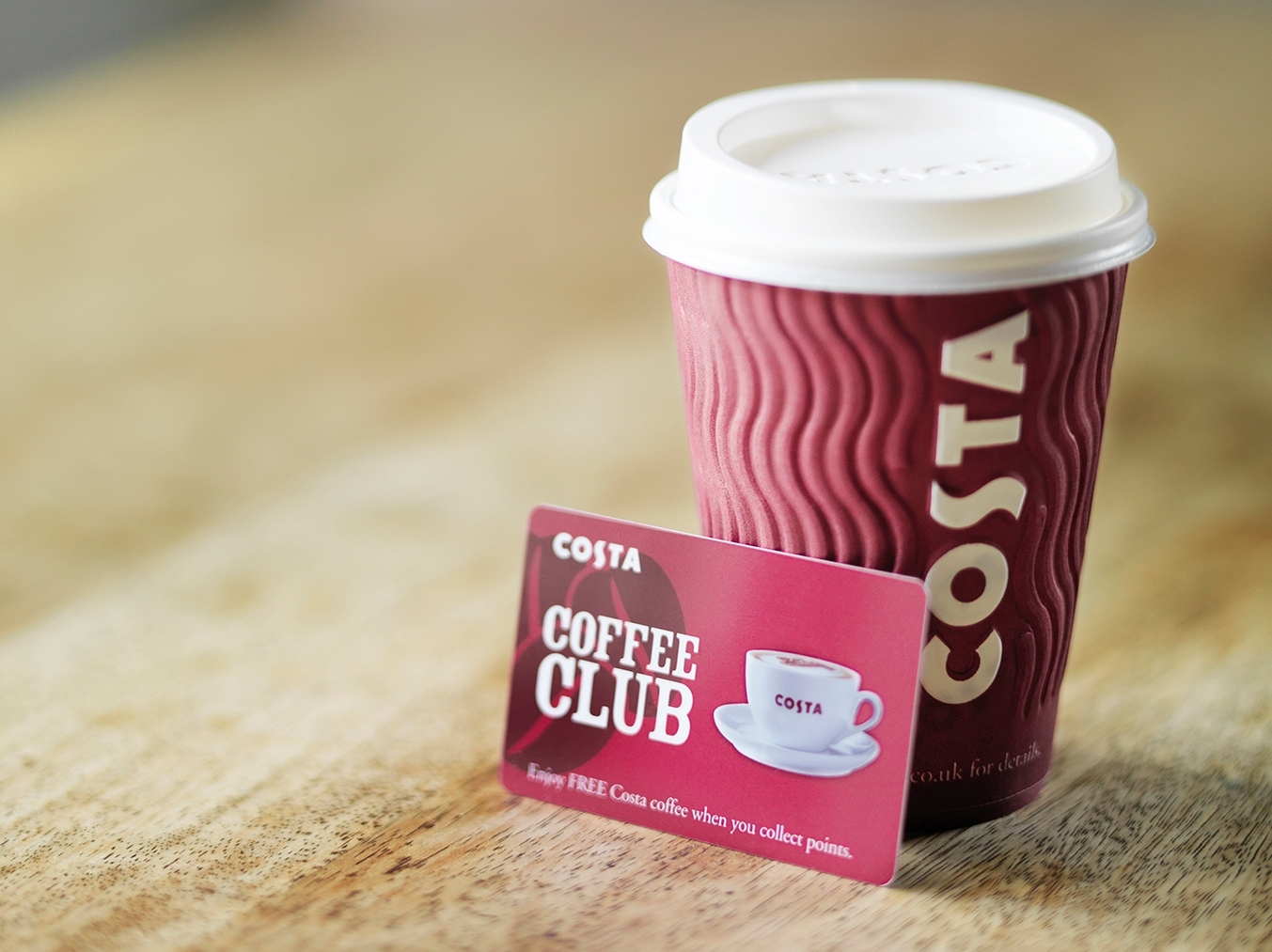
    Coca-cola bought Costa Coffee for GBP3.9 billion (US$5.1 billion) recently. As a result of the deal, the US-based fizzy drink company will gain a strong cafe presence across Europe, Africa, the Middle East, and the Asia Pacific.

    So far, Costa has about 2,400 coffee shops in the UK, 1,400 coffee shops in 31 international markets, and more than 8,000 Costa Express self-serve units.

    Why your cash is no good at these bars and coffee shops

    On average, the brand has been in business for more than 40 years and has opened 289 new stores every year. In fact, prior to the deal, Costa was set on establishing a strong presence in China.

    The company also earned GBP1.167 billion (US$1.507 billion) in revenues in 2016. The figure pales in comparison to Starbucks’ revenues of US$22.39 billion (2017) but maybe in a couple of years, Costa might be in a position to lead the market.

    One of the biggest factors that will play to Coca-Cola’s advantage is that innovation is part of Costa’s DNA. “When I came to the business I could see the foundation was strong but we needed to invigorate and innovate. I want us to be famous for innovating,” said Costa MD Dominic Paul last year.

    The company even worked with startups in the UK to prepare itself for the digital world, and build the coffee shop of the future. “We want to build an experience that’s relevant in 2025,” said an executive at one of the company hackathons.

    Highlighting the digital opportunity

    Starbucks has access to plenty of data about its customers and their buying habits, and it does a fabulous job using technology to drive business growth — today.

    Costa Coffee, on the other hand, might not know as much about its customers but with Coca-Cola in the mix, the company has significant opportunities ahead of it.

    Coca-Cola owns brands like fairlife (milk), Dasani (water), Georgia (coffee), Nestea (ice-tea), Cappy (fruit juice) among several others.

    The company understands the beverage market and has data to map seasons, geographies, and other metrics to customer purchases — allowing Costa to enter new markets, draw up ideal customer personas to market to, and even create more targeted advertising.

    In fact, Costa Coffee could even follow in Starbucks’ footsteps and venture into the retail market, all on the strong shoulders of Coca-Cola.

    Here are a few technologies that Coca-Cola uses — that Costa could borrow and benefit from in the future:

    # 1 | AI-driven proof-of-purchase for loyalty program

    One reason why Starbucks has been able to collect mountains of customer data is that they offer a great loyalty program. In fact, since their loyalty program runs on an app, the company is able to send targeted messages and offers as well.

    Costa could ape the loyalty program that Starbucks offers, and it could make it better by incorporating features that award points for the purchase of ready to drink coffee products from supermarkets and retail outlets.

    In order to do so, the company could use the AI solution that Coca-Cola developed in partnership with Google last year — which is now part of most of the campaigns run by the fizzy drink company in the US.

    # 2 | AI-powered vending machine count

    In the digital age, vending machines are a good alternative to retail outlets, especially for the cafe industry.

    A large number of people across the globe wait in a queue every morning, only to take their coffee and bagel ‘to-go’. Having more vending machines could be a good way to solve the problem — especially if they’re stocked frequently.

    However, the problem then would be checking when a machine needs to be refilled. If Costa is to go down this route, it could leverage a solution that Coca-Cola developed in partnership with Salesforce.

    The ERP giant’s AI product had been trained to recognize, identify, and count the varieties and quantities of Coca-Cola bottles stored in one of its cooler display cabinets, simply by analyzing a photo taken with an iPad or iPhone.

    Further, using AI, the system can factor in seasonal variations, weather information, and upcoming promotions, to automatically calculate when the machines need to be restocked.

    # 3 | Big data to determine popular flavors

    Coca-Cola created Cherry Sprite based on data from hundreds of thousands of self-serve soft-drink fountains.

    It has developed strong big data capabilities and understand how to leverage data to determine how to create products that customers prefer.

    Using this knowledge, and data from Coca-Cola’s Georgia and other brands, Costa could create the perfect ready to drink beverages for customers, propelling itself ahead of the competition quite quickly — especially with Coca-Cola’s distribution and supply chain intelligence to support it.

  • Bacardi shuffles Asia Pacific Travel Retail pack

    Bacardi shuffles Asia Pacific Travel Retail pack

    Bacardi has made several personnel changes to its Asia Pacific Global Travel Retail (GTR) division.

    The company said late last week that Irving Holmes Wong, formerly regional director of Asia Pacific for Bacardi GTR, would take on the newly-created role of managing director for Bacardi Greater China (domestic), from a base in Shanghai. He will be replaced by Vinay Golikeri, who will be based in Hong Kong and report to Mike Birch, Bacardi’s GTR MD.

    Golikeri moves up from the position of customer marketing director of GTR. He will be replaced by former GTR finance director Leila Stansfield.

    The team will assume their new roles on 14 April.

    Birch said: “Bacardi prides itself on developing its internal talent pool and I am especially pleased to have the expertise of Vinay and Leila in their new roles. Global Travel Retail is a strategic shop window for the Bacardi group with strong support from our CEO Mike Dolan and I am delighted that we have his personal support and continued investment in helping us deliver our ambitions in the sector.”

    In September last year, Bacardi set its sights on the spirits market in China with the creation of the non-executive chairman for Greater China position.