Tag: cold chain

  • China Eastern Signs Skagen Salmon Deal as Direct Food Arteries Expand

    China Eastern Signs Skagen Salmon Deal as Direct Food Arteries Expand

    China Eastern Airlines’ logistics subsidiary signed a salmon supply agreement with Denmark’s Skagen Salmon at the China International Import Expo in Shanghai.

    To support the flow, China Eastern opens a dedicated cargo route connecting Shanghai with Copenhagen during November, establishing a direct air artery between northern Europe and mainland retail networks.

    The agreement taps surging Chinese consumer appetite for fresh seafood, pairing European farm output with China Eastern’s dedicated cold chain infrastructure and direct retail distribution channels.

    Cold Chain Monitoring and Livestream Shelves

    The carrier’s logistics unit built an end-to-end corridor covering origin transit, customs clearance, domestic warehousing, and processing at localized fresh-food hubs. It uses proprietary in-pack temperature loggers to record full transit curves, pinpointing environmental breaches across thousands of flight miles.

    Finished stock heads directly to physical supermarket counters and livestream e-commerce operators, stripping traditional layers of import brokers. That immediate link matters as domestic consumer appetites shift toward traceable chilled seafood over frozen blocks.

    Zespri Scales Direct Maritime Access

    Direct maritime routing shows parallel efficiency gains across produce aisles. New Zealand marketer Zespri dispatched the chartered vessel Kowhai from the Port of Tauranga on March 17 carrying 4,750 tons of new-season fruit, docking in Shanghai 12 days later.

    Its first shipment of more than 3,000 boxes reached a Shanghai agricultural trading hub on April 2 and cleared out before the end of the day. The brand projects global sales of 260 million standard retail trays and NZ$6.3 billion ($3.5 billion) in total revenue for the 2026/27 season.

    China accounts for NZ$1.4 billion of that projected total, equal to more than 1.5 billion individual kiwifruit moving across 34.37 million domestic households. The company expanded its retail presence from 35 Chinese cities in 2019 to 82 cities in 2026.

    “We will keep innovating, sustain our steadfast partnerships in China, and keep Zespri at the forefront of the kiwifruit category here,” said Michael Jiang, president of Zespri China and APAC South.

    South American Transit Times Drop

    Direct maritime infrastructure in South America is altering port economics for trans-Pacific fresh cargo. COSCO SHIPPING Ports Chancay Peru expects its terminal to handle close to half of its 1 million twenty-foot equivalent unit capacity this year, general manager Wang Bin reported on Sunday.

    Direct transit between Chancay and Shanghai now takes 23 days, cutting freight expenses by more than 20 percent. The port runs five regional feeder routes gathering shipments from neighboring markets, funneling avocados and blueberries onto fast trans-Pacific services.

    Data from the State-owned Assets Supervision and Administration Commission shows Chancay handled 62 percent of Peru’s agricultural exports to China between January and September, delivering roughly $210 million in trade value.

    The Margin Squeeze on Traditional Distributors

    State carriers and volume fruit marketers are increasingly taking operational control of origin packing, temperature logging, and regional distribution. For independent importers and regional wholesale dealers, this consolidation cuts off trading margins on premium items.

    Large supermarket chains and rapid-delivery platforms gain predictable arrival dates and reduced spoilage rates, giving them room to discount premium fresh categories. The operational risk falls on port clearance velocity: when high-value perishable volume converges on single terminals, any processing pause damages expensive stock.

    China Eastern’s cold chain unit established its integrated model after identifying Denmark as a supply node that fit spare European belly and freighter capacity. The Copenhagen flight schedules beginning this November will test whether air freight yields can hold steady through winter perishable cycles.

  • DHL Global Forwarding Establishes Six Air Cold Chain Corridors to Asia

    DHL Global Forwarding Establishes Six Air Cold Chain Corridors to Asia

    DHL Global Forwarding expanded its cold chain network in October 2026 by launching six dedicated life sciences and healthcare air corridors connecting Europe and North America with Asia.

    The newly established routes connect Liège and Brussels in Europe, along with Cincinnati in the United States, directly to Shanghai, Singapore, Tokyo Narita, and Seoul Incheon.

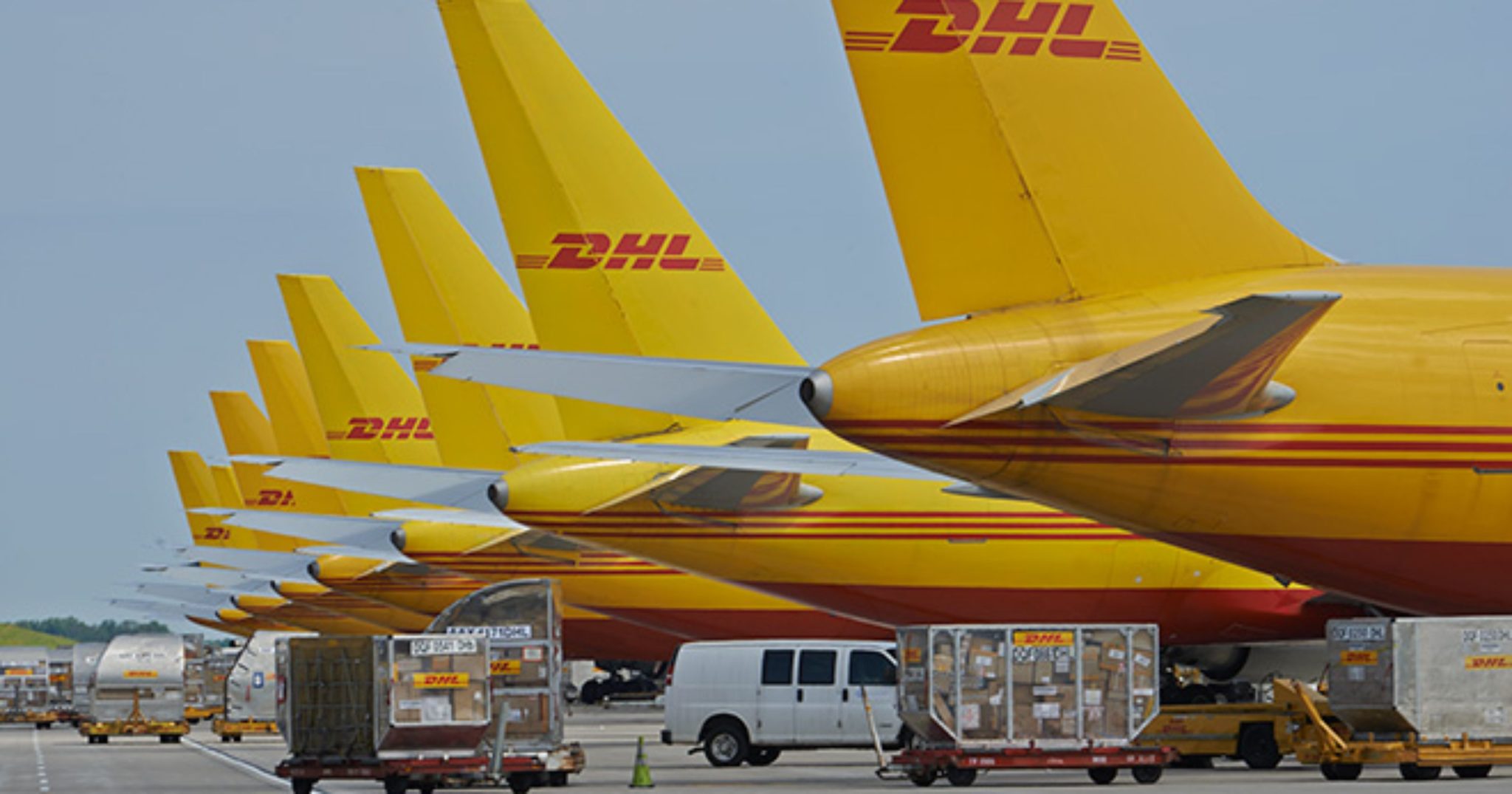
    Operated primarily on DHL Express-branded Boeing 777 freighters, the flights offer three different temperature-controlled compartments to reduce handovers and safeguard temperature-sensitive healthcare shipments.

    The Six Strategic Transcontinental Trade Lanes

    Three corridors run directly from Europe, and three run from the United States. European departures connect Liège to Shanghai, Brussels to Shanghai and Brussels to Singapore. Transatlantic flights leave DHL’s Cincinnati hub for Singapore, Tokyo Narita and Seoul Incheon.

    Each aircraft combines active temperature control with passive packing protections, including thermal blanket systems and phase-change materials. These systems maintain strict limits: 2 to 8 degrees Celsius for refrigerated biologicals, and 15 to 25 degrees Celsius for controlled room-temperature medicines.

    These new corridors further expand our Cold Chain Network into strategically important healthcare markets across Asia. They respond to customer demand for reliable connectivity between major healthcare markets while giving us greater control over critical quality parameters throughout the transportation process. This enables our customers to move critical healthcare products with greater confidence and reliability.

    Control Across Healthcare Supply Chains

    Transfer points create the biggest operational bottleneck in long-haul pharma airfreight. Commercial passenger bellyhold space exposes sensitive cargo to tarmac temperature spikes during layovers or unexpected delays.

    Operating dedicated Boeing 777 freighters across proprietary hubs gives drug makers predictable schedules and uniform standard operating procedures from loading to customs clearance. It also limits reliance on third-party ground handlers who may lack good distribution practice validation.

    Competition is intensifying against rival global integrators and forwarders fighting for high-margin life sciences contracts across Asia-Pacific. Drug manufacturers in Japan, South Korea, China and Southeast Asia demand direct, auditable cold chain links into Western consumer and clinical trial markets.

    Expanding the Global Cold Chain Footprint

    This Asian expansion builds on DHL Group’s February initiative to create an integrated international cold chain network. That rollout started with transatlantic flights between Brussels and Cincinnati before extending into secondary healthcare routes.

    North American drug producers gain direct export lanes from Cincinnati into North Asia and Southeast Asia without routing through intermediate commercial air hubs. European plants around Belgium’s biopharma cluster gain matching outbound capacity into China and distribution nodes in Singapore.

    Changi Logistics Hub Anchors Regional Growth

    Adding the Brussels-Singapore and Cincinnati-Singapore routes fits DHL Global Forwarding’s wider infrastructure spend in Southeast Asia. In September, the group confirmed plans for its upcoming DHL Singapore Cold Chain Hub at Changi Airport.

    The airport facility will provide dedicated 2 to 8 degrees Celsius and 15 to 25 degrees Celsius handling zones linked directly to the airside tarmac. It will process inbound cargo from the new Boeing 777 flights and transfer shipments into regional distribution channels across Southeast Asia.

    Looking ahead, DHL plans to commission the Changi cold store facility and add further network routes across the Middle East and Latin America.

  • Sajo Seafood Buys Hines Cold Chain Shed in Greater Seoul for $65M

    Sajo Seafood Buys Hines Cold Chain Shed in Greater Seoul for $65M

    Sajo Seafood agreed to buy a Greater Seoul cold storage warehouse from Hines and Pebblestone Asset Management for KRW 90 billion ($65 million).

    The purchase gives the South Korean tuna processor and deep-sea fishing group full ownership of Hines Logistics Namyang in Hwaseong, Gyeonggi province. Sajo said the acquisition will expand its storage operations and add a direct distribution hub serving the capital region.

    Payment Schedule and Asset Specs

    Regulatory filings show Sajo paid an initial 10 percent deposit of KRW 9 billion. A second installment of KRW 18 billion falls due on 30 September, with the final KRW 63 billion balance scheduled for payment when the property transfers on 26 November.

    At the agreed price, Sajo is paying just under KRW 2 million per square metre of floor space. Completed in 2023, the four-level facility spans 487,258 square feet of gross floor area across ambient and refrigerated zones, featuring full ramp access, 10-metre clear ceiling heights, and floor load capacities up to 2.5 tonnes per square metre. E-commerce giant Coupang Fulfillment Services and Korea Food Services Corporation occupy space as key tenants.

    Shifting Cold Chain Capital

    Houston-based Hines and Seoul-based Pebblestone broke ground on the Namyang site in late 2021 as Hines made its first direct property investment in South Korea. The exit allows both managers to return capital after building out the multi-temperature asset from scratch on a 30,658-square-metre plot.

    Food producers across East Asia continue to buy dedicated logistics hubs rather than rely entirely on third-party cold chain operators, aiming to lock in temperature-controlled capacity near dense urban populations. The Hwaseong site sits within 50 kilometres of 21 million consumers, positioned between Incheon Airport, Incheon Port and Pyeongtaek Port.

    Hines has stepped up capital recycling across Asia, selling a Tokyo office tower to LaSalle Investment Management while acquiring Singapore retail assets. The final ownership transfer for the Hwaseong cold storage facility remains on track for completion on 26 November.

  • Kerry Logistics Expands Food Cold Chain Business in China

    Kerry Logistics Expands Food Cold Chain Business in China

    Kerry Logistics Network Limited (‘Kerry Logistics’; Stock Code 0636.HK) has expanded its food-related cold chain capability in mainland China through the establishment of Kerry Cold Chain Solution Ltd (‘Kerry Cold Chain’), to tap into the fast-growing domestic market of niche food products.

    Kerry Cold Chain is a joint venture company formed with Shanghai Zhizhen Logistics Co Ltd (‘Zhizhen Logistics’) in which Kerry Logistics holds the majority interest. It provides comprehensive integrated cold chain logistics solutions from upstream to downstream. 

    Using self-owned cold chain facilities and partnering with local expertise, Kerry Cold Chain will handle a wide range of food products, from raw ingredients to dairy product additives.

    Edwardo Erni, Managing Director – China and North Asia of Kerry Logistics, said, “The market for food-related cold chain logistics in mainland China is immense with enormous growth potential. There is also ample room for technological growth to reach international standards.

    “Intending to fill a gap in the market, we welcome the collaboration with Zhizhen Logistics, which marks an important strategic step for Kerry Logistics to extend its footprint in the domestic cold chain logistics market, enhancing our service offerings and competitiveness.”

    Kerry Cold Chain currently operates more than 1 million sq ft of ambient and cold chain facilities in China, including a temperature-controlled facility of over 50,000 sq ft in Shanghai featuring automated storage and retrieval systems.

    Founded in 2008, Zhizhen Logistics serves the logistics needs of both domestic and international customers from locations across China including Beijing, Tianjin, Wuhan, Guangzhou, and Shenzhen. It commands a 90% market share for imported food essences in the Shanghai region.

    With a wealth of experience in cold chain logistics, Kerry Logistics offers seamless F&B solutions with complete cold chain integrity to food chain stores and restaurants in Hong Kong as well as hypermarkets and frozen food retailers in Taiwan.

    The Group also runs cold chain facilities of 70,000 sq ft in Oceania, serving supermarket chains, convenience stores, independent retailers, and food importers.

  • DHL beefs up cold chain to US and Asia

    DHL beefs up cold chain to US and Asia

    DHL Global Forwarding, the air and ocean freight specialist of Deutsche Post group, says it is going to accelerate the supply chain for the north Norwegian seafood industry.

    DHL has started shipping live crabs and seafood from the Lakselv Airport Banak in north Norway to Asia and Northern America.

    On dedicated weekly flights, DHL transports the fresh seafood to the DHL terminal in Oslo, from where the freight is sent to South Korea and other destinations such as Japan or the United States.

    From the origin, which is only 100km from the North Cape, to its destination in Asia the whole logistics is exactly timed, ensuring the shipments are delivered in perfect condition.

    Tim Robertson, head of Air Freight, DHL Global Forwarding, Americas, said: ‘Thanks to our team of experts, who understand temperature control requirements, regulations, food safety and quality control guidelines, this seafood and fish is able to get to market and to consumers in the most expedient way possible.’

    DHL said transporting the fresh seafood by plane allows it to cut the lead time nearly by 50 per cent. This ensures that living crabs and other fresh seafood arrive at their destination in the best condition.

    Bjørn-Erik Stabell, marketing manager for salmon and trout at the Norwegian Seafood Council, said: ‘Time is of the essence when it comes to delivering fresh seafood of the very best quality. Norway is a long country, and with a large proportion of seafood being produced in the north, this air freight route is an important contribution to efficiently reaching seafood consumers across the world.’

    DHL is aiming to increase the frequency of deliveries from Oslo to Asia to three flights per week. From Oslo, almost 90 per cent of the fish is flown directly to Seoul in South Korea, while approximately 10 per cent is further directed to destinations in the US, Japan and China.