Tag: coles group

  • Coles Falls Behind Rival Woolworths as Sales Grow 2.2 per Cent

    Coles Falls Behind Rival Woolworths as Sales Grow 2.2 per Cent

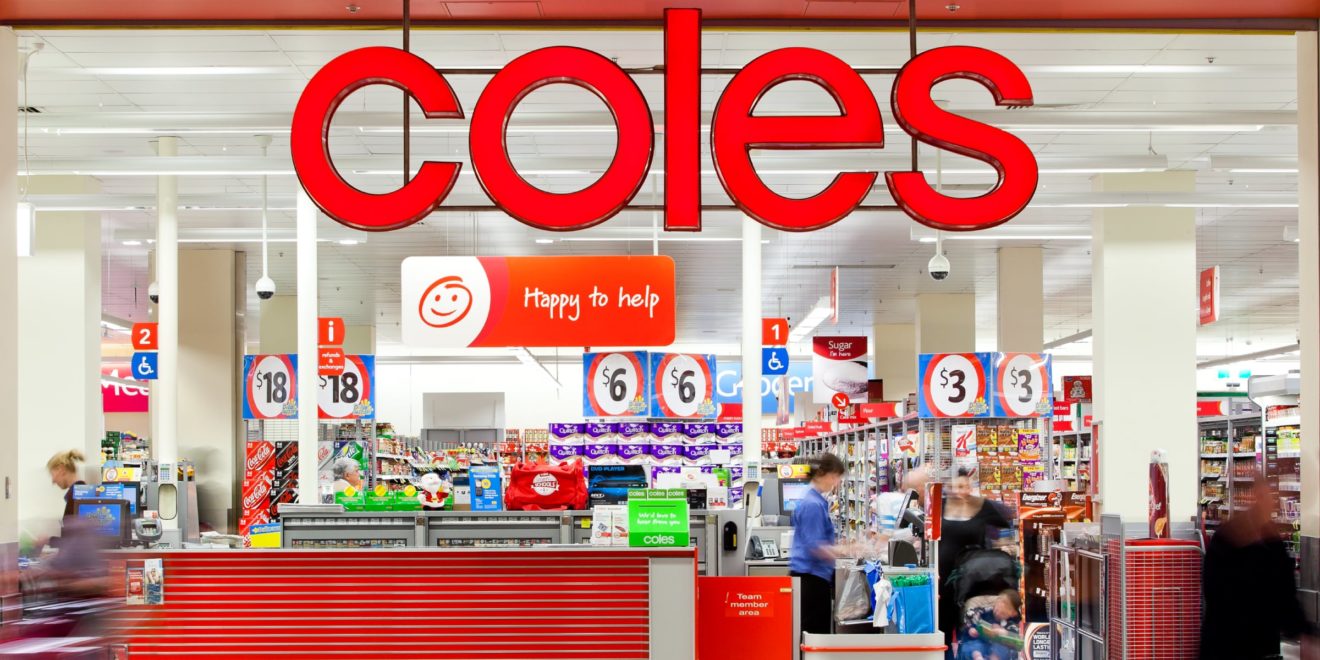
    Coles Group booked first-quarter revenue of $11.2 billion, trailing primary rival Woolworths as shoppers cut spending across grocery aisles.

    Total sales rose 2.2 per cent year-on-year for the opening quarter of fiscal 2027, falling short of the 4.7 per cent expansion delivered by Woolworths over the same stretch.

    Supermarket Volumes Under Inflationary Squeeze

    Supermarket operations at Coles lifted 2.7 per cent on a comparable basis, an outcome that lagged domestic price rises. Headline inflation hit 4.3 per cent in the twelve months through September, according to data from the ABS. With grocery price tags climbing faster than overall register revenue, underlying sales volumes shrank across the store network.

    Customers managed stretched household budgets by splitting their weekly grocery shopping across multiple chains. Shoppers pursued weekly promotions, relied more heavily on loyalty incentives, and selected store-brand goods over premium labels. Leah Weckert, managing director and chief executive of Coles Group, pointed to structural shifts in weekly shopping habits across the country.

    “While supermarket sales growth remained in line with the prior quarter, we know household budgets are under pressure, and customers are shopping more deliberately across retailers and channels,” Weckert said.

    Digital Channels Outpace Physical Stores

    E-commerce delivered the fastest sales momentum across the business, rising 22.9 per cent during the three-month period. Digital grocery orders proved popular among households seeking to monitor running totals and avoid impulse purchases at the shelf edge. The private label range Exclusive to Coles also added sales volume as shoppers turned away from costlier branded goods.

    Elevated operating expenses offset that digital expansion. Coles informed market analysts that higher diesel and transport fuel costs pushed distribution overheads higher across its supply chain. Regional geopolitical tension added shipping volatility, limiting the earnings use the retailer could extract from top-line revenue gains.

    The Margin Gap Widens Between Chains

    Woolworths established a clear sales advantage by generating $19.4 billion during the corresponding quarter. Capturing 4.7 per cent revenue growth allowed the largest grocer to absorb fixed supply chain costs more effectively than Coles. Scale provides Woolworths with superior margin protection when negotiating trade discounts from food manufacturers and logistics contractors.

    Coles faces tough commercial trade-offs leading into the peak December quarter. Matching Woolworths on promotional discounts risks sacrificing retail gross margin, while leaving prices unchanged risks surrendering foot traffic to rival stores. Price competition will compress supplier rebates across fresh produce and packaged groceries through the end of the year.

    Earlier Performance and the Road to December

    Supermarket sales growth tracked at the same modest level recorded during the prior quarter. Household wallets tightened through winter as high interest rates and elevated electricity tariffs reduced discretionary household expenditure across metropolitan areas.

    Focus shifts to the Christmas trading stretch, which historically accounts for the largest share of annual grocery operating profits. Coles plans to adjust its promotional pricing program over the coming weeks to defend customer retention before the half-year fiscal 2027 audit.

  • Coles Selects Coveo for AI Search Across Online Grocery Platform

    Coles Selects Coveo for AI Search Across Online Grocery Platform

    Coles Group Limited selected Montreal-based enterprise software provider Coveo Solutions Inc. On Oct. 22, 2026, to deploy AI search and product discovery tools across coles.com.au.

    The partnership aims to help digital shoppers navigate Coles’ extensive grocery catalog with greater speed and accuracy. Coveo’s AI-Relevance system evaluates customer intent, context, browsing behavior, and product data to deliver personalized search results and recommendations.

    The deployment serves Coles’ nationwide network of over 1,800 retail outlets, backed by more than 115,000 team members and 8,000 suppliers serving millions of shoppers every week.

    Algorithmic discovery for digital supermarket aisles

    Coveo’s AI-Relevance technology brings together shopper intent, context, behavioral signals and product data to present each customer with the results and recommendations most relevant to them. For a large, constantly changing grocery range, that means a more intuitive experience for shoppers.

    “We’re always looking for ways to make shopping with Coles easier for our customers, and search is an important part of the online experience,” said Ben Levinson, general manager of digital product at Coles. “Coveo demonstrated that its technology will make it easier for customers to find the products they are looking for, and we look forward to continuing to improve the Coles online shopping experience.”

    The competitive battle for digital basket building

    “Helping Australians find their everyday grocery products faster and easier is a great opportunity for Coveo” said Alexander Mahr, managing director, APAC, at Coveo. “We’re proud to support Coles as it creates a smarter, more intuitive online grocery experience for customers across Australia.”

    Coles is one of Australia’s leading retailers, with an extensive footprint of over 1,800 retail outlets nationally. The company employs more than 115,000 team members, engages with more than 8,000 suppliers, and serves millions of customers through its store network and digital platforms every week.

    Integrating tech into omnichannel distribution

    Coveo brings superior AI-Relevance to every point-of-experience, transforming how enterprises connect with their customers and employees to maximize business outcomes.

    Relevance is about moving from persona to person, the degree to which the enterprise-wide content, products, recommendations, and advice presented to a person online aligns easily with their context, needs, preferences, behavior and intent, setting the competitive experience gold standard. Every person’s journey is unique, and only AI can solve the complexity of tailoring experiences across massive, diverse audiences and large volumes and variety of content and products.

  • Australian Shoppers Shift to Private Labels as Discretionary Sales Drop

    Australian Shoppers Shift to Private Labels as Discretionary Sales Drop

    Australian supermarket chains lifted private-label grocery sales by up to 6.1 per cent in fiscal 2026 as stubborn inflation squeezed household budgets. Coles Group reported that own-brand revenue outpaced overall company growth, with one in three customer baskets now containing its private-label lines.

    Woolworths Group recorded a 5.5 per cent increase in own and exclusive brand sales over the same period. Budget department store Kmart, operated by Wesfarmers, delivered resilient sales, while rival Big W returned to profitability before early fiscal 2027 trading slowed.

    Private Labels Win Margin and Volume

    Household goods retailers experienced a sharp pullback in consumer demand. Furniture chain Nick Scali reported that customer traffic fell by up to 15 per cent in the quarter to August as residential property turnover slowed. Australian same-store sales at Harvey Norman dropped 3.4 per cent, and electronics chain JB Hi-Fi posted its largest single-day share price decline since 2020 after missing consensus sales estimates.

    Quick-service dining networks faced similar pressure. Retail Food Group, which operates Gloria Jean’s and Donut King, booked an annual decline of roughly 3 per cent in domestic network sales. Automotive parts maker ARB posted a 3.3 per cent drop in Australian aftermarket revenue, while used-car transactions across the country fell 16.2 per cent in June.

    Property Slump Stalls Discretionary Demand

    Consumer price inflation has held above 3 per cent since 2025, outpacing wage growth of 3.2 per cent in the June quarter. With Commerzbank calculating that 60 per cent of Australian household wealth is tied up in residential real estate, higher borrowing costs and property tax adjustments targeting investors have directly curbed big-ticket purchases.

    The divergence across retail categories mirrors trends across Asia-Pacific markets, where food retailers expand low-price private lines to capture defensive trade while durable goods sellers rely on promotional financing to prevent transaction volumes from falling further.

    Trading updates for the first eight weeks of fiscal 2027 show sales at Big W have already started to decline, making the upcoming quarterly retail trade data the next key benchmark for consumer demand.

  • Australian Supermarkets Adapt to In-Between Shoppers Seeking Asian Groceries

    Australian Supermarkets Adapt to In-Between Shoppers Seeking Asian Groceries

    Australian mainstream grocers are restructuring their international food aisles as demand from second-generation shoppers erodes the traditional gap between independent Asian grocers and major supermarket chains.

    The shift challenges decades of split retailing, where consumers bought standard household staples at major chains and visited specialty Asian grocers for authentic ingredients.

    Breaking the Specialty Divide

    May Wong, who concluded her tenure as a category manager at Coles Group on August 31, 2026, after seven years managing an Asian grocery store, said the boundary between the two channels is disappearing. Shoppers from second-generation migrant backgrounds increasingly expect mainstream supermarkets to stock the authentic food items that match their cultural heritage.

    Specialty grocers long held a monopoly on authentic imported brands, while major supermarkets focused on westernised pantry staples. Younger shoppers now seek authentic taste profiles without making a separate trip to suburban ethnic markets.

    Shifting Demographics on Mainstream Aisles

    For supermarket operators across the Asia-Pacific region, tailoring shelf space to multicultural demographics has turned ethnic aisles into high-growth territory rather than niche perimeter displays. Major chains in markets with large diaspora populations are expanding direct sourcing relationships with Asian food exporters to meet tighter consumer standards on authenticity.

    Coles and competing Australian supermarket operators will test updated product assortments across metropolitan store networks through the coming retail quarters.

  • Coles Lifts Underlying Profit to $1.26 Billion as Supermarket Sales Surge

    Coles Lifts Underlying Profit to $1.26 Billion as Supermarket Sales Surge

    Coles Group lifted underlying annual profit 13.7 per cent to A$1.26 billion in Melbourne, powered by grocery volume and fast-expanding digital channels.

    Group sales revenue advanced 2.8 per cent to A$45.58 billion across the 2026 financial year. Reported net profit came in lower at A$1.09 billion after the grocer set aside A$235 million to cover remediation costs and penalties from a Federal Court staff underpayment judgment.

    Supermarkets drove the operating momentum. Core grocery revenue rose 3.7 per cent to A$41.47 billion, while division earnings before interest and tax increased 12.2 per cent to A$2.37 billion as the retailer took market share. Supermarket e-commerce sales jumped 26.4 per cent to A$5.6 billion, pushing the group’s automated customer fulfilment centres into positive earnings in their second full year of operation.

    Shoppers pinched by living costs continued to trade down to private labels and loyalty discounts while eating more meals at home. That grocery strength insulated Coles from regional retail headwinds, contrasting with discretionary Asian department store and hypermarket chains that continue to struggle against softer household demand.

    Liquor Slump and In-Store Shrink

    The liquor arm proved the main drag on the group balance sheet. Liquor sales slipped 3.3 per cent to A$3.55 billion, and division operating earnings plunged 47.8 per cent to A$59 million. Management responded with a multi-year restructuring plan that includes shutting standalone shops, co-locating bottle shops alongside supermarkets, and bundling food and beverage offerings.

    Security issues also weighed on store operations. Victoria recorded an 85 per cent surge in threatening incidents against staff over two years, pushing Coles to trial facial recognition systems, though management has not committed to a full network rollout.

    Restructuring Corporate Roles Under Accenture Deal

    Coles will cut hundreds of corporate jobs in the 2027 financial year as part of an expanded technology partnership with Accenture. The retailer plans to spend about A$190 million during the year on restructuring and redundancy costs to establish a dedicated capability centre.

    Store and customer-facing teams will remain exempt from the staff reductions, with the company offering reskilling pathways for affected corporate workers. Capital expenditure will increase in parallel, with Coles allocating an extra A$300 million across FY27 and FY28 to fund technology upgrades, store refurbishments, and 45 new supermarket openings.