Tag: colliers international

  • Vietnam retail rents rise as flurry of global brands arrive

    Vietnam retail rents rise as flurry of global brands arrive

    Prime Vietnam retail rents are rising as a flurry of international retail brands move into Ho Chi Minh City.

    The third quarter of 2016 saw major changes of supply market in HCMC, according to a research report by Colliers International.

    In recent months, more than 100,000 sqm of retail space has been added in the city with the opening of the revamped Saigon Center anchored by Japanese department store Takashimaya and a new Aeon Mall opening in Binh Tan.

    But average retail rental rates have slightly increased to US$126/sqm/month in the CBD and US$36/sqm/month in the suburbs.

    Saigon Centre has been completed and occupied by 400 local and foreign brands, including concessions in Takashimaya. Aeon’s Binh Tan mall is the company’s second in Ho Chi Minh City, home to a large supermarket, restaurants, fashion shops, cinemas and a variety of retail stores.

    Geert Jan ten Hoonte, retail advisor of Kusto Management Vietnam, said these two malls will bring an extra level into the market. “It will force other operators to rethink their offer to the consumers. It would be a good development if shopping centre developers start to think in location, functionality and market positioning for the malls they are planning,” he said.

    Foreign brands

    Vietnam’s retail industry’s latest quarter started with the departure of well-known F&B brand NYDC. The exit of the Singaporean dessert and coffee chain partly confirmed the struggle of international F&B brands face competing with domestic players.

    Q3 also saw the debuts of many international fashion brands. The first, and largest, was Spanish fast-fashion brand Zara, which has taken up 2400 sqm of Vincom Dong Khoi with its first flagship store in Vietnam. The opening day brought Zara more than VND5 billion sales, reportedly the highest first-day sales of any new Zara store opening worldwide.

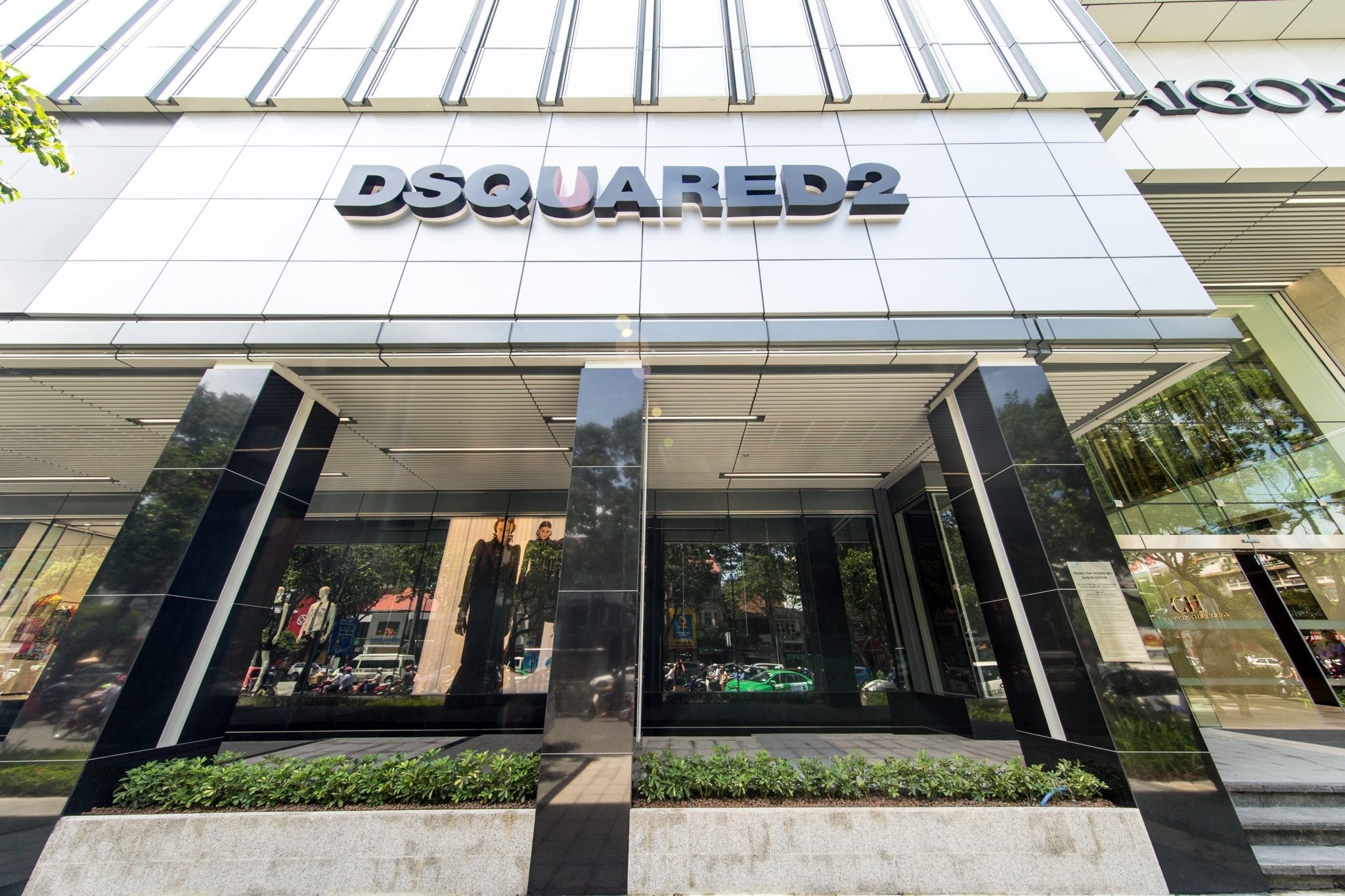
    Saigon Center and Takashimaya has enticed many international brands to HCMC such as Dsquared2, Fred Perry, and Ted Baker.

    Other significant retailers to launch in the city during the quarter included faux Japanese, Chinese-headquartered retail chain Miniso, Naughty Cat and Innisfree.

    With its fast-growing young population and emerging middle class, Vietnam’s retail market is expected to mature into a more convenient, modern retail environment in coming years. Vietnam’s admission to the WTO and the upcoming TPP trade agreement will draw a significant amount of FDI from international retailers in the future.

    Online shopping

    Meanwhile, online shopping is growing rapidly, with the Vietnam eCommerce and Information Technology Agency (VECITA) forecasting some 30 per cent of the population will be buying goods online by 2020, spending US$10 billion a year.

    In 2015, online sales were $4.07 billion, and growing at 37 per cent on the previous year.

    Despite being comparatively small by Asian standards, Vietnam’s eCommerce market is growing exponentially with more than 54 per cent of the population now connected online.

    The government plans to boost eCommerce with a goal of 50 per cent of local enterprises setting up online stores and 80 per cent doing business through eCommerce platforms.

    -Yen Hai Nguyen
  • Singapore retail now ‘a tenant’s market’

    Singapore retail now ‘a tenant’s market’

    Singapore retail is now “a tenant’s market”, realtors warn in the wake of official data showing further decline in boath rental rates and occupancy levels.

    According to URA data out today (April 22), retail rents fell by 1.9 per cent in the first quarter of 2016, following a full year decline of 4.1 per cent in 2015. That’s the fifth consecutive quarter in which a decline has been recorded, and the latest figure is higher than the 1.3 per cent of the preceding three months.

    For retail space in the Central Area (which includes the Downtown Core, Orchard and Rest of Central Area), the rental index was down 2.1 per cent quarter-on-quarter.

    Occupancy rates also dipped, falling by 0.1 percentage point quarter-on-quarter to 92.7 per cent in the three months to March 31.

    In the Central Region, vacancies were up at a five-year high of 8.7 per cent by March 31, up from 8 per cent at the end of December. In the key orchard Planning Area, the occupancy rate dropped by 1.2-percentage points quarter-on-quarter to a five-year high of 8.8 per cent.

    “With a subdued retail landscape, landlords are placing greater emphasis on maintaining occupancy levels, more so than maintaining rental values in this challenging period,” commented Lee Na Jia, regional head of research with DTZ.

    “Should landlords be inflexible during rental negotiations, tenants can go elsewhere especially with the relatively large pipeline supply coming on-stream [215,000 sqm of GFA in the middle six months of 2016]. At this moment in time, it can be considered a tenant’s market as they will have more choices,” said Lee.

    “Moreover, declining retail sales, competition from eCommerce and rising operating costs also work against brick-and-mortar retailers. If businesses underperform, they exit the market.”

    Retailers who have recently announced their withdrawal from Singapore include Smoothie King, fashion chain New Look and furniture store Iwannagohome.

    Anthea To, senior associate director of research and advisory with Colliers International, said the continued easing of retail rents is unsurprising, as leasing momentum slowed and vacancies rose.

    “By and large, retailers remained cautious on their real estate requirements in the first quarter of 2016, amid growing economic uncertainties.”

    She noted a 32.4 per cent drop in the number of leasing deals being struck in the last quarter, according to details sourced from URA Realis – to 1725 transactions. That’s the lowest quarterly number since the second three months of 2012.

    Bleak outlook

    Anthea To fears the current economic headwinds might continue to erode consumer confidence in turn leading to a further reduction in discretionary spending in the city state as shoppers fear pay cuts or job losses.

    “Given retailers’ expected cost-conscious stance, landlords would also be more realistic on rental expectations for the rest of 2016. This would weigh down on retail rents in the coming quarters.”

    To expects retailers to respond to the depressed retail market with store network consolidation, greater focuses on eCommerce and customer engagement in-store, and new products, trying to keep their brick-and-mortar stores relevant to an increasingly digital-savvy market.

    “However, not all retailers are focusing on the digital world. Major retail brands are still committed in physical store expansion which allows them to offer more products, services and new shopping experiences under one roof,” said To.

    “While rents in the Central Area are on a downward trend and are under pressure to fall further, some brands are taking the opportunity to optimise their store portfolios and open new flagship stores to strengthen their branding.”

    Colliers expects retail demand will continue to be coming from international lifestyle and fashion brands showing strong interest for flagship and new concept stores, and local players in sectors such as health and beauty, as well as leisure and personal goods.

    Lee Na Jia concluded that Singapore landlords recognise the current market challenges and are more inclined to lowering rental reversion rates to retain tenants. Older malls are also constantly undergoing rejuvenation (such as changing their tenant mix and external facades) to keep up with competition from the new malls.

  • Colliers Singapore’s senior executives for industrial services quit

    Colliers Singapore’s senior executives for industrial services quit

    THE exodus of executives from Colliers International Singapore has continued this week. This time, some senior executives in its industrial services team including the division head are leaving for a rival firm.

    Colliers’ executive director and head of industrial services, Tan Boon Leong, three other senior executives and one support staff are said to be joining Knight Frank Singapore.

    This leaves Colliers with two industrial brokers. Meanwhile, Knight Frank’s industrial department will increase significantly to 11 executives, comprising nine brokers and two administrative staff with Mr Tan helming the team.

    Their official starting date at Knight Frank is not confirmed yet. But sources told BT that Mr Tan is expected to join Knight Frank in March after two months of gardening leave. He will be reporting to Knight Frank Singapore group managing director Danny Yeo.

    An internal email to employees announcing the changes were sent out by Knight Frank at 5.30pm on Friday.

    Colliers’ traditional strengths are said to be in industrial services and valuation.

    But last June, five industrial brokers from Colliers Singapore, including executive directors Brenda Ong and Rimon Ambarchi, jumped ship to CBRE. Its former managing director, Dennis Yeo, later joined CBRE as regional head of industrial and logistics services in Asia.

    Since some leadership changes took place at Colliers International, the firm became a poaching ground here.

    In September, a team of eight experienced valuers including Colliers’ head of valuation and deputy managing director, Cynthia Ng, moved to Savills Singapore.

    All three directors of its office services team joined Savills Singapore earlier in February and four members of its retail team hopped over to JLL’s retail agency team in June.

    This week, one of its deputy managing directors, Calvin Yeo, and head of investment service, Stella Hoh, also left the company.

  • China and India to Dominate Divergent Picture in Asian Real Estate for 2016

    China and India to Dominate Divergent Picture in Asian Real Estate for 2016

    The outlook for real estate in the Asia Pacific region remains largely positive heading into 2016, according to Colliers International’s 2016 Property Outlook. But pockets of weakness are starting to appear, according to the forecasts from Colliers International, while government policy continues to drive the behaviour of investors in many markets.

    China is the proverbial “elephant in the room” for Asian real estate. That’s whether it is as a source of outbound capital or as an investment destination. Its economic slowdown and Beijing’s attempts to rebalance the domestic economy also spill over into its neighbors and trading partners.

    “The focus remains firmly on China and the continued impact it has on all aspects of property activity,” Simon Lo, executive director, Asia research & advisory at Colliers international, says. “The dominance of China means that any changes to government policies in that country will continue to have ramifications throughout the whole region.”

    Amid general caution and cost cutting among multinational finance companies, Chinese banks will continue to drive the office leasing in markets such as Hong Kong and Singapore in the year ahead. China’s outbound tourism is reshaping the hotel sector across Asia, rapidly becoming the No. 1 source of visitors to Japan.

    India is cropping up on the radar for investors, in many cases for the first time. That is mainly as a result of its opening up of its domestic economy to international capital. Players active in India and China should see their cost of financing decline in 2016. In contrast, with U.S. interest rates set to increase, borrowing costs will be on the rise in Hong Kong and Singapore, although landlords should benefit from better yields.

    India and China combined will account for around 70% of the huge impending supply of Grade A office space, Colliers predicts, with 100 million square feet already hitting the market in 2015 and 110 million square feet due for completion in 2016.

    E-commerce is reshaping retail and industrial space around Asia. Logistics should be one of the most exciting spaces for investment, Colliers anticipates, as capital — once almost exclusively local — starts to cross borders in greater volume. Business-process outsourcing has put the Philippines on the map, resulting in large demand for purpose-built facilities there.

    China represents a significant opportunity for retailers and mall operators, Colliers forecasts, since both global and Asian mid-market food & beverage operators are underrepresented there. This suggests China can build on the same kind of trends at play in Singapore, Hong Kong and Japan, where landlords are creating more “experiential retail,” built around wellness and lifestyle as well as a broader range of dining options.


  • Restaurant operators regain a presence in Hong Kong

    Restaurant operators regain a presence in Hong Kong

    Restaurant operators have regained their presence in Hong Kong’s retail market where an increasing number of top-end retailers have surrendered their spaces in the wake of weakening spending on luxury items and a decline in tourist arrivals.

    JLL said that in 2013 food and beverage operators accounted for only 29 per cent of the leasing deals it handled. This year, that figure has increased to more than 50 per cent.

    “There are in discussions with a number of overseas restaurants to open their first outlets in Hong Kong as part of their their Asian expansion plans,” said Michelle Chiu, an associate director at JLL’s retail department. “They come from the United States, Europe and Southeast Asia.”

    A new trend of incorporating food and beverage elements into their retail businesses has been seen among luxury fashion brands, including Franck Muller and Vivienne Westwood. And then, there is the lifestyle concept, such as the collaboration between Mercedes-Benz and Maximal Concepts, which has led to the creation of Mercedes Me.

    At more than 4,000 square feet, Mercedes Me has taken the space formerly occupied by Porsche Design and Geox on the ground floor of Entertainment Building in Central at an estimated monthly rental of HK$4 million. Meanwhile, Vivienne Westwood opened its first cafe in Tsim Sha Tsui and Swiss luxury watch maker Frank Muller has launched a fine-dining restaurant in Causeway Bay.

    To capture growing leasing demand among restaurants, JLL has formed a seasoned food and beverage team to cater for the industry.

    Terence Chan, head of retail at JLL, said the team will offer specialist services to local operators, international restaurant groups and new-to-market entrepreneurs alike.

    “Apart from the traditional F&B agency services including site introduction, lease negotiation, location analysis, tenant representation and market entry strategy and analysis, we also provide project coordination services. We will assist the clients in liaising with the interior designers, licensing consultants, contractors and maintenance vendors for set-up of their restaurants,” Chan said.

    Helen Mak, the retail services group head at Colliers International, believes the softening retail leasing market will provide more opportunities for the return of restaurants given the high rents the international brands could afford to pay just a few years ago.

    “With a restaurant inside the shop, it will also help to retain customers inside longer as well as serving as a venue for promotional events,” Mak said.

    She said shopping centres intend to allocate more space for restaurants in view of the difficult retail market.

    But the rapid expansion of restaurants could increase direct competition as most shopping centres plan to devote more space for food and beverage operators.

  • Hong Kong Luxury Goods Stores Want Cheaper Rents

    Hong Kong Luxury Goods Stores Want Cheaper Rents

    Rents for retail space on the island of O‘ahu rose to a record earlier this year.  Colliers International says commercial rents here have been rising for the past several years, a trend that’s expected to continue. Commercial rents have also risen in Hong Kong, but some luxury retailers are fighting back.  HPR’s Bill Dorman has more in today’s Asia Minute.

    Selling luxury goods in Hong Kong is not the business it used to be.  Part of that reflects a slowing Chinese economy.  But those who follow the sales say an even bigger impact has been the crackdown on extravagant spending by Chinese government officials.

    This week, the chief financial officer of Gucci’s parent company threatened to close some stores in Hong Kong unless rents are reduced.  He told a conference call of analysts that “many landlords have not necessarily understood that the markets have changed.”

    Bloomberg reports Burberry may also try to lower its rent after its sales in the city fell to a two-year low.  Commercial rents have come down in some parts of Hong Kong, but they remain among the most expensive in the world.  Reuters reports a 500-square foot store space in the neighborhood of Causeway Bay can cost the equivalent of 64-thousand US dollars a month.

    Commercial real estate firm Cushman and Wakefield says annual rent for retailers tops two-thousand dollars a square foot in three different Hong Kong neighborhoods.  Many Chinese shoppers are now traveling beyond Hong Kong to buy luxury goods.  In a report last month, Bain and Company said the world’s luxury goods market is continuing to grow, and its major driver is tourism.