Tag: Comeback

  • Formula 1’s Malaysian Comeback: An Economic Boost through Tourism and Global Exposure

    Formula 1’s Malaysian Comeback: An Economic Boost through Tourism and Global Exposure

    Malaysia is poised to host the Formula 1 Bahrain Grand Prix in October, an event that is projected to give a significant boost to the country’s economy through tourism and related sectors. Analysts believe that the race will have long-term economic benefits for the country, contributing to an increase in tourism, attracting more international investment, and promoting the organization of other world-class events.

    Race Details and Economic Impacts

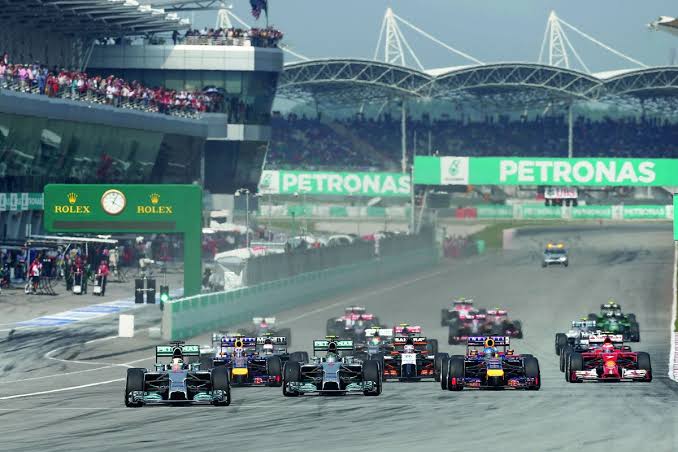
    Deputy Prime Minister Ahmad Zahid Hamidi stated that the economic impacts of hosting such a prestigious event extend beyond simply increasing tourist numbers. The global media coverage and viewership that the race attracts will also greatly contribute to promoting Malaysia on an international scale. Formula 1 and the Fédération Internationale de l’Automobile (FIA) recently announced that Malaysia has been selected to host the Bahrain Grand Prix at the Sepang International Circuit (SIC) from October 2-4, 2026. This is contingent upon final agreements and official approval, including endorsement from the World Motor Sport Council.

    The upcoming race, set to take place between the Azerbaijan and Singapore Grands Prix, is a one-off replacement for the Bahrain GP, which has been postponed due to regional conflicts. Malaysia has been chosen as the host country due to the SIC having been the venue for F1 on numerous occasions between 1999 and 2017.

    Positive Reactions and Expectations

    The decision has been well-received in Malaysia, with former Sepang International Circuit CEO, Datuk Razlan Razali, stating that the choice of Malaysia as host makes strategic sense. Razali also believes that hosting the Bahrain GP will not pose any major operational challenges and that the SIC will not require any significant modifications for Formula 1.

    While the idea of Formula 1’s permanent return to Malaysia remains unlikely due to the high costs associated with hosting the championship, Razali is confident that the upcoming race will benefit domestic tourism and create opportunities for local suppliers and food and beverage businesses.

    Motorsports Association of Malaysia president Tan Sri Mokhzani Mahathir also welcomed the return of Formula 1 to Sepang, stating that it would be particularly meaningful for younger motorsport fans who missed the championship after it left Malaysia in 2017. Mahathir is optimistic that the hospitality, tourism, airline, and F&B sectors will all see benefits from the event.

    Questions & Answers

    What are the expected benefits of Malaysia hosting the Formula 1 Bahrain GP?
    Hosting the race is expected to boost Malaysia’s economy through increased tourism and related industries. In the long run, it could potentially attract more international investment and encourage organization of other world-class events.

    Why was Malaysia chosen to host the Bahrain GP?
    Malaysia was selected due to its successful track record of hosting F1 at the Sepang International Circuit, having done so 19 times between 1999 and 2017.

    Is there a possibility of Formula 1 permanently returning to Malaysia?
    The likelihood of a permanent return is currently considered remote due to the high costs associated with hosting the championship. However, this upcoming race could potentially pave the way for further discussions.
  • Matthieu Blazys Fresh Spin Sparks Chanels Comeback in Luxury Market

    Matthieu Blazys Fresh Spin Sparks Chanels Comeback in Luxury Market

    The Paris-based luxury fashion brand Chanel has experienced a significant surge in demand, piquing the interest of first-time buyers. This increase has been attributed to the reimagined versions of classic items such as bags, shoes, and jackets by the brand’s creative director, Matthieu Blazy. As a result, Chanel’s demand has exceeded supply, signaling a rebound in growth.

    Revamping Classics Fuels Growth

    Chanel recently reported a 2% increase in currency-adjusted revenues for 2025, amounting to US$19.3 billion. The brand experienced a 4.3% reduction in revenue the previous year, a period when high-end fashion labels struggled with demand following significant price increases in the wake of a post-pandemic luxury boom.

    Last year, Matthieu Blazy assumed the role of creative director, succeeding Virginie Viard. His maiden collection, launched in October, infused fresh life into the brand with innovative designs. Notable among these are the slouchy leather maxi flap bag retailing for $8,500, and brightly colored, frayed interpretations of the traditional Chanel tweed jacket.

    Chanel’s CEO, Leena Nair, attributes the brand’s recent success to “a creative momentum across all our business activities,” further noting that investments made in the previous year laid the groundwork for this sales rebound. The brand’s operating profit also experienced growth, recording a 5% increase to hit $4.7 billion.

    New Trends Attracting New Customers

    The brand’s revamped collection has been well-received by consumers, resulting in a substantial increase in new clientele for Chanel. High-demand pieces such as new handbags, mint green and black two-tone pumps (priced at $1,450), and multicolored tweed jackets are flying off the shelves.

    As for the brand’s performance relative to its competitors, Chanel’s growth rate fell short of Hermès at 9.8%, but outperformed LVMH’s fashion and leather goods division, which recorded a 5% decline.

    America, despite enduring tariffs, contributed the most to Chanel’s growth, with a sales increase of 7.2% in currency-adjusted terms in the Americas region. Meanwhile, sales in the Asia-Pacific region — Chanel’s largest market — fell by 0.8%, and Europe recorded a growth of 2.5%.

    Chanel has plans to increase prices by 3% overall and 2% for fashion products this year, according to CFO Philippe Blondiaux. He also noted the Middle East’s market resilience, which accounts for approximately 4% of the brand’s revenue, despite the ongoing conflict in Iran.

    The company plans to continue expanding its retail presence, intending to launch 30 new stores this year, including nine fashion boutiques in locations such as Boca Raton, Florida, and Palo Alto and San Diego in California.

    Questions & Answers

    What has been the impact of Matthieu Blazy’s designs on Chanel’s performance?

    Blazy’s redesigns of classic Chanel pieces have resulted in increased demand, attracting many first-time buyers and contributing to significant growth for the brand.

    How does Chanel’s recent growth compare with that of other luxury fashion brands?

    Chanel’s growth rate in 2025 was slower than that of Hermès but exceeded the growth rate of LVMH’s fashion and leather goods division.

    What are Chanel’s future plans for expansion?

    Chanel plans to open thirty new stores this year, including nine fashion boutiques in locations such as Boca Raton, Florida, and Palo Alto and San Diego in California.

  • Gap Eyes China Expansion: Plans 50 New Stores, Hong Kong Comeback and Australia Re-Entry

    Gap Eyes China Expansion: Plans 50 New Stores, Hong Kong Comeback and Australia Re-Entry

    Gap, the prominent American clothing retailer, is said to be significantly expanding its footprint in Greater China. The company’s plans include opening 50 fresh storefronts throughout mainland China during the current year, as well as reestablishing its presence in Hong Kong.

    This expansion initiative follows in the wake of Gap’s first-ever quarterly break-even performance in China. This success has been credited to Baozun, the local operator who assumed control of the business in 2022. Under Baozun’s leadership, the company completed a comprehensive overhaul of its supply chains, merchandising, and digital channels.

    The forthcoming new stores are not confined to the established business hubs of Shanghai and Beijing. Indeed, locations span from tier-one cities to tier-three cities, broadening the brand’s geographical reach.

    Baozun has set a target of approximately 30% annual growth over the coming two years. The strategy for achieving this ambitious goal blends physical retail development with a fortified online presence.

    Vincent Qiu, the chairman and CEO of Baozun, has publically expressed the brand’s readiness to “accelerate the business and scale it to a bigger size” within the next three-year period.

    In addition to its expansion in Greater China, Gap is also gearing up to make a return to the Australian market. The company will do so through a collaborative partnership with Myer. Despite forming part of its wider international strategy, this Australian venture remains secondary to Gap’s primary focus on Greater China.

    Questions & Answers

    What plans does Gap have for expansion in Greater China?
    Gap plans to open 50 new stores across mainland China this year and re-enter the Hong Kong market.

    What is Baozun’s growth target for the next two years?
    Baozun aims to achieve around 30% annual growth over the next two years by combining physical retail expansion with a stronger online presence.

    Is Gap planning to re-enter any other markets?
    Yes, Gap is preparing to re-enter the Australian market through a partnership with Myer as part of its broader international strategy. However, this remains secondary to the company’s focus on Greater China.

  • Esprit Makes a Fashionable Comeback: Unveils Revamped Collection in New Hong Kong Flagship Store

    Esprit Makes a Fashionable Comeback: Unveils Revamped Collection in New Hong Kong Flagship Store

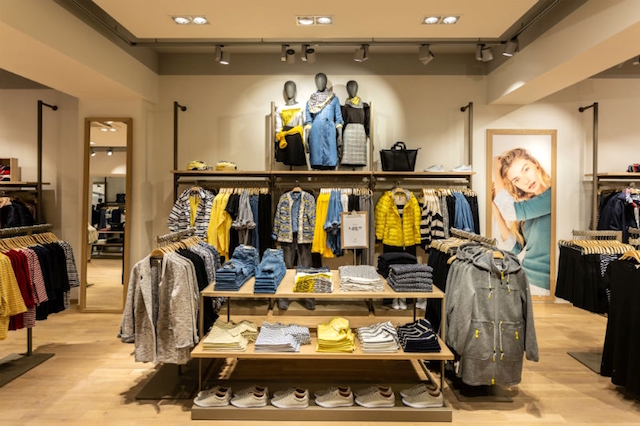
    Esprit, a popular fashion brand listed in Hong Kong, has made a comeback in the city by opening a flagship store in Causeway Bay. This comes after the brand’s departure from its headquarters in 2020.

    New Beginnings in Causeway Bay

    Since November 1, Esprit’s new flagship store has been in operation at Fashion Walk in Causeway Bay. Covering 4400 square feet over two floors, the store signifies a new dawn for the brand. As it re-establishes its presence in Hong Kong, Esprit is focusing on bringing back its classic styles to its loyal customer base.

    The store’s opening has been enabled by WIP International, led by Esprit HK CEO Herbert Chan Wai-ming. WIP International has secured exclusive rights for the brand’s operations in the region. Chan has outlined a five-year plan to regain the brand’s momentum.

    Esprit’s Revival Strategy

    As the brand re-enters the somewhat sluggish retail scene in Hong Kong, Chan is driven by his goal to “create miracles for Hong Kong.”

    Esprit, which was founded by Susie and Doug Tompkins in 1968, got listed on the Hong Kong Stock Exchange in 1993. The brand then experienced rapid expansion into over 40 countries. However, sales began to drop sharply and underwent massive restructuring. This, coupled with the Covid-19 crisis, led to the closure of its retail stores across Asian markets.

    The listed Esprit is now solely a brand owner, licensing its name to third parties. It has moved away from its initial business model, which included significant capital expenditures associated with sourcing, distribution, and retail operations.

    Chan’s current strategy involves “rebuilding Esprit as a Hong Kong brand” by bringing the brand’s own heritage back to the city streets. In addition, he has ambitions for a global relaunch, potentially in Taiwan, Japan, South Korea, and Mainland China. However, he is committed to taking this expansion slowly, prioritizing success in the home market first.

    Flagship Store and Revamped Collection

    The new flagship store also serves as the platform to introduce Esprit’s revamped collection. With an array of new fabrics and designs, 70 percent of the items have been personally designed by Chan. This revamp has resulted in a 30 percent price increase on some products.

    In his bid to reposition the brand, Chan has been willing to try new strategies that Esprit has not experimented with before.

    After closing its store five years ago, Esprit made a preliminary return to Causeway Bay in 2022 with a three-story pop-up store, marking the initial stage of its revival.

    Questions & Answers

    What is Esprit’s new strategy for its return to Hong Kong?
    Esprit aims to rebuild itself as a Hong Kong brand by reintroducing its classic styles and revamping its collection with new fabrics and designs.

    Who is leading the revival of Esprit in Hong Kong?
    Herbert Chan Wai-ming, Esprit HK’s CEO, is leading the brand’s revival in Hong Kong.

    What are the future expansion plans of Esprit?
    Esprit’s CEO has plans for a global relaunch, potentially in Taiwan, Japan, South Korea, and Mainland China, prioritizing success in the home market first.