
Virginia Huang has amassed nearly 20 years of top-level commercial real estate industry knowledge, and is the longest serving member of the CBRE team in Beijing.
After joining the firm in 1997, she is now the firm’s managing director, and head of advisory and transaction services for Greater China
A specialist, particularly, in the office leasing market, Huang has been involved in some of the Chinese capital’s highest profile transactions, dealing with top-tier Chinese and international developers.
She shares her thoughts on the sea changes that have happened in China’s commercial real estate landscape, the recent rise in the amount of retail space being converted into offices, and the emergence of Beijing’s decentralised markets.
What major changes have you seen during your 20 years in the commercial real estate sector?
When I first entered the industry in the late 1990s, Chinese companies basically wouldn’t use our services. Our customers were primarily foreign corporations whose own corporate real estate teams were small and much more used to outsourcing.
The traditional perception about CBRE as a company was that we were classy but aloof, dealing only with foreign clients. But we set out to convince people that was not the case, that we were straight forward, humble and down to earth, and that we had and in-depth understanding of Chinese companies and the Chinese market.
Our domestic client base, as a result, has grown rapidly in the past few years, very much in line with the rise in size and number of many Chinese companies. There has also been a change in mindset, that they increasingly recognise the value of a professional international firm, as many are looking overseas for business.
How can companies ensure their real estate requirements match their overall growth strategy?
Many Chinese companies, especially technology firms, have grown so fast that often their property planning procedures has failed to keep pace, even if they do have procedures in place. But the same is often true in many mature multinationals, who might not have clear procedures in place to make these types of decision. It’s a universal problem.
Chinese firms in this aspect do face a gap, especially when it comes to decision making: who, at what stage should they be involved? Often that is unclear. That fits their early-stage nature. But when start-ups grow larger and larger, as some now do, they will naturally shift to see leasing more as a means to attract and retain talent and improve working efficiency. In that way they would be less likely to compromise quality simply for cost.
Workplace management should be aligned more with other departments from the start, especially with the top management and the overall strategy of the company. In terms of leasehold or freehold, there is no fixed solution. Each company has to make its workplace strategy in line with its overall strategy.
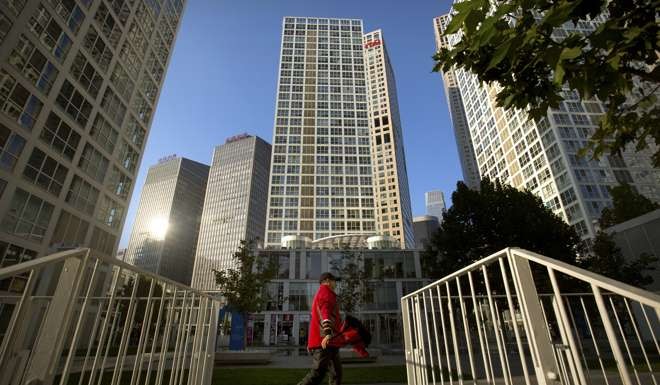
A lot of companies have reported that finding good office space in Beijing’s central business district(CBD) is becoming increasingly difficult, and expensive – but many are unwilling to locate to less popular and cheaper sites away from the city centre. How can the problem be solved?
Contrary to popular perception, there is plenty of supply in Beijing CBD, a lot more in fact than in the city’s Financial Street or Zhongguancun, where an office can be really hard to find.
Also contrary to perception is that emerging markets, such as Wangjing area, have a high vacancy ratio. The vacancy ratio in Wangjing is low, and rents are not low any more.
The problem some of these areas have in filling their space is to do with infrastructure
Office workers in Wangjing, particularly, complain it’s hard to get to by public transport. Services and amenities, such as convenience stores, restaurants and hotels are rare.
These types of out-of-town areas used to attract tenants with cheap rents and favourable policies. But office owners are becoming increasingly aware they cannot attract firms just by offering generous discounts. They have to do more complete the surrounding amenities, the soft environment of their markets, and more will be willing to move into them.
With an oversupply of retail space in China, many underperforming malls are being converted into offices. Is there a danger of that too becoming oversupplied if the trend continues?
There are two types of retail space being converted into offices: complementary retail space in bigger complexes, and whole retail buildings that are underperforming due to their poor location or poor management.
On the first type, often their small size and flaws in design make them difficult to attract tenants. Ideally owners should be converting the second, third and fourth floors into offices, especially if higher floors are already offices.
Whole underperforming retail buildings can be more be difficult to convert, because of their design, the position of their escalators, windows and so on. It can also be hard for there types of building to attract traditional tenants such as financial and law firms.
I don’t think there’s an oversupply issue for now, because the trend is exclusively robust in Beijing. There is an acute supply issue in the capital, because it is nearly impossible to find new office projects in the downtown area because of policy regulations. Demand for offices here continues, unabated.
If retail property owners invest in converting the lower levels of their buildings into office space, they will be able to earn much higher rents, than if for instance the site was leased as a restaurant. So there is a strong incentives to do so.