Tag: commodity

  • LNG Canada investor Petronas signs gas supply deal with Vitol

    LNG Canada investor Petronas signs gas supply deal with Vitol

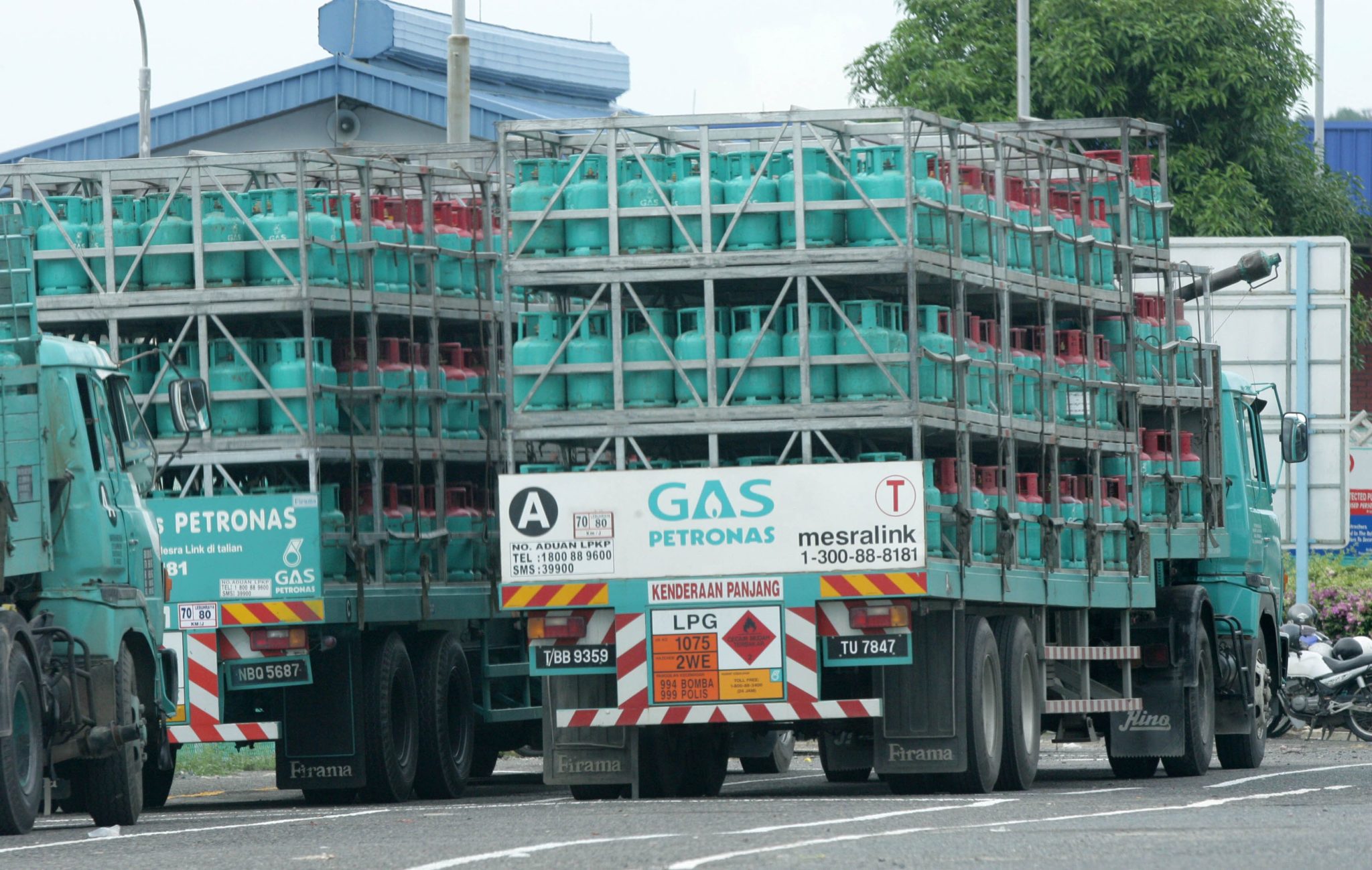
     LNG Canada, the US$30 billion (RM125.7 billion) liquefied natural gas (LNG) export project, has bagged another client after project shareholder Petroliam Nasional Bhd (Petronas) signed an initial sales deal with trading house Vitol.

    Royal Dutch Shell decided in October to construct the export terminal. It was the first major investment decision in a new North American LNG export project for two years and was expected to launch a new wave of such projects in the region.

    Petronas, the Malaysian state-owned oil and gas company that bought a 25% stake in the project in May, will supply Vitol with 0.8 million tonnes per year (mtpa) of LNG starting from 2024 for 15 years, Vitol said in a statement.

    “The primary supply to Vitol will come from LNG Canada as well as from (Petronas’) other global LNG supply portfolio,“ Vitol said.

    Vitol joins Asian utilities Tokyo Gas, Toho Gas and Korea Gas Corp (Kogas) as buyers, committing to offtake around 2.4 mtpa collectively.

    Such long-term agreements normally underpin project finance and are critical before a final investment decision is taken. But because Shell and partners Petronas, PetroChina, Mitsubishi and Kogas are such large players in the LNG market, they can absorb the output into their global portfolios without needing to find significant other buyers.

    Under previously announced deals, Toho Gas will buy 0.3 mtpa, Tokyo Gas 0.6 mtpa and Kogas 0.7 mtpa from LNG Canada.

  • Indian rice rates gain for third week; markets eye Philippine order

    Indian rice rates gain for third week; markets eye Philippine order

    Rice export prices rose for a third straight week in India while an Philippine order did little to infuse activity in Thailand and Vietnam. India’s 5 percent broken parboiled variety was quoted around $367-$375 per tonne this week, from $363-$371 the last week. The top exporter’s rupee currency rose to its highest level in more than two months, trimming exporters’ margins.

    “Paddy rice prices have jumped in Chhattisgarh and other neighbouring states and accordingly export prices are going up,” said an exporter based in Kakinada in the southern state of Andhra Pradesh.

    In July, the government raised prices paid to local farmers for common grade paddy rice by 13 percent from a year earlier to 1,750 rupees per 100 kg for the new season crop.

    Meanwhile, neighbouring Bangladesh will procure 600,000 tons of rice at 36 taka ($0.40) per kg from local farmers in the current harvesting season to boost reserves, a food ministry official said.

    In Vietnam, rates for 5 percent broken rice fell to about $410 a ton from $415-$420 last week.

    “Though prices are lower, trade remains very quiet as domestic supplies are empty. Prices will fall further in the coming weeks, closer to the levels offered by Thailand and India,” a trader based in Ho Chi Minh City said.

    “The Tan Long Group offered 118,000 tonnes in a Philippines import tender for 500,000 tons earlier this week, but the firm hasn’t been seen buying rice from the local market, and it’s not clear where its source will be.”

    The Philippines is on a rice-buying spree this year in a bid to tame prices that surged as stocks at government warehouses nearly ran out.

    Singapore-based commodity trader Olam International offered to supply the Philippines with 210,000 tons and Vietnam’s Tan Long Group Joint Stock Co offered 118,000 tons.

    Traders said the Vietnamese market will remain quiet until early next year when supplies of the winter-spring crop become available.

    Meanwhile in Thailand, benchmark 5 percent broken rice prices were quoted at $382-$395 per ton, free on board (FOB) Bangkok, narrowed from $380-$398 last week.

    Thailand will only supply part of the Philippines deal so there has been no immediate impact yet, but there is a chance that domestic price could rise later this week because of it, a Bangkok-based rice trader said.

  • Moody’s downgrades Petronas LNG’s ratings outlook to negative

    Moody’s downgrades Petronas LNG’s ratings outlook to negative

    Moody’s Investors Service has downgraded Petronas LNG Ltd’s (PLL) ratings outlook to “negative” from “stable”, following the same outlook revision for its parent company Petroliam Nasional Bhd’s (Petronas) yesterday. At the same time, the rating agency has affirmed PLL’s A3 foreign and local currency issuer ratings.

    Moody’s said the changes reflects its negative outlook on Petronas’ ratings and its expectation of PLL’s continued strong support from and linkages with its ultimate parent.

    PLL is 100%-owned by Petronas, which is in turn wholly-owned by the government.

    Moody’s said given the negative ratings outlook, a ratings upgrade is unlikely and it will revise PLL’s ratings outlook to stable from negative only if Petronas’ ratings outlook is stabilised.

    It said that PLL’s ratings will be downgraded if: Petronas’ rating is downgraded; there is a decrease in Petronas’ ownership of PLL; there is a reduction in Petronas’ supervision of and operational and financial support to PLL; or there is a material increase in PLL’s risk appetite.

    PLL’s ratings were assigned using a top down approach by evaluating the company’s full ownership by Petronas, its strong operational and financial integration with Petronas, and the willingness and ability of Petronas to extend support to PLL in an event of distress.

    Meanwhile, Moody’s assistant vice president and analyst Rachel Chua said PLL’s A3 ratings are positioned two notches below the A1 ratings of its ultimate parent.

    She noted that PLL enjoys ongoing liquidity support from Petronas and it can draw from Petronas’ umbrella credit facility for liquidity management, adding Petronas has continued to support PLL financially through cash injections of almost $400 million over the past three years.

    “Petronas’ support for PLL extends beyond financial assistance. Petronas also provides PLL with significant management support and oversight, including monthly reporting on risk and governance to a committee chaired by Petronas.

    “PLL also has an integrated treasury function with Petronas, where its cash is held centrally by Petronas and cash flow requirements are shared with its parent,” she added.

  • Indonesia Will Not Cut Export Levy on Palm Oil: Minister

    Indonesia Will Not Cut Export Levy on Palm Oil: Minister

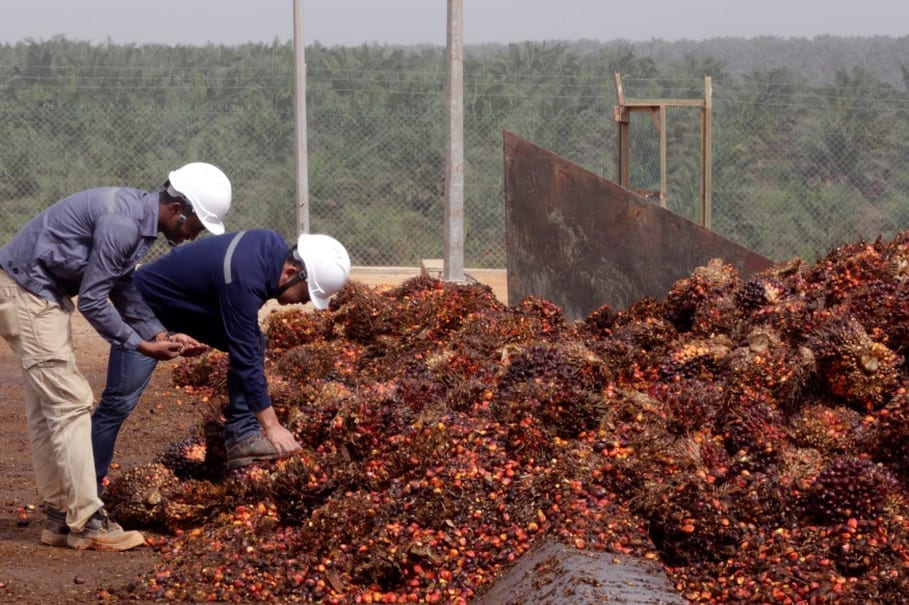
    Indonesia has decided not to make any changes to export levies on palm oil, Coordinating Economic Affairs Minister Darmin Nasution said on Thursday. “Even though we have had discussions on the issue, we prefer not to change the policy on this area. There is no change,” Darmin said at a press briefing in Kuala Lumpur.

    “In the long term, I cannot confirm, but in the short term there is no change,” he said.

    Darmin said at an industry conference in Bali last week that Indonesia was considering a move to reduce the levy.

    Indonesia, the world’s top producer and exporter of the edible oil, currently slaps a levy of $50 per metric ton on crude palm oil, and a range of $20-$40 for refined palm products.

    The Indonesian Palm Oil Association (Gapki) said last month that it had proposed cutting the palm oil export levy by $20 per ton until prices of the vegetable oil reach $700 per ton.

    The government’s reference price for crude palm oil has stayed below $750 per ton for over a year.

    Speaking in Kuala Lumpur, Darmin said Indonesia decided against the cut in export levy as such a move would result in lower prices that would benefit consuming countries, not exporters.

    The minister has in the past said Indonesia was considering reducing the levy to boost exports, which would then reduce stockpiles, but he said on Thursday that this would be achieved by boosting the use of biodiesel.

    “Our policy is to increase the utilization of biodiesel, so of course, it takes time but I believe the result will be there in six months,” Darmin said.

  • Exporters fret over weaker yuan

    Exporters fret over weaker yuan

    While the weakening yuan has allowed Vietnamese importers to benefit from cheaper material costs, exporters are feeling the pinch. The yuan declined to 6.9075 per U.S. dollar on Nov. 6. The move has dragged the yuan down by almost 9 percent from the beginning of this year, the steepest drop in the last 10 years.

    A yuan was selling for VND3,327 on Monday, down from VND3,595 in February 5, according to Vietnam Customs. This means that the dong has gained 7.4 percent over the yuan in the last nine months.

    Experts say that this is an opportunity for Vietnamese businesses to import cheaper materials.

    Economist Bui Trinh said that the falling yuan will allow local businesses to gain from importing materials and machines, 90 percent of which are obtained from China.

    A Vietnamese plastic importer said as his firm pays with the weaker yuan, it has become more competitive in the market. Up to 70 percent of this company’s materials are imported from China.

    An importer of Chinese fruits said buying fruits from China is cheaper and prices in Vietnam remain the same. “So I’m making more profit.”

    But the falling yuan has created more difficulties for Vietnamese exporters.

    Bui Thanh Van, director of trade firm Van Phat Ltd., which exports produce to China, said that the falling yuan has lowered the amount of orders they used to get.

    Some Vietnamese produce are being priced higher than other countries in ASEAN, such as Thailand and Malaysia, and countries which are lowering their currency values to increase exports to China, he said.

    “The weakening of the yuan has made it a challenge to export to China.”

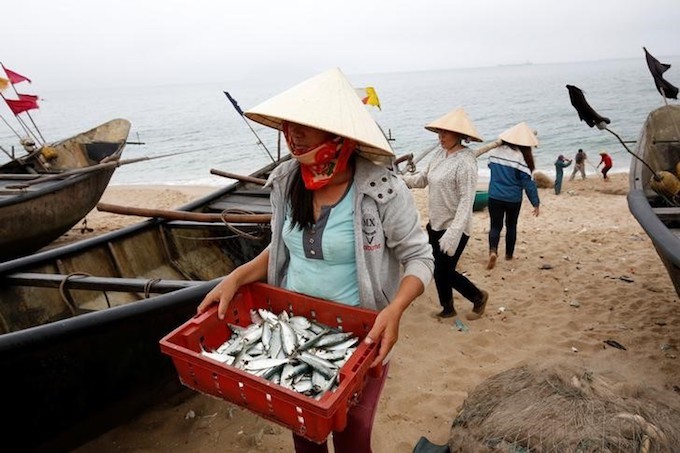
    Truong Dinh Hoe, general secretary of the Vietnam Association of Seafood Exporters and Producers, said that as China has been one of Vietnam’s top export markets in the last two years, the weaker yuan would make it difficult for seafood exporters.

    China was among the top four largest importers of Vietnamese seafood in the first eight months this year, along with Japan, South Korea and the U.S., according to the Ministry of Agriculture and Rural Development. These four markets accounted for over 54.1 percent of Vietnam’s total seafood exports in the same period, it said.

    The falling yuan will likely increase prices and lower orders from China, affecting the local seafood market, Hoe said.

    Experts are also worried that the weaker yuan will lead to an increasing number of Chinese goods entering Vietnam with more competitive prices, making the nation’s trade deficit even higher.

    From January to September this year, Vietnam had a trade deficit of $18.45 billion with China, its largest trade partner among over 200 countries and territories, according to Vietnam Customs.

    Trade turnover between Vietnam and China reached $93.69 billion last year, up 23.2 percent from 2016, accounting for 22 percent of Vietnam’s total trade turnover, Vietnam Customs reported. The figure is estimated to reach 100 billion this year.

  • India shifts to gold discount but Akshaya Tritya seen reigniting demand

    India shifts to gold discount but Akshaya Tritya seen reigniting demand

    Gold was sold at a discount in India as demand remained subdued for a fourth straight week while buying in the rest of Asia picked up as prices fell for a third consecutive week.”Many consumers are busy in paying advance tax. Since this is last month of the fiscal year, they have to pay taxes by March end,” said Ashok Jain, proprietor of Mumbai-based wholesaler Chenaji Narsinghji.India’s fiscal year runs from April to March.Dealers in India were offering a discount of up to $3 an ounce over official domestic prices, compared with a premium of $2 last week. The domestic price includes a 10 per cent import tax.”Retail demand is very weak.

    Despite the correction in prices, consumers are showing little interest in buying,” said Harshad Ajmera, the proprietor of JJ Gold House, a wholesaler in the eastern Indian city of Kolkata.In the local market, gold was trading at 30,405 rupees per 10 grams, after hitting a 15-month high of 30,839 rupees last month.India’s gold imports in February dropped a quarter from a year ago to 63 tonnes as higher prices curtailed demand in the world’s second-biggest consumer of bullion, provisional data from precious metals consultancy GFMS and bank dealers showed.

    Weddings and Akshay Tritiya festival, when buying gold is considered auspicious, could lift demand in April, Ajmera said.Meanwhile in China, there was some good buying through the mid week, with gold selling at a premium of $6-$8 over benchmark rates this week, down slightly from $8-10 last week.

    Gold prices extended losses into a third session on Friday as the dollar strengthened against the yen on hopes of easing tensions between the United States and North Korea and ahead of U. S. non-farm payroll data later in the day.Benchmark spot gold prices have fallen for a third straight week.

    Premiums of 70 cents to a $1.20 were being charged in Hong Kong last week, while in Singapore, premiums were unchanged at the 80 cent level.”There was a pick up in demand when prices fell below $1,320 last week … There is buying on dips and we expect prices to go down further, which should see some buying,” said Ronald chief dealer at Lee Cheong Gold Dealers in Hong Kong.

    In Japan, premiums were unchanged from last week at 50 cents despite good demand.The demand in Japan was strong due to lower prices in Japanese yen terms, but have started to wane towards the end of the week, a Tokyo-based trader said.

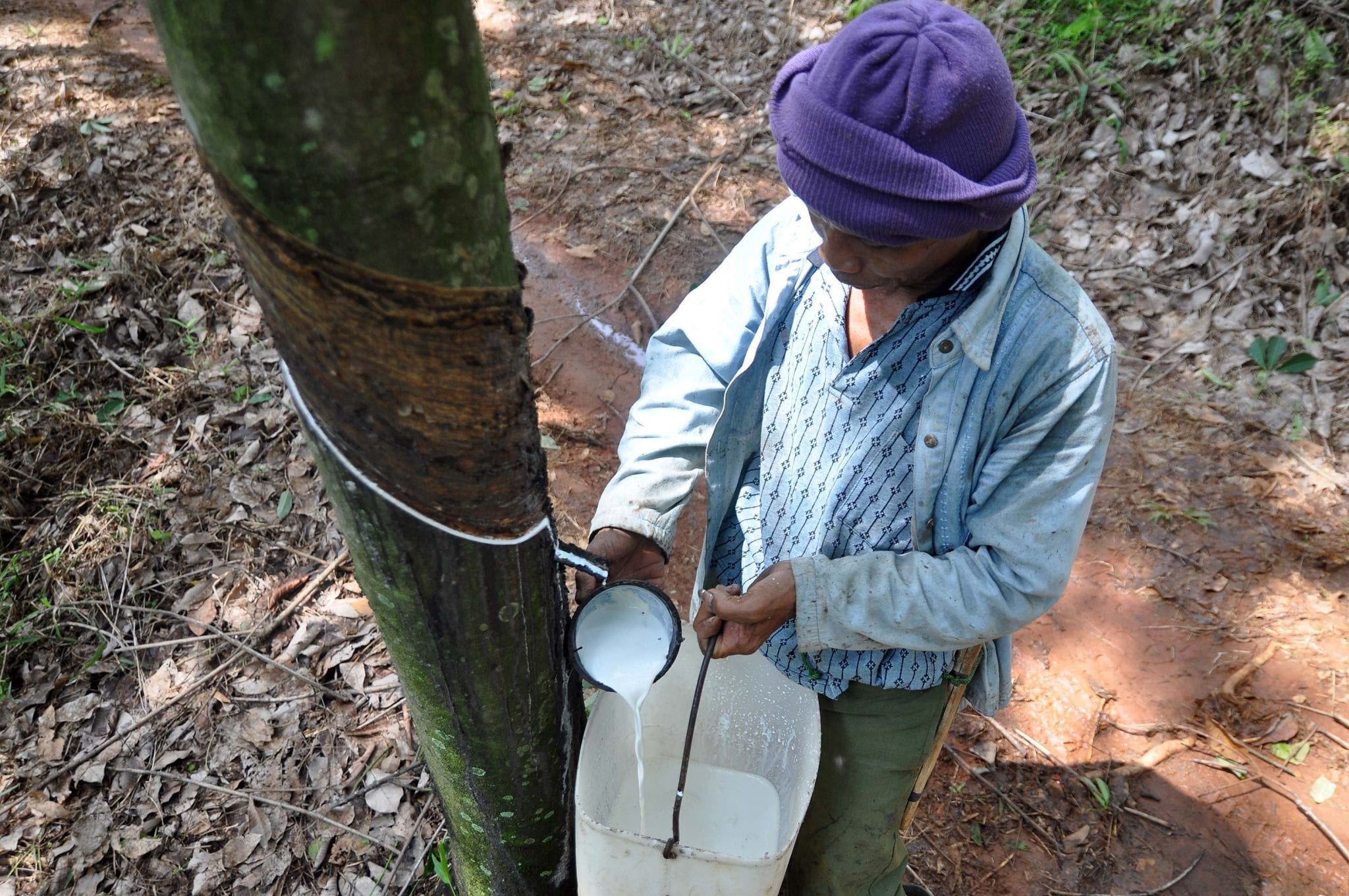
  • Vietnam’s PM demands answer on rubber firm sprung for stretching financial legality

    Vietnam’s PM demands answer on rubber firm sprung for stretching financial legality

    Prime Minister Nguyen Xuan Phuc has called for a report on potential fraudulent activity at the state-owned Vietnam Rubber Group (VRG) after government inspectors discovered misuse of state capital and assets at the group three years ago.

    The Ministry of Public Security has been instructed to submit the report by December 31.

    VRG, in which the Vietnamese government currently owns a 95 percent stake, has allegedly committed fraud worth up to VND8.4 trillion ($370 million).

    Between 2006 and 2011, the group spent over VND2.42 trillion, or 13 percent of its charter capital, on non-core businesses, such as cement, hotels, steel, hydropower projects and the stock market.

    Most of the investment came from the state budget, but the group reported that it did not generate any profits.

    Some VRG leaders have also been accused of contributing capital to establish and run a seafood import-export firm in the southern province of Dong Thap.

    VRG also raised its charter capital in 2010 and 2011, without government approval, by VND1.84 trillion.

    And although the inspection, completed back in 2014, was aimed at handling individuals and groups that committed fraud, VRG has yet to be held accountable.

    Thanh Nien (Young People) newspaper reported last month that where the money had gone, and how the group would make up for the massive sum, remained a questions that the public still has no answer to.

    In September, VRG rolled out a privatization plan, in which it declared a charter capital of VND40.7 trillion and 244,000 hectares (593,052) of lands in 18 cities and provinces across the country.

    The rubber giant, which has 103 subsidiaries, expects to earn VND13 trillion from selling one billion shares in its initial public offering.

    It also has a target of earning more than VND3 trillion in net profit this year, up 9 percent from last year.

    “There is a sense of urgency in Vietnam to privatize state-owned enterprises (SOEs) and use the money raised from public offerings to alleviate the government’s fiscal burden,” HSBC said in a report in August.

    Late last year, PM Phuc signed off on a decision which pushes for further divestment of state capital in existing SOEs by eliminating or reducing the minimum level of ownership that the government holds in certain industries.

    The decision provided a clearer roadmap for equitization by saying that the state will equitize 137 SOEs and sell its entire stakes in 103 firms. Equitization is the term Vietnam uses to describe the process of issuing shares to partially privatize state-owned businesses in which the government will still hold the majority stake.

    The Ministry of Finance said in June that the country’s public debt, which includes central government debt, government-backed loans and local government debt, may reach the ceiling set by the legislative National Assembly of 65 percent of gross domestic product from 2017-2018.