
Tag: CommunicAsia2017

  • 100b IoT connections by 2025: Huawei

    100b IoT connections by 2025: Huawei

    There will be more than 100 billion IoT connections by 2025, predicts Huawei. The company recently shared its vision of the IoT with over 200 attendees at the inaugural Huawei IoT Ecosystem Forum, held in conjunction with CommunicAsia2017 last week.

    Low power wide area (LPWA) networks such as narrowband IoT (NB-IoT) running on licensed spectrum will represent approximately 70% of cellular IoT connections, Huawei predicted. Today NB-IoT is already powering industry applications such as asset tracking, agriculture and parking.

    While the massive number of connections is expected to enable significant productivity gains for companies and individuals, IoT will need the support of the entire ecosystem to reach its full potential.

    Lim Chee Siong, chief strategy and marketing officer of Huawei Southern Pacific region highlighted in his opening speech that Huawei will support the IoT ecosystem by focusing on three areas.

    These are building wireless network, enterprise IoT gateways and home IoT routers; providing a cloud-based IoT connection management platform, which realizes secured and reliable IoT connections; and innovating IoT chipsets, with built-in LiteOS, to make communication and connection in the IoT environment with ease.

    “We will work to develop a cohesive IoT ecosystem, which all partners and telcos can leverage as they address the IoT needs of different vertical industries,” said Lim.

    To drive innovation and glocalisation of technology services in Singapore, Huawei announced its partnership with i5Lab with NUS enterprise in November 2017 to accelerate the growth of IoT startups in Singapore.

    The collaboration aims to cater to the industry’s needs for incubation of innovative ideas, training, research support, funding, testing and certification in the region.

    Huawei  president of IoT solutions Jiang Wang Cheng commented that “We believe that IoT is a ‘GLocal’ ecosystem where telcos, local enterprises and global vendors like Huawei leverage on each others’ knowledge and capabilities to build a vibrant ecosystem. Huawei is glad to recommend our partners in different industries and establish channels of communication between operators and vertical industries. We call for more partners from across different verticals to join us to build viable IoT solutions.”

    Huawei is currently working with more than 40 partners on smart meter, smart light and connected car to offer IoT device, network, service platform, applications and system integration. In March 2017, Huawei announced plans to invest US$1 billion in developer ecosystem worldwide.
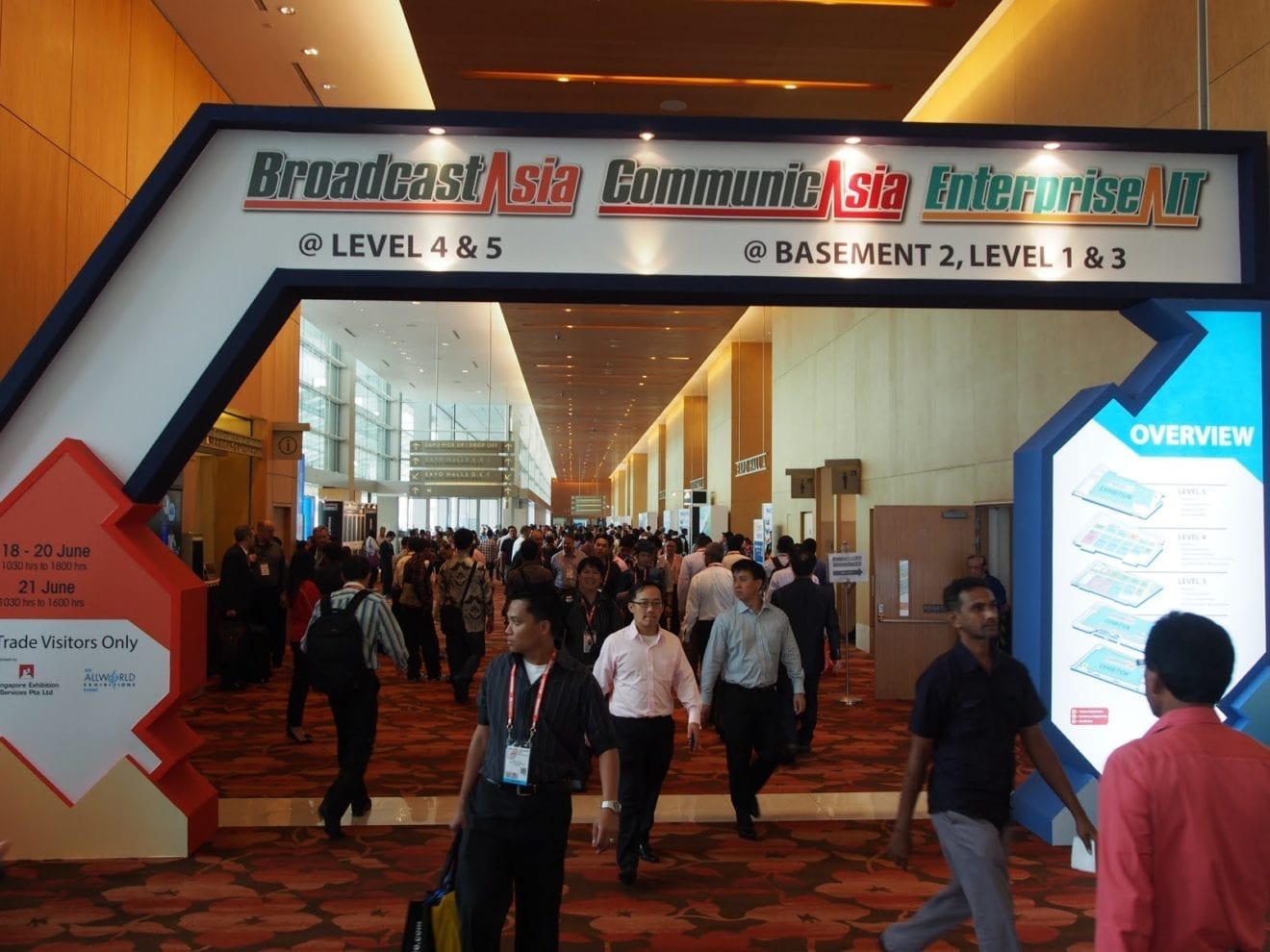
  • Minister Ibrahim opens CommunicAsia2017

    Minister Ibrahim opens CommunicAsia2017

    “They say ‘change is the only constant’, but change has never come at a faster rate,” said Ibrahim. “Convergence and disruption are transforming the way we operate. Every so often, we see another Airbnb or Uber come along, up-ending the way our economies function.”

    Global upheaval

    “Across the world, we see greater calls for protectionism,” he said. “I am sure we recognize this reality in our countries. But how do we deal with such upheaval?”

    “We can, of course, try to protect our economies and close them off-take the easier path. But history has shown that those who resist change eventually fall behind and end up playing catch-up.”

    Digital strategies

    “As ministers and policy-makers, we have been looking at the policies to prepare our country, so that we are digitally ready to thrive in the future economy,” said Ibrahim. “The TechSkills Accelerator, or TeSA, we launched last year aims to deepen skills and capabilities. Over 10,000 ICT professionals have gained from TeSA so far.”

    “We will be training another 10,000 public servants in data science to improve capabilities in the public service. We are also reaching out to the small medium enterprises. With the SMEs Go Digital program, we want to help our small businesses scale up and boost productivity through technology.”

    Culture of experimentation

    “We want to encourage a culture of collaborating, sharing and experimenting,” said the Minister. “One way we are doing this is to provide dedicated spaces and tools for people to tinker around with innovative projects, and exchange ideas with others in the community.”

    “The PIXEL Lab at the Jurong Regional Library is one such space. Tools and equipment like 3D printers and micro-controllers are available for anyone who wants to play around with them.”

    Regulation without stifling innovation

    “How do we regulate without stifling innovation? Last year, the Monetary Authority of Singapore, or MAS, launched a regulatory sandbox for financial institutions and FinTech players. The idea is to provide a conducive space where certain regulatory requirements are relaxed for a period of time, to encourage firms to test their solutions. If the experiment fails-and there will be some that do, it does so within a confined space, without major impact on our financial system.”

    “Digital is the future, but the future is not only digital,” said Ibrahim. “I believe analogue will remain for some time in many of our countries. We must look into harnessing the benefits of digital to transform older, analogue processes and sectors. This is one way to ensure a more inclusive and equitable distribution of benefits we gain from technology.”