Retail News CRM

Tag: communication

  • Taiwan’s Fixed Communication Market Set for Steady Growth Amid Rising Fiber Broadband Demand

    Taiwan’s Fixed Communication Market Set for Steady Growth Amid Rising Fiber Broadband Demand

    The revenue for Taiwan’s fixed communication services market is predicted to increase from USD 3.3 billion in 2025 to USD 3.4 billion in 2030, showing a slow compound annual growth rate (CAGR) of 0.4%. This sluggish expansion is primarily due to a continuous decrease in fixed voice access lines and average revenue per user (ARPU) levels.

    Shifting Communication Preferences

    Taiwan’s Fixed Communication Forecast for the third quarter of 2025, provided by GlobalData, predicts that total voice subscriptions in the country will decrease at a CAGR of 0.8% from 2025 to 2030. This decrease is attributed to users increasingly opting for mobile and application-based communication services over traditional voice lines.

    Declining ARPU in Fixed Voice Services

    The overall ARPU for fixed voice services is also expected to decline during this period. The ARPU for residential fixed voice is forecasted to drop from USD 2.68 in 2025 to USD 2.38 in 2030. While the number of fixed broadband accounts is expected to grow at a CAGR of 2.6% during the forecast period, the ARPU for fixed broadband is expected to decrease. The ARPU for residential fixed broadband is forecasted to decline from USD 25.67 in 2025 to USD 24.69 in 2030, and for the business segment, it is expected to drop from USD 33.64 to USD 30.38.

    Continued Dominance of Fiber Broadband

    According to Pradeepthi Kantipudi, a Telecom Analyst at GlobalData, fiber is set to remain the dominant broadband technology when it comes to subscription share throughout the forecast period. By the end of 2030, fiber-based subscriptions are expected to constitute 63% of total fixed broadband accounts in Taiwan. This projected growth is driven by the increasing demand for high-speed broadband connectivity. Additionally, initiatives by the government and telecom operators to expand and upgrade the country’s fiber broadband infrastructure are also contributing factors.

    Chunghwa Telecom is projected to lead the fixed broadband services market in terms of subscription share in 2025 and maintain this lead through 2030. This prediction is based on the company’s strong position in the fiber-to-the-home (FTTH) segment and its continued efforts to upgrade the gigabit broadband network nationwide.

    Questions & Answers

    What is the projected growth rate for Taiwan’s fixed communication services market?
    The revenue for Taiwan’s fixed communication services market is predicted to increase at a CAGR of just 0.4% from 2025 to 2030.

    What factors are contributing to the slow growth of Taiwan’s fixed communication services market?
    The slow growth is primarily due to a continuous decrease in fixed voice access lines and average revenue per user (ARPU) levels, with users increasingly opting for mobile and application-based communication services.

    Who is expected to lead the fixed broadband services market in Taiwan by 2030?
    Chunghwa Telecom is projected to lead the fixed broadband services market in Taiwan through 2030, thanks to its strong position in the fiber-to-the-home (FTTH) segment and its focus on upgrading the gigabit broadband network nationwide.

  • Rakuten and Amazon Join Forces to Take on Starlink in Japan’s Satellite Market

    Rakuten and Amazon Join Forces to Take on Starlink in Japan’s Satellite Market

    Japan’s satellite communications landscape is on the brink of transformation as Rakuten Group and Amazon gear up to launch their own services, challenging the long-standing dominance of SpaceX’s Starlink. With operations expected to begin as early as next year, this competition promises to reshape the market and improve connectivity for consumers across the country.

    Starlink, spearheaded by Elon Musk’s SpaceX, has established itself as the go-to satellite service in Japan, especially through partnerships like KDDI, which allows for direct smartphone-to-satellite connections. This capability has proven invaluable in rural locations and areas prone to natural disasters, where traditional infrastructure is often lacking.

    In a significant move to diversify the market, Japan’s Ministry of Internal Affairs and Communications (MIC) has initiated work on new spectrum regulations that are set to pave the way for increased competition by 2025. This regulatory shift will create opportunities for Rakuten and Amazon to enter and thrive in the satellite communications arena.

    Rakuten’s Bold Ambitions

    Rakuten Mobile is wasting no time in making its mark, with plans to roll out its satellite service between October and December 2025. Collaborating with U.S. startup AST SpaceMobile, Rakuten’s initial offering will focus on text messaging. But that’s just the beginning—plans are afoot to expand services to include money transfers and video streaming. The company emphasizes that this initiative aims to enhance connectivity in underserved areas while providing a reliable backup during emergencies—a win-win for users reliant on stable communication.

    Amazon’s Satellite Strategy

    Not to be outdone, Amazon is preparing to launch its Project Kuiper satellite network in Japan, which aims to deploy over 3,200 satellites by 2029. This ambitious project aligns with the MIC’s plans to amend regulations after April 2025, ensuring that Amazon can compete in this burgeoning market. The retail behemoth’s foray into satellite communications underscores a broader trend of tech giants expanding their reach beyond traditional digital services.

    As Japan stands on the threshold of this new era in satellite communications, the impending rivalry between these giants has all the makings of an exciting battle for connectivity supremacy—let’s just hope consumers don’t have to wait on hold for years while they hash it out!

    Questions & Answers

    What changes can consumers expect in Japan’s satellite communications market?
    Consumers can anticipate increased competition, primarily from Rakuten and Amazon, which will enhance connectivity options, especially in rural areas and during emergencies.

    When are Rakuten and Amazon expected to launch their services?
    Rakuten plans to debut its satellite services between October and December 2025, while Amazon’s Project Kuiper is set for a rollout, targeting more than 3,200 satellites by 2029.

    How might these new services impact existing providers like Starlink?
    The entry of Rakuten and Amazon is likely to intensify competition, potentially leading to improved services and pricing options for consumers who currently rely on Starlink.

  • Indonesia’s Fixed Communication Services Market Projected to Reach $3.7 Billion by 2029

    Indonesia’s Fixed Communication Services Market Projected to Reach $3.7 Billion by 2029

    Indonesia’s fixed communication services market is poised for steady growth over the next five years, with projections indicating a rise to USD 3.7 billion by 2029, up from USD 3 billion in 2024, according to recent analysis by GlobalData. This anticipated surge signifies a significant leap in the sector, reflecting the country’s ambitious digital aspirations.

    Broadband Boom: The Driving Force Behind Growth

    The primary catalyst for this growth is the expanding fixed broadband segment, expected to grow at a compound annual growth rate (CAGR) of 4.3%. The Indonesian government’s commitment to enhancing high-speed internet access plays a crucial role, aiming for affordable speeds of up to 100 Mbps to support digital inclusivity and national transformation initiatives.

    The Twilight of Fixed Voice Services

    Conversely, fixed voice services are on a downward trend, projected to decline at a CAGR of 1.3%. This drop can be attributed to a shrinking base of circuit-switched subscriptions and a decrease in average revenue per user (ARPU), as more consumers pivot to over-the-top (OTT) and app-based communication channels. It seems we are saying goodbye to the days of home phone lines, one fiber optic cable at a time!

    Fiber Optics: Connecting the Future

    Fiber lines currently hold an impressive 83.1% market share of total fixed broadband lines in 2024 and are expected to maintain their dominance through 2029, noted Neha Mishra, Telecom Analyst at GlobalData. This trend is fueled by a surging demand for reliable, high-speed broadband services and the government’s ongoing push for a nationwide fiber rollout.

    Rising Competition and the Quest for Connectivity

    As service providers work diligently to extend high-speed connectivity to underserved regions, a competitive landscape is emerging. Competition will likely center around service differentiation through bundled offerings, network reliability, and customer experience. Operators that invest strategically in infrastructure and innovate in pricing strategies are set to capture long-term value in what is becoming an increasingly digitally empowered Indonesia.

    Questions & Answers

    What is the projected growth of Indonesia’s fixed communication services market?
    The market is expected to grow to USD 3.7 billion by 2029, up from USD 3 billion in 2024.

    What segment is driving this growth?
    The expanding fixed broadband segment is the main driver, projected to grow at a compound annual growth rate of 4.3%.

    How are fixed voice services performing in Indonesia?
    Fixed voice services are expected to decline at a CAGR of 1.3% due to a decrease in circuit-switched subscriptions and a shift towards OTT communication methods.

  • China Broadband Communications Rebrands as CBC Tech

    China Broadband Communications Rebrands as CBC Tech

    Effective September 1, China Broadband Communications rebrands as CBC Tech to reflect the company’s vision to become a next-generation network-as-a-service (NaaS) provider. CBC Tech will focus on providing elevated customer experiences and technological innovations to enable global enterprises to grow in China, as well as empowering Chinese companies that plan to penetrate overseas markets.

    This rebranding marks a significant milestone for the company as it veers away from providing traditional telecom operator services. As a NaaS provider, CBC Tech will embrace cloud-native networks and security-as-a-service solutions to help enterprises advance. CBC Tech will also continue to strengthen R&D capabilities, enhance the eNet network to meet customers’ changing network and security needs and provide customers with an excellent digital experience.

    “Upgrading the CBC brand to CBC Tech aims to reshape the company’s vision, mission and culture to better integrate telecommunications and technology advantages in the transformation process, complete with an innovation roadmap. This transformation will be made through continual investment in people, technology and processes,” said Richard Fung, co-founder and CEO of CBC Tech. “CBC Tech will spare no effort to focus on business development and provide the best employee and customer experience. Our goal is to expand eNet network coverage to 50 markets outside of China in the next one to one and a half years.”

  • Google Fi is fi-nally getting end-to-end encryption for phone calls

    Google Fi is fi-nally getting end-to-end encryption for phone calls

    If you’re concerned about the privacy of your voice communications, Google has a new way to guarantee that no one can snoop in on your calls anymore.
    Of course, there’s only so much the search giant can control, so the newly announced end-to-end encryption feature will merely work on the company’s own Fi MVNO (mobile virtual network operator) starting sometime “in the coming weeks.”

    Both the caller and the callee will need to be Google Fi subscribers and use Android phones for everything to work as advertised, at least to begin with. There’s not a lot to the technology that Big G plans to deploy before long, and all you have to know is that everything discussed during fully encrypted one-to-one voice calls will stay between you and the person you’re talking to.

    To avoid potential confusion or misunderstandings, a bunch of new “audio and visual cues” will make it crystal clear both before engaging in and during end-to-end encrypted calls that you’re wholly and entirely protected from spying ears.

    Namely, look for a lock symbol and straightforward “Encrypted by Google Fi” text on your phone’s screen or be aware of a “unique ringing tone” to make sure the functionality is indeed up and running. Obviously, the feature itself is hardly groundbreaking, as Google points out by highlighting that end-to-end encryption has become an “industry standard” in recent years for messaging apps.

    Slowly but surely, things are moving in the right direction from a privacy and security perspective as far as voice services are concerned as well, thanks to the likes of Facebook and now Google. The search giant’s Duo app actually launched with built-in end-to-end encryption for audio and video calls all the way back in 2016, so if anything, we’re surprised it took so long to implement this for Fi users.

  • Zoom lied about using end-to-end encryption and is lightly spanked by the FTC

    Zoom lied about using end-to-end encryption and is lightly spanked by the FTC

    Announced on Monday, a settlement between video conferencing app Zoom and the FTC revealed that since 2016, Zoom had been lying about providing ‘end-to-end, 256-bit encryption’ to protect the security of users’ communication. The truth was that Zoom was actually giving users a lower level of security. As the FTC said on Monday, “Zoom maintained the cryptographic keys that could allow Zoom to access the content of its customers’ meetings, and secured its Zoom Meetings, in part, with a lower level of encryption than promised.”

    The FTC complaint chronicles the rapid growth of the company. In July 2019 it had 600,000 paid subscribers and 88% of its paid subscribers were small businesses with 10 or fewer employees. By December of 2019, 10 million people around the world were participating in a Zoom chat daily. And by the time COVID-19 hit the U.S. big time in April 2020, the number of people around the globe participating on a Zoom chat everyday had skyrocketed to a whopping 300 million.

    During this amazing period of growth, Zoom made various representations about the strength of its security measures. On its websites and in its security guides Zoom said that it takes “security seriously,” that it “places privacy and security as the highest priority.” Zoom also made it known that “it is committed to protecting your privacy.” Since 2016 Zoom has been making claims that its chats offer end-to-end encryption. One way that it did this was by placing an icon of a green padlock in the top left corner of a Zoom Meeting. When a user hovered near the icon, he or she would see a popup that read “Zoom is using an end-to-end encrypted connection.”

    But as the FTC notes, “Zoom did not provide end-to-end encryption for any Zoom Meeting that was conducted outside of Zoom’s Connector product. On a blog post written by Zoom’s Chief Product Officer, the company finally admitted that “while we never intended to deceive any of our customers, we recognize that there is a discrepancy between the commonly accepted definition of end-to-end encryption and how we were using it.” The FTC also noted that the claim made last year by Zoom that its recorded meetings were stored encrypted as soon as the Meeting was over simply was not true. As it turns out, recorded Meetings were kept in Zoom’s own server unencrypted for up to 60 days before they were transferred to Zoom’s secure cloud storage where they were stored encrypted.

    The Democrats on the FTC panel are not happy about the settlement since they feel that it does not punish Zoom enough for its lies. Democratic Commissioner Rebecca Kelly Slaughter said, “Zoom is not required to offer redress, refunds, or even notice to its customers that material claims regarding the security of its services were false. This failure of the proposed settlement does a disservice to Zoom’s customers, and substantially limits the deterrence value of the case.” However, Zoom does face lawsuits from customers and investors and these could result in the company being ordered to make financial restitution to those who were hurt by the firm’s dishonesty.

    The proposed settlement that Zoom has agreed to includes beefing up its security including the use of multi-factor authentication as a way to prevent unauthorized access to the Zoom network. The settlement is open for the public to comment on it for 30 days; once that time is up, the Commission gets to vote on making it final. The 30 days begins once the settlement is published in the Federal Register. Zoom will have to notify the FTC if there are any data breaches. All software updates will need to be examined by Zoom for any security flaws. And a third-party will need to sign-off on Zoom’s security program once the settlement is finalized and for every two years after that for a total of 20 years.

  • AirAsia appoints Kris Taute to global communications role based in Kuala Lumpur

    AirAsia appoints Kris Taute to global communications role based in Kuala Lumpur

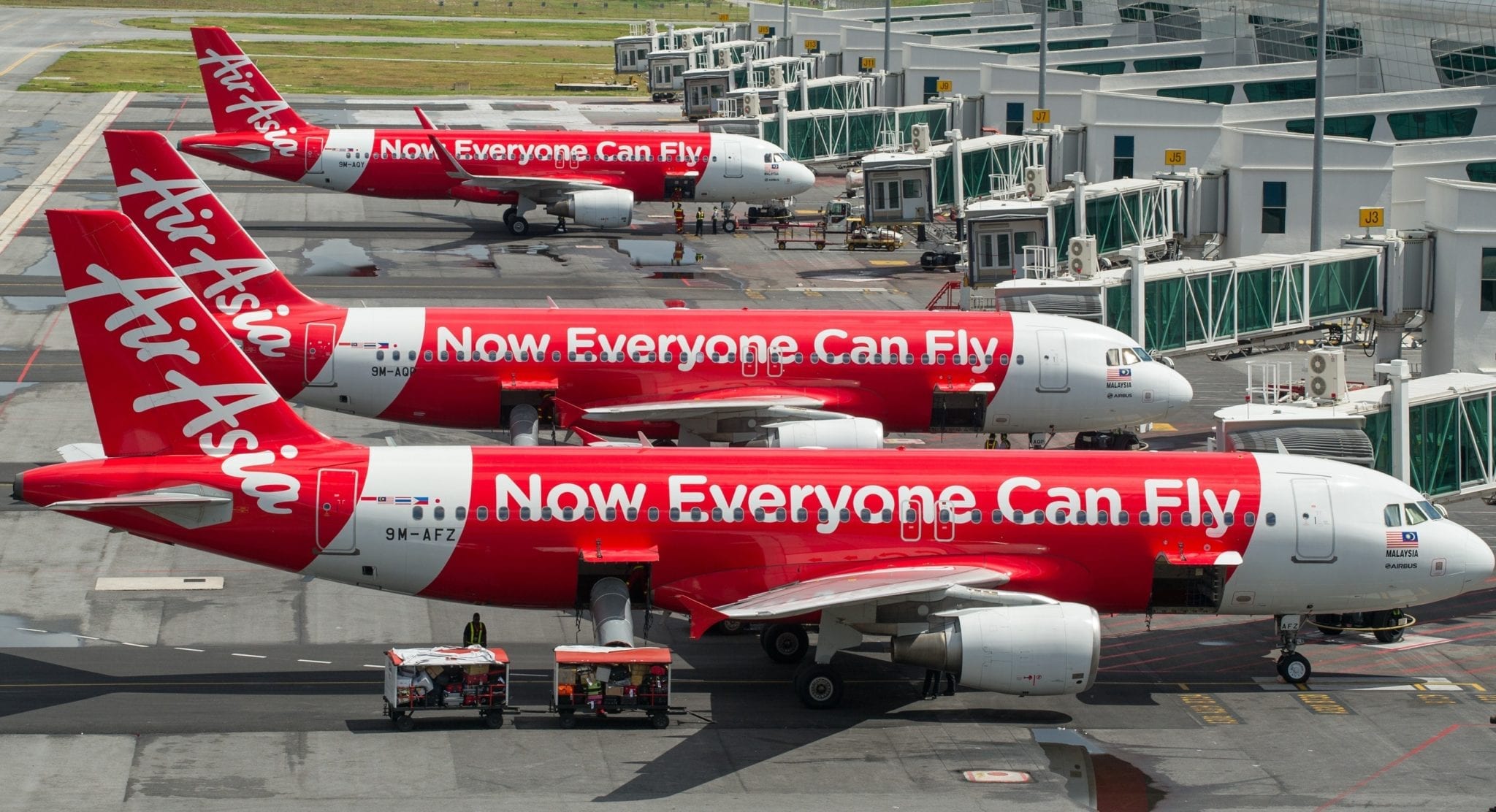
    AirAsia Australia PR and communications manager Kris Taute has moved to the airline’s Kuala Lumpur headquarters for a new global communications role.

    Taute had joined Air Asia last year, moving from the New South Wales state government, having worked for both Transport for NSW and for the state tourism body.

    In his new role as group manager communications for editorial, Taute will be responsible for the editorial communications of the airlines and its subsidiaries including  AirAsia and AirAsia X group of airlines, as well as lifestyle brands such as AirAsia Big Loyalty, travel360.com, Vidi, BigPay, RedCargo Logistics, Rokki, and Ourshop.

    In addition, Daphne Cheah is now ASEAN communications manager moving from a previous role as regional head green and sustainability.

    Taute has been replaced by Sarah Quinn who moves from Destination NSW and takes charge as PR and communication manager for AirAsia Australia.

  • Huawei Launches ‘World’s First’ 5G Communications Hardware For Automotive Industry

    Huawei Launches ‘World’s First’ 5G Communications Hardware For Automotive Industry

    China’s Huawei Technologies launched on Monday what it said was the world’s first 5G communications hardware for the automotive industry, in a sign of its growing ambitions to become a key supplier to the sector for self-driving technology.

    Huawei said in a statement that the so-called MH5000 module is based on the Balong 5000 5G chip which it launched in January. “Based on this chip, Huawei has developed the world’s first 5G car module with high speed and high quality,” it said.

    It launched the module at the Shanghai Autoshow, which began last week and runs until Thursday.

    “As an important communication product for future intelligent car transportation, this 5G car module will promote the automotive industry to move towards the 5G era,” Huawei said.

    It said the module will aid its plans to start commercializing 5G network technology for the automotive sector in the second half of this year.

    Huawei has in recent years been testing technology for intelligent connected cars in Chinese cities such as Shanghai, Shenzhen and Wuxi and has signed cooperation deals with a swathe of car makers including FAW, Dongfeng and Changan.

    The company, which is also the world’s biggest telecoms equipment maker, is striving to lead the global race for next-generation 5G networks but has come under increasing scrutiny from Washington which alleges that its equipment could be used for espionage. Huawei has repeatedly denied the allegations.

  • CTG, Tata Communications form IoT alliance

    CTG, Tata Communications form IoT alliance

    China Telecom Global has entered a collaboration with India-based Tata Communications to launch a global internet of things service for the Chinese market.

    Under the collaboration, the two companies will develop IoT-based services targeting multiple industries, including consumer and industrial electronics, manufacturing, automotive, transport, and logistics.

    China Telecom Global will gain access to the Tata Communications MOVE service, which seeks to leverage the company’s relationships with more than 600 mobile operators worldwide to enable global connectivity for new IoT-enabled devices.

    Meanwhile China Telecom Global will provide Tata with connectivity for Hong Kong, mainland China, and Macau as well as access to the Chinese operator’s 4G network resources.

    For specific vertical industries including automotive, China Telecom Global will also provide Tata with IoT solutions that are compliant with Chinese market requirements and regulatory requirements.

    “We want to grab our share of the rapidly growing Chinese IoT market. China Telecom Global is working closely with Tata Communications to pave the way for innovative and advanced IoT solutions across industries,” China Telecom Global CEO Deng Xiaofeng commented.

    “We’re able to offer our customers the borderless, reliable and affordable network connectivity they need for their different IoT devices. As the volume of connected ‘things’ continues to grow, we are able to give our customers complete visibility and control to make the management of hundreds of thousands of IoT devices easier on a global scale.”

  • Huawei confident of 5G role in Vietnam

    Huawei confident of 5G role in Vietnam

    Huawei Technologies says it has a good chance to be a supplier of 5G equipment to Vietnamese service providers. Fine Fan, CEO of Huawei Vietnam, said that the Chinese company is in talks with Vietnamese partners on conducting 5G trials later this year. “We are confident of expanding in Vietnam,” Fan said, adding that Vietnamese Minister of Information and Communications Nguyen Manh Hung “is open to every provider.”

    Fan said that Huawei cannot be beaten on quality or cost in Vietnam. “Huawei will provide better technology and solutions, along with financial support to local operators to deploy 5G.”

    Huawei’s expression of confidence comes as major mobile carriers in Vietnam have previously announced plans to develop 5G networks using equipment from other suppliers, including Ericsson, Nokia and Samsung Electronics.

    Viettel, the country’s largest telecommunications company, became the first firm to receive permission to trial 5G services last month.

    The company has earmarked $40 million for the development of its own 5G chipset, but was also considering using technology from Ericsson and Nokia, its president and CEO Le Dang Dung said.

    Last November, Minister Hung said at a conference that Vietnam should test 5G in 2019 and ensure nationwide coverage by 2020.

    “Vietnam should be one of the first to launch the network, at least in Hanoi and HCMC,” Hung said. The country had been one of the last in Southeast Asia to roll out 4G services.

    Huawei has been the largest provider of 2G and 3G network equipment in Vietnam, though the company lost its lead when 4G arrived, CEO Fan said.

    Vietnam’s telecom market was estimated at more than $16 billion in 2016, with the three state-owned providers, Viettel, MobiFone, and VNPT, accounting for 95 percent of the market.

    5G is said to offer speeds 100 times faster than 4G, primarily used for smartphones and other similar devices. 5G is also expected to support new applications like remote medical procedures and autonomous driving.

  • Axiata buys 80% stake in Laos firm

    Axiata buys 80% stake in Laos firm

    Axiata Group Bhd’s 63%-owned subsidiary edotco Investments (Labuan) Ltd (edotco Labuan) is acquiring an 80% stake in Laos’s Mekong Tower Company Ltd (MTCL) for LAK12.8 billion (RM6.08 million) cash. Axiata said in a filing with the stock exchange that edotco Labuan had entered into a share subscription agreement (SSA) with Viphet Sihachakr (VS) and MTCL for the purchase.

    The SSA is subject to, amongst other, procurement of operating licence or other form of authorisation from the Ministry of Post and Telecommunications of the Government of Laos to MTCL for the provision of infrastructure solutions for telecommunications and network operators in Laos; registration of MTCL with the Ministry of Industry and Commerce of the Government of Laos; and procurement by VS of viable business including relevant concessions and/or incentives in Laos.

    Unless waived by the parties, the conditions must be satisfied not later than six months from the date of the SSA.

    “The proposed subscription provides opportunities for edotco group to expand into a new market and grow organically via build-to-suits and inorganically with sizeable sale-and-leaseback prospects,“ Axiata said.

    The Laos tower market is expected to undergo intense growth in tandem with a national drive towards 4G adoption, with an estimated demand of no less than 5,000 towers over the next three years, underscoring the need for an independent tower player to meet the requisite capital expenditure and cost optimisation burdens incumbent on local mobile network operators.

  • Singapore telco M1’s suitors say they won’t raise offer price

    Singapore telco M1’s suitors say they won’t raise offer price

    Singapore conglomerate Keppel Corp and Singapore Press Holdings (SPH) said they will not raise their offer price to gain majority control of mobile operator M1 Ltd, a move that could put pressure on Axiata Group, M1’s single largest shareholder. Keppel and SPH, which together control 34.3% of Singapore’s smallest mobile operator, said in September they would offer S$2.06 (RM6.25) per share for majority ownership of M1 in a bid to support its falling share price and restructure the firm to better compete against sector rivals.

    “The offeror wishes to announce that it does not intend to increase the offer price of S$2.06 in cash per offer share under any circumstances whatsoever,” Keppel and SPH said in a regulatory announcement issued by their jointly-owned holding company. The closing date was extended to Feb 18 from Feb 4. M1 has a total market value of S$1.92 billion.

    Malaysia’s Axiata, which holds a 28.3% stake in M1, said in September the offer should reflect the accurate future value of M1, inclusive of an acceptable control premium and consistent with market standards.

    Axiata said at the time it was working with an adviser and was reviewing its options. As quoted, Axiata viewed the offer price as “inadequate”.

    In response to a query, Axiata said it would not comment on a statement. “Axiata will make any necessary announcements as required and in due time,” it said.

    Since the September announcement, M1’s shares have rallied 26% to trade at S$2.05 this week but are little changed over the past two years and have lost 49% from a record high of S$3.99 in early 2015.

    Mobile telecoms competition is heating up in Singapore, with Australia’s TPG Telecom planning to launch a new service after winning a licence to become the city-state’s fourth telecom operator. Analysts consider M1 to be the most vulnerable to new competition.

    In July 2017, Axiata, Keppel and SPH had considered, and then called off a strategic review of their M1 shareholding, which sources said was due to a lower-than-expected offer from external parties.

  • Miroglio and Workplace keep collaboration in fashion

    Miroglio and Workplace keep collaboration in fashion

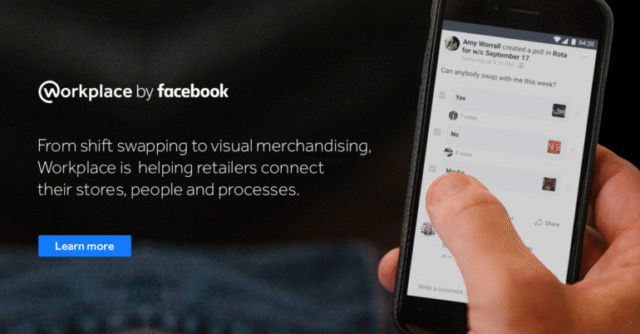
    Miroglio Fashion is the women’s clothing arm of Miroglio Group – a 71-year-old Italian conglomerate operating in 22 countries. The group joined Workplace in 2016. Since then, says CEO Hans Hoegstedt, it has “revolutionized our way of working.” “Over the last few years, the role of the CEO has changed. It is crucial for a CEO today to create culture, to remove filters and blockers so there can be a transparent and constructive dialogue between everyone. I was confident that Workplace was a platform that would help us achieve this,” he explains.

    “We chose Workplace because everyone in the company knows how to use Facebook. And they just instinctively ‘got it’. Right from the first day, people began to spontaneously interact with each other in a genuine way with no training required. We launched Workplace at our annual convention two years ago. Over 1,100 stores in our various brands swung into action along with the head office. We set up all the Workplace groups that we use for various parts of the business, like visual merchandising, product, innovation, communication and so on”.

    The result was instant. Within a short space of time, barriers and distances disappeared. People who had found it difficult to make themselves heard by head office suddenly had a direct, filter-free channel. It has given the company a more innovative and efficient way of working.

    “A clear example is the visual merchandising team. Before Workplace, the team would create a model window and send it out to all the stores by email. With Workplace, the VM team now posts the image of the model window into a group. All the shops reply with their versions, comments, and suggestions. The VM team then provides instant feedback for the stores.

    This allows to have hundreds of examples of how to dress the window instead of just one, and people can take ideas and inspiration from the others. There is a better dialogue and smarter collaboration that results in better window displays.

    Hoegstedt continues “There are functions we did not use at the outset that have now become core features for us. Auto Translate was crucial when we extended the platform to our colleagues in Russia. Everyone posts in their own language and Workplace auto translates. Simple and effective. It’s a powerful way to create a vast international network, and we’ll be relying on the translations as we deploy Workplace in Romania, Spain, and France. We also now use Live Video whenever we present a new collection”.

    “For me, as a CEO, it is also a way of ‘taking the pulse’ of the company. Of getting a quick sense of how people are feeling. It’s a kind of mass collective intelligence.”

    From frontline to back office to HQ, Workplace connects entire retail organisations so they can share, collaborate and transform the customer experience with next-generation technology.

  • Nestlé launches Workplace by Facebook

    Nestlé launches Workplace by Facebook

    Nestlé has adopted Workplace by Facebook as its global internal communication tool, to connect its workforce and better serve consumers.  The announcement comes as the latest and largest wave of staff join the platform, part of a process that began only nine months ago. Today, around 210,000 of its employees worldwide use the platform to connect and collaborate. Nestlé has pledged to move quicker to turn good ideas into great products to meet fast-changing consumer demand. With the majority of its employees active on the platform, Workplace is already making a difference. Internal engagement is higher and responses faster. People are experimenting and collaborating more, as well as sharing information and ideas.

    Workplace offers familiar Facebook features such as News Feed, Groups, Chat, events and live streams, as well as seamless mobile integration.  Because Workplace is easy to use, it can connect everyone and reach employees where they are.

    The first wave of market adoption including Mexico, Brazil, the Middle East and South Africa saw 25 times higher engagement per post and very high rate of use on mobile devices. Amongst other advantages, managers can use Live video to connect directly with employees at different locations. Sales teams can also use Workplace for daily check-ins and to share information and best practice.

    Commenting on the move to Workplace, Nestlé Executive Vice President Chris Johnson, said: “Nestlé is a people-first environment. We really rely on our talented teams to manage more than 2,000 Nestlé brands worldwide. We help our employees develop and we give them the right tools, so Workplace is a perfect fit.”

    The move to Workplace is part of Nestlé’s commitment to empower people and sustain a high-performance culture. The company is moving more and more to offer open office configurations and more flexible working environments.

    Workplace is also a great example of Nestlé constantly embracing the best technology and systems. Filippo Catalano, Chief Information Officer at Nestlé: “Today, using Workplace by Facebook we are able to give our employees across the globe a platform to build connections, enabling faster and more engaging sharing of information.”

    Julien Codorniou, vice president of Workplace by Facebook said, “As the global work landscape continues to change and the demand for better collaboration, best-of-breed IT and mobile-first work increases, we are honored to partner with a company like Nestlé to help employees work together to allow for limitless innovation.”

    While a large majority of users has now joined the Workplace platform, the rollout will continue throughout 2019.

  • LG U+ CEO says Huawei gear is not a risk

    LG U+ CEO says Huawei gear is not a risk

    LG U+ CEO and Vice Chairman Ha Hyun-hwoi has made it clear that the carrier does not think there are any security threats related to its use of Huawei equipment in its 5G infrastructure. Ha made the statement during a year-end press briefing on Wednesday in Yongsan District, central Seoul, rebuffing claims by some lawmakers that there is a risk of security leaks through the use of the Chinese tech giant’s equipment in the network. LG U+ currently partners with Huawei as well as Samsung Electronics, Ericsson and Nokia for its 5G infrastructure.

    According to Ha, the Chinese IT company has already applied for security certification of its 5G network equipment from an international certifying body in Spain. The CEO added the public will be able to see how secure the equipment is once the evaluations are complete next year.

    “Security concerns apply to every equipment vendor we partner with, not only Huawei, and we need to thoroughly verify all the equipment [we use] is secure,” Ha said. “There are roughly 170 countries that are already using Huawei’s network equipment, and there hasn’t been any security problems reported so far.”

    Locally, Huawei has set up equipment that abides by over 70 security guidelines set by the Korea Internet & Security Agency, according to LG U+.

    The main reason for the carrier taking the risk of using the controversial equipment is because 5G infrastructure needs to be built in conjunction with the existing network equipment for 4G long term evolution (LTE), some of which LG U+ also bought from Huawei. Ha said price, technological competitiveness and the ability to deliver the equipment in a timely manner were also considered when choosing the vendor.

    LG U+ has built 5,500 base stations to service the next-generation 5G network as of Wednesday, while its local competitors have reportedly established less than 1,000 5G base stations.

    On why the mobile carrier is rushing to establish its 5G infrastructure, Ha said, “It is important to have a head start to have a competitive edge in [5G] services considering the quality tests we need to go through before March [when the high-speed network is commercialized for smartphones].”

    Ha said the company invested roughly 4 trillion won ($3.6 billion) to set up its 5G infrastructure, including at 5G spectrum auctions.

    The company said it hopes to take up a larger share of the market, which is dominated by SK Telecom, with 50 percent, and KT, with 30 percent.

    “In July 2011, when we first began the LTE service, our local market share was 17.7 percent, but the share increased to 21.2 percent over time as of the end of October,” LG U+ said in statement. “We think next year could be the best time to shake up the competing structure.”

    The carrier is preparing a 5G-based smart factory service with its affiliates LG Electronics and IT service company LG CNS, targeting enterprise customers. For individual customers, LG U+ is focusing on augmented reality and virtual reality content that can offer an immersive experience of watching sports games and K-pop concerts at home.

    The CEO also commented on speculations that the carrier will acquire paid TV service operator CJ Hello. Ha said it has opened up its options to cable TV operators other than CJ Hello and plans to finalize the deal within the first half of next year. Industry sources, however, still say negotiations between the two parties have nearly come to a close and final results are likely to come out around March.