Retail News CRM

Tag: companies

  • Riding the Yuan Wave: Global Companies Amplify Chinese Currency Adoption, Says StanChart Report

    Riding the Yuan Wave: Global Companies Amplify Chinese Currency Adoption, Says StanChart Report

    Companies across the globe are progressively employing the Chinese yuan in an array of contexts, as noted in a recent study by Standard Chartered. These contexts range from settling trade transactions to financing supply chains.

    A growing number of international corporations are adopting the use of the Chinese renminbi (RMB). Statistics from a Standard Chartered study reveal that 23% of revenues and 25% of costs are subject to the influence of this currency. However, the report also points out that only 14% of debt is in RMB, indicating a discrepancy between operating exposure and the currency employed for financing.

    The study suggests that the uptake of RMB is increasingly motivated by operational necessities of corporations rather than currency positioning. The main factors encouraging its adoption are trade settlement, supply chain financing, alignment of balance sheets, and management of foreign exchange and interest rate exposure.

    Diverse Regions, Diverse Adoption Trends

    The adoption patterns of the RMB vary across different regions. For instance, corporations in Greater China and North Asia are extending their use of RMB beyond settlement to include funding and liquidity management. The uptake in Southeast Asia is primarily driven by supply chain needs, whereas in the Middle East and parts of Africa, the usage is concentrated in the energy and infrastructure trade sectors. In Europe and the Americas, the capital market issuances and selective funding diversification are emerging as significant starting points.

    Karen Ng, the head of China opening and RMB internationalization at Standard Chartered, stated, “Many corporations already have significant RMB exposure through trade, procurement, and supply chains. As the market infrastructure deepens and liquidity expands, the adoption is increasingly being driven by operational needs, including trade settlement and balance sheet alignment.”

    The report titled “Renminbi in Motion for Corporates” is based on a survey involving nearly 300 global corporations across 19 sectors.

    Questions & Answers

    Why are corporations worldwide increasingly using the Chinese yuan?
    The use of the Chinese yuan is growing due to operational needs including trade settlement, supply chain financing, balance sheet alignment, and managing foreign exchange and interest rate exposure.

    How does the adoption of the Chinese yuan vary across different regions?
    Adoption patterns differ by region. Corporations in Greater China and North Asia are expanding its use beyond settlements to include funding and liquidity management, while in Southeast Asia, adoption is largely driven by supply chain needs.

    What is the percentage of revenues and costs carrying exposure to the Chinese yuan, according to the report?
    The report indicates that 23% of revenues and 25% of costs are subject to the influence of the Chinese yuan.

  • Yili Group Forecasts Robust Revenue Growth; Investments Boost Dairy Production Capacity

    Yili Group Forecasts Robust Revenue Growth; Investments Boost Dairy Production Capacity

    Yili Group, a leading dairy company based in New Zealand, is predicting a steady increase in revenue for the upcoming year, following impressive growth during the first half of the current year. The company’s subsidiaries, Westland Milk Products and Oceania Dairy, reported a joint unaudited revenue growth of 16% during the first half of this year, compared to the same timeframe in the previous year. In addition, the pre-tax profit experienced a 12% increase.

    Investing in Production Capacity

    Zhiqiang Li, the Executive Director of Yili Group, stated that the companies are in an excellent position for sustained growth due to significant investments in their production capacity at essential sites.

    “Major investments have been made to increase the production capacity of high-demand, high-value products at Westland’s Hokitika and Rolleston sites, as well as ODL’s Glenavy facility. This is in response to the rising global demand for top-quality dairy products,” said Li.

    Among the significant upgrades is an increase in butter production by 10,000 tonnes at the Hokitika site, as well as enlarged skim milk powder output at the Glenavy site.

    Boosting UHT Cream Production and Export

    These enhancements have facilitated a 20% growth in UHT cream production at the Rolleston site. A considerable amount of this production is exported to China, facilitated by the addition of new equipment such as a silo and revamped unloading facilities.

    In the past year, Westland and Oceania have partnered in sales and marketing ventures to offer a wider variety of dairy products.

    “While the profits for the individual companies will experience a period of consolidation, both total revenue and profit margins are projected to continue their healthy growth trend,” added Li.

    Questions & Answers

    **What is the projected growth for Yili Group?**
    Yili Group is anticipating consistent revenue growth in the upcoming year, following a significant increase in the first half of the current year.

    **What key upgrades have been made to increase production?**
    Key upgrades include a 10,000-tonne increase in butter production at the Hokitika site, as well as an expanded skim milk powder output at the Glenavy site.

    **What collaborations have occurred between Westland and Oceania?**
    In the past year, Westland and Oceania have collaborated on sales and marketing to offer a broader range of dairy products.

  • One-Third of Asian Companies Set Their Sights on Expanding Trade with South Asia

    One-Third of Asian Companies Set Their Sights on Expanding Trade with South Asia

    According to a comprehensive 2025 survey conducted by HSBC, over a third of Asian companies are shifting their trade focus towards South Asia and Europe, while more than a quarter are scaling back their dealings with North America. The poll, encompassing over 2,750 international firms across seven Asian markets, reveals a striking trend: around 83% of respondents have begun reevaluating their long-term business strategies in light of recent changes in trade policies.

    This seismic shift in approach is fueled by a pervasive sense of uncertainty, with 81% of businesses expressing increased caution regarding expansion and investments. Amid these challenges, many Asian firms are bracing for an average revenue decline of 18% due to persistent supply chain delays. Aditya Gahlaut, the region head of Global Trade Solutions, Asia at HSBC, notes, “In the face of trade uncertainty, numerous companies are hitting the pause button on capital expenditure to better assess the evolving landscape.” His insights hint that while capital expenditures may take time to devise, one constant remains: “Wherever trade flows, investment follows.”

    Breaking down the numbers, 38% of Asian firms are eager to boost trade with South Asia, while 36% are targeting increased business with Europe. Interestingly, North America presents a mixed bag; although 28% intend to decrease trade with the region, a separate 23% still pursue greater engagement. The survey further indicates that over the next two years, more than half of Asian firms (52%) are considering or actively moving production to, or increasing production in, China. Following closely behind, 39% are eyeing South Asia, with Europe at 35%, the US at 29%, and the Middle East at 28%.

    However, rising costs are casting a shadow over this new trade landscape, with 51% of firms expressing concerns linked to tariffs and other trade-related expenses. A significant number (34%) have already adjusted prices to offset these increased costs, and another 51% plan to follow suit. In a world of shifting trade dynamics, it seems companies are not only navigating the currents but also learning to ride the waves.

    Questions & Answers

    What percentage of Asian companies are planning to increase trade with South Asia? 38% of Asian firms are looking to enhance their trade relations with South Asia.

    How many firms expressed concern about rising costs? Over 51% of Asian companies are worried about increased costs due to tariffs and trade-related factors.

    What trend is observed regarding North American trade? While 28% of firms plan to reduce trade with North America, 23% remain optimistic and seek to expand their business in the region.

  • Sygnum Bank Achieves Unicorn Status, Boosting Brand Growth in Fintech

    Sygnum Bank Achieves Unicorn Status, Boosting Brand Growth in Fintech

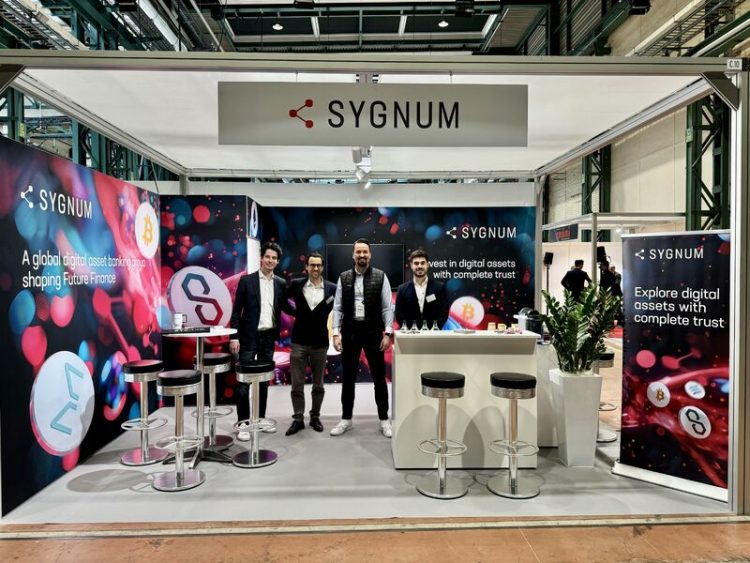
    Sygnum Bank has emerged as a beacon of resilience in the Swiss financial landscape, successfully securing $58 million in an oversubscribed funding round, and achieving a valuation exceeding $1 billion. This milestone reflects the bank’s determination to expand its foothold in the competitive digital asset arena.

    Funding Round Fuels Expansion Plans

    The successful funding round, which welcomed prominent investor Fulgur Ventures, aims to propel Sygnum’s growth initiatives and market presence. The bank plans to leverage the new capital to broaden its reach within the European Economic Area (EEA) and Hong Kong, enhance its product offerings, and strengthen its operational infrastructure. With over $5 billion in client assets, Sygnum solidifies its position as a significant player in the global digital asset ecosystem.

    In a recent press release, CEO Mathias Imbach underscored the importance of sustained innovation within Switzerland’s financial sector. “As Switzerland loses its competitive edge as a digital asset hub, it’s crucial to attract talent and capital to remain relevant,” he stated.

    Strategic Growth in Target Markets

    While Sygnum celebrates its achievements, challenges persist for Switzerland as other countries, such as the U.S., continue to embrace digital assets. Currently, Sygnum does not operate in the U.S., focusing instead on high-growth markets like Singapore, the United Arab Emirates, and soon, Hong Kong. The bank is also pursuing a MiCAR license in Liechtenstein to enhance access to European markets.

    Partnership with Fulgur Ventures

    Fulgur Ventures, a U.S.-based venture capital firm specializing in Bitcoin technologies, played a crucial role in Sygnum’s latest funding round. Partner Oleg Mikhalsky stated, “Sygnum’s established infrastructure and dedicated team make them an ideal partner for developing innovative Bitcoin-related financial products.” This partnership highlights the growing intersection of Bitcoin technologies with institutional finance, an area where Sygnum is particularly well-positioned.

    Leadership Driving Vision and Innovation

    Sygnum’s success is supported by a robust institutional infrastructure and commitment to regulatory compliance. Co-founder and Group CEO Imbach remarked, “Achieving unicorn status validates our business model and strategy. It’s a proud moment for us, but it won’t change our core values of integrity and humility.”

    Meanwhile, Co-founder Gerald Goh, CEO of Sygnum APAC, emphasized that offering trusted services for digital assets will remain central to the bank’s growth strategy.

    Navigating Future Opportunities

    Sygnum boasts over 2,000 institutional clients across 70 countries, with regulated operations in Switzerland, Singapore, and Abu Dhabi, positioning it well to navigate the changing digital asset landscape. Recent product initiatives, such as the Sygnum Connect instant settlement network and Sygnum Protect, which allows clients to trade on major crypto exchanges while securely holding assets with Sygnum, exemplify the bank’s commitment to innovation.

    A Path Forward for Switzerland

    Sygnum Bank’s remarkable growth offers a glimmer of hope for the Swiss financial sector, yet the pressure to innovate and adapt never subsides. As more jurisdictions adopt crypto-friendly regulations, Switzerland’s financial industry must prioritize modernization and talent acquisition to stay competitive.

    Sygnum’s journey encapsulates the potential for transformation within the digital finance realm. As Switzerland seeks to maintain its status as a financial hub, the message is clear: adapt strategically or risk being left behind in a rapidly evolving global financial landscape.

  • Delivery companies miss out on demand surge amid stay-at-home orders

    Delivery companies miss out on demand surge amid stay-at-home orders

    Delivery companies are unable to capitalize on rising demand since drivers are not keen amid mobility restrictions and delayed vaccination. Hung, a shipper in Hanoi, has shut down his driver’s app for over a week now after the city imposed travel restrictions.

    Through his company, AhaMove, does provide paperwork for the 22-year-old to pass through checkpoints set up to discourage people from coming out into the streets, he is concerned about contracting Covid and spreading it at home.

    “It is difficult financially, but since I do not know when I’ll be vaccinated, I’d rather stay at home for safety,” he said.

    Nghia, who works for Grab, does not have the liberty to make that choice since the city does not allow his company to operate.

    Hanoi allows delivery people from supermarkets, e-commerce platforms and postal services but not from ride-hailing companies like Grab, Be Gojek, MyGo, and FastGo.

    “It is unfair. Three or four trips a day would help me earn enough for food, but we cannot do anything but wait.”

    The shortage of drivers and ambiguous and inequitable regulations mean delivery companies are unable to take advantage of the surging demand amid the lockdowns in Hanoi and HCMC.

    AhaMove reported a tenfold rise in the number of orders after the lockdown began, but it cannot accept much of them since its drivers are not allowed past checkpoints. Hanoi does not allow delivery of “non-essential” goods.

    “Many shippers refrain from working since they have to pay for their own Covid-19 tests,” Tuoi Tre newspaper quoted Phan Tuong Bach, operating director of AhaMove, as saying.

    In HCMC, there are times when the number of orders is triple the normal rate, but a driver shortage means they could not be accepted, he said.

    There is also confusion occasionally as authorities in Hanoi and HCMC abruptly change regulations catching delivery companies unawares.

    AhaMove last week had to apologize to its drivers and customers in HCMC after some of its drivers were fined for delivering goods after 6 p.m. amid a ban on people leaving their homes at night.

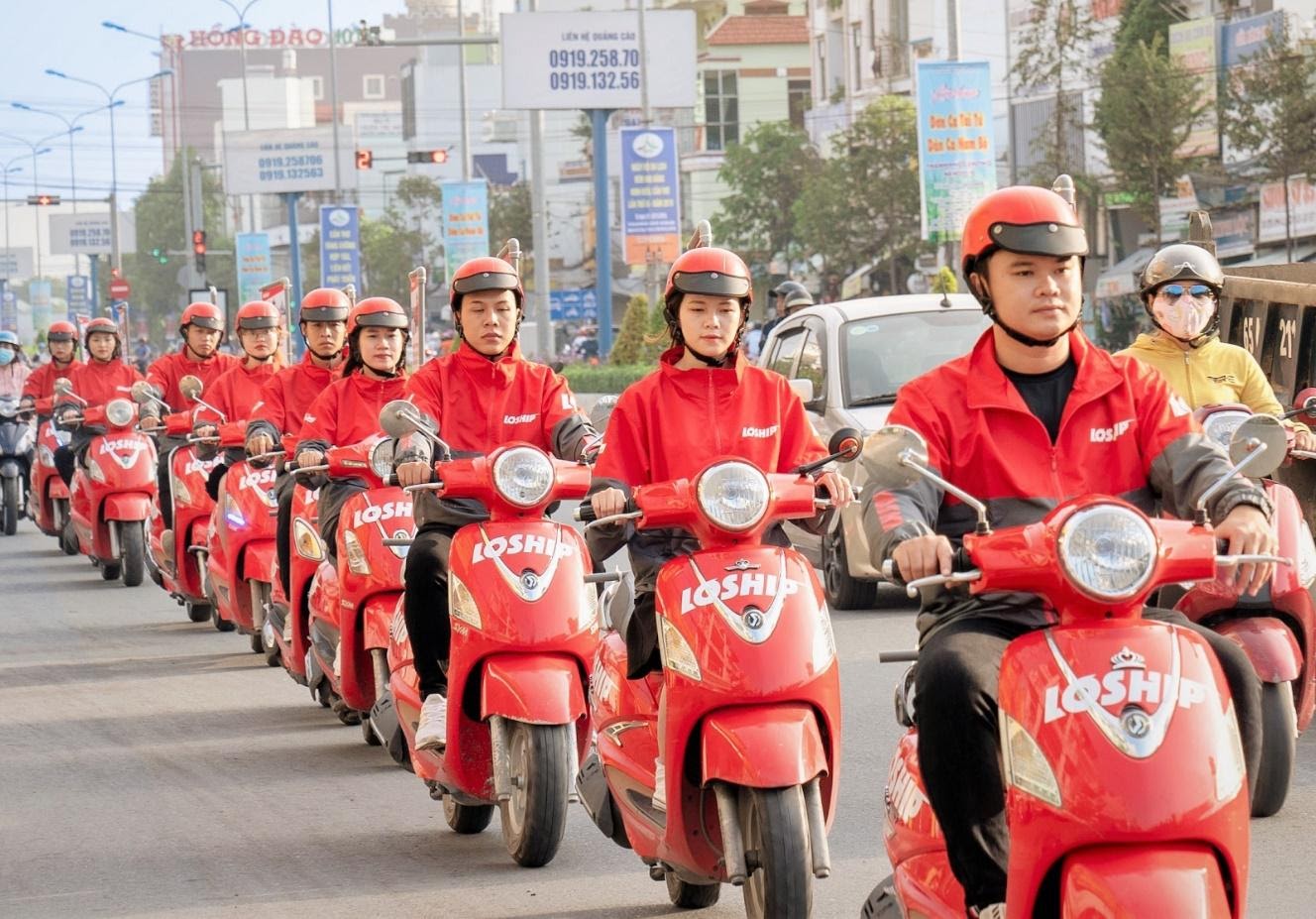
    Startup Loship is facing similar difficulties as many of its drivers had stopped working.

    CEO Nguyen Hoang Trung said working conditions have become extremely difficult for delivery people because of lack of clarity on what constitute essential goods.

    The company has doubled the minimum income in the hope of attracting more drivers back to work.

    Be Group saw orders rise tenfold in mid-July but had to suspend operations two weeks later to keep its drivers safe.

    Ride-hailing giant Grab asked to be allowed to deliver food, saying Hanoi’s suspension of its services while allowing other delivery companies to operate goes against its policy on fair competition. But its demand has yet to be approved.

    HCMC has had strict social distancing regulations since July 9, and they will continue until August 16. Its Covid-19 tally now is more than 112,000.

    Hanoi is in the 14th day of a 15-day social distancing campaign. The city has had nearly 1,800 cases.

  • Breaking Down The Biggest Asian Companies

    Breaking Down The Biggest Asian Companies

    Are you aware of the fact that Asia is home to some of the biggest companies in the world? Over the years, Asia has managed to build and attract many successful businessmen and women. These individuals have gone on to create many profitable businesses. There is a good chance that you’ve encountered a few of these businesses at some point. However, you may not have realized that they were Asian. With that being said, you’ll want to read this comprehensive guide and learn about the biggest Asian companies on the planet.

    Alibaba

    First and foremost, you should take a look at Alibaba. Most people have heard of this company. If not, there is a good chance that you know about the company’s founder, Jack Ma. He has become one of the most successful businessmen in the world. Alibaba was founded in early April of 1999. It is more than twenty years old and the company has become immensely successful during the past few years. In fact, it is now traded publicly on the New York Stock Exchange under the ticker BABA. The company is similar to Amazon but they offer many other services.

    Alibaba is one of the biggest companies in the world. At the end of March 2019, it was said that the company had more than 101,000 employees. If you take a look at the latest Australian pokies news, you will find out that most believe Alibaba will be around for many years to come.

    Avenue Supermarts

    Next, you have Avenue Supermarts. You’ve likely never heard of this company. Nevertheless, they’re very successful in India. The company was founded in 2002 by Radhakishan Damani. The company is publicly traded and it currently operates more than 180 stores. As you can tell by the name, the company operates hyper markets. They’ve been around for more than 17 years and they’ve found great success over the years. It is estimated that the company will generate more than 2.7 billion dollars in 2019 with a net income of more than 133 million. The is very impressive. Remember that this company’s stock is traded on the National Stock Market.

    Tencent

    Tencent is a little different. This is an investment holding conglomerate that has found big success in the past few years. The company is currently based out of China. They’ve been around for more than 20 years. The company was founded in mid November of 1998. They’re publicly traded and they are involved in numerous industries. For instance, you should know that Tencent has become the biggest gaming company in the world. They’re considered one of the most valuable technology companies in the world. Plus, they run one of the world’s biggest social media networks.

    As you can already see, the company is involved in a little bit of everything. They are involved in the smartphone, payment system, social media, music, and mobile games market. This is a very diverse company that is going to continue thriving in the future. They currently employ more than 54,000 employees.

    Samsung

    Next, you have Samsung. This company competes directly with Apple and many American consumers will agree that Samsung is better. The company offers a little bit of everything from televisions to smartphones. They’ve had a few problems during the past few years but they’re grown steadily nevertheless. You can guarantee that Samsung is going to be around for many years. They’re very successful all around the world. If you’re not a fan of the Apple iPhone, you should strongly consider making the switch to a Samsung phone. You’ll be glad that you did in the long run.

    Either way, you can guarantee that Samsung is one of the most successful Asian companies ever.

    Toyota

    Finally, you have Toyota. There is a possibility that you’ve owned a Toyota vehicle in the past. If you have, you likely loved the automobile. The company is very popular because they produce high-quality vehicles that will withstand the test of time. Just remember that the company’s vehicles are slightly expensive. Nevertheless, they’ll prove to be well worth it in the long run. Toyota is capable of producing vehicles that are going to be safe and reliable. On top of that, their vehicles are fun to drive too. Be sure to check out their vehicles!

  • Asian firms are better prepared than European peers to comply with data-privacy regulations, according to new EIU study

    Asian firms are better prepared than European peers to comply with data-privacy regulations, according to new EIU study

    The collection and use of personal data for commercial purposes are on the rise, but concerns over privacy and cyber-security breaches are causing concern among consumers, companies and regulators alike. The report, The transparent business barometer: Preparing for the end of easy data, written by The Economist Intelligence Unit (EIU) and sponsored by Ant Financial, assesses companies’ level of preparedness to face a more privacy-conscious world. It is largely based on a survey of 250 executives across China, the US, Western Europe and South-east Asia.

    Nearly 100% of respondents agree that data privacy is important to their organisation, with a majority (54%) saying it will be much more so in three years’ time. One reason for this is the perceived importance of data privacy to good corporate governance, which is something that 88% of executives across the surveyed regions and almost all Chinese executives (98%) believe to be true.

    Many firms are waking up to the fact that stricter laws in the mould of the EU’s General Data Protection Regulation may be in the offing. In a barometer constructed for this study, companies were asked to rank their preparedness to face various data-privacy regulations, such as that which might restrict their ability to gather data directly from consumers, on a one-to-ten scale. Overall, they are relatively well prepared, although they are less willing to take different measures, such as changing business models to reduce reliance on consumer data, in response to such regulations. Compared with bullish Americans, executives in Europe are the least prepared to face regulations and least likely to try new approaches in response to them, while the sentiment in China and South-east Asia falls between those two extremes.

    Transparent business barometer aggregate scores, by region

    (Scores out of 10)

      China US Western Europe South-east Asia Total
    Readiness 7.35 8.04 6.69 7.42 7.36
    Likelihood 6.58 7.16 5.67 6.56 6.47
    Overall 7.06 7.71 6.31 7.10 7.02

    Smaller companies are also less ready to face regulations than their larger counterparts, even as some large firms, including tech heavyweights like Apple and Google, are now beginning to call for regulators to create greater clarity—a step that will hopefully lessen uncertainty going forward.

    Michael Gold, editor of the report, says: “Businesses need to be aware that playing fast and loose with consumer data can lead to major repercussions down the road. Smart, well-co-ordinated regulations can make the business world more transparent and trustworthy amid a growing realisation that data is truly the ‘new oil’ in today’s economy.”

    Full report can be downloaded here.

  • Almost 77,000 new enterprises operative in H1

    Almost 77,000 new enterprises operative in H1

    There were 61,276 newly-established enterprises in Vietnam in the first half of this year with total capital of VND596.196 trillion ($26.22 billion), according to the Ministry of Planning and Investment (MPI).

    Numbers were up 12.4 per cent year-on-year while capital was up 39.4 per cent. Average capital was VND9.7 billion ($42,600), a 24.3 per cent increase year-on-year.

    There were also 18,100 enterprises adding capital in the first half, totaling VND859.186 trillion ($37.7 billion), for new and additional capital of some VND1,455 trillion ($64 billion).

    MPI’s figures also reveal that the number of newly-established enterprises and capital grew each year in the first half from 2013 to 2017.

    The number of newly-established enterprises in the first half of 2017 increased 1.5-fold compared to the first half of 2013.

    Registered capital and average capital in the first half of this year rose three-fold and 1.8-fold, respectively, compared to the first half of 2013.

    Most sectors saw newly-established enterprises in the first half.

    There were almost 2,280 in real estate, up 68.3 per cent year-on-year, 679 in banking, finance and insurance, up 37.2 per cent, and 318 in healthcare and social assistance, up 30.9 per cent.

    In education and training, 1,597 enterprises were newly-established, an increase of 30.4 per cent, and in electricity, water, and gas production 442, a 23.1 per cent increase.

    Some 15,380 enterprises also returned to operations in the first half after temporarily suspending operations, up 3.2 per cent.

    There were also, however, 14,377 enterprises temporarily suspending operations in the first half, an increase of 17.8 per cent year-on-year.

    The number of enterprises ceasing business or waiting for dissolution was 23,530, up 24.4 per cent year-on-year.

    Of these, 5,443 enterprises completed procedures for dissolution, down 1.2 per cent.

    Some 91.5 per cent of enterprises ceasing operations or temporarily suspending operations had registered capital of less than VND10 billion ($439,800), up 23.1 per cent.

  • More than 14,000 enterprises established in Vietnam in two months

    More than 14,000 enterprises established in Vietnam in two months

    More than 14,450 enterprises were set up in the first two months of this year, with a total registered capital of over VND152.5 trillion (US$6.71 billion), up 3.9% in terms of number of enterprises and 35% in terms of registered capital over the same period in 2016, according to the Business Registration Management Agency.

    The average registered capital per new enterprise reached VND10.6 billion (US$466,000), an increase of 29.9% against the same period of last year.

    However, in February alone, more than 5,400 enterprises were established, with VND62.2 trillion (US$2.74 billion) worth of registered capital, a decrease of 39.3% in the number of enterprises and 31% in registered capital compared to January.

    The fall in number of newly established enterprises was due to a long Tet holiday in late January and early February.

    The first two months of this year also saw more than 7,900 enterprises resume their operations, up 7.6% compared to the corresponding period last year.

    In the meantime, about 2,500 enterprises were dissolved, up 14.9% compared to the same period of 2016, including more than 2,300 enterprises with a registered capital of less than VND10 billion (US$440,000) while more than 16,300 enterprises registered to suspend operations.

    The sectors that attract the participation of a large number of labourers include the processing and manufacturing industry, wholesale and retail sales, automobile and motorcycle repairs and construction, among others.

  • Nearly 9,000 new companies launched in Vietnam in January

    Nearly 9,000 new companies launched in Vietnam in January

    A strong start for the economy in the new year after a record high number of new openings in 2016. Vietnam’s business community has hit the grounds running in the new year. Official reports showed that 8,990 companies opened in January, up 8 percent from last year. Their registered capital surged 52.3 percent to VND90.3 trillion ($4 billion) in total.

    The new companies are expected to create 104,100 jobs. In comparison, there were 8,320 new companies with 124,000 new jobs in January last year.

    Nearly 5,600 suspended companies also resumed operations last month.

    The number of businesses shutting down increased 18.3 percent year-on-year to 1,583.

    Vietnam hopes to see over one million businesses in operation by 2020. It is now halfway to that point.

    The country saw a record number of business openings of 110,000 last year, strengthening hopes for robust growth and strong investment in the near future.

    Officials from the labor ministry reportedly said that Vietnam aims to create 1.6 million jobs this year, roughly the same figure last year.

    More than 3 percent of the country’s urban adults are unemployed while the rural rate is nearly 2 percent.

  • 70 companies honoured at Hong Kong Awards for Industries

    70 companies honoured at Hong Kong Awards for Industries

    Seventy companies were honoured today (December 13) at the 2016 Hong Kong Awards for Industries (HKAI) presentation ceremony, at which the Chief Executive, Mr C Y Leung, officiated.

    The Grand Award winners were WowWee Group Limited (consumer product design), the Hong Kong Research Institute of Textiles and Apparel (equipment and machinery design), Sidefame Limited – Anteprima Wirebag (customer service), Gammon Construction Limited (innovation and creativity), Chow Tai Fook Jewellery Group Limited (productivity and quality), Comba Telecom Systems Holdings Limited (technological achievement) and Sinomax Group Limited (upgrading and transformation).

    A total of 234 entries were received at the 2016 HKAI. The winners were decided by the final judging panels chaired by Professor Joseph Sung.

    The HKAI was launched in 2005 by merging the former Hong Kong Awards for Industry and the former Hong Kong Awards for Services, established in 1989 and 1997 respectively. The HKAI aims to recognise the outstanding achievements of Hong Kong enterprises in pursuit of high technology and high value-added activities, and to commend excellence in various aspects of their performance.

    The 2016 HKAI covered seven categories, namely the consumer product design category organised by the Federation of Hong Kong Industries; the equipment and machinery design category organised by the Chinese Manufacturers’ Association of Hong Kong; the customer service category organised by the Hong Kong Retail Management Association; the innovation and creativity category organised by the Hong Kong General Chamber of Commerce; the productivity and quality category organised by the Hong Kong Productivity Council; the technological achievement category organised by the Hong Kong Science and Technology Parks Corporation, and the upgrading and transformation category organised by the Hong Kong Young Industrialists Council.

    The 2016 HKAI media partners were Hong Kong Economic Times and Metro Finance.