Tag: computer

  • Nvidia aims to set up a base in Vietnam

    Nvidia aims to set up a base in Vietnam

    Nvidia wishes to establish a base in Vietnam to develop the country’s semiconductor industry as it considers the Vietnamese market an important one, the Vietnamese government said, citing the U.S. chipmaker’s chief executive.

    In his first visit to the Southeast Asian country, Nvidia’s CEO, Jensen Huang, said the company viewed Vietnam as its home and affirmed its plans to set up a center in the country.

    “The base will be for attracting talent from around the world to contribute to the development of Vietnam’s semiconductor ecosystem and digitalization,” the Vietnamese government statement cited Huang after his meeting with Prime Minister Pham Minh Chinh.

    Nvidia, which has already invested $250 million in Vietnam, is set to discuss cooperation deals on semiconductors with Vietnamese tech companies and authorities in a meeting on Monday, Reuters reported on Friday.

    Vietnam, which is home to large chip assembling factories including Intel’s biggest globally, is trying to expand into chip designing and possibly chip-making.

    The chipmaker has already partnered with Vietnam’s leading tech companies to deploy AI in the cloud, automotive and healthcare industries, a document published by the White House in September showed when Washington upgraded diplomatic relations with Vietnam.

  • Ford Is Going All In On Android Automotive Starting In 2023

    Ford Is Going All In On Android Automotive Starting In 2023

    If it often befuddled you why carmakers like Ford were developing their own car infotainment system software, then that’s about to change. Ford has stated that starting in 2023, it will be turning to Google’s Android Automotive platform for the operating system of its vehicles and this will not be a one-off thing but rather millions of vehicles will be equipped with the software.

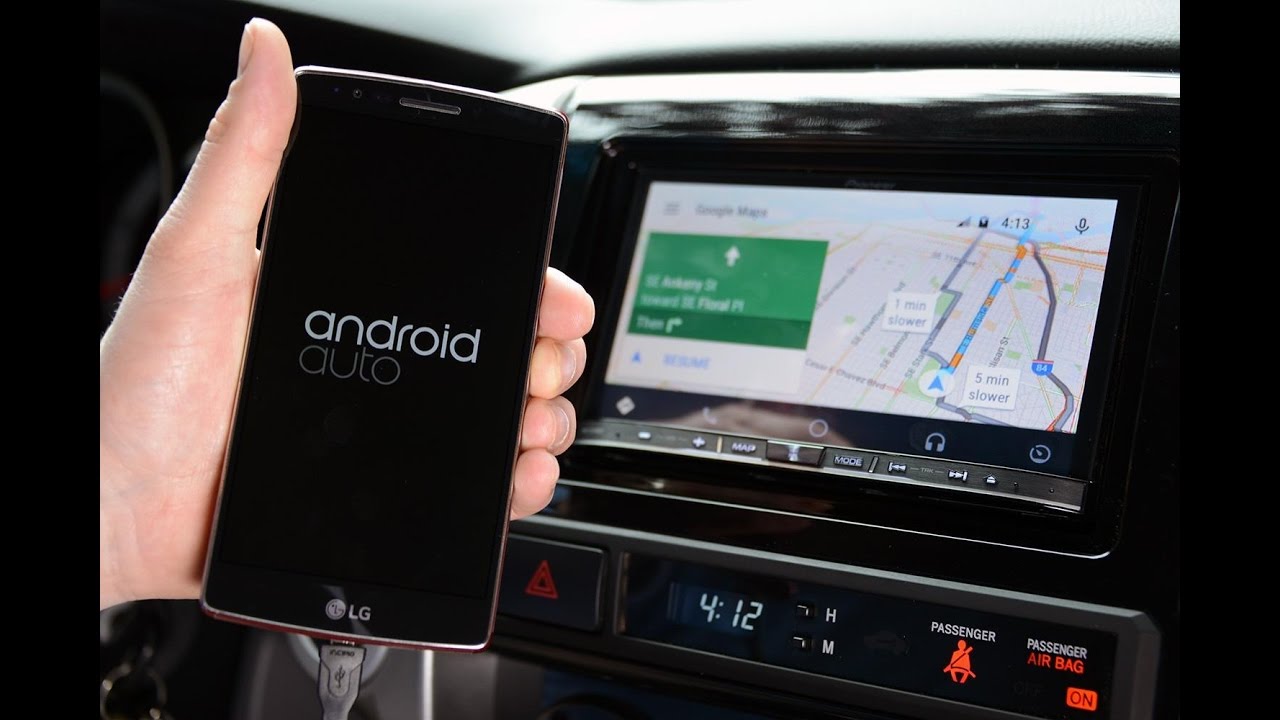
    This will give Ford’s vehicles access to core Google services like Maps, Google Assistant, and other apps without needing an Android smartphone. Currently, via Android Auto users can mirror the features of their phones onto the infotainment system of their cars.

    This integration will be deeper than what is possible via Android Auto. For instance, users will be able to summon the Google Assistant and say “okay Google” “make it warmer”. This will also enable OTA updates for adding features or addressing maintenance issues.

    Ford is making a system that will still retain compatibility with Apple’s CarPlay and Amazon’s Alexa as options too. This will scale to millions of vehicles under the Ford and Lincoln brands, except in China where Google’s services are banned.

  • Dell quits retail in Singapore, Malaysia moving online only

    Dell quits retail in Singapore, Malaysia moving online only

    It appears retail stores in Malaysia and Singapore will not be carrying Dell products in the near future. According to an official statement from the company, Dell will “transition out of the retail market in Singapore and Malaysia,” though that doesn’t mean you cannot buy a Dell laptop anymore in these two markets.

    This news was first shared by Lowyat.NET, which has received an internal memo sent to Dell retailer partners in Malaysia and Singapore. According to the memo, Dell is exiting the retail market in these two countries after the company reviewed its presence in a number of regions. As such, effective immediately, Dell will no longer accept new orders from retail stores.

    Of course, any form of an existing contractual agreement between Dell and its retail partners – as well as customers – will still be honored despite this move.

    Now, it’s worth noting that this does not mean retail stores will immediately cease the sales of Dell products. You can still head to your local retail store and pick up a Dell laptop, but if you want the latest product offerings from the company, you can only get them from Dell’s Malaysian online store.

    Speaking of which, that will be the only channel to get new Dell products – for those in Malaysia and Singapore – moving forward. These include the latest XPS 13 and XPS 13 2-in-1 with Intel’s 11th generation Tiger Lake processors. Basically, retail stores will only be carrying older Dell products from now on.

    In the grand scheme of things, this does not affect the availability of Dell products in Malaysia and Singapore; you can still purchase them directly from the company on its online store. Of course, this does mean you won’t be able to try out new Dell laptops at retail stores in the near future.

  • Lenovo Philippines opens second Legion concept store

    Lenovo Philippines opens second Legion concept store

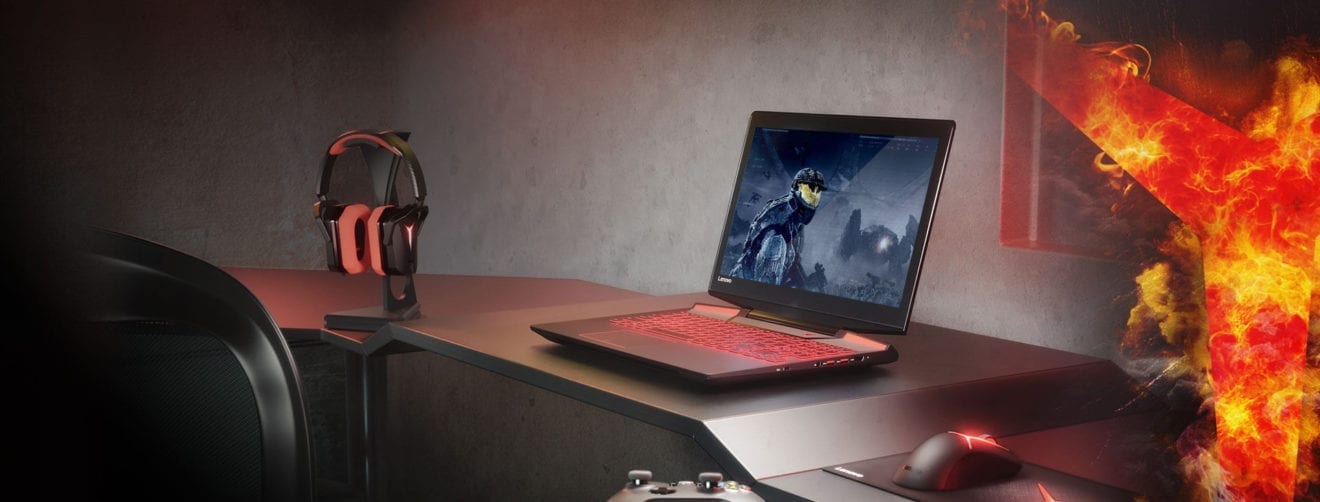
    Tech brand Lenovo has opened its second Legion concept store in the Philippines at SM City Cebu.

    The company has launched the outlet near the mall’s cyberzone area to showcase its gaming devices and accessories. It will also serve as an event space for monthly gaming tournaments.

    Lenovo Philippines GM Michael Ngan says it wants to introduce the Legion brand to Filipinos living outside the national capital. He indicated that further branches are likely to open in the country.

    The Legion concept store is offering a range of promotions to mark its Cebu launch.

  • Qualcomm Launches Autonomous Driving Computer, Aiming To Hit Roads By 2023

    Qualcomm Launches Autonomous Driving Computer, Aiming To Hit Roads By 2023

    Qualcomm Inc on Monday announced a computing system for autonomous vehicles designed to handle everything from lane controls to full self-driving that it aims to have on the road by 2023. The system, dubbed Snapdragon Ride, is the company’s first foray into a full system to power self-driving cars. San Diego-based Qualcomm, known best as the world’s biggest mobile phone chip supplier, has been a major automotive supplier for more than a decade, but primarily for the modem chips that connect vehicles to the internet and chips for the infotainment systems that power screens inside vehicles.

    Qualcomm has spent years developing self-driving technology near its headquarters in virtual silence while rivals such as Intel Corp and Nvidia Corp jumped into the market, spending billions on acquisitions supplying major automakers for autonomous driving.

    Patrick Little, the senior vice president and general manager of Qualcomm’s automotive business, said the company is using the expertise it built in the mobile phone processor business developing powerful processors that consume little electricity and generate little heat.

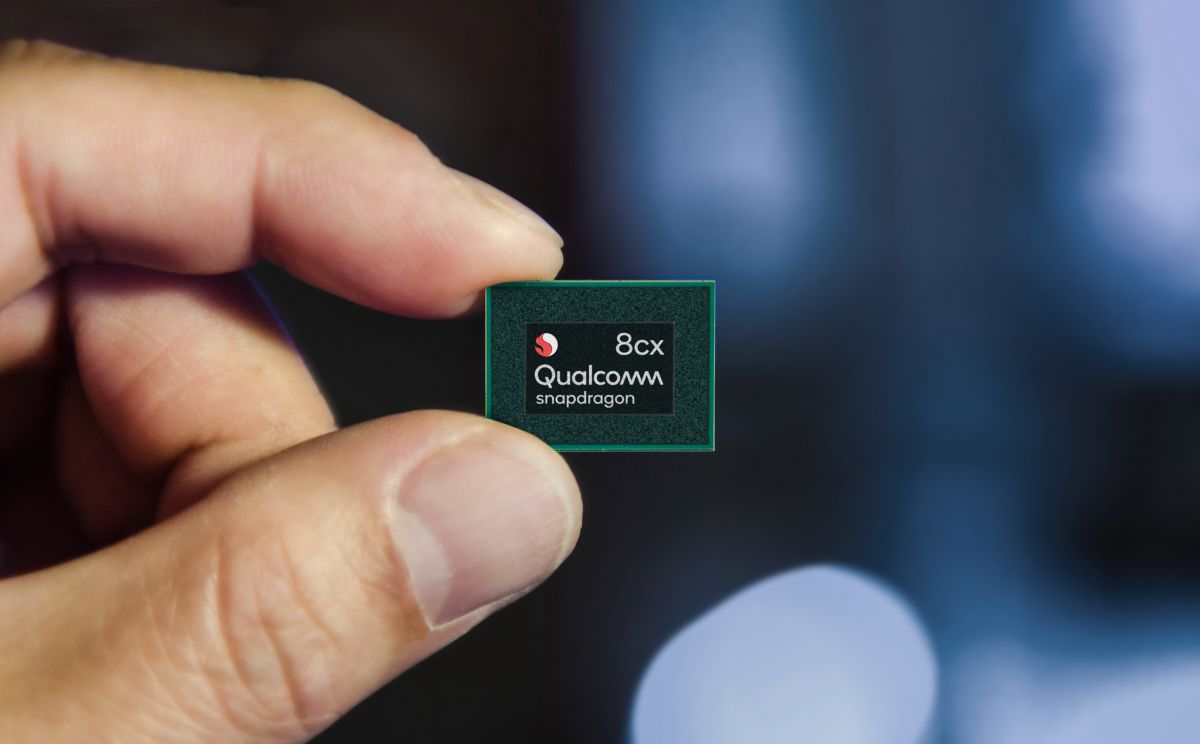
    Qualcomm’s new computers can fit in one hand and do not need fans or liquid cooling systems to prevent them from overheating. Lower power consumption will become important in electric vehicles, in which computers will have to compete with the drive train for battery power.

    “Many of these cars have a supercomputer in the back. It looks like your kid’s gaming PC,” Little told Reuters in an interview. “Now imagine you’re putting that in the trunk of an electric vehicle. Now your range anxiety is just doubled.”

    Qualcomm has also broken the system into pieces of hardware and software that can be scaled up or down for various needs from automakers. A smaller version of the computer can be used for simpler tasks like lane-control, or the computers can be chained together for full self-driving. Little said Qualcomm has used test vehicles in San Diego to develop its own set of self-driving software algorithms if automakers want to use them, but that it will be up to each one.

    “If they came to us with their own software stack, or even somebody else’s software stack, we’re happy to say we’ll help you” adapt it to Qualcomm’s hardware, he said.

    Qualcomm and General Motors Co on Monday also said that the automaker has expanded its existing partnership with the chip suppler into “high performance compute platforms.” Qualcomm previously provided chips for the company’s dashboard electronics, location tracking and driver-assistance systems.

  • Shinsegae testing a cashierless grocery retail store concept

    Shinsegae testing a cashierless grocery retail store concept

    South Korean retail giant Shinsegae is developing a cashier-less grocery-store modeled on the Amazon Go concept.

    The brand’s first automated store – to be branded Emart24 – will open at the company’s data centre in Gimpo in Gyeonggi Province as a pilot while the model is refined before being launched in a more high-profile location.

    Just like at an Amazon Go, shoppers will be able to select products from shelves and walk out the door, the cost of the goods deducted from their pre-registered payment choice. Entry to the store will be granted by a QR code appearing on the customer’s smartphone and items will be automatically added to a virtual cart as they shop. About 30 cameras inside the store will monitor what items customers take from shelves – and those they put back.

    The project is being developed by Shinsegae’s IT department which will oversee the operations, while stock will be managed by Emart24.

    “The store will be a ground-breaking testbed where we apply and test various advanced technologies,” Kim Jang-wook, CEO of Shinsegae I&C said. “We plan to operate a store where customers can experience retail technology and enjoy real shopping.”

    Technology used in the store will include artificial intelligence (AI), computer vision and cloud point-of-sale systems.

    After a trial run with employees which is currently underway, the store will be opened to the public on September 30.

  • Cross-brand file sharing feature announced by three phone manufacturers

    Cross-brand file sharing feature announced by three phone manufacturers

    As many Apple iPhone users know, AirDrop is a feature that allows them to share photos, videos and documents with nearby Apple devices without requiring an internet connection. This is achieved using Bluetooth and Wi-Fi connectivity. A WeChat post published today by Xiaomi reveals that three Chinese phone manufacturers are teaming up to provide their customers with wireless peer-to-peer file sharing across the different brands.

    This new feature will apparently use Bluetooth to pair the devices, creating a peer-to-peer Wi-Fi network just like AirDrop does, and transfer files at speeds up to 20Mbps. Xiaomi says that other smartphone manufacturers are welcome to join the trio. By the end of this month, a beta version of the new file-sharing protocol is expected to be rolled out. According to Counterpoint Research, Vivo, Oppo, and Xiaomi made up 49% of the domestic phone market during the first quarter. Adding some additional manufacturers, especially Huawei, would allow the vast majority of handsets in the country to share files without the use of internet connectivity. There is no indication whether Huawei or other Chinese companies are or aren’t interested in joining the original trio.

    Google itself has had a feature since 2011’s Ice Cream Sandwich called Android Beam that uses NFC to share “photos, videos, contact information, links to webpages, navigation directions, YouTube URLs, and more” by tapping two devices together. But Android Beam is being phased out in Android Q, replaced by a Google Play Services feature called Fast Share. This will be similar to Apple’s AirDrop thanks to the use of Bluetooth. Android Q users will be able to share files, images, URLs and small parts of text messages even without an internet connection.

    The Files by Google app, available in the Google Play Store, uses Bluetooth to allow Android devices with the app installed to share files at speeds as fast as 480Mbps. Encryption is employed to protect the privacy of those using the app.

  • Vietnam’s gaming firm profits fall 52 pct in 9 months

    Vietnam’s gaming firm profits fall 52 pct in 9 months

    Vietnamese online gaming giant VNG has reported Jan-Sept 2018 profits of VND152 billion ($6.5 million), a 52 percent year-on-year slump. The company has said in its third-quarter financial statement that higher expenditures have eaten into its profits.

    Selling and administrative expenses of VND853 billion ($36.7 million) and VND382 billion ($16.44 million) respectively in the nine-month period marked a 72 percent and 27 percent year-on-year surge.

    At its recent annual meeting, the company’s management board had predicted a sharp drop in profits compared to previous year as the company wanted to focus resources on investment in strategic products and diversify operations.

    The company focuses in four main areas: e-wallet, mobile product development, ecosystem building, and e-commerce.

    VNG has set a revenue target of over VND5 trillion (more than $215 million) for this year, 17 percent higher than in 2017.

    However, after-tax profit is expected to only reach VND549 billion ($23.62 million) compared to VND938 billion ($40.36 million) in 2017.

    VNG, which used to be known as VinaGame, also owns major news site Zing, popular music site Zing MP3, instant messaging app Zalo, and e-commerce site Tiki.

    Tiki, VNG’s largest investment in e-commerce, continues to suffer increasing losses. In the first half of this year, Tiki’s losses of VND102 billion (nearly $4.39 million) were more than double the same period last year.

    The cumulative loss of this e-commerce site has reached nearly VND600 billion (about $25.82 million) after seven years of operation, beginning in 2010.

  • Fujitsu, Lenovo agree to PC merger

    Fujitsu, Lenovo agree to PC merger

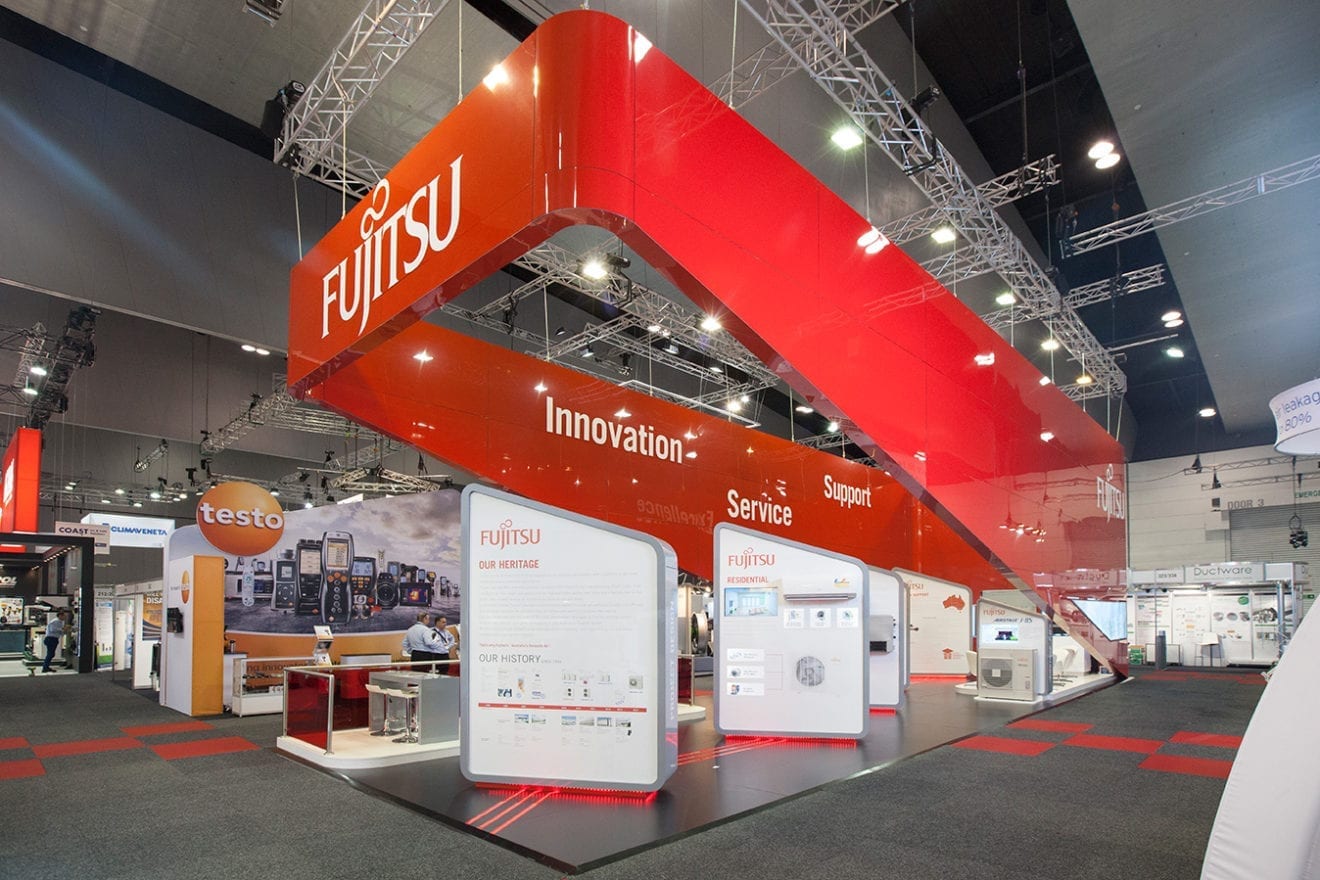
    The deal should allow Fujitsu to pour more resources into its profitable IT services operations. Japan’s Fujitsu said on Thursday it had agreed to merge its struggling PC business with Lenovo, giving the Chinese computer giant a controlling share of the business.

    Tokyo-based Fujitsu said it had “decided to formally sign a deal” with Lenovo, the world’s largest PC maker, and the government-backed Development Bank of Japan (DBJ) on a “strategic partnership” to develop and sell PCs.

    Lenovo will hold 51 percent of the shares in Fujitsu’s PC subsidiary, while the DBJ will hold five percent, Fujitsu said in a statement.

    The deal should allow Fujitsu to pour more resources into its profitable IT services operations, while also pushing ahead with a sweeping restructuring program that will see 3,200 job cuts.

    The decision came after Fujitsu said last month it was in talks with Lenovo over a potential deal, which pushed Fujitsu shares up by 7.8 percent.

    After the announcement however, Fujitsu shares were trading down 2.44 percent at 874.1 yen.

    The company had been in talks with Toshiba and Vaio to merge their once high-flying personal computer businesses, but those negotiations failed to result in a deal.

    Once-mighty Japanese firms have struggled in the face of stiff competition from lower-cost rivals overseas, including in China and South Korea.

    Earlier this year, Taiwan’s Hon Hai, better known as Foxconn, took over struggling Japanese electronics maker Sharp after it faced huge losses and mounting debts.

  • Dtac, True slam new computer crime bill

    Dtac, True slam new computer crime bill

    Legal representatives from both TrueMove and Dtac have slammed the new computer misuse act for moving the burden of proof to ISPs to prove their innocence while True said that the Single Gateway government mass surveillance program was still alive and well.

    Speaking at a recent seminar entitled Online life: which way shall we go, Akarawit Jongsawasdiworakul from Dtac’s legal division said that unlike the US’ common carrier law, Thailand’s computer misuse act article 15 puts telcos at risk of criminal prosecution for the actions of their subscribers as service providers face the same criminal liability as their users for, say, an illegal posting.

    Dtac has to invest significant resources into monitoring its users to stay safe legally, resources that could have better been invested in 5G, he said.

    Unlike most aiding and abetting clauses in Thai law in which the aider gets two-thirds of the punishment, the computer misuse act doles out the same punishment to the service provider as it does to the criminal using it.

    However, the latest draft amendment is much worse. In trying to fix that glaring problem, the new version lays out a system where authorities can issue orders to service providers to block the offending post. The law then goes on to say that if the service provider can prove they complied with the order, then they are exempted from any punishment.

    Akarawit said that the computer misuse act shifts the burden of proof. Instead of the prosecution proving guilt, the service providers will now have to prove their innocence to a court.

    He also noted that under the current law, censorship orders must be only via a court order. The new version only needs an order from a “the official in charge” without any judicial oversight.

    Suporn Hornchaiya from True’s legal division, added that the definition of service provider is so vague that anyone with an unsecured WiFi hotspot would be subjected to the full force of the law.

    Suporn said that today authorities use article 20 to block websites, not just those which are a threat to national security or good morals which are allowed under the law, but also use it to block gambling websites and copyright infringement sites which is not allowed under the law. He noted that courts regularly grant blocking orders for the latter.

    Suporn said True has in the past appealed a court order, but the appeal was not accepted as the courts said that True was not an affected party to the blocking order.

  • Radware opens new office in Thailand

    radwareRadware, a provider of cyber security and application delivery solutions, has opened its new office in Bangkok, Thailand.

    Located in the Ratchada area in Bangkok, the new office equips training and demonstration facilities, and will support Radware’s operation across Thailand.

    Radware works with clients in industry verticals such as telecoms, banking, Government, retail and manufacturing sectors.

    Radware Thailand office has also added additional resources, including the appointment of a new Enterprise Business Manager focusing on Banking and Government customers and a new Systems Engineer.

    Paul Coates, VP of South APAC, Radware, said: “Asia Pacific continues to be a strategic region for Radware, and building out a new infrastructure in Thailand allows us to provide even faster technical and sales supports to our valued customers in various industries.”

    Radware has 16 offices in Asia Pacific region: Australia, China, Hong Kong, India, Japan, Korea, Singapore, Taiwan and Thailand — to support its customers and partners.