Tag: concerns

  • China Cracks Down on Walmart’s Sams Club Over Food Safety Concerns

    China Cracks Down on Walmart’s Sams Club Over Food Safety Concerns

    In a recent development, China’s market regulator has enforced stringent measures on the supermarket chain, Sam’s Club, which is owned by Walmart. The regulator has initiated these steps as part of a bid to eradicate food safety risks from the company’s supply chain and ensure public dietary safety.

    The directive comes as Sam’s Club is actively pursuing expansion activities in China. As a result of new store openings, the company achieved double-digit growth in its transactions last year. This has increased the number of its membership-only stores to 63 across the nation, as per the data available on the company’s website.

    The decision was made following a meeting with a top-level executive from the U.S. retail giant to address recently identified food safety concerns. The State Administration for Market Regulation shared this information in an announcement on Monday, without specifying the date on which the meeting took place.

    As of now, Walmart’s China office has not responded to any requests for comments on this matter.

    In response to the regulator’s directive, Sam’s Club has issued an apology stating, “We will consistently report the progress of our rectification measures to the regulatory authorities and willingly accept their supervision.”

    In an effort to rectify the situation, the grocery chain has established an exclusive task force, headed by its management. This team is responsible for conducting supply chain inspections to ensure compliance with regulations and maintain the highest standards of product quality control.

    Questions & Answers

    What actions has China’s market regulator taken against Sam’s Club?
    The regulator has ordered Sam’s Club to enforce strict measures to eliminate food safety risks in its supply chain and ensure public dietary safety.

    What was the reason behind the regulator’s directive?
    The decision was made following a meeting with a top-level executive from Sam’s Club to address recently identified food safety concerns.

    What steps is Sam’s Club taking in response to the regulator’s orders?
    Sam’s Club has established a specialized task force, led by its management, to ensure strict compliance with regulations and maintain the highest standards of product quality control. The company will also regularly update the regulatory authorities about the progress of these rectification measures.


  • Vietnams Gold Plunge Continues Amidst Rising Inflation Concerns and Middle East Tensions

    Vietnams Gold Plunge Continues Amidst Rising Inflation Concerns and Middle East Tensions

    The price of gold in Vietnam continued to decline on Monday, with reductions seen throughout the day following an initial drop of nearly 1% earlier in the day. Saigon Jewelry Company, a prominent gold retailer, noted a further 0.42% decrease in its gold bar price from the morning, ultimately tallying a total loss of 1.37% for the day. The quoted price of gold per tael (equivalent to 37.5 grams or 1.2 ounces) fell to VND165.2 million, equivalent to US$6,276.26.

    Local Rates Versus Global Prices

    In comparison, local gold prices in Vietnam exceed international gold rates by approximately VND17 million per tael. The price of a gold ring also saw a similar decrease, falling to VND164.7 million per tael.

    Internationally, gold prices fell by 1% on Monday in response to escalating geopolitical tensions. The refusal of President Donald Trump to accept Iran’s recent peace proposal to end ongoing conflicts in the Middle East has raised fears of inflation and a continued period of high interest rates. This sentiment has been reflected in the gold market, with spot gold falling to $4,667.99 per ounce following a 2% increase last week. Concurrently, U.S. gold futures for June delivery saw a drop of 1.1%, hitting $4,677.80.

    Market Reactions and Predictions

    Market observers note the significant impact of these geopolitical developments on inflation risks and market expectations. Bybit’s Chief Market Analyst, Han Tan, highlighted that the stalled peace negotiations have weighed heavily on the market’s psyche, maintaining high interest rate expectations and amplifying pressure on non-yielding gold. Since the conflict’s inception in late February, gold has seen a decline of more than 11%.

    Tan further suggested that gold could face additional downward pressure if the U.S. Consumer Price Index (CPI) forecast for the following day proves hotter than anticipated. This situation could necessitate the Federal Reserve maintaining elevated benchmark rates for an extended duration.

    Questions & Answers

    Why did Vietnam’s gold prices drop on Monday?
    The gold prices in Vietnam dropped due to international gold prices falling by 1% in response to increasing geopolitical tensions and the current conflict in the Middle East.

    What are the implications of high inflation and interest rates on the gold market?
    High inflation and interest rates put pressure on non-yielding bullion, causing its price to drop. The gold market has seen a decline of more than 11% since the conflict began in late February.

    What could cause further downward pressure on gold prices?
    If the U.S. Consumer Price Index forecast proves hotter than anticipated, the Federal Reserve may need to maintain elevated benchmark rates for a longer period. This scenario could exert additional downward pressure on gold prices.

  • China’s Singles’ Day Sales Fall Flat Amid Consumer Apathy and Economic Concerns

    China’s Singles’ Day Sales Fall Flat Amid Consumer Apathy and Economic Concerns

    With the conclusion of China’s Singles’ Day sales festival, the largest shopping event worldwide, it’s clear that the country’s most significant e-commerce platforms were unable to stimulate widespread consumer enthusiasm. This comes in light of the lingering property crisis in China and rising concerns over income security, making it increasingly challenging to convince consumers to part with their money.

    Retailers’ Response

    Retailers, in response to the economic climate, have amplified their efforts in providing year-round discounts, introducing billions in consumer subsidies and coupons, and extending the duration of sales events. For this year’s Singles’ Day, many platforms commenced their sales in early October, making it the longest festival yet.

    However, the response has been mixed, according to Josh Gardner, CEO of Kung Fu Data, a company that manages online stores in China for various global fashion and lifestyle brands. He described the sales sentiment during the Singles’ Day period as “muted,” noting that some brands had performed exceptionally well while others observed flat or minor changes compared to the previous year.

    Last year’s sales event, also known as “Double 11” in China, reached an impressive total of 1.44 trillion yuan (US$202 billion). However, the figures for this year remain undisclosed, as companies such as Alibaba and JD have stopped revealing their total Singles’ Day sales in recent years.

    Platform Sales Performance

    JD reported on Wednesday that its turnover reached a “new high,” with a 40% increase in the number of users placing orders and a nearly 60% increase in the number of orders. Several brands on JD.com, including Bellamy Organic baby products from Australia, the American pet brand Instinct, and French skincare brand Avène, saw a surge in sales by over 150% compared to the previous year.

    Meanwhile, Alibaba’s Tmall and Taobao platforms have continued their Double 11 deals until November 14, yet they have not released any information regarding their sales performance for the entire period.

    Gardner reported that the Singles’ Day sales surge is not as robust as it was in the past, but October and November still account for approximately 30% to 40% of annual revenue for the brands he manages.

    Strategies for Attracting High-Spenders and International Growth

    In an attempt to lure high-spenders, Alibaba pledged 50 billion yuan in subsidies specifically for its 53 million 88VIP members in October. The company reported a 39% increase in daily active buyers from the previous year during the festival among those members.

    Moreover, Alibaba’s Taobao introduced Singles’ Day-related sales in over 20 countries this year, signalling a widespread push from Chinese e-commerce firms for international growth. According to a report released by Bain in late October, it is crucial for Chinese e-commerce companies to pursue global growth, considering the lukewarm consumer outlook domestically.

    Questions & Answers

    What is Singles’ Day in China?
    Singles’ Day is a Chinese sales festival held annually on November 11. It’s considered the world’s largest shopping event, with massive discounts offered by e-commerce platforms to stimulate consumer spending.

    How did Singles’ Day perform this year?
    This year’s Singles’ Day results were mixed. Some brands reported exceeding sales expectations, while others experienced flat or minor changes compared to the previous year.

    What are some strategies adopted by retailers during Singles’ Day?
    Retailers have introduced year-round discounts, billions in consumer subsidies and coupons, and extended sales events. Some are also attempting to attract high-spenders with exclusive offers and expanding their sales to international markets.

  • Apple’s mobile devices can help diagnose a serious health issue

    Apple’s mobile devices can help diagnose a serious health issue

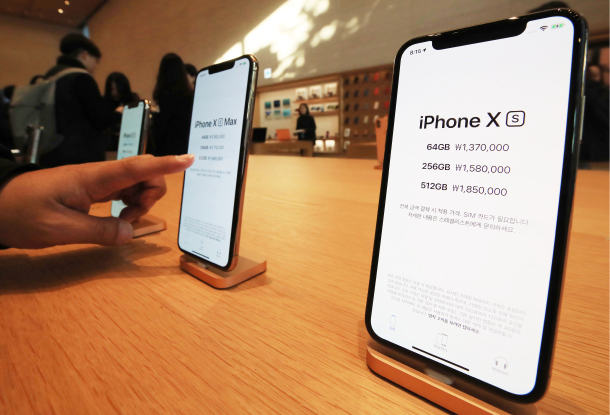
    With Apple working hard to come up with more health-related features for its products, drugmaker Eli Lilly announced last week that certain Apple products can help spot people with dementia. Early results from a test showed that devices including the iPhone, iPad and Apple Watch, in combination with certain apps and the Beddit sleep monitoring device, can reveal whether a person has “mild Alzheimer’s disease dementia” and “mild cognitive impairment” (MCI). The study was conducted by Apple, Lilly and health care company Evidation Health on 113 people age 60 to 75 over a period of 12 weeks.

    Those participating in the study were asked to answer a pair of one-question surveys each day. They also were asked to perform certain tasks on an app such as tapping on a circle as fast as possible and dragging on screen an object with a certain shape to another object. Other tests were performed on the participant’s ability to type and read. The results of the study were presented at the Association for Computing Machinery’s KDD conference in Anchorage and found that those with symptoms of dementia tended to type at a slower rate of speed than others, and sent fewer text messages over a set period time.

    16TB of data were collected from the participants, and the study showed that Apple devices and certain apps can help monitor symptoms of those diagnosed with MCI or mild Alzheimer’s disease dementia; detect cognitive changes that could point to MCI; test the effectiveness of treatment and therapies; and speed up the development of therapies to produce more accurate diagnostic tools.

    Over the past few years, we’ve seen how data and insights derived from wearables and mobile consumer devices have enabled people living with health conditions, along with their clinicians, to better monitor their health. We know that insight from smart devices and digital applications can lead to improved health outcomes, but we don’t yet know how those resources can be used to identify and accelerate diagnoses. The results of the trial set the groundwork for future research that may be able to help identify people with neurodegenerative conditions earlier than ever before.”-Nikki Marinsek, Ph.D., first author and data scientist, Evidation Health

    “Lilly has been leading the fight against Alzheimer’s disease for more than 30 years, and we’re broadening the application of digital health to identify tools that may improve the lives of people with chronic conditions and diseases. While further research is needed, the study findings provide important insight into the potential benefits of wearable devices in identifying chronic health conditions such as MCI, Alzheimer’s disease, and dementia. These findings could inform subsequent research that may eventually lead to early screening or detection tools for neurodegenerative conditions.”-Divakar Ramakrishnan, Ph.D., chief digital officer, Eli Lilly ”

    Apple has already demonstrated that it can integrate life-saving health tools in the Apple Watch; the heart-rate monitor has already saved a number of lives and the breakout feature on the Apple Watch series 4 is the electrocardiogram (ECG) sensor. The latter detects abnormal heartbeats indicative of Atrial fibrillation, which can lead to blood clots, heart failure, strokes, and death. This life-saving feature has become so popular that Samsung is including it on the Galaxy Active Watch 2. However, as it did with Apple’s ECG sensor, the FDA needs to greenlight the one on Sammy’s phone. As a result, the ECG sensor will be disabled on the new Tizen-powered timepiece until sometime during the first half of next year.

    Apple released a very brief statement related to the release of the study. Myoung Cha, Apple’s Head of Health Strategic Partnerships, said, “We are excited to work alongside Lilly and Evidation in supporting the research community, as they seek to discover digital biomarkers of cognitive impairment.”