Tag: concessions

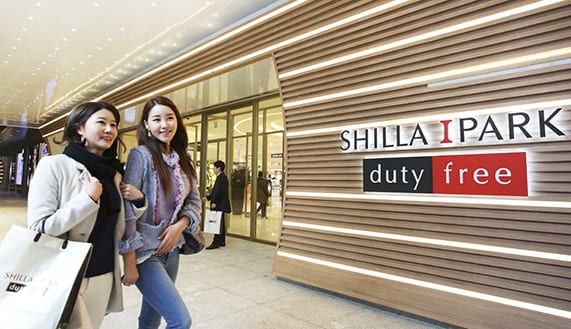
  • Shilla Duty Free To Cease Operations At Incheon Airport Amid Financial Struggles

    Shilla Duty Free To Cease Operations At Incheon Airport Amid Financial Struggles

    Shilla Duty Free has declared its intention to halt operations at its DF1 duty-free store at Incheon International Airport in March. This follows the store’s excessive losses and the concession’s business value falling below its liquidation value.

    Financial Impact of the Decision

    The DF1 concession recorded a revenue of KRW$429.2 billion (US$312 million) in the past fiscal year, contributing 10.9 per cent to Shilla’s overall sales.

    The company commented on the changing climate of the duty-free market, since inking the contract for the duty-free store at Incheon International Airport in 2023. It noted the rapid shifts in consumer behavior and diminished buying power. The company has approached the Incheon International Airport Corporation to adjust the rent, but the request was turned down.

    This resolution was approved by the board on September 18 and was revealed in a Korea Exchange filing.

    Company’s Future Outlook

    Shilla anticipates a short-term drop in sales as a consequence of the exit. However, the company maintains an optimistic outlook for a more robust financial performance in the medium to long term.

    The company stated, “We believe it is crucial to enhance our financial structure and increase corporate and shareholder value.” Despite the ongoing challenges in the duty-free industry, the company pledged to maximize efforts to boost profitability.

    Other Changes in the Duty Free Landscape

    In addition to Shilla, Shinsegae Duty Free has also relinquished its business rights at Incheon. Both retailers had sought to reduce their rent by up to 40 per cent on their perfume, cosmetics, liquor, and tobacco concessions at Terminals 1 and 2. However, the Incheon International Airport Corporation (IIAC) declined these requests, asserting that rental terms were established in the original bids and could not be altered beyond the stipulations outlined by law.

    Questions & Answers

    Why is Shilla Duty Free suspending its operations at Incheon International Airport?

    Shilla Duty Free has cited “excessive losses” and a business value now lower than its liquidation value as reasons for its decision to suspend operations.

    What impact will this decision have on Shilla Duty Free’s sales?

    While the company expects a temporary dip in sales due to the closure, it foresees a stronger overall financial performance over the medium to long term.

    Have other duty-free stores at Incheon International Airport made similar moves?

    Yes, aside from Shilla, Shinsegae Duty Free has also given up its business rights at Incheon. Both companies unsuccessfully attempted to negotiate a reduction in rent.
  • India looks to cut tariff concessions on Chinese goods

    India looks to cut tariff concessions on Chinese goods

    India is expected to push for a new approach to tariff cuts at the 16-country trade bloc to prevent China from flooding its market with cheap goods. The commerce department is working on ways to give minimum tariff concessions to Chinese goods and delay the concessions by a long number of years even as it allows imports from other member countries at lower duties.

    As part of the Regional Comprehensive Economic Partnership (RCEP) trade negotiations, India is looking to treat Chinese products differently due to the burgeoning trade deficit it has with Beijing. In 2015-16, India’s exports to China were $9 billion while the imports were a staggering $61.7 billion leaving a trade deficit of $52.7 billion.
    India hopes this longer phasing out of tariff concessions and differential treatment, called “deviations”, will become the basis for RCEP negotiations. The new approach comes ahead of the next ministerial meeting on November 3-4 in the Philippines.

    Moreover, since India had to do away with a three-tier structure of differential duty cuts as part of the negotiations, deviations are the last ray of hope to contain the trade deficit with China under a formal trade agreement. In the earlier tiered structure, India had proposed to remove duties on 42.5% of the items traded with China, something that Beijing had termed as low.

    “We hope the tiers come back from the backdoor through deviations,” said a commerce department official, adding that the difference in tariff cuts may not be as much as in the earlier structure of three tiers.

    “We can look at longer staging periods for China by delaying the concessions by some years or not offer key products for tariff cuts to them at all,” the official said. Despite agreeing to a common concession, India is insisting on a single undertaking for the RCEP which means nothing is agreed until everything is agreed. “With single undertaking, we can be sure other members will not lose interest in India’s demands once we accept their demands for tariff concessions on goods,” the official said.

    Trade Openness

    Our problem with China seems to be a lack of trade access. And to better manage our trade deficit with China, we need to call for better trade access rather than opt to keep tariff barriers high. The latter option would only raise transactions costs and lead to thoroughly suboptimal policy going forward. are definite gains from trade and openness