Tag: condominiums

  • Singapore Home Prices Rise 1.4% as Suburban Condos Lead Gains

    Singapore Home Prices Rise 1.4% as Suburban Condos Lead Gains

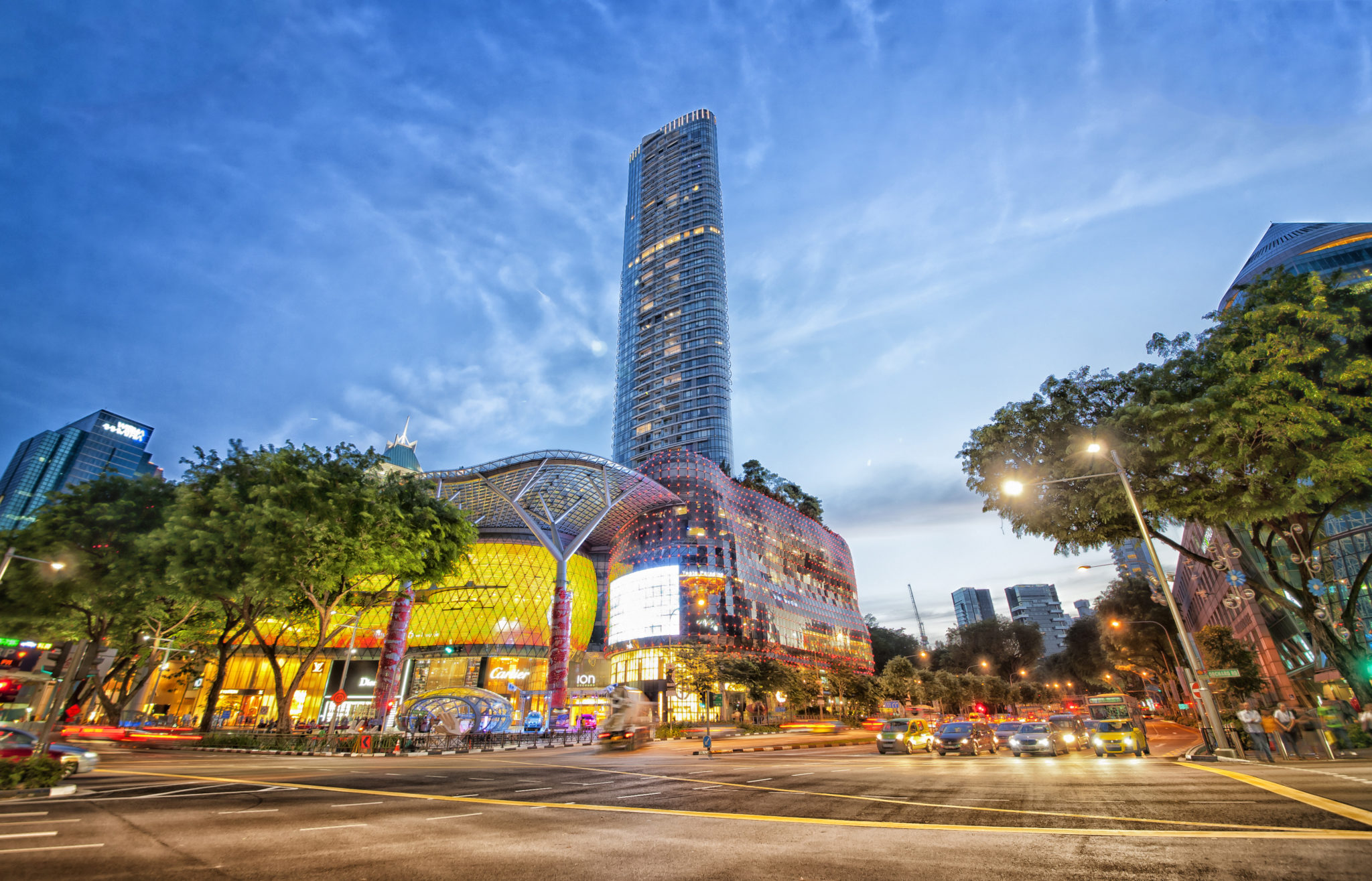
    Private residential property prices in Singapore climbed 1.4 percent in the third quarter of 2026, registering the fastest quarterly increase in almost two years. Suburban condominium values led the expansion with a 2.3 percent surge, even as primary sales dropped sharply because developers held back major project releases.

    Official numbers from the Urban Redevelopment Authority show the private housing index outpaced the 0.5 percent growth recorded in the second quarter. The acceleration represents the strongest single-quarter gain since a 2.3 percent rise in the final quarter of 2024, extending an upward pricing trend across eight consecutive quarters. Island-wide economic growth of 5.4 percent year on year during the quarter helped anchor overall housing demand.

    Suburban Values Advance while Prime Districts Diverge

    Apartments in the Outside Central Region, the official classification for Singapore’s suburban districts, drove the pricing rebound after dipping 0.1 percent in the preceding three months. Over the first nine months of 2026, suburban non-landed prices rose 4.4 percent, exceeding the 3.2 percent gain registered throughout 2025. Landed property prices across the island rose 2.9 percent, outpacing the 1.0 percent increase recorded across all non-landed homes.

    City fringe non-landed prices in the Rest of Central Region held flat following a 1.2 percent contraction in the second quarter. Growth in the prime Core Central Region moderated to 0.3 percent from 1.8 percent, though transaction volumes in those central districts rebounded 23.5 percent. A US buyer completed the period’s highest-value private residential deal, paying S$20 million, or $15.6 million, for a 3,272-square-foot unit at Sculptura Ardmore.

    Foreign buyers represented only 1.1 percent of all non-landed home acquisitions across the quarter. Singapore citizens accounted for 81.2 percent of purchases, and permanent residents took up the remaining 17.6 percent.

    Primary Sales Slump on Launch Calendar Lull

    Developers sold 1,183 private homes, excluding executive condominiums, between July and September. That total represents a 44.7 percent decline from the 2,141 units moved in the second quarter and sits 64.0 percent below volumes from the same quarter in 2025. Primary supply contracted in tandem, with developers releasing 1,140 units, down 36.1 percent quarter on quarter to make it the quietest third quarter for project launches on record.

    A quiet launch calendar during the lunar seventh month kept prospective buyers on the sidelines ahead of fourth-quarter rollouts. Resale transactions stepped in to fill the gap, totaling 3,801 units and taking 73.9 percent of total secondary and primary market sales. Resale home prices slipped 1.1 percent as buyers used the reduced primary activity to negotiate discounts.

    Fewer private homes were sold as developers paused their launches during the lunar seventh month, while prospective buyers held out for Q4 projects,

    Dunearn House, the initial residential offering on the former Bukit Timah racecourse site at Turf City, sold 237 of its 380 units. Amberwood at Holland in District 10 recorded 24 sales at a median rate close to S$3,000 per square foot, while Lentor Gardens Residences closed the period as the quarter’s highest-volume seller.

    Rental Gains and Completed Inventory Add Pressure

    Private home rents climbed 1.3 percent across the quarter, speeding up from a 0.7 percent increase in the prior quarter to record the sharpest climb since the second quarter of 2023. Suburban apartment rents drove the trend with a 3.1 percent jump, while city fringe rents rose 1.5 percent and prime rentals declined 0.3 percent. Property researchers expect residential rental rates to increase between 2.5 percent and 3.0 percent for the full year.

    Supply deliveries expanded rapidly at the same time. Developers completed 3,559 private residential units and executive condominiums during the quarter, the largest volume delivered since the third quarter of 2024. Completed inventory expanded by 3,491 private units while occupied stock contracted by 305 homes, lifting island-wide private vacancy to 7.2 percent from 6.4 percent.

    For consumer operators, lifestyle retail tenants, and commercial landlords across Singapore, elevated suburban housing costs redirect household spending away from discretionary purchases. High mortgage obligations and rising suburban rents squeeze disposable budgets in satellite towns, while higher vacancy rates in the city fringe point to localized pockets of excess supply.

    Developer Pipeline Readies Fourth-Quarter Tests

    A heavy launch pipeline scheduled through the close of 2026 will test buyer depth under tighter household balance sheets. The 1,268-unit Thomson Reserve on the city fringe anchors this pipeline, led by a joint venture where CapitaLand Development holds 50 percent, UOL Group holds 40 percent, and Singapore Land Group controls 10 percent. The group acquired the former Thomson View site for S$810 million, with units starting at S$1.544 million, or S$2,608 per square foot.

    City Developments tested buyer appetite early in the fourth quarter at Lucerne Grand on Lakeside Drive, shifting 350 of 570 units over its opening weekend ending 4 October at an average price of S$2,480 per square foot. CDL secured the government land sales plot in 2025 for S$608 million, reflecting a land rate of S$1,132 per square foot of gross floor area.

    Full-year primary volumes are expected to reach roughly 7,000 homes against developer launches of up to 6,300 units, marking the first time since 2022 that developer sales outstrip new project supply. With the government’s Confirmed List releasing 9,320 private homes this year, market attention shifts to the opening of bookings at Thomson Reserve on 31 October.
  • Thailand Resale Condo Transfers Surge 39 Percent in Second Quarter

    Thailand Resale Condo Transfers Surge 39 Percent in Second Quarter

    Thailand recorded a 39.4 percent year-on-year surge in second-hand condominium transfers in the second quarter of 2026, driven by buyers seeking affordable alternatives to costly new builds.

    Total transfer value for resale condos climbed 41 percent over the same period, making apartments the fastest-expanding segment in the country’s housing market, according to the Real Estate Information Center.

    Supply expanded in tandem with buyer activity. Listed resale condo inventory rose 25.2 percent year-on-year to 49,199 units during the quarter, while total listed value climbed 67.8 percent to 285 billion baht.

    Bangkok Captures Bulk of Secondary Trading

    Activity remained heavily concentrated in Greater Bangkok, which accounted for 42.3 percent of all secondary housing transfers and 47.4 percent of transaction value nationwide. Greater Bangkok saw 26,388 second-hand residential transfers, a 35 percent increase from a year earlier, with total value rising 29.4 percent to 59 billion baht. Bangkok proper alone recorded 13,910 transfers, up 38.7 percent, generating 38.3 billion baht in value.

    Condos outpaced all landed residential formats. Single detached house transfers rose 16.8 percent across the country, townhouses gained 24 percent, and semi-detached homes grew 22 percent. Resale condo volume expanded at more than double the pace of detached houses.

    Wage Lag Diverts Demand from Primary Projects

    The pivot to secondary properties reflects structural household constraints rather than a deficit of new construction. New home prices in Bangkok rose at a compound annual rate of 4.3 percent between 2012 and 2025, while labour wages grew just 2.8 percent over the same span, according to research by Krungthai Compass.

    That divergence is pricing first-time buyers out of newly launched developments in central locations. Resale properties offer established transit links and larger floor plans at discounts to primary launches, drawing cost-conscious buyers into older buildings.

    Mid-Priced Units Dominate Buyer Takeup

    Transaction growth clustered tightly around middle-tier price brackets. Units selling between 1.51 million baht and 5 million baht saw transfer volumes jump between 25 percent and 30 percent during the quarter. Condos priced between 2.01 million baht and 3 million baht captured 24 percent of total second-hand transaction value, the largest single share.

    Sub-1-million-baht properties generated 34.8 percent of all secondary unit transfers but represented only 10.2 percent of total market value. While entry-level transactions remain numerous, available stock in that bottom tier is shrinking. Secondary listings priced below 1 million baht fell 9.9 percent in unit count and 7 percent in total value during the period.

    Luxury Listings Expand as Primary Developers Pivot

    Upper-tier supply moved in the opposite direction. Secondary listings priced above 10 million baht jumped 32.4 percent by unit count and 39.6 percent in value, pushing total nationwide resale listing value up 24.9 percent despite a modest 6.1 percent gain in overall listed unit volume. Actual buyers, however, stayed concentrated in the affordable mid-market.

    Primary developers now face direct competition from older inventory in established corridors. With household debt high and borrowing capacity squeezed, builders can no longer rely on broad market expansion to absorb newly launched supply. They face sharper pressure to discount inventory and redesign upcoming pipelines around entry-level price thresholds.

    Krungthai Compass projects total secondary residential transfers in Bangkok will hit 195 billion baht by the end of 2026, accounting for roughly 40 percent of all residential property transfers in the capital.

  • Japan Plans Fiscal 2027 Condo Tax Overhaul to Curb Urban Speculation

    Japan Plans Fiscal 2027 Condo Tax Overhaul to Curb Urban Speculation

    Japan’s land ministry plans to seek tax code changes for fiscal 2027 to curb speculative condominium flipping that drove central Tokyo apartment prices to record highs. Average prices for new units in the capital reached unprecedented levels during the first half of 2026, pricing regular domestic buyers out of urban districts.

    The Ministry of Land, Infrastructure, Transport and Tourism will target short-term resale transactions that exploit current tax rates on residential assets. Urban developers have focused heavily on high-end luxury high-rises in Tokyo and Osaka, where penthouses and upper floors frequently trade in cash to absentee owners.

    Curbing cash buys in Tokyo and Osaka

    Tokyo-area condominium prices passed the 100 million yen threshold during the January to June period for the first time. Inflows of private capital from Taiwan and other regional wealth hubs have accelerated this surge, replacing mainland Chinese buyers who pulled back from cross-border deals.

    Local buyers face steep barriers as wage growth lags property appreciation across central wards. Japanese megabanks have responded by raising interest rates on large deposits, attempting to capture proceeds from high-value property disposals while standard mortgage borrowers take on longer repayment terms.

    Regional playbooks for property cooling

    Across major Asian markets, regulators have routinely turned to transaction taxes when speculative momentum broke local affordability limits. Singapore and Hong Kong deployed targeted stamp duties and higher holding penalties to choke off luxury flipping, and Tokyo is now adopting a comparable fiscal approach instead of relying purely on central bank monetary policy.

    The land ministry will submit its detailed tax proposals to the ruling coalition for inclusion in the annual fiscal 2027 tax reform outline scheduled for review late this year.