Retail News CRM

Tag: confidence

  • Holiday Sales Set to Soar as FedEx Survey Reveals Business Confidence Bolstered by E-commerce Shopping Festivals

    Holiday Sales Set to Soar as FedEx Survey Reveals Business Confidence Bolstered by E-commerce Shopping Festivals

    Federal Express Corporation (FedEx), a global leader in express transportation, has shared valuable data from a survey conducted to understand attitudes and trends related to the year-end festive shopping period among businesses and consumers in the Asia Pacific and European regions.

    Survey Insights

    The survey, conducted in September 2025, collated responses from 850 small and medium-sized enterprises (SMEs) and 850 consumers from 13 Asia Pacific markets, as well as more than 1,200 SMEs from nine European markets. The study aimed to identify business expectations for the holiday shopping season and highlight consumer preferences and concerns.

    The results indicated a strong sense of optimism, with over 70% of Asia Pacific businesses and more than 80% of European businesses anticipating improved holiday sales compared to the previous year. Asia Pacific businesses are preparing for a significant cross-border demand from Europe during the year-end shopping season.

    This rise in e-commerce across borders and the influence of major online shopping festivals are driving demand. This year, 88% of Asia Pacific consumers are planning to do at least a quarter of their holiday shopping online, with 53% intending to ramp up their online activity. Shopping festivals such as Double 11, Black Friday, and Cyber Monday are particularly influential, with 83% of Asian shoppers incorporating these events into their holiday purchasing plans. SMEs are modifying their strategies accordingly, with 91% of Asia Pacific businesses and 83% of European businesses considering these e-commerce shopping festivals vital for capturing seasonal demand.

    Consumer Preferences

    While there is strong demand among Asia Pacific shoppers for European goods, more product choices, competitive delivery speed, and costs remain paramount. Almost nine in ten Asia Pacific shoppers identify efficient shipping as crucial when buying holiday gifts online.

    However, delays in delivery (55%) and high shipping costs (45%) are the main issues faced in previous seasons, highlighting the need for e-tailers to enhance logistics performance and customer experience. These concerns directly influence purchasing decisions, with more than half of Asia Pacific consumers suggesting that lower shipping costs (53%) and faster delivery times (50%) would make them more likely to buy from European vendors.

    Business Response

    Businesses in both regions are elevating their efforts to meet growing customer expectations. Close to one-third of businesses in the Asia Pacific (29%) and Europe (33%) are improving their fulfillment and delivery operations to better accommodate cross-border demand. Over one-third of enterprises in the Asia Pacific (34%) and Europe (32%) are bolstering their customer service capabilities. Interestingly, 85% of businesses in both these regions are confident about meeting delivery deadlines during this year’s holiday season.

    Integrated E-commerce and Digital Logistics Solutions

    Salil Chari, Senior Vice President of Marketing and Customer Experience at FedEx Asia Pacific, said, “In Asia Pacific, the festive gifting season extends beyond Christmas and into the Lunar New Year, forming one of the world’s most dynamic periods for cross-border commerce. E-tailers are poised to maximize sales with the surge in e-commerce across Asia Pacific and Europe. We assist businesses in delivering superior customer experiences and optimizing logistics, particularly during the business holiday season, through our extensive network and smart, digital solutions.”

    FedEx’s comprehensive e-commerce solutions aid e-tailers in streamlining order fulfillment. The company has integrated its Ship Manager platform with prominent e-commerce marketplaces such as Shopify and BigCommerce, allowing Asia Pacific e-tailers to manage shipments and paperwork directly from their online orders. These user-friendly, seamless services are essential for e-commerce merchants, especially during the bustling holiday season when order volumes spike.

    To meet increasing expectations for speed and reliability, FedEx offers services such as FedEx® International Connect Plus (FICP), which enables merchants to ship within the Asia Pacific and to the U.S. and Europe. This affordable international solution typically delivers most shipments within one to three business days, closely aligning with consumer demand for speedy delivery.

    Questions & Answers

    What is the primary expectation of Asia Pacific consumers when shopping online for the holiday season?
    Efficient shipping is the top expectation of almost nine in ten Asia Pacific consumers when they shop online for the holiday season.

    What percentage of Asia Pacific consumers plan to do their holiday shopping online?
    According to the survey, 88% of Asia Pacific consumers plan to conduct at least a quarter of their holiday shopping online.

    What actions are businesses in the Asia Pacific and Europe taking to meet growing customer expectations?
    Approximately one-third of businesses in both regions are enhancing their fulfillment and delivery operations to accommodate increased cross-border demand, while over one-third are strengthening their customer service capabilities.

  • Renewed Confidence in Asian Trade: HSBC Reveals Progress in Intra-Region Connectivity and Policy Certainty

    Renewed Confidence in Asian Trade: HSBC Reveals Progress in Intra-Region Connectivity and Policy Certainty

    Recent reports indicate that trade policy uncertainty in Asia has lessened, largely due to ongoing adjustments within supply chain structures that boost intra-regional connections. This is an important development considering the unpredictable global business climate, exacerbated by persistent geopolitical tensions. However, there is now evidence of adaptation and stabilization in the sector, a stark contrast to the anxiety prevalent in the early months of 2025, during the height of the “Liberation Day” fear.

    Revelations from the Trade Pulse Report

    Based on the findings of the “Global Trade Pulse” report by HSBC, approximately 68% of Asian respondents expressed a higher degree of certainty about the effects of trade policy compared to their sentiments six months prior. Looking forward, an average of 13% predict a negative impact on their revenue in the upcoming two years, a decrease from the 18% who held similar concerns half a year ago.

    Reconfiguration as a Means of Adaptation

    One of the key strategies to alleviate these concerns has been the reconfiguration of supply chains, particularly within the Asian region. Southeast Asia emerged as the top choice for Asian firms seeking to increase their dependencies, with 41% of companies making this shift. This is followed by East and North Asia (34%), and South Asia (29%).

    Aditya Gahlaut, HSBC’s Regional Head of Global Trade Solutions in Asia, provides further insight into these trends. He notes that the data suggests a positive adaptation from Asian companies to the shifting trade environment. While there is a noticeable easing of concerns about potential revenue loss, companies are still actively identifying and managing risks. The uncertainty around tariffs has, in fact, stimulated the Asian markets. Additionally, a growing sense of certainty is empowering companies to make more informed decisions, better preparing them for the future.

    Questions & Answers

    What is the key finding of the “Global Trade Pulse” report?
    The report found that 68% of Asian respondents feel more certain about the impact of trade policy compared to six months ago.

    How are firms in Asia adapting to the uncertain trade environment?
    Firms are adapting by reconfiguring their supply chains, particularly within the Asian region. Southeast Asia has become the leading destination for this change.

    What has been the impact of tariff uncertainty on Asia?
    While the uncertainty has galvanized the region, it has also stimulated the markets and created a growing sense of certainty that is enabling companies to make more informed decisions and plan better for the future.

  • South Korea’s Retail Sales Surge 7% in May, Signaling Strong Consumer Confidence

    South Korea’s Retail Sales Surge 7% in May, Signaling Strong Consumer Confidence

    South Korea’s retail sector demonstrated remarkable resilience in May 2025, achieving a 7% year-on-year growth, spurred primarily by an ongoing boom in online sales. Data from the Ministry of Trade, Industry and Energy (MOTIE) revealed that this robust performance marks a continued recovery for both digital and traditional retail.

    Online Sales Take the Lead

    The online retail landscape saw a significant surge, with sales climbing by an impressive 13% compared to the same month last year. Meanwhile, the offline segment showed modest growth, with sales up a slight 0.9%, marking a positive turnaround for hypermarkets and department stores following the Seollal holiday season in January.

    Positive Trends in Hypermarkets and Department Stores

    Hypermarkets enjoyed a 0.2% bump in sales, whereas department stores reported a 2.3% increase, driven by high demand for luxury items and an uptick in customer spending during visits. Super supermarkets (SSMs) also continued their winning streak for the third consecutive month, with a 1% growth attributed to a steady flow of shoppers. However, not all segments experienced growth; convenience store sales dipped slightly by 0.2%.

    A Mixed Bag for Offline Goods

    Within the offline categories, food products increased by 1%, while luxury goods, particularly jewelry and watches, saw a remarkable 8.1% rise. But the picture wasn’t entirely rosy—home appliances and cultural items faced a sharp decline of 7.8%, with kids and sports goods decreasing 2.5% and fashion and miscellaneous items falling by 3.7%. If retail were a game of musical chairs, some segments might want to consider making a quick exit.

    Online Retail Remains a Powerhouse

    Online retail retains its status as the primary growth engine, with exceptional gains in services (up 37.3%) and food products (up 18.2%). The rising popularity of food delivery, e-coupons, travel packages, and cultural content significantly bolstered these statistics. Yet, it wouldn’t be the retail world without some hiccups; fashion and clothing sales saw a 4.6% decline, while sports-related items plummeted by a staggering 12.7%, extending a worrying downward trend.

    MOTIE’s analysis is derived from a comprehensive survey of 23 major retailers, encompassing 13 offline businesses—including department stores, hypermarkets, convenience stores, and super supermarkets—alongside 10 online platforms. As South Korea’s retail landscape evolves, it paints a vivid picture of changing consumer preferences and the dynamic interaction between online and offline shopping environments.

    Questions & Answers

    What drove the growth in South Korea’s retail sector in May 2025?
    The 7% year-on-year growth was primarily driven by a significant increase in online sales, which surged by 13% compared to the previous year.

    How did physical stores perform during this period?
    Offline sales saw a modest rise of 0.9%, with department stores and hypermarkets showing positive trends after the Seollal holiday season.

    Which retail categories witnessed the strongest and weakest performances?
    Luxury goods like jewelry and watches experienced an 8.1% increase, while fashion and sports-related items struggled, with declines of 4.6% and 12.7%, respectively.

  • Malaysia’s Private Sector Loans Surge 5.4% in May, Boosting Economic Confidence

    Malaysia’s Private Sector Loans Surge 5.4% in May, Boosting Economic Confidence

    Asia’s retail landscape is brimming with innovation, and nowhere is this more evident than in the rise of omnichannel strategies among major players. As consumers in the region demand seamless shopping experiences that integrate both online and physical interactions, retailers are stepping up to meet these expectations with creativity and precision.

    Transforming Customer Experience

    Leading the charge is JD.com, which is redefining the shopping experience through cutting-edge technology. In a recent initiative, the e-commerce giant has begun experimenting with augmented reality (AR), allowing customers to visualize products in their own space before making a purchase. This playful and immersive approach not only enhances engagement but also boosts buyer confidence—a win-win in today’s competitive market.

    Revamping Traditional Outlets

    Meanwhile, traditional retailers aren’t sitting on the sidelines. With the pandemic having propelled a shift towards digital shopping, brands like 7-Eleven are redesigning their brick-and-mortar stores to cater to a hybrid shopping model. These new outlets emphasize convenience, featuring smart kiosks and dedicated pickup areas for online orders, making the in-store experience just as appealing as e-commerce. It’s not just a store; it’s an experience!

    Personalization at the Forefront

    In a world awash with choices, personalization has emerged as a powerful driver of customer loyalty. Retailers like Sephora have leaned into this trend by harnessing data analytics to offer tailored product recommendations. This level of customization not only enhances the shopping experience but also cultivates a connection between the customer and the brand, ensuring that shoppers feel seen and valued.

    Innovative Strategies in Payment Solutions

    Asia’s retail sector is also witnessing a revolution in payment solutions. The proliferation of mobile wallets, particularly in markets like China and Southeast Asia, is reshaping the way transactions are conducted. Companies such as Alibaba and Grab are leading the charge, enabling seamless transactions that often bypass traditional banking systems altogether. It’s as if cash is making a quiet exit, and digital currencies are gleefully taking center stage.

    Looking Ahead: Sustainability Matters

    As the spotlight on sustainability grows ever brighter, retailers are taking action. Brands are investing in eco-friendly practices and products to appeal to a more environmentally conscious consumer base. The challenge lies not only in meeting these expectations but also in communicating their sustainability efforts effectively. Retailers that navigate this tricky terrain will likely lead the pack in the years to come, as consumers increasingly prioritize ethics in their purchasing decisions.

    Questions & Answers

    How is JD.com using technology to enhance customer experience?
    JD.com is integrating augmented reality into its shopping platform, allowing customers to visualize products in their own environments before purchasing, thereby boosting engagement and buyer confidence.

    What changes are traditional retailers making to adapt to the rise of e-commerce?
    Traditional retailers like 7-Eleven are redesigning their stores to support hybrid shopping models, featuring smart kiosks and dedicated pickup areas for online orders to enhance convenience for customers.

    Why is personalization important in retail today?
    Personalization is crucial as it helps forge a deeper connection between the customer and the brand. Retailers like Sephora leverage data analytics to provide tailored product recommendations, enhancing customer loyalty.

  • Yum China Boosts Share Buyback Program to $510M, Strengthening Investor Confidence for H2 2025

    Yum China Boosts Share Buyback Program to $510M, Strengthening Investor Confidence for H2 2025

    Yum China Holdings, Inc. has unveiled an impressive $510 million share repurchase program set to kick off on July 1, 2025. This marks a significant 42% increase from the previously announced $360 million for the first half of the year, signaling strong confidence in the company’s future.

    Alongside this strategic move, Yum China will issue a quarterly dividend of $0.24 per share, projecting a remarkable return of at least $1.2 billion to shareholders in 2025. CEO Joey Wat emphasized the company’s commitment to balancing business growth while effectively rewarding investors. The aim is to achieve $3 billion in returns from 2025 to 2026, following a successful $1.5 billion return in 2024.

    The repurchase initiative breaks down to approximately $410 million allocated in the U.S. and HK$790 million earmarked for Hong Kong, showcasing Yum China’s robust financial strategy. Since 2017, the company has impressively returned a total of $4.8 billion to its shareholders through dividends and share buybacks.

    As Yum China enriches its shareholder base, it seems the only thing missing is a celebratory feast—perhaps a few extra dumplings to toast the occasion!

    Questions & Answers

    What is the total amount Yum China plans to return to shareholders in 2025?
    Yum China expects to return at least $1.2 billion to shareholders in 2025.

    When does the share repurchase program start?
    The share repurchase program will begin on July 1, 2025.

    How much has Yum China returned to shareholders since 2017?
    Since 2017, Yum China has returned $4.8 billion to its shareholders through dividends and buybacks.

  • Consumer Confidence in Gold Returns

    Consumer Confidence in Gold Returns

    While gold investment demand fell in the first quarter, this was mitigated by the strength of retail purchases of bars and coins, as well as gold jewelry.

    Gold-backed exchange-traded funds saw 177.9 tons of outflows in the first quarter of 2021 – a 23-percent drop year-on-year – amid rising Treasury yields, according to the World Gold Council’s Gold Demand Trends Q1 2021 report, published on Thursday.

    At the same time, these outflows were mitigated by a 339.5-ton increase in retail gold purchases (36 percent y-o-y), influenced by price-driven «bargain-hunting» and widespread concern over growing inflationary pressures, the report said. Overall overall global gold demand from January to March was on par with the preceding quarter at 815.7 tons.

    We are beginning to see the green shoots of recovery, so there’s a natural pullback,» the World Gold Council’s Andrew Naylor said about the slowing pace of institutional investment in gold. However, he noted the ETF market is still buoyant, and that Asian ETFs have actually seen net inflows because of the stronger retail market participation in the region.

    The Singapore-based head of central banks and public policy noted that there is still a strategic case for investing in gold. «There is still a lot of uncertainty, and there is a likelihood of an inflationary environment with the extension of government balance sheets,» Naylor said.

    As for retail consumers, a more positive economic environment, coupled with a lower gold price, is prompting renewed interest, Naylor said. Bar and coin demand had its best quarter since 2016, growing 36 percent year on year, while jewelry demand enjoyed a post-Covid rebound of 52 percent.

    Naylor said that despite the growing interest in cryptocurrencies and digital assets among investors, he does not see them as competing as they play different roles in portfolios.

    Cryptocurrencies do have a role in the asset allocation mix at the moment, but they’re not gold. They’re a risky asset, and you would probably want to balance that with a risk mitigator such as gold, Naylor said.

    Naylor reiterated the case for investing in gold, whether in a high or low-interest rate environment: its role as a risk diversifier, unique demand profile, and how it helps risk-adjusted returns of a portfolio.

  • Confidence Returns to Indonesia’s Financial Markets

    Confidence Returns to Indonesia’s Financial Markets

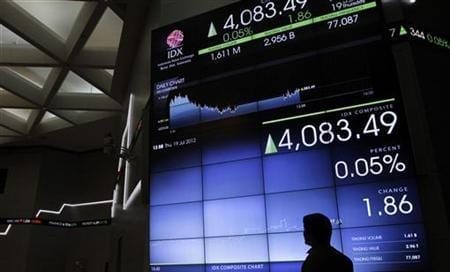
    After a steep correction last year and pressure on the rupiah, Indonesia expects stability to return to its financial markets this year as foreign capital starts flowing back into the domestic market. The first bond offerings of the year last week were more than three times oversubscribed, with interest mainly coming from foreign investors, who also bought more local stocks than what they sold over the past two weeks, reversing a net selling trend that persisted throughout last year, according to Indonesia Stock Exchange (IDX) data.

    For Bank Indonesia Governor Perry Warjiyo, the return of foreign capital inflows came as no surprise. The central bank has been aggressive in raising its benchmark interest rate – the seven-day reverse repo rate – which was increased by 175 basis points to 6 percent over the past nine months in response to tightening by the United States Federal Reserve.

    As it now seems more likely that the US central bank may raise the federal funds rate only twice this year instead of three times, Indonesia’s financial markets have become more attractive to foreign investors as a destination to park their funds.

    “The US dollar is not king anymore this year,” Perry said during a meeting with editors of the country’s largest media groups on Monday.

    Pressure on the rupiah has also eased. The currency currently trades at 14,031 to the greenback, having appreciated 8 percent from its weakest level of 15,253 four months ago, Bank Indonesia data showed.

    Bank Indonesia took measures in concert with the central banks of Malaysia and Thailand on Jan. 2 to reduce dependency on the dollar in bilateral trade. The arrangement will involve Indonesian trade with the two countries, which amounts to about $33 billion per year, being settled in the countries’ respective currencies, instead of the US dollar.

    Indonesia’s current-account deficit, the main culprit for the weakness in its currency, is expected to narrow to 2.5 percent of gross domestic product this year, compared with 3 percent last year.

    American multinational investment bank Morgan Stanley said lower oil prices should help Indonesia lower its current-account deficit.

    “With Brent down 36 percent from its September highs, we should see some relief on the trade balance, which has been weighing on the current account and, in turn, [become] a drag on confidence in equities and performance,” analysts Sean Gardiner and Aarti Shah wrote in a recent note to clients.

    They said oil prices, with the combined effects of the election stimulus, recovering loan growth, dovish monetary policy and rising company earnings have cemented Morgan Stanley’s bullish views on Indonesian stocks.

    The New York-based bank’s top picks include conglomerate Astra International, state-owned gas utility company Perusahaan Gas Negara, state-owned telecommunications company Telkom Indonesia, and lenders Bank Central Asia and Bank Mandiri.

    Bank Indonesia is confident that the country’s economy may grow by between 5.0 percent and 5.4 percent this year, compared with an estimated 5.2 percent last year. Household consumption is also expected to expand by between 5.1 percent and 5.5 percent and investment by between 6.5 percent and 6.9 percent, the central bank governor said.

    Perry said bank loans will maintain their expansive pace of 12 percent this year, in line with an increase of between 8 percent and 10 percent in third-party funds.

    However, one source of concern this year is lower commodity prices, which will affect Indonesia’s export earnings. Perry said the country should therefore increase its exports of manufactured goods, seek new markets for its products and encourage tourism.

    He said Bank Indonesia is comfortable with its current policy and that it can afford to maintain its benchmark rate until March.

    “We are optimistic that 2019 will be better than 2018,” Perry said.

  • Malaysian businesses less optimistic on prospects for next six months

    Malaysian businesses less optimistic on prospects for next six months

    Malaysian businesses are displaying less optimistic sentiment on prospects for the next six months as the RAM Business Confidence Index (RAM BCI) fell to its lowest level since its inception two year ago. RAM said in a statement today that the corporate and the SME indices of the RAM BCI declined to 55.1 and 51.0 respectively, although the reading above 50.0 still denotes positive sentiment.

    The RAM BCI is a comprehensive survey jointly conducted by RAM Holdings Bhd and RAM Credit Information Sdn Bhd, on business sentiment in Malaysia. Released quarterly, the index is based on data from a survey of close to 3,500 SMEs and corporates across five main industry segments respectively.

    The cooler sentiment is attributable predominantly to the weak economic prospects in the next six months, with a number of firms citing this as the main challenge, rising to 41.2% and 41% both corporate and SME segments.

    Decelerating domestic growth, uncertain global demand and investment activities and a lack of positive catalysts, including the relatively neutral Budget 2019, all play a part in the generally weaker business sentiment on the next six months.

    On a sectoral basic, the construction sector appeared the least bullish with the SME sector recording a reading at 49.7 while the corporate sector declined for the third time in a row to 53.0.

    Without any new growth catalyst amid the property overhang, plus the shelving of new big-ticket infrastructure projects, it is not surprising that the construction sub-indices have hit record lows, RAM said.

    Another sector that showed pessimism in the Q1-Q2 2019 survey is SME retail as its performance outlook slipped back into negative territory after a brief expansionary momentum that had been aided by the tax-free window from June to August 2018.

    “Faced with uncertain global and domestic economic prospects, consumers are once again more prudent with their spending, leading to weaker sentiment on retail consumption in 2019,” it added.

    On the back of weaker prospects, the firms are also holding back from capacity building with the sub-indices tracking corporate business expansion, capital investment and hiring recording a fall in three consecutive surveys.

    Likewise, the capacity-building sub-indices for SMEs pulled back from the last survey and remain below those of corporates.

    RAM noted that firms’ expressed reticence on capacity building remains the most prominent downside risk, as it could weigh on the momentum of economic growth in 2019 and potential economic output over the longer run. This is particularly true in respect of SMEs, which are more vulnerable and sensitive to immediate economic challenges.

    “That said, more guidance on future economic policies that will shape the overall business environment will be crucial to building business confidence among firms, potentially being the game changer for a more resilient growth trajectory this year,” it added.

  • Malaysian consumer sentiment to remain healthy this year

    Malaysian consumer sentiment to remain healthy this year

    AmInvestment Bank has maintained its “overweight” rating on the consumer sector, as consumer sentiment is expected to remain healthy on the back of recent consumer-friendly initiatives by the government. It said in a report that recent initiatives such as the reintroduction of petrol subsidy, capping of the electricity tariff and introduction of public transport subsidies, have contained the problem of rising cost of living and effectively put more money back into the pockets of consumers.

    “The substitution of the Goods and Services Tax (GST) with the Sales and Services Tax (SST) is a net positive to consumers as the SST has a narrower scope compared with the GST,” it said.

    According to the Malaysian Institute of Economic Research, the Consumer Sentiment Index has recovered beyond the 100-point confidence threshold after three years of a low sentiment trend.

    AmInvestment Bank believes that the positive trend in consumer sentiment will be sustained as consumers become more confident of the government with expectations of more rakyat-centric government policies, better governance and transparency.

    It expects private consumption to grow at 6.5% year-on-year on the back of a healthy labour market and stable inflation.

    While the food and beverage sub-sector does not typically benefit from greater disposable income, AmInvestment Bank has identified Berjaya Food Bhd (BFood), Mynews Holdings Bhd and Power Root Bhd as the top picks for the sector.

    It said that BFood is a beneficiary as improved consumer sentiment will drive discretionary spending while Mynews will be an indirect beneficiary of the public transportation subsidy.

    “We reckon that this measure will boost foot traffic surrounding the train stations. Mynews currently operates more than 30 stores in the MRT, LRT and monorail stations,” it added.

    Meanwhile, Power Root will be a potential beneficiary as it is a producer of staple products. It will also benefit from a stronger US dollar as around 50% of its sales are in exports.

    Downside risks that may prompt it to review its call for the sector are weakening of the ringgit against the US dollar (its 2019 assumption average is RM4.12) and sluggish improvement to economic fundamentals, which could lead to a de-rating of the sector.

    “A sluggish recovery in economic fundamentals such as high operational costs and a weak ringgit may not see consumers fully benefitting from savings tied to the SST reintroduction and consumer-friendly measures, thereby dampening the recovery in consumer sentiment,” it said.

  • Indonesian consumers regain confidence in Q3

    Indonesian consumers regain confidence in Q3

    Indonesian consumer confidence rose again in the third quarter of this year in line with their increasing confidence for the government’s recent economic policies, global research company Nielsen revealed on Wednesday.

    According to Nielsen’s Global Consumer Confidence Survey, the Indonesian consumer confidence index increased by three points to 122 in the third quarter from the previous quarter, an improvement that Nielsen Indonesia managing director Agus Nurudin attributed to a positive public response to the government’s tax amnesty, controlled inflation and manageable economic growth.

    “This is the first time we moved back to 120 after one year,” he told reporters, adding that Indonesia, since the third quarter last year, always scored below 120 in the quarterly survey because of political instability and economic uncertainty.

    The survey findings also suggested that although Indonesian consumers show an increasing willingness to spend, they are getting more rationale than before.

    “They prefer to reduce their spending on expensive tertiary goods, update their gadgets less often and change their foreign trips to domestic ones,” Agus said.

  • Shopper confidence index exhibits fall in Might

    The buyer confidence index (CCI) dipped 1.29 factors to 91.64 in Might, whereas the inventory funding confidence sub-index noticed the most important fall, by 9.6 factors, based mostly on a report launched by the Nationwide Central College (中央大學, NCU) yesterday.

    Dachrahn Wu (吳大任), director of NCU’s Analysis Middle for Taiwan Financial Improvement, stated the arrogance for inventory funding tumbled largely as a result of the federal government tuned down this yr’s GDP progress forecast final week, and cash within the native inventory market had flown to China’s booming inventory market.

    The inventory funding confidence index registered at 100.1 factors.

    Simply final month, inventory funding confidence rose probably the most among the many six sub-indices, growing four.9 factors to succeed in all-time-high 109.70.

    Final month’s survey was carried out at a time when the inventory index was approaching the 10,000 mark, and when Beijing proposed a stock-connect platform between Taiwan and China. The prospects led to a rise in overseas capital and fueled investor confidence.

    Different Sub-indices Scores

    Beneath the CCI’s 200-point scale, an index that falls within the Zero-100 level zone displays pessimistic shopper confidence whereas a determine between 100 and 200 signifies optimism.

    Regarding the different indexes, the CCI for worth ranges and family finance climbed to 55.85 factors and 87.65 factors, respectively. The job market index stayed degree at 114.9.

    The CCI for home financial system and sturdy items purchases — principally actual property purchases — declined to 86.65 factors and 104.7 factors, respectively.

    J.P. Morgan’s Conflicting Discovering

    Whereas the native inventory market may need underperformed, buyers are nonetheless upbeat concerning the world financial system, based mostly on a report launched by J.P. Morgan lately.

    In accordance with J.P. Morgan’s report, the index for investor confidence reached 106.four within the second quarter, rising for the second consecutive quarter and reached the very best degree in three years.

    Though buyers are usually not assured concerning the native financial system, they confirmed nice optimism over the world financial system, believing it is going to end in wealth progress within the close to future, the survey discovered.

    Jerry Chu (邱亮士), an government from J.P. Morgan Asset Administration, stated the uncertainty relating to when the U.S. Fed will hike curiosity is definitely thought-about by buyers as a constructive.

    Different positives, in response to Chu, embrace larger profitability for corporations in Japan and Europe; a unfastened financial coverage in China that may increase enterprise incomes, which may then translate into greater wage ranges and better consumption.

    Main inventory markets within the globe have moved up prior to now three months. The Chinese language market soared almost 40 %, whereas Japan and European markets have surged about 10 %. The markets in Taiwan and the U.S. grew a comparatively low 5 %.

    Taiwan’s inventory market hit a brand new document final month, and the current retraction is taken into account by Chu as a traditional adjustment.

  • Vietnamese consumer confidence rises in last quarter

    Vietnamese consumer confidence rises in last quarter

    Vietnamese consumer confidence continued to see rapid improvement in the fourth quarter of 2014, according to the latest Consumer Confidence Index released by Nielsen, a global information and measurement company.

    Nielsen said Vietnam had become the ninth most optimistic country globally, with an index score of 106, an increase of four points compared to the previous quarter.

    Vaughan Ryan, managing director of Nielsen Vietnam, said over the last two quarters there was a significant increase in the confidence of consumers in Vietnam.