Retail News CRM

Tag: connection

  • Korean Air Marks Half a Century of Flying High on the Seoul-Zurich Route: A Legacy of Connection and Culture

    Korean Air Marks Half a Century of Flying High on the Seoul-Zurich Route: A Legacy of Connection and Culture

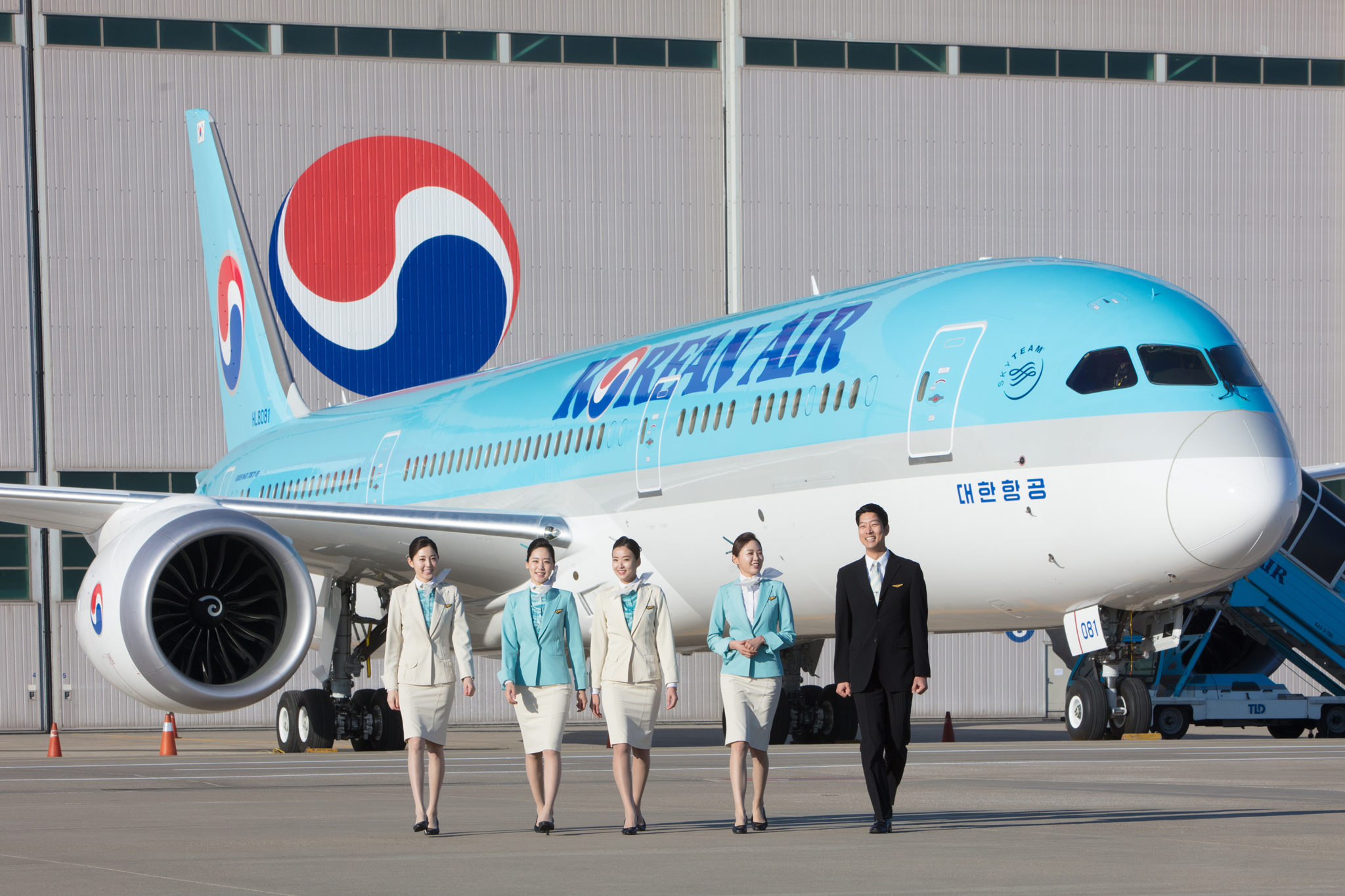
    Korean Air celebrates its golden jubilee of the Seoul-Zurich route, highlighting half a century of unifying Korea and Switzerland through travel and cultural exchange.

    In honor of this significant achievement, a gala reception was held at Zurich’s Widder Hotel on May 27. About 70 esteemed attendees, including Woosik Shin, the Chargé d’Affaires of the Republic of Korea to Switzerland, Stefan Gross, the Chief Commercial Officer of Zurich Airport, and prominent members from the Swiss-Korean community, graced the occasion. Representing Korean Air were Jungho Choi, the Executive Vice President and Head of Sales, Sukwoo Lee, the Managing Vice President of Passenger Sales, and Euisuk Byun, the Regional Manager for Switzerland.

    Seoul-Zurich Route: A Long-standing Bridge Between Two Nations

    Korean Air pioneered the first direct flight between Korea and Switzerland on July 14, 1976, with the launch of the Seoul-Zurich route. Over half a century, the route has played a crucial role in fostering bilateral ties, and catalyzing business, tourism, and cultural exchanges between the two nations.

    The airline constantly broadens its reach via Zurich, one of its fundamental European entry points. A recent collaboration with Swiss Federal Railways (SBB) has led to the launch of a Rail & Fly service, facilitating seamless post-flight journey to major Swiss cities from Zurich Airport for passengers.

    To elevate the passenger experience, Korean Air plans to deploy its Boeing 787-10 Dreamliner on the Zurich route from June 2, 2026. This aircraft, furnished with the latest Prestige Suites 2.0, promises superior privacy and an exquisite cabin interior inspired by Korean traditional design. The revamped Economy Class cabin also offers improved comfort, with a seat pitch of 32 inches and a recline angle of 120 degrees.

    Looking Ahead: Korean Air’s Commitment to the Future

    With a legacy of five decades of secure operations and customer trust, Korean Air remains dedicated to boosting the Zurich route as an integral fragment of its European network. The airline is unwavering in its commitment to service innovation and network connectivity, with a view to maintaining the route as a pivotal bridge between Korea and Switzerland for many more decades.

    Jungho Choi, Executive Vice President and Head of Sales, emphasized the airline’s steadfast dedication to linking Korea with Europe’s core. He stated, “As we look towards the next 50 years of operations, our focus remains firmly on upholding the highest standards of safety, comfort, and premium service for our customers.”

    Questions & Answers

    What does the Seoul-Zurich route signify for Korean Air?
    The Seoul-Zurich route symbolizes Korean Air’s enduring commitment to establishing a connection between Korea and the heart of Europe.

    What new developments are in store for the Seoul-Zurich route?
    Korean Air plans to introduce its Boeing 787-10 Dreamliner, offering superior privacy and comfort, on the Zurich route from June 2, 2026. The airline also recently launched a Rail & Fly service in collaboration with Swiss Federal Railways.

    How has the Seoul-Zurich route impacted bilateral relations between Korea and Switzerland?
    The Seoul-Zurich route has significantly strengthened bilateral relations and promoted business, tourism, and cultural exchanges between the two nations over the past 50 years.


  • A2 Milk Amplifies China Connection: Targets Growth in English-Label Infant Formula Sales

    A2 Milk Amplifies China Connection: Targets Growth in English-Label Infant Formula Sales

    A2 Milk, a renowned dairy company, has expanded its enduring alliance with China State Farm Agribusiness Holding Shanghai Co (CSFA), with the inclusion of English-label (EL) infant formula within the cross-border e-commerce realm.

    Introducing A2 Genesis Product

    The initial focus of the rollout will be on the A2 Genesis product, a premium item in their line-up. Subsequently, other EL formulas, like A2 Platinum, will also be introduced to the market.

    New Agreement Enhances Distribution and Confidence

    In the newly ratified agreement, CSFA will now function as the sole import agent and principal distributor for EL products. This strategic move will allow A2 Milk to improve logistics, strengthen its retail footprint, and utilize the reputation of the state-owned enterprise to reinforce consumer confidence.

    Targeting the HMO Segment

    A2 Genesis was launched in the latter half of this year. This new product targets the rapidly expanding human-milk-oligosaccharide (HMO) sector, with a specific focus on gut health and immunity.

    David Bortolussi, CEO of A2 Milk, described this development as a pivotal component in the company’s China strategy. Meanwhile, Zhang Lei, Chairman of CSFA, portrayed this arrangement as a benchmark of successful collaboration in the dairy nutrition field.

    Expanded Agreement and Recent Acquisition

    The augmented agreement was officially established at the China International Import Expo in Shanghai, after a year of diligent preparation.

    Additionally, in September, A2 Milk successfully concluded its purchase of Yashili New Zealand’s Pokeno nutritional manufacturing facility for $282 million from China’s Mengniu Dairy Group.

    Questions & Answers

    What is the primary focus of A2 Milk’s initial rollout with CSFA?
    The primary focus of the initial rollout will be the premium A2 Genesis product, which targets the rapidly growing HMO sector, with an emphasis on gut health and immunity.

    What is the role of CSFA under the new agreement with A2 Milk?
    Under the new agreement, CSFA will function as the exclusive import agent and principal distributor for EL products, which will help A2 Milk streamline logistics, expand its retail presence, and build consumer confidence.

    What significant acquisition did A2 Milk make recently?
    In September, A2 Milk completed the acquisition of Yashili New Zealand’s Pokeno nutritional manufacturing facility for $282 million from China’s Mengniu Dairy Group.

  • Meta Unveils Ambitious Plan for Multi-Gigawatt Data Centers to Boost AI Innovation

    Meta Unveils Ambitious Plan for Multi-Gigawatt Data Centers to Boost AI Innovation

    Meta is gearing up for a groundbreaking leap in its artificial intelligence (AI) capabilities, announcing an ambitious investment of USD 72 billion to establish a series of formidable data centers across the globe. This extensive initiative is set to bolster the company’s efforts in developing super-intelligence and artificial general intelligence (AGI), with the first data center projected to come online next year.

    Revolutionary Data Centers on the Horizon

    The flagship of this initiative is Prometheus, a multi-gigawatt data center anticipated to begin operations in 2026. Meanwhile, another powerhouse center, Hyperion, is designed to scale up to an impressive 5 gigawatts in the subsequent years. Remarkably, these centers will be developed as “clusters,” featuring a colossal capacity that positions them among the largest data centers globally.

    Zuckerberg’s Vision for the Future

    Mark Zuckerberg, CEO of Meta Platforms, elaborated on the company’s grand vision, asserting that these sprawling titan clusters will encompass a footprint that rivals significant urban landscapes, such as a substantial portion of Manhattan. With this staggering scale, Meta aims to set a new standard in the data center landscape.

    R&D Powered by Cutting-Edge Infrastructure

    This major investment comes on the heels of Meta’s commitment to advancing research and development in AI. As the tech giant endeavors to push the boundaries of intelligence through AGI, these data centers will become critical to facilitating groundbreaking advancements and innovative solutions in the realm of AI.

    The landscape of artificial intelligence is set to get a major upgrade, and who knows — these futuristic hubs could soon be the breeding ground for the next big thing in tech, perhaps even an AI that finally understands why cats seem to rule the internet. Stay tuned!

    Questions & Answers

    What is the total investment Meta is making in its new data centers?
    Meta plans to invest USD 72 billion in the development of several massive data centers to enhance its artificial intelligence efforts.

    When is the first of Meta’s new data centers expected to be operational?
    The first data center, named Prometheus, is expected to come online in 2026.

    How is Meta transforming its approach to data centers?
    Meta is constructing its data centers as “clusters,” which will feature a significant capacity, some even capable of rivaling large areas like parts of Manhattan.

  • New Zealand bans Huawei from 5G mobile network

    New Zealand bans Huawei from 5G mobile network

    From offering mobile payment services such as WePay and Alipay to hiring front-desk staff proficient in Mandarin, the New Zealand Chinese Travel and Tourism Association was not short of advice for Kiwi tourism operators on how to benefit from an influx of mainland Chinese visitors to New Zealand this year.

    “Chinese tourists enjoy spontaneous travel so there are a lot of last minute bookings. For businesses who’d like to attract Chinese tourists, this is the major challenge for them,” association chairman Simon Cheung said in a promotional video.

    But preparations for the 2019 China-New Zealand Year of Tourism – a campaign by both governments to strengthen economic and bilateral ties – were cast in doubt when China postponed the launch event, which was expected to take place in Wellington next week. Huawei is banned, but where is the backlash in New Zealand?

    New Zealand Prime Minister Jacinda Ardern on Tuesday acknowledged that the country’s relationship was complex and not without challenges, but dismissed talk there was a rift. But she revealed that dates for her first official trip to China, planned for the end of last year, still had not been finalised.

    “I have been issued with an invitation to visit China, that has not changed. We continue to find dates that would work,” she said.

    Her admission fuelled concerns from opposition parties and the media that ties, already tense after Ardern’s government blocked Chinese telecom giant Huawei from the nationwide roll-out of a 5G data network over “significant national security concerns”, were deteriorating further.

    Last weekend, an Air New Zealand flight en route to Shanghai was turned back to Auckland, with some reports suggesting it was due to how paperwork on board the plane had referred to Taiwan. According to Bloomberg, the airline said the Boeing 787-9 Dreamliner was not yet certified to fly to China, but had been “unfortunately assigned” the flight.

    The Civil Aviation Administration of China last year told foreign firms and airlines not to refer to Taiwan as anything other than a Chinese territory on their websites.

    Former New Zealand government trade consultant Robert Scollay said from the point of view of those in the country, China’s latest actions “raised the question of whether this is a temporary expression of displeasure or if it means something more significant”.

    After Wellington’s decision on Huawei, which it took in support of its fellow members in the Five Eyes intelligence alliance, there was a debate on whether it had finally chosen a side in its long-running balancing act between the United States and China – its two most important economic partners.

    But Chinese foreign ministry spokesman Geng Shuang on Friday dismissed the suggestion, saying both countries had a common interest in ensuring healthy and stable ties. “China is willing to work with New Zealand on the basis of mutual respect, equality and mutual benefit to promote the continued development of China-New Zealand relations,” Geng said.

    Noakes from the University of Auckland said he was not convinced ties had deteriorated, despite recent events. “The really unlucky thing is that the perceived souring of ties dovetails with commonly held misperceptions of what China is and what engagement with China means for New Zealanders.”

    Jason Young, director of New Zealand Contemporary China Research Centre at the Victoria University of Wellington, had a more ominous take.

    “This can become a self-fulfilling prophecy,” he said. “We talk ourselves into having a bad relationship with China, and that’s quite dangerous.”

  • KT CEO talks 5G at World Economic Forum

    KT CEO talks 5G at World Economic Forum

    The head of KT, the country’s leading telecommunications provider, outlined the importance of 5G networks in driving innovation at the World Economic Forum in Davos, Switzerland, last week. KT CEO Hwang Chang-gyu was invited to a meeting of the International Business Council, a community of 100 select highly influential executives around the globe, which was held on the forum’s sidelines.

    Hwang said the adoption of the upcoming network system will play an integral role in processing autonomous driving vehicles and telemedicine systems.

    5G refers to the fifth-generation mobile network that will succeed the current 4G network, which has been prevalent for about seven years. The network is expected to be commercialized in the first quarter of this year, according to KT.

    The global elite meeting also acted as a get-together for the world’s renowned CEOs and academics. KT said Hwang spoke with Apple’s Tim Cook, adding that the Apple CEO pledged to visit Korea or invite Hwang to the United States to learn more about the 5G network. Rafael Reif, the president of the Massachusetts Institute of Technology (MIT), said he expected Hwang will lecture about 5G at the campus.

    The KT CEO also promised to strengthen cooperation with Japan’s telecom NTT Docomo to run 5G during the Tokyo Olympic Games in 2020.

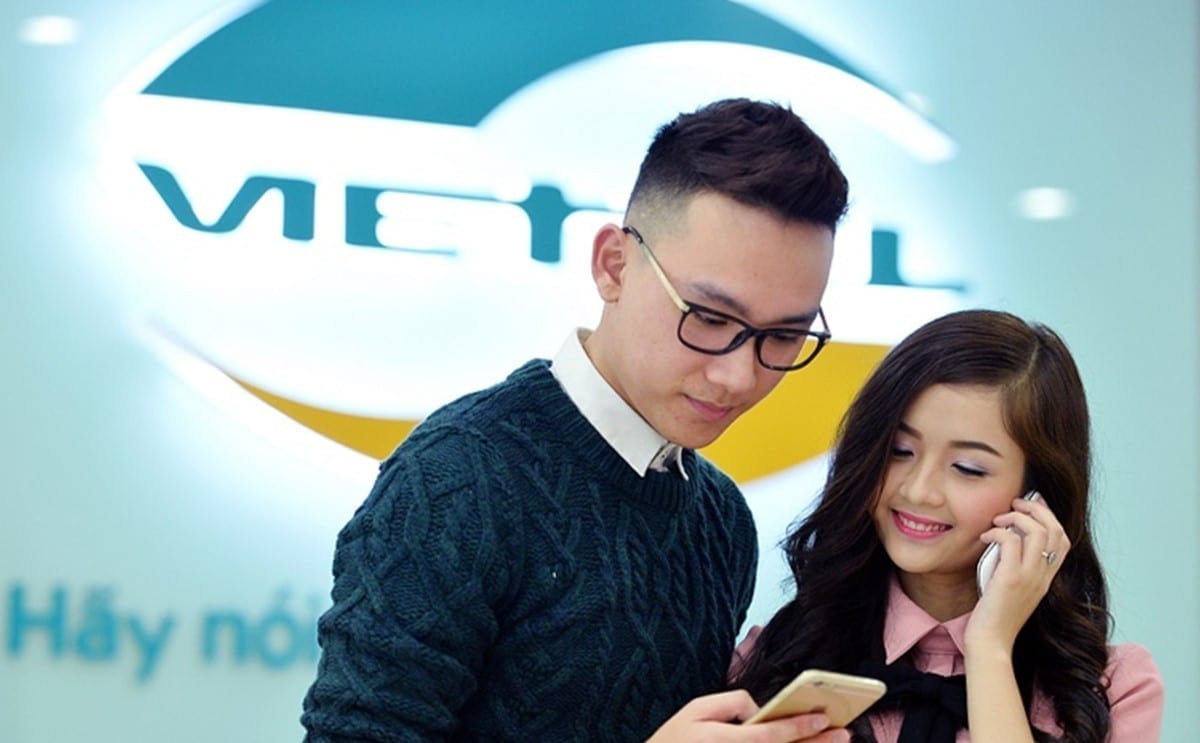
  • Viettel gets one-year 5G trial license

    Viettel gets one-year 5G trial license

    Vietnam’s largest telecommunications company Viettel has received a license to trial its 5G services. The trial is licensed for a period of one year until January 21 next year. Viettel is the first company in Vietnam to receive this license. The military-owned company is allowed to trial the sevices in Hanoi and HCMC at not more than 73 locations and without charging for the services.

    The company had earmarked $40 million for the development of its own 5G chipset, but was also considering using technology from Ericsson and Nokia, its president and CEO Le Dang Dung said.

    Viettel has around 60 million subscribers in Vietnam and over 30 million more in 10 other countries, predominantly in Asia and Africa.

    Speaking at a seminar on telecoms innovations at the end of 2018, Minister of Information and Communications Nguyen Manh Hung had expressed plans to introduce 5G by 2020, which would make Vietnam one of the first countries to deploy this technology.

    5G is the latest generation in of mobile Internet connectivity, and should offer much faster speeds and more reliable connections on smartphones and other devices compared to the current 3G and 4G technologies.

  • Vietnam wants to excel in IT, telecom

    Vietnam wants to excel in IT, telecom

    Vietnam, which is in a lowly 108th place in the International Telecommunication Union’s ICT Development Index, wants to improve its status. Speaking at a Ministry of Information and Communications (MoIC) conference Tuesday, Prime Minister Nguyen Xuan Phuc emphasized the need for the country to improve its ranking in ICT, one of country’s strengths alongside agriculture and service.

    MoIC Minister Nguyen Manh Hung said the country must use the International Telecommunication Union’s rankings as a guideline and strive to improve to no lower than 50th latest by 2022.

    He stressed that to take the lead in the digital revolution, the country needs to popularize smartphones by licensing 4G and testing 5G technologies to increase capacity, data usage per user and the quality of the mobile network.

    “Vietnam must be on the same line with the world in new technologies. We will not be eight and 10 years behind like we were with 3G and 4G.”

    According to the minister, Vietnam’s development in telecommunications must remain sustainable by shifting resources to explore new markets once the phone market saturates instead of continuing to compete unhealthily on old markets.

    “Mobile money,” which the ministry is trialing now, allows users to transfer money and make purchases through their telecom accounts, and would help bring e-payment to everyone in the country and stimulate economic growth, he said.

    Digital transformation, e-governance and smart cities would be the big stories of 2019, he said.

    “National digital transformation, digital economy and digital society would be the overarching story for decades to come. We need to develop strategies and projects in 2019 to clarify what must be done for each field in the digital economy and the Fourth Industrial Revolution.”

    Speaking about cyber security and safety, he said the Internet, on which the country’s prosperity depends, is itself an unsafe environment.

    “In 2019 there will be no incidents of government agencies’ websites being hacked and having information stolen. Vietnam must become ASEAN’s center for cybersecurity.”

    Vietnam has an opportunity to become one of the world’s major manufacturers of electronic and telecom equipment, he said.

    Globally there are only four major telecom infrastructure and equipment manufacturers — Ericsson, Nokia, Huawei and ZTE – and while China’s Huawei and ZTE enjoy a market share of 60 percent, they are encountering difficulties with the U.S., he pointed out.

    “Vietnam is currently capable of manufacturing 70 percent of telecom equipment [used globally]. With effort, we could become the fourth nation in the world capable of manufacturing and exporting all types of telecom equipment. This must be achieved by 2019-2020.”

    “Vietnamese network operators must use Vietnamese-made equipment if the price and quality are similar.”

    The ministry has set a target of  20-30 percent of operators’ revenues coming from digital content this year instead of the current 6-8 percent, saying the digital content industry is capable of expanding by three or four times to achieve revenues of $3-4 billion.

    “The key to the digital content industry’s growth is that policies must promote it,” said the minister.

  • Korea’s KT 5G bus hits the road

    Korea’s KT 5G bus hits the road

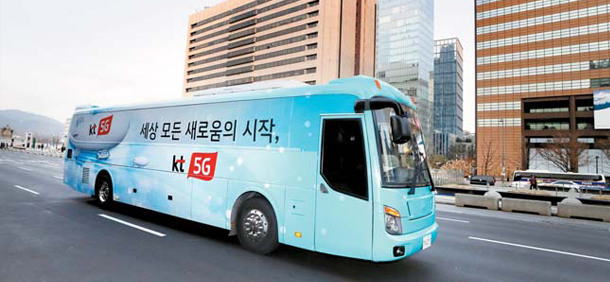
    Are you curious about all the hype over 5G? A ride on a 5G-powered bus may answer some questions. Mobile carrier KT announced Tuesday that people can sign up for free rides on its 5G bus. The bus will be connected to its ultra-fast 5G wireless network and will demonstrate devices that can be used to enjoy new media services like KT’s GiGA Live TV. GiGA Live is a head-mounted display – thick goggles with a screen embedded inside. GiGA Live supports virtual reality (VR) media services, including live sports broadcasts, as well as 360-degree films.

    VR and augmented reality (AR) are commonly cited as the technologies that have the most to benefit from 5G network. Because 5G promises up to 20 times faster speeds than LTE, it can transfer large volumes of data quickly in real-time, which is integral to the proper operation of VR and AR services.

    Those who want to take 30-minute sojourns on the 5G bus can apply online at www.kt5Gbus.com. The bus will run in the Gwanghwamun area from Jan. 15 to 24, and Gangnam Station from Jan. 25 to Feb. 2. Rides will be offered five times a day, excluding Sundays and Mondays.

    “5G network makes it possible to transfer huge volumes of information safely and in real-time,” said Park Hyun-jin, head of KT’s 5G business. “We will continue to offer innovative 5G services that can provide new experiences and value to consumers.”

    Earlier this month, KT added 5G-capabilities to its barista robot B;eat in Samsung Life Insurance’s Seocho District office. The robot, which looks like an advanced vending machine, can now recognize customers’ presence and send real-time footage of orders to human managers.

  • Bullet train to connect Hanoi with HCMC in five hours

    Bullet train to connect Hanoi with HCMC in five hours

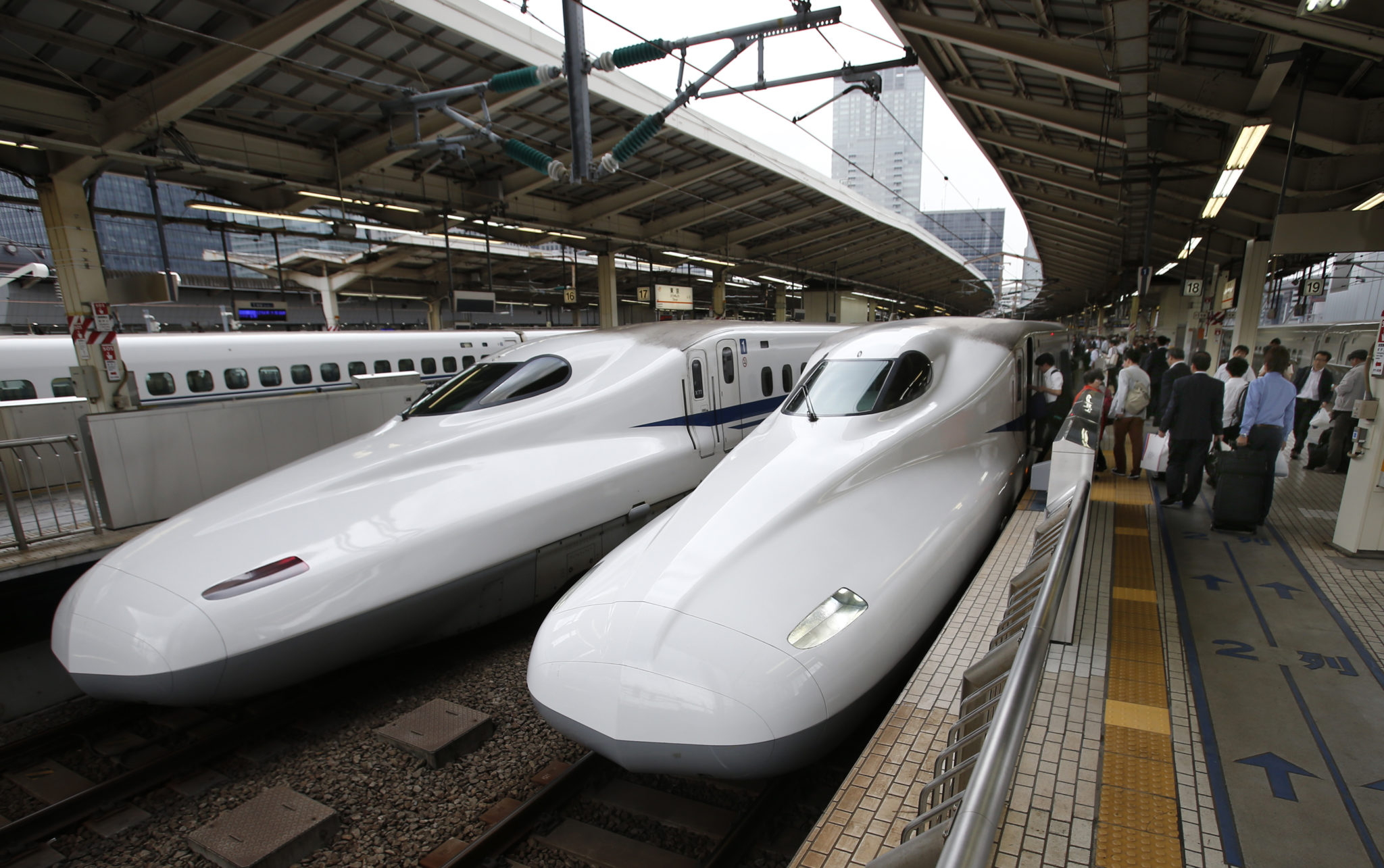
    Vietnam’s bullet train will cut travel time between Hanoi and Saigon to five hours from the current 24. The railway project management board has submitted a pre-feasibility study to the Ministry of Transport, which quotes transport consultants’ estimate that if the train travels at 320 km/h, its running time would be from 5 hours 17 minutes to 6 hours 50 minutes depending on the number of stops.

    The route from Hanoi Railway Station to Thu Thiem Station in HCMC’s District 2 will be 1,545 kilometers (960 miles) long and run through 20 provinces.

    Sixty percent of the tracks will be on viaducts, 10 percent underground and 30 percent on the surface, completely protected by fencing and without a single crossing.

    It will have double standard-gauge tracks of 1.435 meters width and 24 stations, according to a consultancy consortium comprising Vietnamese firms TEDI, TRICC and TEDIS.

    It will use the distributed traction technology used by Japanese high-speed trains.

    The project is estimated to cost a total of $58.7 billion, comprising $2.23 billion for land, $43.3 billion for construction and equipment and $4.3 billion for management, consulting and other costs.

    It will be undertaken as a public-private partnership (PPP), with the government accounting for 80 percent of the cost and private investors for the remaining 20 percent.

    Construction will be in two phases, with the 282-km Hanoi-Vinh section and 362-km Nha Trang-HCMC section built first in 2020-2030 at a cost of $24 billion. Commercial operations on these stretches are likely to begin in 2032. The second phase connecting Vinh and Nha Trang is expected to be built in 2030-2045.

    The consultants have estimated the project to cost 0.4 – 0.55 percent of the country’s GDP in 2020-2030 and 0.35 – 0.4 percent in 2030-2040.

    After being reviewed by the Ministry of Transport, the study will be submitted to the State Appraisal Council and the government for review and to the National Assembly for approval next October.

    Vietnam currently has over 3,000 kilometers of railway tracks, none of them high-speed. The railway accounts for just 1.9 percent of the transportation sector in the country, according to the Vietnam Railway Authority.

  • Huawei’s woes in U.S. give pause to Korea, too

    Huawei’s woes in U.S. give pause to Korea, too

    The arrest of Huawei’s Chief Financial Officer Meng Wanzhou in Canada has triggered alarms in the Korean telecommunications industry, especially after LG U+ moved onto a fifth-generation (5G) network this month that uses Huawei network devices.

    The Chinese telecommunications giant has maintained a sizeable influence since it first entered the Korean market in 2002. While it was originally focused on the cable infrastructure business, Huawei moved on to offering wireless telecommunications devices in 2007 as local telecommunications companies introduced third-generation wide-band code-division multiple access services.

    In 2013, Huawei received orders for fourth-generation 4G long-term evolution (LTE) wireless base stations from LG U+ for services in Seoul, Incheon, and areas in Gyeonggi and Gangwon.

    The 5G equipment market in Korea is estimated to be worth 10 trillion won ($8.89 billion).

    While Huawei is a leading supplier to the telecommunication industry, concerns about the security of its devices has held the company back. Only LG U+ decided to use Huawei equipment for 5G. Huawei has claimed that it had no such security problems in the 170 countries that it operates in and would follow inspection requests by the Korean government.

    LG U+ signed a deal with Huawei to introduce around 30,000 base stations in the Seoul, Incheon, and the Gyeonggi and Gangwon regions by next March. The deal is reportedly worth around 300 billion won, not including maintenance fees.

    The decision by Korea’s smallest telecommunications company made business sense as it used Huawei equipment for its 4G network.

    Huawei’s equipment, however, will not be installed in areas occupied by United States Forces Korea (USFK) such as in Pyeongtaek, Dongducheon, Yongin in Gyeonggi. The U.S. government has requested that Huawei equipment not be used out of concerns about a Chinese cyberattack. USFK has been suspicious about Huawei equipment. When LG U+ chose Huawei equipment for its 4G network, around 10,000 USFK soldiers switched carriers.

    The current situation has left LG U+ in a difficult position. Its deal with Huawei is already inked, and the 5G service works in sync with the existing 4G system, so it is impossible for the company to simply not use Huawei equipment.

    The recent banning of Huawei equipment by Britain, Australia, Canada, New Zealand and Japan, along with growing worries in Korea, places more pressure on the telecommunications unit.

    A senior LG U+ official expressed frustration at the current situation and the Korean government’s inaction.

    “Our government is just trying to not upset either China or the United States,” said the official. “Shouldn’t the government come forward and clear things up?”

    Meanwhile, the government maintains its stance that the selection of telecommunications equipment is an issue for companies to decide.

    “Inspecting security is the responsibility of the business operator. It is not appropriate for the government to take part in an area that a company should make a decision on,” said Park Jun-guk, an official at the Cyber Security Industry Bureau in the Ministry of Science and ICT.

    “[We] will, however, strengthen security inspections in the form of a technology advisory conference.”

    While 5G has stirred controversy, Huawei has an even stronger presence in the country with its cable and optical transmission equipment businesses. In the cable business, all three telecommunications companies, SK Telecom, KT and LG U+, are customers of Huawei.

    Huawei has also won orders from Koscom, a state-run financial IT solution company, and from electric utility Kepco.

    Last month, the Chinese company won an order with KT to connect the sales network of the National Agricultural Cooperative Federation and the National Livestock Cooperatives Federation worth around 120 billion won.

    According to market researcher IHS Markit, Huawei is the biggest global telecommunications equipment maker, with a market share of 22 percent. While Samsung Electronics holds a strong position in the Korean market, a 45 percent market share, it commands a paltry 4 percent share of the global market.

  • For first few years, Koreans will be biggest users of 5G

    For first few years, Koreans will be biggest users of 5G

    Korea is forecasted to have the highest proportion of fifth-generation (5G) smartphone usage in the world over the next couple of years, a market tracker said on Sunday. According to Strategy Analytics’ Service Provider Group, the adoption rate of 5G smartphones in Korea is expected to reach 5.5 percent in 2019 and 10.9 percent in 2020, which will be the highest level among major global nations.

    The estimate is based on the fact that Korea is to commercialize 5G services next March, making it the first country in the world to do so, with tech giant Samsung Electronics planning to release a model featuring the high-end technology, the market tracker said.

    By 2020, 5G will account for 4.7 percent of total market share in the United States, 5.2 percent in Japan and 2.8 percent in China, Strategy Analytics said, adding that its penetration rate would increase after that date in line with the broader establishment of the network.

    In 2021, the adoption rate of 5G smartphones is expected to begin to surge in major countries, with numbers hitting 27 percent in the United States, followed by 21.3 percent in South Korea, 19.7 percent in Japan and 8.5 percent in China.

    “The 5G standard will become the mainstream of the global network industry in years to come,” said an industry insider.

  • Vietnamese network providers ready for 5G rollout

    Vietnamese network providers ready for 5G rollout

    Vietnamese telecom firms are seeking a head start in the 5G race as the country becomes an early adopter of the technology. State-owned Vietnam Posts and Telecommunications Group (VNPT) recently signed a deal with Finnish telecom firm Nokia to develop 5G solutions and technology for the Internet of Things. The three-year deal is worth $15 million.

    The country’s third largest mobile service provider is seeking permission from the Ministry of Information and Communications for its Vinaphone network to beta test 5G, chairman Tran Manh Hung said at a conference last month.

    He said the test would help VNPT master the technology and prepare to produce 5G equipment, adding Vinaphone is ready to provide 5G services as soon as it gets the ministry green light.

    Military-run Viettel Group has also announced it is ready to beta test 5G next year. Its deputy director, Tao Duc Thang, said its installation of infrastructure for 4G even in remote areas allows Viettel to be ready for the new network.

    5G is said to offer speeds 100 times faster than 4G, primarily used for smartphones and other similar devices. The former is also expected to support new applications like remote medical procedures and autonomous driving.

    Thang said Viettel, the country’s largest mobile service provider, is working with partners to manufacture 5G equipment.

    “I think Vietnamese operators are ready for 5G with the existing infrastructure. When the market, equipment and users are ready, developing 5G will be possible.”

    The company, which has been working on 5G plans since 2015, will start installing infrastructure early next year and introduce the service first in big cities like Hanoi and HCMC.

    The country’s second biggest mobile service provider, MobiFone, which trailed its competitors in deploying 4G, earlier this year signed an agreement with Samsung Electronics for engineering and commercial cooperation on 4G and 5G networks.

    Vietnamobile, a joint venture between Hanoi Telecom and Hongkong-based Hutchison Asia Telecommunications, has also announced its interest in offering 5G services.

    VNPT, Viettel, MobiFone, and Vietnamobile are expected to receive 5G testing licenses in January.

    Last month Minister of Information and Communications Nguyen Manh Hung said at a conference that Vietnam should test 5G next year and ensure nationwide coverage by 2020.

    “Vietnam should be one of the first to launch the network, at least in Hanoi and HCMC.” The country had been one of the last in Southeast Asia to roll out 4G.

    This time Vietnam would be able to produce the required equipment before it launches the network, whereas for 4G the country had to wait for eight years before being able to do so, and for 2G and 3G all the equipment had to be imported, he said.

    “5G is not only an opportunity for connection services and going up the telecommunications ladder, but also an opportunity for developing the country’s information and communications technology industry.”

    The International Telecommunication Union last year ranked Vietnam 115th out of 193 economies in terms of mobile teledensity, but Hung wants the country to have 100 percent subscription by 2020 and be among top 30-50 countries in the world in data spending per capita.

    Vietnam’s telecom market was estimated at more than $16 billion in 2016, with the three state-owned providers, Viettel, MobiFone, and VNPT, accounting for 95 percent of the market.

    Viettel had the largest share with 46.7 percent, followed by MobiFone with 26.1 percent and VNPT with 22.2 percent.

    While MobiFone and VNPT are on the list of state-owned companies slated for privatization by 2020, Viettel will remain in government hands.

  • Factories, tractors and robots benefit from 5G in Korea

    Factories, tractors and robots benefit from 5G in Korea

    All three of Korea’s mobile carriers launched their 5G networks on Saturday, the first day of December, officially kicking off an era of the high-speed network. SK Telecom started transmissions from its Bundang network management center in Seongnam, Gyeonggi; KT from its Gwacheon network control center in Gyeonggi; and LG U+ from Magok Science Park in western Seoul. All of the 5G networks operate on a 3.5-gigahertz (GHz) frequency band.

    5G boasts a 20 times faster data transmission speed than the currently prevailing fourth-generation long-term evolution (LTE). Its competitive edge lies in ultra-wide bandwidth, ultra-low latency and ultra-fast connectivity. Data transmission speed of 5G is more than 20 gigabytes per second (Gbps), meaning a 2.5-gigabyte ultra high-definition video can be downloaded in just one second.

    The network can currently only be accessed by corporate clients, not individual users. Businesses can use the card-shaped mobile routers to pick up the 5G network and convert it into super-fast Wi-Fi.

    Individual subscribers are expected to be able to start using 5G from March, when smartphone devices supporting the new network will become available. Samsung Electronics is expected to unveil its Galaxy S10 smartphone as early as February and may come up with two different versions: one supporting LTE and one that works on 5G.

    SK Telecom’s first 5G customer was Myunghwa, a product quality assessment firm in Banwol Industrial Complex in Ansan, Gyeonggi. The company is using the network to process ultra-high definition photos of auto components taken from different perspectives as the products are being moved on a conveyer belt. The images are transmitted using the 5G mobile router to a cloud server, where a high-performance artificial intelligence interface can instantly tell whether a product is faulty.

    SK Telecom also began test operations of its 5G autopilot vehicles in Hwaseong and Siheung, both in Gyeonggi. The vehicles are able to exchange information about their status while on the road with a control center and traffic lights dozens of times per second.

    KT celebrated the launch of its 5G network by having a robot as its first subscriber. The robot, called Lota, will be guiding visitors to the Seoul Sky observatory at Lotte World Tower in Songpa District, eastern Seoul.

    “We chose Lota to show that 5G doesn’t simply mean a generational shift, but will become a platform that will innovate our overall lives and industry,” said KT in a statement.

    KT plans to prioritize 24 major cities nationwide as well as key public transportation routes and university areas, where traffic demand is expected to be high, for 5G installation in the near future.

    LG U+’s first corporate customer is LS Mtron, an industrial machine developer based in Anyang, Gyeonggi. The two companies have jointly developed a 5G remote-controlled tractor, the first in Korea. LG U+ said 5G-based remote-controlled technologies may minimize human engagement in risky working environments, such as the removal of mines and industrial waste disposal.

  • Telkom’s $250m satellite to better connect Indonesia’s islands

    Telkom’s $250m satellite to better connect Indonesia’s islands

    Close to the equator, French Guiana, a scarcely populated country with only 158,000 inhabitants, is regarded as an ideal place to launch satellites. Mostly covered by equatorial forest, the South American country provides a stable climate, as well as invulnerability to earthquakes and hurricanes. Lying just over 500 km north of the equator, Kourou provides an advantage for satellite launches, because the earth’s spinning boosts the propulsion of the rocket taking the satellite into space.

    In this part of Guiana, where a joint French and European spaceport has been built, Indonesia’s biggest telecommunication company Telekomunikasi Indonesia (Telkom) is set to release its latest satellite into space early in the morning of Feb. 15, Jakarta time. Called the Telkom 3S, the firm’s third satellite, which costs up to Rp 3.33 trillion (US$250 million), will provide high-definition television services, faster mobile communications and internet applications across the sprawling Indonesian archipelago of more than 17,000 islands, reaching primarily to the most remote areas.

    This will be enabled by new technology, high-frequency Kuband transponders, which will cut installation time and allow faster connections.

    “Unlike Telkom 1 and Telkom 2 Telkom 3S has Ku-band. The benefit is that the dishes needed to receive signals are smaller,” Telkom satellite project head Tonda Priyanto said on Sunday in Kourou.

    Indonesia has long struggled with poor information and communication technology infrastructure despite the fact that many of its citizens are already highly tech-savvy.

    The current administration kicked off late last year its ambitious Palapa Ring project in a bid to connect all areas nationwide through its fiber-optic network.

    However, only around one third of Indonesia’s area can be covered by terrestrial communications systems, leaving the rest to be linked through satellite systems.

    A McKinsey report released last September revealed that Indonesia could realize growth of an estimated 10 percent in the gross domestic product (GDP), equivalent to $150 billion, by 2025.

    “The need for satellite technology is absolute in Indonesia. Meanwhile, the supply is still low,” Telkom chief technology officer Abdus Somad Arief recently said.

    Overall, the Telkom 3S satellite will carry 49 transponders, adding to the 140 transponders that Telkom currently operates through its two orbiting satellites.

    Satellite builder Thales Alenia Space has handled the design, testing and in-orbit delivery of the satellite, while the satellite launch company Arianespace will be in charge of releasing the satellite into space.

    During the planned launch, Telkom 3S will be positioned at 118 degrees east, to replace Telkom 2. Telkom 2, which still has a life span of about four years, will be moved to another orbital position.

    In response to the satellite launch, Communications and Information Minister Rudiantara said the Telkom 3S satellite would definitely help meet the demand for better network quality in Indonesia.

    “I think that even if the government begins launching its own satellites, we will still be at a deficit even up to the year 2023,” he said. “What the government can do in the meantime is to give satellite lending rights to local companies to avoid dependence on foreign ones.”

  • Global average connection speed grows 2.3% in Q3

    Global average connection speed grows 2.3% in Q3

    The global average connection speed increased 2.3% sequentially and 21% year on year to 6.3 Mbps in the third quarter of 2016, Akamai’s latest State of the Internet report shows.

    South Korea maintained its lead with the highest average connection speed at 26.3 Mbps in the third quarter, but this was down from 27Mbps in Q2, which was itself down 7.2% compared to the first quarter.

    The global average peak connection speed increased 3.4% sequentially and 16% year-on-year to 37.2 Mbps in the third quarter, rising 16% year over year. Singapore continued to have the highest average peak connection speed, at 162 Mbps in the third quarter.

    Meanwhile, global 10 Mbps broadband adoption rose 5.4% quarter over quarter, and 15 Mbps and 25 Mbps broadband adoption rates increased 6.5% and 5.3%, respectively.

    Asia-Pacific region continued to lead the world in average peak connection speeds in the third quarter. Four of the Top 10 countries in average peak connection speeds were from the region.

    Singapore, Hong Kong and South Korea all had average peak connection speeds above 100 Mbps again, with Indonesia close behind at 99.3 Mbps.

    Eleven of the 14 qualifying surveyed Asia Pacific countries/regions posted increases in 15 Mbps adoption, ranging from 3.7% in Singapore to 94% in Vietnam.

    Global average mobile connection speeds meanwhile ranged from a high of 23.7 Mbps in the United Kingdom to a low of 2.2 Mbps in Venezuela.

    “The holiday season serves as one of the true tests of internet connectivity as consumers activate slews of connected devices at the same time and more families are at home collectively pushing their broadband capabilities to the limit,” said David Belson, editor of the State of the Internet Report.

    “The good news is those limits are getting higher as we have continued to observe positive long-term trends in both average and average peak connection speeds around the world. While ‘batteries not included’ may still cause unwelcome surprises, we’re optimistic that connection speeds won’t spoil the holidays this year.”