Tag: consortium

  • France and Germany To Support Battery Cell Consortium

    France and Germany To Support Battery Cell Consortium

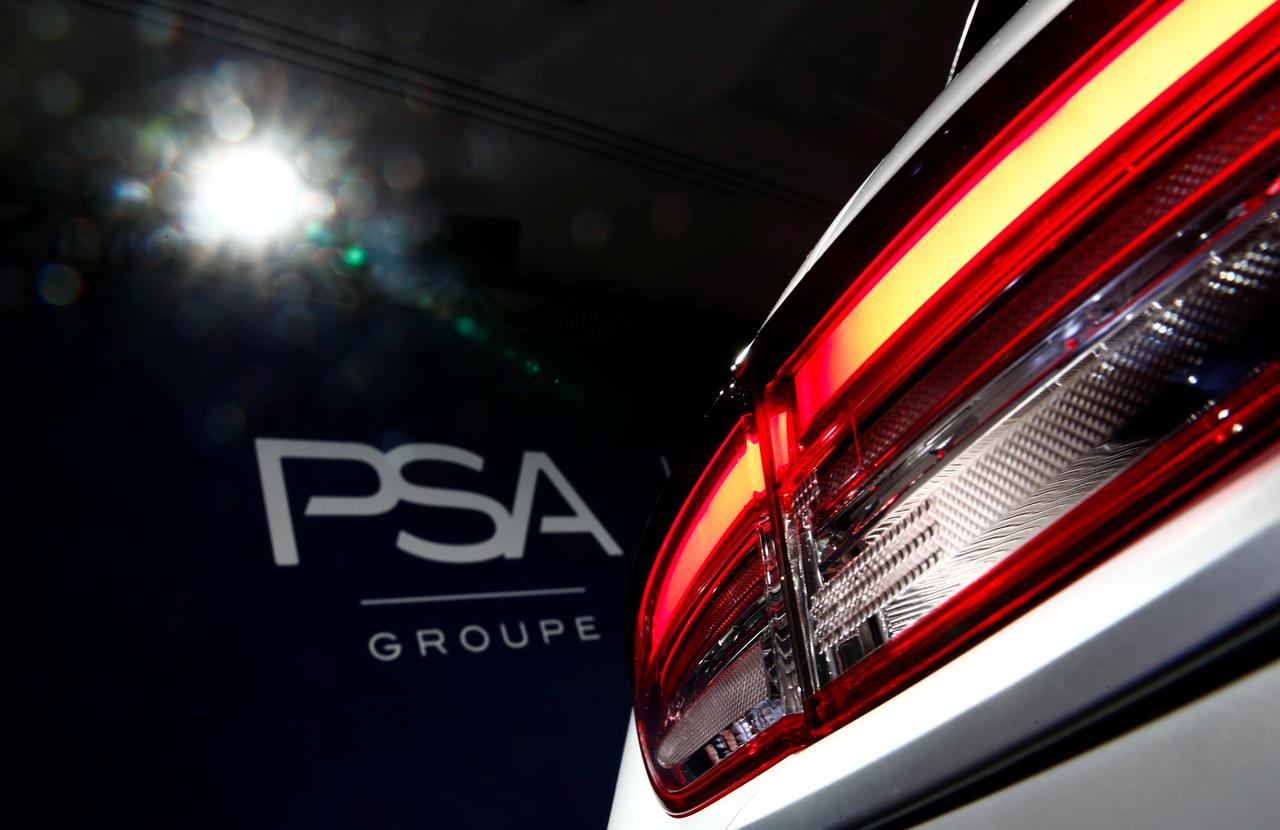
    France and Germany have asked the European Commission to approve state subsidies for a cross-border battery cell consortium including carmaker PSA with its German subsidiary Opel and French battery maker Saft, a German official said on Monday. The two countries have earmarked 1.7 billion euros ($1.9 billion) to support company alliances to help reduce European carmakers’ dependence on Asian suppliers and protect jobs at risk from the shift away from combustion engines.

    The economy ministries of both countries sent a letter of intent to the European Union’s executive body asking it to give a provisional go-ahead, a German economy ministry spokeswoman said, without giving a sum for the planned state funding.

    “We’re now waiting for Brussels to give us the green light,” the spokeswoman said.

    German Economy Minister Peter Altmaier will meet French counterpart Bruno Le Maire in Paris on Thursday to discuss the matter, aiming to make progress with forging further battery alliances. The FAZ report said that the PSA/Saft alliance was planning to convert an Opel factory in the western city of Kaiserslautern close to the French border into a battery cell production site.

    Among the more than 30 companies that applied for state funding at the German Economy Ministry are carmakers Volkswagen and BMW, as well as German battery maker Varta and Swedish battery manufacturing startup Northvolt. Saft, a 100-year old French company owned by energy company Total, produces a range of batteries for industrial applications.

    It has joined forces with German industrial group Siemens, electronic components specialist Manz, Belgian chemicals group Solvay and Belgian material group Umicore to develop a new generation of batteries for electric vehicles.
  • HKT, Huawei co-found C-V2X consortium

    HKT, Huawei co-found C-V2X consortium

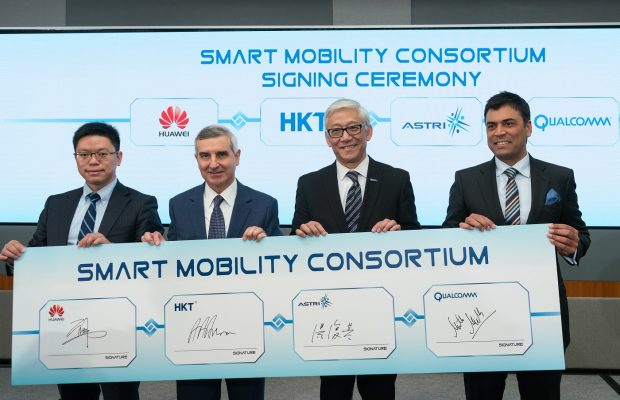
    The Hong Kong Applied Science and Technology Research Institute (ASTRI), operator HKT and vendors Huawei and Qualcomm have formed a consortium aiming to build a smart mobility system for Hong Kong using cellular vehicle-to-everything (C-V2X) technologies.

    The consortium aims to revolutionize Hong Kong’s transportation sector using C-V2X, a standard covering both network-based and direct communications for vehicles.

    A C-V2X powered smart mobility system will therefore enable vehicles to connect to both the cloud and each other, as well as to pedestrians and to traffic infrastructure.

    Vehicles can use the “co-operative awareness” this enables to improve mobility safety as well as autonomous driving, and can help law enforcement and traffic and urban planners to plan and monitor the safety and efficiency of traffic movements.

    The consortium aims to use C-V2X to introduce intelligent transport services including a warning mechanism for collision and control, assistance for cruise control and parking, and alert systems for speed and lane violations.

    It plans to work with government, the automobile industry and other stakeholders to realize this vision. The project is also expected to generate opportunities for other sectors including shipment, ridesharing, home-delivery, insurance, infotainment and mobile healthcare.

    “Hong Kong is a well-connected city with good infrastructure. If we complement these strengths with the latest innovation in science and technology, Hong Kong can become one of the most sophisticated and advanced smart cities in the world,” ASTRI chairman Wong Min-yam commented.

    “This Smart Mobility Consortium is a giant step in that leap. ASTRI is developing state-of-the-art applications, platforms and prototypes which can benefit not just Hong Kong, but potentially other cities in this region too. We, as the SAR’s largest technological R&D institution, are partnering with three eminent organisations to bring revolutionary changes to the way we manage our city’s traffic.”

    The consortium plans to carry out C-V2X pilot in the second quarter of this year. “Our trial sites will likely be at Hong Kong Science Park and the Chinese University of Hong Kong. We hope to extend the pilot to East Kowloon at a later stage,” said Peter Lam, managing director for engineering at HKT.

    “For C-V2X implementation, dedicated spectrum in 5.9GHz is needed. We will try to seek a spectrum testing license from the government to do the pilot,” he added.