Tag: construction

  • Shingda Group Streamlines Operations: A Bold Move for Singapore’s Construction Industry

    Shingda Group Streamlines Operations: A Bold Move for Singapore’s Construction Industry

    In a strategic move to elevate its IT capabilities, Shingda Group, a civil engineering and construction powerhouse based in Singapore, has embraced a cutting-edge cloud management platform. This innovation aims to enhance operations across remote construction sites, where digital resources are often sparse.

    By implementing a hub-and-spoke VPN architecture, Shingda has streamlined connectivity and fortified security across various locations, bridging its remote sites to headquarters with newfound efficiency. The company selected Zyxel Networks’ Nebula cloud management platform for this pivotal transition.

    Since its deployment, Shingda reports an impressive 60 percent increase in network management efficiency. The IT team is experiencing a remarkable transformation, completing troubleshooting and configuration tasks up to 70 percent faster, saving valuable time and resources.

    “We needed a solution that would keep our sites connected, secure, and manageable,” shared Joshua Pek, IT Manager at Shingda Group. The integration with Zyxel Networks’ equipment allows the IT team to swiftly diagnose and resolve issues from a single, unified dashboard — no more juggling multiple tabs like a circus performer just to configure devices!

    Building a Centralized Network for Enhanced Control

    Shingda Group’s revamped network infrastructure features GS1920 Series smart managed switches with Power over Ethernet (PoE) capabilities and WAX510D WiFi 6 access points, ensuring robust connectivity even in high-density environments. Security is prioritized via ATP Series firewalls and branch devices such as the ATP200, SCR50AXE, and USG20-VPN.

    All these components are seamlessly managed through Nebula’s centralized cloud platform, offering full network visibility and automatic topology mapping. This centralized approach eliminates the need for spreadsheets to track IP addresses or credentials, liberating staff from cumbersome manual processes.

    As a result, team members now enjoy streamlined logins, reliable WiFi coverage, and uninterrupted site-to-site connectivity, allowing them to focus on what truly matters — the projects at hand.

    Questions & Answers

    What prompted Shingda Group to adopt a cloud management platform?
    The company aimed to modernize its IT infrastructure and improve operations at remote construction sites where resources are typically limited.

    How has the implementation of the Nebula platform impacted Shingda’s network management?
    Shingda reports a 60 percent boost in network management efficiency and a significant reduction in the time needed for troubleshooting and configuration tasks.

    What key features does Shingda’s new network setup include?
    The network setup includes GS1920 Series smart managed switches, PoE-enabled WiFi 6 access points, and robust ATP Series firewalls, all managed through Nebula’s centralized cloud platform.

  • Asia’s Construction Insurance Market Set for Robust Growth in 2024!

    Asia’s Construction Insurance Market Set for Robust Growth in 2024!

    Insurers in the construction sector across Asia are gearing up for a robust year in 2024, as highlighted in Aon’s 2025 Global Construction Insurance and Surety Market Report. The report underscores a growth-oriented atmosphere buoyed by enhanced reinsurance treaty performance, a strong underwriting appetite, and ample capacity.

    Long-Term Stability and Profitability

    While the momentum is palpable, insurers are also focused on achieving long-term profitability and stability, which is fostering greater underwriting discipline, even as some markets soften. A delicate balance of risk and reward is becoming the sweet spot for companies navigating these waters.

    Favorable Conditions in Key Markets

    China, Hong Kong, and India stand out as the beacons of favorable insurance market conditions. These regions have witnessed impressive growth, particularly India, where local and foreign insurers have rallied behind infrastructure expansion efforts. In China, insurers are offering modest premium reductions for low-risk profiles, with reinsurers showing an increased appetite for catastrophe exposures—a vital trend given the region’s vulnerability to natural disasters.

    Challenges in Japan

    Conversely, Japan is undergoing a modest hardening cycle, where regulatory scrutiny has prompted insurers to adopt more conservative strategies, impacting the management of large and complex risks.

    Mixed Signals in Southeast Asia

    In Southeast Asia, markets in Singapore, Thailand, and Malaysia are witnessing moderate conditions, while Australia boasts a surge in construction activity across real estate and infrastructure sectors. The post-pandemic boom in residential development has shifted insurer priorities, sparking a rising demand for latent defects insurance and internal water damage protections. Detailed water management plans and strong contractor risk mitigation strategies are proving essential to securing favorable terms.

    Competition in Real Estate

    The real estate sector remains fiercely competitive with robust local insurer capacity. However, ambitious civil engineering projects, especially those involving underground works or exposure to natural catastrophes, are still testing insurer capacity and pricing structures. These complex and high-risk projects often necessitate international market support or unique risk transfer solutions.

    Emerging Trends in Technology-Driven Construction

    The rise of technology-driven construction—think data centers, battery plants, and semiconductor factories—is emerging as a vibrant growth area. Australia, in particular, is seeing insurers respond enthusiastically to defense-related infrastructure projects, propelled by increasing government investment projected through 2029. While the market remains rich in capacity and competitive for preferred risk types, insurers are proceeding with caution concerning catastrophe risks. Therefore, larger, more intricate projects might require tailored insurance structures like excess-of-loss (XOL) or alternative risk transfer (ART) solutions to adequately address coverage needs. If all else fails, you may need to put on a superhero cape to navigate these complexities!

    Questions & Answers

    What is driving growth in the construction insurance market across Asia in 2024? The growth is fueled by improved reinsurance treaty performance, strong underwriting appetite, and ample capacity within the market.

    Which countries are experiencing the most favorable insurance market conditions? China, Hong Kong, and India have reported sustainable growth, with India showing significant support for infrastructure expansion from both local and foreign insurers.

    How are insurers responding to large-scale civil engineering projects? Insurers are increasingly cautious about these projects, which often necessitate bespoke insurance structures to meet coverage requirements, especially due to the heightened risks associated with natural disasters.

  • Construction steel prices lowest in two months

    Construction steel prices lowest in two months

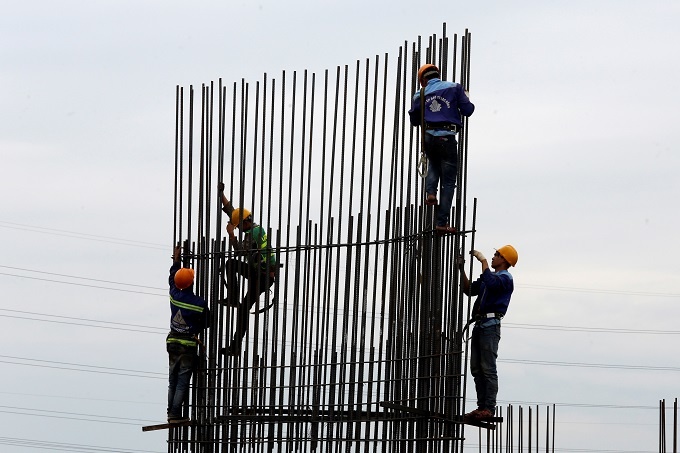
    Prices of construction steel have dropped by VND200,000 (US$8.50) per ton, the 10th decline in a row, to VND14.5 million, the lowest rate in the last two months.

    Companies like Hoa Phat, Viet Y, Viet Duc, and Viet Nhat have cur prices by a cumulative VND1.5 million per ton since early April.

    The Vietnam Steel Association attributed the lower prices to weak demand.

    However, the price reduction has helped boost production and demand in the last two months. Over 812,000 tons of construction steel were produced in May, up 14% from April, while 927,000 tons of the product were sold, up 26%, the highest growth rate since the beginning of this year, according to the association.

    Hoa Phat Group, which holds one-third of Vietnam’s construction steel market share, said it sold 530,000 tons of steel of all kinds in May, up 16% against April. Specifically, it sold 284,000 tons of construction steel, up 33%.

    Steelmakers said they experienced hardship in the second half of last year, saw improved performance in the first quarter of this year, and would make profits in the second quarter.

    However, VNDirect Securities Corporation said steel demand would remain weak throughout 2023.

    Total sales of construction steel and galvanized steel are likely to decrease by 9.2% and 7% this year to 9.5 million tons and 3.9 million tons, respectively, it predicted.

  • Construction steel prices fall further

    Construction steel prices fall further

    The price of Vietnamese construction steel dropped to below VND17 million ($732) per ton, but contractors said this was still high.

    The Viet Duc Steel Company said it has lowered prices of steel bars and coils by VND300,000 per ton from July 1, while the Thai Nguyen Iron & Steel Joint Stock Corporation reduced the prices of steel coils by VND300,000 to around VND16.7 million per ton.

    The prices of a ton of steel coils produced by the Hoa Phat Group and the Vietnam-Italy Steel Joint Stock Company are VND300,000-600,000 lower than in June.

    The decline in prices of construction steel in the Vietnamese market over the past few weeks has been attributed to lower prices of steel billets in the world market.

    The most-traded steel rebar on the Shanghai Futures Exchange, for October delivery, closed down 2.9 percent at 5,014 yuan ($774.60) a ton.

    Another contributing factor is weaker demand for construction materials in some localities that have already entered the rainy season.

    However, many construction contractors said the prices of domestic steel products were still high, cutting deep into their profit, leaving them with smaller profits. Steel costs account for 10-30 percent of a construction project.

    Vietnam produced nearly 12 million tons of steel products of different kinds in the first five months of this year, a year-on-year rise of more than 38 percent while exporting nearly 2.8 million tons, up 80 percent.

    The country exported 1.1 million tons of steel to China in the five-month period, twice that of last year, according to the General Department of Vietnam Customs.

  • CapitaLand tops out Raffles City Chongqing

    CapitaLand tops out Raffles City Chongqing

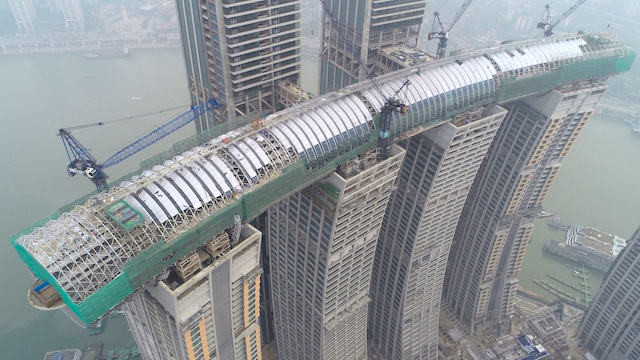
    CapitaLand has topped out the eighth and final skyscraper of Raffles City Chongqing, expecting to launch it in phases from the second half of this year. This follows the completion of the 200m-high bridge The Crystal which connects six of the towers. “The successful topping out of Raffles City Chongqing represents a new milestone in CapitaLand’s track record of building well-designed integrated spaces,” said Lucas Loh, president (China & investment management) of CapitaLand Group.

    “After six years of construction using state-of-the-art engineering technologies, we are proud to present in Raffles City Chongqing an iconic architectural form resembling a powerful sail surging forward on the historic Chaotianmen site.”

    Following Raffles City Chongqing’s structural completion, the group is now focusing on the interior fit-out works, including transplanting trees to enliven The Crystal sky bridge, which will feature the tallest observation deck across Western China.

    Retail offering

    The development’s five-storey shopping mall will house some 450 retailers of fashion, dining, lifestyle and entertainment.

    Anchor retail tenants committed to date include Chinese electric vehicle company Nio, which will open its largest showroom there, a 1500sqm space also serving as an “exclusive clubhouse” Nio owners.

    South Korean cinema chain CGV will open its 5600sqm flagship and popular bookstore Yanjiyou will open a regional flagship, featuring a lifestyle cafe and other creative and experiential offerings.

    Ole’ will operate a gourmet supermarket with a food hall serving a wide range of fresh produce and international specialties.

    In a tribute to the 3000-year-history of Chongqing, the mall will feature a dedicated zone to promote authentic Made-in-Chongqing products, such as local delicacies, handicrafts and souvenirs.

    Occupying 9.2ha, Raffles City Chongqing brings together a 235,000sqm shopping mall, 150,000sqm of Grade A office space, about 1400 residential apartments, Ascott Raffles City Chongqing serviced residence and InterContinental Raffles City Chongqing hotel.

  • Malaysia’s BLand earmarks RM1.05b property launches this year

    Malaysia’s BLand earmarks RM1.05b property launches this year

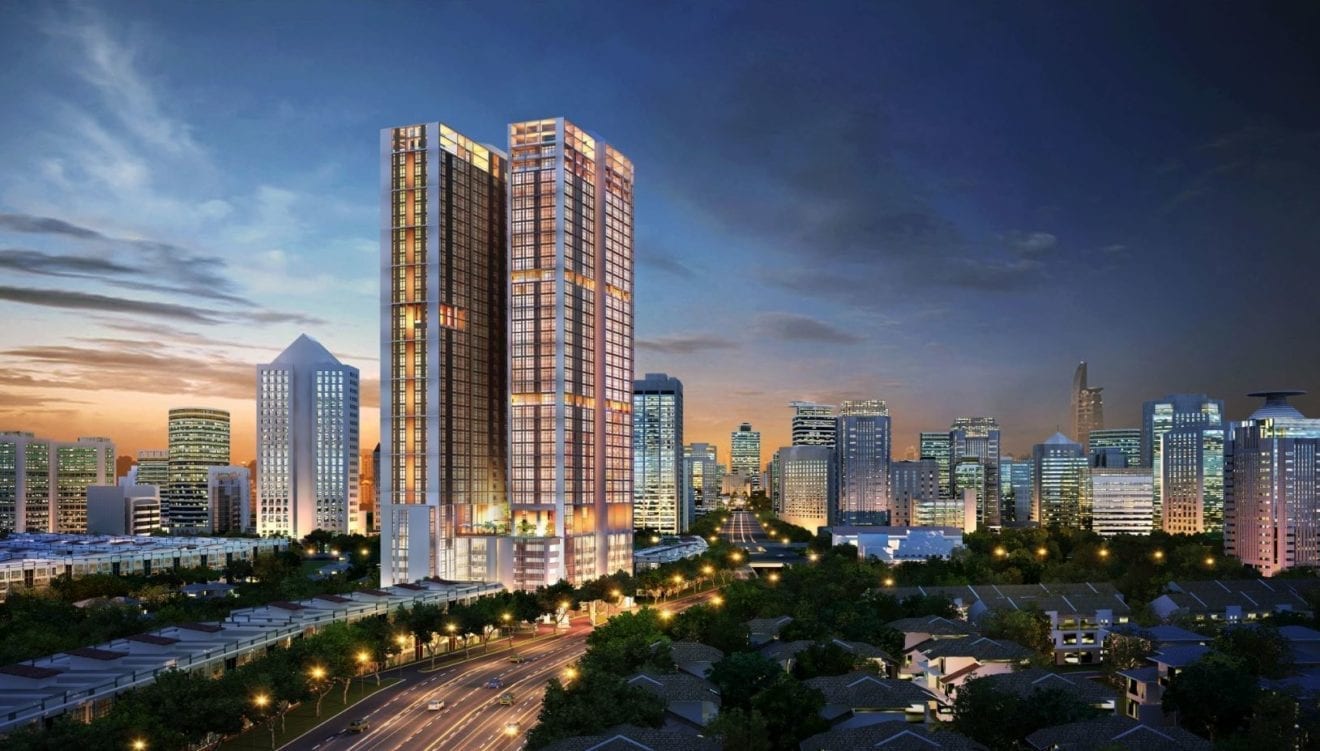
    Berjaya Land Bhd (BLand) plans to launch some RM1.05 billion worth of properties in 2019, mainly The Tropika in Bukit Jalil and Timur Bayu in Shah Alam, after a two-year hiatus. The group, via its subsidiary Berjaya Golf Resort Bhd, launched The Tropika over the weekend, a mixed development project with a gross development value (GDV) of RM720 million, comprising 868 residential units across four towers.

    BLand senior general manager of property marketing Tan Tee Ming expects The Tropika in Bukit Jalil to be the main revenue contributor for the group’s property segment this year.

    The Tropika is located on 6.5 acres of freehold land in Bukit Jalil. There are four different types of units, namely Type A, Type B, Type C and Type D measuring 732 sq ft, 974 sq ft, 1,318 sq ft and 1,251 sq ft respectively.

    Tan said units of the first tower is priced at RM725 psf and every subsequent tower will increase RM50 psf.

    “There are two market segments that we want to cater for in The Tropika. We thought of the buyers in mind and the first segment is young families. We also want to focus on investors. We know that there will be a rental market for the apartments that we build here,” Tan told the media.

    The Tropika is within close proximity to SJKC Lai Meng, International Medical University and Asia Pacific University, as well as the Bukit Jalil Complex, the Bukit Jalil Recreational Park and the Bukit Jalil Gold & Country Resort.

    Surrounding the four residential towers of The Tropika is a 2.9-acre deck equipped with 68 types of facilities.

    The commercial space of the project features a 23,695 sq ft grocer along with a two-storey dual frontage office lots ranging from 3,316 sq ft to 3,814 sq ft and retail space ranging from 752 sq ft to 1,677 sq ft.

    Completion of the commercial component will take two years while the residential towers will take four years.

    Tan said BLand is also planning to develop the 12-acre land next to The Tropika, where the Berjaya Property Gallery sits on, into a 1,500-unit residential project with managed healthcare.

    Meanwhile, he said the Timur Bayu development in Shah Alam has a GDV of RM330 million, consisting of high-rise and low-rise residential units. It is expected to launch the project in the third quarter this year.

  • Vietnam’s Deputy PM wants Long Thanh airport construction to begin next year

    Vietnam’s Deputy PM wants Long Thanh airport construction to begin next year

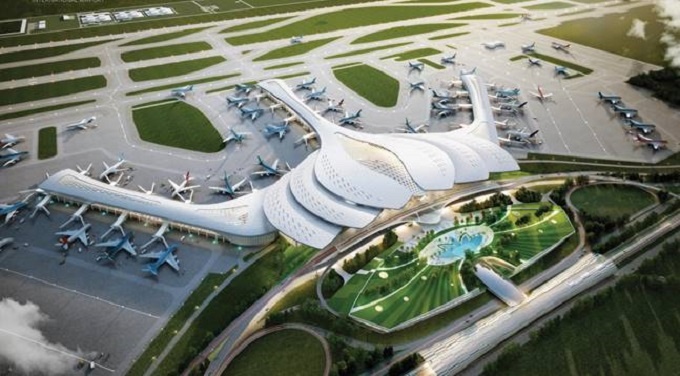
    Construction of Long Thanh International Airport should begin next year with private funding prioritized, Deputy PM Trinh Dinh Dung has said. It has reached the highest level of priority since Saigon’s Tan Son Nhat has become overloaded, he said at a recent meeting. The deputy prime minister wanted the giant new airport in Dong Nai Province near HCMC to become an aviation hub for Southeast Asia.

    “If we get companies with deep pockets into the project, costs would surely be lower than using public funds or loans.”

    The Airports Corporation of Vietnam (ACV) recently proposed it should be the main investor.

    The ACV, which operates 21 airports in the country, said it could bring in the $1-1.5 billion needed for the first phase of the airport.

    It is currently working with the Ministry of Transport and Dong Nai authorities to acquire 1,800 hectares of land for the first phase.

    The ministry reported at the meeting that the consultancy consortium of the airport is now completing the preliminary design, which would be submitted next April.

    The ministry has instructed the consortium, JFV, to complete an environmental impact report by next month.

    JFV, comprising three Japanese, one French and two Vietnamese companies, will also need to submit a feasibility report for the airport by June.

    The Long Thanh International Airport, to be built in three phases over three decades, will become Vietnam’s largest airport.

    The first part is scheduled for completion in 2025 with a capacity of 25 million passengers a year. The next two phases will run from 2030 to 2035 and from 2040 to 2050.

    The total cost is estimated at $16 billion. Experts have warned that the cost could double every five years in case of delays.

    Once completed, the airport will have an annual capacity of 100 million passengers and five million tons of cargo.

    The tourism surge in Vietnam in recent years has resulted in a demand for upgrades to existing airports and construction of new ones.

    The country received 12.5 million air passengers last year, up 14.4 percent from 2017, according to the General Statistics Office.

  • World’s first digital mall launched in India by Digital Mall of Asia

    World’s first digital mall launched in India by Digital Mall of Asia

    In a revolutionary development that could potentially redefine the global retail and e-commerce industries, Digital Mall of Asia (DMA), a first-of-its-kind digital e-commerce platform merging the real estate and the digital spaces, has announced the launch of its Noida mall. The launch took place at the company’s registered office in the Film City, Noida, setting an unprecedented example of how online portals and brick-and-mortar retailers can transcend the digital-physical divide to optimize their consumer outreach and revenue generation.

    An initiative by Yokeasia Malls Pvt. Ltd., DMA is a disruptive innovation by an Indian organization recreating the experience of a physical mall in the digital space. In an industry where most of the key names are being run or backed by foreign players, this unique and disruptively innovative initiative by Yokeasia Malls has the potential to put the novelties of Digital India on the world map.

    The Need

    The launch of DMA Noida addresses the challenges that retailers often face and empowers them to maximize their business footprint with innovative digital offerings and an unmatched value proposition. DMA operates on a zero commission model; retailers at DMA don’t have to pay anything apart from the rent, a major revolution in a space where all the major E-commerce players charge somewhere between 5-35 percent of the revenue. Moreover, the organization will provide an immediate settlement of all payments received, ensuring complete transparency and reliability. It is also working towards completely eradicating the issue of the sale of counterfeit or fake merchandise. These unique features, apart from its focus on digital innovation, makes DMA a powerful and pioneering presence in the e-commerce space, both in India and on a global level.

    The Solution

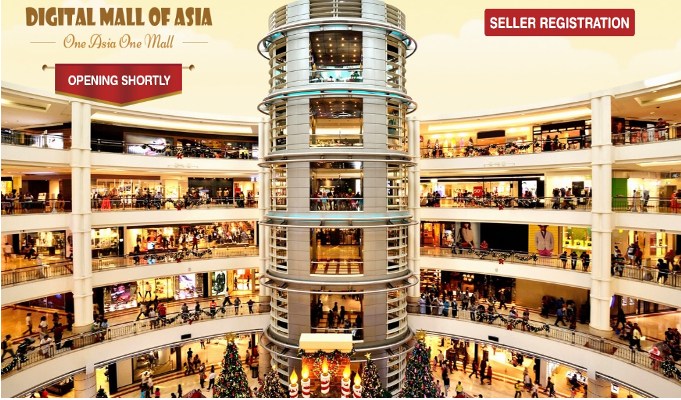
    Going beyond the concept of a typical e-commerce portal, DMA’s Noida mall will have 11 towers with 10 floors each, adding up to a total of more than 5,000 shops and an available inventory currently worth approximately Rs 500 crore. The mall will incorporate visual and sensory elements to offer an immersive, stimulating environment and will have dedicated towers for different categories such as men, women, kids, electronics, home and kitchen, education, financial services, food court, hypermarket, digiplex, and online nightclub. Fundamentally, DMA Noida has all the elements that make up a physical mall, albeit virtually.

    The Value Addition

    By creating a new ‘digital asset’ class providing attractive returns, DMA also envisions to transform the general perception towards the term ‘investment’ while ensuring security, profit, and convenience for investors. The shops in the Noida mall are available for both sale (to investors) and rental (to retailers), whereas the shops in the rest of the 20 cities are available only to rent at present.

    Commenting on the launch and the idea behind, Rishabh Mehra, Managing Director and CEO – Digital Mall of Asia, remarked, “We, at Digital Mall of Asia, are beyond ecstatic to launch our Noida mall and we are certain of its potential to bring about a revolution in the digital and retail space worldwide. This project is aimed at serving many purposes, from an industry-wide transformation to retailer empowerment through our zero-commission model. But most importantly, DMA is our effort against data colonization. I wholeheartedly agree with Mr Mukesh Ambani’s stance on how India’s data must be owned by Indians, and not controlled by global corporations. In this era of data-driven revolution, we hope that DMA’s disruptive innovation sets an example for our contemporaries to follow through and bring the ownership of Indian data back to where it belongs – in our own hands.”

    The launch in Noida also marks DMA’s first step towards a pan-India launch in 20 cities including New Delhi, Mumbai, Bengaluru, Pune, Chandigarh, Jaipur, Lucknow, Coimbatore etc. After a pan-India expansion, DMA plans to expand its operations across the Asian market and has already begun the process of seller registration in China, Japan, South Korea, Malaysia, Thailand, Indonesia, and Singapore.

  • Vietnamese firm seeks main investor status in Long Thanh airport

    Vietnamese firm seeks main investor status in Long Thanh airport

    The Airports Corporation of Vietnam (ACV) desires to be the main investor in the Long Thanh International Airport. ACV, which operates 21 airports in the country, has proposed that it contributes more than a quarter of the $5.4 billion needed to build the new Long Thanh International Airport. Lai Xuan Thanh, chairman of ACV, said that the corporation is ready to contribute $1-1.5 billion needed for the first phase of the mega airport to be built in Dong Nai Province, neighboring HCMC.

    In a proposal to the Ministry of Transport, ACV has said that its initial contribution will be used for major components of the airport including the terminal, runways, parking lots and cargo areas, worth a total of $3.77 billion, according to the Vietnamese government’s website.

    The airport operator is currently working with the Ministry of Transport and Dong Nai authorities on acquiring about 1,800 hectares for the first phase of the airport.

    Most of the targeted area is now covered by plantations belonging to the Dong Nai Rubber Corporation where 200 families reside.

    The Ministry of Transport has asked the consultancy consortium of the airport, JFV, to finish an environmental impact report next month.

    The consortium, comprising of three Japanese, one French and two Vietnamese companies, will also need to submit the feasibility report for the airport by June.

    In turn, the ministry “will submit the feasibility report to the National Assembly in October. If it is approved, bidding will start in 2020 and construction in 2021,” Transport Minister Nguyen Van The told local media recently.

    The Long Thanh International Airport, to be built in three phases over three decades, is set to become Vietnam’s largest airport.

    The first part is scheduled for completion in 2025, when the new airport will be able to handle 25 million passengers a year. The next two phases will run from 2030 to 2035 and from 2040 to 2050.

    Experts have previously warned that the construction cost of the airport could double every five years.

    Lying 40 kilometers east of HCMC, the airport is expected to take up the overflow from the largest existing airport in the country, Tan Son Nhat International Airport.

    Once completed, Long Thanh International Airport will have an annual capacity of 100 million passengers and five million tons of cargo.

    The tourism surge of recent years in Vietnam has resulted in demands for an upgrade of existing airports and construction of new ones.

    The country welcomed 12.5 million air passengers last year, up 14.4 percent from 2017, according to the General Statistics Office.

  • Vietnam’s largest airport set for $496 million expansion

    Vietnam’s largest airport set for $496 million expansion

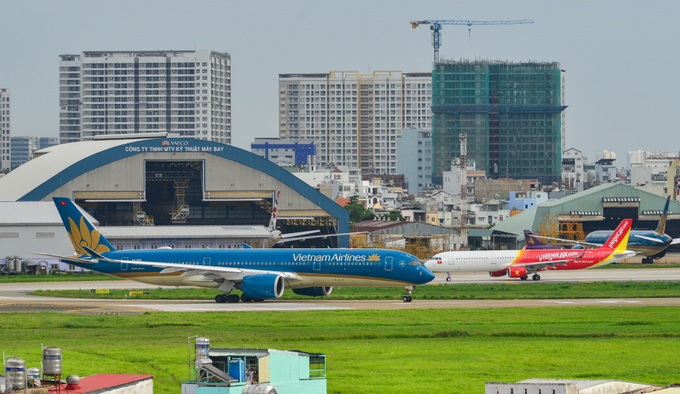
    The Tan Son Nhat Airport could get a third terminal and other facilities at the cost of over $496 million. The Airports Corporation of Vietnam (ACV), which manages and operates civil airports in the country, has submitted to the Ministry of Transport a pre-feasibility report on the construction of a third terminal (T3) at HCMC-based Tan Son Nhat International Airport to reduce overload.

    T3 will be designed to have a capacity of 20 million passengers per year, with total floor area of about 100,000 square meters. ACV proposes to construct in tandem an additional airport apron, a two-lane overhead path, a 5-lane viaduct in front of the terminal and a multi-storey car park. The total cost is estimated at over VND11.43 trillion ($496.18 million).

    The completion of feasibility reports and selection of construction blueprints is set to be finished in February 2020.

    Once T3’s design has been approved, contractors will be chosen via a tendering process so that construction starts in the third quarter of 2020 and can be completed in the second quarter of 2022.

    Because the construction area is located on the Defense Ministry’s land, ACV has suggested allowing a temporary handover of the site in Q1 next year for construction along with completion of necessary legal procedures.

    There are also plans to expand existing terminals T1 and T2 of the Tan Son Nhat airport, raising their combined capacity to 30 million passengers per year.

    The airport currently handles 36 million passengers per year, which is way above its designed capacity of 25 million.

    The Transport Ministry has hired French consulting firm ADPi to work on the plan alongside local firms. The plan proposed by ADPi was approved by the Prime Minister last March and it formed the basis for the new, detailed version.

    ACV has also proposed to the Ministry of Transport that it be assigned as investor for the construction of essential components for the proposed Long Thanh International Airport, including passenger terminal, flying zone (runway, taxiway, apron), and refueling systems.

    ACV chairman Lai Xuan Thanh said that the company is willing to spend between $1-1.5 billion for constructing the first phase of the proposed airport, which is estimated to cost $5.4 billion.

    The Long Thanh Airport, to be built in three phases over three decades, was recently listed by CNN Travel as one of the world’s 16 most exciting airport projects.

    The first phase is scheduled for completion in 2025 when it will be able to handle 25 million passengers annually. The next two phases will be built in 2030-2035 and from 2040-2050.

    The new airport would have an annual capacity of 100 million passengers and five million tons of cargo when completed.

    ACV has announced that in its 2019 plan, the company will spend more than VND10 trillion ($432.71 million) on upgrading and expanding several airports, including Cat Bi in northern Hai Phong City, Vinh in central Nghe An Province, Phu Cat in central Binh Dinh Province, and Noi Bai in Hanoi.

    Most of these upgrades are expected to be completed by the third quarter of 2019.

  • Malaysian office space to remain vibrant despite influx of new supply

    Malaysian office space to remain vibrant despite influx of new supply

    The Klang Valley office market is expected to remain vibrant this year, despite the influx of new buildings which is expected to affect occupancy rates, said Knight Frank Malaysia. “Due to the influx of new buildings, particularly in TRX, occupancy rate in Kuala Lumpur city is expected to decline marginally. However, rental rates will continue to hold steady as newer buildings tend to command higher rental rates,” it said in its Real Estate Highlights 2nd Half 2018 report.

    The report highlighted the trend of co-working and shared services as a sweet spot in the challenging office market environment.

    Labelled “space as a service”, the rising popularity of this market segment is demand driven by freelancers, start-ups and small and medium sized entrepreneurs. Knight Frank expects to see active take-up by co-working, shared services and IT related industries this year.

    “Moving into 2019, occupancies in selected sub-office office markets are expected to be under pressure due to heightened competition from impending and existing office stock while rentals will continue to hold steady as newer buildings tend to command higher rates.

    “We continue to observe active enquiries and leasing activities in the co-working and IT related segments. Also, an increasing number of older buildings are looking into repositioning and refurbishment to meet current occupier needs,” said Knight Frank Malaysia executive director of corporate services Teh Young Khean.

    Dated but well located office buildings such as Menara Weld, Menara Standard Chartered, Menara Maxis and Menara Milenium will reportedly be undergoing repositioning/upgrading works to improve their market competitiveness in terms of rental and occupancy levels.

    Knight Frank noted that the new government’s concerted efforts to implement numerous regulatory reforms will augur well for the business operating environment and this is expected to be positive for the country’s economic and property market performance over the longer term.

    Looking back at 2H2018, the cumulative supply of purpose-built office space in Kuala Lumpur and Selangor stood at 103.17 million sq ft following the completion of six buildings with a combined space of 1.84 million sq ft.

    In 1H2019, office buildings slated for completion include The Exchange 106, Menara Prudential, Menara Star 2, 1Powerhouse and Symphony Square.

    Overall occupancy rate for Kuala Lumpur city was about 78.7% in 2H2018 compared with 79% in 1H2018. The overall occupancy rate for decentralised office locations in Kuala Lumpur fringe fell to 82.2% from 83.8% during the same period.

    In Selangor, overall occupancy was slightly lower at 78.3% in 2H2018 compared with 79.2% in 1H2018.

    The average rentals in Kuala Lumpur fringe and Selangor rose marginally in 2H2018 to RM5.75 psf and RM4.22 psf respectively compared with RM5.72 psf and RM4.20 psf respectively in 1H2018.

    However, average rental in Kuala Lumpur city remained flat at RM7.15 psf as owners and landlords of newer office buildings offered competitive rental and attractive tenancy terms to improve take-up.

  • Look to Singapore, Sarawak for construction jobs, says HLIB

    Look to Singapore, Sarawak for construction jobs, says HLIB

    Contractors should look to neighbouring Singapore and Sarawak for jobs, as a slowdown in award of contracts is expected in 2019, according to Hong Leong Investment Bank (HLIB). The research house said in a note that contract flows are expected to slowdown on the back of slight year-on-year (y-o-y) decline of 0.4% in development expenditure to RM54.7 billion.

    For the cumulative period of 12 months, domestic and foreign contract awards amounted to RM18.3 billion and RM406 million, representing a y-o-y decrease of 37% and 85% respectively. Contract flows continue to slow down after a brief rebound in Q3 18 as the government re-prioritised major infrastructure projects.

    HLIB said foreign contracts (piling works) from Singapore amounted to RM148 million in Q4 18, which is an indication that civil infrastructure projects remain robust in Singapore. HLIB expect more domestic contractors to bid for foreign jobs especially in Singapore given its geographical proximity and the continued slowdown in the domestic construction landscape.

    It expects contractors under its coverage such as Gamuda, Kimlun and Sunway Construction to compete for jobs there.

    “We expect smallish basic infrastructure projects such as road upgrading, hospital, water, sewerage and rural area development projects will be rolled out by government this year which we believe is insufficient to spark any enthusiasm back towards the sector. However, we do not discount potential events such as award of Phase 2 of Klang Valley Double Track project (RM5 billion) and news flow on ECRL (possible revival) and Pan Borneo Sabah could alleviate the pessimistic sentiment towards the sector,” it added.

    While the job flows in Peninsular Malaysia looks lacklustre following the change in government, Sarawak appears to have prospective jobs offers.

    “We understand that industry players are aiming for jobs in Sarawak as its chief minister mentioned emphasis will be put on state water and rural road projects following the decision to shelve Kuching LRT project,” it said.

    Funding for those projects is expected to come from the Sarawak state reserve of RM31 billion which is likely to insulate the projects from risk of cuts in federal government spending. The call for bids for the Sarawak Coastal Road and Second Trunk Road which has an estimated combined value of RM11 billion are expected in the near term.

    In that light, HLIB maintains a “neutral” call on the construction sector post changes in federal government and the scrapping of mega rail projects.

    “The domestic construction industry landscape is expected to remain challenging and we do not expect a significant improvement in the near term. The 37% decline in domestic contract awards in 2018 supports our view,” it added.

    Nonetheless, high orderbook levels (average cover ratio of 4.5 times) following the robust job flows in the past two years coupled with rock bottom valuation (0.5 times price-to-book ratio) should cushion further downside amid subdued near term industry prospects.

  • Retailers, mall operators embrace high technology

    Retailers, mall operators embrace high technology

    Malaysian retailers and mall operators are jumping on the technology bandwagon, adopting technologies such as shopper tracking systems and facial recognition cameras, using data analytics to capture important shopper information. Sunway Velocity Mall general manager centre management Danny Lee said the mall completed the installation of its shopper tracking system in early December that identifies a unique ID of each mobile phone carried by shoppers, and is testing the system now.

    “It enables us to know how many times a person comes to the mall and where they go. At the same time it tells us the number of shoppers at the mall and is able to give us an accurate count of how many people visit the mall every week or month. This is phase one.

    “This will then later link into us getting data of who they are so that we can use that as an intelligence system to know our customers and to push promotion to them. For example, we’d be able to detect automatically if it’s your birthday today when you visit the mall, and if there’s a special promotion in certain outlets during your birthday, you’d get certain discounts. We’ll be working on that in phase two,” Lee said recently.

    “How the system works is that it will detect shoppers who carry smartphones. The shoppers’ travel history, traffic pattern will be recorded. Insights of shopper traffic flow in the mall, visit frequency (new traffic or returning traffic) and dwell time can be viewed on the online portal. There is also provision for integration with mobile application (to identify shopper profile to offer more personalised engagement), as well as additional reports based on user requirement.”

    Adding that it has a formula to include children and discount double counting, Lee said Sunway Pyramid had rolled out the shopper tracking system first, followed by Sunway Velocity.

    “It lets us know whether our campaign for a period of time is effective or not compared to other campaigns. In this mall (Sunway Velocity), we have 55-56 sensors throughout the mall. So it covers different zones and it can track where a person goes to, from one zone to another, and capture how many people are there. At what time, how many people are there in this atrium… we’re able to generate reports on that,” explained Lee.

    He revealed that the set-up costs for this system range from RM120,000 to RM150,000, with recurring costs of RM10,000 every month per mall.

    “Some malls have (this system) but not many have this in the Klang Valley, compared with malls in Singapore that have a lot more.”

    Meanwhile, MRCA Academy, the training arm of the Malaysia Retail Chain Association (MRCA), is promoting awareness on technology adoption, especially in the areas of facial recognition and data analytics, to help MRCA members be more efficient in running their retail businesses.

    MRCA Academy deputy chancellor Stan Singh-Jit, who is also National ICT Association of Malaysia councillor, said technology will be a catalyst that will help retailers grow their business and that it is a tool that retailers should take advantage of.

    Stan is the founder and principal consultant of Ironhorse Asia Sdn Bhd, which provides solutions for in-store point-of-sale requirement, head office merchandising needs, warehousing, supply chain management, web-store, internet business, social media consultation, maximising return on investment via customer analytics, harnessing on merchandising analytics, among others.

    He said while the recording of images is illegal due to the Personal Data Protection Act, there is another facial recognition technology that captures the identity of shoppers in a different way.

    “It tails the person… it tells you whether the shopper is a male or a female and gives you the person’s age group. If I have data today that tells me the people that come to my store, their age and gender groups, I’m able to do more of what I’m selling. This is an important factor that is missing in the retail scene.

    “Facial recognition can tell whether the person is a staff or supplier. If a customer walks past your store but doesn’t walk in, it can also tell you how many people didn’t come into your store. It’s a way to find out why people don’t come in. And if my store is here but you spend more time looking at the merchandise there, that tells me a story,” explained Stan.

    He said this method differs from a footfall counter machine, which counts every walk-in, walk-out and hence the latter may not produce accurate numbers.

    He disclosed that since this facial recognition technology is new, there are five proofs of concept for such technology in the Klang Valley at the moment, of which one is for a department store. He said that a camera may cost some RM130. A department store may have three to four floors and many cameras on each floor.

    “All good things about buying begins at the store and there are many touchpoints in the store. As a customer walks into the store, how do you capture those points… how do you prioritise the value…. we’re helping MRCA members to understand the technology and how they can use it,” he said.

  • New Lego land in China

    New Lego land in China

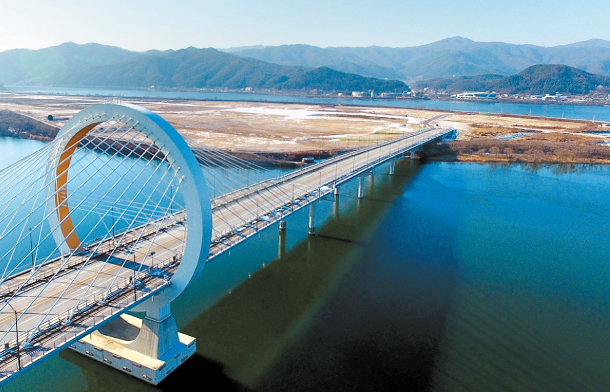
    The site where a Legoland will be built in Chuncheon, Gangwon, on Friday. The development of the Legoland, about the same size as the Legoland in Johor Bahru, Malaysia, has been approved by the Gangwon government. British amusement park developer Merlin is in charge.

  • Semen Indonesia Snaps Up LafargeHolcim Unit to Bolster Market Lead

    Semen Indonesia Snaps Up LafargeHolcim Unit to Bolster Market Lead

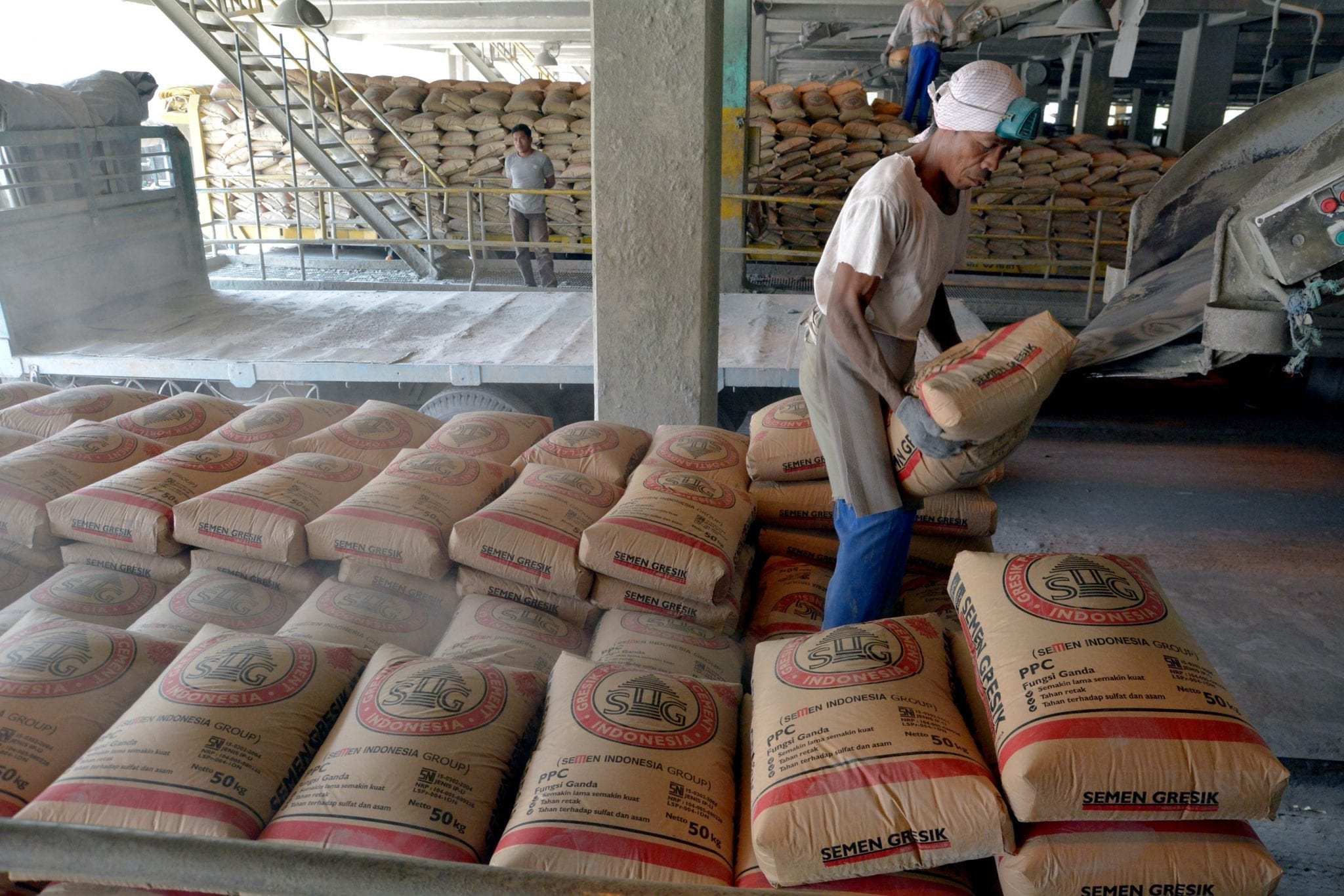
    Cement maker Semen Indonesia is buying the local unit of Swiss rival LafargeHolcim for around $917 million, as it seeks to extend its dominant position in Southeast Asia’s largest market. Semen Indonesia said in a statement it had signed a deal to acquire LafargeHolcim’s 80.6 percent stake in Holcim Indonesia, which is the third-biggest cement producer in the country.

    A fully owned subsidiary of the state firm would launch a mandatory offer for the remaining shares owned by public shareholders, it said.

    “In the competitive environment of the national cement industry, the combination between Semen Indonesia and Holcim will be stronger and larger,” Semen Indonesia president director Hendi Prio Santoso said.

    The company said the acquisition will boost its total cement capacity to 53 metric tons per annum. Analysts say this will give the combined entity a total capacity share of about 50 percent, in a market that has 15 companies.

    Sources familiar with the matter said Malaysian infrastructure company YTL Corp and privately owned Chinese firm Hongshi Cement had also been among the final bidders but the strategic fit with Semen Indonesia helped LafargeHolcim’s Indonesian unit to win the auction.

    The initial round of the auction drew interest from about a dozen companies, including from Japan, the Philippines and other countries, the sources said.

    YTL and Hongshi declined to comment.

    A spokeswoman for LafargeHolcim said it had received strong interest from bidders for its Indonesian business but declined to give details on the parties involved.

    Though President Joko “Jokowi” Widodo’s infrastructure push has fueled a boom in the building of airports, roads and housing projects, an aggressive expansion in the industry and entry of newer players such as Anhui Conch has created excess capacity and a price war in the last few years, analysts say.

    Semen Indonesia has secured financing from local, regional and international banks such as BNP Paribas, said the sources, who declined to be named as complete details of the deal have not been announced.

    “This secures Semen Indonesia’s position as a market leader for many years. Cement prices are improving and there is significantly less new capacity coming,” one source said.

    In an August report on potential consolidation in the Indonesian cement industry, Deutsche Bank analysts said: “A bull-case scenario would be that domestic consolidation reduces the number of players competing in the overcapacity market, supporting higher ASP [average selling prices] and a profitability recovery.”

    “A bear-case scenario would be a prolonged condition in which the industry loses its pricing power due to the new players’ strategy to overtake market share,” the report said.

    Semen Indonesia said the acquisition would give it significantly larger capacity and broader product portfolio and geographical footprint, while LafargeHolcim, the world’s largest cement maker, said in a separate statement that it was selling the business as it reviews its portfolio to improve its financial strength.

    LafargeHolcim’s local unit has four cement plants with a capacity of 14.8 metric tons per annum and 30 ready-mix plants, Semen Indonesia said.

    It was advised by BNP Paribas, while LafargeHolcim was advised by Citigroup.