Retail News CRM

Tag: consumer behaviour

  • Keeping Up with the Centennials:  Buy Social, Pay Offline

    Keeping Up with the Centennials: Buy Social, Pay Offline

    Dentsu Aegis Network, in collaboration with Econsultancy, today launched Here Comes the Centennial: Southeast Asia’s New Generation of Shoppers, a white paper investigating the online buying behaviour of centennials – consumers of the future – in the region. Launched on the sidelines of FUTR Asia 2018 Summit, the study finds that, despite the surge in online shopping, cash is still king for centennials in the digital age, and shopping on social media platforms is the new norm.

    Despite being digital natives, the concept of a cashless society has yet to fully take off for centennials in six countries surveyed, as 56% of survey respondents still prefer paying cash on delivery for their purchases. The next generation of online shoppers also enjoy having a variety of payment methods, as 43% of centennials will readily abandon their purchases because their preferred payment option is not available.

    Having grown up in the smartphone era, centennials are also using social media platforms differently compared to previous generations in their buying journey. Social media applications (47%) such as Facebook and Instagram are the second most popular place for centennials to shop in. Close to half of the survey respondents (49%) also turn to social media when they are researching for more information on their future purchases, rather than asking friends (45%) and family (27%).

    Nick Waters, CEO of Dentsu Aegis Network Asia Pacific, said: “All eyes are on Southeast Asia as the world’s next consumer powerhouse, with its young population and increasing purchasing power. Close to 280 million centennials – tomorrow’s consumers – call this region home. Enabled more than ever before by technology and data, we are seeing incredible potential for growth in the region and our latest research ‘Here Comes the Centennial: Southeast Asia’s New Generation of Shoppers’, helps us understand what is important for these consumers of the future and how businesses can adapt and position effectively for Southeast Asia’s future retail landscape.”

    Brand name and image is no longer a priority of centennials, making end-to-end brand experience more important than ever for retailers. Only 11% cite having a prestigious or famous brand as one of their top three attributes when choosing where to shop. This means retailers need to work harder to get their brand experience perfect in order to capture the attention of tomorrow’s consumers.

    Who are the Centennials? Why are they important?

    Centennials – also known as Generation Z – are those who are born between now and 1995. Accounting for about 277 million of Southeast Asia’s population, 50% of centennials spend more than USD30 a month on online shopping, while 9% spend over USD100 monthly. The size of this new generation alone makes them attractive for retailers, but the behaviours of this group make them lucrative in terms of its online shopping and ecommerce potential.

    This new generation will also soon be one of the world’s most demanding consumers who have high standards and expectations of the online shopping experience. Technology should be an integral part of this experience, as 82% of centennials are excited about futuristic shopping technology such as virtual reality. Personalisation is key as well, as 76% of respondents are happy to share data with websites, if it makes more relevant recommendations.

    Jefrey Gomez, Managing Director, Econsultancy Asia Pacific, said: “Centennials are coming of age in an era when high speed internet is always available, and they expect technology and brand experiences that are fast, responsive, and seamless. The survey showed that 86% of centennials will not use an app or website that takes too long to load and 82% will not use an app or website that is difficult to navigate. This means that retailers can therefore no longer just provide well-designed stores or rely solely on brand campaigns to drive sales. Instead they need to focus on the utility of their online offering to make the purchasing journey easy to complete.”

  • What research says about Indonesian mother’s buying behaviour?

    What research says about Indonesian mother’s buying behaviour?

    As Southeast Asia’s largest nation continues to grow in numbers with 2.44 births on average per female, both Indonesian-bred and global retail companies are allocating massive budgets to target the next generation of shoppers by understanding the mothers and soon to be mothers of today.

    ecommerceIQ, the leading market research firm dedicated to ecommerce insights and data in Southeast Asia, shares findings from its report: “Digital Mom and Baby Shopper Profile in Indonesia” with a select group of brands on the preferences, household income, age, average basket size, etc. of its female shoppers across the archipelago.

    The conference was held on October 11th, 2018 in Jakarta and welcomed guest speaker,  Wenny Damayanti,  Head of Marketing Baby Care PT Softex Indonesia, and Agni Pratistha, Indonesian actress, former Miss Indonesia, and a mom of two.

    The Top Online Destination preferred by Indonesian Women

    The research reveals 66% of Indonesian shoppers have purchased from the Mom & Baby category online due to the practicality of ecommerce such as convenience and variety of brands. Lesser time consumption and convenience have been cited by the respondents as key drivers.

    45% of Indonesian females chose Shopee Indonesia as the top online destination for ecommerce purchases due to a wide product selection. Lazada comes in second (34%) and Tokopedia and social media trail behind at 7% and 5%, respectively.

    Originated as a Consumer-to-Consumer (C2C) ecommerce platform, Shopee has the advantage of a wide product selection. The Mom & Baby category is also Shopee’s most popular category in Indonesia as reflected through its recent campaign known as the Mom & Baby Super Deal campaign that was organized as a form of Shopee’s gratitude for the trust given by mothers in Indonesia.

    “Indonesia is filled with more than 260 million people and has the fourth highest birth rate among all Southeast Asian nations.” commented Sheji Ho, aCommerce Group Chief Marketing Officer.

    “There is a massive opportunity for brands to deliver a satisfying and more importantly, trustworthy digital experience. Shoppers today have more access to information online to help them make informed purchasing decisions, it’s not enough to have a picture of your diapers – What are others saying about your product? Which influencer is backing your product? This all matters.”

    “Because more women are joining the workforce while also being full-time mothers, the demographic highly values convenience. Ecommerce players just need to deliver it to them.”

    Other key takeaways from the survey:

    • 64% of new mothers are shopping online;
    • 57% of women are buying goods from the Mom & Baby category once a month, spending less than 500,000 IDR (USD 33.50) per purchase online;
    • The largest spending from females online? is allocated to Baby Clothing (51%) and Baby Gear (25.5%)
    • A wide variety of products (34.4%) is crucial to attracting more shoppers as they
      likely have not formed a strong affinity for a brand yet and open to testing products;
    • 64% of Indonesian mothers start their online shopping journey by going directly to e-marketplaces, but Google and Facebook / Instagram remain powerful tools for product discovery.

    Download the full report here.

    The Digital Mom and Baby Shopper Profile in Indonesia was a survey conducted by ecommerceIQ in February 2018 and collected a total of 1,144 responses from females in Indonesia.

  • Retailer Uses RFID, Social Media and Cameras to Track Shopper Behavior

    Retailer Uses RFID, Social Media and Cameras to Track Shopper Behavior

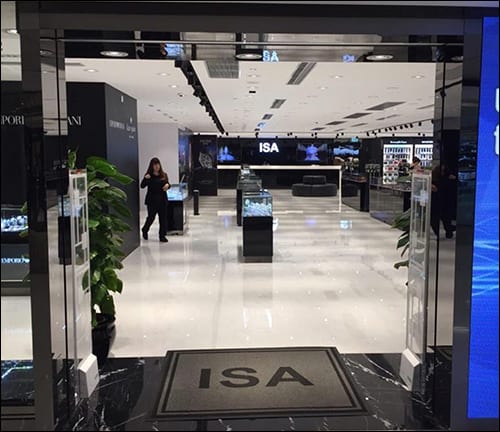
    ISA Fashion Boutique International Ltd., a seller of international luxury brands in Hong Kong, mainland China and Macau, has deployed an RFID-based inventory-management system provided by Hong Kong IT services company PCCW Solutions. The system enables the retailer to track the locations of products, engage with customers, learn their preferences and reduce labor costs based on inventory counts. The solution, known as Infinitum Retail, includes IP cameras as well as ultrahigh-frequency (UHF) RFID readers. As a result of the improved inventory management, the retailer says that it plans to deploy the system this year at all 11 of its stores. Alpha Solution Ltd. installed the technology.

    Traditionally, RFID has had limitations since it can track a tagged product, but not necessarily link that item with a particular customer, explains Jacky Ting, PCCW Solutions’ digital practice leader. By itself, RFID cannot enable a store to forward product information and promotions to shoppers. However, by linking RFID data to closed-circuit television (CCTV) camera images and social-media sites such as Facebook, a retailer can identify where shopper traffic is heaviest (using a camera-based heat map), understand how an individual responds to a product (by tracking the expressions on his or her face) and monitor comments that its customers make on social media (with their permission), using the store’s Wi-Fi network.

    The reader built into an ISA store’s EAS gate can capture the ID number of a customer’s RFID-enabled loyalty card, prompting the Infinitum Retail software to send promotional offers to that individual’s phone, based on his or her previous purchasing behavior.

    Infinitum Retail aims to overcome a variety of problems that stores face, says Wing Lee, PCCW Solutions’ senior VP, such as understanding which products interest customers, and then approaching them with relevant offers. ISA Boutique uses camera images only for tracking shoppers’ locations within its stores, Lee notes, while it could opt to use facial analytics in the future to identify each customer’s age, race, gender and response to products based on facial expressions.

    In 2012, ISA Fashion first installed an RFID system for counting inventory and tracking product locations at one of its stores with the help of Alpha Solution (see ISA Boutique Tracks Inventory, Shopper Behavior Via RFID). The system, which is still in use, employs tiny RFID labels attached to jewelry, as well as readers installed in display cabinets, to track when goods are on display and when they are removed from a cabinet. After Infinitum Retail was released in October 2015, the retailer began using the system to track all of its products, which also include clothing, leather goods, eyewear and watches, at three shops and one warehouse in Hong Kong, as well as a single shop in mainland China. The new solution includes the use of electronic article surveillance (EAS) hard tags for non-jewelry products.

    Infinitum Retail consists of RFID readers built into the EAS gate at the door, as well as a feature known as iR-Furniture—RFID interrogators built into shelves to read tags in real time. The system also includes readers installed at checkout terminals. In the warehouse, readers are used to identify when goods are received and then shipped to a store.

    At the warehouse, an EAS hard tag with a built-in EPC Gen 2 ultrahigh-frequency (UHF) RFID inlay is attached to each product other than jewelry. The inlay is read at the warehouse for inventory purposes, and the cloud-based hosted software is automatically updated to indicate, for instance, if a tagged item has been shipped, as well as to which store and when this occurred.

  • Japan shopper confidence fell in Might for second straight month

    Japan shopper confidence fell in Might for second straight month

    Shopper confidence worsened in Might for the second straight month amid rising costs of products comparable to meals, knowledge confirmed Tuesday, prompting the federal government to downgrade its evaluation.

    The seasonally adjusted index of sentiment amongst households made up of two or extra individuals fell zero.1 factors from April to 41.four, the Cupboard Workplace stated.

    The federal government downgraded its primary evaluation of the index, saying the tempo of a pickup in shopper confidence is “turning into average.” Final month, the federal government stated shopper confidence was “choosing up.”

    The survey polls shoppers on the financial outlook for the approaching six months. A studying under 50 suggests pessimists outnumber optimists.

    Of the 4 elements, these for employment circumstances and the timing of latest sturdy items purchases declined 1.four factors to 47.2 and zero.1 factors to 39.6, respectively.

    In the meantime, shoppers’ view of their livelihoods improved zero.four factors to 38.eight, whereas their evaluation of revenue progress rose zero.5 factors to 39.eight, based on the Cupboard Workplace.

    Within the reporting month, 87.four % of households stated they anticipate shopper costs to rise within the yr forward, down from 89.2 % within the earlier month, the survey confirmed.

    The newest survey was carried out as native media reported a rise in costs of on a regular basis gadgets corresponding to chocolate and liquor, in line with a authorities official. Common gasoline costs additionally rose in Might from the earlier month, the official stated.

    The Cupboard Workplace survey, carried out on Might 15, coated 5,712 households, with legitimate responses acquired from 5,498, or 65.5 %.

  • Blaming China’s anti-graft measures hides issues in retail methods

    With a inhabitants of over 1.36 billion and with over 160 cities with a inhabitants of over a million, the alternatives that China presents retailers with are monumental. Subsequently it’s regarded by many as a precedence market.

    During the last 24 months, a variety of the world’s most famous manufacturers have introduced that they’re experiencing a troublesome time in China and are both scaling again their operations or closing their China enterprise.

    So why are these retailers struggling when others proceed to develop a worthwhile enterprise? Within the report, Nobody stated that it might be straightforward: Find out how to crack the China Retail Market, CR Retail’s Managing Director James Rogers, analyses retailer’s methods and behavior, identifies the important thing causes behind these failures.

    “Numerous retailers regularly blame the anti-graft measures for the slow-down, nevertheless these are solely partly accountable” says Rogers. “We see the problems beginning lots earlier with the retailers failing to understand the complexities and challenges concerned with opening there.”

    In line with the report, there are 15 questions that have to be requested previous to getting into the market starting from figuring out one’s audience to figuring out whether or not the model will journey and, whether or not the buyer is definitely prepared.

    “When talking with retailers it’s astounding what number of new entrants haven’t considered a few of these points” notes Rogers. “They consider the parable that a retailer can simply open a retailer just like what they function in different markets and the shoppers will come flooding in. Typically this could not be farther from the reality.”

    There have been numerous examples of shops saying very aggressive enlargement plans however only a few truly obtain them. “When retailers announce their enlargement plans for the China market, it is rather shortly obvious how good an understanding they’ve of what lies forward.” says Rogers. “Retailers are sometimes drawn by the numbers and whereas the market is getting simpler to function in, the competitors stays fierce.”

    In 2014, China recorded on-line gross sales of USD 427 billion making it the most important on-line retail market on the planet. “No matter your on-line technique at house, if establishing your self in China, you can’t afford to disregard the e-commerce market. It’s a key pillar of China’s retail market.” provides Rogers.

    As with bodily bricks-and-mortar shops, China’s e-commerce market might be equally as difficult. One must firstly decide whether or not you’re to launch your personal native website or have your merchandise bought by way of a 3rd celebration platform. In that case, which one? How are you to speak with the buyer and draw them to the place your merchandise are being bought?

    “The methods during which a retailer engages with the Chinese language shopper are totally different. A social media presence is vital, nevertheless there isn’t any Fb or Twitter. Retailers subsequently have to familiarise themselves with the native platforms,” he continues.

    With China’s retail market nonetheless considered immature, Rogers advises that one thinks long-term. “The US retailers are notably good at this in comparison with their European counterparts. They respect how lengthy it has taken to construct a robust enterprise at house and are typically extra affected person. Whereas turning into spoilt for selection, the buyer continues to be studying. Rome wasn’t inbuilt a day and nor will a retailer’s China enterprise. It ought to be remembered nevertheless, establishing a profitable presence in China may even drive gross sales in different worldwide markets. Subsequently conceding defeat and retrenching must be a final resort.”

  • Consumer confidence dips in Q1: Nielsen

    Consumer confidence in the first quarter dipped one point from a quarter ago with sentiment about employment and personal finance both lowered, a latest study shows.

    The Chinese Consumer Confidence index stood at 106 in the first quarter this year, down from that of 111 points in the same period a year ago, Nielsen China said in a research report today.

    Despite dip in sentiment about employment and personal finance, the willingness to spend showed an overall increase of 2 points to 44 percent.

    “Chinese consumers’ willingness to spend is seeing a recovery especially in lower tier cities and the increasing disposable income, the low inflation level as well as the booming e-commerce development all suggest huge growth potential for consumer spending,” Oliver Rust, Managing Director of Nielsen China, said in a statement.

    Following a historic high of 118 points in the fourth quarter last year, consumer confidence index in first tier cities dropped five points to 113 points this quarter, and Nielsen suggested these are just normal fluctuations.

    The survey covers a total of 3,500 respondents in China. Consumer confidence levels above and below a baseline of 100 indicates degrees of optimism and pessimism, respectively.

    The immediate spending intention in the following 12-month period jumped 8 points to 50 percent among tier four cities’ consumers, as these smaller cities are leading the momentum of overall consumer goods growth in China.