Tag: consumer finance

  • Temasek Invests S$342M in India’s Godrej Capital

    Temasek Invests S$342M in India’s Godrej Capital

    Singapore state investor Temasek will invest 25 billion rupees (S$342 million) in Indian non-bank lender Godrej Capital through an affiliate, valuing the firm at up to 280 billion rupees.

    Parent company Godrej Industries will retain roughly 80 percent equity ownership in the credit business after the cash injection closes.

    How the Capital Works

    The transaction gives the credit unit fresh equity to underwrite consumer housing loans, property-backed borrowing, and operational funding across commercial hubs. Godrej Capital, launched in 2020, runs branches across more than 100 cities in India.

    Assets under management stood at 350 billion rupees as of October 31, 2026. Subsidiary companies write mortgages, secured loans against real estate assets, working capital lines, construction funding, and unsecured personal credit for merchants and households.

    Institutional Demand for Indian Credit

    Global investors want exposure to India’s retail lending spreads as prime commercial banks turn selective on mid-tier borrowers. Temasek already holds equity in ICICI Bank, India’s second-largest private lender by market value, giving the sovereign fund positions across both balance-sheet banking and shadow lending networks.

    Foreign funds are taking strategic blocks rather than public market paper. Fairfax Financial Holdings picked up a 60.7 percent stake in IDBI Bank earlier in 2026, while Bank of America formed a joint venture to take 49.9 percent of Jio Credit, the lending arm of Jio Financial Services.

    Lending Scale and Operating Risk

    Competition across top Indian urban centres is compressing loan margins. Established non-bank finance companies and digital payment apps compete for the same secured small-business borrowers, raising customer acquisition costs across branch networks.

    For Godrej Capital, real estate links provide a direct pipeline. Property buyers and commercial contractors working with the wider industrial conglomerate offer immediate loan volume, reducing marketing overheads that independent non-bank lenders carry.

    Building the Balance Sheet

    The fresh funds follow six years of retail footprint expansion from Godrej Industries as it built out its financial services division. The group previously relied on real estate development and consumer goods to drive operating cash flows before setting up dedicated lending subsidiaries.

    Group management is using the equity round to establish balance sheet strength ahead of a public market debut. Financial services represents a major long-term growth area of focus for our Group, and our ambition is to build Godrej Capital into a 1 trillion-rupee AUM franchise by 2031, said Pirojsha Godrej, chairman of Godrej Industries Group.

    Godrej Industries plans to list Godrej Capital on domestic stock exchanges within five years, setting up public filings as assets approach the 1 trillion rupee target.


  • Home Credit Rolls Out Installment Financing for Apple iPhone 18 in Philippines

    Home Credit Rolls Out Installment Financing for Apple iPhone 18 in Philippines

    Home Credit Philippines launched installment plans for Apple’s iPhone 18 Pro and Pro Max on October 2. Daily payments start from 137 pesos.

    The financing scheme covers terms up to 24 months with zero down payment and zero interest rates for eligible buyers. It applies across authorized retail partner networks.

    Terms for Flagship Handset Upgrades

    Pre-orders opened at 12:01 a.m. On October 2 through authorized Apple resellers and physical partner storefronts. General retail availability starts nationwide on October 16.

    Buyers can access the program directly in stores or secure loan pre-approvals through the lender’s mobile application on Google Play, App Store, and Huawei App Gallery. The campaign operates under Philippine trade permit FTEB-242751.

    “A new iPhone launch is always one of the most anticipated moments for Filipino consumers. For many, however, upgrading also comes with the important consideration of how the purchase fits into their monthly budget,” said Puneet Suneja, Chief Sales Officer of Home Credit Philippines.

    Shifting Premium Device Affordability

    Point-of-sale financing drives sales volume for premium smartphone distribution across Southeast Asian retail corridors. High retail ticket prices push middle-income shoppers toward micro-loans rather than cash purchases or traditional credit card lines.

    For independent electronics retailers, integrating instant non-bank credit lines protects footfall against carrier-contract bundles. Retailers avoid carrying customer credit risk on their own balance sheets. This captures store conversions during competitive product launch windows.

    Balance Sheet Exposure and Underwriting

    Extended 24-month zero-interest terms require strict portfolio underwriting to keep non-performing loan ratios stable across long repayment cycles. Financing uncollateralized hardware exposes non-bank lenders to depreciation risk if borrowers default early.

    Home Credit manages this exposure through credit scoring algorithms embedded in its mobile loan application. Regulatory oversight from the Securities and Exchange Commission and Bangko Sentral ng Pilipinas sets capital adequacy standards for the lender’s consumer credit portfolio.

    Retail Expansion Pipeline

    Consumer lenders across the archipelago continue targeting electronics retail partnerships to expand point-of-sale distribution. The October rollout establishes the financing structure ahead of fourth-quarter holiday spending across regional shopping centers.

    Partner store networks nationwide will handle direct unit distribution when customer handovers begin at 12:01 a.m. On October 16.

  • Japan Gold Bar Scam Losses Hit 8.13 Billion Yen in First Half of 2026

    Japan Gold Bar Scam Losses Hit 8.13 Billion Yen in First Half of 2026

    Scammers in Japan extracted 8.13 billion yen in physical gold bars from victims during the first six months of 2026. The six-month total already exceeds the 6.02 billion yen lost across the entire previous year.

    How Fraudsters Extract Physical Bullion

    Data from the National Police Agency shows two primary methods drove the surge in bullion-related theft. Fake police inquiries generated roughly 5.3 billion yen, or nearly two-thirds of the total losses. In these operations, callers tell victims that their bank accounts were implicated in criminal activity and instruct them to buy and deliver gold bars to accelerate official investigations.

    Social media investment schemes made up the second major channel. Victims bought gold bars after online solicitations promised structured investment returns, accounting for roughly 2 billion yen in lost assets during the first half.

    Shifting Tactics in Consumer Finance

    The pivot to physical bullion reflects tighter controls inside traditional banking rails. Japanese retail banks have added transaction monitoring, automated transfer limits, and stricter account screening over the past three years. Fraud syndicates bypass electronic freezes by steering victims to over-the-counter bullion dealers and delivery couriers instead.

    For precious metals retailers and pawn operators across Tokyo and Osaka, the surge places customer onboarding under immediate scrutiny. Store clerks face higher compliance burdens to identify distressed or coerced buyers before bullion leaves the counter, shifting retail risk from payment gateways directly onto storefront staff.

    Tracking the Surge Past 2025 Totals

    The sharp acceleration follows a full-year 2025 tally of 6.02 billion yen in gold bar scam losses across Japan. Rising domestic bullion prices and heightened consumer interest in gold as an inflation hedge have made physical bars easier for criminals to pitch as safe stores of value.

    Police departments across Japan are preparing updated guidance for precious metals dealers, focusing on point-of-sale interventions when first-time retail buyers make large cash or card transactions for delivery to third parties.

  • Vietnam Fintech MFast Raises US$6 Million to Fund Philippines Expansion

    Vietnam Fintech MFast Raises US$6 Million to Fund Philippines Expansion

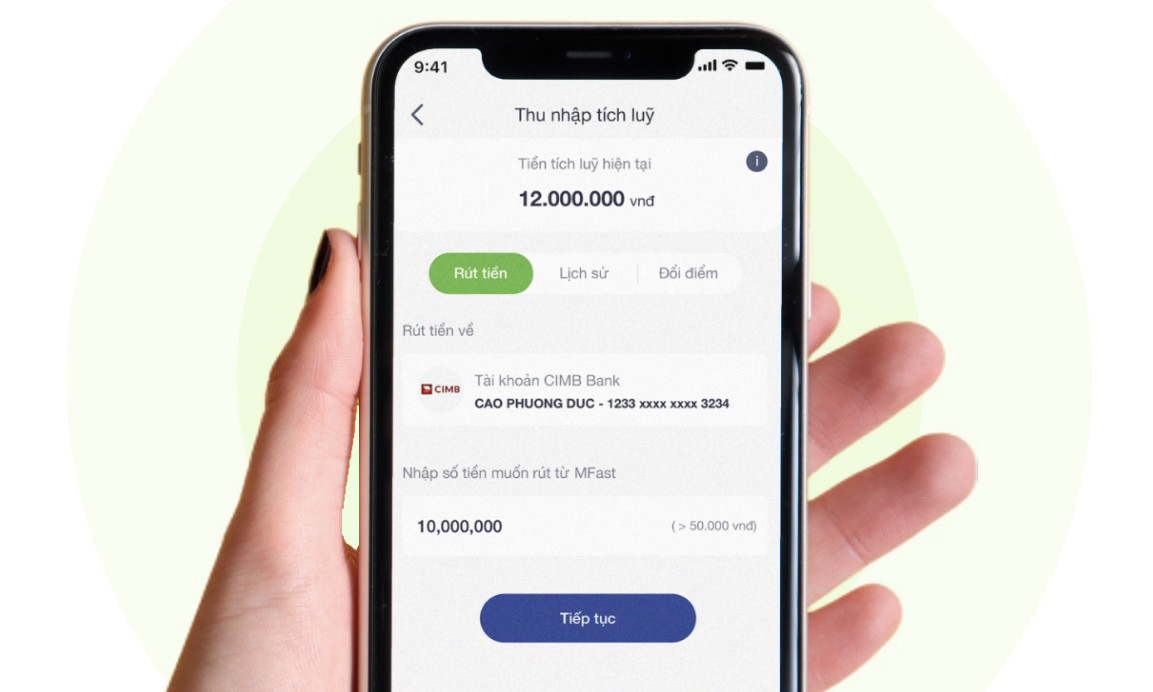
    Vietnamese financial services distribution platform MFast has raised US$6 million in Series A funding to expand its agent network and launch operations in the Philippines.

    Venture capital firm Wavemaker Partners led the round, with new participation from Tokyo-based Headline Asia and Thailand-based Finnoventure Fund I, managed by Krungsri Finnovate. Existing backers Do Ventures, Jafco Asia and Ascend Vietnam Ventures also joined the equity injection.

    Distribution beyond major metros

    MFast operates as a unit of Vietnam-based startup DigiPay, founded in 2017 by twin brothers Phan Thanh Long and Phan Thanh Vinh. The platform functions as an agent-driven marketplace selling insurance policies, consumer loans and banking products to retail customers.

    The business model relies on individual sales agents rather than physical storefronts. Traditional lenders and commercial brands routinely avoid opening physical branches in lower-tier cities such as Hue due to high real estate and operational costs. MFast uses mobile software to turn local individuals into commissioned sellers, bridging that retail gap.

    By August 2023, the network had grown to 160,000 active agents operating across all 63 cities and provinces in Vietnam. The company said it has connected more than one million consumers to financial products, while the number of income-earning agents rose 62 per cent year-on-year in the first half of 2023.

    Regional banking ties

    Consumer finance distribution in Southeast Asia has increasingly pivoted toward hybrid agency networks. Pure digital lending apps frequently face elevated default rates and high user-acquisition costs outside major capitals, making on-the-ground agent validation a practical distribution channel for commercial banks targeting lower-tier consumer markets.

    The startup has established distribution partnerships with international and regional lenders, including Singapore’s UOB, Thailand’s Kasikornbank, and SHB Finance, the Vietnamese consumer finance unit controlled by Thailand’s Bank of Ayudhya.

    MFast will use the capital to design bespoke credit products for segmented customer groups before launching its agency distribution model in the Philippines in 2024.

  • Bangladesh Closes 20,000 Mobile Accounts in Digital Lending and Crypto Crackdown

    Bangladesh Closes 20,000 Mobile Accounts in Digital Lending and Crypto Crackdown

    Bangladesh financial regulators shut down more than 20,000 mobile financial service accounts last month in an expanding crackdown on predatory lending apps, illegal gambling, and unauthorized cryptocurrency trading.

    The enforcement targets unlicensed operators that use local digital payment rails to harvest consumer data, charge interest rates reaching 800 percent, and move illicit funds across borders.

    Harvesting Data and Escalating Interest

    Fraudulent operators run mobile applications under names such as FinCash, Money, PopKash, CashNow, Drutoloan, Fast Loan, Shathi Loan, and Quickloan. During installation, these apps gain access to contact lists, photographs, and private videos stored on borrowers’ devices. Borrowers who miss payment deadlines or contest inflated rates face harassment and extortion threats to leak their personal media to family and employers.

    Scammers also deploy social media pages to advertise microloans carrying sub-market interest rates as low as 5 percent. Victims pay upfront fees and security deposits amounting to Tk 100,000 before administrators sever all contact. Bangladesh Bank confirmed that none of these digital lending applications hold operational licenses in the country.

    Arief Hossain Khan, executive director and spokesperson for Bangladesh Bank, said the central bank’s Payment Systems Department regularly inspects payment service providers and mobile operators. While operators actively track suspicious transactions, screening every single retail transfer remains a structural operational challenge.

    Unlicensed Crypto and Stricter Gambling Penalties

    Central bank investigators also identified unlicensed virtual asset platforms operating inside Bangladesh. A recent central bank inspection revealed that UAE-based platform Fasset, established in 2019 and licensed by Dubai’s Virtual Assets Regulatory Authority, operates locally without authorization. The platform permits domestic users to buy Tether using local bank accounts and mobile wallets on its peer-to-peer marketplace, allowing capital conversion into Bitcoin and Ethereum.

    To curb digital capital flight, the government enacted the Gambling Prevention Act, replacing the colonial-era Public Gambling Act of 1867. The revised statute criminalizes digital casino betting, fantasy sports, and virtual wagering conducted through mobile applications, servers, and digital wallets. Violators face prison sentences ranging from two to seven years and fines between Tk 2 lakh and Tk 5 crore.

    Across Southeast Asia and South Asia, central banks face an identical problem: rapid adoption of mobile wallets has lowered the barrier for predatory fintech syndicates operating outside formal banking supervision. For licensed digital lenders and consumer brands, the proliferation of rogue apps threatens retail trust in legitimate mobile commerce channels.

    The Bangladesh Financial Intelligence Unit and Dhaka Metropolitan Police are now reviewing transaction records across remaining mobile money accounts, with further provider audits scheduled throughout the quarter.