Tag: consumer tech

  • 3Cat Secures $4 Million to Expand Refurbished Device Retail in the Philippines

    3Cat Secures $4 Million to Expand Refurbished Device Retail in the Philippines

    Electronics recommerce platform 3cat has raised $4 million in fresh capital this week to launch its refurbished device retail model in the Philippines. The funding round finances inventory acquisition, quality inspection infrastructure, and local retail distribution networks across the country.

    Consumer demand for certified secondary electronics has grown across Southeast Asia as retail prices for flagship smartphones and laptops climb. Securing reliable inventory and providing standardized warranties remain the twin operational barriers for any business attempting to formalize the trade.

    Capital for secondary device inventory

    Refurbished hardware retail requires substantial working capital upfront. Retailers must purchase returned, pre-owned, or trade-in devices from corporate fleets, carriers, and individual consumers before grading, repairing, and testing each unit.

    By establishing certified inspection processes, 3cat aims to offer consumers refurbished smartphones and computing hardware backed by replacement warranties. The approach seeks to narrow the price gap between brand-new consumer electronics and unverified secondhand devices sold through peer-to-peer online listings.

    The secondhand electronics retail problem

    Most secondhand device sales across the region still take place through informal grey-market stalls and unvetted online marketplaces. These fragmented sellers rarely provide functional guarantees or standardized battery health checks, leaving buyers to absorb technical defects.

    Formal refurbished retail platforms change this balance by shifting product risk from the consumer to the operator. If grading criteria fail or return rates spike above single digits, inventory holding costs quickly erase gross margins on hardware.

    Competing with informal trade channels

    The Philippines represents a high-volume market where mobile phone penetration is high but consumer purchasing power remains price-sensitive. Local shoppers frequently turn to physical gadget markets such as Greenhills in Metro Manila for discounted pre-owned hardware.

    For structured retailers, winning market share from informal stalls depends entirely on warranty fulfillment speed and transparent grading tiers. Landlords in major metropolitan shopping centres also increasingly view organized circular tech storefronts as dependable, foot-traffic-generating tenants compared to unregulated repair kiosks.

    Next steps in market execution

    Establishing consumer electronics trade-in partnerships with local enterprise fleets and device distributors forms the primary operational priority following the fundraise. Without steady local supply channels, recommerce retailers must rely on imported secondhand stock, exposing margins to cross-border shipping friction and currency shifts.

    The company will now focus on rolling out its warranty and retail fulfillment network across Metro Manila before testing wider distribution across provincial retail hubs.


  • Facebook and Instagram Hit by Outage with over 22,000 US Reports

    Facebook and Instagram Hit by Outage with over 22,000 US Reports

    Meta-owned social media platforms Facebook and Instagram suffered widespread access issues on Monday (Sep 21) morning, affecting users in Singapore and multiple countries globally.

    Outage tracker Downdetector showed incident reports in Singapore peaking at about 9.20am, reaching around 220 for Facebook and 120 for Instagram, with most users reporting trouble accessing the platforms’ websites.

    Disruption Spreads Across Regional Markets

    Users in several other countries, including the Philippines, Australia, Mexico, and the United States, also experienced disruptions. In the US, Downdetector logged more than 17,000 reports for Facebook and over 5,000 for Instagram as of 1.11am GMT.

    Data compiled at 1:11am GMT showed more than 17,000 outage reports for Facebook in the United States alone. Instagram registered over 5,000 reports during the same window, leaving social commerce operations and live merchant feeds temporarily inaccessible.

    Commercial Exposure for Digital Merchants

    For consumer brands and small enterprises across Southeast Asia, disruptions on Meta properties halt direct sales channels immediately. Social selling drives an outsized share of regional retail conversions, particularly through direct messaging and live product shows on Instagram and Facebook storefronts.

    E-commerce merchants running paid acquisition campaigns face wasted ad spend and disrupted conversion tracking when destination platforms fail during peak morning trading hours. Retailers that rely solely on Meta for digital customer interaction bear direct revenue losses when access drops.

    Repeated Network Instability This Year

    Meta has faced multiple service interruptions across its international infrastructure over recent months. In June, a global outage knocked platforms offline across Singapore, the Philippines, India, Australia, Canada, and the United States.

    Another disruption followed in July, cutting platform access for hundreds of users in Singapore during business hours. The recurring outages raise operational questions for commercial operators that direct consumer discovery and customer support through Meta’s messaging and social infrastructure.

    Platform Performance Under Scrutiny

    Engineers restored connectivity across the affected regions later in the morning as report volumes subsided on tracking platforms. The recurring pattern of downtime places technical resilience at the center of Meta’s regional enterprise relationships, where brands demand uninterrupted access to consumer audiences.

  • Samsung Fights Apple Foldable Push as Counterpoint Projects 25 per Cent Duo Share

    Samsung Fights Apple Foldable Push as Counterpoint Projects 25 per Cent Duo Share

    Samsung launched a marketing blitz across Asia and Europe on Wednesday to protect its premium smartphone business. The campaign follows Apple’s release of its first folding handset, the $1,999 iPhone Duo.

    Apple’s entry puts it in direct competition with the $1,899 Galaxy Z Fold 8. Counterpoint Research expects Apple to capture a 25 per cent global market share this year, cutting into Samsung’s projected 38 per cent share.

    Cupertino designed the Duo with a passport-style layout similar to Samsung’s latest flagship, which runs Alphabet’s Gemini artificial intelligence. Samsung fought back by booking billboards across Seoul, Tokyo and London with slogans like “Welcome to Foldables” and “The World’s Lightest Fold”. It also posted technical notes on its consumer website detailing its hinge and weight reductions.

    The Margin Fight at Two Thousand Dollars

    A narrow $100 price gap shifts the fight to hardware refinement and software ecosystems. For telecom carriers and electronics retailers across Asia, having two players at the $2,000 price point turns foldables from a show into a high-volume margin driver.

    Heavy risks sit with Samsung’s mobile division, which faces margin erosion if affluent buyers in South Korea, Japan and Greater China defect to iOS. Samsung Display supplies the folding screens for the iPhone Duo and collects component revenue on every unit sold. Even so, the handset division loses its most profitable hardware moat.

    Rivalry in Component Supply and Social Media

    Online, Samsung went on the offensive. It ran posts on X describing the Duo as “reheating our leftovers” and “So far, so same”. Apple chief executive John Ternus fired back, calling earlier foldables “like two phones awkwardly stuck together.”

    Industry analysts note that Apple waited for screen mechanics to stabilize before entering the segment. “Apple is good at getting its timing right and entering the market when a product reaches a certain level of maturity,” said Ben Wood, chief analyst at CCS Insight.

    Seven Years of Category Building

    Samsung created the commercial category in 2019 after display failures delayed the original Galaxy Fold release by several months. Over the next eight device generations, the Suwon-based company improved screen durability and expanded global distribution while battling Chinese rivals like Huawei in domestic and regional markets.

    Stores begin stocking the iPhone Duo later this month. That starts the first direct quarterly sales clash between Apple and Samsung during the peak year-end shopping season.

  • Seven China IPOs Hand Retail Investors over 100,000 Yuan This Year

    Seven China IPOs Hand Retail Investors over 100,000 Yuan This Year

    China’s boom in initial public offerings has handed individual investors first-day trading profits exceeding 100,000 yuan ($14,900) across seven separate stock debuts this year.

    The run represents the most six-figure retail listing windfalls in at least six years. Investors who secured standard 500-share allocations and sold on debut day captured gains equivalent to six months of salary in a single day.

    Robotics and Tech Lead the Surge

    Individual investor Stacy Wei earned about 380,000 yuan after securing an allocation in the listing of Unitree Robotics and selling on debut day, enough to upgrade to her dream car.

    Hardware manufacturers and artificial intelligence supply-chain companies continue to draw the heaviest speculative retail subscriptions across domestic exchanges. Bidders flip shares instantly rather than holding long positions, treating mainland debut pops as liquidity events rather than valuation anchors.

    Shifting Liquidity in Mainland Markets

    Institutional allocators face a different calculation. While retail flippers bank quick cash, fund managers buying secondary tranches absorb the risk of sharp post-debut pullbacks once initial euphoria clears from the order book.

    Sellers who take profits on opening day bypass subsequent price volatility. That trading pattern concentrates quick consumer liquidity in Tier 1 and Tier 2 cities, diverting trading gains directly into private purchases and big-ticket household spending.

    The Trajectory of New Offerings

    Regulators spent recent quarters calibrating the pace of new equity issuance to stabilise broader secondary market indices. That restricted pipeline funnelled intense speculative capital into the select batch of tech and robotics candidates cleared for listing.

    Trading desks now track subscription ratios for the next pipeline of advanced manufacturing and consumer tech filings scheduled for domestic exchange review this autumn.

  • Reliance Jio Holds 506 Million Users but Trails in 11 Indian Circles

    Reliance Jio Holds 506 Million Users but Trails in 11 Indian Circles

    Reliance Jio reached 506 million mobile subscribers across India while trailing regional rivals in 11 of the country’s 22 telecom service circles.

    The split highlights how regional competition remains stubborn across key states even as the operator dominates aggregate national numbers.

    Regional Market Share Dynamics

    India divides its telecom market into 22 operational circles covering distinct states and metropolitan areas. Jio leads in half of those service areas, driven by heavy nationwide mobile broadband rollout. In the other 11 circles, competing operators retain the top rank through entrenched distribution channels and long-standing subscriber bases.

    Gaining ground in secondary and rural circles requires continuous capital expenditure on base stations and fiber links. Jio has focused its standalone 5G deployment to challenge rival networks where earlier market entrants built strong local brand loyalty.

    The Battle for Secondary Circles

    Across Asian telecommunications, aggregate national subscriber leads frequently mask localized market splits where regional operators protect user share and pricing power. Similar dynamics play out in markets like Indonesia and the Philippines, where provincial dominance often resists nationwide network rollouts.

    Jio now faces the operational test of lifting its rank across those 11 remaining circles as Indian operators push to convert network capacity into higher average revenue per user.

  • CES Asia Unveiled Expands to Seoul in Partnership with KES

    CES Asia Unveiled Expands to Seoul in Partnership with KES

    CES Asia Unveiled is expanding into Seoul through a formal partnership with the Korea Electronics Show. The tie-up connects the regional preview platform directly with South Korea’s primary trade gathering for consumer electronics, appliance manufacturers and component suppliers.

    Organisers designed the Seoul event to give domestic tech makers, retail buyers and international media an early look at product launches ahead of the main global exhibitions. South Korean conglomerates and hardware startups will gain a dedicated stage to demonstrate consumer hardware, artificial intelligence applications and smart home devices to regional distributors.

    Bringing Preview Formats to South Korea

    The Seoul expansion reflects South Korea’s position as a dominant exporter of consumer electronics and display technologies. By collaborating with the Korea Electronics Show, the platform integrates local exhibition infrastructure with international brand networks that typically anchor large-format consumer technology shows across Asia.

    Participating companies will present products across smart appliances, mobility solutions, gaming hardware and personal devices. The format focuses on direct business matchmaking, pairing device manufacturers with Asian retail operators, ecommerce platform buyers and regional supply chain partners seeking early product inventory.

    Regional Competition in Consumer Electronics

    Trade event organisers across the Asia-Pacific region continue to adjust their calendars to secure hardware debuts from top tier manufacturers. While previous editions of regional technology shows concentrated heavily in Shanghai and Tokyo, trade bodies are increasingly setting up multi-city formats across key consumer markets in Northeast Asia.

    For South Korean electronics suppliers and regional distributors, the joint event provides immediate access to product roadmaps without requiring travel outside the domestic market. Registration timelines and exhibition schedules for the joint Seoul show will open through official trade channels as participating brands finalize their regional product lineups.

  • Apple Leads Asian Smartphone Market as Xiaomi Expands Low-Cost Reach

    Apple Leads Asian Smartphone Market as Xiaomi Expands Low-Cost Reach

    Apple captured 21.16 per cent of Asia’s smartphone market through early 2026, leading an increasingly divided consumer hardware market across the region. Samsung held second place with 15.57 per cent, retaining its broader footprint after regaining leadership in Southeast Asia despite a 1 per cent dip in total regional shipments during 2025.

    Xiaomi secured third position across Asia with a 12.02 per cent market share, lifting its Southeast Asian shipments 4 per cent to 17 million units. Vivo and Oppo followed with 10.5 per cent and 9.8 per cent shares across Asia, while Huawei retained roughly 18 per cent of domestic shipments in mainland China.

    Social Commerce Alters Budget Device Distribution

    Digital storefronts and direct livestreams on platforms like TikTok have transformed low-cost distribution across developing markets. Xiaomi’s sub-brand POCO recorded its highest monthly volume in November 2025, moving units ranging from the $93 entry-level C71 to the $427 mid-range F7 model.

    Transsion captured 16 per cent of Southeast Asian shipments, supported by basic itel models priced below $30 that drove substantial volume in Vietnam and the Philippines. In Japan, domestic manufacturers Sony and Sharp maintained defensible positions in their home market alongside established flagship brands.

    Component Inflation Squeezes Entry-Level Margins

    Consumer demand in Asia now sits at two distinct poles: premium buyers paying top dollar for ecosystem flagships, and price-sensitive shoppers seeking maximum specifications under $100. While Apple and Samsung control the profitable high end, budget-focused manufacturers face immediate margin erosion from rising memory and storage component expenses.

    Hardware makers entering the second half of 2026 face higher bills of materials that directly threaten sub-$200 device margins. Brands operating in emerging Southeast Asian markets must decide whether to absorb these memory cost increases or risk raising retail price tags above critical affordability thresholds.

  • Pagcor Fines Gambling Firm P1 Million over Ivana Alawi iPhone Promotion

    Pagcor Fines Gambling Firm P1 Million over Ivana Alawi iPhone Promotion

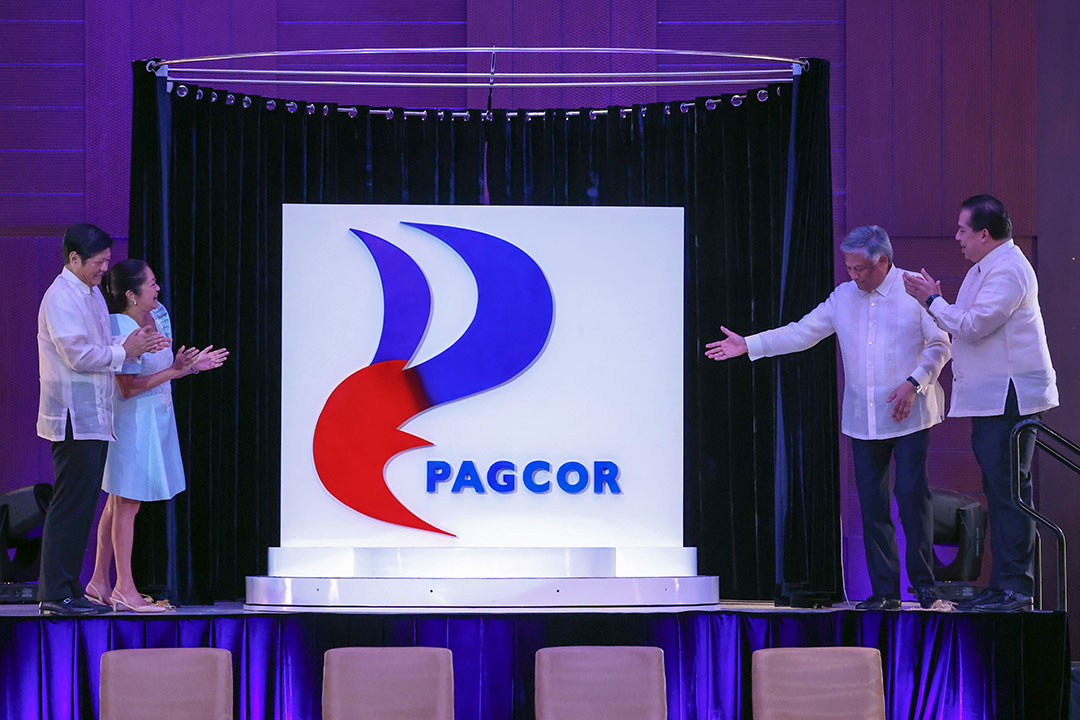
    Philippine gaming regulator Pagcor fined an online gambling operator 1 million pesos ($17,700) for running an unapproved 100-unit iPhone giveaway with celebrity influencer Ivana Alawi.

    The social media promotion involved 4.28 million pesos worth of iPhone 17 Pro Max handsets distributed across Alawi’s digital channels in July without regulatory clearance. Prospective winners had to follow her affiliated gaming group and leave comments on promotional posts to enter the draw.

    Unauthorised Promotions Draw Scrutiny

    Pagcor chairman and chief executive Alejandro Tengco disclosed the financial penalty during a 2027 House of Representatives budget hearing in Manila. Lawmakers raised concerns after Kamanggagawa party-list Representative Elijah Fernando questioned the expanding marketing ties between digital influencers and gambling operators.

    Alawi maintains an official brand ambassadorship with online operator Casino Plus. Tengco confirmed the fine was accompanied by an explicit warning that repeat infractions would trigger license suspensions and outright cancellations.

    Enforcement Across Digital Platforms

    Regulators estimate that illegal operators make up roughly 50 per cent of the country’s online gaming ecosystem, operating beyond state oversight and consumer protection rules. Pagcor works alongside the Department of Information and Communications Technology, the National Telecommunications Commission, and the Cybercrime Investigation and Coordinating Center to pursue cases against unlicensed platforms and their celebrity endorsers.

    For consumer brands and digital marketing agencies across Southeast Asia, the action shows tighter oversight of influencer-led giveaways and promotional sweepstakes. Regulators in Manila now require promotional campaigns tied to licensed gaming entities to secure prior clearances from both Pagcor and the Ad Standards Council.

    Several content creators have cancelled promotional contracts with unlicensed gambling entities following the initial enforcement drive. State agencies are preparing further takedown requests and legal filings against operators that continue running unregistered social promotions.

  • Taiwan Consumer Confidence Dips Despite Strong Economic Forecasts Amid Inflation Fears

    Taiwan Consumer Confidence Dips Despite Strong Economic Forecasts Amid Inflation Fears

    Taiwanese consumer confidence has fallen, with sentiment regarding the economic outlook and spending weakening this month, despite official predictions of the strongest economic growth in decades. A recent survey by Cathay Financial Holding Co. Revealed that inflation concerns and volatility in financial markets are contributing to this cautious mood among consumers.

    The survey highlighted a drop in consumer optimism toward the local stock market and overall risk appetite following recent equity swings. Factors such as heightened tensions between the US and Iran, rising oil prices, and expectations for higher US interest rates have made investors more conservative. Frequent stock trading halts in South Korea and renewed questions about the sustainability of the artificial intelligence (AI) boom have fueled market volatility.

    Divergence in Economic Views

    Consumers now anticipate inflation to average 2.3 percent this year, surpassing the government’s estimate of 2.07 percent and the central bank’s 2 percent target. Their economic growth expectations also fall short of official projections, with consumers anticipating an 8.94 percent expansion this year on average, significantly lower than the government’s forecast of 11.05 percent, which would mark the fastest pace in nearly four decades. Only about one-quarter of respondents expect growth to exceed 10 percent.

    This divergence between official forecasts and household expectations suggests that the benefits of Taiwan’s AI-led economic expansion have not yet translated into stronger consumer confidence. Higher energy costs, inflation risks, and financial market swings are adding to uncertainty, which in turn has led to a weakened willingness among consumers to make major purchases. The index for durable-goods spending has consequently moved into negative territory.

    Investment Sentiment

    Despite the cautious consumer sentiment, Taiwanese equities remain the most preferred investment target for the next six months, selected by 57 percent of respondents. In comparison, 24 percent favored US stocks. For those planning to increase investments, confidence in Taiwanese companies’ ability to sustain earnings was the most frequently cited reason, followed by optimism regarding the economy’s overall strength.

    RetailNews Asia observes that similar patterns of economic growth failing to fully translate into consumer confidence have been seen across other Asian markets, particularly where global economic headwinds and local inflationary pressures create a disconnect between macro-indicators and household spending power. This trend often prompts retailers to adapt strategies to cater to more value-conscious consumers or focus on essential goods over discretionary purchases.

    The survey, conducted from August 1 to August 7, gathered 12,580 responses from customers and members of Cathay Life Insurance Co. And Cathay United Bank Co.

  • Minecraft Workshops Reconstruct Pre-Atomic Bombing Cities in Japan

    Minecraft Workshops Reconstruct Pre-Atomic Bombing Cities in Japan

    University students in Japan are using the popular video game Minecraft to educate children about the appearance of Hiroshima and Nagasaki before the atomic bombings of August 1945. These workshops aim to help participants grasp the scale of loss and destruction caused by the nuclear attacks.

    Misaki Katayama, a 27-year-old graduate student at the University of Tokyo specializing in peace education, initiated these two-day workshops in Hiroshima and Nagasaki in 2023. The program targets elementary school students from fourth to sixth grade, tasking them with digitally rebuilding the pre-bombing cityscapes.

    Rebuilding History Through Gaming

    Participants utilize historical maps, photographs, and video footage to reconstruct significant areas within Minecraft, a game renowned for its block-building virtual environment. For instance, a workshop held in Hiroshima on August 4 and 5, 2023, saw students meticulously recreate the district where Hiroshima Peace Memorial Park now stands, including a temple and a kindergarten that were once part of the bustling neighborhood.

    Katayama’s inspiration for the project arose six years ago after an atomic bomb survivor (hibakusha) recounted an elementary student’s comment, “It was lucky that the atomic bomb was dropped on a park.” This statement highlighted a critical gap in understanding, as the student was unaware that the park site was once a vibrant, densely populated area. Katayama noted that as time passes, it becomes increasingly challenging for people to visualize the pre-bombing cities.

    Understanding Loss and Reality

    The workshops are structured to offer a comprehensive learning experience. On the first day, students gather historical information, plan their reconstructions, and build the cityscapes in Minecraft. This activity allows them to experience how long it takes to build a city and how quickly it can be destroyed. The second day transitions to a more somber reflection, where participants view images of hibakusha immediately after the bombing and listen to survivor testimonies. This segment helps them understand the stark reality of the attacks and their transformative impact.

    While digital technology can significantly broaden understanding of historical urban environments, Katayama acknowledges the challenge of ensuring participants remain focused on the educational objective rather than merely the game’s building aspect. She mitigates this by beginning workshops with a moment of silence for atomic bomb victims, emphasizing the gravity and respect required for the subject matter. Katayama believes these digital tools can stimulate imagination and encourage deeper reflection on the atomic bombings and the lives affected.

  • Samsung Eyes over $72 Billion Shareholder Return Amid AI Chip Surge

    Samsung Eyes over $72 Billion Shareholder Return Amid AI Chip Surge

    Seoul, South Korea based Samsung Electronics is expected to announce a substantial new shareholder return policy later this month, reportedly exceeding 100 trillion won (approximately $71.75 billion). This initiative comes as the technology giant seeks to share record profits with investors, largely fueled by the ongoing AI-driven chip supercycle.

    According to media reports, the South Korean memory-chip maker’s board is scheduled to convene at the end of August to approve the new shareholder return plan. Industry sources suggest the program will include a special dividend and allocate 50 percent of the company’s free cash flow to this new scheme.

    Rival Actions and Market Impact

    This anticipated announcement from Samsung follows closely on the heels of a significant move by its local competitor, SK Hynix. On Wednesday, SK Hynix, the world’s second-largest memory-chip producer after Samsung, revealed its own 40 trillion won share buyback and cancellation program. This represents the largest shareholder return initiative ever declared by a publicly listed South Korean company. SK Hynix also committed to dedicating over 50 percent of its free cash flow generated between 2025 and 2027 to shareholder returns.

    Such large-scale financial commitments from key players like Samsung and SK Hynix highlight the robust profitability within the global semiconductor industry, particularly in the memory chip segment. The surge in demand for chips due to advancements in artificial intelligence has created a lucrative environment for these technology powerhouses, allowing them to reward investors handsomely. These moves are likely to influence investor sentiment and financial strategies across Asia’s tech sector, setting a precedent for how major corporations manage their excess capital in times of high growth.

    Rewarding Investors Amid Strong Performance

    The reported shareholder return program from Samsung underscores a period of strong financial performance for the company. The AI-driven surge in demand for high-performance memory chips, essential for AI applications, has significantly boosted revenues and profits for chip manufacturers. By distributing a substantial portion of its free cash flow, Samsung aims to enhance shareholder value and maintain investor confidence. The company has not yet commented on the media reports.

  • Asian EV Sales Surge Amidst Global Oil Price Hike and Policy Shifts

    Asian EV Sales Surge Amidst Global Oil Price Hike and Policy Shifts

    Electric vehicle (EV) sales are seeing a significant boost globally, with a record 29 percent of all new cars sold worldwide this year expected to be electric, including battery-powered models and plug-in hybrids. This marks a sharp increase from just 4 percent in 2020. The surge is largely attributed to spiking oil and gasoline prices, exacerbated by the U.S. Conflict with Iran and the closure of the Strait of Hormuz, which began in February 2026. Brent crude prices have climbed over 25 percent since the conflict started.

    While traditional internal combustion engine cars face a steady decline, with sales projected to hit their lowest level since the early 2000s this year, the shift towards EVs presents both opportunities and challenges across various markets, including Asia-Pacific. Analysts suggest that while short-term factors like oil prices play a role, the long-term economic benefits of EVs, such as falling battery costs and lower operational expenses, will continue to drive adoption.

    Asia-Pacific Markets See Accelerated Adoption

    Several Asia-Pacific nations are at the forefront of this EV acceleration. South Korea, Australia, and New Zealand have nearly doubled their EV share of total new car sales since the conflict in Iran began. Laos is experiencing a dramatic increase in battery-powered vehicle imports from China, while Indonesia, Malaysia, and Taiwan are also recording notable gains in EV market share between 2025 and 2026.

    Other Asian markets, including India, Singapore, and Thailand, have also witnessed a substantial rise in EV sales since the Iran war started. Singapore, for instance, saw its EV market share jump from 31 percent in July 2024 to 65 percent in July 2026. This rapid growth indicates a clear consumer response to fuel price volatility and a growing preference for electric alternatives.

    China’s Pivotal Role and Policy Impacts

    Despite China accounting for roughly half of global EV sales, its domestic purchases fell this year due to a weakening economy and reduced government subsidies. Nonetheless, China remains a dominant force in the global EV supply chain, with Chinese companies exporting approximately 2.4 million electric vehicles in the first half of this year, nearly matching their total 2025 exports. These low-cost Chinese EVs are increasingly welcomed in markets such as Argentina, Australia, Indonesia, New Zealand, and South Africa, where they constitute over 80 percent of electric car sales.

    Several Asian governments have introduced new policies to encourage EV adoption. Cambodia and Kenya have temporarily slashed tariffs on imported electric vehicles, while Laos went a step further by barring imports of gasoline-powered cars for the remainder of 2026 and cutting taxes on EVs, leading to a significant influx of Chinese models. These policy shifts demonstrate a concerted effort by regional governments to curb reliance on expensive oil imports and accelerate the transition to electric mobility. Retailers and distributors across the Asia-Pacific region are closely watching these developments, adapting their inventory and sales strategies to meet evolving consumer demand and capitalize on the growing EV market.