Tag: Continues

  • El Niño Threat Looms: Philippines Continues Rice Imports to Mitigate Shortage Fears

    El Niño Threat Looms: Philippines Continues Rice Imports to Mitigate Shortage Fears

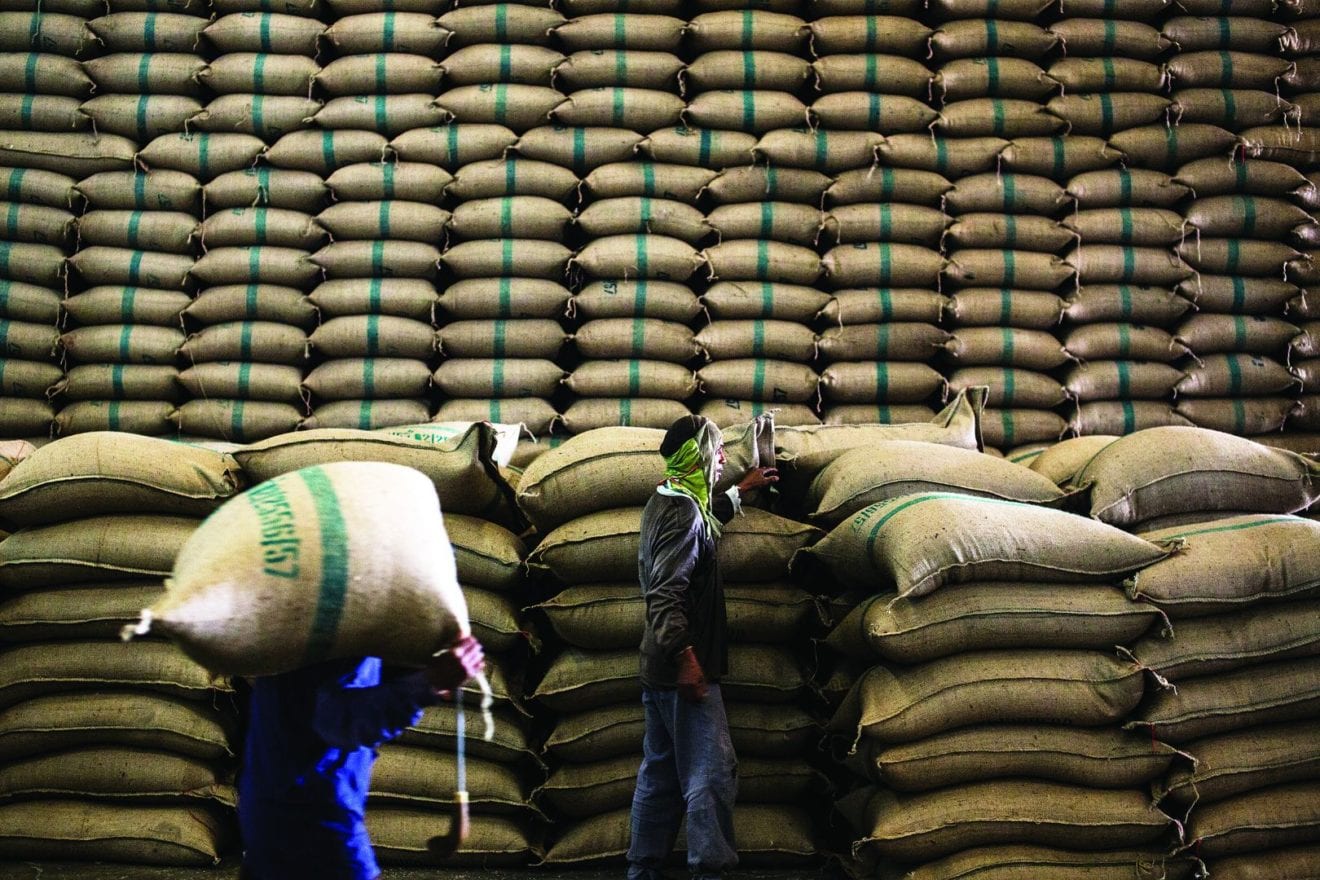
    In preparation for a potential reduction in domestic supply due to the expected El Niño weather event, the Philippines will not enforce a prohibition on rice imports this year. The possible upcoming strong El Niño, according to the nation’s Department of Agriculture, may diminish the national paddy yield by an estimated 750,000 metric tons. This could exacerbate the risk of supply shortages prior to the dry-season harvest in the early part of 2027.

    Rice Demand Outweighs Domestic Supply

    The consumption of rice in the Philippines exceeded the domestic supply by over one million metric tons last year. The country’s demand was 13.57 million metric tons, greatly surpassing the domestic yield of 12.40 tons. Francisco P. Tiu Laurel Jr., the Secretary of Agriculture, has stated the government’s intention to ensure large rice reserves are held prior to the upcoming harvest in order to preempt potential supply shortages.

    This strategic decision marks a deviation from the previous year’s approach, during which the Philippines halted rice imports between September and December. This move was implemented to bolster domestic paddy prices during the primary harvest season. This interruption to the importation process impacted delivery schedules for numerous Vietnamese exporters. Consequently, several companies had to seek orders from Africa and the Middle East.

    Impact on International Trade

    By August 3rd of this year, the Philippines had imported 3.3 million tons of rice. To lessen the impact of ongoing imports on local rice farmers, the government has directed the National Food Authority to procure 500,000 metric tons of paddy during this year’s wet-season harvest.

    A rice exporting enterprise in Vietnam’s Dong Thap Province has indicated that the Philippines’ decision to persist with imports will facilitate more straightforward negotiations of contracts for future deliveries this year. The Philippine market’s demand for Vietnam’s fragrant rice varieties remains steadfast due to their competitive pricing and unwavering quality.

    Vietnam exported a total of 5.5 million tons of rice in the first seven months of the year, generating $2.64 billion in revenue. In terms of volume, this figure represents a 0.5% increase year-on-year, although overall exports have declined by 6.7%. The Philippines continues to be Vietnam’s largest market, accounting for 45% of total exports.

    El Niño is a naturally occurring climate phenomenon characterized by unusually warm Pacific Ocean temperatures. This weather pattern can disrupt global weather patterns and often results in droughts in Southeast Asia, thereby reducing agricultural yield.

    Questions & Answers

    What is the expected impact of El Niño on the Philippines’ paddy yield?
    The strong El Niño weather event expected later this year could decrease the country’s paddy output by approximately 750,000 metric tons.

    How is the Philippines preparing for potential rice supply shortages?
    The Philippine government plans to maintain substantial rice reserves in anticipation of the next harvest to mitigate potential supply shortages.

    How have the Philippines’ import decisions impacted Vietnam’s rice exporters?
    The previous year’s suspension of rice imports disrupted delivery schedules for Vietnamese exporters. However, the decision to continue imports this year is expected to ease contract negotiations for future deliveries.


  • Vietnams Gold Plunge Continues Amidst Rising Inflation Concerns and Middle East Tensions

    Vietnams Gold Plunge Continues Amidst Rising Inflation Concerns and Middle East Tensions

    The price of gold in Vietnam continued to decline on Monday, with reductions seen throughout the day following an initial drop of nearly 1% earlier in the day. Saigon Jewelry Company, a prominent gold retailer, noted a further 0.42% decrease in its gold bar price from the morning, ultimately tallying a total loss of 1.37% for the day. The quoted price of gold per tael (equivalent to 37.5 grams or 1.2 ounces) fell to VND165.2 million, equivalent to US$6,276.26.

    Local Rates Versus Global Prices

    In comparison, local gold prices in Vietnam exceed international gold rates by approximately VND17 million per tael. The price of a gold ring also saw a similar decrease, falling to VND164.7 million per tael.

    Internationally, gold prices fell by 1% on Monday in response to escalating geopolitical tensions. The refusal of President Donald Trump to accept Iran’s recent peace proposal to end ongoing conflicts in the Middle East has raised fears of inflation and a continued period of high interest rates. This sentiment has been reflected in the gold market, with spot gold falling to $4,667.99 per ounce following a 2% increase last week. Concurrently, U.S. gold futures for June delivery saw a drop of 1.1%, hitting $4,677.80.

    Market Reactions and Predictions

    Market observers note the significant impact of these geopolitical developments on inflation risks and market expectations. Bybit’s Chief Market Analyst, Han Tan, highlighted that the stalled peace negotiations have weighed heavily on the market’s psyche, maintaining high interest rate expectations and amplifying pressure on non-yielding gold. Since the conflict’s inception in late February, gold has seen a decline of more than 11%.

    Tan further suggested that gold could face additional downward pressure if the U.S. Consumer Price Index (CPI) forecast for the following day proves hotter than anticipated. This situation could necessitate the Federal Reserve maintaining elevated benchmark rates for an extended duration.

    Questions & Answers

    Why did Vietnam’s gold prices drop on Monday?
    The gold prices in Vietnam dropped due to international gold prices falling by 1% in response to increasing geopolitical tensions and the current conflict in the Middle East.

    What are the implications of high inflation and interest rates on the gold market?
    High inflation and interest rates put pressure on non-yielding bullion, causing its price to drop. The gold market has seen a decline of more than 11% since the conflict began in late February.

    What could cause further downward pressure on gold prices?
    If the U.S. Consumer Price Index forecast proves hotter than anticipated, the Federal Reserve may need to maintain elevated benchmark rates for a longer period. This scenario could exert additional downward pressure on gold prices.

  • Gold prices’ rally continues

    Gold prices’ rally continues

    On Wednesday, the price of gold in Vietnam saw a further increase, continuing its upward trajectory in the wake of record-high global bullion rates. The Saigon Jewelry Company raised the price of its gold bars by 0.42% to VND142.5 million (equivalent to US$5,405.61) per tael. This upward adjustment came after a morning increase of 0.92%.

    Year-to-Date Gains

    Bullion prices have seen a significant rise of 68% in the year-to-date. Currently, these prices are now over VND14 million per tael higher than the global rates. In the day’s trading, the price of a gold ring rose to VND139.5 million per tael, marking a 0.29% increase from its value earlier in the day. It’s crucial to note that in Vietnam, a tael is equivalent to 37.5 grams or 1.2 ounces.

    Global Gold Prices

    Worldwide, gold prices continue their historic surge, breaking past the $4,000 an ounce mark for the first time. This milestone was reached on Wednesday as investors sought refuge in the safe haven asset amid growing geopolitical uncertainties and speculation of further U.S. interest rate cuts. The spot gold price rose 1.2% to stand at $4,032.46 per ounce. Concurrently, U.S. gold futures for December delivery rose by 1.3% to register at $4,054.80 per ounce.

    This precious metal has experienced a twofold increase over the past three years, with a 12% rise in September alone. According to BNP Paribas analyst David Wilson, in most years, one or two risk drivers influence the gold price. He noted, “Right now, everything that is a traditional gold driver is happening.”

    Questions & Answers

    What is the current price of gold per tael in Vietnam?
    The price of gold per tael in Vietnam as determined by the Saigon Jewelry Company is currently VND142.5 million, equivalent to US$5,405.61.

    What factors are contributing to the current rise in global gold prices?
    The rise in global gold prices can be attributed to increasing geopolitical uncertainties and expectations of further U.S. interest rate cuts, driving investors towards the safe haven asset.

    What has been the percentage increase in gold prices over the past three years?
    Gold prices have seen a twofold increase over the past three years.

  • Domino’s Pizza China Reports Record Half-year Revenue, Loyalty Program Membership Soars

    Domino’s Pizza China Reports Record Half-year Revenue, Loyalty Program Membership Soars

    Domino’s Pizza in China has announced an impressive 27% surge in its half-yearly revenue, reaching RMB2.59 billion (US$363.2 million). This continued the firm’s trend of double-digit growth year on year.

    Impressive Profit Growth

    The company’s net profit growth was also highly commendable, registering an increase of 504.4% to RMB65.9 million. Additionally, the adjusted net profit saw a significant increase of 79.6% year on year, reaching RMB91.42 million.

    Loyalty Program Boost

    The first half of the year saw 30.1 million people signing up for Domino’s China’s loyalty program, representing a substantial 55.2% increase compared to the previous year. The revenue generated by the loyalty members constituted an increased percentage of the company’s total revenue, moving from 63.6% to 66%. This development indicates a growing scale, and a deepening engagement and loyalty from the customers.

    Expanding Store Network

    Since the third quarter of 2017, Domino’s China has been rapidly expanding its store network through its ‘go-deeper, go-broader’ approach. This has led to the company increasing its store count from merely 100 stores to 1198 stores spread across 48 cities on the Chinese mainland.

    Domino’s attributes its successful expansion to stringent site evaluation standards. The company ensures that each new store meets the requirements for long-term profitability. This has helped the firm maintain its store closure rate below the industry benchmarks.

    Questions & Answers

    What was the increase in Domino’s Pizza China’s half-year revenue?
    The half-year revenue of Domino’s Pizza China increased by 27%, amounting to RMB2.59 billion (US$363.2 million).

    How many people signed up for Domino’s China’s loyalty program in the first half of the year?
    In the first half of the year, 30.1 million people signed up for Domino’s China’s loyalty program.

    How many stores does Domino’s China currently have?
    Domino’s China currently has 1198 stores across 48 cities on the Chinese mainland.