Tag: corporate finance

  • IDX Overhauls Listing Rules with IDR100 Trillion Pathway

    IDX Overhauls Listing Rules with IDR100 Trillion Pathway

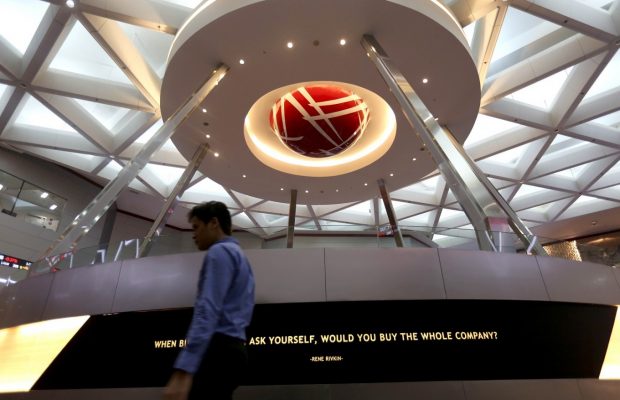
    The Indonesia Stock Exchange has rewritten its primary listing rules, establishing a 10,000-investor post-listing requirement for Main Board applicants alongside an IDR100 trillion market capitalisation route.

    Board of Directors Decree No. Kep-00152/BEI/10-2026 took effect on 9 October 2026, replacing the earlier framework under Decree No. Kep-00045/BEI/03-2026 to govern public offerings across the IDX.

    The revision eliminates standalone net tangible asset qualification for prospective issuers. Companies pursuing Main Board entry must now pair at least IDR250 billion in net tangible assets across their last two audited financial years and latest interim accounts with an established market capitalisation and an additional operating metric: pre-tax earnings averaging IDR100 billion over three years, revenue of IDR800 billion, total assets of IDR2 trillion, or operating cash flow of IDR100 billion. Alternatively, applicants can bypass asset tests entirely if they reach a market capitalisation of IDR100 trillion and equity of at least IDR10 trillion.

    Stricter Hurdle for Small Floats

    Development Board standards also faced upward revisions. Minimum commercial operating histories now span 24 consecutive months instead of 12, requiring full revenue records across that two-year period.

    Financial thresholds for the secondary tier require IDR50 billion in net tangible assets alongside market valuations between IDR300 billion and IDR500 billion, depending on whether applicants qualify via profits, revenue, assets, or cash generation. A standalone route on the Development Board requires an IDR10 trillion market capitalisation alongside IDR1 trillion in equity. Applicants must also distribute allocations across at least 5,000 single investor identification holders after the offering closes, up from earlier distribution practices.

    Shareholder Dispersion and Floats

    Capital markets in Southeast Asia have wrestled with tightly held listings that leave thin public floats after debut trading. Indonesia’s exchange is tackling that structural issue by enforcing absolute investor counts rather than relying strictly on percentage-based public floats.

    For regional consumer conglomerates, retail chains, and fast-growing technology platforms eyeing Jakarta, the rules cut off quiet, insider-dominated public exits. Companies can no longer slip onto the Main Board through balance-sheet asset valuations alone without proving wide retail or institutional buy-in across 10,000 separate accounts. Existing listed issuers also face a higher bar, requiring more than 1,000 active investor accounts to maintain their Main Board tenure compared with the earlier 750-holder floor.

    Five-Year Projections Replace Shorter Targets

    Underwriting teams now absorb deeper accountability under the disclosure terms. Lead managers must submit equity research reports at the time of application, at the end of the sixth month following admission, and at the close of the twelfth month.

    Filing documentation must feature integrated financial projections spanning at least five years, stretching past the historical three-year standard. Underwriters must execute and document formal due diligence on these five-year operating estimates, restricting aggressive growth claims often used to price retail and e-commerce listings.

    Scrapping the Share Price Floor

    Regulators removed the mandatory IDR100 minimum offering share price, handing dealmakers pricing room for fractional or high-volume issuances. Prospective applicants can also seek exchange clearance to count shares held by investment vehicles toward their official free float when underlying beneficiaries qualify as public investors.

    Companies that lodged listing applications before 9 October 2026 remain subject to review under the previous regulations during the transitional window. The exchange has yet to release the operational timetable and verification steps for approving beneficiary-level free-float exemptions.

  • Delta Electronics Singapore Unit Seeks $1.5 Billion in Exchangeable Bonds

    Delta Electronics Singapore Unit Seeks $1.5 Billion in Exchangeable Bonds

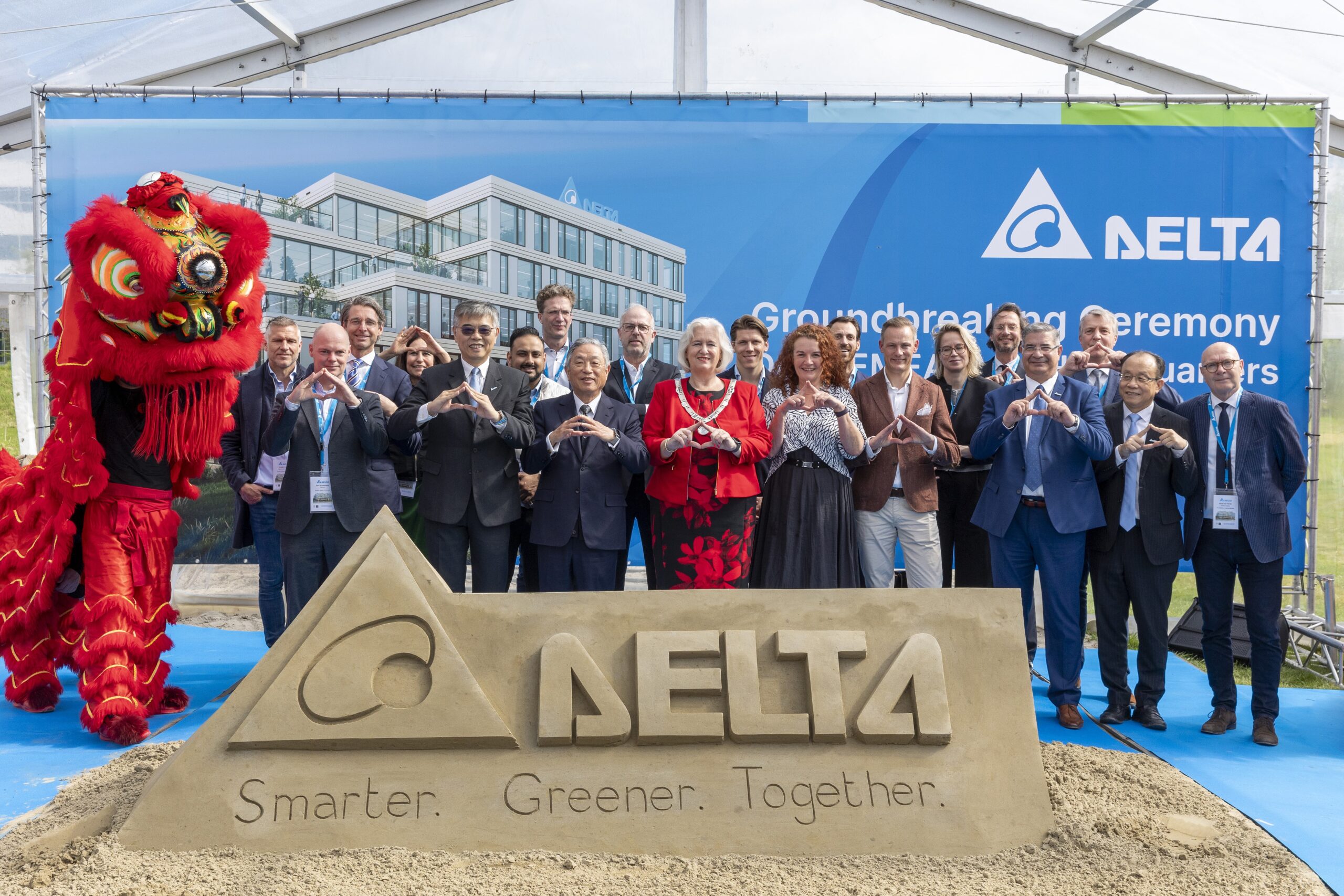
    Delta Electronics International Singapore is raising $1.5 billion through bonds exchangeable into shares of Bangkok-listed Delta Electronics Thailand.

    Through the transaction, the Singapore holding entity, a subsidiary of Taiwan-listed Delta Electronics Inc, can monetize part of its Thai equity stake. The structure also locks in substantial share price premiums.

    Pricing Terms and Tranches

    The proposed offering splits into two maturities. A shorter tranche consists of $500 million in bonds maturing in September 2027. These carry an initial exchange price of 266.8 baht per share, representing a 15 percent premium over the reference share price.

    A larger $1 billion tranche due in September 2031 sets an initial exchange price of 301.6 baht, or roughly $9.08 per share, pricing in a 30 percent premium. Investors in these notes face early redemption terms set at 99.25 percent of the principal amount after 18 months, falling to 98.51 percent after three years from issuance.

    Equity Dilution and Parent Control

    Full exercise of the exchange rights across both tranches would convert the debt into approximately 172.1 million existing shares. That volume represents about 1.38 percent of Delta Electronics Thailand’s total issued equity.

    Taiwan’s Delta Electronics holds 42.85 percent of the Thai subsidiary through the Singapore vehicle, according to LSEG data. By delivering existing equity rather than issuing new treasury stock, the transaction avoids direct share dilution for minority investors while generating liquidity for regional operations.

    Expansion Capital for Supply Chains

    Proceeds from the bond sale will fund general working capital and ongoing manufacturing expansion. Across Southeast Asia, regional hardware makers continue to build capacity to meet global demand for power management systems, data center components, and electric vehicle parts.

    Production for the parent group’s regional network remains anchored in Thailand, centered at its manufacturing facility in the Bangpoo Industrial Estate in Samut Prakan province.

    Final settlement of the offering will set the conversion terms and the timeline for bondholder redemption rights running through September 2031.

  • ByteDance Lines up $29.6 Billion Loan After Lenders Pile in

    ByteDance Lines up $29.6 Billion Loan After Lenders Pile in

    ByteDance has lined up a US$29.6 billion loan facility after attracting more than US$30 billion in orders from international and regional lenders. The TikTok owner initially sought a US$20 billion facility before expanding the total borrowing size to meet overwhelming interest from participating banks.

    Surplus demand prompted the company to upsize the transaction by nearly 50 per cent. The jumbo facility ranks among the largest corporate loans ever assembled for an Asian consumer technology company.

    Lender Demand Exceeds Target

    Lenders submitted orders exceeding US$30 billion during syndication, allowing the group to lock in substantial liquidity across its corporate structure. The scale of the order book gave the company room to lift the final allocation well above its opening target.

    Strong bank appetite reflects continued institutional confidence in the company’s core cash flows. Revenue from digital advertising, short-form video streaming, and rapid expansion into live social commerce across Southeast Asia and Western markets continues to anchor commercial performance.

    Financing Tech and Infrastructure Scale

    Large technology groups in Asia are securing deep pools of capital to fund computing capacity and product engineering. For ByteDance, managing data-intensive operations across TikTok and domestic platforms requires sustained capital expenditure in server networks and cloud infrastructure.

    The sizeable debt package also broadens the group’s financial headroom without diluting existing equity. Market participants are now monitoring final allocations and pricing details as syndication closes across global banking syndicates.

  • ByteDance Secures $29.6 Billion Loan After Strong Bank Demand

    ByteDance Secures $29.6 Billion Loan After Strong Bank Demand

    ByteDance secured a $29.6 billion syndicated loan after lenders offered commitments well above the company’s initial borrowing targets. The Chinese technology group originally sought a $20 billion facility before expanding the final size to meet institutional demand.

    Upsizing the Debt Facility

    Lenders lined up to back the transaction, prompting the owner of TikTok and Douyin to take on nearly $10 billion more than planned. The facility ranks among the largest corporate loans raised by a private technology firm globally.

    Strong participation from regional and global banks enabled the expansion. The company has routinely tapped debt markets to manage working capital, refinance existing obligations, and finance server infrastructure across its consumer platforms.

    Lending Demand Across Asia

    Large-scale technology refinancings in Asia have drawn steady interest from commercial lenders seeking investment-grade corporate credit. For ByteDance, expanding the facility secures balance sheet liquidity without requiring immediate equity dilution or public market listings.

    Syndication records will detail the breakdown of participating institutions and the repayment timeline across the multi-billion-dollar tranches.