Retail News CRM

Tag: Costa

  • Coca-Cola closer to sale of Costa Coffee – reports

    Coca-Cola closer to sale of Costa Coffee – reports

    The Coca-Cola Company is said to have received a bid from Bain Capital’s Special Situations division for its well-known café chain, Costa Coffee. Established in London in 1971 by brothers Bruno and Sergio Costa, the business started as a wholesale operation providing roasted coffee. The coffee chain caught the attention of Whitbread, which acquired the business in 1995. Later, in 2018, Costa Coffee was sold to The Coca-Cola Company for roughly £3.9 billion, equivalent to approximately US$5.1 billion at the time of the transaction.

    Bain Capital’s Bid

    The Special Situations unit of Bain Capital, which has previously invested in British bakery and café chain Gail’s as well as restaurant chain PizzaExpress, has proposed an initial bid for the UK-based coffee chain. Besides Bain, private equity firm TDR Capital has also expressed interest in the deal.

    Costa Coffee’s Global Presence

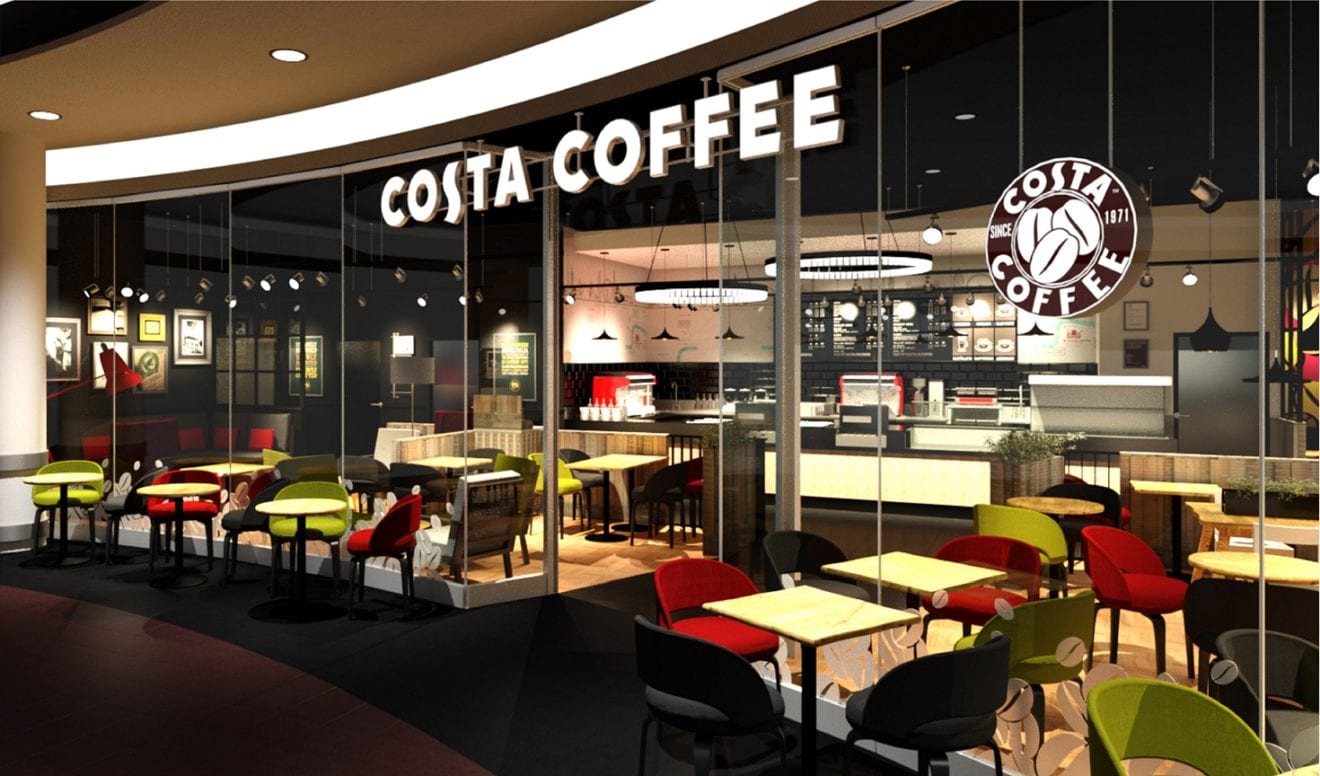
    Costa Coffee has grown significantly since its establishment, expanding its presence to over 50 countries. It currently maintains more than 2700 stores across the UK and Ireland and operates in more than 1300 locations in other global markets.

    Challenges Amidst the Pandemic

    Despite its global reach and popularity, Costa Coffee has grappled with increasing costs and a decline in consumer spending due to the Covid-19 pandemic. The café chain reported an annual loss of £13.8 million and revenues of £1.2 billion in 2023.

    Bain Capital’s Recent Acquisitions

    Bain Capital has a history of acquiring food and beverage establishments. For instance, the firm purchased the restaurant franchise growth platform Sizzling Platter in July, which operates several well-known brands such as Little Caesars, Wingstop, and Dunkin’.

    Questions & Answers

    Who initially founded Costa Coffee and when was it established?
    Costa Coffee was established by brothers Bruno and Sergio Costa in London in 1971.

    Who submitted a bid for Costa Coffee?
    The Special Situations unit of Bain Capital has reportedly submitted a bid for Costa Coffee.

    What financial impact did the Covid-19 pandemic have on Costa Coffee?
    Due to the pandemic, Costa Coffee has faced a decline in consumer spending and rising costs, resulting in an annual loss of £13.8 million in 2023.

  • Costa sliming down Chinese cafe network

    Costa sliming down Chinese cafe network

    British coffee franchise Costa will pull back further from the China market by early next year.

    In response to a dip in consumer demand, the Coca-Cola-owned firm reduced its physical stores within the territory by around 10 percent last month, half of which were located in the capital, Beijing. It has also shuttered its entire network in the coastal city of Qingdao.

    The brand’s long-standing aspirations for China have been frustrated during the Covid-19 pandemic, caused by rising unemployment and other economic factors hit by the outbreak. The firm’s operations have also been strongly impacted by the virus within its home market, with 1650 staff dropped off the payroll in the UK

    Costa has had significant difficulties facing the competitive Chinese coffee shop market, having launched just a sixth of its 2500-store target network since opening in 2006. Despite this, recent statements by the firm reaffirm its commitment to the market.

  • The Coca-Cola Company completes acquisition of Costa

    The Coca-Cola Company completes acquisition of Costa

    The Coca-Cola Company has announced that it has completed the acquisition of Costa Limited from Whitbread PLC. The US$ 4.9 billion transaction follows approval from regulatory authorities in the European Union and China. The acquisition was first announced on August 31, 2018. Costa, which has operations in more than 30 countries, gives Coca-Cola a significant footprint in the global coffee business. Worldwide, the coffee segment is growing 6 percent annually. Costa has a scalable platform across multiple formats and channels, from the existing Costa Express vending system to opportunities to introduce ready-to-drink products.

    “We see great opportunities for value creation through the combination of Costa’s capabilities and Coca-Cola’s marketing expertise and global reach,” said James Quincey, CEO of The Coca-Cola Company. “Our vision is to use the strong Costa platform to expand our portfolio in the growing coffee category.”

    “We wish our friends and colleagues at Costa all the very best for their future success,” said Alison Brittain, Whitbread Chief Executive. “Whitbread acquired Costa 23 years ago, when it had only 39 shops. Costa has grown to become a leading, international coffee brand, and Coca-Cola is the right partner to take Costa to the next stage of expansion.”

  • The digital opportunity for Coca Cola at Costa Coffee

    The digital opportunity for Coca Cola at Costa Coffee

    Coca-cola bought Costa Coffee for GBP3.9 billion (US$5.1 billion) recently. As a result of the deal, the US-based fizzy drink company will gain a strong cafe presence across Europe, Africa, the Middle East, and the Asia Pacific.

    So far, Costa has about 2,400 coffee shops in the UK, 1,400 coffee shops in 31 international markets, and more than 8,000 Costa Express self-serve units.

    Why your cash is no good at these bars and coffee shops

    On average, the brand has been in business for more than 40 years and has opened 289 new stores every year. In fact, prior to the deal, Costa was set on establishing a strong presence in China.

    The company also earned GBP1.167 billion (US$1.507 billion) in revenues in 2016. The figure pales in comparison to Starbucks’ revenues of US$22.39 billion (2017) but maybe in a couple of years, Costa might be in a position to lead the market.

    One of the biggest factors that will play to Coca-Cola’s advantage is that innovation is part of Costa’s DNA. “When I came to the business I could see the foundation was strong but we needed to invigorate and innovate. I want us to be famous for innovating,” said Costa MD Dominic Paul last year.

    The company even worked with startups in the UK to prepare itself for the digital world, and build the coffee shop of the future. “We want to build an experience that’s relevant in 2025,” said an executive at one of the company hackathons.

    Highlighting the digital opportunity

    Starbucks has access to plenty of data about its customers and their buying habits, and it does a fabulous job using technology to drive business growth — today.

    Costa Coffee, on the other hand, might not know as much about its customers but with Coca-Cola in the mix, the company has significant opportunities ahead of it.

    Coca-Cola owns brands like fairlife (milk), Dasani (water), Georgia (coffee), Nestea (ice-tea), Cappy (fruit juice) among several others.

    The company understands the beverage market and has data to map seasons, geographies, and other metrics to customer purchases — allowing Costa to enter new markets, draw up ideal customer personas to market to, and even create more targeted advertising.

    In fact, Costa Coffee could even follow in Starbucks’ footsteps and venture into the retail market, all on the strong shoulders of Coca-Cola.

    Here are a few technologies that Coca-Cola uses — that Costa could borrow and benefit from in the future:

    # 1 | AI-driven proof-of-purchase for loyalty program

    One reason why Starbucks has been able to collect mountains of customer data is that they offer a great loyalty program. In fact, since their loyalty program runs on an app, the company is able to send targeted messages and offers as well.

    Costa could ape the loyalty program that Starbucks offers, and it could make it better by incorporating features that award points for the purchase of ready to drink coffee products from supermarkets and retail outlets.

    In order to do so, the company could use the AI solution that Coca-Cola developed in partnership with Google last year — which is now part of most of the campaigns run by the fizzy drink company in the US.

    # 2 | AI-powered vending machine count

    In the digital age, vending machines are a good alternative to retail outlets, especially for the cafe industry.

    A large number of people across the globe wait in a queue every morning, only to take their coffee and bagel ‘to-go’. Having more vending machines could be a good way to solve the problem — especially if they’re stocked frequently.

    However, the problem then would be checking when a machine needs to be refilled. If Costa is to go down this route, it could leverage a solution that Coca-Cola developed in partnership with Salesforce.

    The ERP giant’s AI product had been trained to recognize, identify, and count the varieties and quantities of Coca-Cola bottles stored in one of its cooler display cabinets, simply by analyzing a photo taken with an iPad or iPhone.

    Further, using AI, the system can factor in seasonal variations, weather information, and upcoming promotions, to automatically calculate when the machines need to be restocked.

    # 3 | Big data to determine popular flavors

    Coca-Cola created Cherry Sprite based on data from hundreds of thousands of self-serve soft-drink fountains.

    It has developed strong big data capabilities and understand how to leverage data to determine how to create products that customers prefer.

    Using this knowledge, and data from Coca-Cola’s Georgia and other brands, Costa could create the perfect ready to drink beverages for customers, propelling itself ahead of the competition quite quickly — especially with Coca-Cola’s distribution and supply chain intelligence to support it.
  • The Coca-Cola Company to acquire Costa

    The Coca-Cola Company to acquire Costa

    The Coca-Cola Company has announced that it has reached a definitive agreement to acquire Costa Limited, which was founded in London in 1971 and has grown to become a major coffee brand across the world.

    The acquisition of Costa from parent company Whitbread PLC is valued at US$ 5.1 billion and will give Coca-Cola a strong coffee platform across parts of Europe, Asia Pacific, the Middle East and Africa, with the opportunity for additional expansion. Costa operations include a leading brand, nearly 4,000 retail outlets with highly trained baristas, a coffee vending operation, for-home coffee formats and Costa’s state-of-the-art roastery.

    For Coca-Cola, the expected acquisition adds a scalable coffee platform with critical know-how and expertise in a fast-growing, on-trend category. Costa ranks as the leading coffee company in the United Kingdom and has a growing footprint in China, among other markets. Costa has a solid presence with Costa Express, which offers barista-quality coffee in a variety of on-the-go locations, including gas stations, movie theaters and travel hubs. Costa, in various formats, has the potential for further expansion with customers across the Coca-Cola system.

    The acquisition will expand the existing Coca-Cola coffee lineup by adding another leading brand and platform. The portfolio already includes the market-leading Georgia brand in Japan, plus coffee products in many other countries.

    Costa also provides Coca-Cola with strong expertise across the coffee supply chain, including sourcing, vending and distribution. This will be a complement to existing capabilities within the Coca-Cola system.

    “Costa gives Coca-Cola new capabilities and expertise in coffee, and our system can create opportunities to grow the Costa brand worldwide,” said James Quincey, President and CEO, Coca-Cola.

    Quincey added, “Hot beverages is one of the few segments of the total beverage landscape where Coca-Cola does not have a global brand. Costa gives us access to this market with a strong coffee platform.”

    Coffee is a significant and growing segment of the global beverage business. Worldwide, coffee remains a largely fragmented market, and no single company operates across all formats on a global basis.

    “The Costa team and I are extremely excited to be joining The Coca-Cola Company,” said Dominic Paul, Managing Director, Costa.

    Paul added, “Costa is a fantastic business with committed and passionate associates, a great track record and enormous global potential. Being part of the Coca-Cola system will enable us to grow the business farther and faster. I would like to say a huge thank you to our customers and to everyone in the Costa team who have helped us build the business to this position, and I look forward to the next exciting chapter in Costa’s vision of Inspiring the World to Love Great Coffee.”

    Transaction details

    The purchase price is £3.9 billion. This translates to approximately US$ 5.1 billion. Upon the closing, The Coca-Cola Company will acquire all issued and outstanding shares of Costa Limited, a wholly-owned subsidiary of Whitbread. This subsidiary contains all of the existing operating businesses of Costa.

    Whitbread will be seeking shareholder approval for the transaction, which is expected to take place by mid-October. The deal is subject to customary closing conditions, including antitrust approvals in the European Union and China. It is expected to close in the first half of 2019.

    Coca-Cola expects the transaction to be slightly accretive in the first full year, not taking into account any impact from purchase accounting. For the fiscal year 2018 (ending March 1, 2018), Costa generated revenue and EBITDA of £1.3 billion and £238 million GBP, respectively. This equates to roughly $1.7 billion in revenue and US$ 312 million in EBITDA.

    Because Coca-Cola expects the transaction to close in the first half of 2019, there is no change to 2018 guidance. The company’s long-term targets also remain unchanged. Coca-Cola will provide additional information as part of comprehensive guidance provided during the fourth quarter 2018 earnings call.

    Advisers

    Rothschild acted as exclusive financial adviser to The Coca-Cola Company. Clifford Chance acted as legal counsel to The Coca-Cola Company, and Skadden, Arps, Slate, Meagher & Flom acted as tax counsel to The Coca-Cola Company.

  • Costa Coffee buys out south China partner Yueda

    Costa Coffee buys out south China partner Yueda

    British high-street chain Costa Coffee has taken full ownership of its south China business after buying out partner Yueda.

    Costa previously held 51 per cent of their JV, buying the balance of shares for RMB310 million (US$47 million), giving it total control of 252 stores.

    The deal is part of the group’s plans to expand overseas, says Alison Brittain, chief executive of Costa’s parent company Whitbread.

    “We have enjoyed an excellent partnership with Yueda over the past 10 years, together beginning to build the Costa brand in this key market,” says Brittain. “The coffee shop market in China is highly attractive, with a compelling opportunity for Costa to grow its presence over the longer term.

    “This acquisition gives us full strategic and funding flexibility to unlock Costa’s potential in China.”

    Meanwhile, the company says it remains fully committed to its partnership with BHG in northern China.

  • Costa Coffee Vietnam makes debut at airport

    Costa Coffee Vietnam makes debut at airport

    Costa Coffee Vietnam has made its debut with an outlet at Da Nang International Airport.

    The outlet has been opened by British multinational coffeehouse company’s global partner, Italian catering company Autogrill.

    Costa Coffee says the store is part of its expansion in Southeast Asia. It opened a store in Jakarta last month, with a second to open in the next few months.

    For Vietnam, the menu includes its range of blended iced drinks and creamy Frostinos, such as the Double Chocolate Cookie Mocha. There are also Costa classics such as salads, toasties and sandwiches, European and Southeast Asian cakes, desserts and healthy treats.

    “Costa is all about great people and great handcrafted coffee,” says Costa Coffee Southeast Asia head Matt Kenley.

    Founded in London in 1971, Costa has more than 2200 coffee shops in the UK and more than 1200 in 29 international markets.

  • Costa offers WeChat for duty free shopping on Chinese cruises

    Costa offers WeChat for duty free shopping on Chinese cruises

    Costa Cruises is launching a WeChat payment service onboard its fleet in China. It allows Chinese guests to use the online social communication platform to enjoy hassle-free mobile payment options, including duty free shopping – claimed to be a first for the global cruise industry.

    The WeChat service (also known as Weixin in China) launched on 2 September 2017 onboard Costa Atlantica. The integrated platform for instant messaging, commerce and payment services from Tencent Holdings, has over 963 million monthly active users.

    Chinese guests can use the online social communication platform to enjoy hassle-free mobile payment options, including duty free shopping.

    Costa – one of ten brands from Carnival Corporation – initially launched a WeChat Mini Program in August to book and pay for cruise itineraries. This latest addition extends payments to onboard duty free shopping, restaurants, spa, and other services through a complimentary intranet service.

    Costa Group Asia President Mario Zanetti said: “With China being one of the world’s leaders in mobile and digital advancements, we see great potential in leveraging WeChat’s leading position and technologies (and) also provide a more immersive and digitised onboard experience for our guests.”

    Costa Cruises claims it was the brand “that brought cruising to China in 2006” and is the leader in the Chinese cruise market today. Costa Cruises operates year-round in the Chinese market and has provided cruise vacations for over two million Chinese guests through four ships based across north, east and south China.