Tag: Costco

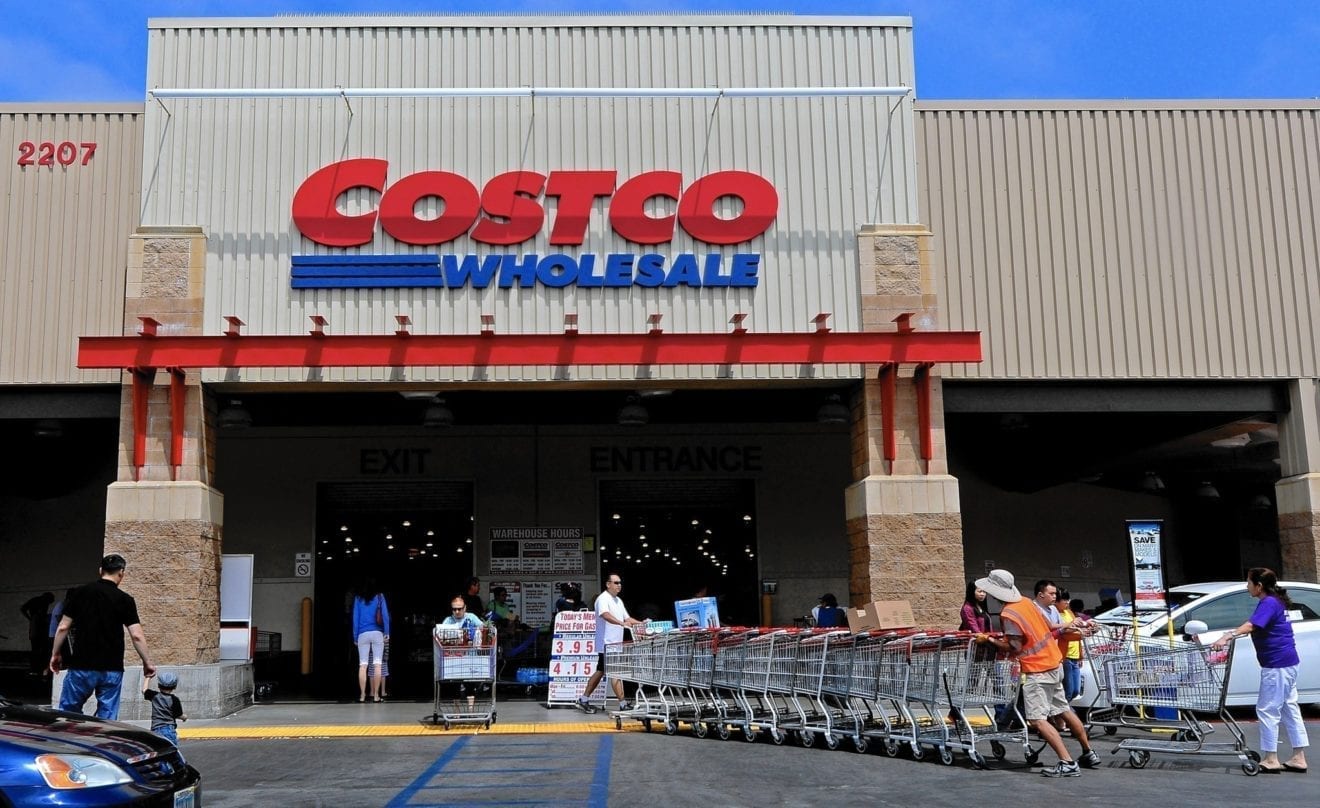
  • Retail giant Costco wins dismissal of prawn lawsuit over Thai forced labour

    Retail giant Costco wins dismissal of prawn lawsuit over Thai forced labour

    Judge Jeffrey White ruled that the plaintiffs failed to establish that the world’s second largest retail chain was bound to inform customers that modern-day slavery could be part of its supply chain.

    The lawsuit, filed in 2015, claimed U.S.-headquartered Costco was aware the prawns it bought from its Southeast Asian producers came from a supply chain dependent on ships involved in human trafficking and labour abuses.

    “The facts described in the (complaint) are tragic and ‘raise significant ethical concerns’,” White wrote on Tuesday in an order to dismiss the case, held in Oakland, California.

    But “plaintiffs fail to allege (Costco) had a duty to disclose the information about labour abuses in the supply chain … on its product packaging,” he added.

    The case against Costco, which is run as a members’ warehouse, was filed by club member Monica Sud, a California resident, as a proposed class-action lawsuit with Sud arguing it could affect millions of customers in her state.

    Exporter C.P. Food Products Inc and its parent company, Thailand’s Charoen Pokphand Foods, PCL. were also named as defendants in the case.

    Charoen Pokphand Foods said in a statement emailed through its public relations representatives that it condemned “all aspects of human trafficking and forced labour.”

    “CP Foods is not – and has never been – an owner or operator of fishing vessels that used forced labour as alleged in the lawsuit,” the company said.

    Attorneys representing the plaintiffs and other defendants did not immediately respond to requests for comment.

    Sud along with fellow Costco customers alleged that Costco purchased farmed prawns, also known in the industry as shrimp, from the Southeast Asian seafood producers despite knowing they used ships manned by slave labourers.

    The complaint followed investigations by Britain’s Guardian newspaper and the Associated Press into the shrimp supply chain. The probe found that large numbers of men were brought and held against their will on fishing boats off Thailand that were used to farm prawns sold in some of the world’s leading supermarkets.

    The Guardian found Charoen Pokphand Foods was buying fishmeal to feed to its farmed prawns from some suppliers that owned, operated or brought from fishing boats staffed by slaves.

    But in dismissing the lawsuit, the judge said the plaintiffs could not trace the prawns they bought to the suppliers in question.

    Judge White dismissed the lawsuit with prejudice, meaning that it cannot be brought again.

    The plaintiffs had filed their lawsuit under a California state law that prohibits unfair competition through misleading advertising.

    Last year, the U.S. State Department’s Trafficking in Persons report removed Thailand from the bottom rung despite what it described as “widespread forced labour” in the country’s vital seafood industry.

    Globally, nearly 21 million people are victims of forced labour, according to the International Labour Organization.

  • US$1 billion in first five minutes of 11.11

    US$1 billion in first five minutes of 11.11

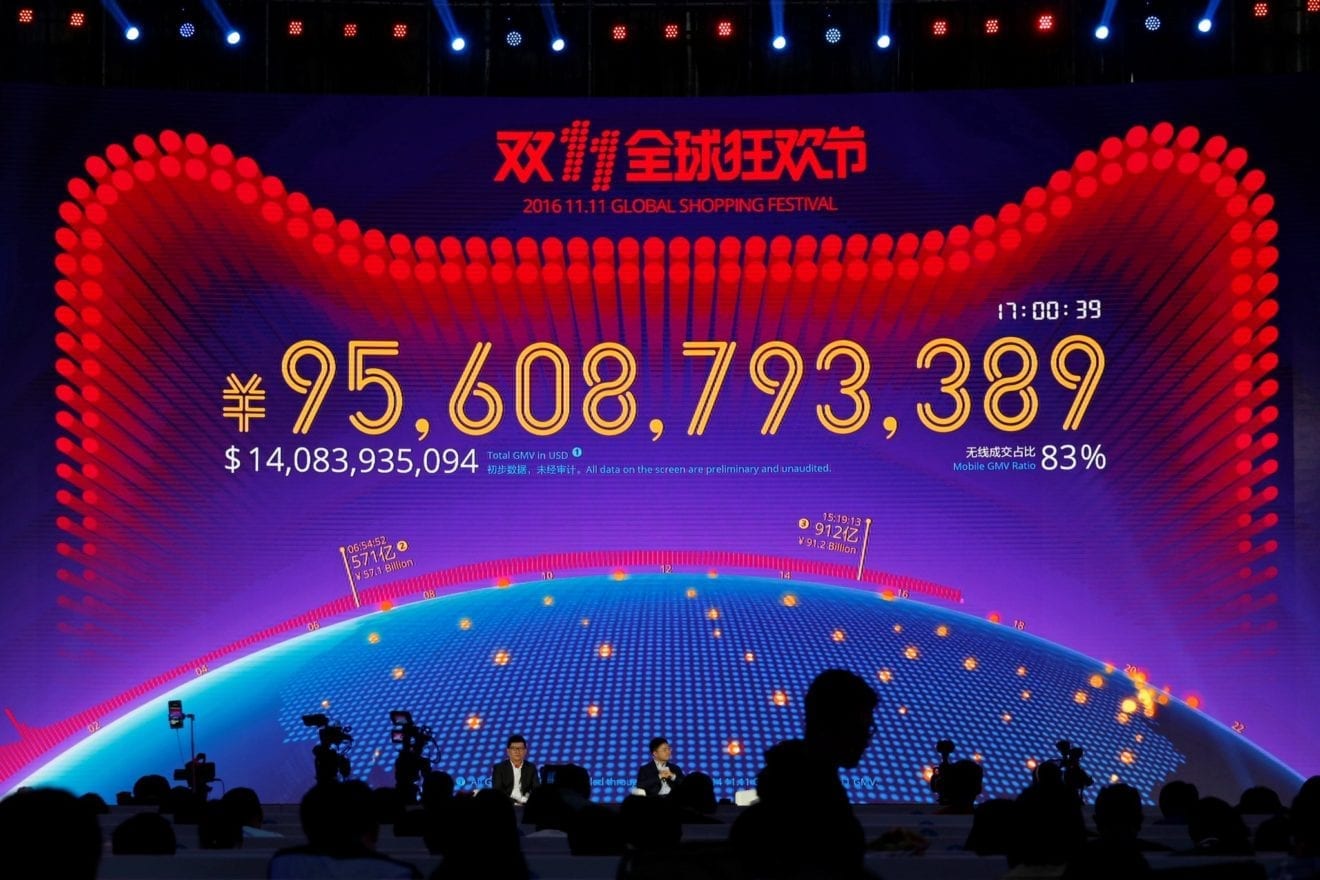
    Alibaba Group says more than US$7 billion (RMB 47.5 billion) of gross merchandise volume (GMV) was settled through Alipay on Alibaba’s China and international retail marketplaces within the first two hours of the 2016 11.11 Global Shopping Festival.

    And more than $1 billion was transacted in the first five minutes – from 12 midnight.

    “Chinese consumers purchased more in the first hour of 11.11 this year than the entire 24 hours in 2013, reflecting the incredible evolution of our global shopping festival,” said Daniel Zhang, Alibaba Group CEO. “This unprecedented level of engagement demonstrates both the consumption power of Chinese consumers and their embrace of online shopping as a lifestyle.”

    In the hours leading up to the official midnight start of November 11, millions of viewers watched the Alibaba Group 11.11 Global Shopping Festival Countdown Gala live online and on mobile devices via Youku Tudou, and the Tmall and Taobao apps. The gala was televised live across China through Zhejiang Satellite TV, as well as in Hong Kong and Macau for the first time.

    “This year, we innovated new ways for consumers watching the live broadcast of our countdown gala. Viewers were able to influence the production of the show in real-time through their mobile phones,” said Chris Tung, chief marketing officer, Alibaba Group. “Consumers in front of their televisions were shaking, tapping, scanning, chatting, browsing and buying with their mobile devices, creating a seamless and truly immersive entertainment experience.”

    VR drives surge

    International think tank Fung Global Retail & Technology predicts sales of $20 billion during the full 24 hours, up an extraordinary 40 per cent over last year’s total of $14.3 billion, thanks in part to the introduction of Buy+, the world’s first-ever end-to-end virtual reality (VR) shopping experience.

    “Buy+ will enable global retailers (even those without a physical presence in China) to offer an engaging, virtual in-store experience to Chinese consumers,” writes Fung Global Retail & Technology MD Deborah Weinswig in Singles’ Day Online Shopping Festival Could Also Benefit Retailers’ Physical Stores, a new report.

    The platform features eight virtual stores: Macy’s, Target, Costco, P&G, Chemist Warehouse, Freedom Foods, Tokyo Otaku Mode and Matsumoto Kiyoshi. Using cardboard VR headsets distributed in October, consumers can virtually walk around Macy’s Herald Square flagship in New York City to find products and, with just a nod of the head, confirm payment to purchase an item they see.

    “One of Alibaba’s strategies for Singles’ Day is to merge gamification with online shopping. The company will leverage its media and entertainment assets to drive increased online consumption,” says Weinswig.

    These include a televised countdown gala event and fashion show that was held last evening. In addition, the company is promoting products on TV screens, allowing viewers to scan QR codes for a real-time purchase.

    The concept has expanded beyond Alibaba, with chief rival JD.com, Gome and Suning also creating promotions. International retailers will target Chinese shoppers, and Chinese retailers target international shoppers. In 2015, Newegg, OTTE New York and Nasty Gal, all launched Singles’ Day promotions.

    “A year ago, Alibaba promised that Singles’ Day will be a true omni-channel event, and this year the company seems dedicated to continue delivering on the promise, armed with more technological innovations that bridge the gap between the virtual and physical worlds,” Weinswig writes.

  • Alibaba Group promises to redefine retail as it sets the clock ticking for Singles Day shopping festival

    Alibaba Group promises to redefine retail as it sets the clock ticking for Singles Day shopping festival

    Alibaba Group has started the clock on the Global Shopping Festival it will hold on November 11, which is known as Singles Day in the Chinese market where it dominates online shopping.

    The retailer, which trades through marketplace sites including Alibaba.com and TMall, has unveiled its plans for a festival that’s set to include a countdown gala, an eight-hour live streamed fashion show, virtual reality shopping, interactive games and more.

    These are all innovations aimed at enabling almost 100,000 merchants to build their brands, as well as engage with and sell to the hundreds of millions of Chinese consumers it predicts will shop on its marketplaces during the festival.

    Last year’s event, saw goods worth £9.3bn sold via the group’s websites.

    The press launch alone was attended by brands from Macy’s and Costco through to Swisse and eMart. There, Daniel Zhang, chief executive officer of Alibaba Group, said, “11.11 Shopping Festival has become the global retail benchmark over the past seven years, and we have raised the bar again this year to redefine the retail experience for consumers together with our merchants from around the world.”

    Zhang continued, “11.11 has evolved far beyond a 24-hours sales event. From today through November 11, consumers will discover, explore, play, watch, comment, share, recommend and shop across our entire ecosystem with our merchants both online and offline. Leveraging our robust infrastructure, global merchants have been empowered with unprecedented capability to seamlessly engage and serve customers through new technology and new environments.”

    Highlights of the Global Shopping Festival will include a Tmall eight-hour fashion show in Shanghai in which 50 international brands and 160 models will take part. It will be streamed live via Tmall and Taobao mobile apps that viewers can use to pre-order items as they appear on the catwalk.

    Shoppers will be able to use virtual reality to buy, as Alibaba pilots Buy+, billed as the world’s first complete virtual reality (VR) shopping experience. Those who use it will be virtually transported to select retail stores internationally, where they can experience the entire shopping process from product selection to payment, all via VR.

    In the run-up to the event, more than 600 international brands are streaming live broadcasts on Tmall to tell consumers about their brand and the deals and products they’ll be offering on 11.11.

    Katy Perry will headline the 11.11 Global Shopping Festival Gala on November 10.

    The event will link online and offline: Alibaba believes the future of commerce is not online only but will integrate the online and offline experience. A location-based augmented reality mobile, to be released two weeks ahead of the festival, will enable consumers to follow the Tmall Cat across the online and offline retail ecosystem: offline partners include shopping malls in Beijing and Shenzen, Shanghai Disneyland, KFC and Starbucks. Alibaba is also working with more than a million offline shops to present consumers with a joined-up experience.

    The retailer also promises each consumer a personalised shopping experience, thanks to the use of big data that will drive tailored product recommendations, search results, and user-generated content.

    The retailer is also focusing on going global, and aims within 10 years to serve two billion consumers, while supporting 10m small businesses, brands and retailers. The 2016 11.11 Global Shopping Festival includes a ‘buy globally, sell globally’ initiative that focuses on making Alibaba a gateway for international brands and merchants to sell to consumers in China. Meanwhile, it is also piloting approaches to supporting global retailers and brands as they sell beyond China. It is taking its infrastructure, including logistics and payments to Hong Kong and Taiwan – the first steps in its expansion strategy.


  • Costco Korea starts selling online

    Costco Korea starts selling online

    The American membership-only warehouse club Costco Wholesale Korea has opened its online shopping mall this week.

    It is the first among the Asian countries Costco has entered, and its fifth international online shopping site after the US, England, Canada and Mexico.

    Customers who are Costco Korea members who register online can shop online at the store.

    The products sold are categorised under 11 different groups: digital, home electronics; furniture, home interior, toys, Christmas; sports, fitness; garden, patio; clothing, fashion accessories; jewellery, watches, accessories; beauty, health; tools, living, cars; stationery, office supplies; and food.

    Compared to other online malls which don’t have a paid membership, the number of items offered is much lower. All prices include shipping.

    Costco has chosen to abstain from selling fresh food online. This could be interpreted as an acknowledgement that the company currently doesn’t have a distribution system fast enough to assure the freshness of the products. For now, customers will be able to purchase processed foods, grains, dried foods, and snacks.

    Industry observers say that since Costco’s online mall lacks fresh food, and has a lot of foreign brands among the products it carries, its pool of consumers should not overlap with domestic retailers.

    Furthermore, the fact that only customers with current membership can use the online mall is another limitation of Costco’s internet penetration potential.

    However, based on the success Costco has achieved through its domestic offline stores, some observers are predicting that once Costco expands its logistics infrastructure, increasing the number of products it can handle and distribute through the online site, its influence on the domestic online market could be great.

    Costco already ranks No.1 in consumer satisfaction among the five largest hypermarket retailers in Korea (Emart, Homeplus, Lotte Mart, NH Hanaro Mart, Costco), according to a report from the Korea Consumer Agency.