Retail News CRM

Tag: Cotton On

  • Cotton On Group Dissolves Inactive Singapore Entity in Strategic Asian Restructuring Move

    Cotton On Group Dissolves Inactive Singapore Entity in Strategic Asian Restructuring Move

    The Australian fashion retail giant, Cotton On Group, has announced the shuttering of its regional division, Cotton On Asia. This decision comes in the wake of a resolution passed by shareholders that approved the winding up of the business and the appointment of liquidators.

    Despite the closure of this regional subsidiary, Cotton On Group has no intentions of withdrawing from the Asian market. Cotton On Australia’s main office has clarified that the liquidated entity was not responsible for operating any stores or hiring employees.

    “We have no plans to exit the Asia region,” a company representative stated.

    It was further explained that Cotton On Asia was an inactive holding company and its existence was no longer necessary. The closure will not affect customers, team members, stores, suppliers or operations within the Asian region in any way.

    Official documents from the Government Gazette reveal that the Singapore-based entity has entered a creditors’ voluntary liquidation. This action was a result of an extraordinary general meeting where members passed a special resolution under the Insolvency, Restructuring and Dissolution Act 2018.

    This move is reportedly part of a more extensive restructuring of the group’s corporate setup in Asia. Although the details have not been specified, it is generally believed that such actions are intended to streamline legal structures and enhance operational efficiency across different markets.

    Cotton On was first established in Singapore in 2007 and over the years have expanded its brand portfolio. The group now includes a variety of brands such as Cotton On, Cotton On Body, Cotton On Kids, Typo, and Rubi.

    The company was founded by Nigel Austin, who still maintains control over the business operations.

    Questions & Answers

    What is the reason behind Cotton On Group closing its regional division, Cotton On Asia?
    The closure is part of a broader restructuring strategy of the group’s corporate setup in Asia, aimed at streamlining legal structures and enhancing operational efficiency across different markets.

    Will the closure of Cotton On Asia affect the company’s operations in the region?
    No, the company has made it clear that the closure of this division will not impact customers, team members, stores, suppliers, or operations within the Asian region.

    Who founded Cotton On Group, and who currently oversees its operations?
    The Cotton On Group was founded by Nigel Austin, who continues to control the business operations.

  • Australian fashion brand Cotton On comes to Vietnam

    Australian fashion brand Cotton On comes to Vietnam

    Australian fashion brand Cotton On is the latest foreign player to come looking for a piece of the action in the growing Vietnamese market.

    It opened its first store in the country at Vincom Thao Dien in Ho Chi Minh City’s District 2 on November 15. It plans to open two more stores before December, including one at Aeon Mall Ha Dong in Hanoi, it said in a statement.

    “We know there is a growing demand for street/casual wear fashion in Vietnam, so we’re confident our distinctive product offering will resonate with customers who want access to the most effortless, on-trend products,” James Lavdas, Cotton On’s general manager of license, said.

    The group has come to Vietnam through a partnership with Imex Pan Pacific Group (IPPG), which also brought other fashion brands such as Nike and Mango to the country. It is the first Australian apparel retailer in the Vietnamese market.

    Cotton On, among the largest fashion brands in Australia, was established in 1991 and now has a presence in 19 countries. Before Vietnam, it had entered India in January.

    Earlier this month Japanese casual wear retailer Uniqlo announced it would open its first store in the country in Ho Chi Minh City’s District 1 on December 6, adding to the list of around 200 foreign fashion brands that have entered Vietnam, including Zara, H&M, Giordano, Topshop, Gap, and Old Navy.

    Industry insiders say that Vietnam, with its young demographic, growing incomes and 96 million population, is a hugely promising market.

    The industry was estimated to be worth $5 billion in 2018 and is expected to reach $7 billion by 2023.

  • Cotton On Group launches in India

    Cotton On Group launches in India

    One of Australia’s largest fashion retailers, Cotton On Group, is launching in India, with a first flagship store scheduled to open in the second half of next year.

    In advance of the company’s physical stores, Cotton On will sell fashion products online on the Myntra platform, in a move seen as a challenge to Sweden’s H&M and california’s Forever 21.

    The first flagship store will open in either Delhi or Mumbai in the third or fourth quarter of next year.

    Cotton On’s local partner is AVS Global Network, which has reportedly secured an 18-month exclusive contract to sell fashion on Flipkart, Myntra and Jabong.

    “About 77 per cent of online fashion brand consumers use either Flipkart, Myntra or Jabong to shop, as they have a high brand-recall value,” said AVS cofounder Sumanto Das. “This is why we thought it would be wise to introduce Cotton On to India through these platforms.”

    Cotton On Group, which owns the namesake brand along with Factorie, Ruby (shoes), Typo (stationery), Supre and Lost, was founded in 1991. It has already expanded into Singapore, Hong Kong, South Africa and New Zealand, among other markets with about 1500 stores worldwide.

  • Cotton On’s Factorie to step out from two markets

    Cotton On’s Factorie to step out from two markets

    Cotton On Group has confirmed it is withdrawing its fashion brand Factorie from Malaysia and Singapore.

    A spokesperson says the move impacts eight outlets, four in each country, but the company will seek to improve its store footprint across the markets. “We value the incredible contribution our team members have made to Factorie …they remain our number-one priority and we’re working closely with them to identify opportunities for their redeployment within the business.”

    The spokesperson would not comment on the reason behind the closure. While the stores are scheduled to shutter by the end of next month, Factorie products will still be available online on Zalora.

    Factorie entered the Asia Pacific market in 2013. Its latest move follows fashion brands such as Celio and New Look leaving the Singapore market.

    Meanwhile, the retail industry in Malaysia saw sales dip 1.1 per cent in the third quarter last year. According to a Retail Group Malaysia report, this was because of a drop in purchasing power among Malaysians.

  • Australia’s Cotton On group top performing eco fashion retailer of 2017

    Australia’s Cotton On group top performing eco fashion retailer of 2017

    Cotton On Group has become the top performing fashion retailer of 2017 in Australia, says a fashion report. The recognition solidifies the Group’s commitment to ethical and sustainable retailing, highlighting the steps it takes towards ensuring a safe, fair and sustainable environment in which its products are being sourced and manufactured.

    The Ethical fashion report by Baptist World Aid (BWA) grades companies on the efforts put in for a transparent and eco-friendly working condition. The research team assesses each company’s labour rights management system according to 40 specific criteria. These assessments consider three critical stages of the supply chain as a proxy for the entire supply chain: raw materials, inputs production and final manufacturing.

    “The environment in which our products are made and the materials used to make them form a critical part of our ethical responsibility – it’s just the right way to do business,” Cotton On Group’s ethical sourcing manager David Nesbitt said.

    “Over the last five years, we have worked closely with BWA to build on the strength of our existing ethical sourcing programme, allowing us to sense check and continually enhance our programmes with a focus on end-to-end mapping of our suppliers,” added Nesbitt. “We know we are on a continuous road to improvement and are committed to an ever-better supply chain for the long haul.”

    The Group’s ethical sourcing programme, including its 14 Rules to trade, has been in existence since 2009 and governs the sourcing, manufacturing and supply of products. Adherence to this code of conduct relies on the strength of the relationships the Group holds with its suppliers – some of which have been partners of the business for over 20 years.

  • The Twee flagship in Kuala Lumpur

    The Twee flagship in Kuala Lumpur

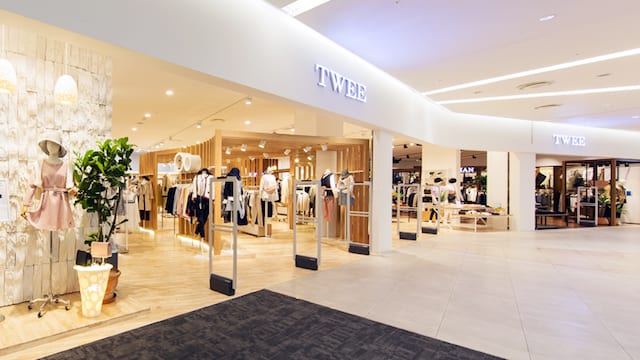
    Korean fashion retailer The Twee will open its first Southeast Asia flagship store at the new KL Gateway Mall in Kuala Lumpur.

    Set to open on January 12, the mall is part of the KL Gateway mixed development by Suez Capital in Bangsar South, Jalan Kerinchi.

    Along the Federal Highway, it offers a net lettable area of about 400,000 sqft (37,161 sqm) across seven levels, with more than 200 retail outlets.

    Covering about 11,000 sqft, The Twee flagship will be the brand’s biggest store in Southeast Asia, says Suez Capital head of asset management Michael Chee Soon Hin.

    Launched in 2009, The Twee has 28 fashion stores as well as kiosks in major department stores across Korea as well as in Shanghai. It targets women between 19 and 25 years old.

    Chee says the mall is already 80 per cent occupied and there are hopes it will achieve full occupancy by April. Secured tenants include Cotton On, Daiso, Doutor Coffee, H&M, Home’s Harmony, Mr DIY, Times Bookstore, Village Grocer, Yamazaki Bakery and Yubiso.

    There will also be free WiFi throughout the common areas of the mall.

    “The concept of the mall is based on a street mall – you will not be bored,” says Chee. Each floor is inspired by elements from different continents, and there will be an outdoor landscaped garden where residents in the residential units above the mall can grow vegetables.

    Suez Capital has invested in an automated car-park system for shoppers. “It will be the biggest automated car park in Southeast Asia with 1230 automated parking bays as well as 900 normal parking bays,” says Chee.

    The projected footfall for KL Gateway Mall is more than 10 million annually, with about 40 per cent from LRT (light-rail transit) commuters. A 100m covered, air-conditioned bridge will link the mall to the KL Gateway-University LRT Station.

    The integrated development includes four residential towers of more than 1180 units, which will be completed next year, while two Grade-A corporate office towers are being delivered in stages.

  • Bloom time for kids’ fashion

    Bloom time for kids’ fashion

    Mrs Madelaine Wong buys new clothes for her three children every fortnight.

    The 37-year-old, a regional director of sales, shops for them during lunch time or after work.

    While Mark, six, Lauren, four, and Jude, one, are at a stage of their lives where they outgrow their clothes quickly, Mrs Wong admits that she also buys them new clothes because she feels guilty about not spending enough time with them. She thinks that shopping for them is a way for her to show affection.

    She spends about $100 on each shopping trip and is a regular customer at mass market-label stores such as Cotton On and H&M.

    “I get suckered into shopping at Cotton On’s online store when the brand is having a 20 per cent discount storewide. I go online and think to myself, ‘Okay, I think they need some more pyjamas’, or I will see a pretty dress and add it to the shopping cart.”
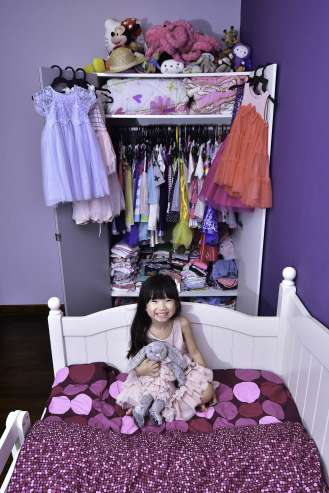

    Lauren Wong may be only four, but her wardrobe is bursting at the seams, thanks to her mother buying her new clothes every fortnight. PHOTO: DIOS VINCOY JR FOR THE STRAITS TIMES

    While parents and grandparents may have grown up with a culture of saving as much as possible… they may now feel that they could be a bit freer spending on their children and grandchildren.

    DR SESHAN RAMASWAMI, associate professor of marketing education at Singapore Management University

    Thanks to indulgent parents like her, the children’s clothing market has become the one bright spot in the weak retail sector.

    The range of children’s clothes has expanded in recent years, with the arrival of new brands and the expansion of existing ones.

    Australian label Seed Heritage, which carries clothes for women and children (from babies to teenagers), debuted with a splash in Singapore last year by opening three stores in Parkway Parade, VivoCity and Wisma Atria.

    The label’s general manager, Ms Denise Haughey, says that the 16-year-old brand had received regular inquiries from mothers living here before it opened in Singapore. She declines to give sales figures, but says: “Singaporean parents really enjoy dressing up their little ones.”

    Seed Heritage clothes feature plenty of whimsical prints and stylish pastel colours and are priced between $7.95 for three pairs of boy socks and $59.95 for a girl’s embroidered dress.

    Israeli high-street label Fox, which carries clothing for women, men and children, has enjoyed an “overwhelming” response to its children’s and baby collection.

    A spokesman for Wing Tai, which distributes the brand here, says the good response can be seen from the large number of members who sign up to collect points for discounts. The brand has accumulated 120,000 members since opening here in 2004.

    The spokesman adds: “We’ve noticed parents are becoming more trend-conscious when it comes to dressing up their children and this has helped spur the childrenswear industry.”

    Popular Swedish high-street fashion label H&M revamped its flagship store at Orchard Building in 2014 to devote the fourth floor to its children’s clothing department.

    The department previously shared space with its men’s fashion.

    H&M’s clothes for children, aged from newborn to 14, include T-shirts, jeans and cotton dresses.

    Like in the adult range, the children’s clothes are priced competitively, ranging from $19.90 for a white lace top for girls to $59.90 for a cotton blazer for boys.

    Ms Abby Wee, public relations manager for H&M Singapore, says the brand has also expanded its childrenswear range to include sportswear, swimwear and dancewear because of strong sales in childrenswear.

    Japanese casual wear label Uniqlo carries children’s clothes in 20 of its 24 stores in Singapore.

    Another popular Japanese label, Muji, sells its children’s collection at three of its nine stores here.

    Ms Jasmine Sng, general manager for Muji (Singapore), says the label had received many requests to bring in childrenswear. Muji shirts and dresses for children range from $12.90 to $59.

    Ms Sng says the sales of children’s and babies’ clothes have grown from 7 per cent of total garment sales in 2014 to about 10 per cent.

    The expansion in children’s labels is also mirrored in the luxury end of the market.

    The Shoppes at Marina Bay Sands expanded its children’s section late last year.

    Italian label Dolce & Gabbana Junior opened a 1,400 sq ft space in October. The outlet is the brand’s first junior store in the region and its collection carries clothes for children aged newborn to eight years old.

    Designer multi-brand retailer Club 21 opened standalone Armani Junior and French label Bonpoint stores at Marina Bay Sands in December.

    Other children’s labels at The Shoppes include Baby Dior, which opened a 900 sq ft store in 2014 and Ralph Lauren Children, which opened its largest standalone store for childrenswear in South-east Asia in the same year. The flagship store for the American label spans 1,985 sq ft.

    The designer label clothes for children can cost $550 for a boy’s shirt and a couple of thousands of dollars for a party dress.

    Paragon shopping mall also has a floor populated with childrenswear stores, including French brand Petit Bateau, international brand Nicholas & Bears, British brand Burberry Children, Filipino label Gingersnaps and multi-label store Kids 21.

    Retail experts interviewed say growing affluence and smaller families have led to the strong growth in the childrenswear market.

    Mr Samuel Tan, course manager (diploma in retail management) at Temasek Polytechnic School of Business, says: “With fewer children a household, parents or even relatives are willing to spend more on the kids.

    “With generally higher disposable incomes and more affluent dual-income families, design, look and quality of clothes are prioritised over price.”

    He adds that parents who are loyal customers of a brand are also more likely to shop for their children at the same store.

    “With the growing popularity of brands such as H&M, Uniqlo and Cotton On, the line extension is a logical move.”

    Dr Seshan Ramaswami, associate professor of marketing education at Singapore Management University, says that retailers may be targeting the children’s fashion market to fend off online competition.

    He adds that today’s parents have higher incomes compared with those of previous generations and are more willing to spend on their children.

    “While parents and grandparents may have grown up with a culture of saving as much as possible and have grown used to spending less on themselves, they may now feel that they could be a bit freer spending on their children and grandchildren,” he says.

    Manager Jonathan Heng, 38, admits that he shops more for his two sons than for himself.

    “It is more because of necessity. They grow so fast and outgrow their clothes and shoes quickly,” says Mr Heng of Caleb, four, and Zachary, three months old.

    “My wife and I probably shop for them every other month. As parents, our lives are about our kids now anyway,” he adds.

    Ms Sharon Yeoh, a senior consultant at the Civil Service College’s Institute of Leadership and Organisation Development who has two daughters aged six and three, says she also shops more for her children than for herself. “It is more fun shopping for them. The clothes are so cute and pretty.”
  • Cotton On plans next stage of global growth

    Cotton On plans next stage of global growth

    Cotton On Group has revealed plans to add 227 jobs in Australia and overseas this year as the Geelong-based value fashion retailer embarks on another expansion phase aimed at maintaining its five-year record of 20 percent-plus sales growth.

    Cotton On Group’s sales are forecast to rise 22.5 percent in 2015 to AUD1.51 billion (USD1.17b) and the privately owned company is budgeting for 20 percent-plus growth in 2016 by opening more than 100 stores and expanding e-commerce with new online sites, improved digital content and click and collect options.

    Over the next three years, the group plans to open 570 stores around the globe, taking the total to almost 1900, while lifting online sales to AUD250 million.

  • Cotton On tells staff to keep it real or face the sack

    Cotton On tells staff to keep it real or face the sack

    It may be a new low in human resources gibberish.

    But the fun crowd at retailer Cotton On have told staff they need to “keep it real” or face the sack.

    A leaked copy of Cotton On’s code of conduct tells its staff it is “unacceptable” when working with colleagues or customers, to be anything but “fun” and “keeping it real”. No ifs or buts. Failure to do so can result in being fired on the spot.

    Less well defined in the document is what “keeping it real” means. The Online Slang Dictionary tells us that to “keep it real” is to “stay true to one’s self; to resist the temptation to be fake”. One claim is that the origins of the phrase emerged out of hip-hop culture in New York in the late 1970s and early 1980s.