Tag: cotton

  • Pakistan Cotton Arrivals Rise 7.5 Percent to 4.08 Million Bales

    Pakistan Cotton Arrivals Rise 7.5 Percent to 4.08 Million Bales

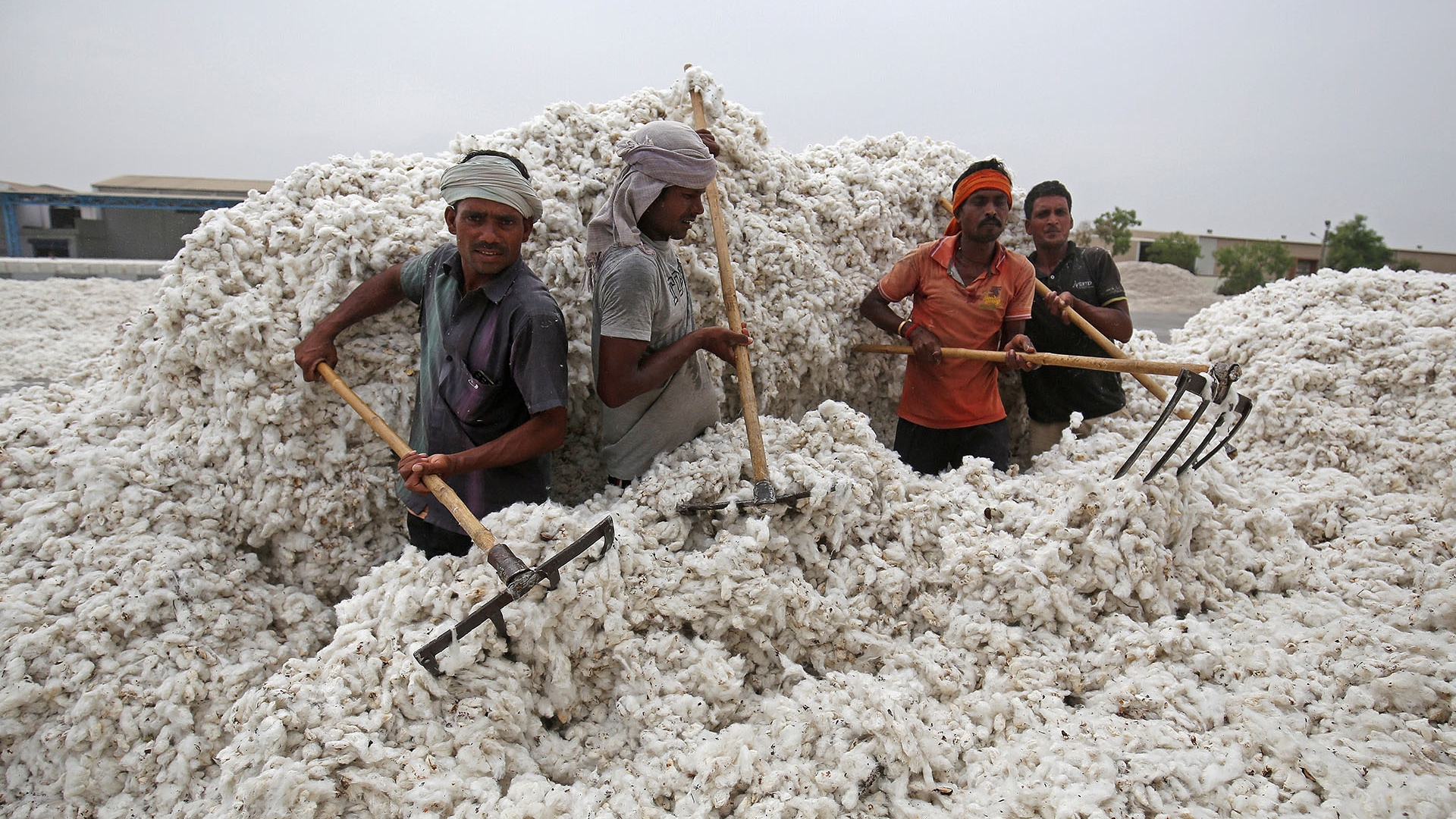
    Cotton arrivals at Pakistani ginning factories reached 4.08 million bales by October 15, rising 7.53 percent year-on-year despite widespread textile plant shutdowns.

    Data from the Pakistan Cotton Ginners Association shows total intake climbed to 4,081,265 bales, up 285,628 bales from the 3,795,637 recorded in the same period last season.

    Domestic mills bought 3.45 million bales and exporters booked 97,000 bales, leaving 531,530 bales unsold across active yards. Total arrivals during the preceding fortnight stood at 872,863 bales, processed by 471 operational ginning facilities nationwide.

    Regional Yields and Mill Disruption

    Sindh drove the bulk of volume with 2.44 million bales, up 7.35 percent from last year, led by Sanghar district at 1.14 million bales. Sukkur followed with 264,500 bales, Naushehro Feroze with 223,200 and Khairpur with 213,900.

    Punjab recorded arrivals of 1.64 million bales, representing a 7.79 percent increase. Bahawalnagar posted 418,750 bales, Bahawalpur delivered 294,606, Dera Ghazi Khan produced 236,514, Rahim Yar Khan reached 169,949 and Layyah logged 122,327.

    The higher volume arrives against severe industrial curtailment. Trade bodies report approximately 500 ginning factories and more than 150 spinning and weaving mills have shut operations, while roughly half of Pakistan’s power looms remain idle.

    Synthetic Influx Distorts Local Pricing

    Local processors blame soaring energy tariffs and leakages under the Export Facilitation Scheme for depressing domestic fiber demand. Under the programme, duty-free imported yarn and fabric intended for export finishing are instead diverted into the local market, bypassing the standard 18 percent sales tax paid by domestic suppliers.

    Import figures from the All Pakistan Textile Mills Association reveal man-made yarn shipments jumped to 12,773 tonnes in the first quarter of the 2026-27 fiscal year, up from 3,056 tonnes a year earlier. Man-made fabric imports surged from 660 tonnes to 8,628 tonnes over the identical timeframe.

    Cotton Ginners Forum Chairman Ihsanul Haq noted that traders brought an estimated 40 million to 50 million metres of fabric from China alone under the concessionary system without generating matching finished garment export growth.

    Crop Estimates and Farmer Margins

    Discrepancies in official output tracking complicate procurement planning for regional apparel makers. The Punjab Crop Reporting Service estimated provincial crop output at 2.983 million bales, creating a sharp divergence against the ginners association tally of 1.638 million bales received by mid-October.

    Central Cotton Research Institute transfer of technology head Sajid Mahmood warned that higher raw output will not stabilize the supply chain if farmgate returns fall below cultivation costs. Farmers facing compressed margins are expected to shift acreage toward competing crops next spring if lint prices fail to cover inputs.

    Karachi Cotton Brokers Forum leader Naseem Usman urged authorities to establish a direct floor price and an official buying mechanism to prevent distressed sales if open-market rates slide further.

    Harvest Run Out

    Picking operations enter their final 15 to 20 days across core farming belts in southern Punjab and upper Sindh. The Central Cotton Research Institute has instructed growers with plants bearing eight to 10 green bolls to apply a foliar spray of two kilograms of urea per 100 litres of water to accelerate boll opening before seasonal temperatures drop.

    Customs authorities have initiated targeted inspections against trading firms suspected of misusing import exemptions, while mills push Islamabad for formal quota caps on incoming synthetic yarn before second-quarter contracts settle.

  • China BCI Cotton Prices Fall 0.96%

    China BCI Cotton Prices Fall 0.96%

    China Better Cotton Initiative certified cotton prices fell 0.96 per cent this week. The drop brings immediate relief to regional textile mills and apparel makers sourcing sustainable fibre across Asian supply networks.

    Factory operators face strict sustainable sourcing quotas set by international brands. Cheaper raw fibre helps spinning mills and garment producers meet those targets without extra cost pressure.

    Input Costs for Asian Spinning Mills

    Downstream yarn producers feel the price shift first. Mills in major regional processing hubs track Chinese BCI benchmarks closely as they plan procurement strategies for upcoming production runs.

    Export clients demand verified traceability. Lower fibre prices allow spinning facilities to protect operating margins while keeping those standards intact.

    Pressure on Apparel Export Margins

    Asian garment exporters face persistent cost competition in North America and Europe. Raw cotton accounts for a major share of fabric production costs, so fractional price shifts matter to volume suppliers.

    Global apparel labels are negotiating seasonal contracts right now. Suppliers that locked in higher procurement rates in recent weeks face tighter pricing pressure during these talks.

    Sourcing Adjustments Across Asian Hubs

    Regional manufacturers balance local buying against imported certified fibre, weighing freight rates and tariff differences. Cheaper Chinese cotton gives domestic mills a brief edge over competitors relying on imported bales.

    Procurement teams are adjusting forward contracts. They must avoid inventory depreciation while still securing required volumes of verified sustainable stock.

    Market Metrics to Track

    Traders now watch raw fibre auction clearance rates in Chinese hubs. Those figures will show whether the 0.96 per cent drop extends into deeper price cuts.

    Spinning mills will track order intake from garment exporters over the coming weeks to determine if raw material price adjustments trigger wider contract renegotiations.

  • Better Cotton Farmers Cut Synthetic Nitrogen 69 Percent in Five-Year Audit

    Better Cotton Farmers Cut Synthetic Nitrogen 69 Percent in Five-Year Audit

    Better Cotton member farmers cut synthetic nitrogen use per kilogram of cotton by 69 percent and pesticide volume by 65 percent, according to the group’s five-year impact audit.

    The benchmark covers field-level operations supplying roughly 24 percent of the global raw cotton crop to textile mills and apparel retailers worldwide.

    Researchers drew on more than 20 million annual data points gathered across commercial operations and smallholder plots. Alongside chemical cuts, 54 percent of licensed growers lowered their carbon footprint, while 52 percent of irrigated farms cut water use per kilogram of lint by an average of 29 percent.

    Lower input expenses delivered financial relief across rural growing belts. About 59 percent of participating smallholders lifted net farm income after adopting standard agronomic practices. These practices substitute biological controls and composting for commercial chemical inputs.

    Field Cuts Across Water and Chemicals

    Pest management shifts accounted for much of that cost drop. Across participating networks, 65 percent of growers reduced active synthetic pesticide ingredients per hectare. A network of 11,000 bio-input production and distribution centers established with local program partners supported the shift.

    Irrigation efficiency improved across arid basins through structured water stewardship training. Partner organizations conducted field sessions for 690,000 farmers and 175,000 agricultural workers. That outreach reached 65,000 female farmers and 77,000 female field workers.

    Female representation in administrative roles also rose over the five-year tracking window. Women now occupy 17 percent of field facilitation and producer unit management posts across participating organizations. Five years earlier, that figure was 9 percent.

    Pakistan Smallholders and Yield Economics

    Growers in Asia facing volatile weather and high fertilizer costs provided key proof points for the standard. In Pakistan’s Sanghar district, 37-year-old farmer Samina Khaskheli cut operating costs by 15.6 percent across three seasons. She did so by adopting botanical pest treatments, compost applications, and organic bio-fertilizers.

    Certified volumes give Asian spinning mills and garment exporters verifiable scope-3 carbon and chemical data under tighter brand procurement rules. Operational risks remain concentrated upstream. The main challenge sits with certification integrity at farm aggregators and ginning facilities along fragmented rural supply routes.

    Exporters in Pakistan and regional processing hubs face persistent scrutiny over raw material traceability. Standardized field reporting gives manufacturers defensible documentation when shipping finished textiles to regulated European and North American retail channels.

    Season Results Across Global Acreage

    Data from the single 2024 to 2025 growing season confirmed steady adoption rates. During that twelve-month cycle, 61 percent of participating growers reduced synthetic nitrogen per kilogram compared to the previous crop year. Another 49 percent cut their carbon footprint.

    Pesticide reductions continued across the single-season cohort. The report tracked 40 percent of growers lowering active synthetic pesticide usage per hectare. Meanwhile, 34 percent applied organic fertilizers such as livestock manure across their acreage.

    Local program partners ran at least 19,900 demonstration plots during the season. These trials validated alternative pest control methods before farmers risked seasonal capital on broadfield deployment.

    “BCI is committed to rigorous impact reporting, which gives confidence through diligently collected, interpreted, and disseminated findings drawn from reliable and complete data,” said Iain Gardiner, senior director of impact and development at BCI.

    Soil Health Targets for 2030

    The report represents the organization’s first comprehensive global impact assessment in five years. It follows a baseline cycle focused on expanding grower enrollment across South Asia, Africa, and the Americas.

    Attention now turns to the organization’s binding 2030 target. That benchmark mandates that 100 percent of its licensed cotton farmers document measurable improvements in soil health across their cultivated acreage.

  • Fashion Brands Influence 30 Percent of Global Farmland, Oxford Study Finds

    Fashion Brands Influence 30 Percent of Global Farmland, Oxford Study Finds

    Global fashion brands hold purchasing influence across 1.45 billion hectares of agricultural land, representing 30.15 percent of the world’s farmland, according to a joint study by the University of Oxford and Dirt Charity.

    Livestock grazing for leather and wool accounts for almost 97 percent of that total footprint, linking apparel buyers directly to commercial livestock farming networks worldwide ahead of European Union due diligence enforcement starting Sept. 27.

    Researchers at Oxford’s Smith School of Enterprise and the Environment and Dirt Charity analyzed five natural fiber categories to measure the full territory shaped by textile demand. Leather production ties into 876 million hectares of grazing land, while wool involves 528.4 million hectares. Cotton farming occupies 34.7 million hectares, linen and hemp cover 5.9 million hectares, and silk accounts for 2.3 million hectares.

    Allocating Land Across Shared Commodity Chains

    The calculation counts the entire agricultural area involved in growing crops or grazing animals rather than isolating the textile portion alone. Cotton lint makes up roughly 40 percent of harvested seed cotton, with the rest processed into cottonseed oil and animal feed, yet farm-level chemical inputs and soil practices apply to the entire crop. Because livestock systems serve meat, dairy, and leather markets simultaneously, the researchers treated the whole grazing area as subject to brand procurement requirements.

    Industrial leather processing reached more than 2.9 billion square meters globally in 2024. Footwear, apparel, and leather goods consumed 1.2 billion square meters of that output, while automotive interiors and furniture manufacturers bought the remaining volume.

    “We are not measuring blame. We are measuring power, and it turns out fashion has far more of it than anyone has been telling us.”

    Supply Chain Gaps Across Asian Sourcing Hubs

    For Asian garment hubs and raw material producers, the findings place commercial responsibility squarely on brand purchasing offices. Sourcing directors across Europe and North America often treat raw material agriculture as an unmanageable Tier-4 liability, leaving farm-level investments to local growers in India, China, and Pakistan. That separation is ending as buyers face mandatory supply chain due diligence rules in their home retail markets.

    Asian yarn spinners and fabric mills now face conflicting pressures from Western clients. Buyers demand verified low-impact cultivation methods such as organic or regenerative farming, but rarely offer long-term price premiums or multi-year purchasing volume guarantees. Without committed off-take contracts, smallholders across South Asian cotton belts bear the entire capital risk of switching soil management practices.

    Carbon Variations Outweigh Material Selection

    Production methods create wider environmental gaps within the same fiber category than the switch between alternative materials, the report found. Life cycle reviews cited in the study showed leather emissions ranging from 8.5 kilograms to 151.9 kilograms of carbon dioxide equivalent per square meter. Viscose emissions spanned 0.20 to 8.30 metric tons of carbon dioxide equivalent per metric ton of fiber, governed by feedstock origin and local electricity grids.

    Agricultural trials cited in the research show operational benefits from alternative soil methods. Long-term cotton trials running over 12 years in India demonstrated stronger soil microbial activity under biodynamic management systems. A five-year project at Egypt’s Sekem initiative cut chemical pesticide use to below 10 percent of previous levels, lifted cotton yields by almost 30 percent, and reduced soil salinity by 18 percent.

    European Compliance Deadlines Press Brand Filings

    The Oxford assessment builds on earlier NGO audits of fashion supply chains, which identified persistent traceability blind spots between Tier-1 assembly plants and upstream agricultural holdings. European retailers are now scrambling to document farm-level provenance as the European Union begins enforcement of its Empowering Consumers for the Green Transition Directive on Sept. 27.

    Dirt Charity and Biodynamic Federation Demeter International are finalizing the Demeter Textile Standard, a commercial framework covering 11 raw material categories across agricultural production, processing, and garment compostability. Apparel groups face mounting scrutiny to verify farm-level environmental claims before the next round of statutory sustainability disclosures opens in 2027.

  • Pakistan Cotton Arrivals Rise 19 Percent to 2.39 Million Bales

    Pakistan Cotton Arrivals Rise 19 Percent to 2.39 Million Bales

    Cotton arrivals at Pakistani ginning factories reached 2.389 million bales by September 15. That volume is up 19 percent from 2.004 million bales during the same period last year.

    The early surge lifts industry projections for full-year national output above six million bales. Last season yielded roughly 5.5 million bales.

    Provincial receipts showed uneven growth across primary growing regions. Punjab deliveries jumped 24.73 percent to 860,942 bales, while Sindh processed 1.528 million bales, a rise of 16.25 percent. Active facilities totaled 205 ginning factories in Punjab and 207 in Sindh.

    Regional Splits and Factory Volumes

    Sindh led early harvesting through intensive picking in key southern districts. Sanghar district alone delivered 888,607 bales to local ginners by mid-September. That single district outpaced the combined intake of all ginning units in Punjab.

    Steady field conditions across Matiari, Tando Allahyar, Hyderabad, Mirpurkhas, Nawabshah and Naushahro Feroze supported the southern haul. In Punjab, picking concentrated across Bahawalpur, Bahawalnagar, Dera Ghazi Khan, Multan, Vehari, Rahim Yar Khan, Muzaffargarh and Rajanpur.

    Mill Demand and Price Competition

    Domestic spinning and textile mills secured the bulk of intake, buying 2.035 million bales by the reporting deadline. Raw cotton exporters booked 93,000 bales. Ginners were left holding an unsold inventory of approximately 261,000 bales.

    Spot prices dropped sharply across trading hubs despite steady buying by domestic spinners. Over seven days, lint prices fell by about Rs1,000 per maund. Rates settled near Rs18,600 in Punjab and Rs18,400 in Sindh.

    Lower import parity prices for Brazilian raw cotton prompted several Pakistani mills to place overseas orders, dampening local price support. Cheaper imported fiber caps production costs for downstream yarn and fabric makers. Domestic growers, however, face tighter margins at the farm gate.

    This price squeeze creates supply chain risks for regional fashion retailers who rely on Pakistani mills for yarn and finished garments. Falling domestic lint prices could erode farm profits. That risk threatens to reverse acreage recovery in future planting cycles and drive higher import dependency across the South Asian textile corridor.

    Data Gaps and Acreage Shifts

    Cotton acreage in Punjab faces land competition from sugarcane, which has expanded into traditional cotton tracts. That shift explains part of the volume gap between the two provinces.

    Official production figures also show large reporting discrepancies between agencies. The Pakistan Cotton Ginners Association recorded 860,942 bales in Punjab through September 15. The Punjab Crop Reporting Service estimated 1.483 million bales by September 17. That represents a 72 percent gap between factory receipts and provincial field estimates.

    Pest Control and Final Crop Risks

    Early arrivals do not guarantee an unbroken harvest, field specialists warn. Agronomists have identified pink bollworm infestations in both provinces. Whitefly, jassid and thrips also apply localized pressure.

    Pest management over the coming weeks will determine whether crop yields hold.

    “The next few weeks will be critical,” Mahmood said, stressing continuous monitoring of bolls, timely pest-control measures and picking to protect both yield and lint quality.

    Growers and ginners are tracking pest counts and late-season rainfall across southern Punjab and Sindh. The next fortnightly arrival report will confirm whether picking maintains the six-million-bale trajectory.

  • Bangladesh Imports from India Hit $10.96 Billion Despite Port Limits

    Bangladesh Imports from India Hit $10.96 Billion Despite Port Limits

    Bangladesh increased its imports from India to $10.96 billion in fiscal 2025-26, defying land border curbs designed to restrict cross-border shipments between the two neighbours.

    The annual import bill rose 13.9 percent from $9.62 billion recorded in the previous fiscal year, according to National Board of Revenue data. Bangladeshi exports to India dipped slightly over the same period, slipping to $1.75 billion from $1.76 billion. The figures leave Dhaka with a bilateral trade deficit exceeding $9.2 billion, with India supplying more than six times what it buys in return.

    Shifting cargo from land to sea

    Bilateral trade friction escalated following political changes in Bangladesh in 2024. Dhaka restricted yarn imports across land borders in March 2025 to shield domestic spinning mills, redirecting all Indian yarn shipments exclusively through Chattogram seaport. New Delhi responded in April 2025 by halting airport transhipment facilities for Bangladeshi garments bound for third countries, later adding land port curbs on Bangladeshi processed food, jute, furniture, and apparel.

    The administrative barriers failed to dent demand for Indian textile inputs. Bangladesh Textile Mills Association president Showkat Aziz Russell said recorded yarn imports from India doubled to approximately 300 billion taka in fiscal 2026, up from 140 billion taka a year earlier. Channeling shipments entirely through seaports brought previously informal or unrecorded overland cargo onto customs registries, inflating formal totals while keeping factory order books supplied.

    Structural imbalance in regional apparel

    Textile mills and garment factories across Dhaka and Chattogram rely heavily on Indian cotton, yarn, and fabric because of shorter freight times and buyer-nominated fabric specifications. While India is Bangladesh’s second-largest overall trading partner after China, Dhaka’s outbound shipments remain heavily concentrated in ready-made garments, which face domestic competition and strict standard compliance inside India.

    Policy analysts and industry bodies note that despite duty-free access granted under the South Asian Free Trade Area framework in 2010, the two countries have yet to build integrated supply chain agreements. Bangladesh Garment Manufacturers and Exporters Association president Mahmud Hasan Khan and Knitwear Manufacturers president Mohammad Hatem have urged both governments to resolve transport frictions through high-level talks.

    Trade associations from both nations continue to push for formal negotiations on a Comprehensive Economic Partnership Agreement to clear land port bottlenecks and establish mutual certification standards.

  • Cotton On Group Dissolves Inactive Singapore Entity in Strategic Asian Restructuring Move

    Cotton On Group Dissolves Inactive Singapore Entity in Strategic Asian Restructuring Move

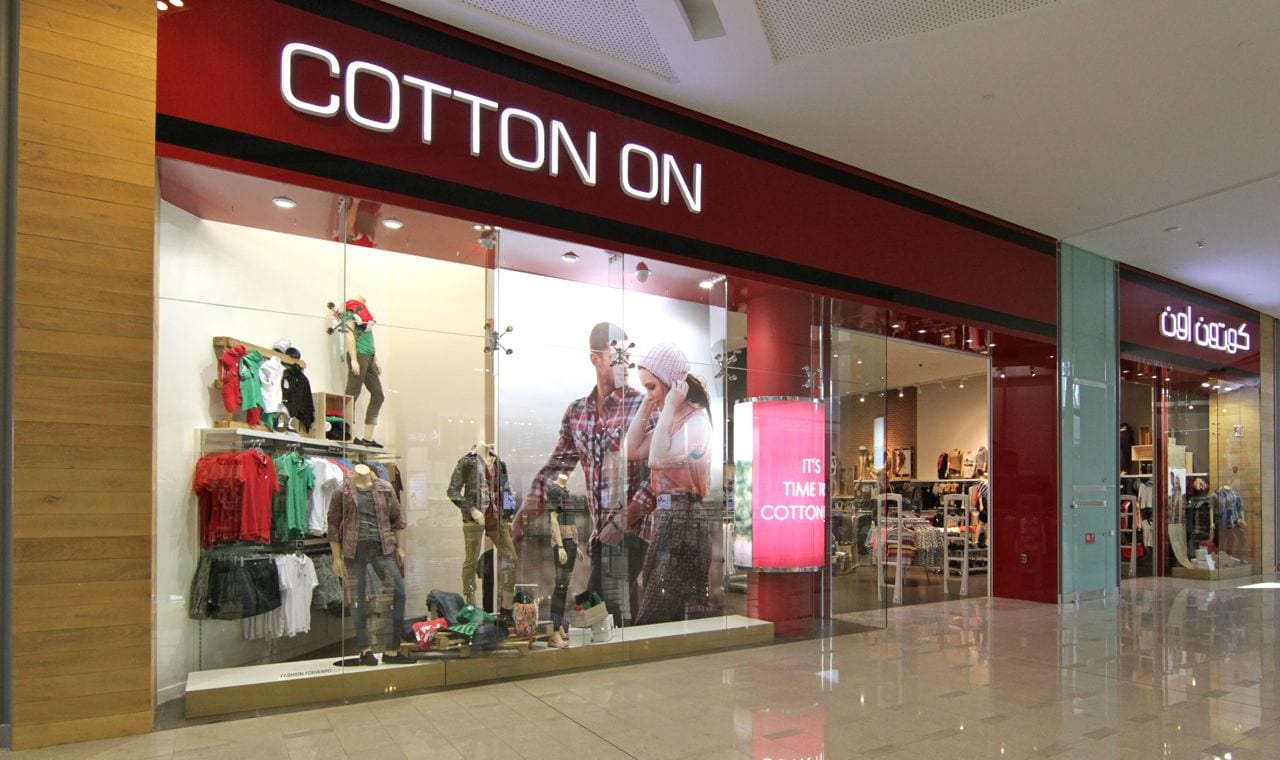
    The Australian fashion retail giant, Cotton On Group, has announced the shuttering of its regional division, Cotton On Asia. This decision comes in the wake of a resolution passed by shareholders that approved the winding up of the business and the appointment of liquidators.

    Despite the closure of this regional subsidiary, Cotton On Group has no intentions of withdrawing from the Asian market. Cotton On Australia’s main office has clarified that the liquidated entity was not responsible for operating any stores or hiring employees.

    “We have no plans to exit the Asia region,” a company representative stated.

    It was further explained that Cotton On Asia was an inactive holding company and its existence was no longer necessary. The closure will not affect customers, team members, stores, suppliers or operations within the Asian region in any way.

    Official documents from the Government Gazette reveal that the Singapore-based entity has entered a creditors’ voluntary liquidation. This action was a result of an extraordinary general meeting where members passed a special resolution under the Insolvency, Restructuring and Dissolution Act 2018.

    This move is reportedly part of a more extensive restructuring of the group’s corporate setup in Asia. Although the details have not been specified, it is generally believed that such actions are intended to streamline legal structures and enhance operational efficiency across different markets.

    Cotton On was first established in Singapore in 2007 and over the years have expanded its brand portfolio. The group now includes a variety of brands such as Cotton On, Cotton On Body, Cotton On Kids, Typo, and Rubi.

    The company was founded by Nigel Austin, who still maintains control over the business operations.

    Questions & Answers

    What is the reason behind Cotton On Group closing its regional division, Cotton On Asia?
    The closure is part of a broader restructuring strategy of the group’s corporate setup in Asia, aimed at streamlining legal structures and enhancing operational efficiency across different markets.

    Will the closure of Cotton On Asia affect the company’s operations in the region?
    No, the company has made it clear that the closure of this division will not impact customers, team members, stores, suppliers, or operations within the Asian region.

    Who founded Cotton On Group, and who currently oversees its operations?
    The Cotton On Group was founded by Nigel Austin, who continues to control the business operations.