Retail News CRM

Tag: Coty

  • Coty Unveils AI-Enhanced Fragrance Concept Store in Hong Kong: A New Chapter in Perfume Retail Experience

    Coty Unveils AI-Enhanced Fragrance Concept Store in Hong Kong: A New Chapter in Perfume Retail Experience

    Coty, a leading global fragrance corporation, has inaugurated a unique retail concept store located in Mong Kok, Hong Kong. This revolutionary store, known as My Scent Edit, is situated within Langham Beauty. It is a multi-brand store, providing an immersive and interactive experience for its customers.

    Interactive Experiences and AI Incorporation

    My Scent Edit goes beyond the conventional shopping experience by incorporating various advanced technologies. It provides AI-powered digital consultations to assist customers in selecting the right products. The store also features trial zones where customers can sample various products before making a purchase. Adding to the interactive experience, the store includes an innovative AI photo booth.

    Coty has integrated AI technology into its operations following its collaboration announcement with an AI company. This partnership promised to enhance Coty’s business operations by expanding the utilization of the AI model, ChatGPT Enterprise. The company stated that its employees would have access to AI’s most robust models. This would aid their daily tasks and foster cross-functional collaboration.

    Coty underscores that human expertise remains at the core of its approach, but believes AI is a vital tool to stimulate efficiency. The company sees AI as a tool that complements and boosts the creativity and strategic thinking that uniquely defines its brands.

    Coty’s Hong Kong Presence

    In addition to the My Scent Edit store, Coty has also established another multi-brand concept, Citi Scent, located in Tsim Sha Tsui, Hong Kong.

    Moreover, Coty’s products are widely available through various distribution channels. These include department stores such as Lane Crawford and Sogo, and retailer partners like Sephora Hong Kong, Sasa, Mannings, and Watsons.

    Questions & Answers

    What is the new AI functionality in Coty’s My Scent Edit store?
    The store provides AI-powered digital consultations, trial zones, and an AI photo booth.

    What is Coty’s view on the role of AI in its operations?
    Coty maintains that human expertise is still fundamental, but believes that AI serves as an efficiency enhancer for creativity and strategic thinking.

    Where else is Coty’s presence notable in Hong Kong?
    Coty has a significant presence in Hong Kong with another multi-brand concept store, Citi Scent, in Tsim Sha Tsui, and broad product distribution through various department stores and retailer partners.

  • Coty’s results beyond expectations

    Coty’s results beyond expectations

    Beauty products maker Coty Inc (COTY.N) posted better-than-expected quarterly results, selling more of a range of luxury perfumes which include Burberry and Gucci brands.

    Once a pure-play fragrance maker, Coty has diversified by acquiring a slew of established brands and adding hair appliances and Younique makeup to its portfolio of products to attract younger customers.

    Powered by strong growth in designer brands including Chloe and Tiffany & Co, sales in its luxury beauty segment climbed 19 percent to $752.5 million in the third quarter ended March 31.

    Shares in the company rose 6.3 percent to $16.90 in response to the results.

    Chief Executive Officer Camillo Pane said that prior to the relaunch of a series of its products in January this year, sales of its CoverGirl makeup and skincare faced double-digit declines. Wednesday’s results showed a low single-digit percentage fall.

    “The overall Clairol business is not showing big signs of improvement,” said Pane, as it faces a stagnant beauty market in the U.S. and competition from L’Oreal (OREP.PA) and ELF Cosmetics.

    Pane said he expects modest organic net revenue growth in the second half of 2018.

    Net loss attributable to Coty Inc narrowed to $77 million or 10 cents per share, from a loss of $164.2 million or 22 cents per share, a year earlier.

    Coty reported a drop of about 73 percent in restructuring costs in the quarter.

    Excluding certain items, the company earned 13 cents per share, beating analysts’ average estimate by 1 cent.

    Sales rose 9.4 percent to $2.22 billion, beating analysts’ estimate of $2.17 billion.

  • Coty sales, profit best estimates despite supply chain woes

    Coty sales, profit best estimates despite supply chain woes

    Coty Inc announced  its second-quarter results for fiscal 2019, confirming it expects to make in a net profit for the period, despite overall sales taking a dive and supply chain issues. The New York-based cosmetic and luxury fragrance company said net revenues for the second quarter came in at $2,511.2 million, for a decrease of 4.8%, while like-for-like revenues grew 0.7%.

    The company said it was helped by higher sales in its luxury segment, with strong holiday demand for the Gucci, Marc Jacobs and Burberry brands.

    That said, the maker of luxury perfumes recorded a net loss of $960.6 million compared to $109.2 million in the prior-year.

    Adjusted net income was $181.9 million, a decline of 23%, “driven by the lower adjusted operating income and the $41.8 million positive foreign tax settlement in the prior year,” said Coty in press release.

    Excluding certain items, the company earned 24 cents per share, topping expectations of 22 cents, and sending its shares up 20%

    “I must stress that while we are confident that we can return Coty to a path of sustainable growth, we are also realistic that it will take time to achieve this outcome,” Coty’s recently appointed Chief Executive Officer Pierre Laubies, said in a statement.

    Revenues in Asia, Latin American, the Middle East and Africa (ALMEA) totalled $567.4 million, to make up 23% of total revenues. Coty said the region showed solid growth despite impacts from supply chain disruptions. Revenues decreased 5% as reported, but grew 4% LFL, fuelled by strong growth in Luxury and Professional Beauty.

    However, Coty’s consumer beauty Max Factor declined in China.

    North America revenues were unchanged at $742.2 million, or approximately 29% of total net revenues, while Europe remained Coty’s largest market, accounting for close to half of company revenues at $1,201.6 million, down just 1% on last year.

  • Coty and DKSH join forces in Asia

    Coty and DKSH join forces in Asia

    DKSH’s Business Unit Consumer Goods, Asia’s leading Market Expansion Services provider for fast moving consumer goods of international and local brands, is the partner of choice for Coty Professional Beauty, to enhance its distribution capability to a wide base of Asian consumers.

    Part of one of the leading beauty companies worldwide, Coty Professional Beauty is geared towards servicing salon owners and professionals.

    The partnership will enable an improved delivery schedule and better inventory visibility, while expanding the availability of Coty’s international brands to consumers in Singapore and Malaysia.

    DKSH will provide distribution, logistics and sales order processing for Coty’s Professional Beauty division across the salon channel.

    The agreement covers popular consumer brands in the category professional haircare, such as Wella Professionals, System Professional, Nioxin and Sebastian Professional. Partnering with Coty gives DKSH the opportunity to showcase its full competence in Market Expansion Services, while the collaboration allows Coty Professional Beauty to reach an even wider audience in Asia.

    In Thailand, DKSH has already been successfully working with another division of Coty, Consumer Beauty, to distribute brands like Adidas body care & fragrances.
    Rui-Yuan Chen, Business Unit Lead, South East Asia and Korea, Coty Professional Beauty, said: “With this strategic partnership, we will improve Coty Professional Beauty’s service level to more salons across Asia. We rely on DKSH’s efficient distribution network to deliver our products faster, more accurately, with quality after-sales services in Singapore and Malaysia.”

    Martina Ludescher, Chief Commercial Officer and Head Business Unit Consumer Goods, DKSH commented: “Through this partnership with DKSH, Coty Professional Beauty is entrusting the distribution to a regional expert with more than 150 years of experience in the Asian markets and an omni-channel approach that offers a one-stop regional solution for its clients. DKSH provides customized services and a deep capillary distribution network that guarantees the direct-to-store distribution of Coty’s international brands in the two Asian markets.”

  • Pret A Manger sold to Krispy Kreme owner for £1.5bn

    Pret A Manger sold to Krispy Kreme owner for £1.5bn

    Pret A Manger’s global business, including Hong Kong and Singapore, has been sold to global investment firm JAB.

    Flush with cash from the sale of Jimmy Choo and a controlling interest in Bally, JAB is refocusing its core business investments on consumer goods and cafes. The company, majority owned by Germany’s secretive Reimann family – has controlling stakes in US coffee brand Keurig Green Mountain, European coffee supplier Jacobs Douwe Egberts, cafe chains Panera Bread, Peet’s Coffee & Tea, Caribou Coffee Company, US bagel chain Einstein Noah Restaurant Group, Krispy Kreme Doughnuts, and Espresso House, Scandinavia’s largest branded coffee shop chain. It also owns shares in makeup giant Coty and consumer goods company Reckitt Benckiser.

    UK-headquartered Pret A Manger, which has 530 stores globally, including 26 in Hong Kong, one in Singapore and two in Mainland China, serves 300,000 customers daily with global revenues of £879 million (US$1.166 billion).

    JAB will pay nearly $2 billion for the business (including taking over debt) to private equity investor Bridgepoint and an assortment of minority shareholders. According to BBC News, all 12,000 staff globally will receive a bonus of about US$1200. Bridgepoint bought the business in 2008, including a 33 per cent stake then held by fast-food operator McDonald’s Corporation, paying €500 million for the business, or US$584 million at today’s exchange rate.

    Pret A Manger CEO Clive Schlee described the sale announcement as “a day of celebration at Pret”.

    “This agreement recognises the hard work of all our amazing teams around the world. Bridgepoint has been a wonderful owner of the business for more than a decade. All of us at Pret believe JAB will be excellent long-term strategic owners.”

    He said JAB supported Pret’s growth plans, suggesting further expansion in Asia is on the cards as the company refines its offers in Singapore and China.

    “I am really looking forward to this next chapter of Pret’s story.”

    The deal follows a ninth successive year of like-for-like sales growth for Pret A Manger.

    “The brand continues to thrive around the world thanks to our simple recipe of freshly prepared food, served by genuinely engaged teams,” said Schlee.

    JAB partner and CEO Olivier Goudet said his company plans to continue Pret’s “extraordinary growth story”.

    “Management’s proven track record and commitment to customer service, investment in innovation and approach to freshly prepared food position Pret well as it capitalises on evolving consumer taste and lifestyle preferences. We look forward to working with Clive Schlee and his management team, while promoting the Pret brand and supporting Pret’s impressive culture for the next phase in the company’s growth with JAB.”

    Last year, Philippines fast-food operator Jollibee was linked to a bid for Pret A Manger at a value exceeding $1 billion and Bridgepoint was also reportedly considering an IPO for the business.

    It would appear from the published reactions of Pret A Manger management private ownership is a more comfortable fit with the business.

  • The new Mexx eyes China, India

    The new Mexx eyes China, India

    Resurrected fashion brand Mexx is considering entering the China and India markets over the next two years.

    Meanwhile, the once Turkish-headquartered label has rolled out a mini-collection including fashion for men, women and children, with a comprehensive footwear collection to follow. Its spring collection next year will be a full brand launch integrating accessories and bags, with a clear Mexx signature and brand DNA, says the company.

    Mexx will relaunch the brand in retail in Canada, France, Austria and the Netherlands in autumn. Those markets will be followed by Belgium, Germany, the Middle East, Russia and Egypt in Spring 2019. Flagship stores are planned for Paris, Antwerp, Amsterdam, Berlin and Munich starting in Spring 2019. “Possible market entries in India and China during the course of 2019/2020 are being discussed,” the company said.

    With the relaunch, Mexx aims to become the leading brand in the upper-low segment, positioned just under Massimo Dutti.

    For fragrances, Mexx will continue with its licence partner Coty.

    E-commerce is one of the highest priorities in the brand’s distribution strategy. As well as developing its own platform, Mexx will team up with platforms such as Amazon and the Otto Group.

    For physical distribution, Mexx is taking a decentralised approach aimed solely at markets where it has been present for more than 25 years. The main channel focus is on controlled distribution through franchise and department store environments, major multi-brand chain stores and a limited number of smaller stand-alone multi-brand stores.

    An important element of the relaunch is a fresh and innovative store concept with its format reduced to a 200sqm lifestyle box.

    “We see immense potential for Mexx to play a highly relevant role in today’s fashion landscape,” says Mexx International CEO Leo Cantagalli.

    Mexx was founded in the 1970s by fashion designer Rattan Chadha and his business partner Adu Advaney who supplied private label clothes to department and wholesale stores in the Netherlands. By 1980, this had resulted in the creation of two well-known Dutch clothing brands – Moustache for men and Emanuelle for women. The two brands merged in 1986 to create Mexx, with the company name coming from M (from Moustache) and E (from Emanuelexx, plus XX (an abbreviation for “Kiss! Kiss!”). The brand achieved revenue of over $1 billion.

    However the company collapsed in 2016 and the global IP of Mexx was acquired by a new Dutch entity Mexx International BV in August last year.

  • Coty focuses on AI with growth accelerator competition

    Coty focuses on AI with growth accelerator competition

    Coty, the global beauty company, is to begin a new technology start-up programme which will offer $100,000 in cash prizes for the best pitches involving artificial intelligence (AI) solutions.

    The digital accelerator start-up programme will ultimately see eight companies work with Coty’s brand portfolio which includes GHD, Burberry and Covergirl, and will see a focus placed on a number of digital capabilities including AI.

    Dates for submitting AI pitches using one of Coty’s brands will be accepted by 12 March, with a concise description of brand benefit expected, including metrics.

    A follow up presentation for potential winners will take place at Coty’s brand leaders Digital Accelerator Summit in London and New York on 27 and 28 March. Prizes will range from between $10k – $50k with strategic support offered by the digital team at Coty.

    Publicis’ media group, Zenith will be involved in summit, working alongside the company’s inhouse agency, Beamly as the business aims to foster its own ‘act like a start-up’ ethos, with AI one of its key priorities for development, explained Jason Forbes, chief digital and media officer for Coty.

    “At Coty, we’re focused on transforming our digital capabilities across the organization, and the launch of the Digital Accelerator represented another step in this transformation. I’m thrilled to take this initiative a step further by bringing external start-ups into the mix. Coty has a growing expertise in partnerships with a breadth of start-ups to drive growth across our brands,” he commented.

    Fred Gerantabee, Coty’s VP of digital innovation, added: “Partnerships between Coty and emerging companies such as Beamly and Holition, which launched our first an app free Augmented Reality (AR) experience exclusively for Covergirl, is an indication of how we’d like to bring disruptive new approaches to the market in partnership with unique new players in AI, AR, voice and other rapidly growing technologies. We intend to foster these relationships and looks forward to more examples like this coming out of our Digital Accelerator summits.”

    Benoit Cacheux, global digital & innovation Lead at Zenith, said, “We’re really excited to work closely with Coty across this important strategic capability. Zenith and Publicis Media have been able to unlock a suite of great AI start-ups and we look forward to introducing more through this important initiative.”

    This is the second year of the digital accelerator programme which aims to develop the digital capabilities of Coty overall.

  • Burberry changes strategy to boost up sales

    Burberry changes strategy to boost up sales

    In a significant strategic u-turn the Burberry beauty business is to be out-sourced again.

    The UK fashion brand has announced a partnership with Coty to help boost the growth of Burberry beauty products from October.

    “We are delighted to partner with Coty, a world leader in luxury fragrance and makeup,” said creative chief Christopher Bailey in a statement. “Working with a global partner of their scale and expertise will help drive the next phase of Burberry Beauty’s development and position this business for future growth.

    “Further, the combination of the upfront payments and ongoing royalties is financially attractive and is expected to provide an accretive impact to our earnings from 2018/19.”

    The Burberry beauty portfolio includes fragrance lines Mr Burberry and My Burberry and make-up products. It turned over about £203 million last fiscal year.

    The appointment of Coty suggests the failure of a four-year old decision to take the beauty business in-house, after previous partner Interparfums was ended. But management disagrees.

    “We are in a very different position now to the position we were in four years ago,” said Julie Brown, Burberry’s chief operating and financial officer, explaining the strategic shift.

    “There was quite a high level of distribution of beauty products four years ago and what we wanted to do was bring it back in-house, control it a lot more carefully, and ensure we repositioned it, alongside the rest of the Burberry range.”

    Executive director John Smith said taking the portfolio in-house had helped strengthen the brand but “at the same time, we are on our own, in an industry where there is lots of competition. By partnering with Coty with their sheer scale… we do feel that we will have a lot more force in the marketplace in terms of distribution and relationships with wholesalers, department stores and so on.”

    Burberry expects be paid £130 million ($163 million) for the long-term exclusive global licence and related transfer of the beauty business, and £50 million for assets.

    Under the deal,Burberry will lead the creative parts of the business and Coty will use its industry expertise and global distribution network to optimise sales.

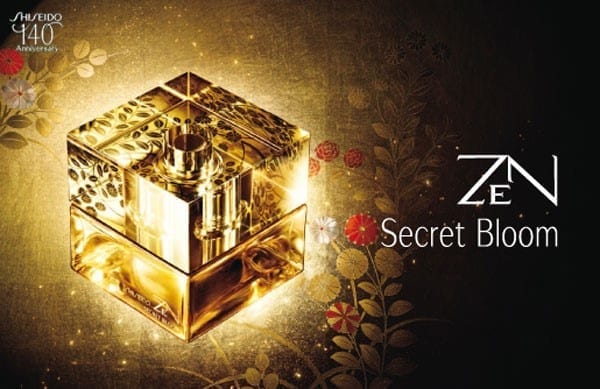
  • Shiseido perfume ambition revealed

    Shiseido perfume ambition revealed

    Japanese cosmetics group Shiseido is aiming to become one of the world’s top five perfume makers in five years, up from its current seventh spot.

    New acquisitions will help Shiseido perfume market share grow – along with a step-up in marketing, especially online.

    Shiseido has beaten Spain’s Puig to win Procter & Gamble‘s Dolce & Gabbana perfume (D&G) licence, which generates 400 million euros ($445 million) in annual revenue. It aims to grow this to 1 billion euros in 10 years.
    Shiseido group chief executive for Europe, Middle East and Africa Louis Desazars, who was previously US head of Shiseido’s Nars make-up brand, says there is a new mindset and energy in the group.

    The D&G licence business will compensate for Shiseido’s loss this year of the Jean-Paul Gaultier perfume licence as part of an agreement with Puig when it bought the French brand in 2011.

    Shiseido says the D&G perfume business helped it more than double its market share instantly to 5.8 per cent from 2.2 per cent. It is aiming to reach 9 per cent in five years.

    On top of its own skincare lines, Shiseido makes perfume under licence for fashion brands Azzedine Alaia, Elie Saab, Issey Miyake and Narciso Rodriguez. The group has created a separate branch for niche brands it has acquired such as Serge Lutens last year, and the skincare and cosmetics brands Laura Mercier and ReVive in July.

    The global perfume market grew 2.9 per cent last year, while niche perfume brands saw their sales surge 15 per cent.

    Estee Lauder has also placed niche perfume brands it has bought, such as Editions de Parfums Frederic Malle and Le Labo, in a separate division.
    Including perfume, skincare and makeup, Shiseido ranks fifth globally behind L’Oreal, Coty, LVMH and Chanel, and is bigger than Clarins. In skincare alone, Shiseido says it aims to join the top three globally, up from its current fifth spot.