
Retail News CRM

Tag: Couche-Tard

  • Japan’s 7-Eleven Parent Responds Boldly to Criticism from Couche-Tard

    Japan’s 7-Eleven Parent Responds Boldly to Criticism from Couche-Tard

    Alimentation Couche-Tard, the Canadian retail giant, has found itself at the center of a heated dispute with Seven & i, the Japanese company that operates the iconic 7-Eleven convenience store chain. In a recent statement, Seven & i pointed out that Couche-Tard had not successfully identified a suitable strategic buyer for its U.S. outlets, a necessary step to alleviate antitrust concerns linked to their proposed merger. This revelation has added fuel to an already simmering clash between the two retail powerhouses.

    Miscommunication and Misinterpretations

    The tension escalated as Seven & i accused Couche-Tard of misrepresenting the challenges inherent in their merger agreement. In a pointed response, the Japanese retailer claimed that its Canadian counterpart showed a lack of commitment to overcoming the various significant hurdles associated with the proposed deal. As blame shifts back and forth like a retail ping-pong match, the prospect of a fruitful partnership increasingly appears to be fading away.

    Antitrust Obstacles Remain

    At the core of the dispute is the complexity of antitrust regulations that are designed to maintain competitive markets. Seven & i positioned itself as a defender of market integrity, suggesting that Couche-Tard’s failure to find a buyer for its U.S. assets exhibits a deeper problem rather than just a mere ‘misunderstanding’ of the situation. With both companies digging in their heels, the future of the proposed merger hangs in the balance like a pair of high-stakes dice.

    What Comes Next?

    As the legal and strategic battles unfold, the retail landscape in Asia watches keenly. Industry analysts are now pondering the potential ramifications for both companies if they cannot find common ground. Can two titans of retail, each with robust operations and loyal followings, navigate their way through this quagmire, or will their aspirations fizzle like an over-enthusiastic soda pop? Only time will tell.

    Questions & Answers

    What is the central issue between Alimentation Couche-Tard and Seven & i?
    The main issue revolves around Couche-Tard’s failure to identify a strategic buyer for its U.S. outlets, a necessary step to mitigate antitrust concerns regarding their proposed merger.

    How has Seven & i responded to Couche-Tard’s claims?
    Seven & i has accused Couche-Tard of mischaracterizing the challenges of the deal and lacking commitment to resolving them, escalating the blame game between the two companies.

    What are the implications of this dispute for the retail industry in Asia?
    The ongoing tensions could have significant repercussions for both companies and the wider retail landscape in Asia, as observers speculate on potential impacts should they fail to reach a resolution.
  • Couche-Tard pulls $47 billion bid for Seven & I, cites lack of engagement

    Couche-Tard pulls $47 billion bid for Seven & I, cites lack of engagement

    Alimentation Couche-Tard, a Canadian retail company, announced its withdrawal from a $47 billion acquisition bid for Seven & I Holdings on Wednesday. Couche-Tard cited the lack of a cooperative exchange from the Japanese retail company as the reason behind this move.

    A Surprise Discontinuation

    The unexpected decision brings a year-long effort by Couche-Tard, the operator of Circle K, to a halt. The goal was to create a global convenience store powerhouse by taking control of the corporation that operates 7-Eleven. According to Couche-Tard, there has been no earnest or productive interaction from 7&i that would help progress any proposal, contradicting public statements made by 7&i representatives.

    Escalating Offers

    Couche-Tard had initially elevated its offer from $38.5 billion to $47 billion in October of the previous year. It also offered to raise it further in March if the Japanese firm was willing to cooperate and disclose more financial data. The Canadian firm had agreed to a store sale strategy to alleviate some regulatory obstacles.

    Couche-Tard’s acquisition efforts had gained momentum after a competing $58 billion bid from Seven & I Holdings’ founding family failed due to a lack of financing.

    Revealing the Breakdown

    Earlier in the year, both businesses signed a non-disclosure agreement (NDA). However, Couche-Tard expressed dissatisfaction with the limited extent and substance of the permitted due diligence which included two tightly controlled management meetings. The company stated that it had no insight into whether or when it would receive any additional information.

    Couche-Tard had proposed to buy all of 7&i’s business outside of Japan and only 40% of its business within Japan. Convenience stores in Japan play a significant role as key infrastructure, providing valuable support during natural disasters. The company stated that it could not effectively proceed with the merger without further and genuine engagement from 7&i leadership and its special committee.

    Questions & Answers

    Why did Couche-Tard withdraw its bid for Seven & I Holdings?
    Couche-Tard cited a lack of constructive engagement from Seven & I Holdings as the reason for withdrawing its bid.

    How high had Couche-Tard raised its acquisition offer for Seven & I Holdings?
    Couche-Tard had increased its offer to $47 billion from the initial $38.5 billion. It also expressed willingness to raise the offer further if the Japanese company cooperated and disclosed more financial information.

    Why did Couche-Tard want to purchase only 40% of 7&i’s business in Japan?
    Convenience stores in Japan are considered as key infrastructure due to their role in providing support during natural disasters. It is likely Couche-Tard took this factor into consideration in its proposal.

  • Couche-Tard drops $20bn Carrefour takeover plan

    Couche-Tard drops $20bn Carrefour takeover plan

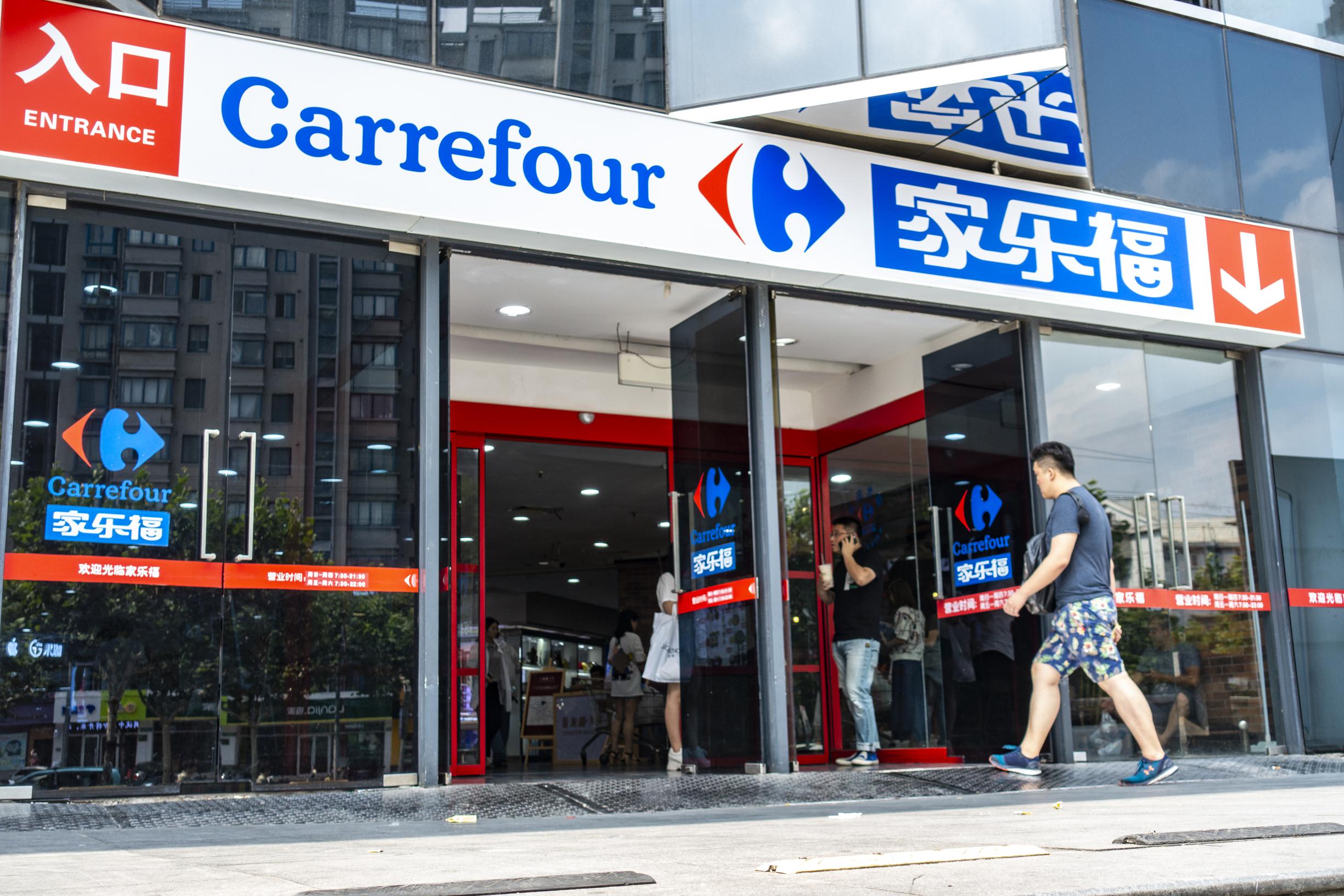
    Canada’s Alimentation Couche-Tard has dropped its €16.2bn ($19.6bn) bid to acquire European retailer Carrefour SA after the takeover plan ran into stiff opposition from the French government, two sources familiar with the matter told Reuters on Friday.

    The decision to end merger talks came after a meeting on Friday between French Finance Minister Bruno Le Maire and Couche-Tard’s founder and chairman, Alain Bouchard, the sources said, speaking on condition of anonymity as the matter is confidential.

    Couche-Tard and Carrefour declined to comment.

    Earlier on Friday, France ruled out any sale of grocer Carrefour on food security grounds, prompting the Canadian firm and its allies to mount a last-ditch attempt to salvage the deal.

    “Food security is strategic for our country so that’s why we don’t sell a big French retailer. My answer is extremely clear: We are not in favour of the deal. The no is polite but it’s a clear and final no,” Le Maire said.

    Couche-Tard was hoping to win the government’s blessing by offering commitments on both jobs and France’s food supply chain and by keeping the merged entity listed in both Paris and Toronto, with Carrefour boss Alexandre Bompard and his Couche-Tard counterpart Brian Hannasch leading it as co-CEOs, one of the sources said.

    The plan included a pledge to keep the new entity’s global strategic operations in France and having French nationals on its board, he said.

    Couche-Tard, advised by Rothschild, was also going to pump about €3bn of investments into the French retailer which was working on the deal with Lazard.

    The proposal was widely backed by Carrefour which employs 105,000 workers in France, its largest market, making it the country’s biggest private-sector employer.

    France’s rejection of the deal less than 24 hours after talks were confirmed sparked grumbling in some business circles over how French President Emmanuel Macron, a former investment banker, is turning away foreign investment. Some politicians and bankers said the pushback could tarnish Macron’s pro-business image, while others highlighted that the COVID-19 crisis had forced more than one country to redefine its strategic national interests.

  • Couche-Tard acquires Circle K business in Hong Kong

    Couche-Tard acquires Circle K business in Hong Kong

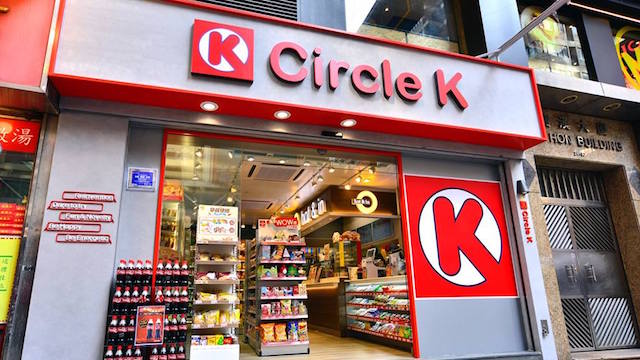
    Convenience Retail Asia Ltd said on Thursday it had agreed to sell its convenience store business in Hong Kong to Canadian convenience store and road transportation fuel retailer Alimentation Couche-Tard Inc for HK$2.79 billion ($359.8 million).

    The Circle K convenience stores and Saint Honore bakery chain operator plans to declare a special dividend of HK$3.85 per share to its shareholders, with the dividend to be paid before the end of 2020, the firm said in a filing to the Hong Kong bourse.

    The convenience store business, with a net asset value of HK$622 million as of end-June 2020, comprises of 340 Circle K stores in Hong Kong, and the net proceeds will be used to pay the special dividend, the Hong Kong-listed firm added.