Tag: counterfelt

  • Hong Kong’s Counterfeit Crackdown Seizes $5.6M in Fake Rolex, Hermès, and Louis Vuitton Merchandise

    Hong Kong’s Counterfeit Crackdown Seizes $5.6M in Fake Rolex, Hermès, and Louis Vuitton Merchandise

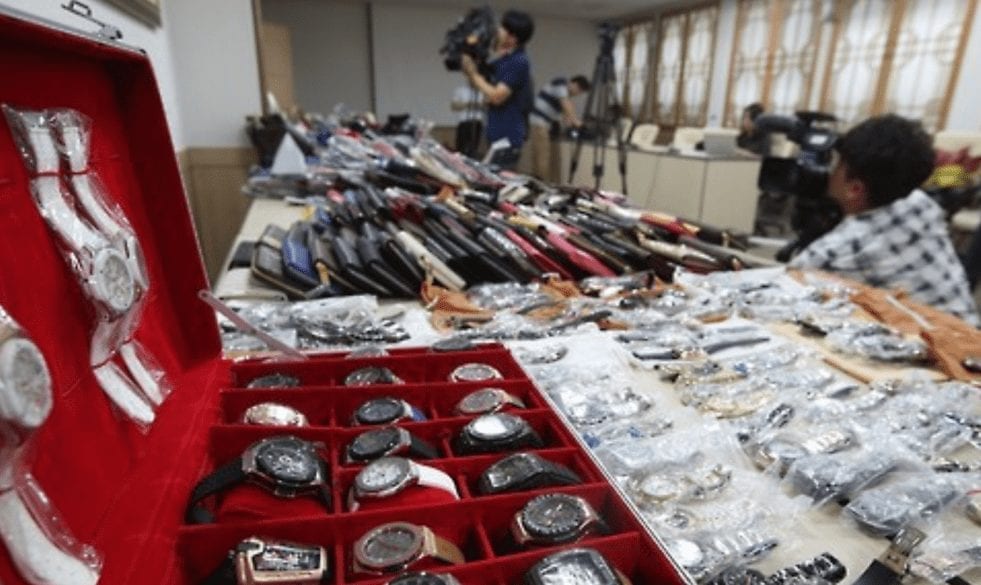
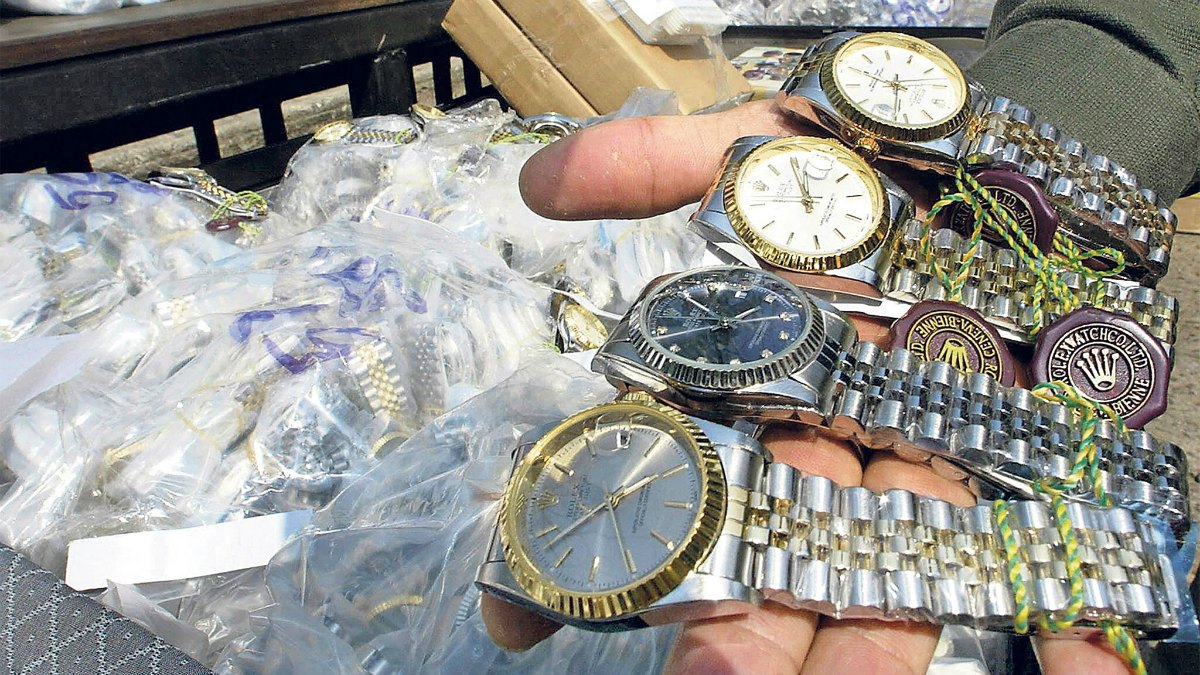
    In a remarkable crackdown, Hong Kong authorities recently seized 67,000 counterfeit items, valued at HK$44 million (approximately US$5.6 million), including luxury brands such as Hermes, Louis Vuitton, and Rolex.

    The confiscated goods ranged from handbags and shoes to watches, with notable brands like Chanel, Gucci, and Patek Philippe also making the list, as reported by the South China Morning Post. The Hong Kong Customs and Excise Department revealed the details of the operation on Thursday.

    The operation, conducted between July 18 and 31, was a coordinated effort with authorities in mainland China and Macao aimed at addressing the growing issue of cross-boundary counterfeit trafficking. This initiative specifically targeted smuggling networks responsible for moving fake products not just within Asia but also towards markets in the U.S. and Europe.

    In Hong Kong, the penalties for importing or exporting goods with forged trademarks are severe. Offending parties can face up to five years in prison and fines reaching HK$500,000. It’s a stark reminder that the city is serious about maintaining its reputation as a hub of authenticity.

    This operation aligns with China’s larger strategy to combat counterfeiting. In related news, authorities seized over 40,000 fake items last month, including products featuring “Labubu,” a beloved character from toymaker Pop Mart. Such efforts underscore a significant shift in China’s approach to intellectual property protection at its borders, as articulated by Zhang Yi, CEO of iiMedia Research Institute.

    Questions & Answers

    What types of counterfeit items were seized in Hong Kong’s recent operation?
    The seized items included luxury handbags, shoes, watches, and goods from brands such as Hermes, Louis Vuitton, Chanel, Gucci, and Patek Philippe.

    How did the operation address cross-border counterfeit trafficking?
    The operation, which spanned Hong Kong, mainland China, and Macao, targeted smuggling networks moving counterfeit goods to various global markets, including the U.S. and Europe.

    What are the legal consequences of importing or exporting counterfeit goods in Hong Kong?
    Violators in Hong Kong face severe penalties, including potential imprisonment for up to five years and fines up to HK$500,000.
  • Hanoi Authorities Seize Thousands of Counterfeit Marshall Speakers and Smartwatches in Facebook Scam Bust

    Hanoi Authorities Seize Thousands of Counterfeit Marshall Speakers and Smartwatches in Facebook Scam Bust

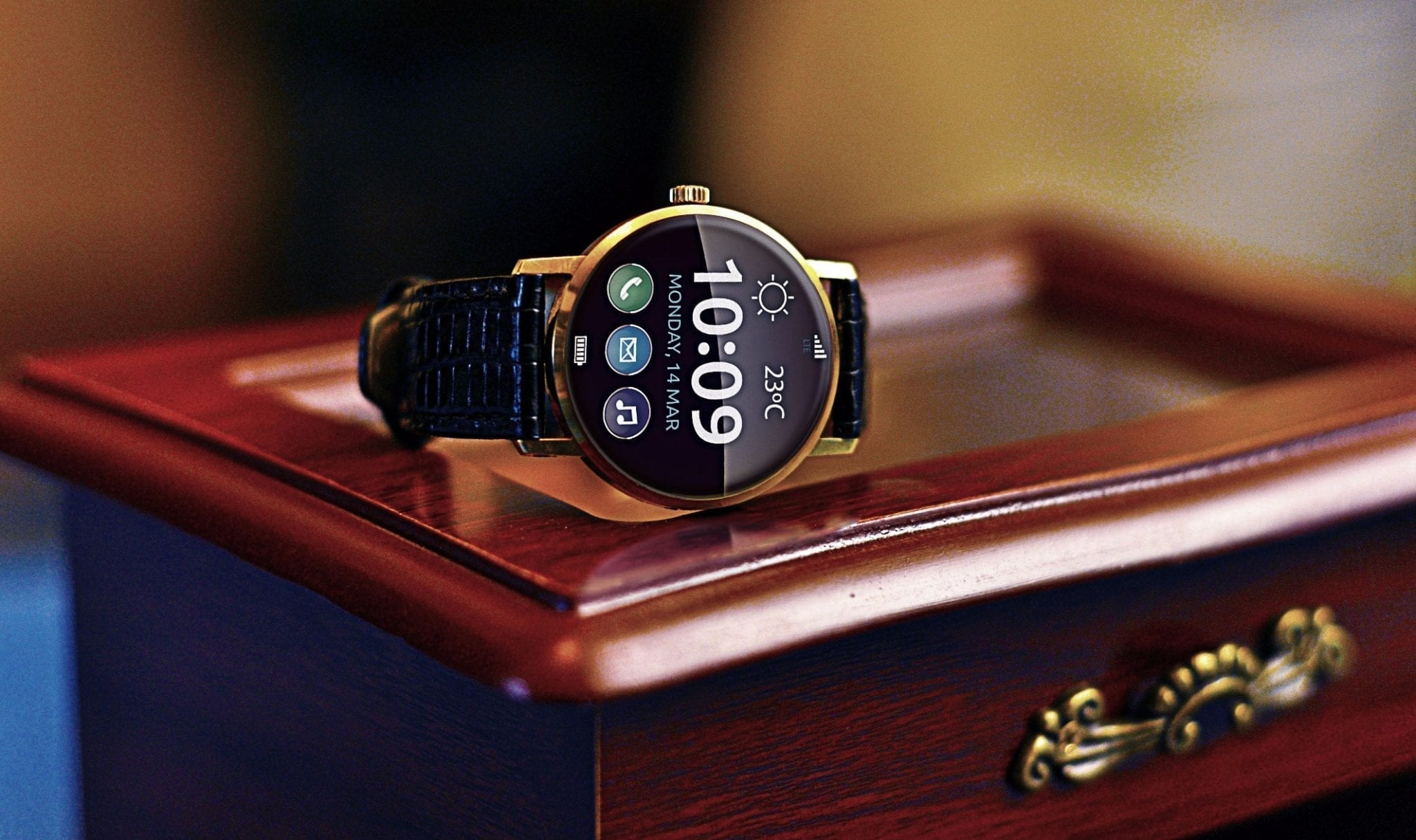
    The streets of Hanoi have witnessed a significant crackdown on counterfeit products as local authorities recently dismantled a network that expertly peddled fake goods via Facebook. Among the impressive haul are 25,500 fraudulent items, including well-known products such as counterfeit Marshall speakers, smartwatches, and vacuum cleaners, all of which have led to a staggering seizure valued at around VND22 billion (approximately US$844,000).

    Operating under the leadership of 30-year-old Le Huu Minh, the group ingeniously set up a social media presence to promote their goods, mostly highlighting audio equipment falsely attributed to the renowned U.K. brand Marshall. Their marketing tactics included elaborate fake promotional campaigns celebrating the fictitious “10 years of establishment” of the Marshall brand, with eye-catching discounts reaching a jaw-dropping 70% on speakers, headphones, and amplifiers.

    To further deceive unsuspecting customers, the group launched a counterfeit website, marshall-store.com, designed to mirror the official Marshall site closely. Once the orders were placed, buyers received their goods through various delivery services, a strategy that morphologically shifted as the sellers often changed logistics companies to evade authorities.

    The prices of these knock-off items were irresistibly low, generally under VND1 million (around $38), making them an enticing option compared to their authentic counterparts. In addition to the impressive volume of fake technology, the police discovered a treasure trove of fashion products and accessories lacking valid proof of authenticity, inclusion in the grand sweep of the counterfeit operation.

    As this crackdown brings to light the extent of brand infringement, it also leaves us to wonder: just how savvy can counterfeiters get? Will online shoppers become more vigilant in their purchasing behaviors? And could this be the beginning of a larger wave of actions against online fraud in the retail sector?

    Questions & Answers

    What prompted the police raid on this counterfeit operation?
    The police acted on reports of a network selling counterfeit products on Facebook, leading to the discovery of a massive inventory of fake goods in Hanoi.

    Who was leading the counterfeiting group?
    The group was led by 30-year-old Le Huu Minh, who is currently under investigation alongside four other members.

    What types of products were seized during the operation?
    The police confiscated a wide array of items, including 12,200 smartwatches, 6,000 fake Marshall earbuds, 1,700 Marshall Emberton speakers, and 2,550 Fujisu vacuum cleaners, among other counterfeit fashion products.

  • Authorities find over 2,000 fake Samsung chargers in Hanoi shop

    Authorities find over 2,000 fake Samsung chargers in Hanoi shop

    Hanoi market authorities found more than 2,000 fake Samsung power banks in a store in Thanh Tri District on Friday.

    They all had ‘20+ Samsung’ printed on the surface, and 836 said made in China while the rest had no indication of origin.

    Hoang Dai Nghia, head of the Hanoi Market Surveillance Department’s Team 1, said the power bank packages that did not carry the Samsung name, and so if the inspectors had not been thorough they might not have noticed the illegal use of the Samsung trademark.

    Market authorities warned that using batteries and power banks without clear origins or of dubious quality could result in fires and explosions.

  • Amazon increases efforts to tackle counterfeit goods

    Amazon increases efforts to tackle counterfeit goods

    Online retail giant Amazon is expanding its product serialization service to Canada, India and some European countries to tackle counterfeit products in the supply chain.

    Amazon Transparency involves the application of unique codes to products to allow the retailer, its customers, brands and other members of the supply chain to authentic every unit of a product.

    “Counterfeiting is an industry-wide concern – both online and offline. We find the most effective solutions to prevent counterfeit are based on partnerships that combine Amazon’s technology innovation with the sophisticated knowledge and capabilities of brands,” said Dharmesh Mehta, vice president, Amazon Customer Trust and Partner Support.

    “We created Transparency to provide brands with a simple, scalable solution that empowers brands and Amazon to authenticate products within the supply chain, stopping counterfeit before it reaches a customer.”

    With Transparency, each brand puts the codes on its products, which is then scanned and verified by Amazon to ensure its authenticity.

    Customers can also use a mobile app to check for themselves, regardless of where they purchased the units.

    Brands also use Transparency to communicate unique unit-level information, including manufacturing date, manufacturing place or other product information such as ingredients.

    Over 4,000 brands are using the service in the US and Amazon said that it has proactively prevented over 250,000 counterfeits reaching customers.

  • Customs seizes $7 million worth of fake goods

    Customs seizes $7 million worth of fake goods

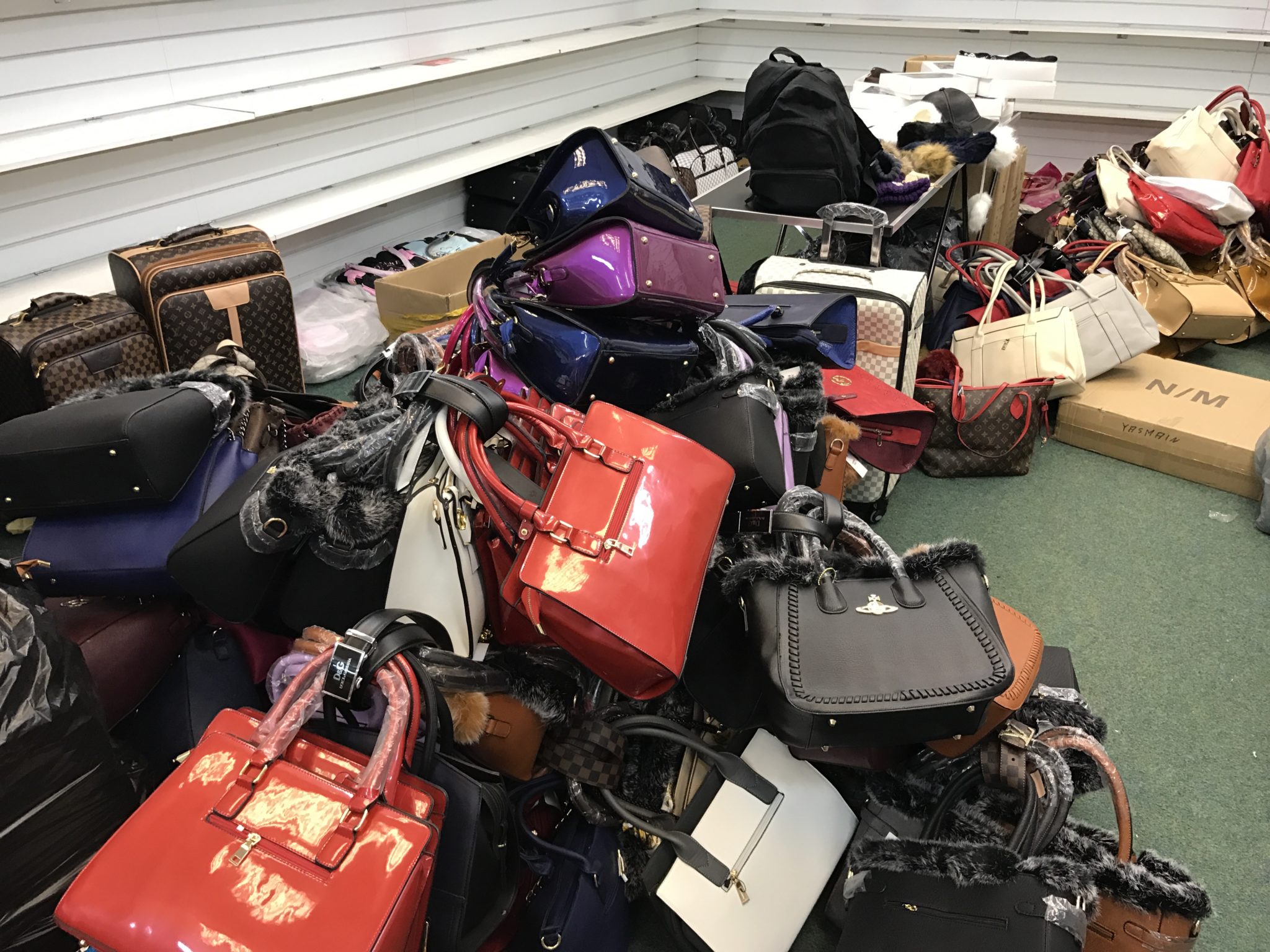
    Hong Kong Customs has seized 55,000 items of fake goods destined for the US during a three-month campaign to combat cross-border counterfeiting. The haul, some of which is shown in the accompanying photograph, included trainer, apparel, mobile phones and accessories, handbags and Beats-branded headphones.

    Customs officers estimated the value of the haul to be about HK$7 million.

    “Hong Kong Customs has been working closely with the US Customs and Border Protection using intelligence exchanges, and took targeted enforcement action between January and April including stepped-up inspection of suspicious express courier parcels destined for the US,” said a Customs spokesperson.

    “Hong Kong Customs will continue working closely with overseas law enforcement agencies to combat cross-boundary counterfeiting activities through intelligence exchanges and joint enforcement actions.”

    Under the Trade Descriptions Ordinance, any person who imports or exports any goods to which a forged trademark is applied commits an offense. The maximum penalty upon conviction is a fine of $500,000 and imprisonment for five years.

  • Apple ‘fixed’ thousands of fake iPhones

    Apple ‘fixed’ thousands of fake iPhones

    Counterfeit goods are a big problem for any established brand, but when Apple is involved, you know that there will be both demand and supply through the roof given the iPhone role as a status symbol, especially in Asia where most of the fake goods originate from.

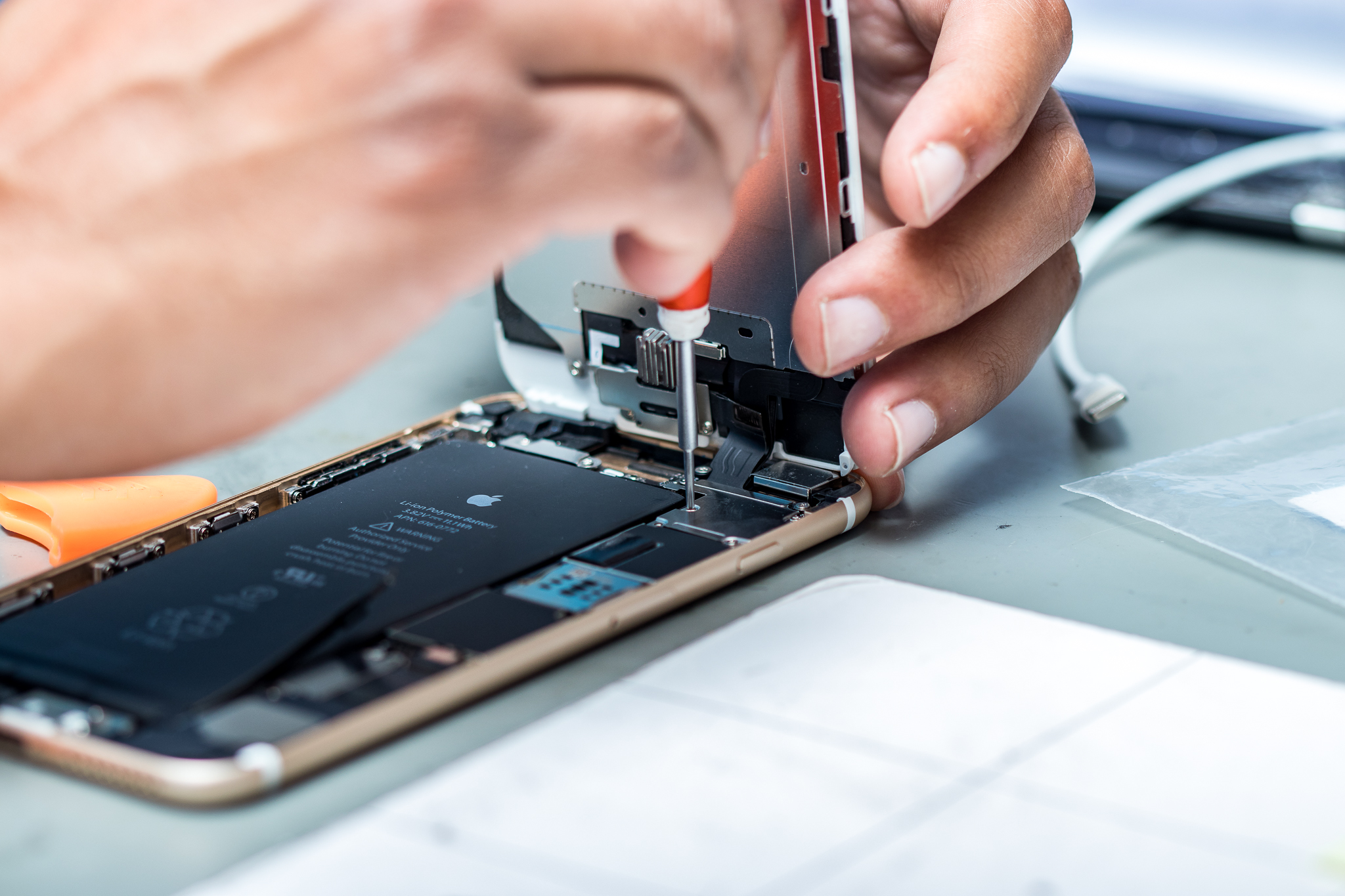
    Two Chinese students in Oregon,  Yangyang Zhou, and Quan Jiang, have been running a fake iPhone repair scheme since 2017, it turns out, defrauding Apple of $895,800 in total, according to the company’s estimates. They had bulk shipments of counterfeit handsets shipped to them from China, and submitted those to Apple as “iPhone won’t power on” cases, both online and in stores. The replacement phones were then shipped back to the source in China who deposited money into Jiang mother’s account he had access to in the States.

    Apple “repaired” (most likely just swapped them for refurbished ones) and returned 1,493 of the more than three thousand fake iPhones that were sent to its service before it got an alert that something was amiss on a grand scale. When the situation was raised with Apple’s fraud department in the summer of 2017, they sent Jiang two cease-and-desist orders to stop the scheme but got no response, presumably since the notices were sent to Zhou’s listed address.

    It’s not clear if the fraud alert came within Apple, or the port authorities that have been investigating suspicious bulk iPhone shipments from China since the spring of 2017 but in any case, the scheme started falling apart for the two Chinese on an engineering student visa. Zhou’s lawyer claims that his client will be “vindicated” as he did not know that the iPhones sent to him from China were counterfeit, and thought he was simply taking a cut for a service.

    Ditto for Jiang, who has been accused of wire fraud, as well as trafficking in counterfeit devices, so we’ll see if Apple manages to retrieve anything from the scheme, considering that the repaired real iPhones have already been sent to the vast Chinese prairies.

  • Police smash massive China counterfeiting gang

    Police smash massive China counterfeiting gang

    Police have shut down a huge China counterfeiting ring estimated to have raked in some US$15 million.

    Chinese police have arrested 32 people believed to be part of the operation, which focused on counterfeiting luxury-branded goods.

    The Shanghai raid led to the seizure of more than 4000 items of luxury apparel and accessories bearing Louis Vuitton, Kenzo and Loewe labels, among other top brands. Two assembly lines producing the counterfeit items were shut down.

    The raid was in response to a tip-off to the Shanghai Qingpu district public security bureau that fake Louis Vuitton bags were selling on Chinese social media platform, WeChat.

    Estimates held that the ring had sold more than 100,000 fake luxury items at a value of around RMB100 million (US$14.9 million). Each item would have cost around RMB200 ($30) to produce.

    The rise of online markets all over the world has been blamed for a general increase in fake products sold globally. The counterfeit industry is now worth an estimated $590 billion a year, and accounts for around 3.3 per cent of total international trade.

    According to customs officials, the most frequently seized fakes are items of footwear, clothing, leather goods and IT equipment. China is by far the world’s largest source of pirated goods.

  • Operation Goalkeeper World Cup against Counterfelt Goods

    Operation Goalkeeper World Cup against Counterfelt Goods

    In a sting to thwart criminal attempts to sell 2018 FIFA World Cup fakes, Hong Kong Customs’ Operation Goalkeeper has so far resulted in about $15.3 million worth of suspect merchandise being seized, plus five arrests.

    Aimed at preventing such items crossing the border, Operation Goalkeeper launched at the end of April with a focus on finding infringing items being trafficked through passenger and cargo channels at airport, seaport, land boundary and railway control points on the eve of the matches.

    Launched at the end of April 30, the sting has so far resulted in about 259,000 pieces of suspect items in 21 cases being seized.

    Items include about 180,000 pieces of apparel and accessories, 50,000 pairs of shoes and 29,000 bags. There are also about 57,000 suspected counterfeit jerseys, including 50,000 pieces bearing suspected forged FIFA trademarks.

    The items were seized from 12 seaborne containers, four goods vehicles and a batch of air parcels.

    Under the Trade Descriptions Ordinance, any person who imports or exports any goods to which a forged trademark is applied commits an offence. The maximum penalty is a fine of $500,000 and imprisonment for five years.

    Operation goalkeeper continues.