Retail News CRM

Tag: country

  • Mastercard Appoints Fintech Veteran Minsook Cho as New Singapore Country Manager

    Mastercard Appoints Fintech Veteran Minsook Cho as New Singapore Country Manager

    Mastercard, the globally renowned credit card company, has named Minsook Cho as its new country manager for Singapore. Cho, an industry veteran with more than two decades of experience, will hold the key responsibility of determining and implementing the company’s strategic direction and overseeing business operations in the market.

    Cho’s Role at Mastercard

    As part of her role, Cho will also work closely with regional and global clients based in the city-state. Additionally, she will support a range of cross-market and strategic initiatives.

    Cho’s expertise spans across various sectors, including payments, fintech, analytics, and consulting. She has been part of the Mastercard team since 2013 and has held the position of senior vice president, advisors client services, Asia Pacific. In this role, she directed consulting, analytics, test & learn, and managed services across several markets such as Japan, Korea, China, Australia, New Zealand, and Southeast Asia.

    Prior to her time at Mastercard, Cho served in senior leadership roles across APAC at companies like Foodpanda and Lazada.

    Mastercard’s Expectations from Cho

    Speaking about this appointment, Safdar Khan, Mastercard’s Southeast Asia division president, expressed his confidence in Cho’s abilities. He highlighted her extensive experience in Data and Services, including enhancing business performance, elevating consumer experiences, and enabling innovation. Khan believes that Cho’s deep market understanding will be vital in strengthening intelligence, security, and interoperability across Singapore’s payments ecosystem.

    Questions & Answers

    Who has Mastercard appointed as its new country manager for Singapore?
    Mastercard has appointed Minsook Cho as its new country manager for Singapore.

    What will Cho’s role at Mastercard entail?
    Cho will be responsible for the strategic direction and business operations of Mastercard in Singapore. She will also collaborate with regional and global clients based in the city-state and support cross-market and strategic initiatives.

    What is Cho’s previous experience?
    Cho has over 20 years of experience in payments, fintech, analytics, and consulting. She has been with Mastercard since 2013, previously serving in multiple leadership roles. Prior to Mastercard, she held senior APAC leadership roles at Foodpanda and Lazada.

  • Asean’s Power Landscape Expected to Transform in 2019

    Asean’s Power Landscape Expected to Transform in 2019

    Member states of the Association of Southeast Asian Nations are on a path to transform their power landscapes as energy demand continues to rise to match the region’s economic growth potential, a power management company said this week. “In the pursuit of a robust digital economy, Asean is heralding in an era of unprecedented innovation … 2019 will see power play an indispensable role in shaping the evolution of the region’s economy,” Ireland-based power management company Eaton said in a statement.

    In Southeast Asia, technology will have to meet increasing demand for clean, renewable energy and remote power management, support the arrival of 5G connectivity, and provide resilience against growing cyberthreats.

    Asean’s evolving energy demand, which according to the International Energy Agency will grow by almost two-thirds by 2040, will go together with the projected boom in the region as part of the fourth industrial revolution.

    Development of the region’s smart cities network has already made way for some significant changes in regional power management, Eaton said.

    “We are seeing a seismic shift in the region’s power management outlook as cities gear up on technology as the foundation of smart and sustainable urban development,” the company said.

    Eaton said batteries would continue to develop in this part of the world beyond their traditional use as a backup energy source.

    “At present, heavy investments in Asean are being made in preparation for such technologies in the years to come,” the company said.

    Singapore, for example, has embarked on a public-private partnership through its Energy Market Authority to speed up the deployment of energy storage systems.

    Though new technology seems to demand new assets, Eaton also highlighted the importance of making the most of existing assets.

    “Only by devising new and innovative solutions can the industry progress amid drastic changes in power demand and supply,” the company said in the statement.

  • Malaysia’s GDP growth likely to return to 4.6-5.0% range in 2020: UBS economist

    Malaysia’s GDP growth likely to return to 4.6-5.0% range in 2020: UBS economist

    Malaysia’s real gross domestic product (GDP) growth is likely to return to the 4.6-5% trend range in 2020 as economic drag diminishes, said UBS Investment Bank economist Edward Teather. He said the impact of the trade war and the government’s institutional reforms should go from drags on growth to net positive contributions to the country’s economy this year.

    “Pakatan Harapan’s institutional reforms and the Comprehensive and Progressive Agreement for Trans-Pacific Partnership (CPTPP) membership would improve prospects in 2020.

    “Malaysia is also a key potential beneficiary of the CPTPP trade deal,” he said during a conference call on global and Asian 2019 outlook.

    However, he said, Malaysia might lose some potential gains if it decided to pull out of the trade deal and this would impact GDP growth next year.

    “Without CPTPP, there will be less potential to be tapped; but it’s possible without the deal, the government would consider liberalisation, introducing more transparency and level playing field between private companies,” he said.

    Teather said trade war, slower China growth and institutional reform and fiscal consolidation policy initiatives would continue to drive the weakness in growth in the near term.

    Hence, he said, UBS expected Malaysia’s growth to be at 4% this year from the estimated 4.7% in 2018.

    “2019 will likely be a case of pain before gain. First, we expect Malaysia to be impacted by trade war-related disruption, but also to be well placed to subsequently take market share from China in the United States,” he said.

    Meanwhile, Teather expects the ringgit to fall to the RM4.40 level to the US dollar this year before improving in 2020. Malaysia being an open economy, the ringgit was pressured by the lower trade growth, he said.

    “Exports, in dollar terms, rose 10% in 2018 and would only grow 1% in 2019. So it’s quite a strong slowdown and that is partly because of lower oil prices and less demand for products and components,” he added.

    On the Overnight Policy Rate (OPR), he said Bank Negara Malaysia (BNM) may leave interest rates on hold throughout 2019.

    “Soft growth should allow BNM to look at acceleration in inflation driven by the change from the goods and services tax to the sales and service tax in 2018 and fuel subsidy reforms.

    “In early 2020, better growth momentum, confidence in CPTPP and trade war-linked supply-chain adjustments in Malaysia’s favour could lead to a 25-basis point rate hike by BNM,” he said.

    He forecast the US Federal Reserve would raise its benchmark interest rate once this year, in September, and that the Brent crude to hover at US$65 per barrel this year and US$73 per barrel in 2020.

  • Malaysia’s GDP growth to ease to 4.7% this year: Moody’s

    Malaysia’s GDP growth to ease to 4.7% this year: Moody’s

    Malaysia’s real gross domestic product (GDP) growth is expected to recede to 4.7% in 2019 after averaging at around the 5% mark between 2015 and 2018 on the back of external headwinds, according to Moody’s Investors Service. For 2020, the economy is projected to moderate further to 4.5%. The rating agency foresees external headwinds from trade protectionism to weigh on trade activity, while the review of infrastructure projects and slowdown in public spending will also prove to be a further drag to growth.

    “Nevertheless, economic expansion will still stay stronger than the median average for A-rated sovereigns, even taking moderating growth into account,” it opined.

    Moody’s said Malaysia’s credit profile, which is rated at “A3 Stable” reflects its large and diversified economy with healthy medium-term growth prospects, and relatively high government debt that is partly offset by a favourable debt structure and large domestic savings.

    It pointed out that the govern-ment’s recent fiscal policy choices, particularly in abolishing the goods and services tax, will narrow its revenue base and reduce fiscal flexibility – while its debt burden which is significantly higher than the A-rated median, will remain a credit constraint.

    “However, deep domestic capital markets and high savings provide a stable funding pool for the government’s debt, and partly offset these fiscal weaknesses. A solid institutional framework that includes effective monetary policy supports the country’s credit profile,” Moody’s said.

    It also noted that pervasive corruption will likely to remain a challenge for the government, which will also undermine policy effectiveness.

    Moody’s said that given a stable outlook of the sovereign rating, a change in the rating is unlikely in the near term, but could face upward pressure if the scope for fiscal consolidation increases.

    Conversely, the rating agency said it would consider downgrading the sovereign rating in the event of weakened fiscal prospects, increased debt burden, growing political tensions and diverging views within the government, which could undermine policy effectiveness or impair the government’s ability to adhere to its fiscal consolidation objectives, potentially threatening the stability of capital flows to the country in the process.

  • World Bank sees slower global economic growth of 2.9% this year

    World Bank sees slower global economic growth of 2.9% this year

    The growth of the global economy is expected to slow to 2.9% in 2019 compared with 3% in 2018, the World Bank said on Tuesday, citing elevated trade tensions and international trade moderation. “At the beginning of 2018 the global economy was firing on all cylinders, but it lost speed during the year and the ride could get even bumpier in the year ahead,“ World Bank CEO Kristalina Georgieva said in the semi-annual Global Economic Prospects report.

    The World Bank outlook comes as the United States and China have been engaged in a bitter trade dispute, which has jolted financial markets across the world for months. The two economies have imposed tit-for-tat duties on each other’s goods, although there have been signs of progress.

    Growth in the US is likely to slow to 2.5% this year from 2.9% in 2018, while China is expected to grow at 6.2% in the year compared with 6.5% in 2018, according to the World Bank.

    Emerging market economies are expected to grow at 4.2% this year, with advanced economies expected to grow at 2%, the World Bank said.

  • Experts express cautious optimism for Vietnam stock market

    Experts express cautious optimism for Vietnam stock market

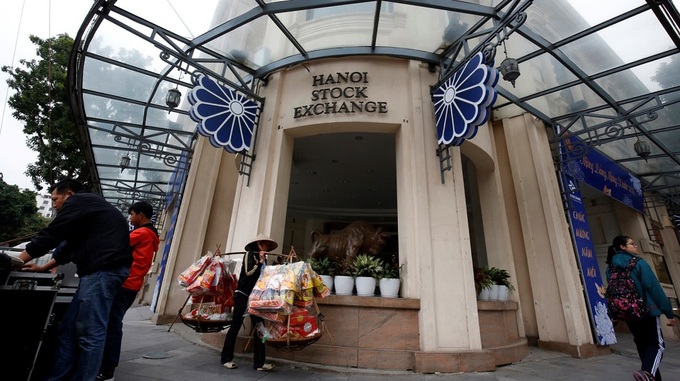
    Last year’s uncertainties and unclear future scenarios are reflected in more cautious assessments than number crunching for 2019. Nguyen Duy Hung, chairman of SSI, a leading Saigon broker, said that with a drop of over 20 percent from its peak, when the VN-Index climbed to 1,204 points on April 9, 2018, Vietnam’s stock exchanges have entered a bear market.

    The benchmark VN-Index on the Ho Chi Minh Stock Exchange lost 1.52 per cent to end Thursday at 878.22 points. On Friday afternoon, it rose to 880.9 points.

    Perhaps it will take between 8 to 11 months for the market to recover, Hung said. “Historical data suggests that it would take 21 months for a bear market to recover its old peak after hitting bottom.”

    But the SSI chairman said the main challenges facing the stock market in 2019 include worries posed by the escalation of the U.S.-China trade war, and increasing geopolitical risks.

    “At this point, no one can say how this war will unfold or predict how widespread the impact will be. Along with the decline in oil prices signaling difficulties of the world economy, the rise in geopolitical risks paint a picture of uncertainties for 2019,” Hung said.

    Also mentioning key challenges for 2019, Securities Commission chairman Vu Bang named the slowdown of Chinese and global economies, the escalating trade war and risks from expanding global debt.

    However, these challenges come with opportunities to be seized. The trade war, according to the SSI chairman, is a chance for Vietnam to increase its exports. This does not mean market share growth will happen immediately, he said, explaining that it was an opportunity to build a medium to long term strategy, innovating the country’s economic growth model based on production and commercial activities.

    Vu Bang also emphasized the advantages of macro factors, saying the continuous high growth rate in recent years was a factor that would increase the attractiveness of Vietnam’s market in the region.

    Vietnam’s GDP growth of 7.08 percent in 2018 retained its status as one of the best performing economies in the world. It was the highest growth the country has experienced since 2008 and compared with the median estimate of 6.9 percent in a Bloomberg survey of 12 economists.

    Offering a more optimistic view, Tran Le Minh, deputy general director of VietFund Management, said that the market in 2019 still holds several favorable factors, including the fact that the decline in VN-Index was relatively slower than in other parts of the world.

    “Why is the market declining more slowly? The reality must be seen in macro factors, growth and the fact that foreign institutional investors continue to invest in the market. Cash flow from foreign investors will continue to be a highlight this year,” said Minh, who predicted that the VN-Index will not fall below its current level by the end of 2019.

    Foreign direct investment disbursement in Vietnam reached a record $19.1 billion in 2018, a year-on-year increase of 9.1 percent, according to the Ministry of Planning and Investment.

    For the market players’ perspective, 2019 is not going to be an easy year, experts say.

    “With many unpredictable factors caused by geopolitical and commercial tensions, most analysts agree that the global economy is entering the end of a growth cycle and 2019 will be a difficult year for the stock market,” said an analyst team with Rong Viet Securities (VDSC).

    It will be difficult for Vietnam to buck the global trend, they felt.

    Bernard Lapointe, head of research of Rong Viet Securities said recently that he was optimistic but not too optimistic about the market this year. He expects the VN-Index to stay within the 900-1,000 points range until the end of 2019.

    Meanwhile, Michel Tosto, head of Institutional Sales and Brokerage of Viet Capital Securities, predicted that the VN-Index could reach 1,060 points at the end of 2019.

  • Vietnamese banks deposit rates rise as usual at year end

    Vietnamese banks deposit rates rise as usual at year end

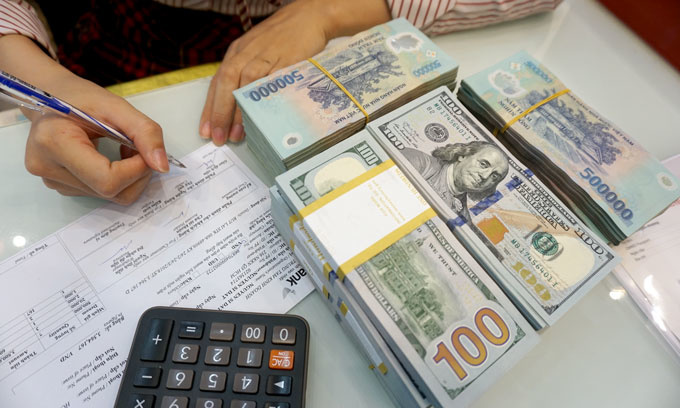
    Banks usually hike deposit interest rates and even offer promotions at the year end, and this year has been no different. On December 19 Sacombank announced a rise in interest rates on deposits of three months from 5.2-5.3 percent to 5.5 percent, and on deposits of 12 months from 6.9 percent to 7.7 percent. VPBank has increased its rates by 0.1-0.7 percentage points, with deposits of 18 months and more carrying the highest rate of 7.8 percent.

    State-owned banks such as BIDV and Vietinbank have hiked rates by 0.1 to 0.5 percentage points.

    The management of a joint-stock bank headquartered in the south said lending usually rises in the last quarter of the year to meet the rising demand for short-term credit to serve the working capital needs of companies.

    As a result, many banks increase their deposit rates, especially for short terms, it said.

    Besides, experts said lenders are running out of time to use 45 percent of short-term capital for medium- and long-term loans, with the ratio to be reduced to 40 percent on January 1.

    The National Financial Supervisory Commission has recently estimated that credit growth to have slowed significantly to 15 percent this year from 18 percent in 2017.

  • Malaysia’s economy likely to grow in Feb to April 2019

    Malaysia’s economy likely to grow in Feb to April 2019

    Malaysia’s economy is likely to grow in February to April 2019, according to the performance of Malaysian Economic Indicators: Leading, Coincident & Lagging Indexes for October 2018 that was released last monday. Chief statistician Malaysia Datuk Seri Dr Mohd Uzir Mahidin said the monthly change of Leading Index (LI) augmented in October 2018, registering a growth of 1.2% to attain 119.3 points from 117.9 points in the previous month, primarily due to the increase of real imports of other basic precious & other non-ferrous metals (0.4%).

    “The annual change of LI showed an improvement from negative 1.7% in September 2018 to negative 0.7% in October 2018. The composite of LI is designed to monitor the economic performance direction in an average of four to six months ahead,” he said in a statement.

    On the same note, he stated that the Coincident Index (CI), which reflects the current economic activity, rose 1.0% in October 2018. Two components that contributed significantly to the increase were volume index of retail trade (0.5%) and real contributions to EPF (0.2%). At the same time, the annual change of CI grew further to 3.9% in October 2018 as against 3.4% in the previous month.