Retail News CRM

Tag: Coupang

  • Korea Sale Festa’ kicks off with huge discounts from retailers

    Korea Sale Festa’ kicks off with huge discounts from retailers

    South Korea kicked off a nationwide shopping event on Thursday with a variety of promotions, cultural and entertainment events to draw more shoppers at home and abroad and revive the sluggish domestic consumption.

    The massive shopping campaign called “Korea Sale Festa” runs until Oct. 9, involving major retailers, manufacturers and traditional markets, while cultural and entertainment programs for foreign travelers will be held throughout October.

    The shopping festival is jointly hosted by the Ministry of Trade, Industry and Energy and the Ministry of Culture, Sports and Tourism to tie up the retail industry with tourism and cultural sectors to unleash pent-up demands in time with the major Chinese holiday season.

    A total of 249 retailers, manufacturers and online malls provide discounts and promotions at 59,000 stores across the nation, offering much wider options compared with last year’s fall shopping season when “Korea Black Friday” and “Korea Grand Sale” were held between September and October.

    This shopping season isn’t just limited to malls and online retailers. Consumers looking for a new vehicle, phone or television will find some attractive bargains at car dealerships and electronics stores as major companies join the shopping season. Among the big names are Samsung Electronics, LG Electronics, Hyundai Motor, AmorePacific and LG Household & Healthcare.
    samsung
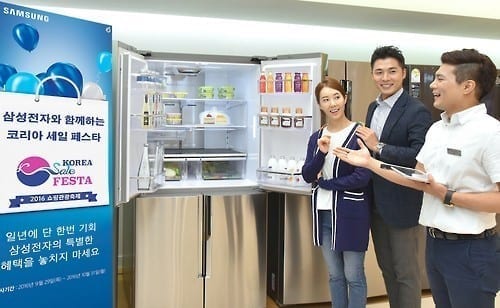
    A sales manager at Samsung’s electronics store in Seoul explains discount deals on a refrigerator on Sept. 28, 2016, in this photo provided by the company.

    Three car makers — Hyundai Motor, SsangYong Motor and Renault Samsung Motors — offer up to a 10 percent discount on cars during the period, while Samsung Electronics and LG Electronics give half priced deals on best-selling home appliance items. Consumers can get up to a 670,000 won discount (US$612) on Samsung’s Galaxy S6 Edge Plus smartphone.

    Department stores give deep discounts on luxury goods, fashion items and cosmetics, knocking down price tags by up to 80 percent.

    Among the top price for a giveaway event is a 700 million won apartment offered by Lotte Department Store, the retail unit of Lotte Group.

    Online malls and social commerce sites, including Coupang and Ticket Monster, are also offering cyber deals during the period, with the government supporting part of their delivery fees to boost sales.

    About 400 traditional markets nationwide will hold various events and unique festivals in October to catch the eyes of visitors and spur the local economy.

    The event held ahead of the year-end holiday season is raising expectations among local retailers as it overlaps with a Chinese national holiday that runs from Oct. 1-7. It’s when deep-pocketed Chinese travelers hop on planes to go on a holiday shopping spree.

    According to industry officials, about 250,000 Chinese tourists are expected to visit South Korea during the weeklong autumn holiday.

    korea-sale-fiesta

    With so much money up for grabs, local retailers have prepared a bunch of promotional events and giveaways targeting Chinese patrons.

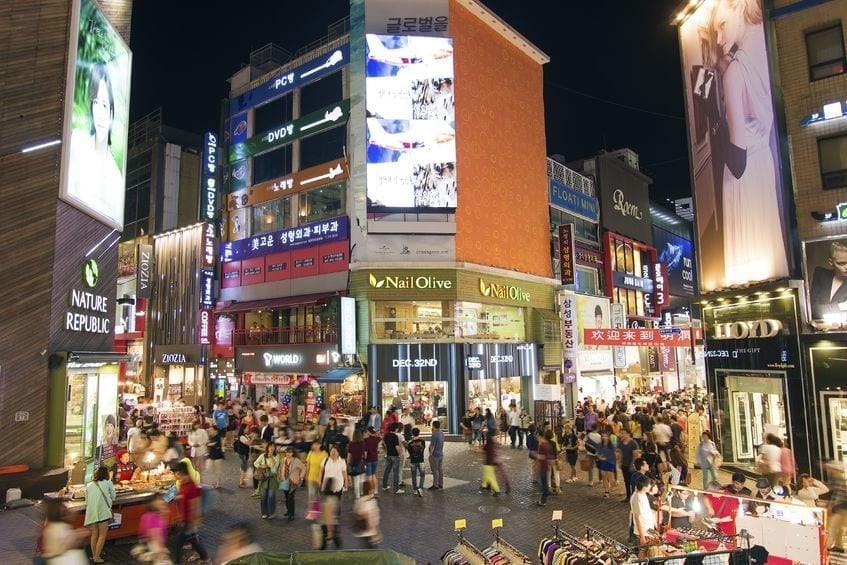
    Myeongdong, the busiest shopping street in downtown Seoul, has transformed to embrace Chinese travelers, supplementing Chinese-speaking shop assistants and putting up Mandarin signs for the latest beauty products.

    Duty free stores, which heavily rely on Chinese travelers, also offer promotional and entertainment events, teaming up with credit card companies.

    Shinsegae Duty Free holds “K-beauty and fashion week” during the Chinese holiday at its Myeongdong branch to attract those who are interested in beauty know-how and encourage purchase of Korean beauty products.

    Market watchers say the influx of Chinese tourists will give much-needed momentum to revitalize the tepid domestic consumption, which will in turn drive up shares related to consumption and leisure.

    “While last year’s sales event was mostly about offering discount deals, Korea Sale Festa is more systematic with wider discounts and cultural events for foreign travelers,” Nam Ok-jin, a researcher at Samsung Securities, said. “Special offers given during (China’s) National Day is expected to maximize the effect.”
  • Coupang Sales Growth Bolsters SoftBank’s Bet on Korean Retailer

    Coupang Sales Growth Bolsters SoftBank’s Bet on Korean Retailer

    Coupang’s net sales more than doubled in the first half of the year, helping to validate SoftBank Group Corp.’s bet that the South Korean web retailer will carve out a piece of Asia’s booming e-commerce market.

    Net revenue rose to 868 billion won ($782 million) in the first half of the year, helped by retail expansion and increased margins, according to a financial document seen by Bloomberg. Gross merchandise volume climbed 26 percent to 1.8 trillion won in the period, the document showed.

    SoftBank, whose investment in Alibaba Group Holding Ltd. has zoomed past $70 billion, backed Coupang in June 2015 with $1 billion in financing that valued the Seoul-based company at $5 billion. The bets are part of billionaire Masayoshi Son’s quest to replicate his success with Alibaba, an investment that started with a $20 million stake more than 15 years ago. SoftBank’s expansion in Asia has also led to deals with India’s Snapdeal and Indonesia’s Tokopedia.

    The number of products offered by Coupang more than tripled to 700,000 items from a year ago, according to the document. The startup launched its Rocket Pay services and opened a fulfillment center in Korea, the first of two planned for this year, the document showed.

    Matthew Nicholson, a spokesman for SoftBank, declined to comment. Coupang Chief Executive Officer Bom Kim didn’t immediately reply to an e-mail seeking comment. Backers of Coupang include Sequoia, Greenoaks Capital and Rose Park Advisors.

    The startup, founded in 2010, is burning through cash to expand and capture users as it competes with sites such as Ticket Monster, a Korean online retailer that’s owned by Groupon Inc., KKR & Co. and Hong Kong-based Anchor Equity Partners. Forward Ventures, Coupang’s parent, said its operating loss widened to 547 billion won in 2015, compared with a 121.5 billion won loss in 2014.

    SoftBank’s e-commerce bet in India is under even more pressure. Snapdeal, which has struggled to narrow the lead of its home-grown rival Flipkart Ltd., now faces competition from Amazon.com Inc. In June, Amazon Chief Executive Officer Jeff Bezos pledged to invest another $3 billion in his company’s Indian operations, bringing the total to $5 billion.

  • A $5 Billion South Korean Startup Is Beating Amazon At Its Own Game

    A $5 Billion South Korean Startup Is Beating Amazon At Its Own Game

     Jeff Bezos has no interest in bringing Amazon to the 51 million people in South Korea, and Bon Kim is the reason for that. Kim is the CEO of Coupang, the fastest growing e-commerce site of all time in South Korea. The startup, founded in 2010, grossed nearly $300 million in 2014 and is expected to show it quadrupled that amount in 2015, when those numbers are available. Last summer, Coupang raised $1.3 billion in funding. Kim has a 19% stake in the company, which gives him a net worth of $950 million.

    Kim and Coupang have mastered something Jeff Bezos and Amazon are still trying to figure out. Coupang offers on-demand e-commerce with same-day delivery. Amazon is trying to offer this to its bajillion customers, but so far, hasn’t been able to make the margins work. It is either too expensive for the consumer or for Amazon and often for both. Remember, Coupang was founded in 2010, the company has managed to do this in remarkably less time in business than Amazon.

    Bon Kim didn’t set out to become the e-commerce king of South Korea. He was born in Seoul and from the age of seven, he spent much of his life abroad. At 13, he went to boarding school in Massachusetts. He was a varsity athlete in track and wrestling. When it came time for college, Kim stayed local and went to Harvard, where he started a student magazine called the Current. Newsweek took the magazine over in 2001, a year after Kim graduated. He also interned at the New Republic.

    DENIS CHARLET/AFP/Getty Images

    Kim enrolled in Harvard Business School in 2010, but dropped out a year later. He had been bitten by the e-commerce bug and wanted to start a business in Seoul. At the time, Groupon was a hot commodity and Kim set his sights on the daily deal model. Coupang became the 30th Groupon clone in South Korea. Kim registered as a limited liability corporation in the U.S. to make it easier to raise money from American investors. He spent nearly a million on advertising. However, he soon learned that daily deals are a lousy business model. Customer retention is nearly nil.

    By the summer of 2013, Kim had transformed Coupang into an e-Bay style site while experimenting with true e-commerce. Two years later, Coupang had $400 million in capital from Silicon Valley behemoths Sequoia Capital and BlackRock and had made a big commitment to its own inventory. Kim made a more than billion dollar investment in logistics infrastructure.

    Remember, Kim spent many years in the U.S. and Coupang’s structure reflects that. The company’s head of marketing is a former Zappos employee whom Kim convinced to move to Seoul with his family last year. Kim wanted Coupang to have a Western perspective to e-commerce. Coupang has more than 200 non-Koreans on its staff, including former Amazon executives, consultants, and engineers fresh from Silicon Valley. Kim hired a battalion of translators to act as translators for its American employees and as mediators for its Korean employees.

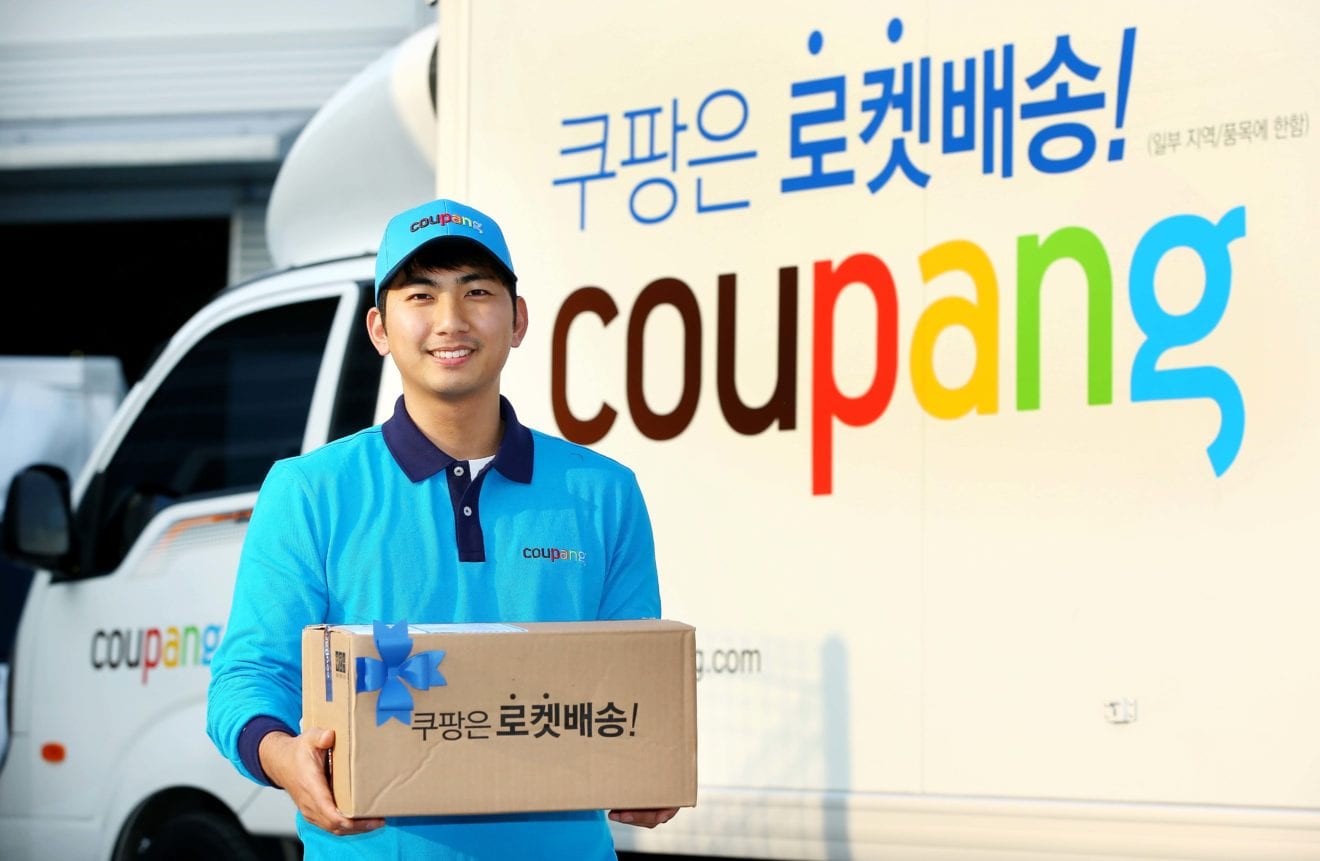
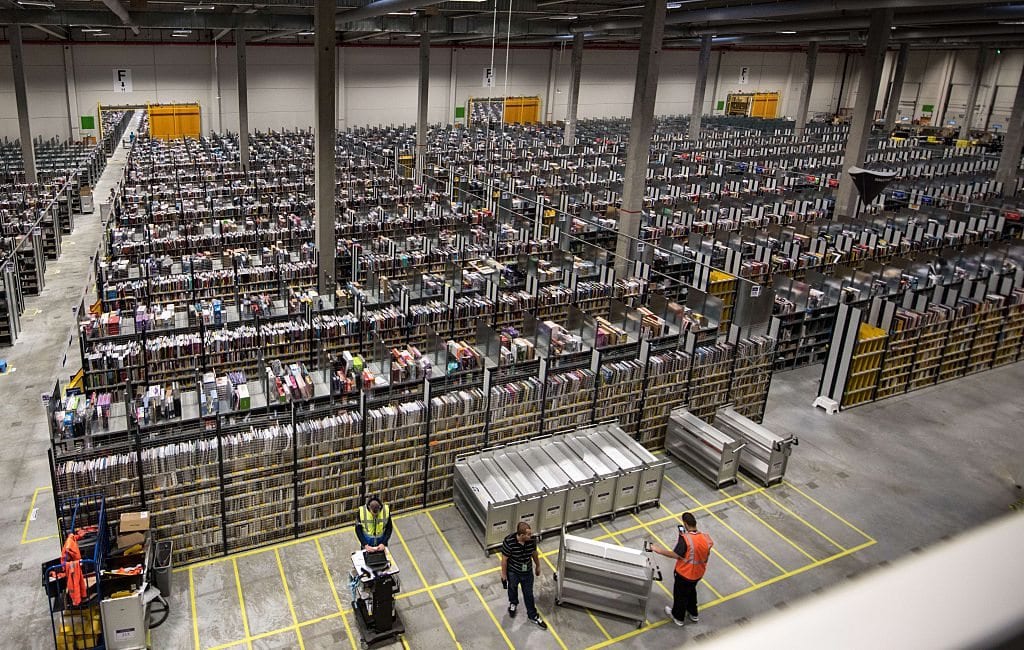
    In just the past two years, Coupang has built a network of customized delivery truck, warehouses controlled by an algorithm that allows it to be the fastest delivery in Korea. The company’s algorithms allow it to inform employees on which stock to move where, so that the most frequently purchased items are closest to the people buying them. Deliveries are made by 3,600 “Coupangmen,” who hand out balloons and candy to kids and text customers pictures of their boxes when delivered, if they are not home to receive them. The average Coupang driver delivers 120 packages each during a 10-hour shift. In South Korea, other retail establishments take two to three days to deliver their goods. Coupang is blowing the competition completely out of the water by delivering in a day or less. Customers can even cancel a shipment already on its way. Oh, and by the way, they don’t charge for delivery.

    South Korea has the second largest GDP in Asia. Almost everyone is on a smartphone and a high-speed network. Half of the country’s population lives in and around Seoul, making it easier for Coupang to deliver on their impressive promise of same day delivery. In South Korea, 15 cents of every retail dollar is spent online. In the U.S. that figure is nine cents.

    Bon Kim has become the e-commerce king of Korea and beaten Jeff Bezos at his own game. Amazon currently operates in 13 countries. Alibaba dominates China and Rakuten is the leader in Japan. Kim is content to keep his business running in Korea alone. At least for now.

  • Coupang Faces off against Retail Giant Shinsegae

    Coupang Faces off against Retail Giant Shinsegae

    “We should catch up to Coupang, accepting the risk of financial loss,” said Chung Yong-Jin, vice chairman of Shinsegae Group. “Coupang is taking away our customers in their 20s and 30s. Why are we just sitting on our hands and leisurely watching the exodus?”

    The JoongAng-Ilbo has recently reported that vice chairman Chung Yong-Jin of Shinsegae Group had harshly criticized Shinsegae executives for making a lukewarm response to Coupang eating into its customer base.

    Chung was quoted as saying: “Even if we have to incur a deficit, the entire distribution channel should come up with strategic online product offerings and sell them at rock bottom prices to lure in 20-30 something consumers who use smartphones to make purchases. To that end, we should give priority to taking E-mart’s online mall to new heights.”

    He made such a comment because E-mart, the discount store unit of Shinsegae, has lost business to social commerce operators, especially Coupang, over the past year.

    After all, Shinsegae Group waged a price war against e-commerce leader Coupang last month: it announced that it would sell baby formula, feminine hygiene products and instant coffee at the lowest possible prices. E-mart, the country’s largest discount store chain logging 13 trillion won in sales and 500 billion won in operating profit, started to fight back, accepting the risk of incurring a deficit.

    Coupang, established in 2010, has emerged as a threat to Shinsegae Group, the country’s largest retail juggernaut. Coupang’s sales grew sharply from 348.5 billion won in 2014 to 1.5 trillion won in 2015, greatly unnerving Shinsegae Group. If the growth of Coupang continued at such high speeds, Shinsegae Group fears, it could be overtaken by Coupang in 2-3 years.

    Computer-based and mobile traffic to E-mart’s online mall is languishing in the one million visitor range. Sales from its online mall account for about 5 percent (or 700 billion won) of its total sales (13 trillion won). In contrast, the number of visitors to Coupang reached over 7 million, dwarfing traffic to E-mart’s online mall.

    Coupang’s mobile app came out on top in traffic for 41 consecutive months from July 2012 to November 2015.

    Though E-mart with deep pockets is trying to take sales away from Coupang by offering products at sharply discounted prices, the majority view is that Coupang still gets the upper hand on E-mart when it comes to mobile shopping. A Coupang official said: “We are unscathed by E-mart going on the offensive. Actually, things are looking up as the mobile shopping market is on the upswing. It has become obvious that so many consumers have faith in Coupang.”

    According to Coupang, consumers, who have enjoyed convenient mobile shopping experiences since the launch of Coupang, will not easily drift away from Coupang.

    There is no doubt that Coupang is enjoying a “first-mover” advantage as sales from its mobile shopping platform surpassed 80 percent of its total sales. According to Statistics Korea, mobile shopping sales hit 2.66 trillion won in January 2016, exceeding computer-based e-commerce sales (2.54 trillion won) for the first time.

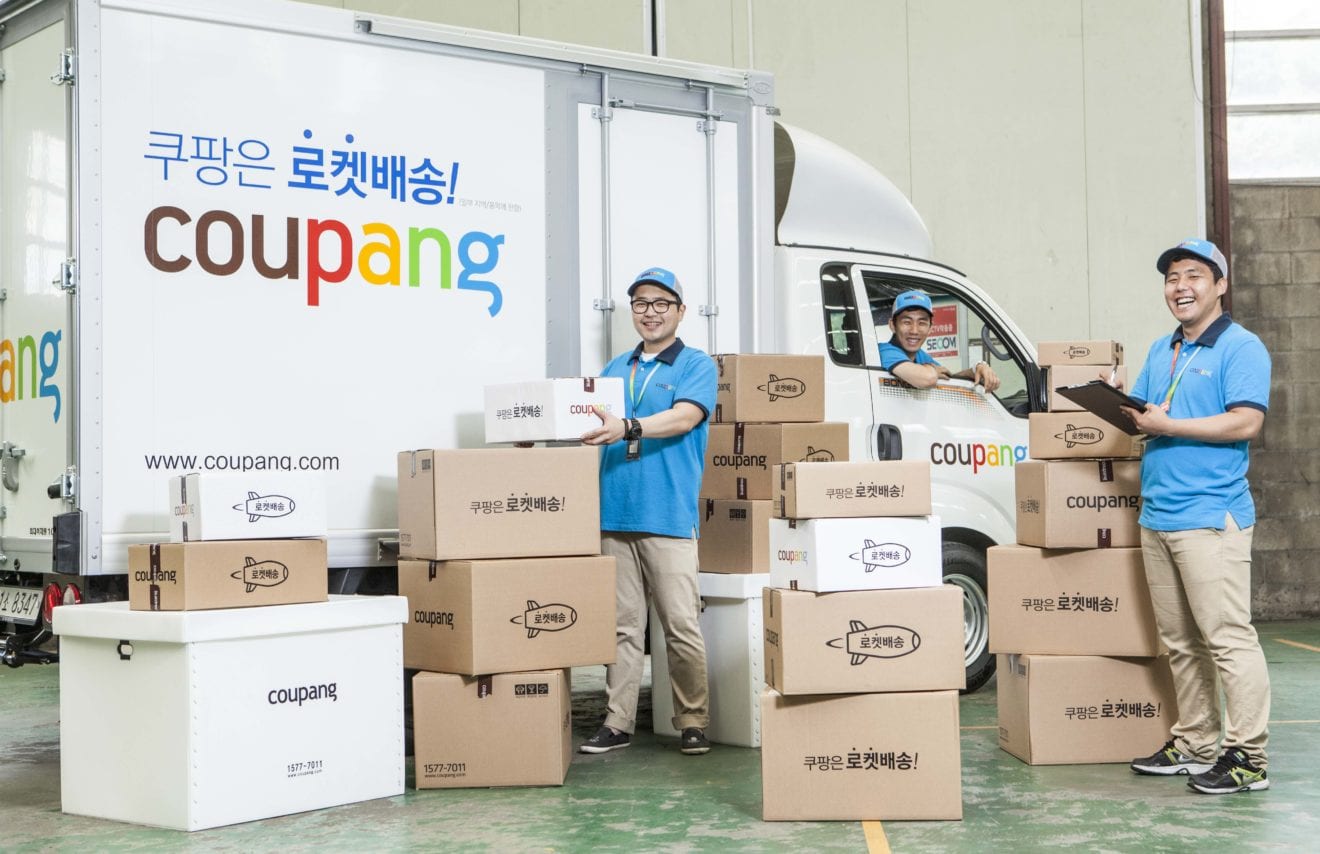
    Coupang is expanding its business realm on the back of its signature “Rocket Delivery” program, its delivery staff dubbed “Coupang men,” and its ‘direct commerce’ business model, in which Coupang takes care of all the stages of e-commerce from selling to delivery.

    Coupang plans to invest 1.5 trillion to increase the number of Coupang men to 15,000 and the number of logistics centers from 14 to 21 by 2017.

  • Korean online bookstores in delivery war

    Korean online bookstores in delivery war

    Korean online bookstores are pushing back their deadlines for same-day delivery, and jumping into the current delivery war that started when Coupang launched its ‘Rocket Delivery’ service.

    But while the bookstores’ new service is expected to attract more customers, concerns are rising over driver safety.

    Yes 24, the largest online bookstore in Korea, announced  it will extend the deadline for same-day delivery service by one hour. Customers will be able to receive purchased products on the same day for orders placed before 2pm, with those in Seoul benefiting from an extra hour and a 3pm deadline.

    Yes 24’s changes follow a move by competing online bookstore Aladdin, which has already pushed back it’s same-day delivery deadline by an hour.

    Coupang started the wave of delivery wars in Korea with the launch of an ultra-fast delivery service called ‘Rocket Delivery’ in March 2014, and the establishment of its own logistics system.

    Henry Ro, Coupang VP, said the Rocket Delivery service offers the greatest customer experience. “Rocket Delivery is an integrated ‘end-to-end’ service that has never been attempted in other countries.”

    However, despite consumer satisfaction, Coupang is expected to log over 400 billion won (US$326.9 million) in operating losses when it files its 2015 audit report in mid-April, due to rising costs in building new logistics centers and hiring new staff, according to industry sources.

    Other negative side effects are also pervasive. While Korean consumers are accustomed to ‘super quick’ deliveries provided by almost every type of business, the number of delivery people injured on the job is skyrocketing.

    According to data from the Korea Occupational Safety and Health Agency, 4460 delivery people were injured on the job between 2012 and 2014. News reports of delivery people involved in fatal accidents are also becoming common.

    Popular 30-minute delivery services are an example. Pizzerias used to compete to deliver pizza within 30 minutes, promising free pizza if the delivery is late. However, 30-minute delivery is now banned, as it was identified as the cause of numerous accidents.

    In the meantime, other online bookstores are looking into joining the delivery war with Yes 24 and Aladdin.

    Interpark plans to extend its deadline for same-day deliveries as well, and Kyobo Books is also looking into providing the service.

    Bookworms are thrilled that they can get the books they ordered right away. One customer commented on the convenience of the service, noting, “we no longer have to make the long trip to the bookstore every time we want to buy a book”.

    However, some point out that bookstores should be focused on providing other services instead of fast deliveries. “The books are so expensive. I would rather have additional benefits such as discounts or book points that can be used at the bookstores,” one customer said.

  • Coupang losses mount

    Coupang losses mount

    Coupang, the leading South Korean eCommerce operator, is expected to reveal mounting operating losses for 2015 as big investments in logistics capacity weighed on the financials of the startup company, industry sources said Thursday.

    Coupang is expected to log over 400 billion won (US$326.9 million) in  losses when it files its 2015 audit report in mid-April due to rising costs in building new logistics centres and hiring new staff, they say.

    The online retailer’s sales were estimated to have jumped more than four-fold last year from 348.5 billion won in 2014 after its same-day delivery service helped attract more customers in online marketplaces.

    While market watchers questioned the sustainability of its business model, Coupang said the deficit is an inevitable result of aggressive investment to get ahead in the highly competitive market.

    “The operating deficit was already being expected because we are making big investments to establish a nationwide logistics network and hire more staff,” a spokesperson said.

    “The investment is aimed at the long-term goal of making a strong foothold in the market. It is expected to take some time to make a turnaround as several projects are currently underway.”

    In November, Coupang said it will invest 1.5 trillion won in expanding logistics capacity by 2017 to step up its same-day delivery service, just months after it won a US$1 billion investment from Japanese telecommunications giant  Corp. Coupang launched an ultra-fast delivery service called “Rocket Delivery” in March 2014 by establishing its own logistics system and employing couriers, joining the global wave of delivery wars led by online retail behemoth Amazon.

    Coupang said it will hire 4000 more staff in the delivery and logistics sector by next year, in addition to 3500 full-time delivery staff, and have 21 logistics centres across the nation. In addition to the same-day delivery competition, Coupang has recently launched a cut-throat price war, advertising that its diapers and powdered milk are the cheapest in South Korea.

    As a result of aggressive marketing, Coupang’s market share in the local online market has steadily risen from 2.3 per cent in 2013 to 5.6 per cent in 2015. Mobile devices also accounted for 9.8 per cent of its transactions last year, according to industry data.

  • Shinsegae Group in massive expansion plan

    Shinsegae Group in massive expansion plan

    Shinsegae Group says it will invest 4.1 trillion won ($3.4 billion) this year and hire 14,400 new staff to expand its retail business and revitalise the “sagging domestic economy”.

    “The overall retail sector has been struggling to deal with continued sluggish domestic consumption,” a Shinsegae Group official said. “But we decided to invest more and hire more workers to find new growth engines and help inject vigor into the stagnant domestic market.”

    Shinsegae, Korea’s largest retail group, will open 10 shopping centres across the country in 2016, including the massive Hanam Union Square southeast of Seoul, built on a 117,000 sqm site and employing 5000 staff. That project is worth 1 trillion won alone,  (US$832 million).

    The company’s discount arm E-Mart, is building a logistics centre in Gimpo, in the Gyeonggi province, to support an expanded online business as it ramps up competition with rivals including Coupang. It also plans to increase the size of many of its existing stores as well as opening new shops in Vietnam and other Southeast asian markets.

    Three new Shinsegae department stores will open their doors – in Hanam, Gimhae (in South Gyeongsang Province) and in Daegu. Stores in southern Seoul and downtown Busan will be expanded.

    And the company’s Shinsegae Duty Free operation is putting the finishing touches on an upmarket duty free store inside its downtown Seoul department store. That shop is scheduled to open in May.

    “Business conditions at home and abroad have largely been unfavorable for us,” said Shinsegae Group vice chairman Chung Yong-jin.

    “We expect to bear fruits this year from our investments in multipurpose shopping centers, duty free shops and department stores. We will continue to invest and hire workers as a leading retailer to help bolster the domestic economy,” he said.

  • Coupang plans $1.3 billion expansion

    Coupang plans $1.3 billion expansion

    South Korean eCommerce giant Coupang will invest 1.5 trillion won (US$1.3 billion) by 2017 to hire 40,000 delivery people called ‘Coupang Men’, and increase its number of logistics centers from 14 to 21.

    This is a significantly larger-scale investment than the $1billion infusion attracted from Softbank, a Japanese IT company, in June.

    To strengthen its ‘Rocket Delivery’ service, Coupang plans to increase the number of Coupang Men on staff from 3500 to 5000 by the end of the year, 10,000 during next year, and 15,000 by 2017.

    In addition, the number of staff members at its logistics centers and call centers will also be increased from the current 6000 to 18,000 by 2016, and 24,000 by 2017. Altogether, a total of 40,000 new employees will be hired Coupang, which hopes to provide same-day delivery service across the country, plans to expand its number of mega logistics centers from 14 to 16 by 2016, and 21 by 2017. Their overall size is the equivalent of 110 soccer fields.

    As the number of Coupang Men and logistics centers increases, the Rocket Delivery service, which is currently limited to major cities, will be offered in other areas, and a larger variety of products will be eligible for shipping through the service.

    Henry Ro, Coupang’s VP, said the Rocket Delivery service provides the greatest experience to the consumers.

    “The Rocket Delivery service is an integrated ‘end-to-end’ service that has never been tried in other countries.”

  • Korea more active than Japan in Southeast Asian tech

    Korea more active than Japan in Southeast Asian tech

    In a region where masses of users are newly armed with smartphones and more spending power, Southeast Asia is a new gold mine for tech enterprises.

    China’s quickly saturating market for all things tech has pushed Asia-bound start-ups to seek new territory, and global companies like Rakuten, eBay and Rocket Internet are vying over Southeast Asia with no clear winner ― meaning plenty of opportunities still abound for new players.

    Those conditions drew Korean-Japanese entrepreneur Tesong Kim, who led e-commerce at Japanese investor Rakuten’s offices in Tokyo and Jakarta, to launch his own discount retail start-up VIP Plaza for fashion goods in Indonesia, Southeast Asia’s biggest market, in 2014, and recently expand to Malaysia.

    And Korea’s start-ups are joining the rush, he says.

    They seem to be making bigger waves there than in Japan. He cannot list any Korean start-ups with a big presence in the country, a closed, conservative market that is a nut nearly impossible for foreign companies to crack. But in expanding to Southeast Asian markets like Singapore, Indonesia and Malaysia, he says they are far more active than their Japanese rivals.

    “Korea is quite aggressive in Southeast Asia, I think more aggressive than Japan in terms of e-commerce start-ups,” he told The Korea Herald in an interview on the sidelines of tech start-up conference Tech in Asia Tokyo 2015 last week.

    “Korea is very crowded. The population is very small, geographically the landscape is very small, and there’s a lot of start-ups. So it’s quite packed, but I think Japanese investors think Korean start-ups can go global more than Japanese start-ups.”

    Indeed, SK Planet’s e-commerce retailer 11st is seen harnessing the region’s demand for Korean fashion and beauty products, while couples messenger Between and crowdsourcing translation app Flitto are also gaining traction in markets like Indonesia, Taiwan and Thailand.

    Meanwhile, Kim says Japanese start-ups are trapped at home, falling hard when they try to copy and paste their successful domestic strategies into new markets.

    But competition in Southeast Asia is heating up fast. Kim believes Korea’s KakaoTalk lost the messenger app war in the region to rivals like BlackBerry, WhatsApp, LINE ― one successful Japanese exception in the region ― and WeChat because it entered too late.

    That’s why it has pivoted to commercial services such as e-commerce when targeting markets like Indonesia, he said.

    Not that e-commerce is any easier, as Kim knows from his experience with Rakuten’s Indonesian e-commerce venture and starting his own online discount retailer. Handling logistics, acquiring products and dealing with fragmented, cash-based payment systems takes immense effort.

    But due to the region’s overall cheaper costs, he believes Korean and Japanese start-ups underestimate the investments they need to gain ground ― a mistake that will get them steamrolled in the market. “They think that with $1 million-$2 million, they can go to Indonesia, try to develop ― with that kind of mindset, they will never succeed,” he says. “All the very aggressive companies are investing into Southeast Asia with a very big amount of money.”

    Even for Korea’s prized e-retailer Coupang, which received a $1 billion boost from Japan’s SoftBank Ventures this year, it might already be too late to test the region’s waters, he said.

    “What they have is a know-how of how to sell things, of impulse buying. They have a system and good talents, but they are not localizing the region,” he said. “If they tackle some new country now, they need to invest in everything ― the products, warehouse, marketing and user acquisition.”

    But the market is already crowded by Lazada, Elivenia and Rakuten, not to mention 11st and Kim’s own start-up VIP Plaza. “I think it’s already too late in terms of social commerce,” he said. “The better strategy is buying out some local players. It’s not only easier, but much cheaper.”

    Still, Japan’s massive opportunities can’t be ignored, he says. Its app market is the biggest in the world, and gaming companies are seizing opportunities. “So in that sense, I think the market is still very big.”


  • Korean Retailer Coupang Gets $1 Billion Investment

    Korean Retailer Coupang Gets $1 Billion Investment

    SoftBank Corp. and Coupang have announced a definitive agreement under which a subsidiary of SoftBank will invest $1 billion in Coupang, the largest and fastest growing standalone ecommerce player in Korea. The investment is expected to close at the beginning of July, and will bring the total amount of funding raised by Coupang over the past year to nearly $1.5 billion.

    This funding will fuel Coupang’s innovations in its end-to-end fulfillment service, same-day delivery network and leading mobile applications that will extend Coupang’s leadership in the future. Coupang will also expand its R&D offices in Silicon Valley, Seattle, Shanghai and Seoul.

    Driven by an unprecedented level of mobile engagement and its revolutionary delivery service, Coupang has become one of the world’s most disruptive ecommerce companies. With more than 25 million mobile application downloads and the highest number of active users, the company is the leading mobile commerce player in Korea. Today, mobile sales account for over 75% of the company’s revenue and over 85% of its total traffic.

    “We welcome SoftBank as a long-term partner and look forward to leveraging their global expertise and vast network to further accelerate our growth,” said Bom Kim, Founder and CEO of Coupang. “This milestone investment from one of the greatest IT investors in the world provides even more financial strength and flexibility to expand our operations and redefine what a great end-to-end customer online shopping experience is all about.”

    Nikesh Arora, Vice Chairman of SoftBank Corp., said Coupang is one of the fastest-growing and most disruptive Internet companies in the world.

    “Coupang is setting a new standard for how ecommerce can and should be done across the globe with its innovative technologies and approach to same-day delivery, mobile commerce, and customer service,” Arora said. “We look forward to working with Bom Kim and his talented team and are excited to support their continued expansion.”

    Coupang’s explosive growth is powered by its cutting-edge delivery service, built on its proprietary technology infrastructure. With unmatched retail selection, the largest end-to-end fulfillment operations in Korea and a home-grown fleet of “Coupang Men” to enable last-mile delivery, its monthly direct retail revenues have more than tripled in the past six months.