Retail News CRM

Tag: CP All

  • CP All to roll out 700 more 7-Eleven stores in Thailand

    CP All to roll out 700 more 7-Eleven stores in Thailand

    CP All Plc, the operator of 7-Eleven convenience stores, plans to spend 11.5-12 billion baht this year to expand its business.

    Kriengchai Boonboapichart, the company’s chief financial officer, said 4-4.1 billion baht of total spending is for investment in new projects, subsidiaries and distribution centres, 3.8-4 billion is slated for store expansion, 2.4-2.5 billion is for store renovations, and the remaining 1.3-1.4 billion is for fixed assets and IT systems.

    The company plans to open 700 new convenience stores this year, on par with last year.

    Some 155 new 7-Eleven stores were opened in the first quarter this year.

    “We will continue to open new stores, but with a more cautious approach. There are many uncertainties, so we will select locations that can build revenue and have real demand from customers,” Mr Kriengchai said.

    “Moreover, each location has to possess the capability to support our O2O [online-to-offline] retailing strategies.”

    CP All operated 12,587 branches of 7-Eleven at the end of the first quarter this year.

    Of the total, 6,771 stores belong to business partners and 5,816 stores were owned by CP All.

    Moreover, 85% of the stores were standalone with 15% located in PTT petrol stations.

    CP All reported total revenue of 547 billion baht in 2020, down 4.3% from the previous year, with a net profit of 16.1 billion, a decrease of 27.9%.

    In the first quarter this year, the company’s total revenue dropped by 8.5% year-on-year to 133 billion baht, with a net profit of 2.59 billion, a fall of 54%.

    The decrease in revenue was largely attributed to outbreaks of the pandemic, resulting in a slow recovery of domestic consumption, decreased consumer purchasing power and a lack of tourism.

    Footfall per store per day in the first quarter this year declined to 845, down from 949 in 2020 and a peak of 1,187 before the Covid-19 outbreak.

    The decrease is mainly a consequence of the first wave of the outbreak, followed by a new wave in late 2020.

    The government announced measures to control the pandemic, resulting in a decrease in economic activities.

    The slow recovery of the tourism industry and domestic consumption has also hurt prospects.

    Furthermore, customer lifestyles are shifting to shopping online.

    The company continues to implement O2O retail strategies, such as 7-Eleven Delivery, All Online and 24Shopping to satisfy customer demand.

    CP All aims to provide prompt access to various consumer products, including at 7-Eleven stores, with delivery and pick-up service at branches seeing a good response, said Mr Kriengchai.

  • Positive result from anti-plastic campaigns by Starbucks, 7-Eleven

    Positive result from anti-plastic campaigns by Starbucks, 7-Eleven

    Starbucks Korea and 7-Eleven Thailand have announced positive results for their respective anti-plastic campaigns. A report revealed that the local Starbucks subsidiary has seen consumption of single-use straws cut by half in the months since introducing strawless lids on drinks without whipped cream or that do not need stirring. The initiative, introduced last November, has resulted in the monthly average of 15 million straws used across its coffee chain stores drop to 7.5 million per month. The company now only provides straws to customers who request them.

    Aiming to further reduce straw usage by up to 70 per cent, Starbucks Korea is planning an online event to offer rewards to customers who upload pictures of drinks taken without using straws. It has also introduced paper straws for usage in some beverages.

    7-Eleven saves 169 million bags

    Meanwhile, in Thailand, more than 169 million plastic bags have remained unused over the past two months at 7-Eleven stores, according to a report in local news site The Thaiger, the result of a management initiative to phase out their use. The move, which has been supported by local celebrities, encourages shoppers to refuse plastic bags or bring reusable bags to the store.

    The reductions are reported to have saved the chain more than 33 million baht, which operator CP All Public Company will donate to a local hospital.

    All about perception?

    Despite these reports, there have been growing concerns among critics in the media regarding the perceived environmental benefits of similar plastics initiatives worldwide.

    The sippy cup lid adopted in Korea is identical to the design used in North American stores, which was shown in a Reason magazine report last year to use more plastic than the previous lid design and straw put together.

    Plastic shopping bag initiatives similar to the one adopted by 7-Eleven have provoked skepticism among observers who point out that of all single-use plastic packaging used throughout supermarkets and convenience stores, the shopping bag is the only item that tends to be reused in the home.

    A 2017 report in Australia’s journalism hub The Conversation called getting rid of plastic bags a windfall for supermarkets without much perceptible benefit to the environment. It reasoned that most alternatives that were recyclable ended up in landfills anyway.

  • 7-Eleven Thailand launches delivery service

    7-Eleven Thailand launches delivery service

    More than 3000 Bangkok 7-Eleven stores are offering a courier service and collection point. The new service, which launched on Monday, promises next-day delivery on parcels or letters dropped off at a participating 7-Eleven store prior to 9pm.

    Customers using the service must present their ID then buy an envelope or box to send their goods in, with fees ranging from THB 35 to THB 119 (US$1.05 to $3.58). A flat rate applies across the city, depending on the size of the box or envelope.

    Customers can send goods any hour of the day or night and senders can use 7-Eleven stores as collections points, rather than sending to a street or office address.

    Called the 24/7 Speed-D express delivery service, it is also available at stores in the neighbouring provinces of greater Bangkok, Nonthaburi, Pathum Thani and Samut Prakan.

    The service is a joint venture between 7-Eleven’s parent company CP All and delivery company Dynamic Logistics. All deliveries can be tracked by GPS on the Dynamic Logistics website.

    As well as a growing range of banking services, two Bangkok 7-Eleven stores recently introduced a trial food and coffee delivery service based on the Line messaging platform.

  • 7-Eleven boosts parents profit growth

    7-Eleven boosts parents profit growth

    Overseas growth in the 7-Eleven convenience store business drove a modest increase in profit for Japanese retail group Seven & I Holdings in the first quarter.

    While the challenges of a shrinking population, falling household spending and corresponding lacklustre economy in its home market subdued local performance, offshore growth continues to underpin the company’s results.

    Operating profit of 86.4 billion yen (US$781.2 million) was 2.7 per cent higher year-on-year in the three months to May.

    While 7-Eleven Japan is the nation’s largest convenience store chain, with more than 20,000 stores, the c-store sector is struggling to make headway amid growing competition from drugstores, and Seven & I Holdings’ Ito-Yokado supermarket chain, and its department stores are essentially standing still.

    That makes overseas growth critical for Seven & I Holdings. While 7-Eleven Japan operating profit fell 6.9 per cent to 55.4 billion yen, overseas 7-Eleven profits surged 33 per cent. In Thailand, the chain has about 11,000 stores operated by local partner CP All. It has another 9500 stores in the US and more still under franchise agreements in markets including Malaysia, Australia and, more recently, Vietnam.

  • China, India, Myanmar can be the next countries for CP All

    China, India, Myanmar can be the next countries for CP All

    CP All is assessing expansion opportunities in China and India for its Siam Makro cash-and-carry retail concept.

    It is also evaluating opening a store in Myanmar after experiencing success in nearby Cambodia.

    “Siam Makro is on a new journey of expanding in overseas markets,” CP All’s CFO Kriengchai Boonpoapichart said in an interview.

    “It will be a tough and challenging road, but it’s a good opportunity with large populations to tap, compared with Thailand’s mature market.”

    Siam Makro set up Lots Wholesale Solutions in India earlier this year with plans to invest as much as US$145 million over five years. The first store is on track to open within a few months along with a second store in Cambodia.

    CP All is the listed retail business of Thai billionaire Dhanin Chearavanont. It paid more than $6 billion to buy Siam Makro five years ago, adding to its 7-Eleven convenience-store chain which now numbers about 11,000 across Thailand, with plans to open a further 700 annually.

  • 7-Eleven in Thailand Witness Significant Growth

    7-Eleven in Thailand Witness Significant Growth

    Convenience store group CP All, which runs 7-Eleven and Siam Makro stores in Thailand, has revealed strong growth over the past year.

    It has posted a net profit of THB19.9 billion (US$631.5 million) for the fiscal year, up 19 per cent on revenue growth with a strong performance also from its cash-and-carry subsidiary.

    Expansion and product strategy drove total sales revenue to THB278.7 billion, up 8.7 per cent from the year earlier with a gross profit margin of 28.1 per cent, down from 28.3 per cent because of higher oil prices pressurising logistics costs, says the company.

    CP All has more than 10,000 7-Eleven outlets across Thailand. It plans to add a further 700 stores this year with a goal of reaching 13,000 by 2021. It is targeting tourist destinations.

    Average daily sales at 7-Eleven stores were THB79,786 last year.

    The company plans capital expenditure of THB9.5 to 10 billion for store expansion, renovation and investments in new projects this year.

    CP All’s cash-and-carry subsidiary Siam Makro has meanwhile reported 14 per cent growth in net profit, reaching THB6.1 billion.

  • Thailand’s CP All bidding for Polish retail chain

    Thailand’s CP All bidding for Polish retail chain

    Thailand convenience-store chain CP All and three private equity funds are competing to buy Polish retail chain Zabka from Mid Europa Partners in a deal valued at up to €1.5 billion (US$1.59 billion).

    Zabka’s sale comes at a time when some policies of the ruling conservative Law and Justice party in Poland are considered an investment risk, says Deal Street Asia. CP All, which runs 7-Eleven stores, is up against CVC Capital Partners, TPG and Hellman & Friedman. The deadline for binding offers is mid-February.

    London-based private equity firm Mid Europa Partners, which focusses on central and eastern European investments, bought Zabka in 2011 for €400 million. Zabka, with 3400 stores, had sales of 5.75 billion zlotys (US$1.39 billion) in 2015.

    In November, Mid Europa Partners bought Romanian supermarket chain Pro from Polish Enterprise Investors fund for €533 million.

  • Big year-end discounts on way

    Big year-end discounts on way

    The government seeks cooperation from retailers and wholesalers to cut product prices to help reduce consumers’ expenses and stimulate the economy in the final month of the year.

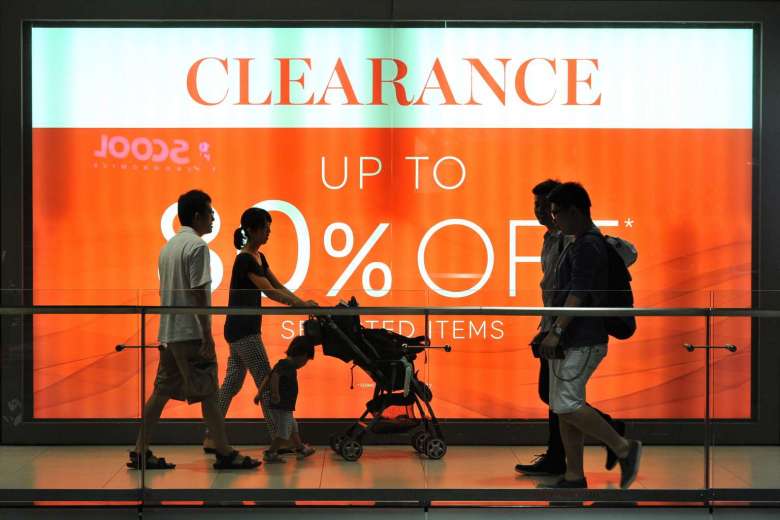
    The government is set to team up with wholesalers and retailers, which together have 13,500 branches nationwide, to cut product prices by 20%-80% to help reduce consumers’ expenses and stimulate the economy in the final month of the year.

    Commerce Minister Apiradi Tantraporn said the Internal Trade Department has been assigned to discuss with retailers and wholesalers, including hypermarket and supermarket operators, the possibility of holding special promotions to spur spending among Thais and tourists during December.

    “The ministry has cooperated with retailers and wholesalers to organise various activities to cut living costs since late 2015,” she said. “The campaign for this year-end promises special events with discounts as high as 80% for certain items.”

    Mrs Apiradi insisted the discounts will be given to brand-new products, not those currently on sale. Products that will feature in the campaign include food and beverages, consumer goods, electrical appliances, garments and accessories.

    The Business Development Department has also been instructed to talk with retail outlets under its supervision to participate in the year-end special discount programme, particularly for items like milled rice, instant noodles, vegetable oil, seasonings, detergent, dishwashing liquid, fabric softener, toothpaste and shampoo.

    She said the ministry has also asked for cooperation from department stores and retail outlets to hold special events or sales promotions to stimulate rice purchases to help local rice farmers.

    Retailers and wholesalers who are expected to participate in the scheme include the Thai Retailers Association, Siam Makro, the operator of Makro cash-and-carry store chain, Ek-chai Distribution System, the operator of Tesco Lotus hypermarkets, Big C Supercenter, Central Department Store, Robinson Department Store, Central Food Retail, the Mall Group, Tang Hua Seng, CP All, Foodland supermarket, Aeon (Thailand), Saha Lawson, Central FamilyMart, CPF Trading and TCC Logistics & Warehouse.

    In a separate development, the savings and credit cooperatives of employees of Thai Airways International Plc (THAI) will support direct sales of rice from farmers, said Mrs Apiradi.

    Flt Lt Kanok Thongpurk, vice-president of THAI, said farmers will be allowed to sell their products through all channels of THAI employees’ savings and credit cooperatives as well as THAI offices both in the provinces and Bangkok, including Don Mueang and Suvarnabhumi airports.

    Meanwhile, the Public Warehouse Organization and agricultural cooperatives have been instructed to open their spaces for farmers to sell their grain.

  • Thailand retail growth predicted at 6%

    Thailand retail growth predicted at 6%

    Thailand’s retail market is expected to grow at a compound annual growth rate (CAGR) of more than 6 per cent from now until 2020.

    This was revealed in the latest market study by global technology research and advisory company Technavio.

    Its research report, Thailand Retail Market 2016-2020, offers an analysis of the market in terms of revenue and emerging trends, as well as forecasts for six major product segments – grocery, apparel and footwear, beauty and personal care, personal accessories, home and garden, and consumer electronics.

    Grocery

    Valued at US$103 billion last year, the grocery market in Thailand is forecast to reach $145 billion by 2020, growing at a CAGR of 6.92 per cent. The segment is largely driven by the modern retail sector, while increasing urbanisation and changing consumer lifestyles are playing a significant role in the market’s development.

    Supermarkets and convenience stores have shown the fastest year-on-year growth rates with 9.5 and 10.5 per cent respectively last year.

    “Even though hypermarkets offer attractive prices, consumers are increasingly preferring supermarkets for the convenience factor and the availability of a wide product range,” says Technavio lead retail goods expert Poonam Saini. “Unlike supermarkets, which are in urban zones, hypermarkets are generally in bordering areas, catering almost exclusively to nearby consumers.”

    Apparel and footwear

    The second-largest market segment last year, apparel and footwear is expected to reach $9.19 billion by 2020, growing at a CAGR of more than 3 per cent.

    Several foreign companies are competing with local companies in the segment, says the report. International brands have fair penetration rates, offering stylish designs and a wide product range through modern retail stores. Local brands have also been successful with their long-established presence along with customer loyalty and trust.

    “The popularity of the online channel is growing, and players are actively using social media sites such as Facebook and Instagram for promotional campaigns and marketing activities,” says Poonam.

    “Websites such as Zalora.com are becoming popular for apparel and footwear products, as these sites offer promotions and discounts.”

    Beauty and personal care

    One of the fastest-growing segments, beauty and personal care (BPC) is having more than 3 per cent CAGR and is expected to reach $5.53 billion by 2020. A continuous exposure to western beauty and grooming trends has helped maintain the growth of the market over the past few years.

    International BPC companies have a nearly 50 per cent share of the market, with comprehensive product portfolios and innovative products. Thai retailers are expanding and attracting new consumers, says the report, citing cosmetics brand Sephora, which opened two new stores in 2014 after entering the market late the previous year.

    Top vendors

    Technavio’s research analysts name five top vendors for Thailand in the report.

    Topping the list are supermarket Big C and retail conglomerate Central Group. Then follow CP All, which has a chain of 7-Eleven stores, and homewares stores Global House and Home.

    Other prominent vendors in the market are Adidas, Aeon, Isetan Mitsukoshi Holdings, Lazada, Nike, Sephora, Seven & I Holdings, Tesco, The Mall Group and WearYouWant.

    Technavio develops more than 2000 reports every year, covering more than 500 technologies across 80 countries. It has about 300 analysts globally.

  • Siam Makro plans $258m expansion

    Siam Makro plans $258m expansion

    Thai cash-and-carry chain Siam Makro plans to invest up to 9 billion baht ($258 million) in opening stores this year in Thailand and overseas.

    Its parent company, CP All, which through its ownership of 7-Eleven Thailand is the country’s largest convenience store operator, plans to sell some of its 97 per cent stake in Siam Makro. It has appointed Siam Commercial Bank as financial advisor for a public share sale.

    It is reported CP All aims to keep a stake of more than 50 per cent in Siam Makro, whose main customers are hotels, restaurants and small convenience stores.

    Siam Makro plans to spend 6 billion baht to open 20 stores in Thailand this year, plus 3 billion baht to expand elsewhere in Southeast Asia. CFO Saowaluck Thitaphant says possible markets include Cambodia, Laos and Vietnam.

    She says the company is also interested in India, and plans a store for Myanmar once the political climate is clearer following elections.

    Siam Makro expects revenue to rise by less than 10 per cent this year.

    CP All, controlled by billionaire Dhanin Chearavanont’s Charoen Pokphand Group, says it will use proceeds of the share sale to repay debt.