Tag: CP group

  • Thailand AI Token Usage Jumps 30-Fold as Retail Deployments Expand

    Thailand AI Token Usage Jumps 30-Fold as Retail Deployments Expand

    Enterprise cloud providers are shifting artificial intelligence deployments across Thailand from internal testing into commercial networks, targeting cost reductions across roughly 19,000 retail storefronts run by Charoen Pokphand Group.

    Thai consumption of AI tokens jumped about 30-fold between January and September this year, yet only 12.4 per cent of the domestic working-age population uses the software regularly, compared with 60 per cent in Singapore.

    The data emerged during the CP Innovation Exposition 2026, where cloud vendors framed the gap between raw compute consumption and everyday workplace adoption as the next commercial hurdle for enterprise software in Southeast Asia.

    Agentic Commerce and Store Operations

    Alibaba Cloud operates two data centres in Bangkok and coordinates domestic compute with CP Group through True IDC. The infrastructure footprint gives the Chinese technology vendor direct access to CP Group’s extensive physical footprint, spanning convenience retail, wholesale distribution, and commercial groceries.

    Andy Lee, vice-president for international business and general manager for Southeast Asia at Alibaba Cloud, pointed to agentic commerce as the operating model designed to monetize that footprint. Under this framework, autonomous software agents evaluate competing vendor catalogs, run product searches, and settle transactions on behalf of individual shoppers.

    The projected scale is substantial. Lee cited industry projections indicating agent-driven commerce could reach US$3 trillion to US$5 trillion worldwide by 2030, transforming routine consumer purchasing into automated machine-to-machine procurement.

    Alibaba Cloud is pairing that consumer pitch with back-office energy management. The company reported that its AI Energy Expert system delivered power reductions of up to 15 per cent at Bangkok Hospital, offering a demonstrable cost return that retail landlords and hypermarket chains want to replicate across chilled logistics and store lighting.

    The Cost Trap of Compute

    Running autonomous agents at scale introduces severe operational friction. Global cloud providers warned that early adopters risk wasting capital if automation simply quickens legacy administrative work without yielding commercial revenue.

    Olivier Klein, chief technologist for Asia-Pacific and Japan at Amazon Web Services, warned that companies risk landing in an efficiency trap when they use automation solely to speed up existing routines without plowing efficiency gains into customer-facing innovations.

    Cutting entry-level staff creates immediate operational vulnerabilities for retail operators. Klein pointed out that while software lets enterprises expand departmental throughput without hiring extra workers, shrinking junior roles strips companies of their long-term talent bench. Human workers must instead supervise automated pipelines and vet software outputs.

    Mark Souza, chief technology officer at Microsoft Asia, described this emerging organizational structure as a frontier firm where staff function as agent bosses. Human employees assign workflows, oversee output quality, and set legal parameters while algorithmic agents execute multistep analytical processes.

    Controlling infrastructure expenses dictates whether these agent fleets make economic sense. Token pricing fluctuates based on model depth and output requirements. Businesses can control costs by selecting appropriate models, reusing previously processed information, and monitoring usage, Souza said.

    Sovereign Data and Enterprise Models

    Huawei Technologies is pitching open architectures to counter Western enterprise lock-in across Southeast Asia. Vincent Liu, vice-president of Huawei’s ICT Business Group, argued that commercial gains depend on anchoring open-source base models to localized enterprise data rather than relying purely on proprietary overseas software.

    Huawei estimates this localized approach cuts model scaling costs by nearly 50 per cent. Liu identified manufacturing, finance, government, and healthcare as sectors where broader deployment could convert physical data centre investments into measurable national productivity growth.

    The read-across for regional retailers is direct. Southeast Asian retail conglomerates run thin margins and cannot absorb speculative software licenses. CP Group and regional peers are under pressure to demonstrate that algorithmic supply chains yield tangible gross margin improvements rather than just server bills.

    Enterprise software suppliers must now show that AI agents can balance store-level inventory, prevent shrinkage, and drive direct basket sizes across brick-and-mortar locations. Compute providers that fail to link agent performance to store cash flow will face enterprise spending pushback across ASEAN.
  • IconSiam Bangkok due to open November 9

    IconSiam Bangkok due to open November 9

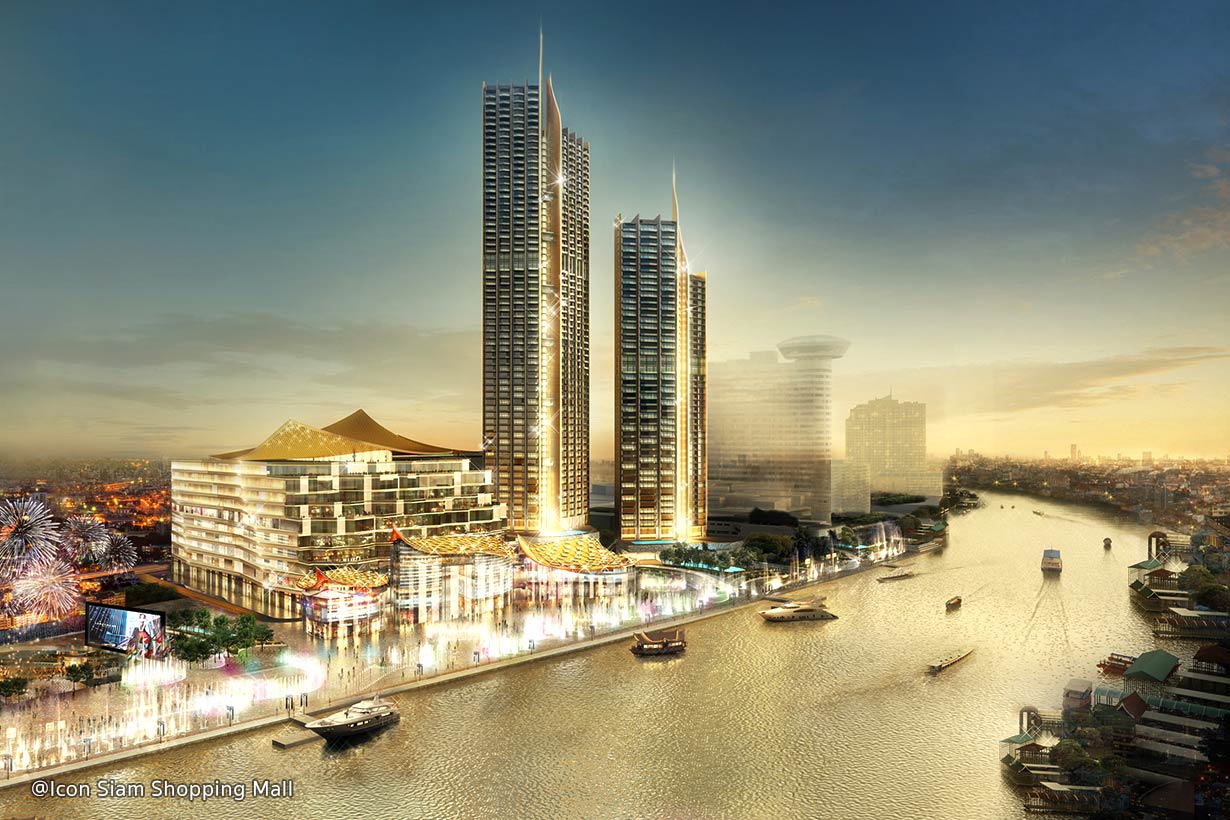
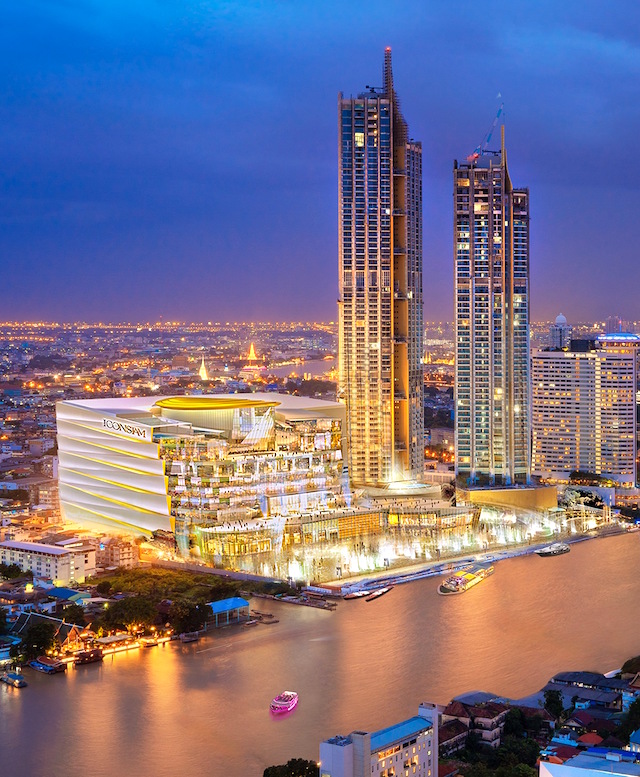
    Bangkok’s massive IconSiam development will open on November 9, its developers have confirmed.

    The US$1.67 billion complex being constructed on a 400-metre-long stretch of the Chao Phraya River will feature 14 flagship stores of internationally renowned brands, many of them taking space in the ultra-luxury 25,000sqm glass pavilion called IconLuxe, located next to the river and featuring the longest pillarless glass facade in the world.

    The development will be home to two shopping centres, whose tenants will include 188 brands and store concepts from around the world making their debut in Thailand, including duplex maisons for luxury brands.

    IconSiam CEO Supoj Chaiwatsirikul says IconSiam will represent “a completely new business model for destination development” in Thailand.

    “We are committed to making IconSiam a new national landmark and an exciting global destination. We have therefore placed particular emphasis on becoming the location of choice for the flagship stores of the world’s finest brands as well as introducing many firsts and innovations at the various outlets.”

    The development will comprise a 750,000sqm mega-destination featuring not only two shopping precincts, but theme parks, a museum, hotel and apartment towers.

    “IconSiam will excite visitors with a rich diversity of offerings, including art and culture, in addition to extraordinary dining and shopping possibilities,” said Chaiwatsirikul. “The project is co-designed and co-activated in collaboration with enterprises of all sizes and with people from all walks of life, and the benefits of the project are shared among all parties.

    “We have made every participant in IconSiam – whether they be outlets selling products, or designers and artists showcasing their creations, or even neighborhood communities helping in our operations – an inseparable part of our business model and they play a part in shaping our development.”

    Flagships line up

    Flagship stores at IconSiam will include the largest Adidas Original store in Asia, H&M-owned fashion label Cos, an Aland lifestyle concept store from Korea, and local accessories brand Naraya. H&M will open a three-level store.

    UK retailer JD Sports will open its first Thai store at the development and Nike’s store will be the first in Asia with a Kicks Lounge.

    The retail development is anchored by Thailand’s first Takashimaya department store from Japan which plans to introduce 170 brands into the market for the first time.

    Details have yet to be released about world-class restaurants and a rooftop bar planned for the complex. Besides those, IconSiam will feature seven food and beverage zones, each with a different atmosphere and concept. Tenants will include Singapore’s Jumbo seafood restaurant and Taiwan’s Harbour restaurant.

    Fitness First will open its largest Thai venue yet.

    Opening festival

    Chaiwatsirikul says IconSiam has budgeted THB1 billion (US$31 million) on an opening and launch festival, including extensive international communications.

    “Because IconSiam will be a showcase for the very best that Thailand has to offer and serve as a platform to propel Thai brands, products, artists, artisans and Thai culture onto the global stage, we are investing heavily to make IconSiam globally visible. We want IconSiam to be a magnet for the country, capable of drawing hundreds of thousands of international and local visitors a day, and to bring honour to Thailand,” he said.

    Meanwhile, the development’s two luxury residential towers remain under construction. The 70-floor, luxury Magnolia Waterfront Residences with 379 residential units is 90 per cent complete, while the 52-floor, super luxury The Residences at Mandarin Oriental Bangkok with 146 units is 80 per cent complete.

    IconSiam is being developed by three Thailand companies: shopping centre operator Siam Piwat, which owns Siam Center, Siam Paragon and Siam Discovery; residential developer Magnolia Quality Development Corporation; and multinational conglomerate Charoen Pokphand Group.

  • Japan’s Inagora inks agreement with Thailand’s CP

    Japan’s Inagora inks agreement with Thailand’s CP

    Japan-based e-commerce platform Inagora is teaming with Thailand’s CP (Charoen Pokphand) Group to boost its China business.

    The joint venture is also researching expansion into Southeast Asia.

    Inagora targets Chinese shoppers seeking Japanese goods. It boasts 4 million registered users and an inventory of about 40,000 SKUs, ranging from food and household goods through to more luxury items. Last year, its turnover totalled about US$98 million.

    Inagora opened a brick-and-mortar store in Zhengzhou this month as it broadens its market reach and eyes new markets. Japanese trading house Itochu and others invested about $68 million into the business last year to help fund expansion.

    By teaming with CP, whose operations include the 10,500-strong 7-Eleven convenience-store network in Thailand, Inagora hopes to start offering Chinese shoppers products from other markets. It may also look to sell Japanese and other Asian products to people living in Southeast Asia.

  • CP All supermarket has the lone laugh in drought hit Thailand

    Sales have tumbled at everything except one of Thailand’s prominent supermarkets as the most terrible drought season in 10 years strikes at the heart of the cultivating sector – the foundation of the rustic economy – and disappoints arrangements to open more stores in the regions.

    CP All is the only supermarket in Thailand to register a rise in same-store-sales growth, when the company reported a growth of 1.6 percent in Q3. Big C Supercenter, Thailand’s second-largest hypermarket chain after Tesco PLC, endured a 5.2 percent slide in Q3 same-store sales growth (SSSG) from a year prior, the most among its associates. About portion of Big C’s business originate from the inside Thailand where shoppers are worried about dry spell, low product costs and a feeble financial standpoint, investigators say. Tesco’s Thai unit does not report quarterly SSSG numbers.

    Big C, lion’s share claimed by Casino Group in France, has lessened its pace of extension like numerous different wary retailers. That is in sharp differentiation to the part’s forceful development arranges only a couple of years back.

    CP All, owned by billionaire Dhanin Chearavanont, is taking an alternate tack. The administrator of Thailand’s 7-Eleven stores is progressing with its extension, mostly to counterbalance slower deals at existing stores. That methodology is by all accounts working – same-store sales rose 1.6 percent in Q3. CP All was additionally the main retailer with any development in deals. The organization arrangements to open no less than 600 store a year to expand the aggregate number of stores to 10,000 by 2018.

    Analysis says retailers’ profit has bottomed in the second from last quarter, with government measures set up to invigorate utilization in the final quarter. That feeling is reflected in a pickup in purchaser trust in October, the first ascent in 10 months. In any case, the street to recuperation may be long, as general utilization could be dragged around falling homestead livelihoods one year from now. Climate forecasters say dried conditions could hold on through 2017. The agrarian area is the nation’s biggest business, representing 32 percent of Thailand’s work power.