Retail News CRM

Tag: craft

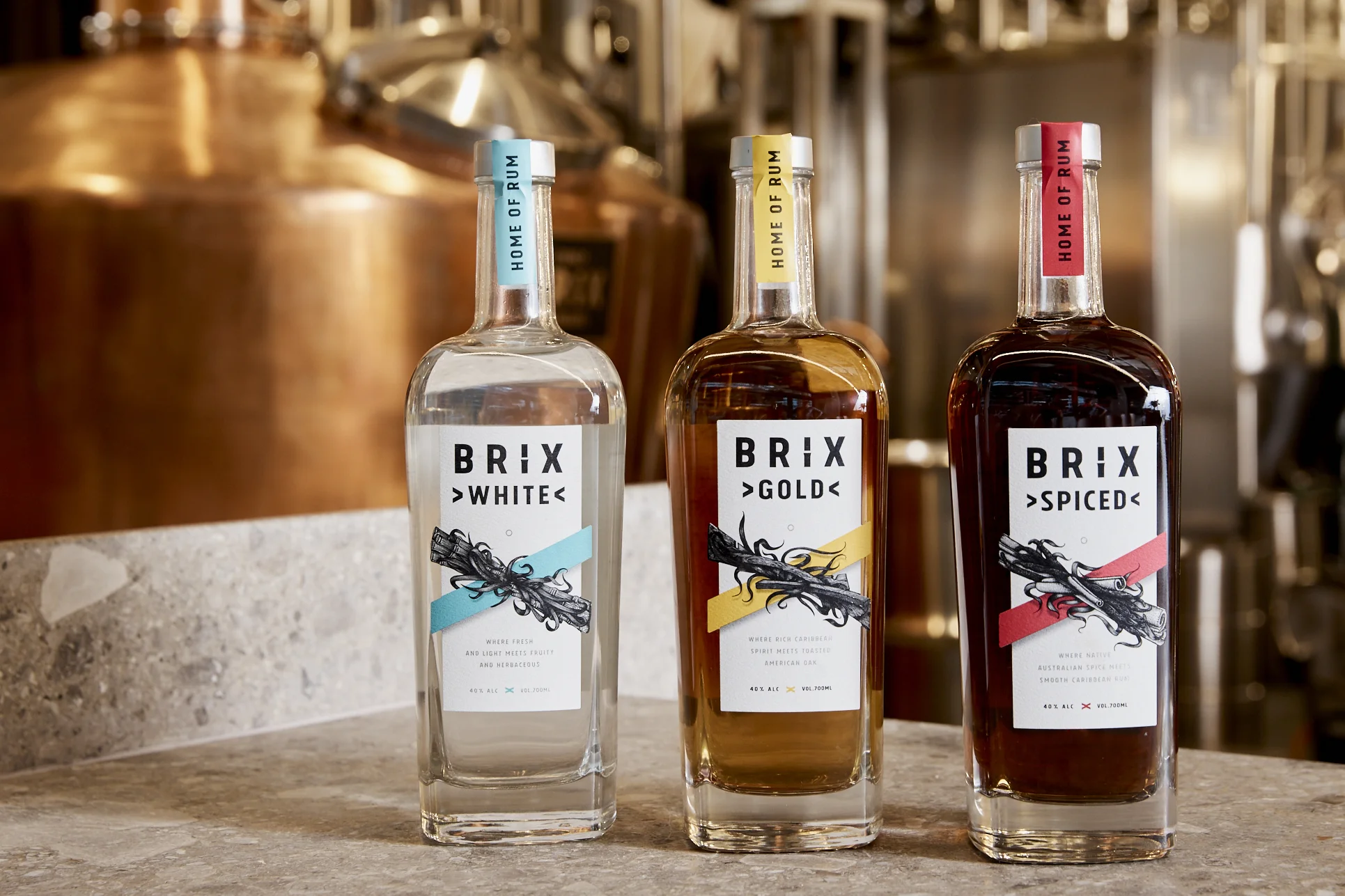
  • Acclaimed Brix Distillers Enters Voluntary Administration: Future of Australia’s First Craft Rum Distillery Uncertain

    Acclaimed Brix Distillers Enters Voluntary Administration: Future of Australia’s First Craft Rum Distillery Uncertain

    The boutique rum manufacturer, Brix Distillers, formerly known as Sydney Distilling Co, has opted for voluntary administration.

    Appointing an Administrator

    RSM Australia has been appointed to manage the administration for the pioneer craft rum distillery in the country. The firm is presently considering all possible alternatives, including liquidating the company’s assets through a deed of company arrangement.

    Brix Distillers, which was established in 2017, ran a bar in Surry Hills.

    Exploring Options for the Distillery

    The primary responsibility of the administrators is to explore and identify all potential solutions to ensure the most favourable outcome not only for the creditors but also for the legacy of this Australian distillery brand. This includes exploring the sale of the business and its assets, according to Ben Carson, director at RSM.

    The administrators are currently in discussion with several parties who have shown interest in the future of this premium craft rum brand and its business operations.

    Seeking Potential Buyers

    Carson noted that the company boasts one of the largest private stockpiles of Australian rum in the country. He encouraged those who are interested in the business to get in touch with their proposals.

    Questions & Answers

    What is the current status of Brix Distillers?

    Brix Distillers has gone into voluntary administration, and RSM Australia has been appointed as the administrator.

    What are the future plans for the business and its assets?

    The administrators are currently exploring all potential solutions, which includes the possible sale of the business and its assets.

    Who could potentially acquire the business?

    The administrators are in talks with several parties who have expressed interest in the business. Interested parties are encouraged to get in touch with their proposals.

  • “Savor Summer with Aldi’s Exclusive Tropicaldi XPA: Hawke’s Brewing Co’s Craft Beer Now Supermarket-Chic!”

    “Savor Summer with Aldi’s Exclusive Tropicaldi XPA: Hawke’s Brewing Co’s Craft Beer Now Supermarket-Chic!”

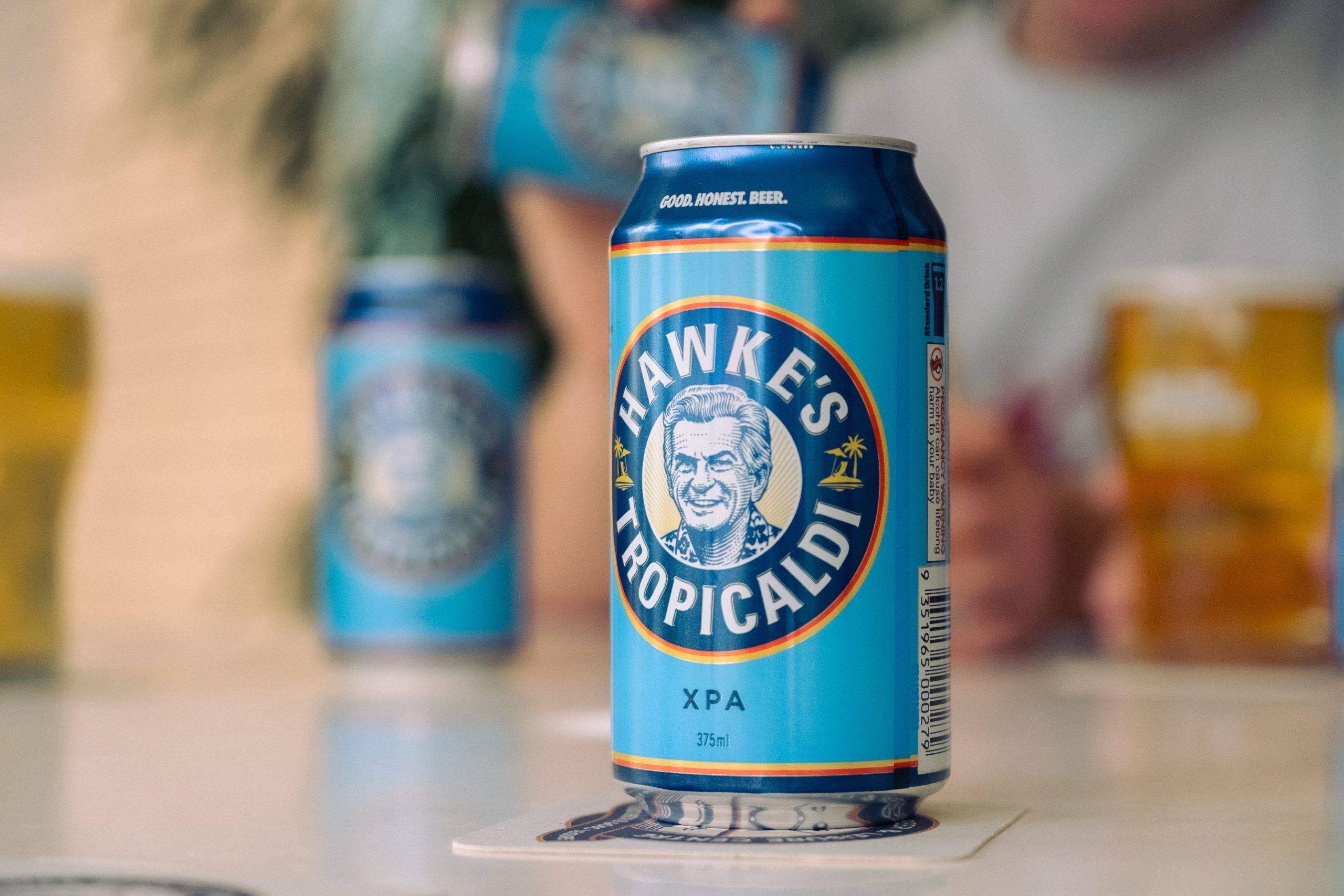
    Hawke’s Brewing Co. has embarked on a unique collaboration with Aldi to introduce Tropicaldi XPA, marking the brewery’s first venture alongside a supermarket.

    Dan Warner, Aldi’s buying director, expressed that the primary objective behind the launch is to heighten the accessibility and affordability of craft-style beer.

    “Previously, Hawke’s XPA was only obtainable through tap,” he revealed.

    “With its exclusive availability in cans at Aldi, Tropicaldi attests to Aldi’s reputation as a go-to retailer for quality, value-for-money summer beverages,” he added.

    The XPA, brewed in Marrickville, possesses a 4 percent ABV. It exhibits tantalizing aromas of pear, orange, and stone fruit and concludes with a crisp, easy-to-drink profile, making it a perfect choice for warm weather.

    Nathan Lennon, co-founder of Hawke’s Brewing Co, remarked that this collaboration aligns squarely with the company’s goal of maintaining the accessibility of craft beer.

    “Much like Aldi, we are committed to demonstrating that high quality does not necessitate a steep price tag,” he added.

    Tropicaldi XPA is available at Aldi stores across the nation for a restricted period. The product is priced at $13.99 for a six-pack of 457ml cans.

    Questions & Answers

    What is the collaboration between Hawke’s Brewing Co. and Aldi?
    The collaboration is about the launch of Tropicaldi XPA, the brewery’s first supermarket-based venture.

    What is the aim of the Tropicaldi XPA launch?
    The aim is to make craft-style beer more accessible to consumers at a more affordable price.

    What is the price and availability of Tropicaldi XPA?
    Tropicaldi XPA is priced at $13.99 for a six-pack of 457ml cans and is available nationwide at Aldi for a limited period.

  • Swift & Moore Partners With Otter Craft Distilling For Nationwide Spirits Distribution

    Swift & Moore Partners With Otter Craft Distilling For Nationwide Spirits Distribution

    Swift & Moore, a beverage distributor, has recently formed a collaboration with Otter Craft Distilling (OCD). As part of this new alliance, Swift & Moore will be taking over the nationwide distribution of the Sydney-based distillery’s variety of small-batch spirits.

    Collaboration Details

    In addition to taking over the distribution, Swift & Moore will also relocate some of its spirits production to Otter’s Marrickville facility. This strategic decision is designed to enhance Swift & Moore’s impact in the high-end spirits category, a segment that continues to experience growth in both retail and on-site sales channels.

    Established in 2015, Otter Craft Distilling produces a selection of Australian vodka, gin, and whiskey. The company has built a reputation for its small-scale, hands-on production methods. All their products are made in controlled quantities directly on-site. This collaboration provides the brand with access to Swift & Moore’s comprehensive national sales and logistics network.

    CEO’s Remarks

    “OCD represents the creativity and quality that consumers are growing more interested in when it comes to craft spirits,” observed Michael McShane, CEO of Swift & Moore. He further noted, “This partnership allows us to introduce their exceptional products to a larger audience and persist in driving growth and customization in the premium spirits category.”

    Swift & Moore manages a collection of numerous beverage brands, comprising both local and international producers. The company has gradually shifted its focus towards premium spirits as a key aspect of its growth strategy.

    Distribution Status

    The partnership started immediately, with OCD products being incorporated into Swift & Moore’s national distribution system well before the holiday trading season.

    Questions & Answers

    What products does Otter Craft Distilling produce?
    Otter Craft Distilling makes a selection of Australian vodka, gin, and whiskey.

    What is Swift & Moore’s growth strategy?
    Swift & Moore has gradually been focusing more on premium spirits as a significant part of its growth strategy.

    How will the partnership benefit Otter Craft Distilling?
    The partnership will give Otter Craft Distilling access to Swift & Moore’s comprehensive national sales and logistics network, helping the brand expand its reach.

  • Craft brewers increasing production but downtime is hindering growth

    Craft brewers increasing production but downtime is hindering growth

    New research reveals that while craft brewers increased production by 7.6 per cent compared with the previous three months, the industry average for actual production time remains just 45 per cent.

    The findings come from the Craft Brewers Benchmark Report, a quarterly report prepared by manufacturing performance software company OFS which provides insights into how data can be used to improve production efficiency in the craft brewing industry.

    The report analysed the production of millions of litres of beer by primarily Australian, New Zealand and U.S. craft breweries between April and June this year and looked at key performance benchmark data and overall equipment effectiveness (OEE).

    “This is an industry that’s thriving while leaving so much potential on the table, OFS CEO James Magee said. “That luxury can’t last forever – we need a mindset shift in how the industry collects and leverages data to improve productivity.”

    Despite the challenges, craft brewers scored particularly well for waste efficiency with only two per cent of beer produced that did not end up in cans or bottles, a 28 per cent improvement compared with the previous three months.

    On average, 6517 units of craft beer were produced per hour, 74.2 per cent behind the potential output of 11,353 per hour. On the other hand, unplanned downtime accounted for 25.46 per cent of production time, in line with the previous three months..

    As for the OEE score, the industry earned an average of 44 per cent, a slight increase from 43 per cent.

    Magee noted visibility is key to further improving efficiency, as when craft brewers can see an opportunity in front of them, they don’t miss it.

    “It’s telling that craft brewers manage product waste so well – they barely leave a drop behind,” he said. “Wasted time, however, is harder to view without the right tools in place, and it’s too easy to generalise and make assumptions about output, downtime, and changeovers when you’re relying on a busy crew updating an excel sheet or piece of paper.

    “What we’re hoping to do with these industry snapshots is show the efficiency potential that’s there when craft brewers surface these insights,” Magee added. “It isn’t rocket science, it is literally just an accurate real-time view of what’s happening on the line, and too few have it.”

  • The Garnered comes to ground at Landmark Hong Kong

    The Garnered comes to ground at Landmark Hong Kong

    Online retailer The Garnered, which offers mainly handmade fashion, craft and design products, is showcasing its wares at a pop-up in Landmark in Central.

    In a first for Hong Kong, the London-based venture will have its creations on show until November 12.

    Former Selfridges head of fashion Anna Gardner launched the e-commerce site last year to offer designers a more flexible, supportive platform through which to express their vision and highlight their creative processes.

    Garner started in the fashion industry at the Paris office of American Vogue and Vanity Fair, as an assistant to André Leon Talley. It was the springboard for an international career that has encompassed being head of communications for London retailer Joseph Ettedgui, and fashion director for Henri Bendel.

  • The State Of The Aging Craft Beer Industry

    The State Of The Aging Craft Beer Industry

    The craft beer industry may still have some few more good years left in it, but its old has started showing after years of enjoy double-digit growth over the past years. Single-digit growth only happened last year and with it come the concern that the industry is set for a poor performance.

    While several factors played a hand in the slowdown, it is most likely that the craft beer industry from here on will be on a downhill journey.

    The Industry Is Aging Well

    As of 2016, the Brewers Association said the growth of the craft beer industry slowed shy of 6%, which was a seven digit drop from that of 2015 and a twelve digits from that of 2014. Well, nothing good lasts forever; likewise, no business can register a torrid growth forever. But it can be said that the craft beer industry did last longer than expected and its reached full maturity. Now focus is on what the future hold for the industry’s producers.

    From the chart above, it’s clear that the industry as seen the last of its good days and it most likely is a victim of its success.

    Boston Beer may not be the first in the craft beer industry but it rapidly became the face of craft beer product. Its success was the start of many other home brewers making their leap in the big-league. The Samuel Adams brands also contributed to the cultural changes that lead to changing how a beer tasted a transition for the weal amber-color beer that were in mass production done by Miller, Molson Coors, and Anheuser-Busch InBev to the dark and richer-tasting brew.

    Bound To Be Bigger Than Ever

    With more than 5,300 breweries in operation, that is an outstanding number that the country has seen it is history. And of these, 99% are in the craft brewing industry. That is a significant figure, a huge leap from that of less than 2,000 breweries in 2011. Based on that information, the breweries growth stands at around 21% annually. Is the craft beer industry running its last leg?

    Boston Beer attribute to its depleted sales to wholesalers and retailers over the last twelve months to the increased demand for shelf space. The wholesalers and retailers are considered as the bridge between the producers and the consumers.

    The growth of the craft breweries caught the attention of mega-brewers but their sales soon took a similar direction, flat-lining and taking a decline soon after. To answer the poor turn of events, Molson launched Blue Moon and Anheuser-Busch followed suit with Shock Top; nevertheless, the domestic beer sales never improved. So, they began purchasing the smaller players in the industry and Anheuser-Busch bagging much of the competitions. Other big players that made significant investments in the craft brewery industry include Constellation, Heineken, and Molson Brands (NYSE:STZ).

    The decline seen in the brewing of craft beers may be attributed to the turn of events stated above. Nearly 1.2 million barrels have been taken out via the acquisitions must of which was from regionals with much of this coming from micro-breweries and brewpubs. As such, the Brewers Associated noted, based on that data, that the craft is bound to get even smaller. This craft beer industry report has an even more in-depth look into this.

    Continuing To Take Market Share

    According to the trade group, a craft brewery qualifies to be considered as such if it produces around six million barrels annually and with a control or ownership by a mass brewer that is below 25% and mostly uses traditional brewing ingredients and methods. Ballast Point Brewing was a known craft brewer; it was bought by Constellation Brands, an acquisition that saw it pulled out of the group. The same fate befall all the other craft beer makers that were acquired by Anheuser-Busch over the past years.

    The remaining breweries, as of 2016, account for the 1.4 million barrels recorded during the same year which was higher than the volume of barrels taken out and a sign of a better things still to come for the industry. Nevertheless, the many craft brewers still in play contributed to an increased competition for the limited shelf space.

    A Shakeout In The Works?

    The craft beer industry is most likely going to consider some reductions and making alliances over the next years. 97 breweries close in 2016, 29 more than what was seen in 2015 and 51 the year before that. The numbers may seem alarming but the market still has many old players and new ones who keep coming in; thus the increased competition only promises to make it harder for brewers to operate profitably.

    Ultimately, the industry will have to consider a craft beer shakeout which may help keep the breweries that are in the pink operational even as the few local favorites fade off.

  • Muslim Indonesia Joins Global Craft Beer Revolution

    Muslim Indonesia Joins Global Craft Beer Revolution

    Defying an escalating anti-alcohol movement and conservative bureaucrats in the world’s most populous Muslim-majority country, Indonesia’s only craft brewer is tapping into demand for better quality booze among the country’s small number of drinkers.

    Despite the fact about 90% of Indonesia’s population is Muslim, and in theory banned from drinking, most practise a moderate form of Islam and alcohol is available in cities and holiday destinations, with local brewers producing mostly Pilsner lagers.

    Unimpressed by the generic, mass-produced drinks on offer, local businessman Bona Budhisurya and his brother-in-law Jacob Suryanata decided to come up with an alternative, and in 2011 introduced Stark craft beer with a wheat and dark wheat variety.

    “We had been abroad and drank a lot of good quality beer,” said Budhisurya, a member of Indonesia’s Christian and ethnic Chinese minorities, adding that on his return to Indonesia he found that “there was no quality beer here”.

    By producing such brews – generally defined as beverages created in small, independent breweries – they have made Indonesia an unlikely new addition to the global craft beer revolution.

    The trend has seen micro-breweries spring up worldwide as consumers sick of flat, flavourless ales and gassy lagers seek out something with more character. Major beer-consuming countries – such as Britain and the United States – have seen explosive growth in the sector.

    Since its launch, Stark has expanded to include six varieties, including lychee- and mango-flavoured beers and an Indonesian Pale Ale, a less bitter alternative to Indian Pale Ale. But setting up a brewery is a risky move nowadays in Indonesia.

    Although most Indonesians are moderate Muslims and alcohol has long been available, growing opposition from politicians pushing a more conservative brand of Islam has created an uncertain climate.

    The government banned beer sales in the country’s ubiquitous minimarts in 2015, leading to sharp profit falls for major brewers, and Muslim political parties have proposed legislation to prohibit booze consumption entirely, although it seems unlikely this will pass.

    Trouble brewing

    It is hard to get permission to brew alcohol and only a handful of companies – such as Multi Bintang which produces popular local lager Bintang, and is majority-controlled by Dutch brewer Heineken – possess licences that they have had for decades.

    Budhisurya – who studied in the US for several years – eventually managed to obtain a licence in Hindu-majority Bali, a popular holiday island where drinking is more common, and Stark set up its brewery near the town of Singaraja.

    The site has a staff of about 50, including a head brewer hired from Australian beer maker Little Creatures. The company says brewing in Bali gives them an edge as they have easy access to clean water, unlike some other brewers whose operations are near Jakarta where water is often polluted and must undergo a long filtering process.

    “We have a principle – if the water is not good, we can’t make the beer,” told Albert Kurniawan, operations manager at Stark’s brewery,  from the red-brick building.

    Budhisurya said that the biggest challenge has been dealing with the official Food and Drug Monitoring Agency, which must approve alcoholic beverages before their release. He said the official time to get approval from the agency, which is staffed by conservative bureaucrats, is about four months, but in reality it takes six months to a year.

    Still, Stark has persevered and carved out a small niche by mainly selling to bars and some supermarkets favoured by a growing number of Indonesian consumers. Stark says its beers offer a quality alternative to pricey imported ales. It is so far proving a modest success, with about 3,000 to 5,000, 24-bottle cases sold every month, mostly in Jakarta and Bali.

    Due to religious considerations and high taxes that push up prices, relatively few Indonesians drink – alcohol consumption in 2015 was an average of just 1.4 litres per person, according to BMI Research. But the market is still potentially huge in a country of 255 million people, and Stark sees a bright future.

    “It does not matter whether it is local or imported – we are a craft beer, which means quality,” Budhisurya said.