Retail News CRM

Tag: crash

  • Dragon Fruit Dilemma: Surplus Supply and Falling Demand Trigger Price Crash in Vietnam

    Dragon Fruit Dilemma: Surplus Supply and Falling Demand Trigger Price Crash in Vietnam

    Dragon fruit farmers in central and southern Vietnam are faced with declining prices due to an oversupply and reduced demand for their produce. Farmers are being forced to sell their crops at prices far below their cost of production, resulting in significant losses.

    Plummeting Dragon Fruit Prices

    In the Central Highlands’ Lam Dong Province, a farmer named Luong finds her offer of VND3,000–8,000 per kilogram for her harvested dragon fruits met with little interest from traders. “I need to sell at VND10,000 or more to be profitable,” Luong said, noting that prices have plummeted by 50–70% since the start of the year.

    Meanwhile, in the southern province of Dong Thap, farmer Hanh is struggling to cover costs as she sells her dragon fruits between VND8,000–12,000 per kilogram. This is insufficient considering the 25-40% rise in fertilizer and pesticide expenses this year. Hanh states that prices must remain above VND13,000–15,000 per kilogram for her to breakeven. “If prices remain lower than this range, we might have to reduce our cultivation area for the next harvest,” she warns.

    The Causes of the Price Crash

    Dinh Van Hien, a dragon fruit trader, attributes the price plummet to the sharp increase in supply, as it is currently the peak harvest season in most growing areas. This, coupled with the harvest of other fruits such as durian, mangosteen, lychee, and plum, has led to a decrease in demand for dragon fruit.

    Huynh Canh, chairperson of the Binh Thuan Dragon Fruit Association, agrees that the drastic drop in dragon fruit prices is primarily due to oversupply. Additionally, he states that China’s imports have sharply decreased after the country expanded its dragon fruit cultivation area in recent years. Furthermore, with the dragon fruit season in China running from May to November, there is heightened competition with Vietnam’s produce.

    There are also challenges with Vietnam’s exports to the European Union due to tightened rules, including an inspection frequency of 30% at the border. According to Canh, only the highest quality fruits meeting the import standards of the receiving countries will command high prices.

    Currently, Vietnam has around 55,000-60,000 hectares dedicated to dragon fruit cultivation, primarily in the central and southern regions, with an annual output of approximately 1.4 million tonnes.

    Questions & Answers

    What is the main cause of the drop in dragon fruit prices in Vietnam?
    The primary cause of the price drop is an oversupply of dragon fruits due to the peak harvest season and a decrease in demand.

    How has the increase of cultivation in other countries affected Vietnam’s dragon fruit market?
    Increased cultivation in other countries, particularly China, has led to a decrease in imports of Vietnam’s dragon fruits, contributing to the oversupply and drop in prices.

    What challenges is Vietnam facing with its fruit exports to the European Union?
    Vietnam is facing challenges with its fruit exports due to tightened regulations, including a higher frequency of inspections at the border. Only the highest quality fruits that meet the import standards of the receiving countries can secure high prices.

  • Microsoft is changing how your Windows laptop tells you it’s crashing

    Microsoft is changing how your Windows laptop tells you it’s crashing

    Microsoft is shaking things up with some new changes to Windows and while some are aimed at making your experience smoother and faster, others, like the removal of the option to set up a new PC without signing in with a Microsoft Account, might ruffle the feathers of Windows 11 users who prefer a bit more freedom. And there is another change that might not sit well with everyone.

    Microsoft has announced it is revamping the infamous Blue Screen of Death (BSOD). The classic blue background, frowning face and QR code are gone, replaced by a simpler error screen in black.

    However, it is still unclear whether the black screen will stick around in the final update or if it will eventually turn green, as users on the beta, dev and canary channels are seeing the test builds with a green background instead. Time will tell, but one thing’s for sure – BSOD is getting a makeover.

    We’re previewing a new, more streamlined UI for unexpected restarts which better aligns with Windows 11 design principles and supports our goal of getting users back into productivity as fast as possible. We’ve simplified your experience while preserving the technical information on the screen. As a reminder, for Windows Insiders this appears as a “green screen”.

    This marks the biggest change to the BSOD since Microsoft first added the sad face back in Windows 8. The redesigned error screen still shows the faulty driver or error message but keeps things simple with just a “your device ran into a problem and needs to restart” message.

  • Apple’s Crash Detection sent 71 notifications to one 911 center last weekend

    Apple’s Crash Detection sent 71 notifications to one 911 center last weekend

    Last September, a new feature was introduced for these devices while unveiling the iPhone 14 series, the Apple Watch Series 8, the Apple Watch Ultra, and the Apple Watch SE (2022). Any of these products will detect when you have been in a severe car, SUV, or pickup truck crash. Unless you shut down the process with a tap, after 10 seconds the phone will contact your emergency contacts and give them your current location.
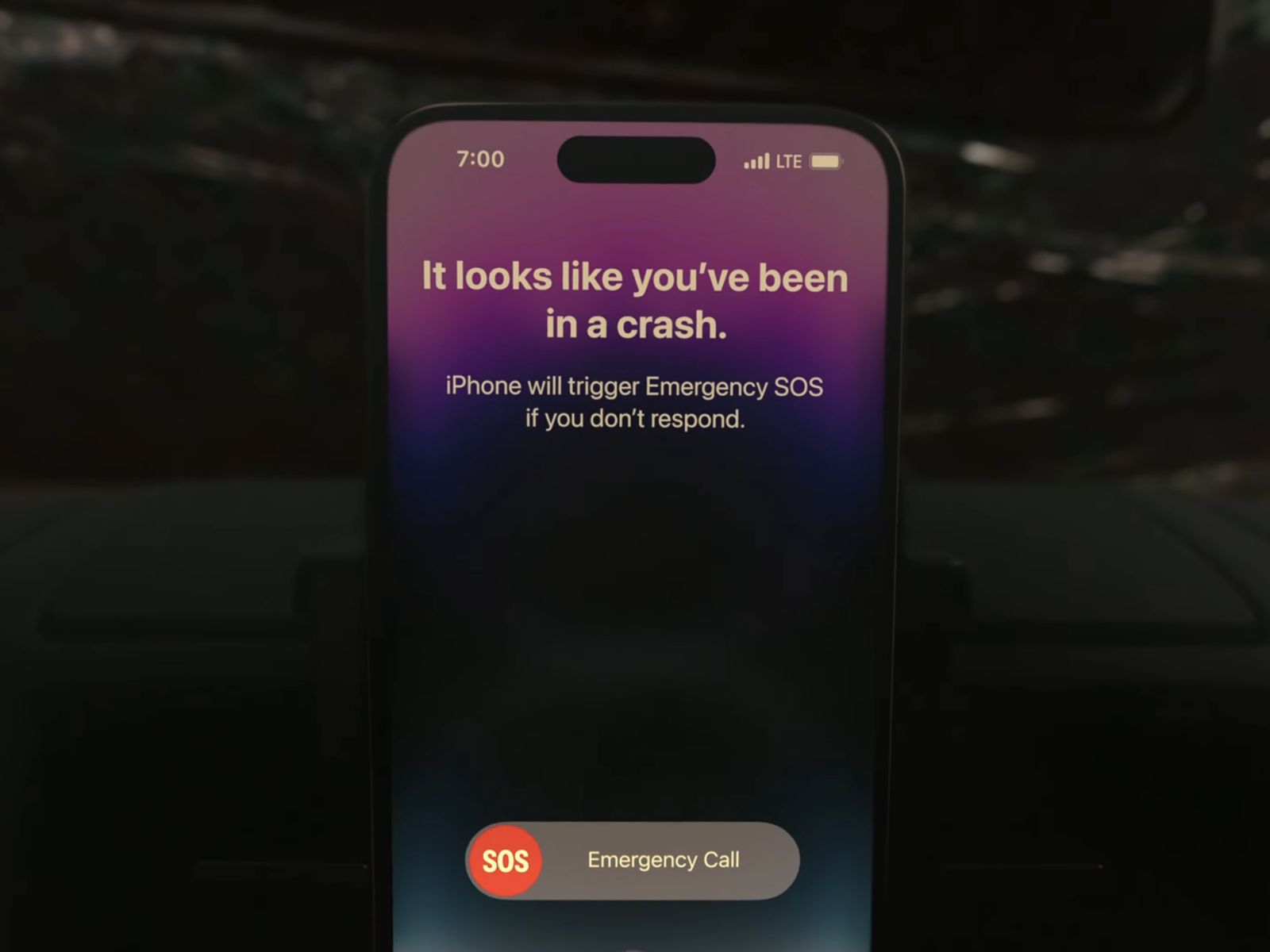
    Two days after introducing the feature, Apple turned Crash Detection into an ad for the new iPhone 14 line that shows an iPhone flying through the air amid a shower of broken glass. “It looks like you’ve been in a crash,” says the screen. “iPhone will trigger Emergency SOS if you don’t respond.” Apple states that the Crash Detection feature is driven (no pun intended) by advanced Apple-designed motion algorithms trained with over a million hours of real-world driving and crash record data.”
    We should point out that a similar feature was made available to the Google Pixel line in 2019. Regardless, while this sounds like a useful, helpful, and potentially life-saving feature, technology can backfire every now and then. For example, at the Summit County 911 Center, dispatchers received an incredible 71 automated crash notifications this past weekend from skiers carrying an iPhone or wearing one of the three newest Apple Watch models.
    The notifications came in from the area’s four ski areas but none of the notifications received had to do with a real emergency. Skiers making quick stops and falling into the snow set off the Crash Detection feature even though there was not one true emergency in the bunch. And if Crash Detection wasn’t set off by a fall into the snow, the Apple Watch’s fall detection feature, which essentially has a similar process to run through when someone wearing the timepiece hits the ground, was responsible for unnecessary notifications.
    None of the 71 notifications could be disregarded. And if the device owner did not respond to a return call, a special operations deputy had to contact ski patrol to visit the location where the impact happened to make sure no one was seriously hurt. This was a time-consuming activity but had to be done.
    Trina Dummer, the interim director of the Summit County 911 Center, said, “We are not in the practice of disregarding calls,. These calls involve a tremendous amount of resources, from dispatchers to deputies to ski patrollers. And I don’t think we’ve ever had an actual emergency event.” All 71 notifications were set off by an impact…into the soft snow.
    And since calls are handled by the 911 Center based on the time the call is received, a bogus accident that sends out a notification from an Apple device could delay the arrival of medical help to a real emergency in the area. Dummer notes that “We are absolutely diverting essential resources away from people who need it toward a feature on a phone.” A comment worded like that sounds like someone is upset with Apple.
    Another 911 Center, this one in Pitkin County, receives 15 to 20 calls a day from Apple’s Crash Detection feature that come from the county’s four main ski areas. The 911 Center’s director, Brett Loeb, says every notification generates a return call although sometimes a skier’s phone is too deep inside a coat pocket for the user to hear it ringing. At that point, the ski patrol has to check out the area which delays things.
    Similar to what happened in Summit County, in Pitkin County not one notification from Apple’s Crash Detection was the result of a real emergency.
  • Snapchat’s latest update fixes major crash bug on the iPhone app

    Snapchat’s latest update fixes major crash bug on the iPhone app

    Yesterday, Snap released an update for its iOS app which introduced a nasty bug that would prevent those who updated it to continue to use Snapchat. Basically, the app would crash at launch or just after the camera feed would pop up on the iPhone’s display.

    Although it was unclear how widespread the issue was, Snap acknowledged the problem and promised to fix it as soon as possible. That came after a wave of tweets that pointed out the bug, including one of The Verge’s writers who posted an article about the issue and tweeted it.

    True to its promise, the social company confirmed at the end of the day that the crash bug has been addressed. Snap also recommends those who are still having problems with the Snapchat app on their iPhones, to manually update to version 11.34.1.35 in the App Store.

    These things happen sometimes, but it rarely happens that they are fixed so soon. Kudos to Snap’s engineers for nailing this one so fast and props to users who patiently waited for the fix.

  • Range Rover Evoque Scores 5 Stars In Euro NCAP Crash Test

    Range Rover Evoque Scores 5 Stars In Euro NCAP Crash Test

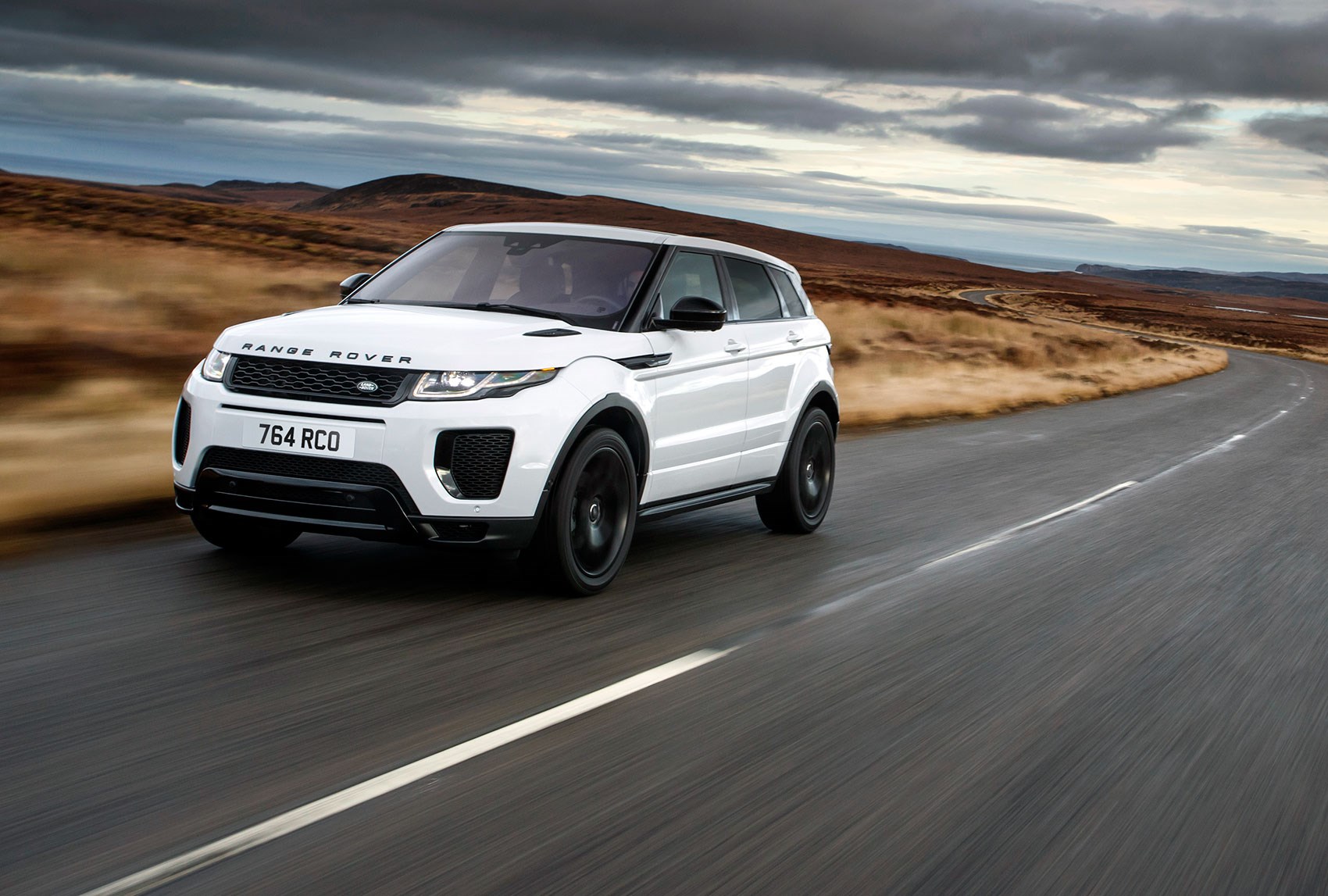
    The second-generation Land Rover Range Rover Evoque was recently crash tested by the Euro NCAP and results are finally out. The new 2019 Range Rover Evoque has bagged a 5-star rating in the crash test, scoring 94 per cent for adult occupant protection and 87 per cent for child occupant protection. Furthermore, for pedestrian protection and safety assist features, the 2019 model has scored 72 and 73 per cent rating, respectively. The second-generation Range Rover Evoque was unveiled last year in November and in addition to updated design and styling, the SUV comes with a host of advanced safety and comfort features.

    According to the Euro NCAP report, in terms of safety, the new Range Rover Evoque has made major progress in the area of vulnerable road user protection with the adoption of an active bonnet and AEB for pedestrian and cyclist detection. Commenting on the SUV’s improved safety standard, Michiel van Ratingen, Secretary General of Euro NCAP says, “It is encouraging to see the continued widespread deployment and improvement of advanced technologies such as AEB and lane support. It is good news that some of the basic driver assist technologies will finally be mandated from 2022, but thankfully most vehicle manufacturers are already way ahead of the curve today.”

    The highlights of the new Range Rover Evoque’s safety features include – auto emergency braking (AEB) function for pedestrian, cyclist, city and Intra-urban. The SUV also comes with active bonnet function, speed assistance and lane assist system. These, of course, are in addition to features like dual front, side, and curtain airbags, seatbelt pretensioner with load limiter, seatbelt reminder, ISOFIX child seat mount, and airbag cut-off switch.

    The Euro NCAP tested the SUV for front offset impact, full frontal impact, rear whiplash impact, and lateral impact. In all these scenarios, the results showed that for adult occupants the protection levels always either good or adequate, except for rear whiplash impact where protection for the rear seat passengers’ necks was recorded as just marginal. On the other hand, in terms of child occupant safety, the protection levels were always rated good. The NCAP test also proved that in city driving condition, the vehicle’s Auto Emergency Brakes (AEB) was rated Good in all three test scenarios – left offset, right offset and no offset.