Retail News CRM

Tag: Credit Cards

  • Indonesia fintech startup Kredivo launches in Vietnam

    Indonesia fintech startup Kredivo launches in Vietnam

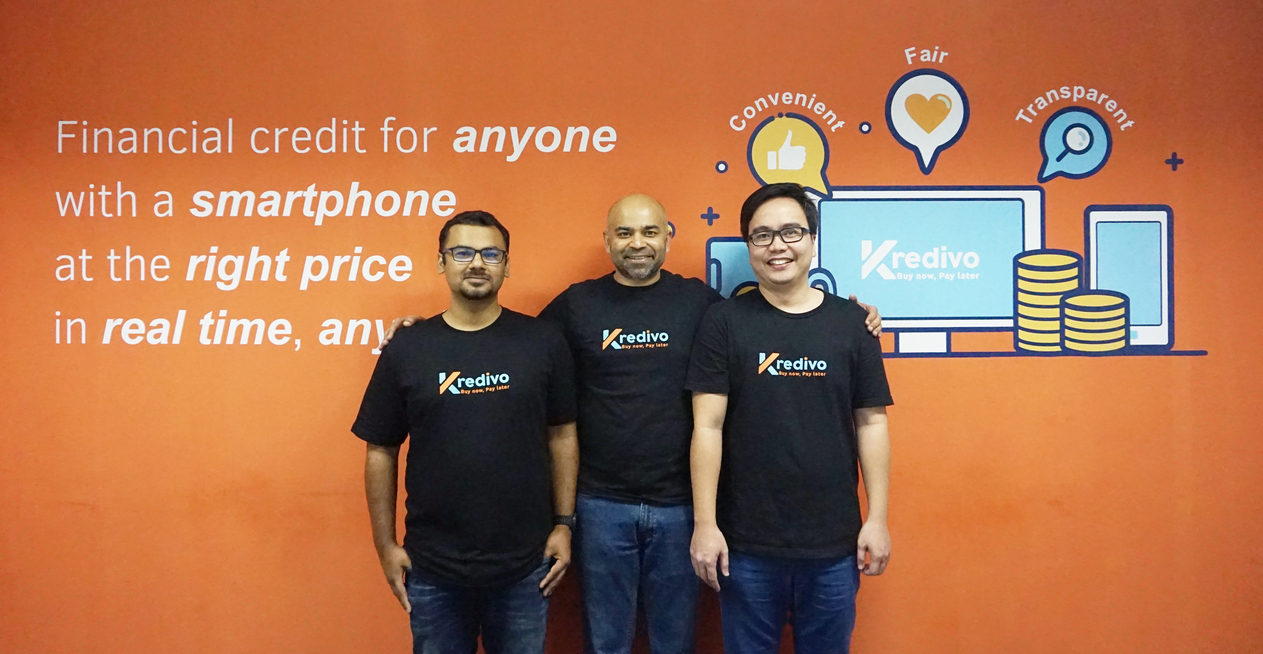
    Indonesian fintech platform Kredivo has announced a Vietnam launch through a joint venture, seeking to offer “buy now, pay later” services.

    It has partnered with Phoenix Holdings, a company with a diversified portfolio in consumer, financial services, retail and technology sectors, to form Kerdivo Vietnam JSC, according to a statement from the Indonesian company.

    “The launch of Kredivo in Vietnam, our first market outside Indonesia, is another key achievement and milestone for the business this year,” said its COO Valery Crottaz.

    This is because the country has low penetration of credit cards and a rapidly growing middle class, together with the fast-growing e-commerce market, he said.

    Kredivo will offer “buy now, pay later” services amid rising demand for consumer loans and a large ratio of cash used in purchases.

    It plans to reach Thailand and the Philippines next year. The company also wants to list in the U.S. by the first quarter of 2022.

    Vietnam’s fintech industry is seeing rising competition from both domestic and foreign players.

    Startup Infina had recently raised $2 million in seed funding from five global venture capitalists, while in June, Mfast raised $1.5 million in its Pre-Series A funding from a group of investors.

  • In Singapore, Credit Cards Set to Collapse by Nearly a Quarter

    In Singapore, Credit Cards Set to Collapse by Nearly a Quarter

    Credit card use in Singapore is set to fall 24% in less than five years, according to new research from Worldpay, the leader in global payments.

    For its Global Payments Report 2016, Worldpay analysed 30 eCommerce markets around the world, including Singapore, China, India, Hong Kong, Taiwan, South Korea, Malaysia and Australia in Asia. In Singapore, Worldpay found that although credit cards are the most popular payment method at the moment, taking a 60% share of the payments market, credit cards are set to collapse by 24 percentage points in 2020.

    Phil Pomford, General Manager Asia Pacific, Global eCom at Worldpay, said: “Our projections show that by 2020, credit cards will account for just 36% of the payment market in Singapore, which represents a significant drop in usage. This growing credit-wariness could be symptomatic of a wider political push to help consumers avoid debt. The government’s Total Debt Servicing Ratio (TDSR) rules, implemented in 2013, were designed to ensure that monthly debt payments don’t exceed 60% of the debtor’s monthly income. This public focus on the issue of debt helps explain why credit card use is predicted to fall nearly a quarter in less than five years, while debit card use is expected to rise.”

    At the moment, debit cards, cash on delivery and bank transfers each account for 9% of the total payments market in Singapore. However, according to Worldpay’s research, all of these non-credit payment options will double or nearly double by 2020. Debit card use is expected to rise by 9 percentage points to cover 18% of the total payments market by 2020, while cash on delivery and bank transfers will represent 18% and 17% of the market, respectively. E-wallet growth is likely to remain relatively flat, growing from 9% market share in 2016 to 10% share by 2020.

    Consumer debt has been a growing topic in Singapore over the past few years, leading the government to create new regulations in order to help borrowers pay down their debts and to prevent further debt from accumulating[1]. Three years ago, the government introduced the TDSR rules to prevent any Singaporean from taking out a loan if the resulting monthly payments would equate to 60% or more of his or her salary. Although those regulations were recently loosened to help people with long-standing loans refinance more flexibly, Worldpay’s recent research still indicates that the government’s programme to increase credit awareness and discourage too much borrowing is resonating with consumers. They are aware of and concerned about rising household debt[2] and now want easier access to non-credit payment options.

    Pomford added: “Our research strongly suggests that Singaporeans will start using a wider range of payment methods in the next five years, possibly influenced by the government’s work to reduce consumer debt and encourage Singaporeans to think more carefully before they shop on credit. Therefore, online merchants that want to win the hearts and wallets of shoppers in Singapore must offer a range of traditional and alternative payment methods – from debit cards, to cash on delivery and bank transfers – because credit cards alone just aren’t enough. Companies that sell online can also partner with a knowledgeable payment provider in order to ensure that they continue to offer the right payment experience and keep gaining customers in Singapore’s thriving eCommerce market, which is set to grow by 11% to US$5.8 billion by 2020.”
  • Apple Pay makes its debut in Hong Kong

    Apple Pay makes its debut in Hong Kong

    Visa, MasterCard and American Express have all introduced support for Apple Pay in Hong Kong.

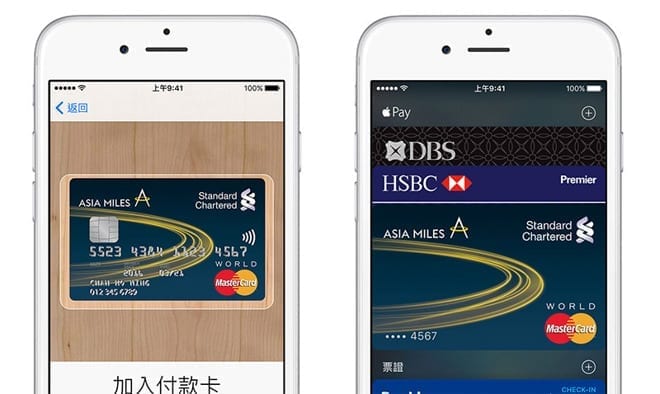
    Holders of credit and debit cards from the three companies issued by Bank of China, DBS Bank, HSBC, Standard Chartered, and Hang Seng Bank are now able to take advantage of the mobile contactless payment service.

    Apple’s Hong Kong website states that support for Bank of East Asia and Tap & Go cards is also “coming soon.”

    17613-15292-160719-Apple_Pay-HK-l

    In Hong Kong, Apple Pay is currently available in Apple’s own stores, as well as those from 39 other major chains, including 7-Eleven, APITA, KFC, McDonalds, Starbucks and Genki Sushi. It is also supported by a number of apps including Cathay Pacific, Deliveroo and Foodpanda. Support for Uber is coming soon.

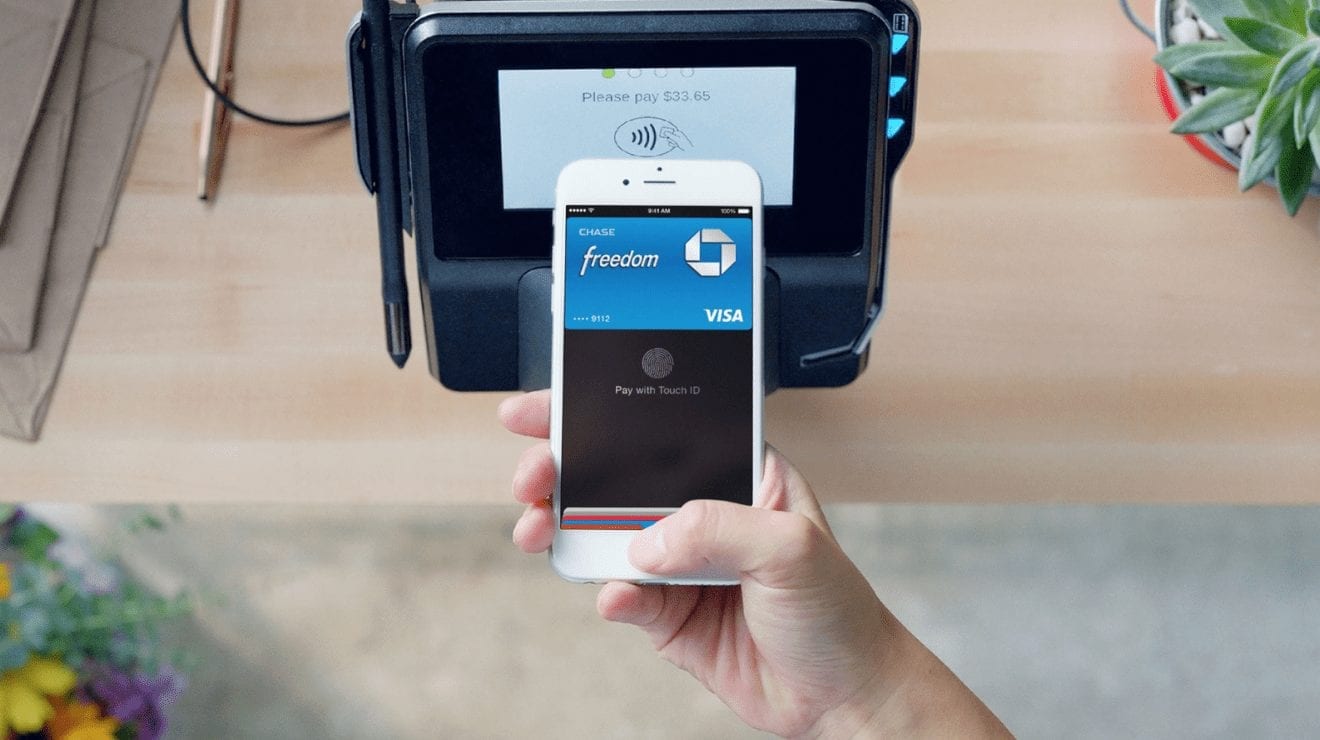
    Apple Pay’s contactless payment technology aims to improve security by not storing credit card numbers on the device or sending credit card details to merchants. Payments can be authorized using the Touch ID fingerprint authentication system.

    Apple Pay is supported by the iPhone 6s and newer, the Apple Watch paired with an iPhone 5 or newer, as well as the iPad Pro, iPad Air 2 and iPad mini 3 and 4.

    “In Hong Kong contactless payments have become a necessity for everyday life, consumers and retailers realize the greater convenience and faster checkouts for busy people on the go,” Visa Hong Kong and Macau country manager Caroline Ada said.

    She said research from the company shows that 77% of respondents are willing to try out or adopt new ways of paying, and 78% are ready to use smartphones as the device for making everyday payments.

  • Credit card companies collaborate to lift fee income

    Credit card companies collaborate to lift fee income

    Local credit card companies are launching offline-to-online (O2O) service businesses by collaborating with various sectors to increase transaction fee income.

    KB Kookmin Card reached an agreement with Uber Korea on Monday to jointly develop card products and take part in joint promotion campaigns in and outside Korea.

    “We hope to offer a wider variety of membership benefits to our credit card customers and expand in new sharing economy businesses like Uber,” said Shin Seong-hoon, head of the marketing division of KB Kookmin Card.

    The joint venture not only helps Uber expand its customer base in Korea against competition with Kakao Taxi, but also assists Kookmin Card to seek a future growth engine by developing taxi reservation services that are offered in association with credit card membership benefits. It may allow Kookman Card to expand its payment service to 400 cities where Uber operates.

    KB Kookmin Card is not alone moving towards such services.

    Shinhan Card has collaborated with four companies, including Kyobo Bookstore, GS Retail, Korea Smart Card and the car sharing service start-up Socar, since last year to offer O2O services and foster a loyal customer base.

    Shinhan also plans to launch a chauffer service this month in Seoul and Gyeonggi by affiliating with existing dispatch companies. It profits from a transaction fee of 2 to 2.5 percent.

    It also has been offering an easy payment services on flower delivery, quick-delivery and tutoring payment, after agreements with six companies.

    Shinhan aims to expand the O2O services by joining hands with 14 more companies by the end of the year.

    Local credit card companies aim to beef up their transaction fee income, which accounts for nearly 50 percent of their total annual income.

    ?However, analysts say it won’t be so easy for the credit card companies to grab market share by winning the competition with IT giants like Kakao and start-ups like Baedal Minjok, which have so far dominated the market share based on their broad customer base.

    “It is true that the credit card companies also have a large customer base, as well as broad affiliated retail shop networks,” said Yoon Jong-moon, a researcher at the Credit Finance Research Institute. “However, such a network is not enough to compete against the IT platform operators, because the card companies will see only a limited growth in profits by doing O2O services among their own customers and affiliated shops.”

  • UnionPay now in Thailand

    UnionPay now in Thailand

    While the company’s success up to now has relied on the huge domestic home market in China – which accounts for 99 per cent of all UP credit cards issued – this could be about to change. UnionPay is setting its sights on global expansion and intriguingly Thailand is the catalyst which will help make this happen. Over the past few years several landmark decisions about ATM/debit cards have been made by the Bank of Thailand (BOT) and the Thai Bankers’ Association (TBA), and these are beginning to be implemented this year.

    To combat the growing incidence of ATM and debit-card fraud, the BOT decided that all new ATM/debit cards in Thailand must carry secure embedded chips, a mandate which comes into force this May. Significantly, the BOT and TBA adopted UnionPay’s chip technology as the standard for all of Thailand’s debit cards, the first country outside of China to do so.

    This will mean a mass transformation of Thailand’s 50-million strong debit-card market, as currently few debit cards have embedded chips and they are mainly used as ATM cards and not for retail transactions. Most cards will, therefore, need to be replaced and to support this UnionPay has joined with Bangkok Bank to establish the Thai Payment Network (TPN). Other leading Thai banks are also expected to become shareholders in this joint venture company.

    Thai banks and other financial service providers will produce the new cards under the TPN and TPN-UnionPay brands, which will be locally issued and processed in line with BOT policy.

    China UnionPay chairman Ge Huayong said that the launch of TPN in Thailand has great significance and he cited four major reasons for this. It is a new breakthrough in the development of technical standards in China’s financial sector, it represents a model for China’s policy of Going Global, it lays a solid foundation for large-scale acceptance and issuance of UnionPay cards in other local markets, and it will help UnionPay develop a business-expansion model which can be replicated which will accelerate the roll-out of its global business.

    Ge Huayong also added that it ties in with China’s “One Belt, One Road” international expansion strategy as UP plans to develop similar payment infrastructure in other countries along the Belt and Road.

    Meanwhile, in another major development China UnionPay last month signed a memorandum of understanding with Visa to collaborate on payments security, innovation and financial inclusion.

    Visa CEO Charlie Scharf said the two card giants would work together to develop innovations in digital payments and broaden the access of financial services to a wider population.

    All these developments fit well with the Thai government’s digital payments strategy and should ensure that Thailand is at the forefront of using new technology in the payments industry.

    The benefits include helping our businesses keep up-to-date with modern technology while ensuring the public has easy and convenient access to financial services.

  • Korea’s card spending jumps 16% in January

    Korea’s card spending jumps 16% in January

    Korea’s card spending rose sharply in January, data showed Friday, on the back of increased consumption for the Lunar New Year holiday and a gradual recovery in domestic demand.

    Purchases made with plastic cards reached 56.1 trillion won ($45.4 billion) last month, up 15.9 percent from a year earlier, according to data compiled by the Credit Finance Association (CREFIA).

    Of the amount, credit card spending went up 15.9 percent on-year to 44.79 trillion won, while those of debit cards advanced 16.2 percent to 11.2 trillion won over the cited period, according to the data.The data includes transactions on credit, debit and prepaid cards. Cash advances, overseas spending and card loans were not included.

    “This year, the new year holiday started earlier than last year, which mainly led to the growth in January’s credit card spending,” a CREFIA official said.

    The retail sector, including department stores and big retail chains, enjoyed a 20.4 percent surge in credit spending on-year to 6.7 trillion won, the data showed.

    In particular, purchases made by credit cards in convenience stores spiked 56 percent thanks to the increase in small families and the solid growth in sales of their private-brand products, according to the association.

  • Mobile wallet outshines credit cards in India

    Mobile wallet outshines credit cards in India

    Mobile wallet may be a new concept, but Indians seemed to have adopted the mechanism faster than credit cards. While there are about 10-12 companies operating in the mobile wallet space, Noida-based Paytm has more than 20 million active users. The number is actually higher than the cumulative number of credit cards in India.

    According to the Reserve Bank of India (RBI), the total number of credit cards issued by 55 scheduled commercial banks in India is 19.9 million as of October 2014. HDFC Bank issued the highest number of credit cards – 5.6 million – followed by 3.3 million by ICICI Bank.

    On the other hand, banks have issued as many as 441 million debit cards in India so far.

  • Christmas shopping: Consumer anxiety falls in time for retail season

    Christmas shopping: Consumer anxiety falls in time for retail season

    Consumers in Australia are less anxious than at any time in the past 18 months amid signs of a robust finale to the Christmas shopping season.

    The National Australia Bank’s consumer anxiety index, released on Tuesday, has fallen for a second straight quarter to its lowest mark since mid-2013. It also revealed households have increased spending on non-essentials.

    New spending data pointed to solid retail spending growth in December, despite the hit to consumer confidence caused by last week’s siege in Martin Place. Commonwealth Bank figures, released on Tuesday, show the volume of debit and credit card transactions made in stores across Australia in the first three weeks of December was 10.7 percent higher than the same period last year. The total value of transactions was five per cent higher in that period.