
Tag: criteo

  • Southeast Asian Online Retail Revenue Climbed 21% in Q4 2025

    Southeast Asian Online Retail Revenue Climbed 21% in Q4 2025

    Online retail revenue across Southeast Asia rose 21% year-on-year in the fourth quarter of 2025, driven by higher conversion rates rather than website traffic gains.

    Commerce platform Criteo revealed that regional consumers spent an average of 22 days researching items between their first product view and completing an order around Singles’ Day.

    Sukesh Singh, Managing Director (SEA) at Criteo, noted that shoppers have learned to take their time across monthly discount cycles, extending consideration windows beyond those seen in Western markets.

    Southeast Asian shoppers evaluated an average of 3.8 brands within a single retail platform during the month before buying, almost double the two brands averaged by American and European consumers. When checking across multiple merchants, regional shoppers examined 5.8 brands before committing capital.

    Traffic Stalls While Checkout Rates Rise

    Merchant web traffic across the region remained largely flat throughout the quarter, shifting the burden of expansion entirely onto basket completion and repeat orders. Singapore recorded a 15 per cent year-on-year decline in retail website visits, yet merchant sales grew 18 per cent because conversion rates jumped 39 per cent.

    Malaysia emerged as the regional growth leader over the period. Conversion rates and retail revenue in the country both increased 34 per cent year-on-year.

    Western digital storefronts tracked in the opposite direction. Retail traffic in the United States grew 3 per cent while conversion rates fell 10 per cent, and European platforms saw visitor numbers rise 6 per cent alongside a 2 per cent drop in conversions.

    Marketplace and department store platforms collected the bulk of regional gains, expanding online revenue by 41 per cent year-on-year during the quarter. Mass-market merchants grew revenue 36 per cent, while online apparel suffered a 21 per cent contraction.

    Singles’ Day Retains Crown Over Western Sales

    Singles’ Day on 11 November retained its position as Southeast Asia’s dominant revenue generator, recording a 132 per cent lift in transaction volumes above baseline averages. Order values rose 212 per cent on the day as platform visits increased 73 per cent.

    Malaysia produced the largest single-day order lift with sales up 155 per cent, while Singapore recorded a 299 per cent jump in order value. The event also drove customer acquisition, lifting first-time buyers 130 per cent above baseline levels, a pace that outstripped repeat buyer expansion of 106 per cent.

    Across the entire fourth quarter, first-time shoppers accounted for roughly 40 per cent of all buyers. The 12.12 event followed with a 79 per cent gain in new buyers, while 10.10 delivered 33 per cent.

    Western promotional events failed to match regional dates. Black Friday delivered an average sales lift of 38 per cent across Southeast Asia, trailing behind the 84 per cent uplift generated during September’s 9.9 sales and the 51 per cent gain posted during 10.10.

    The Pre-Sale Buying Spike

    Transaction records reveal that buying concentrated heavily on the evenings before designated sale dates. Sales jumped 76 per cent on 10 November and 62 per cent on 11 December, establishing the eve of each major event as the second-highest sales day of each month.

    Product category demand split along clear seasonal lines. Health and beauty items jumped 268 per cent during the 11.11 window, while December shifted spending toward home goods and gifting, where cosmetic set orders climbed 467 per cent, television sets gained 430 per cent and karaoke systems rose 406 per cent.

    In Thailand, spending dispersed evenly across consecutive double-day dates rather than concentrating on a single day. Thai sales grew 115 per cent during 9.9 and 102 per cent on 12.12, running close to the market’s 129 per cent lift during Singles’ Day.

    Southeast Asian shoppers have a sale to look forward to almost every month, so they’ve learned that a good price will always come around again.

    The Read-Across for Brands and Marketplaces

    For brand managers and marketplace operators, the decoupling of web traffic from revenue growth exposes a structural shift in regional commerce. Platform expansion in Southeast Asia no longer relies on bringing fresh eyes onto retail pages, because smartphone penetration and digital commerce habits have reached operational maturity across key metropolitan centres. Growth now depends on basket conversion and retaining shoppers who treat retail marketplaces as comparison engines rather than transactional endpoints.

    This dynamic penalises mono-brand stores and rewards multi-brand marketplaces that aggregate merchant pricing. When consumers examine nearly four competing labels on the same site before paying, stand-alone retail sites face higher customer acquisition costs that they cannot offset through single-transaction margins. Consumer goods brands must redeploy budget toward in-platform sponsored search and product comparison visibility, or risk losing shoppers during the three-week consideration window.

    Pre-Sale Window Shapes Ad Allocations

    The concentration of checkout volume on promotional eves upends traditional media scheduling that loaded budgets onto the day of the sale itself. Retailers running campaigns that launch at midnight on 11 November miss the initial transaction wave, which forms 24 hours earlier as consumers clear saved digital carts.

    The integration of conversational AI into shopping journeys adds another preliminary filter. Criteo rolled out sponsored product placements within conversational AI systems across six Southeast Asian territories in September, reporting that over 80 per cent of traffic coming through those listings consisted of new users.

    Merchants face the next test during the fourth quarter of 2026, as brands attempt to protect margins against rising marketplace commission fees while shoppers stretch comparison cycles even further.
  • Best companies for French citizens to work for in 2019

    Best companies for French citizens to work for in 2019

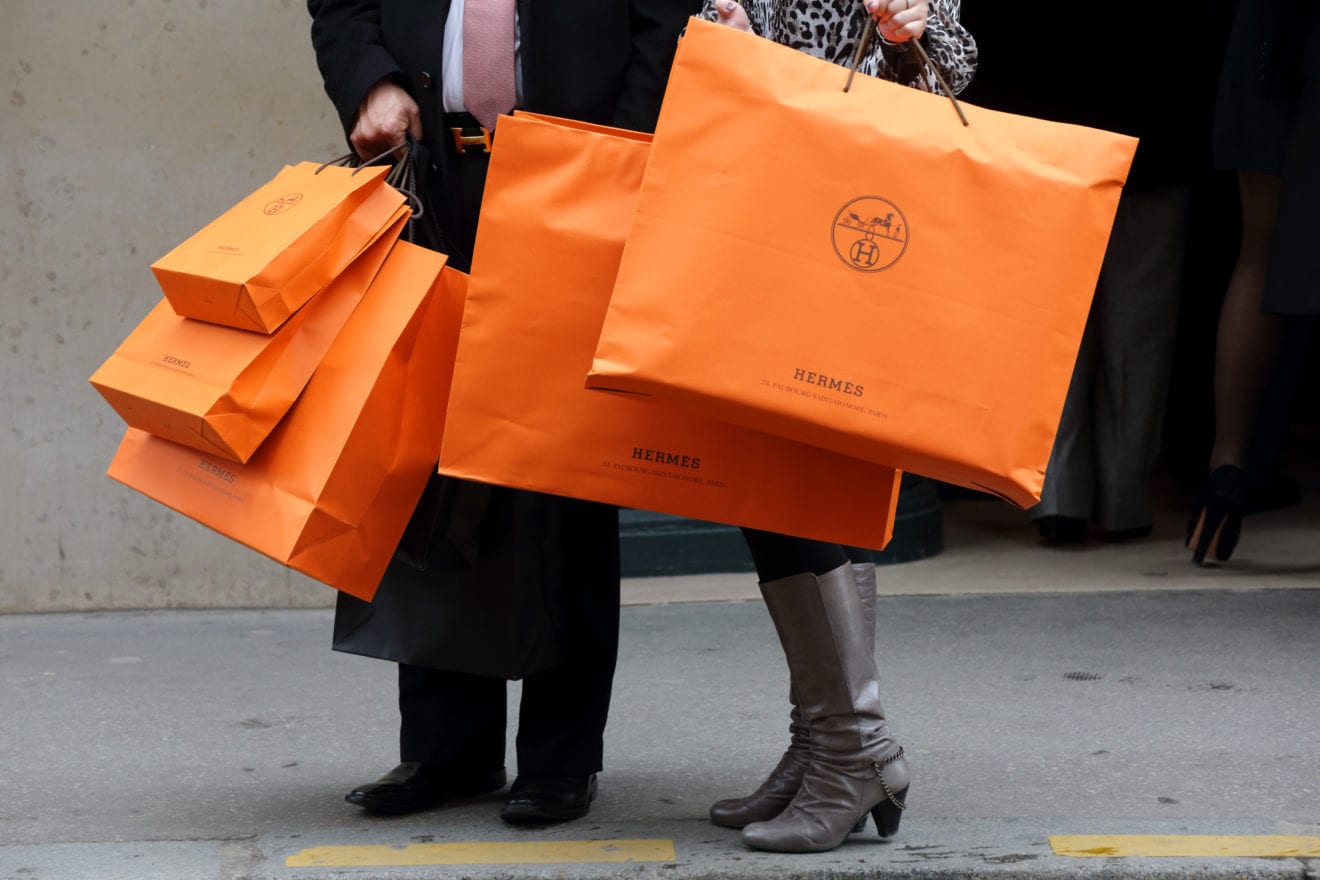
    In its fourth year of running a top employers list for France, Glassdoor has seen several companies — like Thales and Airbus — make a reappearance over the years. This December however, the company that’s been hailed as the best place to work for 2019 is a newcomer to France’s list: fashion designer Hermes.

    It’s fair to say that France is renowned for its luxury brands, yet Hermes is the only group from this field to make it into this year’s top 10, with Louis Vuitton and L’Oreal coming in at 11 and 16 respectively.

    Instead, a few other industries fill the top 10, including transportation and retail.

    To compile, Glassdoor assessed the input that workers give when offering feedback, in addition to recent ratings, which are on a scale from 1 to 5.

    The top 10 firms found in this Glassdoor list surpassed the average global rating of 3.4; with each group receiving a figure of 4.2 or higher.

    Below are the top 10 firms for this year’s ranking.

    10. Amazon

    Coming in at number 10 is e-commerce titan Amazon.

    With a global workforce of more than half a million, Amazon is renowned for its job creation with the e-commerce group stating that in the past five years, it’s created over 125 jobs every day in the States alone.

    While office perks vary from country to country, some benefits mentioned include access to medical care and career development programs.

    9. Leroy Merlin

    Another retailer that’s winning over workers as well as consumers is French-headquartered Leroy Merlin.

    The DIY group’s operations are featured in about a dozen countries, with 100,000 staff members employed to keep the retailer functioning around the clock.

    Having placed on Glassdoor’s “Best Employers” for France since the survey began in 2016, the retailer attributes one reason why it remains popular among employees, is that it sees people as the “central resource” of the business.

    8. Thales

    Moving up from last year’s no. 24 spot, Thales is all about being a responsible leader in the transport, security and defense spheres.

    While Thales has attributed “acting responsibly” as a crucial quality to its long-term success, it’s not the only qualities it aims to foster.

    Inside the firm, Thales is dedicated to supporting its staff, through promoting diversity, team collaboration and career development — it even has an in-house university to support employees through any part of their profession.

    7. AUTO1 Group

    From its small beginnings in 2012, AUTO1 Group has now become Europe’s leading car trading platform with its operations taking place in over 30 countries.

    Inside the company, more than 3,500 people from over 55 nationalities are employed — which AUTO1 attributes as one of its key strengths when it comes to keeping the company thriving on a financial level.

    6. onepoint

    When hiring, onepoint looks for talent that holds “cutting-edge skills, (a) strong commitment to the Group and an open frame of mind.”

    In return, onepoint dedicates a large amount of time on an employee’s first few weeks with its integration period strategy; which can include introducing them to partners, training and different teams.

    On Glassdoor, reviews indicate that the company offers an innovative atmosphere with a strong, upbeat culture.

    5. Saint-Gobain

    With more than 180,000 people hired worldwide, Saint-Gobain asks its large workforce to abide by five key values during each workday: to be agile, uphold the open and engaging culture, foster strong relationship with clients, constantly innovate and embrace their entrepreneurial abilities.

    In return, staff members have a range of work benefits on offer. In France, this can include personalized training and commercial discounts.

    4. Adrexo

    Making its debut in Glassdoor’s rankings for France, Adrexo is considered a leading private operator of advertising print in the country, having collaborated with the likes of McDonald’s and Haribo.

    Inside the firm, over 20,000 individuals in France have been employed by Adrexo and no matter what level they are at, the company wants to make sure it promotes each person’s leadership and entrepreneurial capabilities.

    3. Ubisoft

    The business that’s seen success from the likes of “Assassin’s Creed” and “Far Cry,” is winning over its employees as well as consumers.

    With more than 14,000 workers running its ship, Ubisoft is keen on hiring individuals who are innovative and ooze creativity.

    While game design is an important role at the videogaming firm, it’s not the only job in town, with Ubisoft offering a whole host of divisions including marketing, programming, finance and quality control.

    2. Criteo

    Last year’s winner Criteo has moved down to second place for 2019, yet the ad firm remains a top favorite — with employees applauding the staff who’ve been employed and the strong overall management seen, Glassdoor reviews reveal.

    From what began as a start-up in the mid-2000s, Criteo has now transformed into a business with dozens of international offices and several “success stories,” such as partnering up and helping the likes of Office Depot, Sephora, and Microsoft.

    1. Hermes

    When people think of this high-end luxury brand, the iconic, top-dollar Birkin bag often comes to mind. Yet that’s not the only product on offer at Hermes.

    The luxury group sells jewelry, fragrances, watches, accessories and more to customers across the globe, both in brick-and-mortar stores and online.

    Inside this designer world, over 12,000 people work hard to keep the brand running at full speed and are hired to keep true to its values: high standards and authenticity, imagination and daring, elegance and simplicity.