Tag: crm

  • Salesforce Brings the Customer Data Platform to the World’s #1 CRM

    Salesforce Brings the Customer Data Platform to the World’s #1 CRM

    Salesforce, the global leader in CRM, today unveiled its Customer Data Platform (CDP) with the next generation of Customer 360. New platform services will enable companies to unify disparate customer data throughout their entire organization and then personalize every engagement based on a single view of the customer. Customer 360 will go beyond traditional CDP capabilities and extend the power of CRM with consumer-scale data management and activation.

    “Customers today will not settle for fragmented experiences, and companies recognize that creating a single view of the customer is imperative to earning their loyalty,” said Bret Taylor, President and Chief Product Officer, Salesforce. “With Customer 360, we continue to extend our platform in new ways, empowering brands to unify data and personalize customer engagement at scale.”

    Customers Expect a Level of Personalization They’re Not Getting

    Most of the interactions that customers have with brands today are disconnected and therefore underwhelming. The latest Salesforce Connected Customer report finds that 78 percent of customers expect consistent interactions with a company regardless of the department they’re dealing with, yet only 50 percent of companies tailor their engagement based on a customer’s past interactions.

    The challenge for companies is that they are swimming in a deluge of customer data. Many are trying to unify data from legacy systems, disconnected channels, multi-channel attribution and elsewhere. They also need to adhere to regulations like GDPR and adapt to new channels like voice and chatbots. In this reality, delivering personalized and integrated engagement is difficult, and customers often pay the price. A retailer is unlikely to know that the customer who just contacted customer service for a broken product is the same one that also just received a promotional email for that same product.

    The Next Generation of Customer 360 Delivers Integrated Customer Engagement

    At Dreamforce 2018, Salesforce introduced Customer 360, which allows companies to connect Salesforce apps and create a unified customer ID to build a single view of the customer. Additionally, by extending the power of Customer 360 with MuleSoft, companies can connect any app, data source or device across any cloud and on-premise. Today, Salesforce is expanding Customer 360 with new advancements that will make it easier to bridge fragmented customer data across the entire organization and enable companies to deliver integrated customer engagement at scale.

    The next generation of Customer 360 will enable:

    • Data Unification and Consent Management: Brands will be able to unify all of their customer data to create rich customer profiles. This includes known and unknown data such as cookies, customer first-party IDs and more. With Salesforce’s consent management framework, companies also have the ability to easily gain customer consent wherever they engage–from email marketing to digital advertising.
    • Advanced Audience Segmentation: Segmentation capabilities will allow companies to identify specific groups of people to engage with in real-time based on demographics, engagement history and all other customer data available. For example, a company will be able to build an audience of female shoppers interested in running shoes based on information gathered from a combination of web browsing activities across several retail sites, marketing email interactions, previous purchases and more.
    • Personalized Engagement Everywhere: Once a brand knows what audience segment they’d like to reach, it can then activate the customer data across marketing, commerce, service and beyond. This means companies won’t skip a beat, reaching customers and prospects across channels like ads, email, social, mobile and web that are all integrated to deliver a continuous experience with the brand.
    • Optimization Based on Einstein Insights: With artificial intelligence, companies will be able to analyze and understand how and when to engage with customers to drive customer loyalty and improve business performance. Customer profiles are continuously updated based on their behaviors – as customers click on an ad, browse an ecommerce catalog, buy a product and open an email. This allows brands to leverage AI to drive the most relevant mix of product and channel recommendations to optimize channel engagement and customer satisfaction.

    “Enterprises are having a difficult time capturing all of their customer data in one place. With so much data coming in from dozens of sources, it’s hard for companies to keep track of it all, let alone use it to their advantage to deliver the connected experiences that customers want,” said Sheryl Kingstone, Research Vice President & General Manager at 451 Research. “A lot of solutions out there claim to solve these common challenges, but miss the mark. What Salesforce is announcing today is a strategic step forward in helping companies truly understand their customers through a single lens and engage with them one-on-one across marketing, commerce, service and beyond.”

    “Pacers Sports & Entertainment hosts hundreds of games, concerts and events each year for millions of fans in Indiana. Since teaming up with Salesforce, we’ve been able to improve fan engagement and build loyal relationships” said Todd Taylor, CMO, Pacers Sports & Entertainment. “We can now reach fans with the content most important to them, deliver personalized customer service and analyze how best to engage to keep them happy and involved alongside the entertainment experiences that we deliver. Customer 360 is a breakthrough innovation that we’re excited to adopt as we continue to grow the relationships we have worked hard to create with our fans.”

  • CMR says most smartphones in India go for below industry ASP

    CMR says most smartphones in India go for below industry ASP

    The CyberMedia Research (CMR) report, “CMR India Mobile Pricing Index 2018”, revealed that 80% of smartphone brands are selling their handset below the average price of smartphones in India.

    Consumers want sleeker and cheaper devices, even as they demand overall better user experience, all contributing to increased average sales value of smartphones. CMR says in CY2018 India was one of the few major smartphone markets that grew by around 10%. It expects 2019 to be no different.

    According to Narinder Kumar, lead analyst -IIG CMR, “CY2018 witnessed growth in average sales value (ASV of smartphones largely due to upgradation. A majority of the current smartphone shipments are essentially upgrades, driven by consumers seeking more from their smartphones.”

    Indian and Chinese brands contributed the most to below industry average ASV, whereas 60% of brands in above ASV segment were global brands, including Apple, Google and Samsung.

    “The decline in above ASV percentage can be attributed to increasing market consolidation. There was around 10% decline in numbers of brands operating in the 4G Smartphone space. With top 10 players contributing 80% – 85% of market, there is stiff competition for rest of brands,” stated Narinder.

    CMR anticipates growth in ASV in CY2019, driven primarily by increasing consumer demand.

  • Capillary Technologies Announces Continued Business Momentum in Southeast Asia

    Capillary Technologies Announces Continued Business Momentum in Southeast Asia

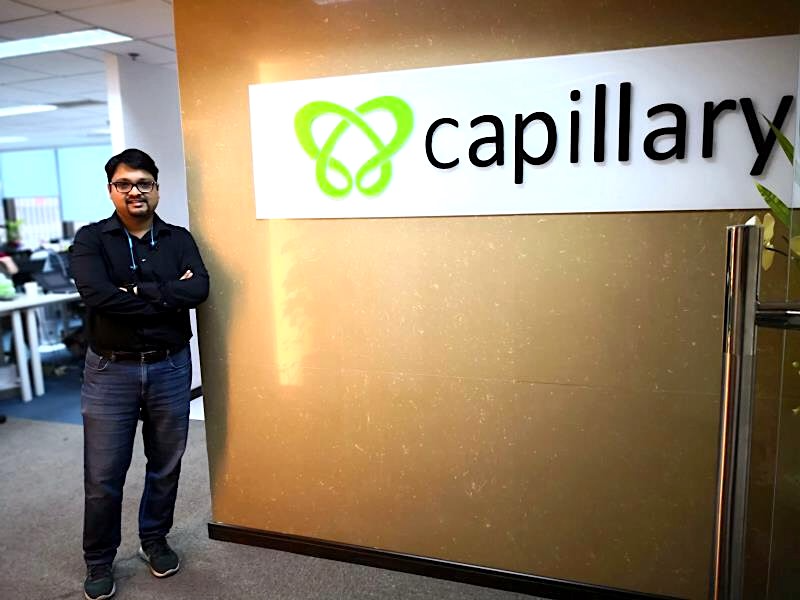
    Capillary Technologies, a leading provider of CRM and digital retail solutions, announced results for 2018 that show significant year-over-year business momentum. The company highlighted many significant developments that contributed to its most successful year since its entry into Singapore in 2012. In 2018, the company posted a record 100% growth from sales of its omnichannel retailing and CRM software in Southeast Asia. From its headquarters in Singapore, Capillary has established a growing presence in Malaysia, Thailand and Indonesia, servicing more than 14 million customers regionally and over 450 brands such as Courts in Singapore, Caring Pharmacy in Malaysia. With over 10 million monthly transactions across 1,400 regional stores, global revenues witnessed an exponential increase of 55% in 2018.

    Solving the region’s retail challenges with AI technology

    The use of artificial intelligence (AI) has been growing by leaps and bounds amongst Southeast Asian retailers. According to a recent report on artificial intelligence in Southeast Asia, more than 24,000 AI-related papers have been published in the Southeast Asia region, with Singapore, Malaysia and Thailand accounting for 86% of the output.

    To help brands realise the full potential of AI and machine learning, Capillary launched several AI-powered solutions: VisitorMetrix, Personalized Campaigns and Instore AI. These innovative products help brands to access accurate and real-time data on visitors and integrate it with transaction data.  Retailers can get insights on store staff effectiveness, power hours, conversion rate, and campaign effectiveness among others. Moreover, personalised analysis of each customer’s needs, preferences and motivations empower retailers to create an ‘offline clickstream’ of data which can be used to provide relevant recommendations and a highly engaging shopping experience.

    Abhijeet Vijayvergiya, President & Managing Director, Global Accounts and APAC, Capillary Technologies said, “Capillary is delighted with the results that we have achieved in Southeast Asia for 2018. The regional retail industry is moving towards providing personalised and seamless experiences to the ever-changing digital consumer. With greater AI implementation, we will see brands capturing more and more data on consumer behavior and preferences across multiple channels to start building individual profiles for each consumer. We are proud to work alongside these online and offline retailers to deliver superior experiences.”

    Leading brands tap on Capillary to drive customer engagement

    In Southeast Asia, Capillary Technologies has partnered with leading brands such as Bata, a leading shoe retailer, to strengthen its omnichannel CRM strategies. “To really improve our brand-customer relationships, we feel it is imperative for us to find ways to walk and talk with our consumers across the various channels they use in their buying journey. The engagement had to be consistent, connected and seamless across platforms,” said Roberto Longo, President – Asia Pacific, Bata on the brand’s objectives for its CRM initiatives. With Capillary, Bata was able to achieve 2.2 times higher returns from targeted campaigns in Singapore and registered 57 times more ROI from Facebook campaigns in Malaysia. In other markets as well, the brand has seen 10 times increase in ROI from its overall CRM investments.

    One of Singapore’s leading F& B chains, TungLok Group recently partnered with Capillary to drive digital customer loyalty and personalised engagement. As a result, TungLok Group experienced a 350 percent increase in sales and a 139 percent increase in loyalty sales. Carolyn Tan, Senior Vice President, Marketing & Corporate Communications at TungLok Group said: “TungLok Group takes immense pride in serving its customers a high-quality experience at every touch point. With Capillary, we extended this beyond our restaurants and outlets. Their inputs on who to target, when and with what offer has been key to improving customer relationship and in turn, contribute to our growth.”

    Ready for 2019

    Capillary Technologies is preparing for even more significant growth in 2019 with the aim of achieving 70% growth globally. In February 2018, it announced an approximate US$20 million funding raised from investors, including its existing investors, Warburg Pincus and Sequoia Capital. This was followed by another round of funding led by Warburg Pincus in October later the same year. Plans are also officially underway for expansion into Vietnam and the Philippines by the end of 2019.

  • Louis Vuitton launches its Facebook chatbot

    Louis Vuitton launches its Facebook chatbot

    In a bid to think “client first”, Louis Vuitton has launched a chatbot on Facebook Messenger that advises shoppers on products, aiming to provide meaningful feedback during the busy holiday period.

    The bot is powered by mode.AI, which has also previously partnered with the likes of Levi’s with its artificial intelligence, visual search and machine learning technology.

    It aims to give clients a more “sophisticated, personalized, visual and conversational online shopping experience” via Facebook, where Louis Vuitton currently has more than 20 million followers.

    The main focus is on search– users can converse with the bot to discover the brand’s full line of products, as well as use it to get suggestions on specific items. It uses natural language processing to facilitate a more advanced search experience.

    They can also share items with friends directly through it, and get votes in return on what to buy. Additional services include info on stores worldwide, access to product care instructions and a conversational view on the brand itself, from its fashion shows to its history and the craftsmanship behind its products.

    LV

    Louis Vuitton CEO, Michael Burke, said: “At Louis Vuitton, we always think client first. Today, our clients like to be connected to the Louis Vuitton universe wherever they are. They shop in our stores worldwide and are often in contact with their personal shoppers. They also follow us on Facebook, Twitter, Instagram, etc. and find our products on louisvuitton.com. It became evident that we should create the Louis Vuitton Virtual Advisor powered by mode.ai, a 24h/7 service to be able to fully meet their needs.”

    “We are still in the very early stage of AI technology adoption in the retail industry. The dominance of e-commerce isn’t just a trend, but an ever-growing arena, giving luxury brands like Louis Vuitton the opportunity to reach and sell to their customers in new and exciting ways. As shoppers continue to move online, the most forward-thinking companies will turn to AI chatbot technology to meet these shifting client demands,” said mode.ai CEO Eitan Sharon.

    Burke added: “The [bot] is designed to increase the quality of the relationship we have with our clients by enhancing and personalizing the shopping experience. We see messaging platforms as future key drivers of conversations with our clients, and potential for the integration of artificial intelligence and chatbot technologies to further enhance service to clients across these new channels.”

    The experience is currently only available on Facebook Messenger in the US, but there are plans to roll it out to Europe and Japan next, as well as across additional platforms including WeChat and Line.

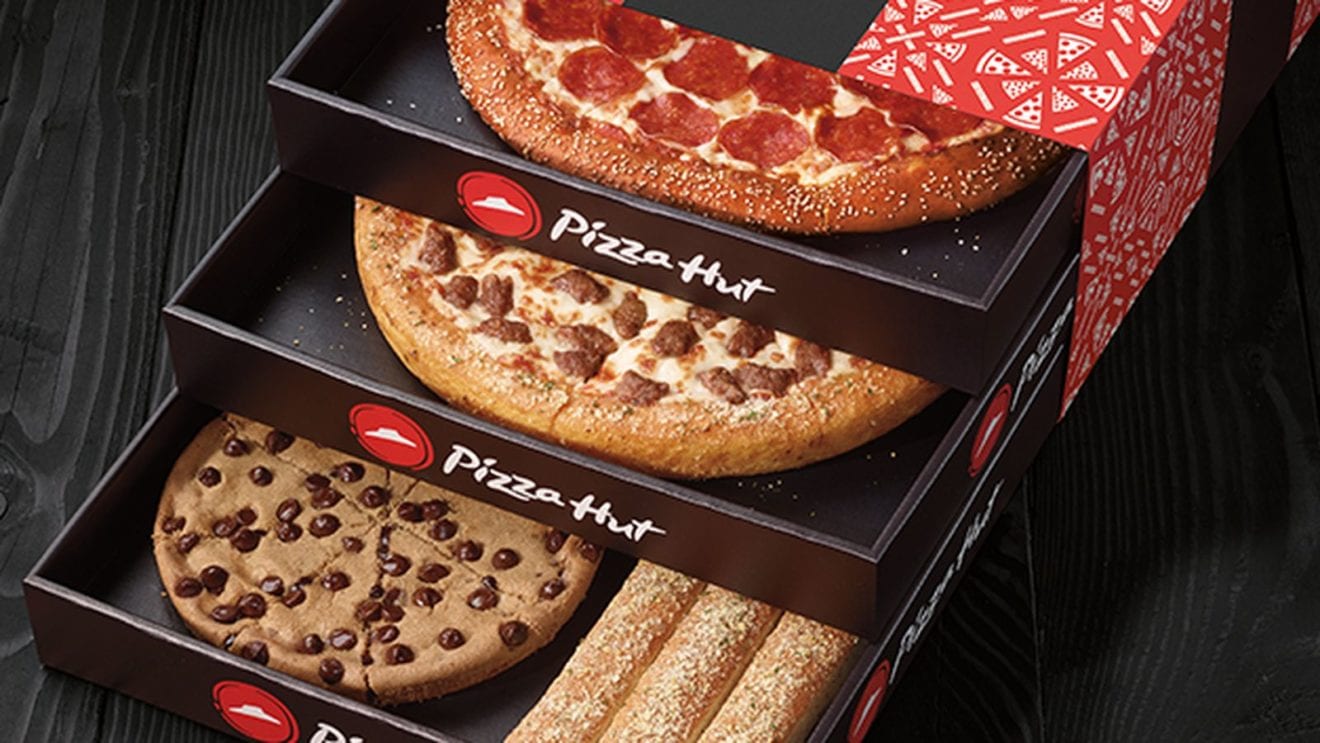
  • Mobile marketing cuts printing cost for Pizza Hut

    Mobile marketing cuts printing cost for Pizza Hut

    With over 70 restaurants in the city, half of Pizza Hut’s business in Hong Kong is dine-in. This gives the diner a great incentive, but at the same time, huge pressure to improve its customer experience.

    In 2014, Pizza Hut started its mobile marketing campaign project. The primary objective was to better serve its customers. Additionally, it wanted to cut out a huge portion of its printing costs on direct marketing materials.

    Pizza Hut has been a customer of Salesforce. “When we started the mobile marketing campaign project in 2014, however, we didn’t know that Salesforce Marketing Cloud could help us to manage marketing campaigns,” said Ravel Lai, group IT director at Jardine Restaurant Group Hong Kong and Macau, in an interview with Computerworld Hong Kong. Jardine Restaurant Group operates Pizza Hut and the KFC restaurants throughout the city.

    Lai’s team studied different marketing solutions and decided to adopt Salesforce Marketing Cloud. “We considered other marketing tools such as those from Oracle and Adobe. We had even approached IBM, but they didn’t have a marketing solution,” he recalled.

    Evaluating a marketing solution was different from that of an IT solution. “This was not a traditional ERP solution, but something new to the IT team. We invited the marketing people and bosses at Pizza Hut and KFC to view the solution demo, and then we let everybody vote,” Lai said.

    Extra 7-10% revenue

    “We were not trying to solve a particular technology problem, but to improve on our marketing campaign management,” said Lai.

    In the past, Pizza Hut used to mail cash coupons to its customers. This involved different stages of production, which were all time-consuming, such as graphic design and printing, before it can finally distribute and mail out the coupons.

    With the new solution, conducting mobile marketing campaigns has become much easier. Now, Pizza Hut would only need to involve an in-house graphic designer to design the digital marketing material, which could be ready for distribution in just two hours.

    “Last year on one rainy morning, I asked my team to send a mobile message along with a coupon to our customers. After preparing the customer segmentation, we decided to send the message to 15,000 housewives and office workers at around 11:00 am to catch up with lunchtime at noon,” said Lai. “The results were good, as we generated an extra 7-10% in revenue for the day.”

    90% printing cost savings

    In the past, Pizza Hut used to distribute paper coupons to customers. The printing and mailing costs involved had been 10 times higher than if the marketing campaigns were conducted on Salesforce Marketing Cloud.

    “This is a very good tool for us to do the job. Instead of sending physical leaflets, we now use the mobile marketing platform, which incurs just 10% of the original printing cost,” said Lai.

    “Besides, the replacement of physical leaflets with mobile marketing messages makes Pizza Hut more environmentally friendly, too.”

    Express ticket

    According to Lai, many restaurant groups have developed their own mobile applications, but their primary function is largely limited to remote ticketing. “When everybody does the same thing, we ask ourselves, ‘How should we do it differently?’”

    To distinguish its restaurant mobile app from the competition, Lai borrowed the idea of “Fast Pass” from Disneyland theme park. A Disneyland Fast Pass allows a visitor to shorten his or her waiting time by getting a pass in advance for selected attractions, and return within specific timeframes.

    Using Pizza Hut HK’s mobile app, a user can obtain a queue number before they even reach the restaurant. This cut down the time and money required for us to issue queue numbers.

    By doing proper customer segmentation on Salesforce Marketing Cloud, Pizza Hut can send messages to customers whose last visit was over one month. The typical message would read: “Dear customer, you visited us one month ago and purchased a meal in our restaurant. We are so sorry that you had to wait for 15 mins. Here is an express ticket for you so you can jump queue upon your next visit. The express ticket is good for two weeks,” Lai suggested.

    Loyalty points reward system

    Pizza Hut HK’s mobile app also provides a points rewarding system. With every HK$5 of purchase at the restaurant, a customer gets one point. “With 50 points, our customers can redeem four pieces of chicken wings,” Lai said.

    Pizza Hut’s loyalty points are transferrable. “When you come to the restaurant with your friends, you and your friends can combine the points together to redeem the reward, for example, 50 points for a pizza,” said Lai.

    Social CRM

    With Salesforce Marketing Cloud, Pizza Hut’s mobile marketing campaign platform has enabled the restaurant group to tap on social CRM. “When I sold the idea of social CRM to the management, I emphasized not just on the benefits, but the improvement on the customer journey,” Lai said.

    Regarding Pizza Hut’s implementation of mobile marketing campaign project, Lai summed up, “If I do it now, I am the pioneer. If I do it later, I would just be a follower.”

  • Salesforce moves into eCommerce with $2.8b M&A

    Salesforce moves into eCommerce with $2.8b M&A

    Salesforce.com is moving beyond CRM and into e-commerce with the acquisition of cloud service provider Demandware.

    It will use the purchase to kick-start a new field of business, the Salesforce Commerce Cloud, it said Wednesday.

    The company already has its Sales Cloud, Service Cloud, Marketing Cloud, Analytics Cloud.

    By rebranding Demandware Commerce Cloud as its own, Salesforce will be able to combine e-commerce, order management, point-of-sale, store operations and predictive intelligence into its own platform.

    Commerce Cloud will allow Salesforce customers to connect with their own clients in new ways, the company said, while Demandware customers will gain access to sales, marketing and analytics functions from Salesforce.

    “There are so many ways it accelerates our mission to transform retail,” Demandware CEO Tom Ebling said in a conference call to discuss the deal.

    Being part of Salesforce will add to Demandware’s credibility when approaching large accounts, he said.

    It will also help the company expand to new countries. “We’ve just got started in places like Japan and Italy but there are many other untapped geographies for us,” he said.

    A third area where it will benefit is omnichannel marketing, helping retailers engage customers everywhere. “The combination of CRM capabilities, knowledge of the customer, with the commerce engine will be a way to accelerate that capability,” he said.

    Salesforce’s Chief Product Officer Alex Dayon said the deal will increase its customers’ insight into their business.

    “Our customers’ information systems are going to be powered by data. You need a complete view of your customers. Having commerce as part of the CRM platform is important,” he said during the same conference call.

    He hammered home the need for more data in response to a question about Salesforce’s ad targeting capabilities.

    “For us it’s all about the data, whether you use your own data, your own targeting, or whether you connect to companies like Google or Facebook,” he said.

    The companies expect to close the deal, worth around $2.8 billion net of cash acquired, before August.

  • CRMNEXT Launches Indonesian Digital Operations in Alliance with Dimension Data

    CRMNEXT Launches Indonesian Digital Operations in Alliance with Dimension Data

    CRMNEXT, Global Leader in commutable cloud, Digital-Customer Relationship Management (CRM) solutions, today announced, launch of its full-fledged Indonesian operations in alliance with Dimension Data, a leader in cloud architecture solutions. The 2-day (7th & 8th October) launch event kicked-off today at Hotel Sultan in Jakarta, Indonesia.

    Indonesia is the fastest growing economy in south-east Asia. In order to cope with a growing economy amidst a wave of global Digital disruption, businesses such as Banking, Financial Services & Insurance in particular, need smarter tools to manage and nurture their customers.

    Elaborating on the inaugural event, Sushil Tyagi, Director – Global Sales for CRMNEXT, said “We are truly excited with the launch, as Indonesia not only has an impressive economic growth, but is also coupled with well-functioning financial systems. It’s imperative that technology solutions would advance organization’s efficiency and overall progress.  CRMNEXT is the world’s only true auto-upgrade, scalable and agile CRM Solution for the digital age. Dimension Data brings the right synergies to deliver cloud CRM solution on private or public cloud. Together, we would be able to offer the right solutions to the Indonesian customer to implement a true cloud solution for today’s digital Age.”

    Delivering a seamless delightful customer experience that propels companies to accelerate growth is the need of the hour. Acknowledging this need, CRMNEXT’s partnership with Dimension Data will provide Digital-CRM solutions that are custom made and designed for Indonesian business.

    Manish Pratap, General Manager, IT as a Service, Dimension Data Asia Pacific said, “In the digital economy, organizations need to innovate faster than ever before. They must think big, start small and scale fast. We at Dimension Data are committed to making industry leading solutions available to enterprises on our Managed Cloud Platform™. It is our pleasure to partner with CRMNext, a leader in the Digital CRM market, to jointly deliver their solution on cloud.”

    Speaking on the occasion, said Hitesh K. Arora, Director of Strategy and Customer Advocacy for CRMNEXT, “Businesses can start small, do a thorough pilot and then scale up as per need on a reliable true-cloud infrastructure. We’ve proven this for Asia’s largest enterprises including the largest Digital-Native Bank. This kind of convenience driven by agile, cost-effective technology has repeatedly given significant savings on running costs and is primarily offered only by CRMNext. Hence, we believe we’re here to stay and serve the Indonesian business community.”

    Insurance Companies, Banks & Financial Services Enterprises of Indonesia would especially be impacted by this new partnership that offers smarter tools to manage and nurture their expanding customer-base.