Tag: cross border e-commerce

  • Jack Ma Explains the key to Alibaba’s success

    Jack Ma Explains the key to Alibaba’s success

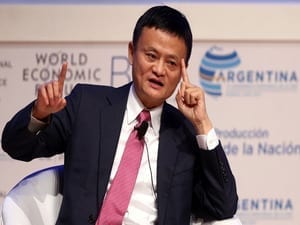
    Forbes Media has presented the Malcolm S Forbes Lifetime Achievement Award to Alibaba Group founder and partner Jack Ma, hailing his commitment to small businesses in addition to the impact that Alibaba has achieved since its launch 20 years ago.

    The annual award celebrates an individual who embodies and exemplifies the ideals of entrepreneurship championed by Forbes, the company said in a release.

    “Jack Ma not only created one of the most outstanding companies of the world but also a company that nourished the vibrant small-business community in China – and small businesses around the globe,” Forbes Media chairman and editor-in-chief Steve Forbes said. “He is indeed one of the most influential figures of our time.”

    Ma received the award at the 19th annual Forbes Global CEO Conference, held this year in Singapore, where he and Forbes talked for about an hour about Alibaba’s history, Ma’s thoughts on entrepreneurship and his philanthropy work. Forbes started by calling Ma “one of the greatest liberators in history, enabling people who wanted to … do commerce. You gave them the means to do it.”

    Ma explained how that came about: “We believed in the future and I believe the internet can empower people,” he said, speaking of Alibaba’s 17 other founders in 1999. “So, we do Alibaba because there are so many small businesses that don’t know when and how, where they can sell the products.”

    That led to the launch of B2B e-commerce platform Alibaba.com at first and later other sites, including Taobao, which has grown from a C2C marketplace to become China’s largest mobile-commerce destination. To enable payments on these platforms, Alibaba developed Alipay. The company also wanted to get products from sellerss to consumers quickly and efficiently, so Ma and his team turned their attention to logistics, eventually launching what is now Cainiao Smart Logistics Network. Alibaba also wanted to support small businesses in need of computing power, so Alibaba Cloud was born. And the company continues to build new businesses to address new demands as the market evolves.

    “So, it’s all about solving problems. I think this is what we did in the past 20 years,” Ma said. “We always think about what we can do to solve social problems instead of complaining. That’s the journey and … millions of people change their lives because [of our] efforts.”

    Ma expanded on the company’s mission to help small businesses, young people and women – those largely outside the traditional financial system – via Alipay, the largest mobile payments and lifestyle app in China. Traditional financial companies focus on the top economic levels of society, he said, not the bottom. But Alipay was always a bottom-up operation. While the wealthy elite wasn’t willing to test the technology when it was first made available, in 2004, many of China’s less wealthy consumers were.

    “They tried it, they loved it, they benefitted from it,” Ma said. “So, this is very, very inclusive.”

    “We feel that the financial system for the 21st century should be inclusive, should empower people,” he continued. All “people have the right to reach the money they need.”

    Alibaba has achieved tremendous success during its two decades, as it now serves 730 million annual active consumers in China and another 130 million overseas. Alipay parent Ant Financial, in which Alibaba holds a 33-per-cent stake, serves 900 annual active consumers in China and 1.2 billion worldwide, including active users of Alipay’s local e-wallet partners. The $456.4 billion Alibaba currently employs about 100,000 people globally, and its e-commerce platforms reach merchants and consumers in more than 200 countries and regions. This year, Alibaba will host its 11th 11.11 Global Shopping Festival, which has grown into the largest one-day shopping festival in the world.

    Ma said he would build on that success – and the money he’s made from Alibaba – to continue helping others. He has already worked through his namesake philanthropic organization, the Jack Ma Foundation, to help improve education and conservation efforts in China. But he has turned his attention to points outside of China as well. Most recently, Ma has focused his attention on supporting entrepreneurs in Africa. He has said that entrepreneurs are “the most important element to develop a society,” and therefore they will be central to Africa’s economic development in the decades ahead.

    “I have the money, I have the resources and I won’t go there, empower the entrepreneurs,” Ma told Forbes. “If we can be able to discover and help more Jack Mas, more Bill Gates or Warren Buffetts – more Steves – Africa will be different.”

    Next month, Ma will travel to Ghana to host the first Africa Netpreneur Prize competition. The $10 million initiative will award $1 million a year for the next 10 years to African entrepreneurs as a way to support the growth of the continent’s digital economy. Nearly 10,000 people from 50 of Africa’s 54 countries applied.

    The remaining 10 contestants – hailing from Egypt, Nigeria, Liberia, Rwanda and Cote D’Ivoire – will make their final pitches to Ma and a panel of judges during the Nov. 16 taping of “Africa’s Business Heroes,” a televised event scheduled to air Nov. 29 in countries across Africa.

  • Alibaba promises US$200 billion global sourcing plan

    Alibaba promises US$200 billion global sourcing plan

    Alibaba has committed to help import US$200 billion worth of goods from more than 120 countries over the next five years. The company says the move underscores its long-term commitment to globalisation and boosting its efforts to meet the rising demand of Chinese consumers for high-quality international products.

    However, it could also be construed as a move to shore up alternative supply chains in the wake of growing trade tensions between the US Trump administration and China.

    “Globalisation is one of Alibaba’s most critical long-term growth strategies,” said Alibaba CEO Daniel Zhang in a statement. “We are building the future infrastructure of commerce to realize a globalised digital economy where trade is possible for every country around the world.”

    He said using Alibaba’s innovative technology and robust ecosystem, the company is positioned to make global trade more inclusive and fulfil its mission “to make it easy to do business anywhere in the digital era.”

    Zhang outlined Alibaba’s plan at its Global Import Leadership Summit held at the first-ever China International Import Expo in Shanghai. Between 2019 and 2023, Alibaba forecasts it will help import international goods from businesses of all sizes in top countries such as Germany, Japan, Australia, the US, South Korea and Singapore. Several top global brands including P&G, Nestle, JBS, and Refa, have confirmed their holistic partnership with the Alibaba ecosystem.

    By collaborating with various Alibaba businesses units, these brands have been able to effectively engage with China’s massive middle class, a primary engine powering China’s consumption growth.

    Alvin Liu, GM of Tmall import and export, said China’s middle class is booming. “As incomes are rising in China, consumers want faster access to and a wider variety of high-quality products from around the world. Tmall is uniquely positioned to help international brands tap into the growing China market as consumers seek to upgrade their lifestyle.”

    According to a joint report by Deloitte China, the China Chamber of International Commerce, and AliResearch, China’s robust economic growth in recent years has increased the number of middle-to-high income Chinese consumers, who are fuelling the demand for imported, quality goods.

    The report notes that China’s cross-border e-commerce market has grown remarkably, with the proportion of imports to total e-commerce sales growing from 1.6 per cent in 2014 to 10.2 per cent last year. The report also highlights that, between 2014 and 2017, the number of shoppers on Alibaba’s dedicated platform for cross-border shopping, Tmall Global, has grown 10-fold.

  • Middle class driving Chinese cross-border e-commerce

    Middle class driving Chinese cross-border e-commerce

    A growing middle class in China that likes shopping for foreign brands is helping drive cross-border e-commerce spending, according to a forecast by research company eMarketer.

    However, it warns of a growth slowdown ahead.

    Total cross-border e-commerce sales in China are expected to reach US$100 billion by the end of this year, with the average buyer spend of $882. This average has increased since eMarketer’s previous forecast thanks to a growing awareness in China of overseas brands, as well as improved logistics and the perception that foreign goods are of better quality.

    Also contributing to the growth is the popularity of JD Worldwide, Kaola and Tmall Global, sites that have made it easier for shoppers to access overseas products, says the eMarketer report.

    It also notes that 23 per cent of digital buyers in China will make at least one cross-border purchase, but growth in these purchases will start to slow as preference switches to local brands for some categories, such as fashion. Realising the demand for better-quality goods, Chinese brands are starting to adapt, says the report.

    However, eMarketer senior forecasting analyst Shelleen Shum says that with shopping sites adding more brands and improving cross-border logistics and processing times, foreign brands still have an opportunity to tap into the demand for high-quality products, especially in categories like baby, maternity, health and beauty.

  • China’s new cross-border e-commerce rules explained

    China’s new cross-border e-commerce rules explained

    The Chinese government has issued updated guidance on rules for cross-border e-commerce in the world’s second-largest economy, giving stakeholders much-needed clarity on potential changes in policy that have hung over the sector for the past year.

    China’s Ministry of Commerce said in a statement on March 17 that overseas goods purchased online and distributed through bonded warehouses would continue to receive some preferential treatment, avoiding quarantine and quality checks that could have brought the import of many popular foreign products to a halt.

    “We believe this policy move injects confidence into China’s [cross-border e-commerce] industry as it demonstrates the authorities’ determination to provide regulatory clarity and spur growth for the industry,” Fung Global Retail & Technology MD Deborah Weinswig said in an email.

    Dennis Zhang, CEO of Los Angeles-based e-commerce service provider Voyage One, agreed, saying, “It gives everybody, including our clients, peace of mind to let them know that this is something the Chinese government continues to support.”

    Pilot program refined

    Last April, Beijing announced changes to a pilot program meant to bolster Chinese consumers’ ability to buy online directly from overseas merchants via cross-border e-commerce. At the centre of the program are bonded warehouses, where international brands shipped merchandise for sale to Chinese consumers without being subject to normal import duties or rules for quarantine and quality checks on goods such as food, cosmetics and health supplements. The proposed changes would have increased the tariffs paid on that merchandise and removed the preferential regulatory treatment. This caused significant upset among international brands because some of the most popular foreign goods purchased online – the food, health supplements and cosmetics – are also the most tightly regulated by Chinese authorities.

    According to reports, cross-border e-commerce orders plummeted as much as 60 per cent in major trading hubs such as Shenzhen, Zhengzhou, Ningbo and Hangzhou a week after the announcement. A month later, apparently in response to industry concerns, regulators said they would suspend the rollout of the new quarantine and quality check restrictions until the end of this year while leaving in place the higher import tax. In its March 17 announcement, regulators extended that suspension indefinitely, saying that all goods shipped through bonded warehouses would be considered “personal items” and therefore exempt from the stricter regulations.

    The government said it might issue further guidance on cross-border e-commerce before the current rules are formalised on January 1, but the announcement at least gives stakeholders a longer runway with which to prepare for any potential changes.

    “Everything is pretty much business as usual for the rest of this year,” said Ron Wardle, the Shanghai-based China CEO of Export Now, a company that helps retailers sell online in China.

    For Alibaba, by far China’s largest e-commerce player, the news means that the online purchase of overseas goods will continue unabated, with marketing research firm eMarketer predicting the sector will reach $157.7 billion by 2020 from about $86 billion last year.

    Pumping water into pools to raise fish

    Cheng Ouyang, a director at Alibaba’s Cross-Border E-Commerce Research Center, called the announcement a “positive signal” for the sector. Using a popular Chinese idiom to describe the new announcement, Ouyang said the government was “pumping water into pools to raise fish,” which means that Beijing is allowing space for cross-border e-commerce to grow. At the same time, the government will continue to fine-tune its regulations for the sector, while stakeholders are able to take advantage of a burgeoning sales channel for foreign goods.

    Part of the ministry’s announcement also included the addition of five more pilot zones, or testing areas for bonded warehouses, in Dalian, Hefei, Chengdu, Qingdao and Suzhou, bringing the total number to 15. Wardle said the additional zones would allow for faster delivery and reduced shipping costs, “which is great for consumers”.

    Alibaba’s logistics affiliate Cainiao Network said it welcomed the news. “We already have a strong network and will work closely with our partners in the newly announced pilot zones to continuously provide seamless cross-border logistics service and better serve both merchants and consumers,” said James Zhao, director of import logistics at Cainiao.

    While the government’s statement has lent stability to the sector for the moment, Fung Global’s Weinswig said there was still no guarantee about what updates to the policy may look like if they are indeed issued later this year.

    “There are still some unanswered questions,” she said. “Will there be some imports that do not fall within personal items? Is registration for imports required which would slow down [cross-border e-commerce] imports?”

    Wardle, meanwhile, expects that any updates to policy will be a hybrid of those already in place along with recommendations from major players in cross-border e-commerce, such as Alibaba’s cross-border shopping site Tmall Global. Any such model “would benefit both consumers and brands,” he said.

    Whatever the changes, Wardle said he doubts that regulators will backtrack on the progress that has been made in China’s cross-border e-commerce sector. Stakeholders have already made significant investments in infrastructure and resources, while consumers have come to expect access to foreign goods they can’t otherwise get.

    “The floodgates are already open,” he said. “That’s going to be hard to pull everything back.”

  • China retail consumption to jump 50%

    China retail consumption to jump 50%

    China’s total retail consumption will jump 50 per cent to $6.5 trillion by 2020, with online transactions accounting for half of that growth, according to new research.

    Seventy per cent of those e-tail purchases will be conducted via mobile devices. Over that same five-year period, cross-border eCommerce will have grown so high – to $152.1 billion – that it will represent one-third of the country’s total foreign trade.

    So say think tanks and research firms watching the world’s second-largest economy as it transitions from its former manufacturing base to one driven by consumption. The predictions were issued by Alibaba Research Institute, the research arm of Chinese eCommerce giant Alibaba Group, as part of its inaugural “Think Tank Summit on the New Economy” held last weekend in Beijing.

    The new annual event brought together over 600 thought leaders to look at ahead at the next five years in Chinese commerce. A panel of judges surveyed research from the 40 participating organisations and picked “10 Forecasts for the New Economy,” which focused not only on the importance of eCommerce but also the impact the internet will have China’s manufacturing, logistics, rural economy and society.

    The use of data, culled from billions of transactions as Chinese consumers buy and sell goods and services online, will also play a key role.

    “China today is in the midst of transforming from an industrial-driven economy to a data-driven economy,” Gao Hongbing, dean of AliResearch and vice president of Alibaba Group, said in a statement.

    “These 10 forecasts are a small part of our observation and thinking, and we hope they can play a part in stimulating further deliberation on the society’s future development.”

    Bain & Company predicted that China’s online retail market would reach $1.52 trillion, accounting for 22 per cent of the country’s retail industry, with maternity and baby products being the strongest category and third-and fourth-tier cities driving a significant part of the growth. The Boston-based management consultancy also said that mobile Internet would make up 70 per cent of all online sales.

    Bain put the total figure for cross-border eCommerce in China at $152 billion, with AliResearch in a separate prediction saying it expects cross-border eCommerce to make up one-third of China’s foreign trade in five years. The China Center for International Economic Exchanges said “e-international trade” will change how trade overall is done and that it will account for account for 30 per cent to 40 per cent of total world trade by 2025.

    Boston Consulting Group estimated that China’s consumer market will climb $2.3 trillion, or 50 per cent, to $6.5 trillion by the close of the decade. Online will account for 42 per cent of that growth, the management consultancy said.

    The internet would also penetrate all rural areas of China, according to Zhejiang University’s China Academy for Rural Development. As a result, the Information Research Department of the State Information Center of China said the sharing economy will rise to full prominence given this full penetration of broadband coverage in China. The Institute of Information Society Studies said China would have a “soft law” system providing a framework for Internet governance by 2020 as well.

    The other predictions included one from the Information Society 50 Forum & Department of Sociology and Anthropology at Peking University, which said that data will digitise how consumers are assessed, say, in providing individual recommendations. The Information Society also noted that the vast reams of data collected as consumers buy and sell goods online will as a result erode some of their privacy.

    ZenCoo, meanwhile, predicted that social measurement and cognitive experiments will replace statistical sampling, revolutionising the fundamental theories of many disciplines including psychology, sociology, economics, and communications.

    And finally, according to the Data Center of China Internet, the 3D printing market will reach $15.2 billion, with households using them the most.

  • E-commerce market in China is big enough for multiple players

    E-commerce market in China is big enough for multiple players

    Cross border e-commerce is gaining traction worldwide, partly because of rising business from China. Despite the rise in global players, US online retailer Amazon is not afraid of the competition.

    Amazon has felt the wind of late comers. Alibaba has brought the war onto Amazon’s home turf, recruiting small US businesses to join its sales network after its debut on the New York Stock Exchange last year.

    Amazon’s senior vice president of international consumer business Diego Piacentini says the market is big enough for multiple players.

    “Business is not sport, where there is one winner. Business has multiple winners,” Piacentini said.

    “The size of the business, particularly e-commerce, would be so large. There is room for global players. Amazon is going to be one of them, absolutely, Alibaba and Tmall is one of them and many others.”

    Besides talking the talk, Amazon has beefed up its operation in China since last year. It opened direct mail to China from six of its global locations. Amazon also set up a Chinese e-commerce website and increased its overseas purchases in China to bolster local sales.

    “For countries like China or India, they are not exposed to many years of modern retail, e-commerce, or mobile commerce. You can expect in the next few years, that the vast majority of retail activities in China and India would happen online,” Piacentini said.

    Last year, 18 million Chinese consumers spent US$213 billion overseas—more than double Amazon’s annual sales. For any global commerce site, such potential is hard to ignore.